Free printable practice
Weights Non Standard Units Practice Activities
Printable Class 2 maths activities for comparing and measuring weight with non-standard units such as cubes, beads, counters and small classroom objects.
Free printable worksheet PDFs
Preview every available page, then download the free worksheet PDF for home, homeschool, tutoring, or classroom practice.
Preview the exact activity before downloading it.
 Measurement: Weights Non Standard Units — Concept FoundationsConcept Foundations for measurement: weights non standard units in Class 2. Choose heavier or lighter objects and complete measurement statements using non-standard units such as cubes, beads and counters.Class 2Free PDF preview
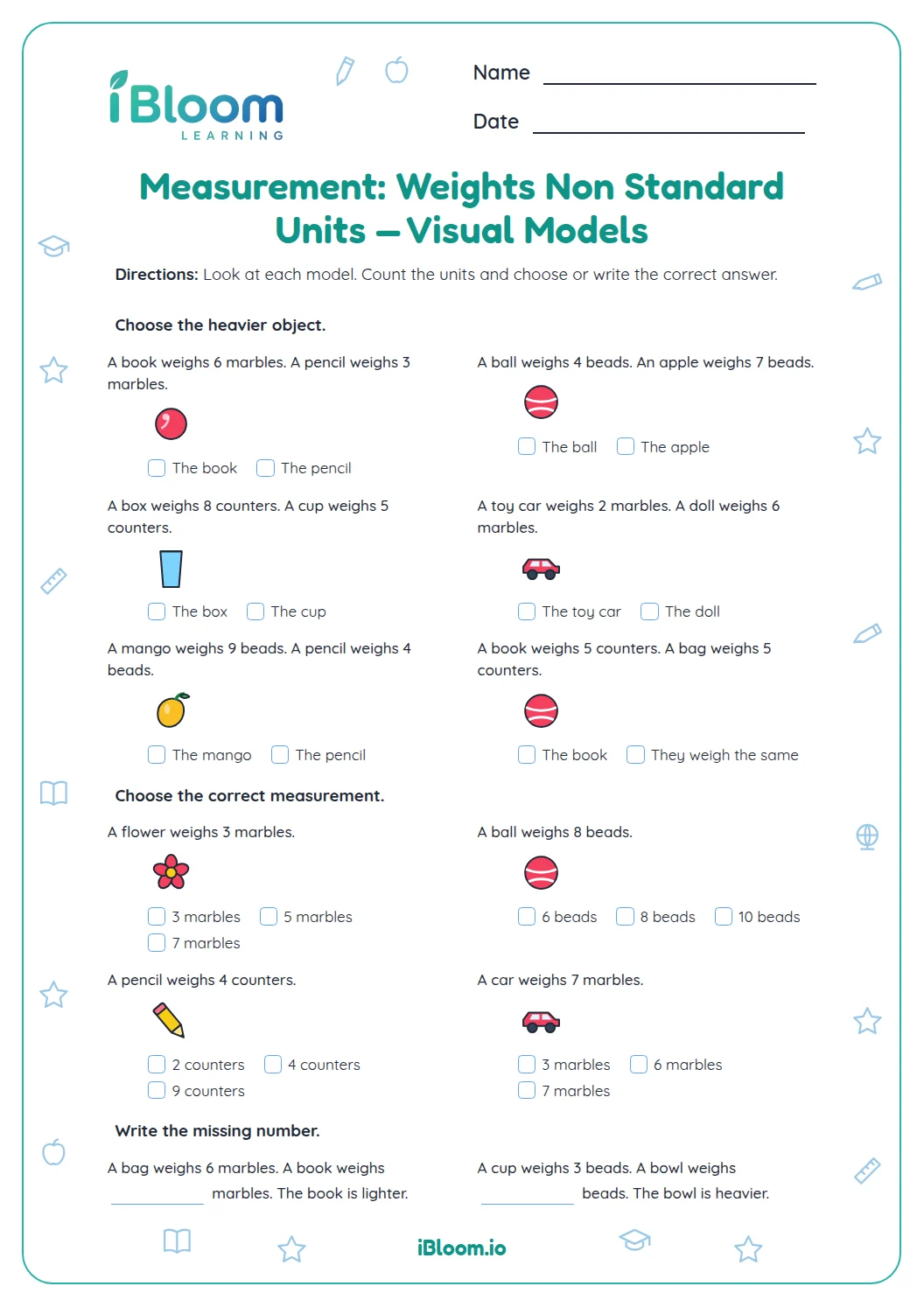 Measurement: Weights Non Standard Units — Visual ModelsVisual Models for measurement: weights non standard units in Class 2. Look at visual weight measurements in non-standard units, compare them, and complete missing measurements.Class 2Free PDF preview
 Measurement: Weights Non Standard Units — Guided PracticeGuided Practice for measurement: weights non standard units in Class 2. Compare measured weights, choose heavier or lighter objects, complete weight statements, and find simple differences in non-standard units.Class 2Free PDF preview
 Measurement: Weights Non Standard Units — Independent PracticeIndependent Practice for measurement: weights non standard units in Class 2. Compare objects by weight and find weights measured in cubes, beads, counters and other non-standard units.Class 2Free PDF preview
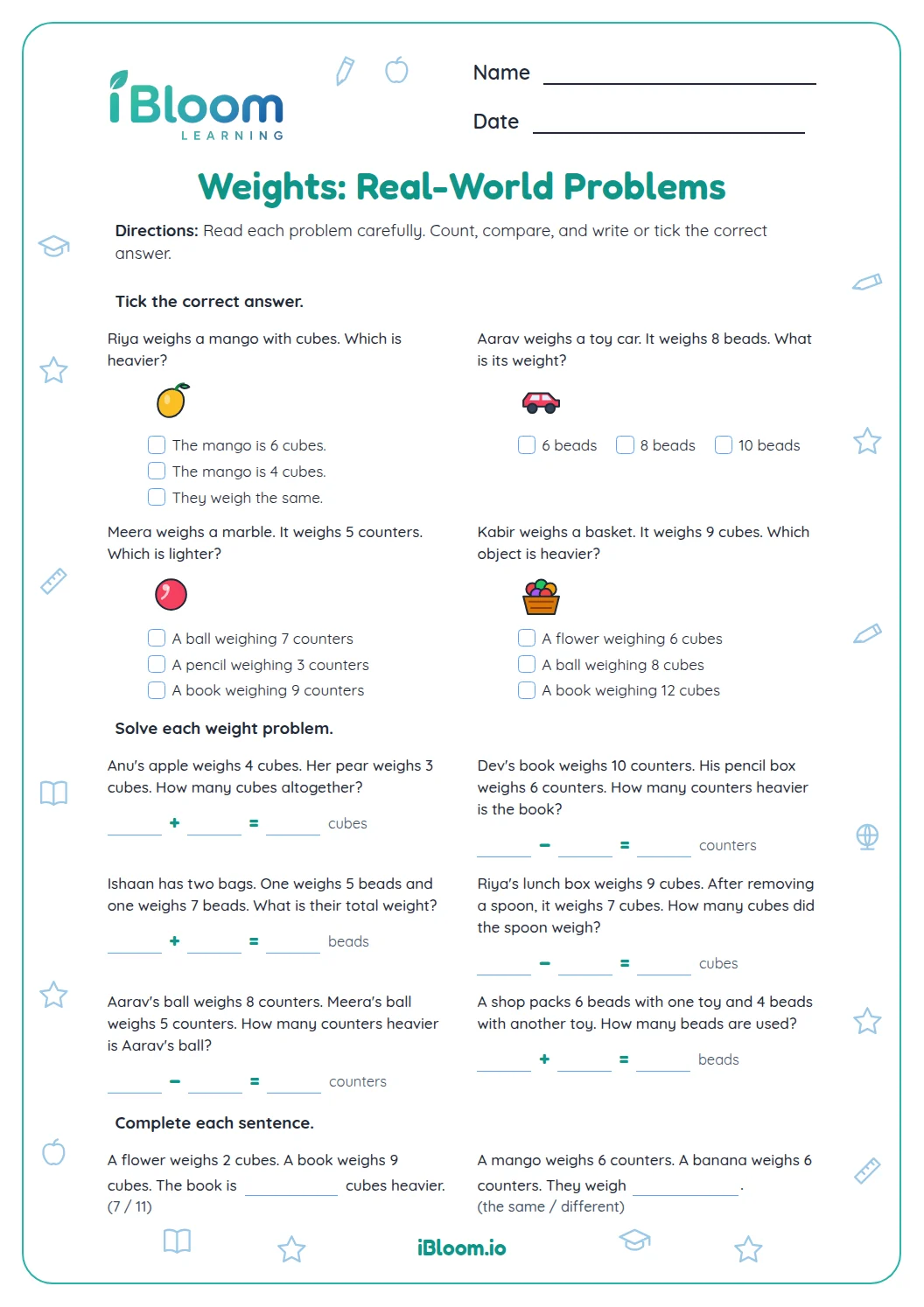 Measurement: Weights Non Standard Units — Real-World ProblemsReal-World Problems for measurement: weights non standard units in Class 2. Solve real-world weight problems by counting, comparing, and finding weights in non-standard units.Class 2Free PDF preview
 Measurement: Weights Non Standard Units — Reasoning ChallengeReasoning Challenge for measurement: weights non standard units in Class 2. Compare weights shown in non-standard units, explain equal weights, and solve simple weight stories.Class 2Free PDF preview
Practice that builds confidence
Building the idea of weight
These Class 2 measurement worksheets help children understand weight by using non-standard units instead of grams or kilograms. Learners practise comparing objects as heavier, lighter or equal, then measure weight by counting how many same-sized units balance an object.
The printable activities include picture-based balance scale questions, counting units, choosing suitable objects for measuring, estimating before measuring, and explaining comparisons in simple maths language.
At this stage, children need many concrete experiences before formal units make sense. These worksheets focus on weight as something that can be compared and measured using equal non-standard units such as cubes, beads, counters, shells or erasers. A child may see that a toy car balances with 8 cubes, while a pencil balances with 3 cubes, so the car is heavier than the pencil.
From comparison to measurement
The practice moves from simple language—heavier, lighter, same weight—to reading balance scale pictures and counting units. Children learn that the number of units matters only when the units are the same size and type. They also practise statements such as “The mango weighs about 6 blocks” or “The book is heavier than the spoon.” This progression prepares them for later work with grams and kilograms without rushing into standard units.
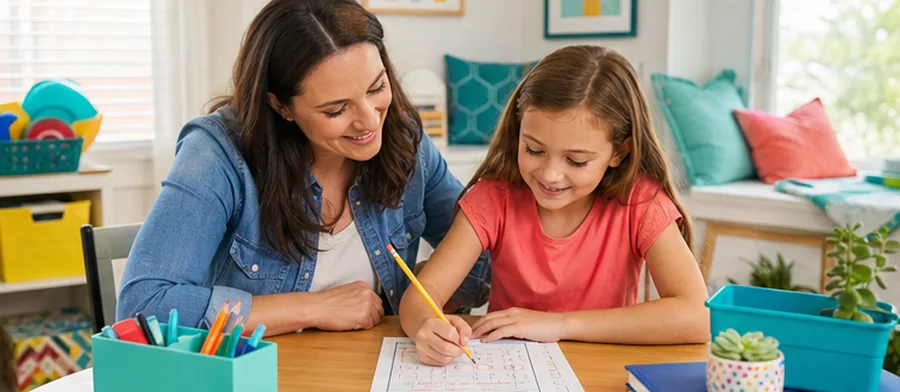
A simple routine for parents
Use a homemade balance or a kitchen scale bowl activity if available. Choose one object, such as a small toy, and one repeated unit, such as identical blocks. Ask your child to estimate first: “Will it take more than 5 blocks?” Then measure, count aloud, and say the full sentence: “The toy weighs the same as 7 blocks.” Repeat with another object and compare the two results. Keep the unit the same throughout the round.
Classroom uses for teachers
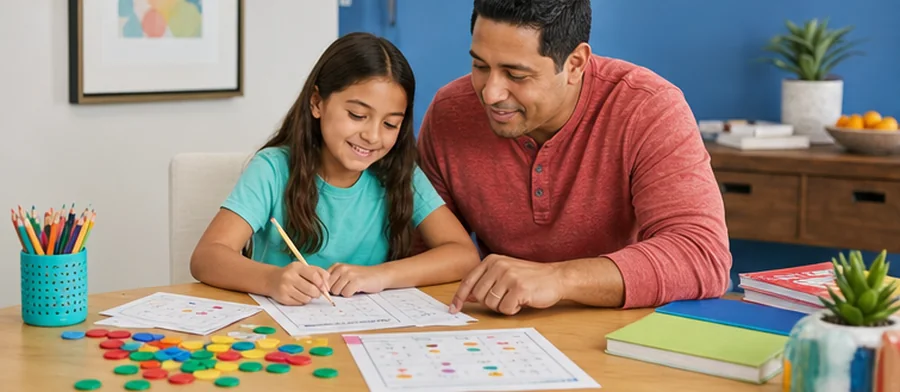
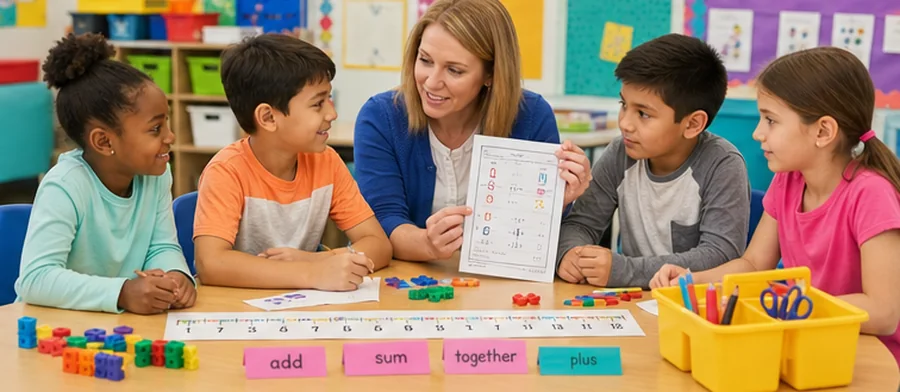
Teachers can use these pages after a hands-on measurement lesson, in maths centres, or as follow-up practice for small groups. Pair work is useful: one child reads the balance scale picture while the other explains the comparison. The worksheets also support vocabulary checks, because children must connect the visual balance with words like heavier, lighter, equal, estimate, measure and unit.
Common errors to watch for
Some children count all objects in a picture instead of only the units on the balancing side. Others mix units, such as counting 3 large blocks and 3 small beads as if they were equal. A common misconception is that bigger-looking objects are always heavier. Encourage children to look at the balance position and the number of equal units, not just the size of the object.
Free printable PDF download
Use this class 2 non standard units weight worksheet page to preview the activity, print it, or download it as a PDF for quick practice. It works well for homework, homeschool lessons, tutoring, morning work, revision, and classroom centers.
Answers and answer key support
After the child completes the worksheet independently, parents and teachers can use the answer support or answer key information to check the work, review mistakes, and choose the next practice step.
Why iBloom worksheets help
The activities give children repeated, clear practice with one idea at a time: compare, balance, count, estimate and explain. A child-friendly strategy is: “Choose one unit, balance carefully, count the units, then say the weight sentence.” This helps Class 2 learners move from guessing to reasoning with evidence.
Helpful answers
Frequently asked questions
What are non-standard units for weight in Class 2 maths?
Non-standard units are everyday or classroom objects used to measure weight, such as identical blocks, beads, counters or erasers. Children count how many of these units balance another object.
Why do children learn weight with non-standard units before grams and kilograms?
Non-standard units help children first understand the meaning of weight, balance and comparison. Once they know that weight can be measured by equal units, standard units like grams and kilograms are easier to understand.
What vocabulary should my child practise with these worksheets?
Key words include heavier, lighter, same weight, equal, balance, unit, estimate, measure and compare. Encourage your child to use full sentences such as, “The apple is heavier than the pencil.”
How can I support this topic at home without special equipment?
Use repeated objects such as building blocks, bottle caps or coins of the same type. Let your child compare two small items by hand first, then count how many matching units are needed to balance or represent each weight.
What mistakes are common in non-standard weight measurement?
Children may mix different units, count the object being weighed, or assume the larger object is always heavier. Remind them to use one kind of unit and to rely on the balance or comparison shown.
Is this class 2 non standard units weight worksheet free?
Yes. You can preview it for free and use the printable worksheet for home or classroom practice.
Can I download this class 2 non standard units weight worksheet as a PDF?
Yes. Use the worksheet download option to save a printable PDF, or print the worksheet directly from the page.
Does this class 2 non standard units weight worksheet include answers or an answer key?
When the activity has fixed answers, iBloom includes answer support so parents and teachers can check the completed worksheet.