Free printable practice
Elapsed Time Review Practice Activities
Class 3 elapsed time review worksheets help children work out time passed between start and end times using clocks and simple reasoning.
Free printable worksheet PDFs
Preview every available page, then download the free worksheet PDF for home, homeschool, tutoring, or classroom practice.
Preview the exact activity before downloading it.
 Telling Time: Elapsed Time Review — Concept FoundationsConcept Foundations for telling time: elapsed time review in Class 3. Work out the time passed between given start and end times using hour jumps and simple minute counting.Class 3Free PDF preview
 Telling Time: Elapsed Time Review — Visual ModelsVisual Models for telling time: elapsed time review in Class 3. Use a 0–60 minute number line and visual start-and-end time models to find elapsed time.Class 3Free PDF preview
 Telling Time: Elapsed Time Review — Guided PracticeGuided Practice for telling time: elapsed time review in Class 3. Work out elapsed time by counting forward from start to end times, first in hours and then in minutes.Class 3Free PDF preview
 Telling Time: Elapsed Time Review — Independent PracticeIndependent Practice for telling time: elapsed time review in Class 3. Work out elapsed time from start and end times, then complete and choose the correct answers.Class 3Free PDF preview
 Telling Time: Elapsed Time Review — Real-World ProblemsReal-World Problems for telling time: elapsed time review in Class 3. Read real-world time stories and work out the elapsed time by choosing or writing the correct duration.Class 3Free PDF preview
 Telling Time: Elapsed Time Review — Reasoning ChallengeReasoning Challenge for telling time: elapsed time review in Class 3. Solve 12 elapsed-time problems by finding how many minutes or hours pass between given start and end times.Class 3Free PDF preview
Practice that builds confidence
Reviewing elapsed time
These Class 3 maths worksheets review elapsed time in the Telling Time section. Children practise finding how much time has passed, working from a start time to an end time, and using hours and minutes accurately.
The printable activities may include clock readings, time intervals, and everyday situations such as travel, study, games, or waiting. They help children move beyond reading a clock to reasoning about time as a measurable duration.
Elapsed time means the amount of time that passes between two moments. In Class 3, children usually know how to read o’clock, half past, quarter past, quarter to, and minute times; this review asks them to use that knowledge to solve “how long?” questions.

From clock reading to time reasoning
Children may compare a start time and an end time, add a given duration to a start time, or work backwards from an end time. They can use an analogue clock face, a number line, or mental jumps such as 20 minutes to the next hour and then 15 minutes more. The focus is not just naming the time but understanding the interval.
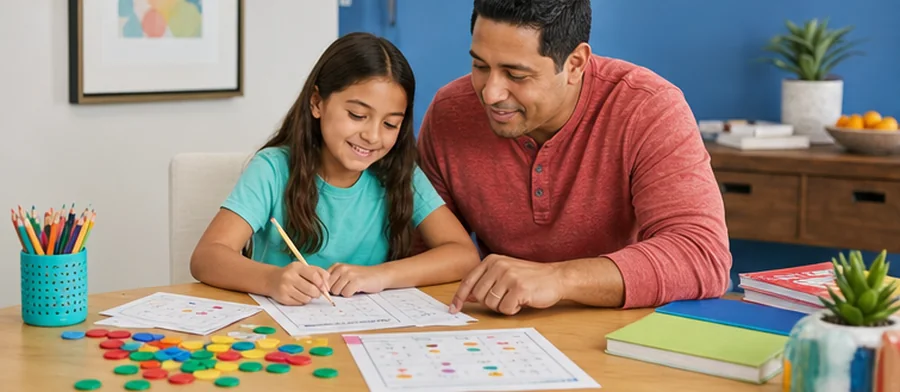
Parent routine at home
Use daily events for practice. Ask, “You started homework at 5:10 and finished at 5:45. How many minutes did you work?” Let your child draw a simple time line: 5:10 to 5:30 is 20 minutes, 5:30 to 5:45 is 15 minutes, so the elapsed time is 35 minutes. Encourage them to explain the steps rather than only give the answer.
Classroom uses
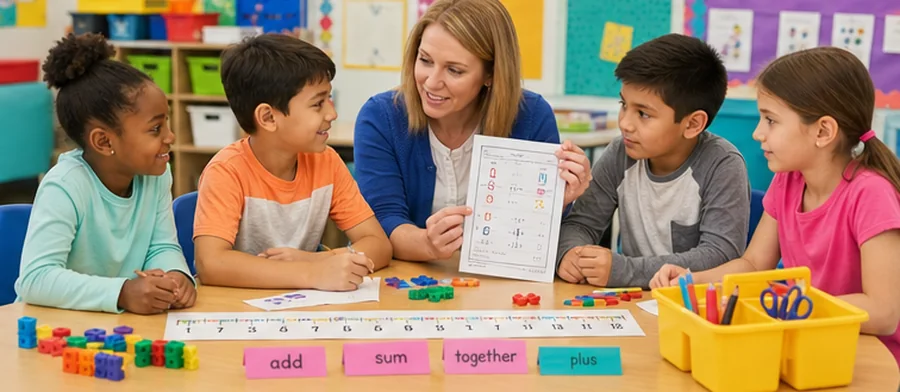
Teachers can use these worksheets after lessons on reading clocks, as revision before mixed time word problems, or in maths centres. They also work well for partner checking: one child explains the jumps on a number line while the other verifies the start and end times. For additional support, provide a toy clock or draw a clock on the board.
Common mistakes to watch for
Some children subtract the minute numbers without considering the hour. Others count the start time as one minute, confuse 12-hour clock movement, or forget that 60 minutes make 1 hour. Watch for answers such as 70 minutes being left unconverted when the question expects hours and minutes.
Free printable PDF download
Use this class 3 elapsed time worksheet page to preview the activity, print it, or download it as a PDF for quick practice. It works well for homework, homeschool lessons, tutoring, morning work, revision, and classroom centers.
Answers and answer key support
After the child completes the worksheet independently, parents and teachers can use the answer support or answer key information to check the work, review mistakes, and choose the next practice step.
Why iBloom worksheets help
iBloom elapsed time review pages give children repeated, varied practice with the same core idea: time passes in organised jumps. A child-friendly strategy is “Start, jump, stop.” Mark the start time, jump to easy clock points, stop at the end time, and add the jumps carefully.
Helpful answers
Frequently asked questions
What does elapsed time mean for Class 3 children?
Elapsed time is the amount of time that passes between a start time and an end time, such as the time between 4:15 and 4:50.
How can my child solve elapsed time without getting confused?
Encourage your child to make jumps to easy times. For example, jump to the next hour or half hour first, then add the remaining minutes.
Are these worksheets about analogue clocks or word problems?
They support both. Children review clock reading and then apply it to duration questions and everyday time situations.
Why does my child subtract minutes incorrectly?
Many children look only at the minute numbers and ignore the hour change. A time line or clock face helps them see the full interval.
Should answers be written in minutes or hours and minutes?
It depends on the question. If the duration is more than 60 minutes, children should practise converting it into hours and minutes when required.
Is this class 3 elapsed time worksheet free?
Yes. You can preview it for free and use the printable worksheet for home or classroom practice.
Can I download this class 3 elapsed time worksheet as a PDF?
Yes. Use the worksheet download option to save a printable PDF, or print the worksheet directly from the page.
Does this class 3 elapsed time worksheet include answers or an answer key?
When the activity has fixed answers, iBloom includes answer support so parents and teachers can check the completed worksheet.