Free printable practice
Letter P Practice Activities
Printable Letter P worksheets for Nursery, LKG and UKG children to recognise, trace, say and use the beginning consonant sound /p/.
Free printable worksheet PDFs
Preview every available page, then download the free worksheet PDF for home, homeschool, tutoring, or classroom practice.
Preview the exact activity before downloading it.
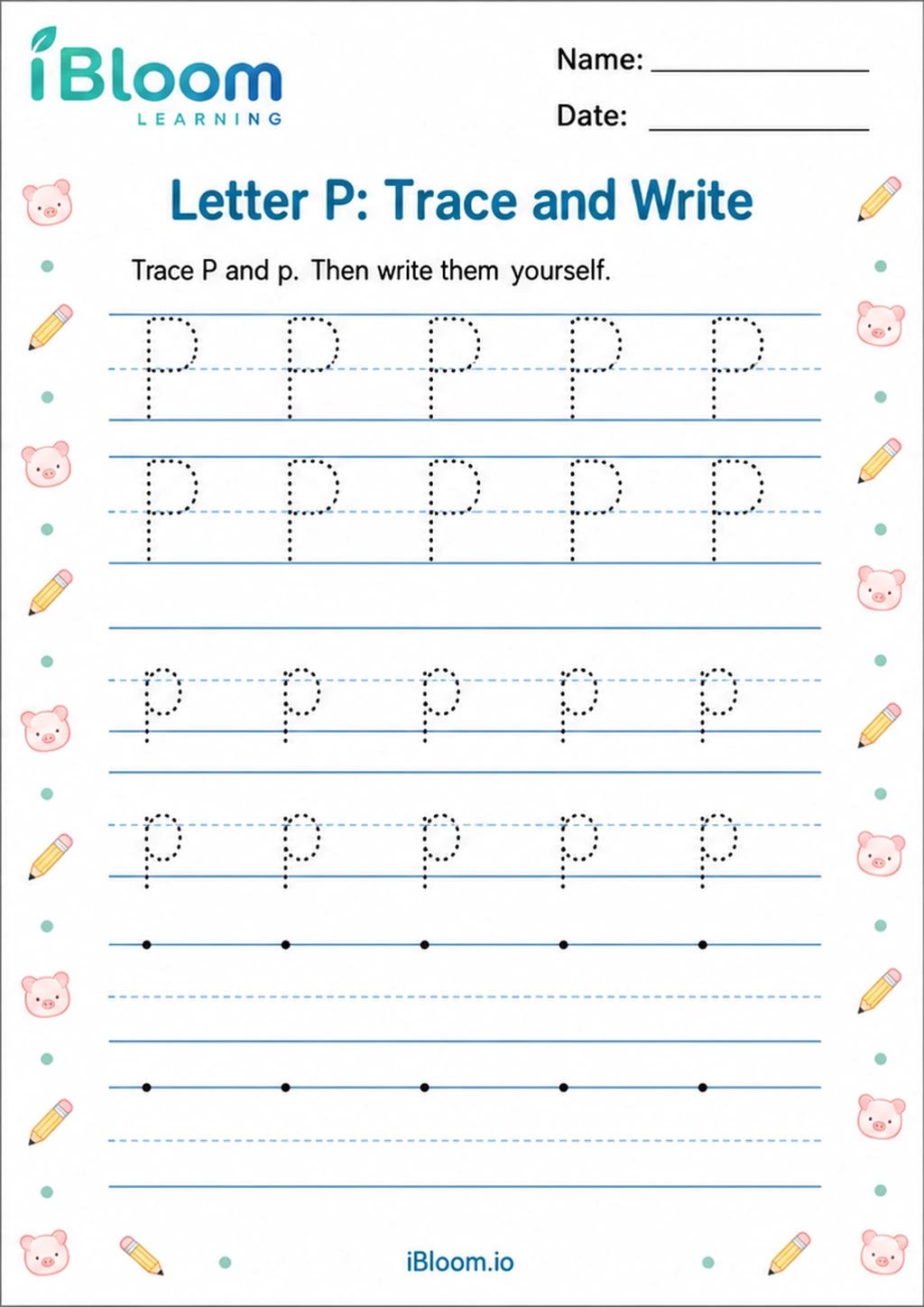 Letter P: Trace and WriteLKG printable practice for Letter P.LKGFree PDF preview
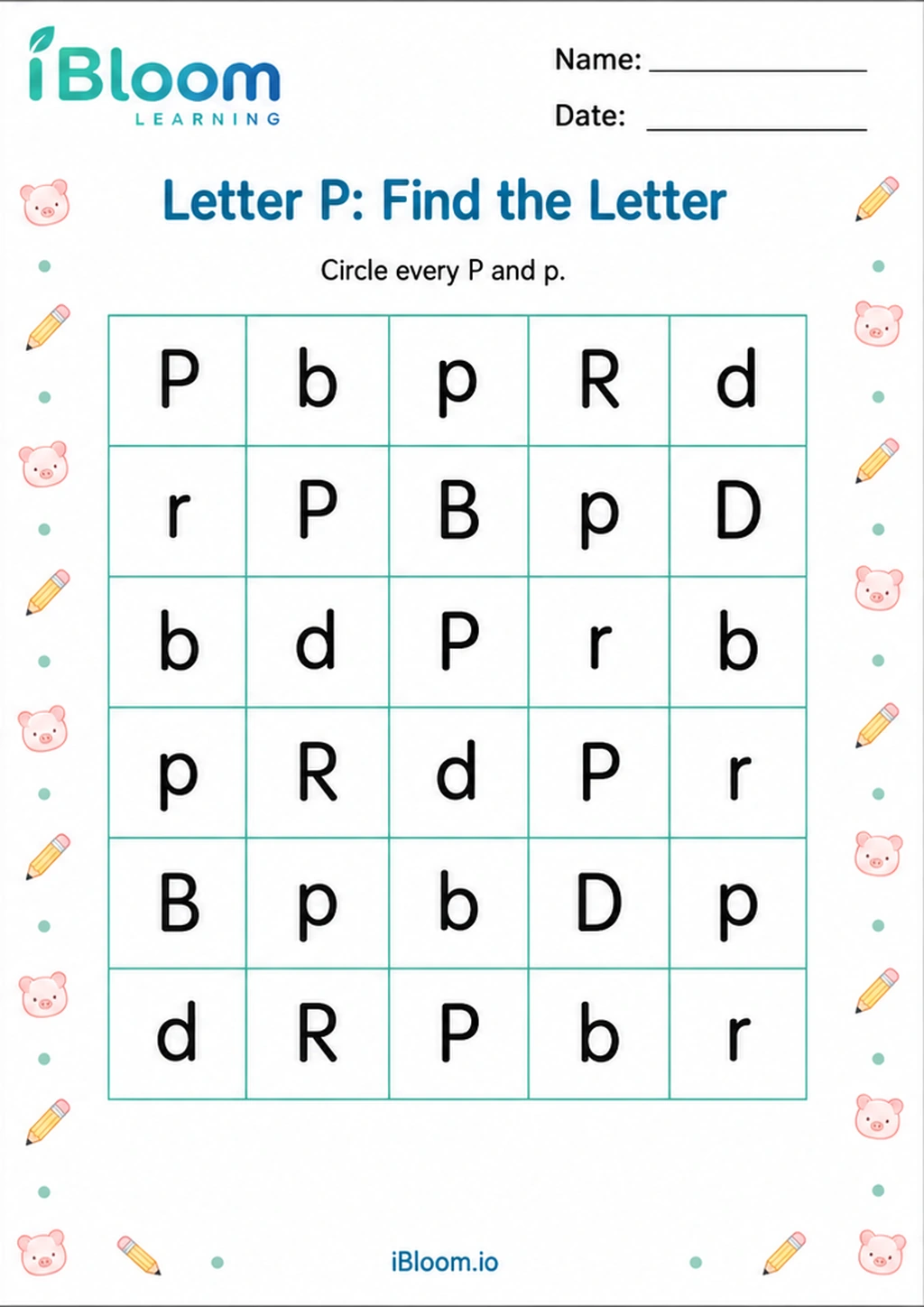 Letter P: Find the LetterLKG printable practice for Letter P.LKGFree PDF preview
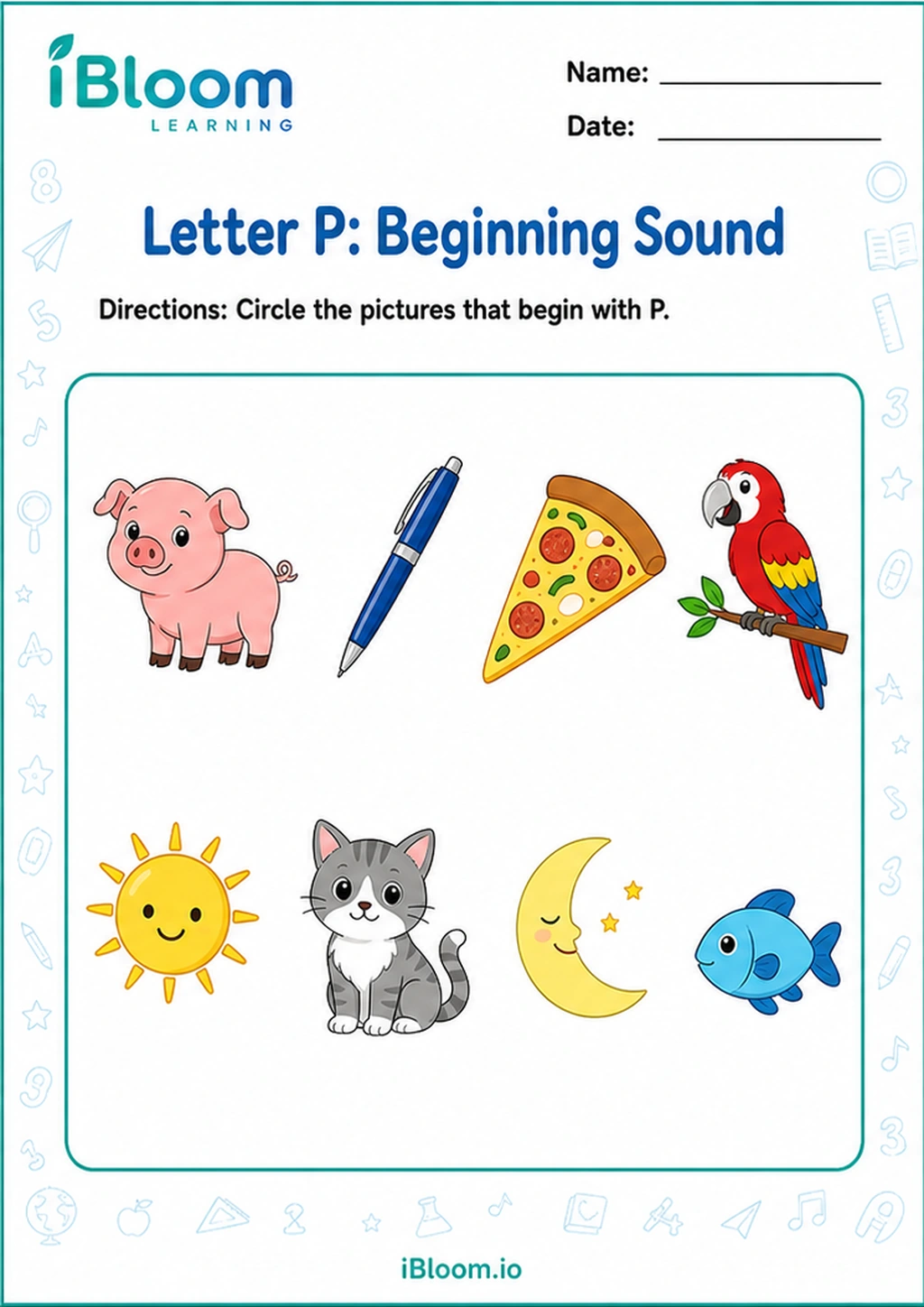 Letter P: Beginning SoundLKG printable practice for Letter P.LKGFree PDF preview
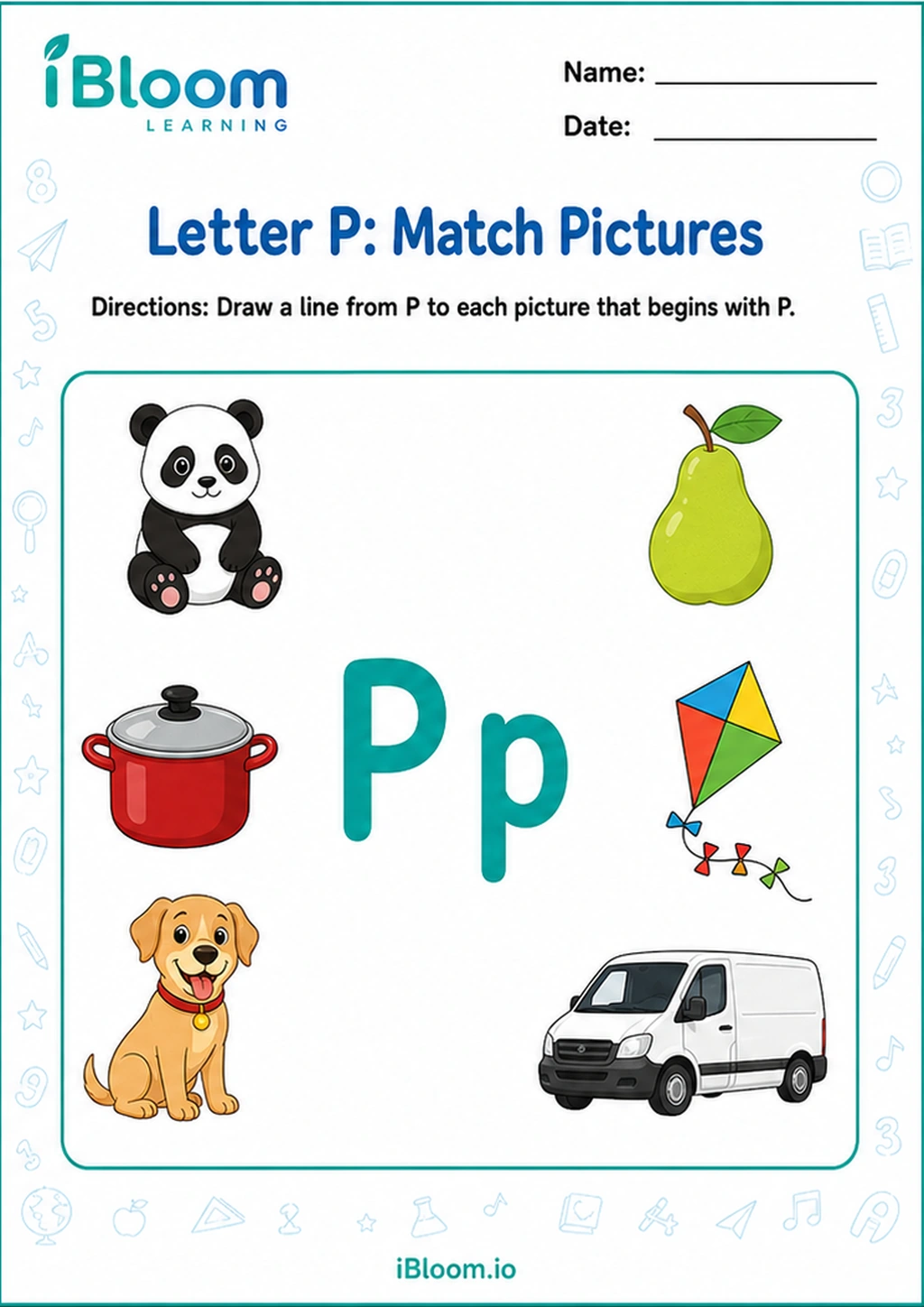 Letter P: Match PicturesLKG printable practice for Letter P.LKGFree PDF preview
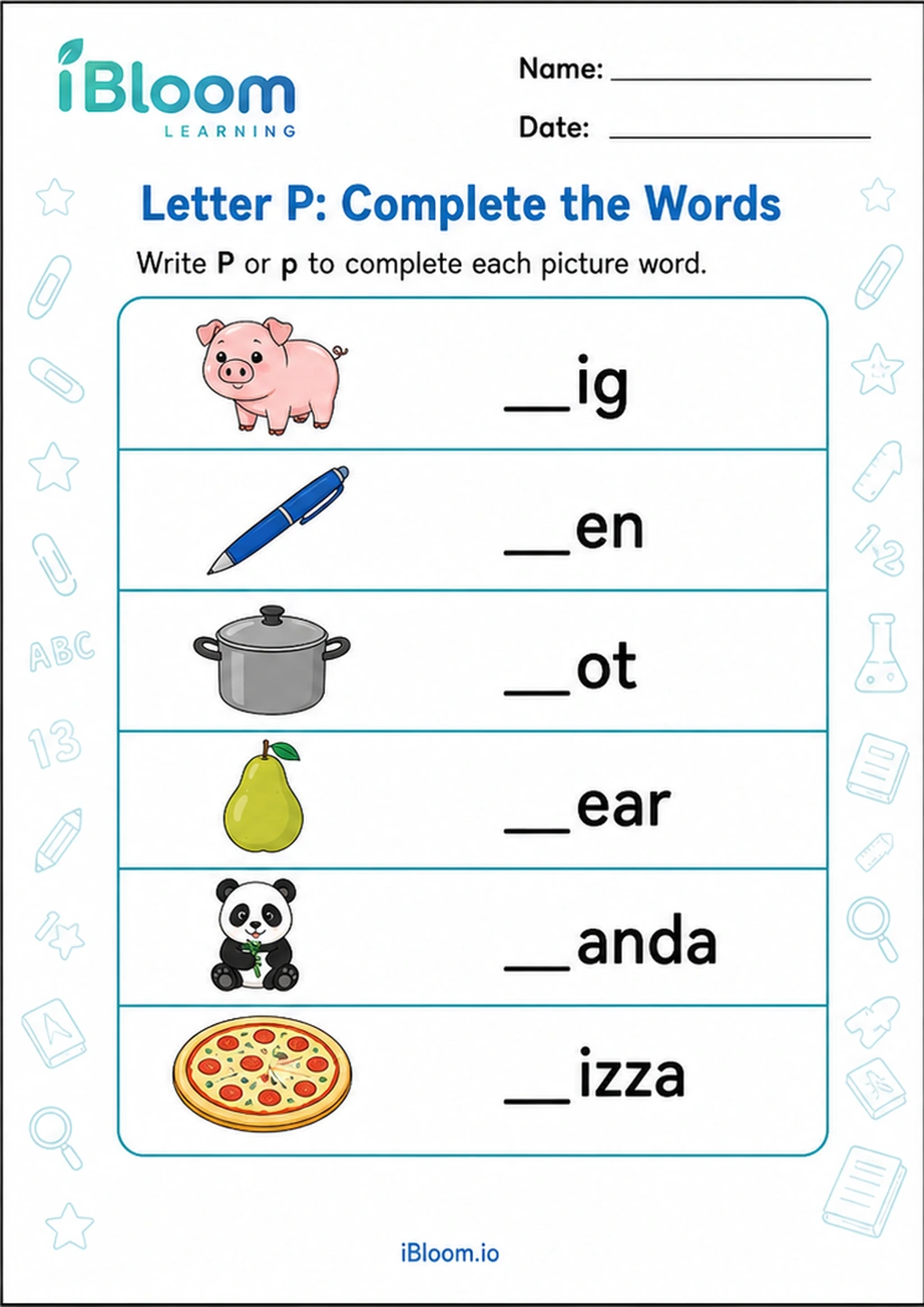 Letter P: Complete the WordsLKG printable practice for Letter P.LKGFree PDF preview
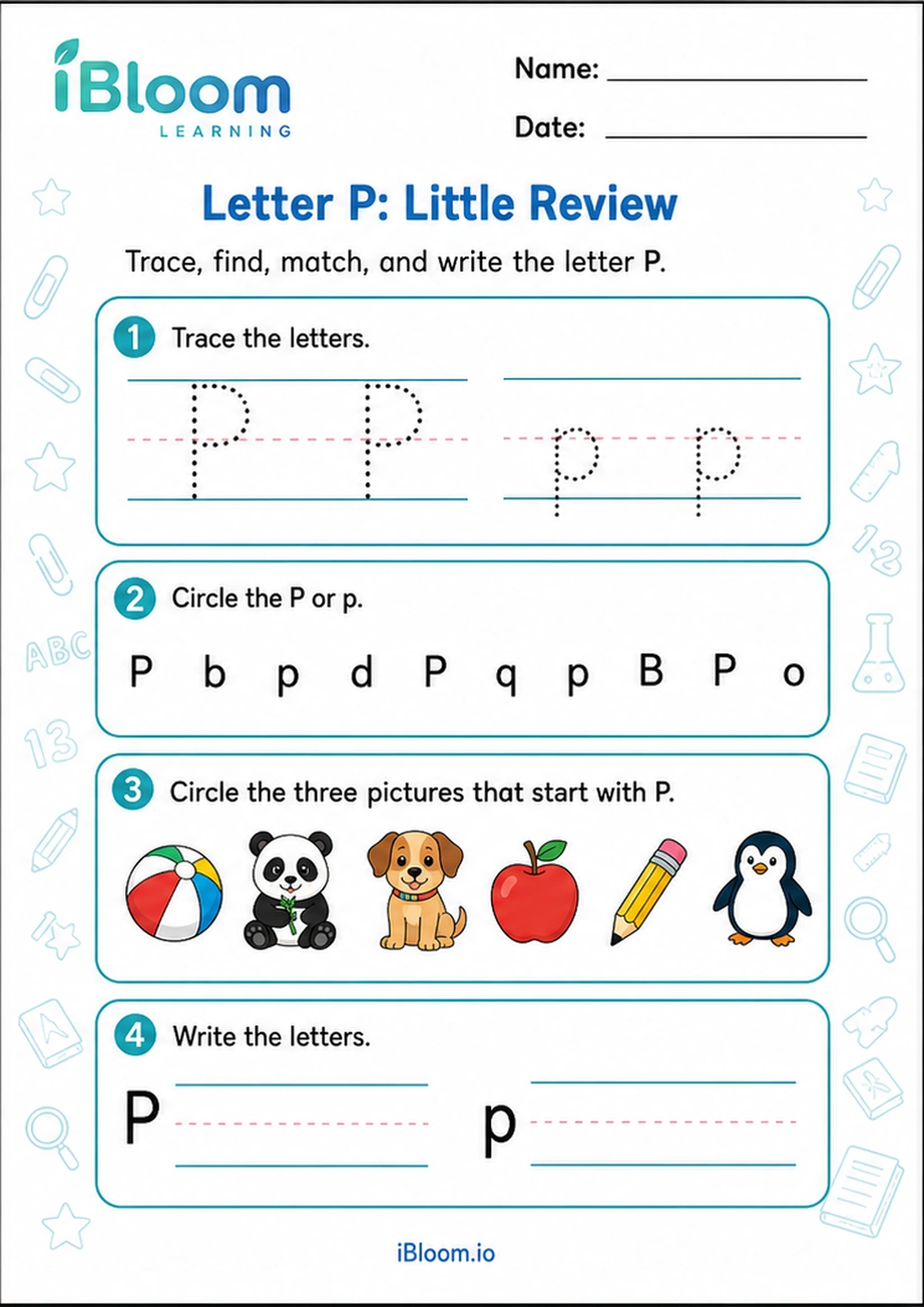 Letter P: Little ReviewLKG printable practice for Letter P.LKGFree PDF preview
Practice that builds confidence
What children learn
These Letter P practice activities help Nursery, LKG and UKG children hear and recognise the beginning consonant sound /p/ in familiar words such as pen, pot, pig, parrot and pencil. Children practise connecting the printed letter Pp with its sound and with pictures that begin with the same sound.
The printable worksheets include simple tracing, colouring, matching, circling and picture-based tasks. They are designed for early phonics lessons, home revision and quiet practice where children can build confidence with one consonant at a time.
Letter P work begins with sound awareness. Children say the short, clear /p/ sound, notice how their lips pop open, and then look for that sound at the start of words. The focus is on beginning consonants, so the aim is not spelling long words but recognising that pig, pan and pumpkin start alike.

From listening to writing
A good progression is: hear the sound, choose the matching picture, identify capital P and small p, then trace and write the letter. Worksheets may ask children to colour only the pictures that begin with P, match Pp to pictures, or follow dotted lines to form the letter. This mix supports visual recognition, pencil control and early vocabulary.
Parent routine at home
Use a short, playful routine. Show the worksheet, say “P says /p/,” and ask your child to repeat it while touching their lips. Name three pictures slowly: pen, ball, pot. Let the child clap only for the P words. Then complete one tracing or colouring task, saying the sound before each answer. End by finding one real object at home that starts with P, such as a plate or pillow.

Classroom uses
Teachers can use these pages during beginning consonant lessons, phonics corners, morning work or small-group support. They also work well after a story or rhyme featuring P words. For mixed ability groups, one child can focus on colouring correct pictures while another tries independent letter formation or says a sentence such as “I see a pen.”

Common errors to watch
Some children confuse P with B because both use a straight line and a curve. Point out that capital P has one round bump at the top, while B has two. Children may also add a vowel and say “puh” too strongly. Keep the sound crisp and short. If a child chooses a picture by its colour or favourite object, return to the first sound and say the word slowly.
Free printable PDF download
Use this letter p worksheet page to preview the activity, print it, or download it as a PDF for quick practice. It works well for homework, homeschool lessons, tutoring, morning work, revision, and classroom centers.
Answers and answer key support
After the child completes the worksheet independently, parents and teachers can use the answer support or answer key information to check the work, review mistakes, and choose the next practice step.
Why iBloom worksheets help
The activities keep the focus narrow: one letter, one beginning sound and child-friendly pictures. This reduces guessing and helps young learners build a clear sound-letter link. The simple layout gives children enough repetition to practise without feeling crowded.
Child-friendly strategy: “Pop your lips for P, point to the picture, then trace the letter.”
Helpful answers
Frequently asked questions
What sound should children practise for Letter P?
Children should practise the short beginning sound /p/ as in pen, pig and pot. Keep it crisp rather than stretching it into a long “puh” sound.
Are these Letter P worksheets suitable for Nursery children?
Yes. Nursery children can begin with picture recognition, colouring and simple tracing, while LKG and UKG children can do more independent matching and writing.
How can I help my child tell P and B apart?
Show that capital P has one round bump at the top, while B has two. Ask your child to trace the straight line first and then add the top curve for P.
Should children know how to write P before using these pages?
No. The worksheets support early recognition first, then tracing and simple formation. Children can say the sound and point to pictures before writing.
What everyday P words can I use with the worksheets?
Use familiar words such as pencil, plate, pillow, pot, parrot and pen. Real objects help children connect the worksheet sound to daily life.
Is this letter p worksheet free?
Yes. You can preview it for free and use the printable worksheet for home or classroom practice.
Can I download this letter p worksheet as a PDF?
Yes. Use the worksheet download option to save a printable PDF, or print the worksheet directly from the page.
Does this letter p worksheet include answers or an answer key?
When the activity has fixed answers, iBloom includes answer support so parents and teachers can check the completed worksheet.