Free printable practice
Ordinal Numbers Practice Activities
Printable Nursery, LKG and UKG activities for matching, reading, writing and using ordinal numbers such as first, second and third.
Explore Ordinal Numbers
Free printable worksheet PDFs
Preview every available page, then download the free worksheet PDF for home, homeschool, tutoring, or classroom practice.
Preview the exact activity before downloading it.
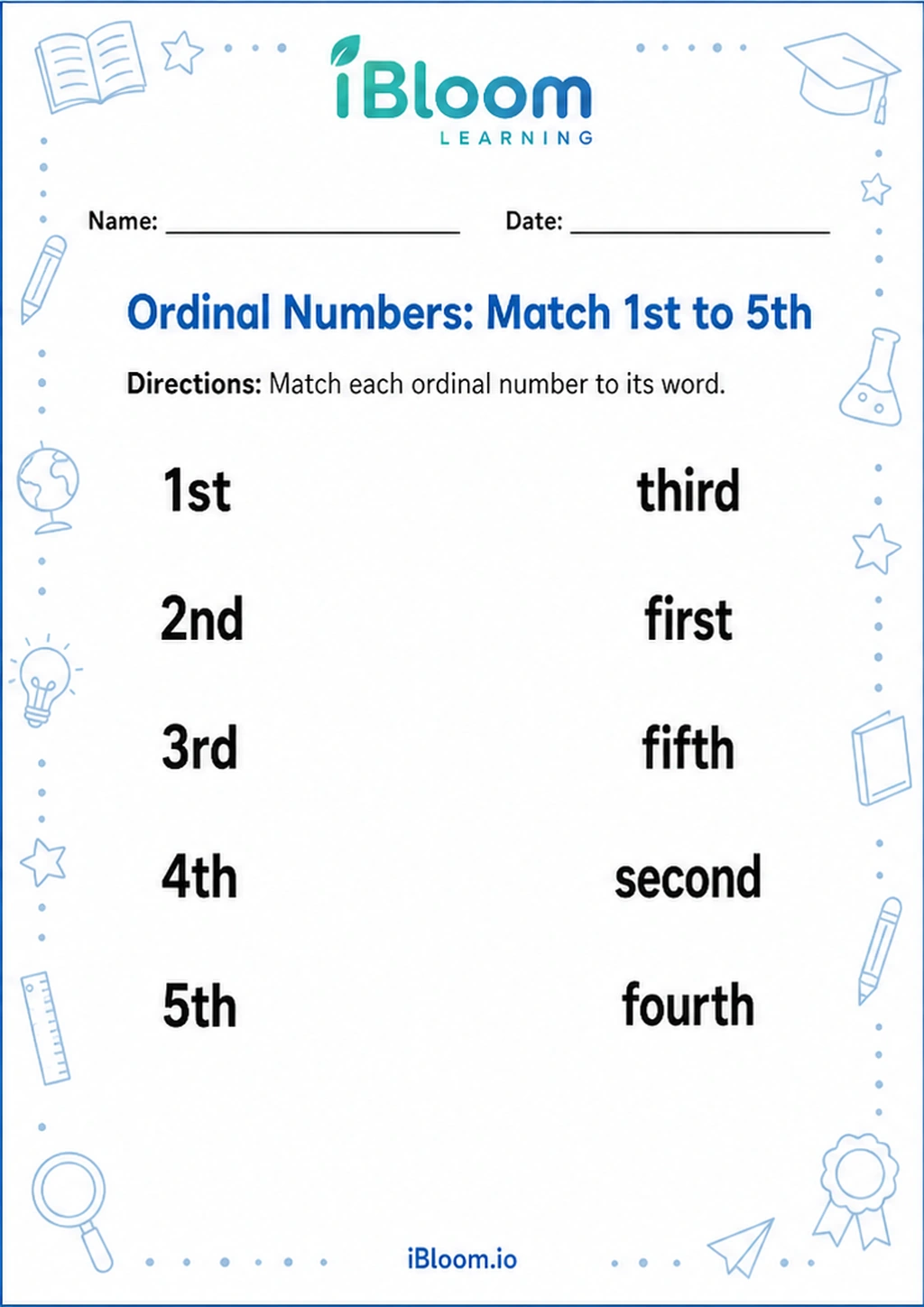 Ordinal Numbers: Match 1st to 5thUKG printable practice for Ordinal Numbers.UKGFree PDF preview
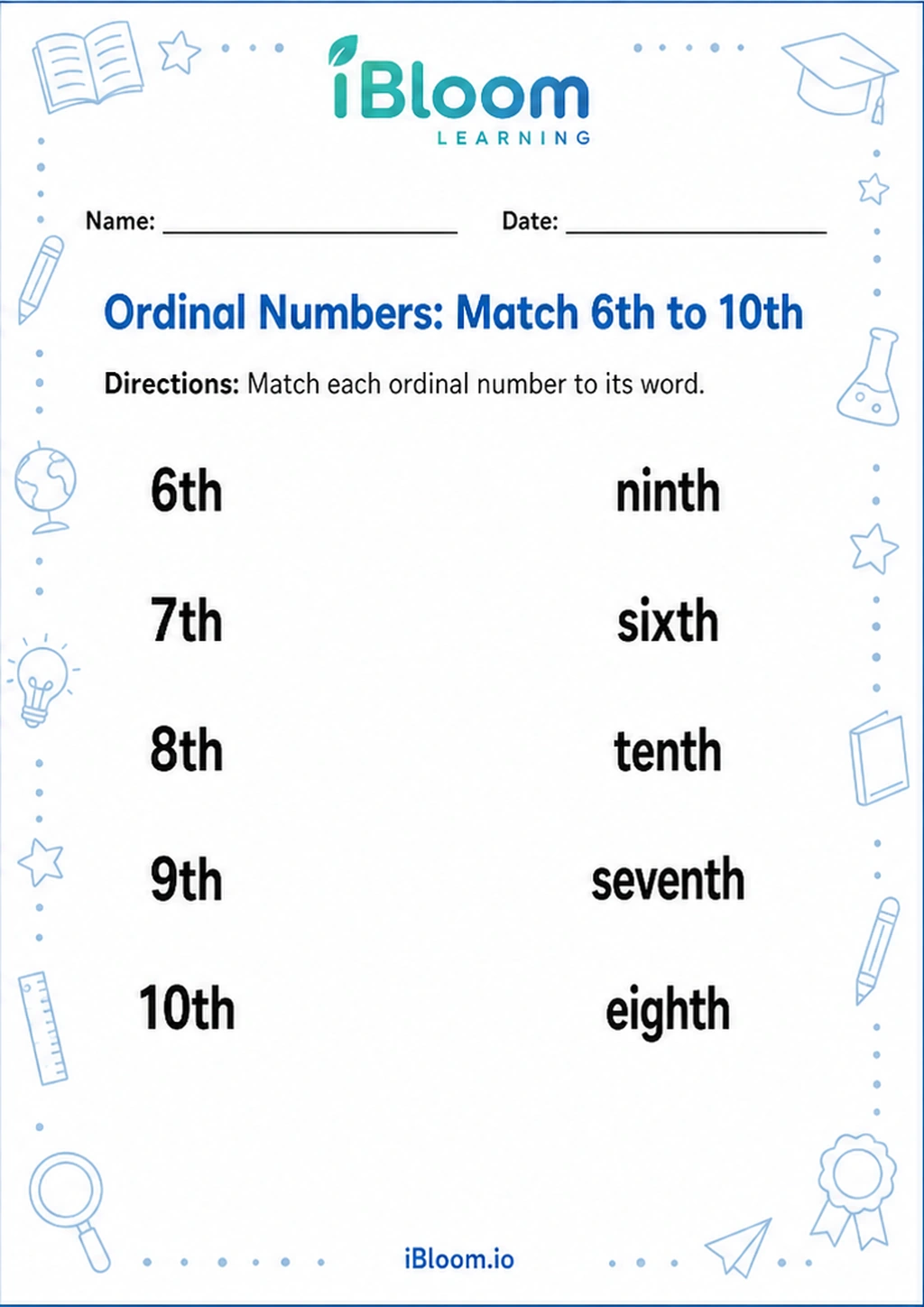 Ordinal Numbers: Match 6th to 10thUKG printable practice for Ordinal Numbers.UKGFree PDF preview
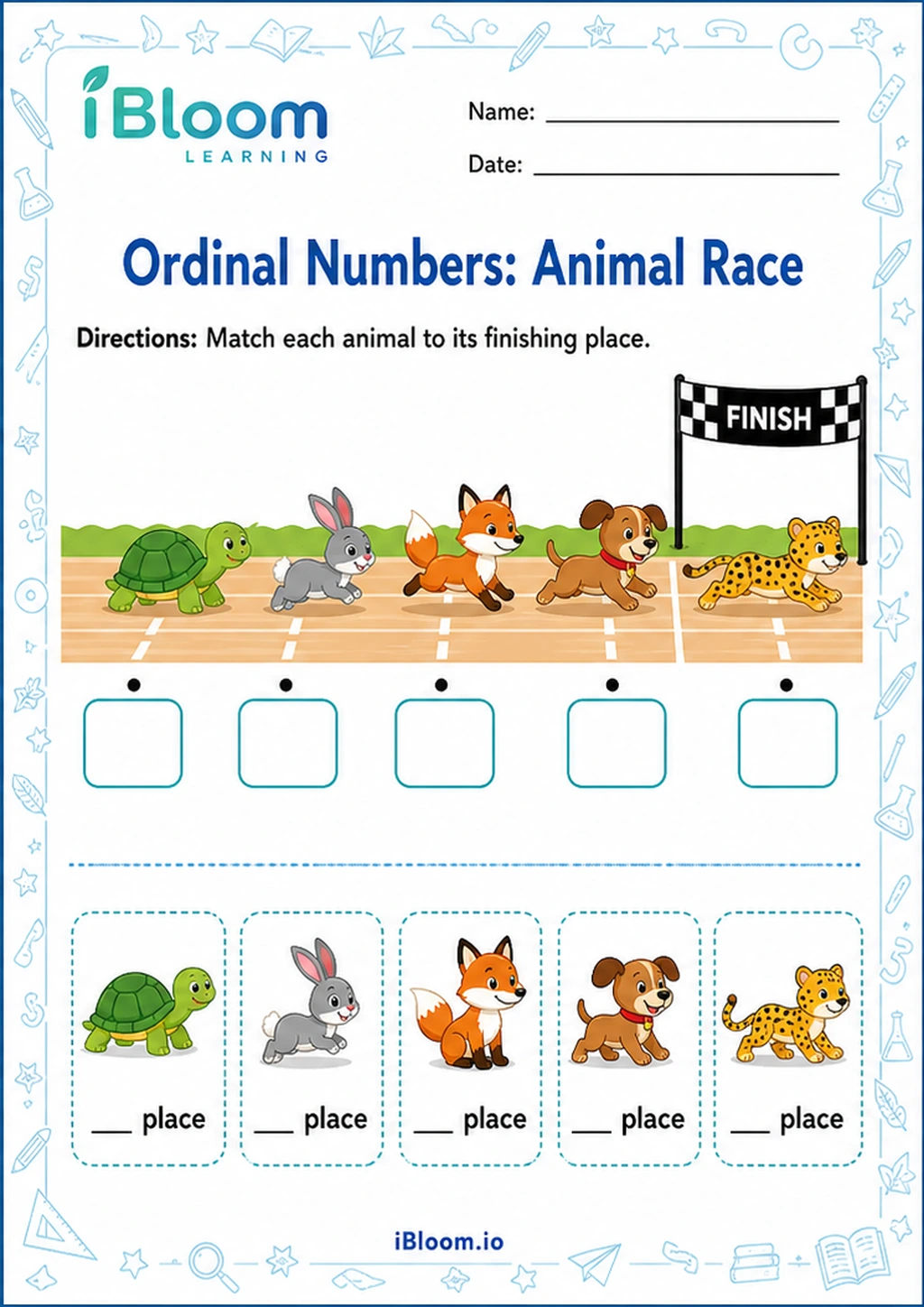 Ordinal Numbers: Animal RaceUKG printable practice for Ordinal Numbers.UKGFree PDF preview
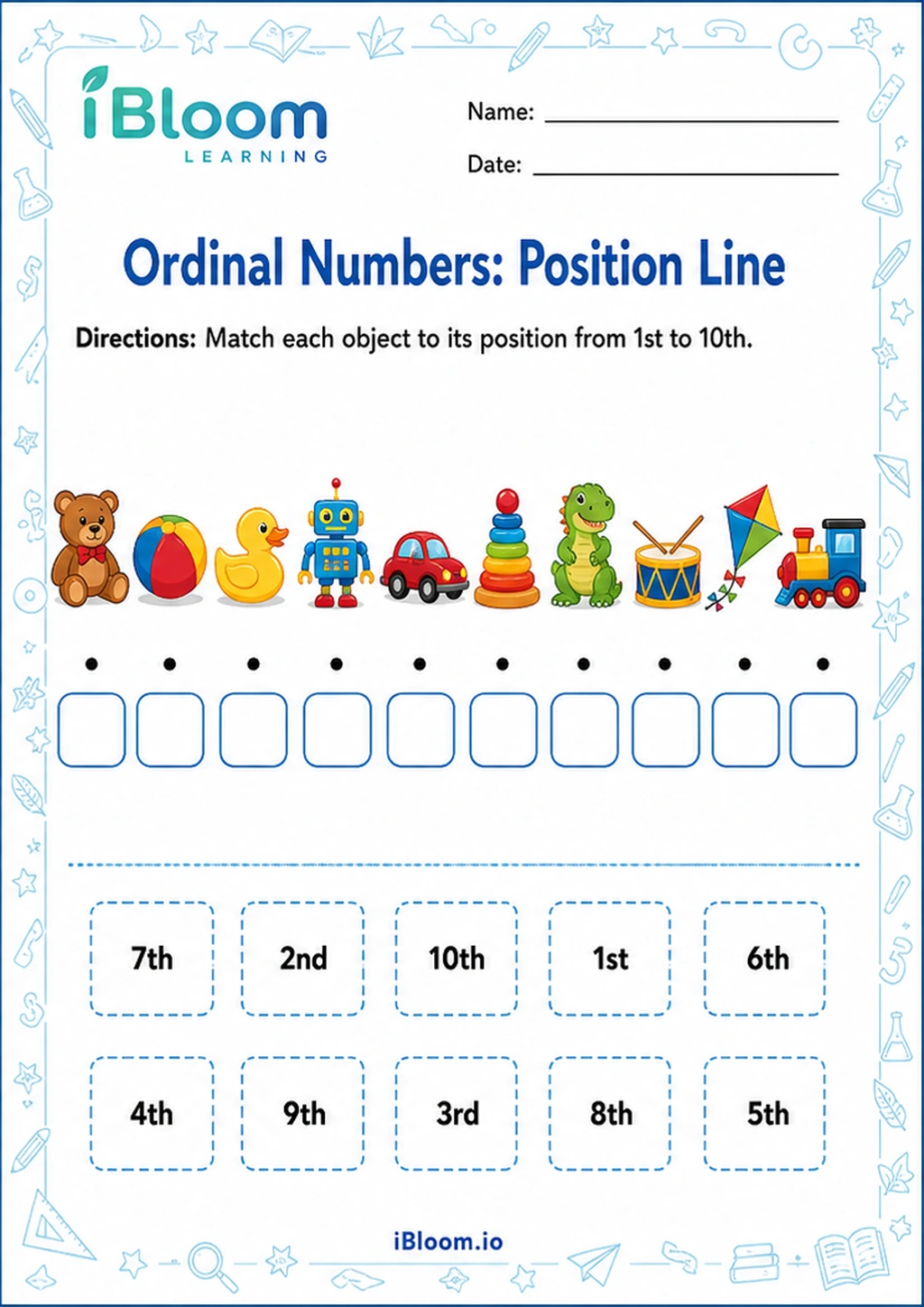 Ordinal Numbers: Position LineUKG printable practice for Ordinal Numbers.UKGFree PDF preview
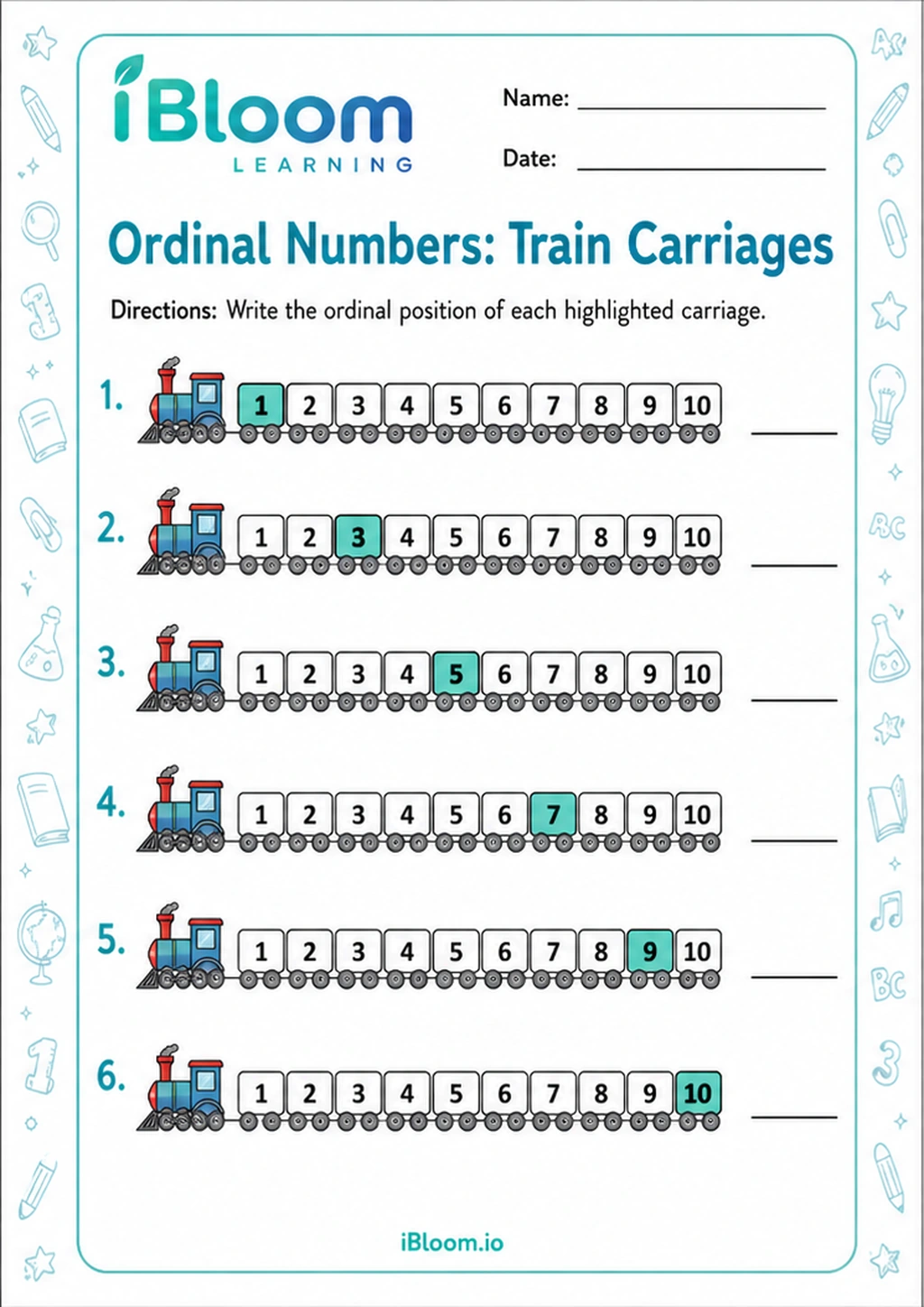 Ordinal Numbers: Train CarriagesUKG printable practice for Ordinal Numbers.UKGFree PDF preview
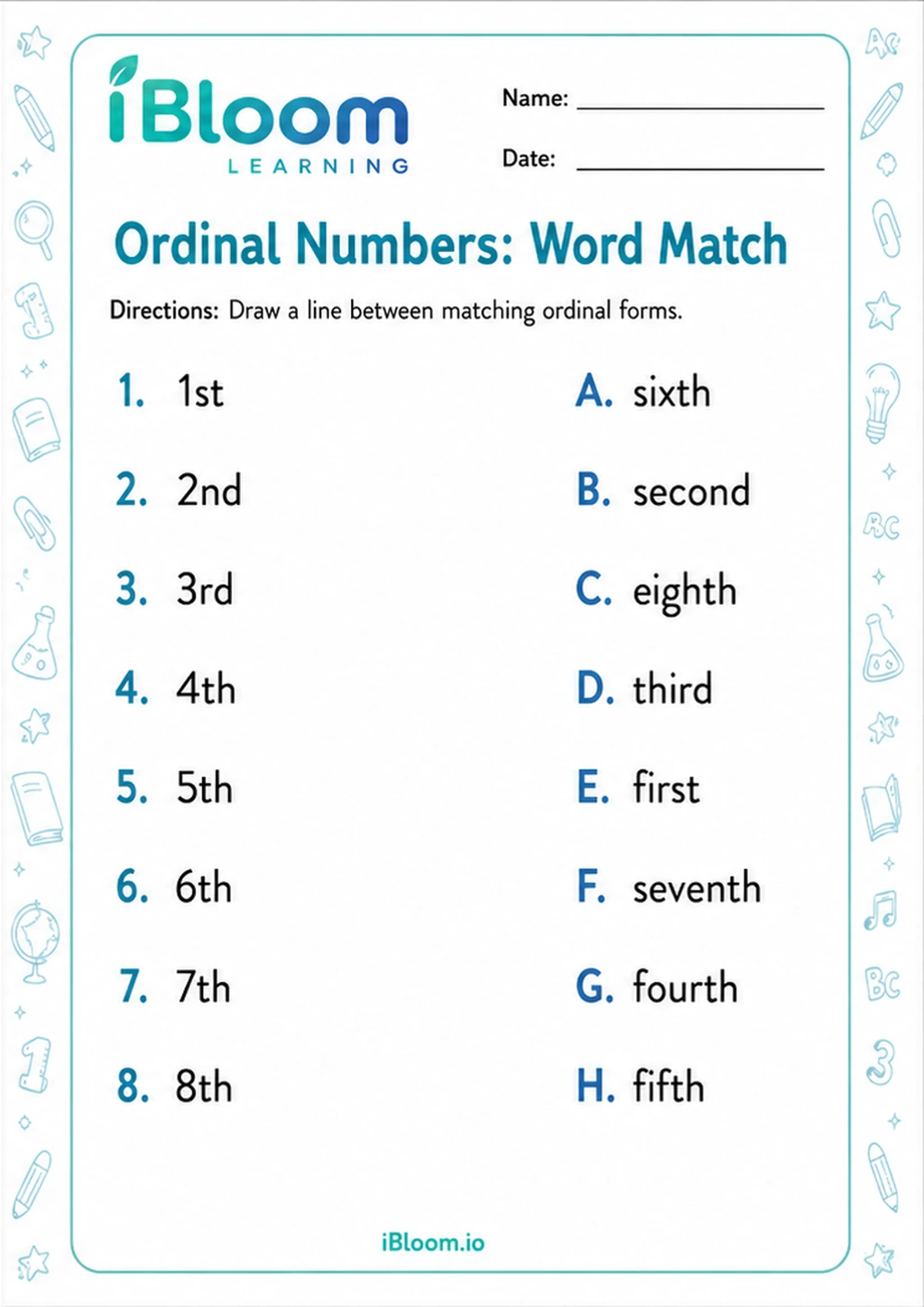 Ordinal Numbers: Word MatchUKG printable practice for Ordinal Numbers.UKGFree PDF preview
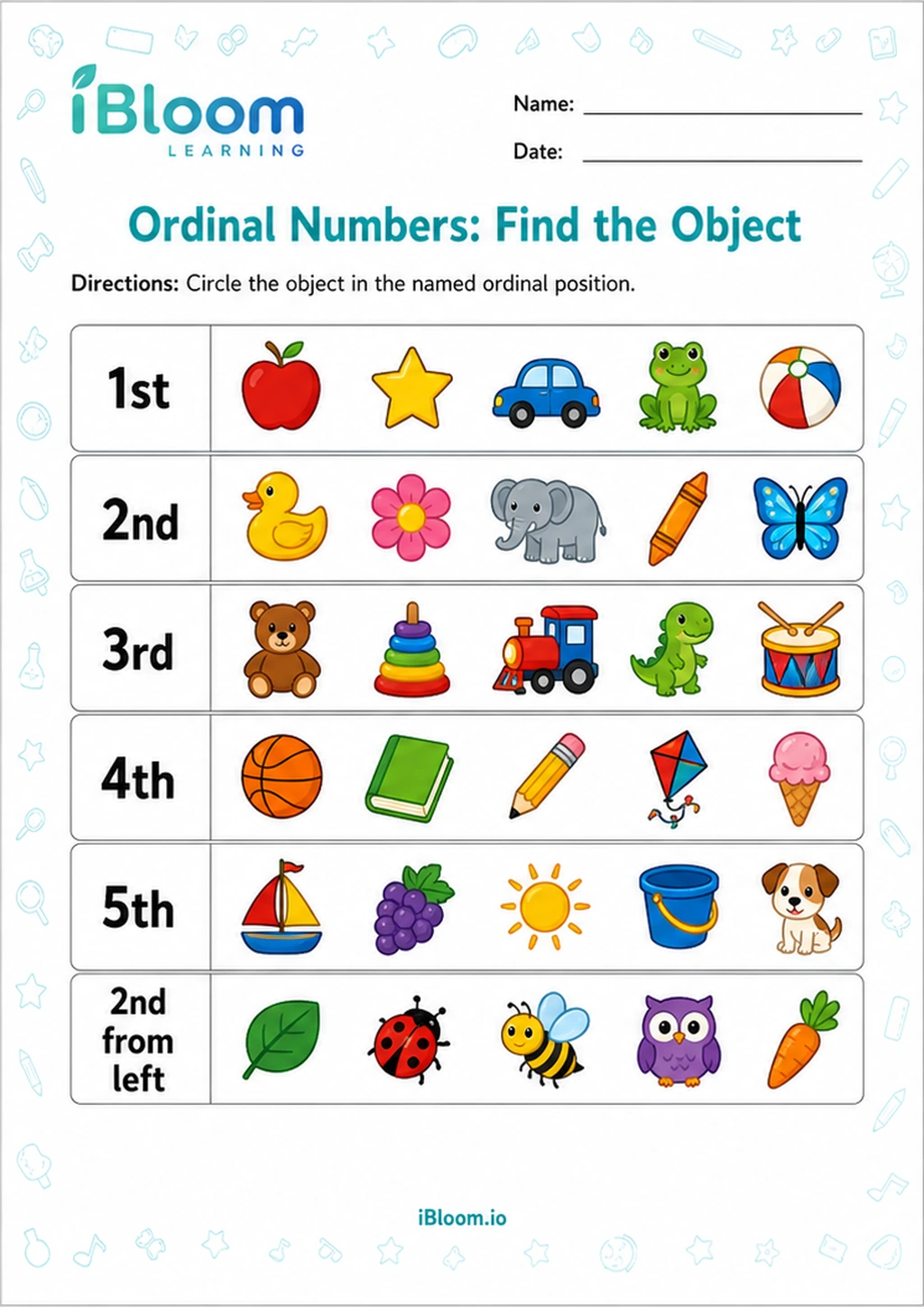 Ordinal Numbers: Find the ObjectUKG printable practice for Ordinal Numbers.UKGFree PDF preview
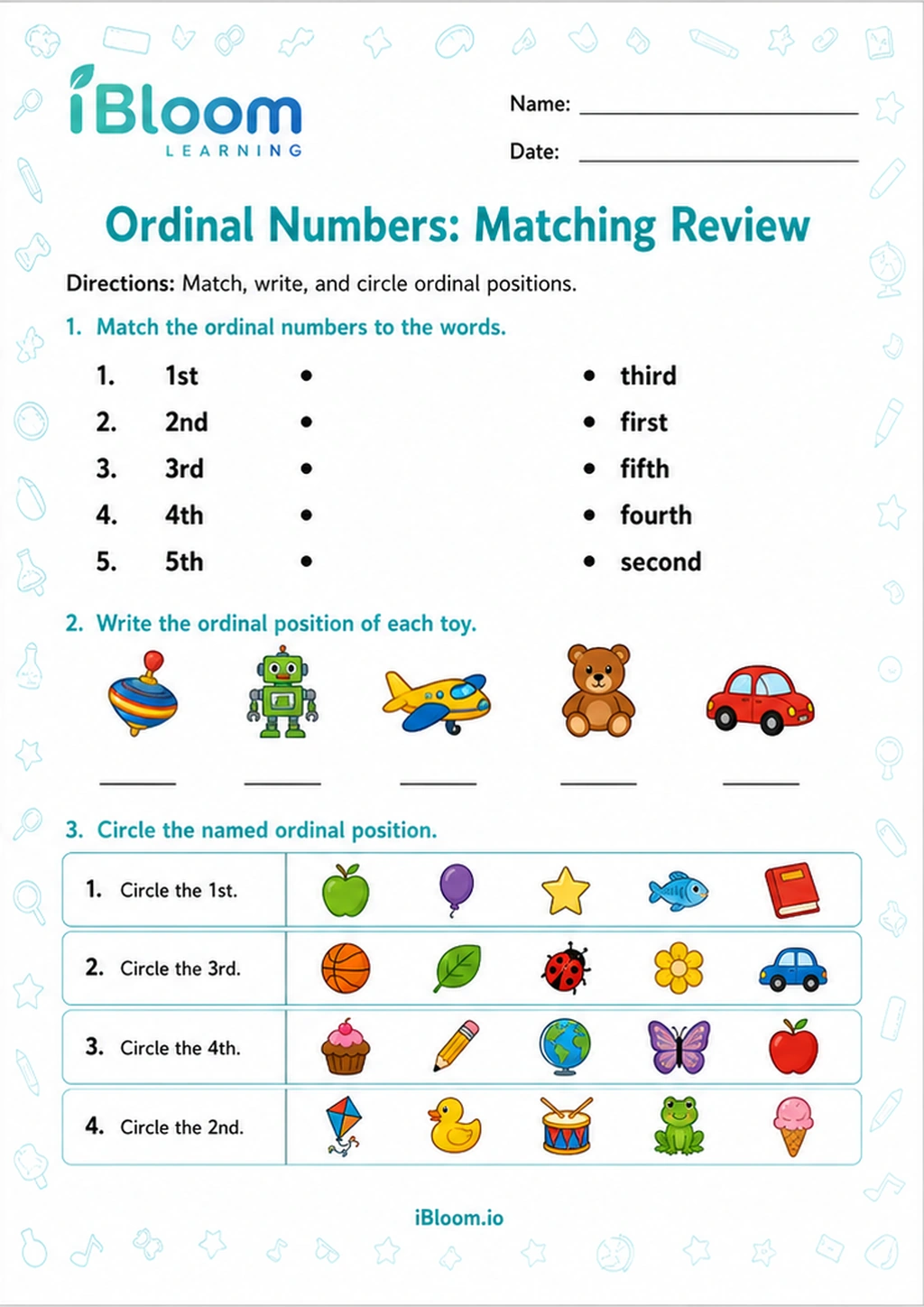 Ordinal Numbers: Matching ReviewUKG printable practice for Ordinal Numbers.UKGFree PDF preview
Practice that builds confidence
What ordinal numbers mean
These ordinal numbers worksheets help Nursery, LKG and UKG children understand position in a line or sequence. Children practise identifying who is first, second, third and so on, using pictures, simple words and familiar classroom-style situations.
The printable activities include matching tasks, ordinal position questions, tracing and writing ordinal words, and reading ordinal words to choose the correct object. They build early maths vocabulary while keeping the practice visual and age-appropriate.
Ordinal numbers tell position, not quantity. A child may count five ducks, but the duck at the front is the first duck, the next is second, and the next is third. These worksheets focus on that important difference through rows of animals, objects, children, vehicles and other simple pictures suited to Nursery, LKG and UKG learners.

Practice across the child topics
Children begin with matching, where they connect an ordinal word or position label to the correct picture. Ordinal positions activities ask them to circle, colour or mark the object in a named place. Writing ordinal words helps children form words such as first, second, third, fourth and fifth. Read ordinal words tasks strengthen recognition, so children can understand the word before choosing the position.
A simple parent routine
At home, place five toys in a line and ask, “Which toy is first?” or “Put the car in third place.” Then let your child make a new line and quiz you. After this hands-on activity, use one worksheet page so the idea moves from real objects to printed pictures. Say the ordinal word aloud before writing it, and use finger-pointing from left to right to avoid guessing.

Classroom uses for teachers
Teachers can use these pages in maths practice, morning work, small-group reinforcement or early finisher folders. Matching pages work well for children who are still building reading confidence, while writing ordinal words can be used after oral counting games. For group learning, ask children to stand in a line and connect their positions to the worksheet vocabulary.

Common errors to watch for
Some children confuse number names with position words, saying “three” when they mean “third”. Others start counting from the wrong side of a row, especially when pictures face different directions. Watch for skipped objects, reversed order and copying the word without understanding the place. Encourage children to touch each object in order and stop when they reach the named position.
Free printable PDF download
Use this ordinal numbers worksheets for Nursery LKG UKG page to preview the activity, print it, or download it as a PDF for quick practice. It works well for homework, homeschool lessons, tutoring, morning work, revision, and classroom centers.
Answers and answer key support
After the child completes the worksheet independently, parents and teachers can use the answer support or answer key information to check the work, review mistakes, and choose the next practice step.
Why iBloom worksheets help
The pages move from seeing and matching to reading and writing, so children do not have to master every part at once. Clear pictures, repeated ordinal vocabulary and focused tasks make the practice useful for both early maths and early literacy. A child-friendly strategy is: “Start at the beginning, point to each one, say the position, then mark the answer.”
Helpful answers
Frequently asked questions
What do children learn in ordinal numbers practice?
They learn to describe position in a sequence using words such as first, second, third, fourth and fifth, instead of only counting how many objects there are.
Are these worksheets suitable for Nursery children?
Yes. Nursery children can begin with picture-based matching and simple position activities, while LKG and UKG children can also practise reading and writing ordinal words.
How can I explain ordinal numbers at home?
Line up toys, spoons or crayons and ask your child to point to the first, second or third item. Then change the order and repeat before moving to the worksheet.
Why does my child count correctly but mark the wrong ordinal position?
This often happens when the child starts from the wrong end or skips an object. Ask them to touch each item from the starting point and say the positions aloud.
Do these activities include writing practice?
Yes. Along with matching and identifying ordinal positions, the collection includes practice for writing ordinal words and reading ordinal words.
Is this ordinal numbers worksheets for Nursery LKG UKG free?
Yes. You can preview it for free and use the printable worksheet for home or classroom practice.
Can I download this ordinal numbers worksheets for Nursery LKG UKG as a PDF?
Yes. Use the worksheet download option to save a printable PDF, or print the worksheet directly from the page.
Does this ordinal numbers worksheets for Nursery LKG UKG include answers or an answer key?
When the activity has fixed answers, iBloom includes answer support so parents and teachers can check the completed worksheet.