Free printable practice
Matching Practice Activities
Printable matching worksheets for Nursery, LKG and UKG children to connect ordinal words and numerals with positions in simple rows and sequences.
Free printable worksheet PDFs
Preview every available page, then download the free worksheet PDF for home, homeschool, tutoring, or classroom practice.
Preview the exact activity before downloading it.
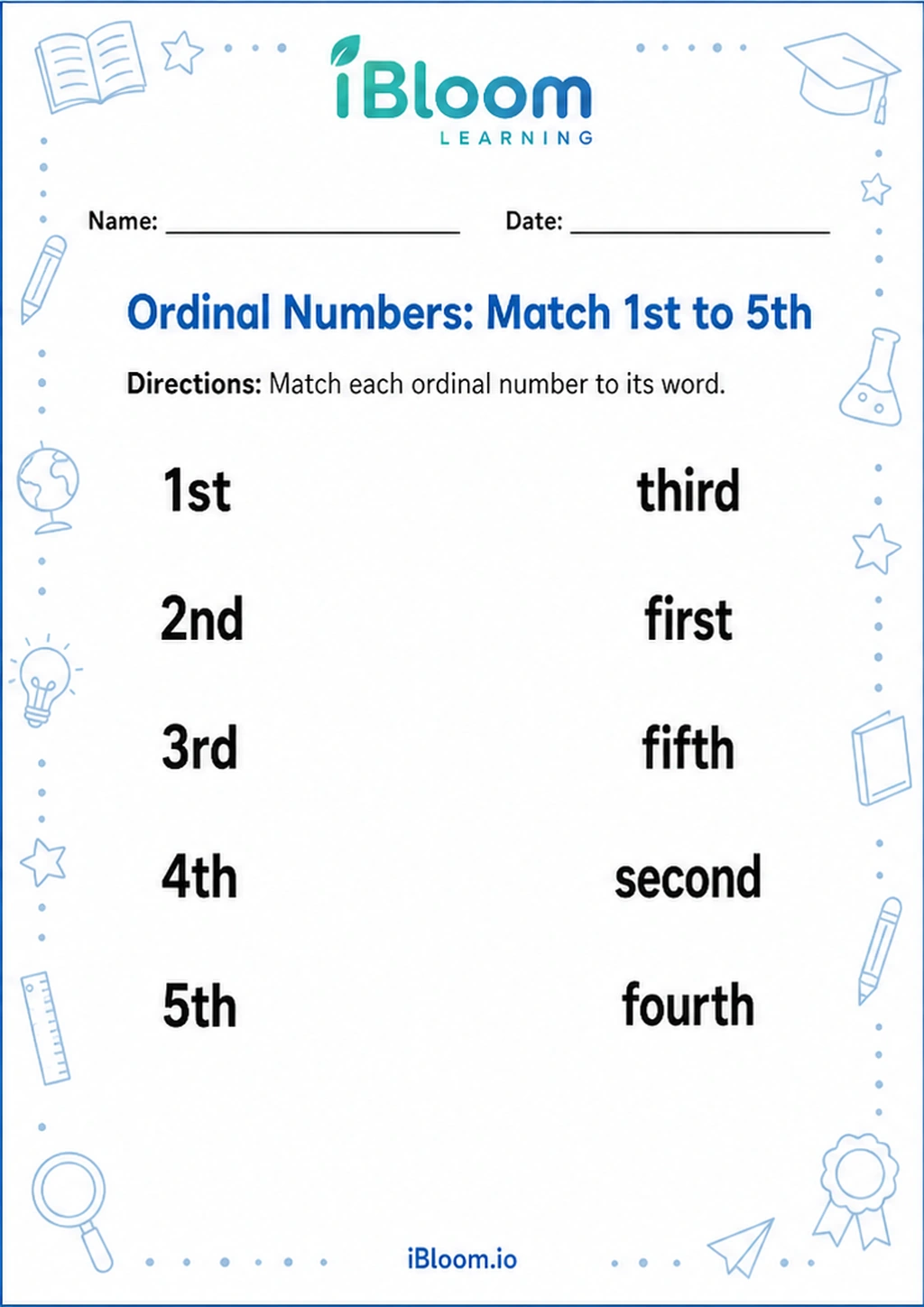 Ordinal Numbers: Match 1st to 5thUKG printable practice for Ordinal Numbers.UKGFree PDF preview
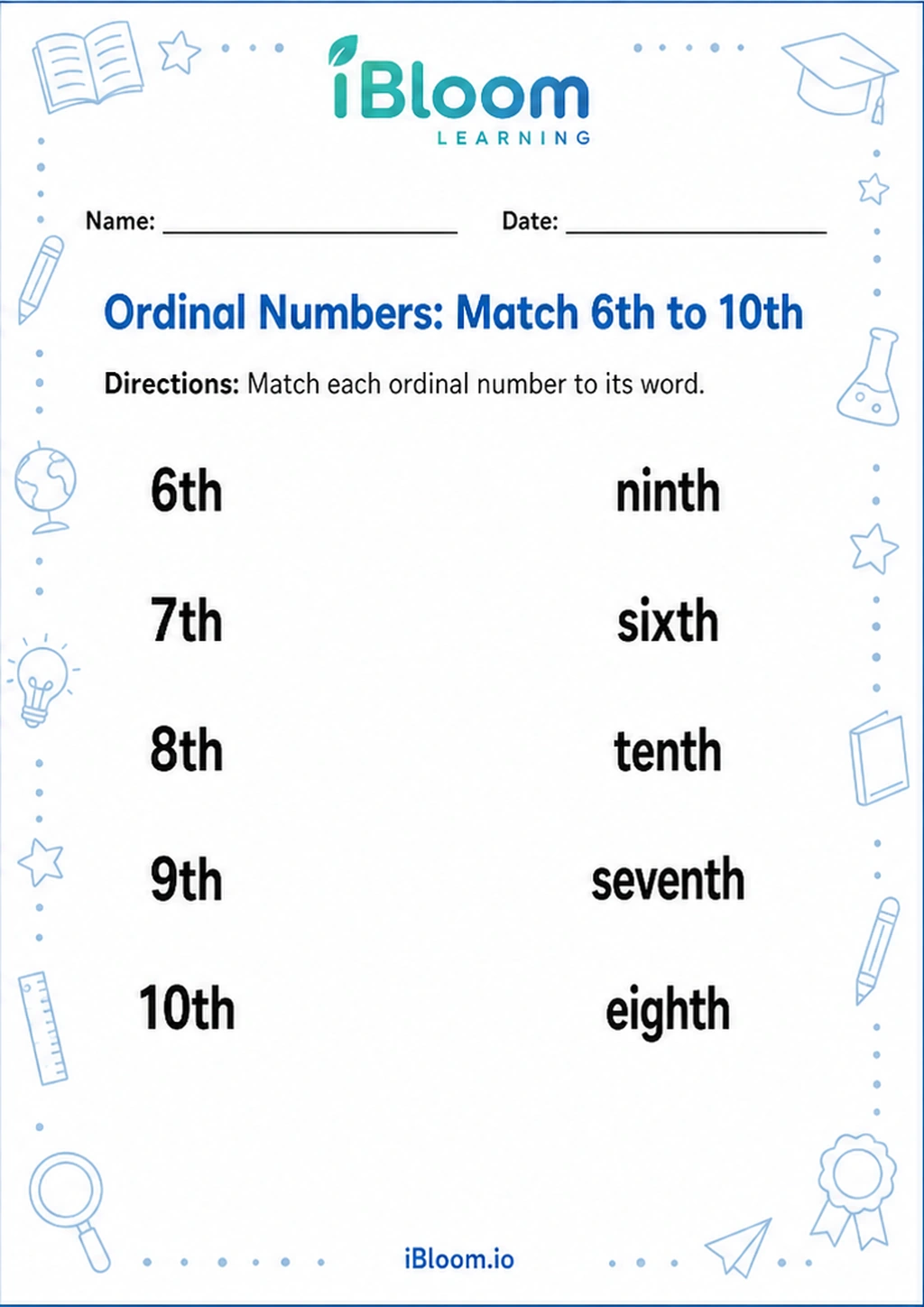 Ordinal Numbers: Match 6th to 10thUKG printable practice for Ordinal Numbers.UKGFree PDF preview
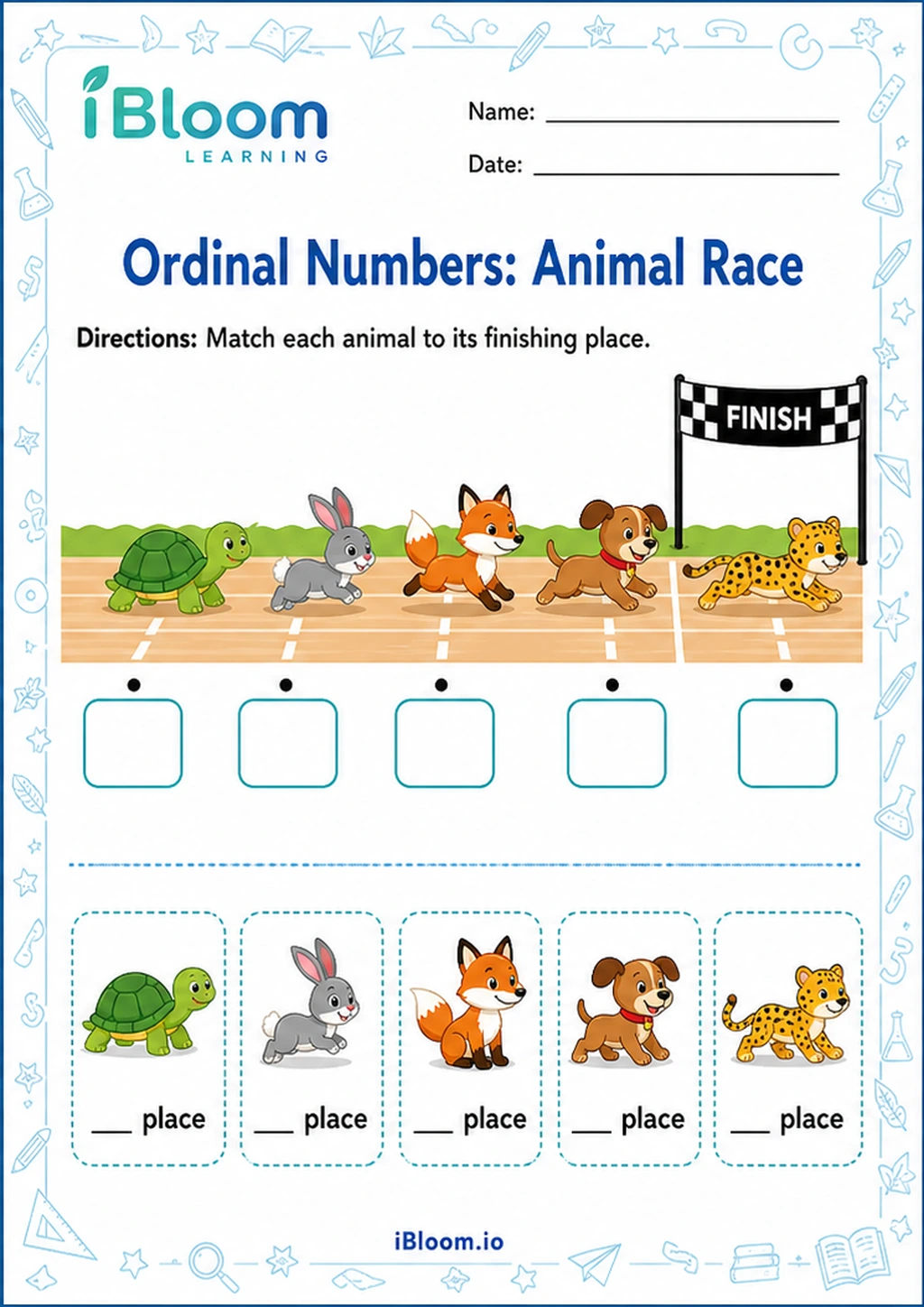 Ordinal Numbers: Animal RaceUKG printable practice for Ordinal Numbers.UKGFree PDF preview
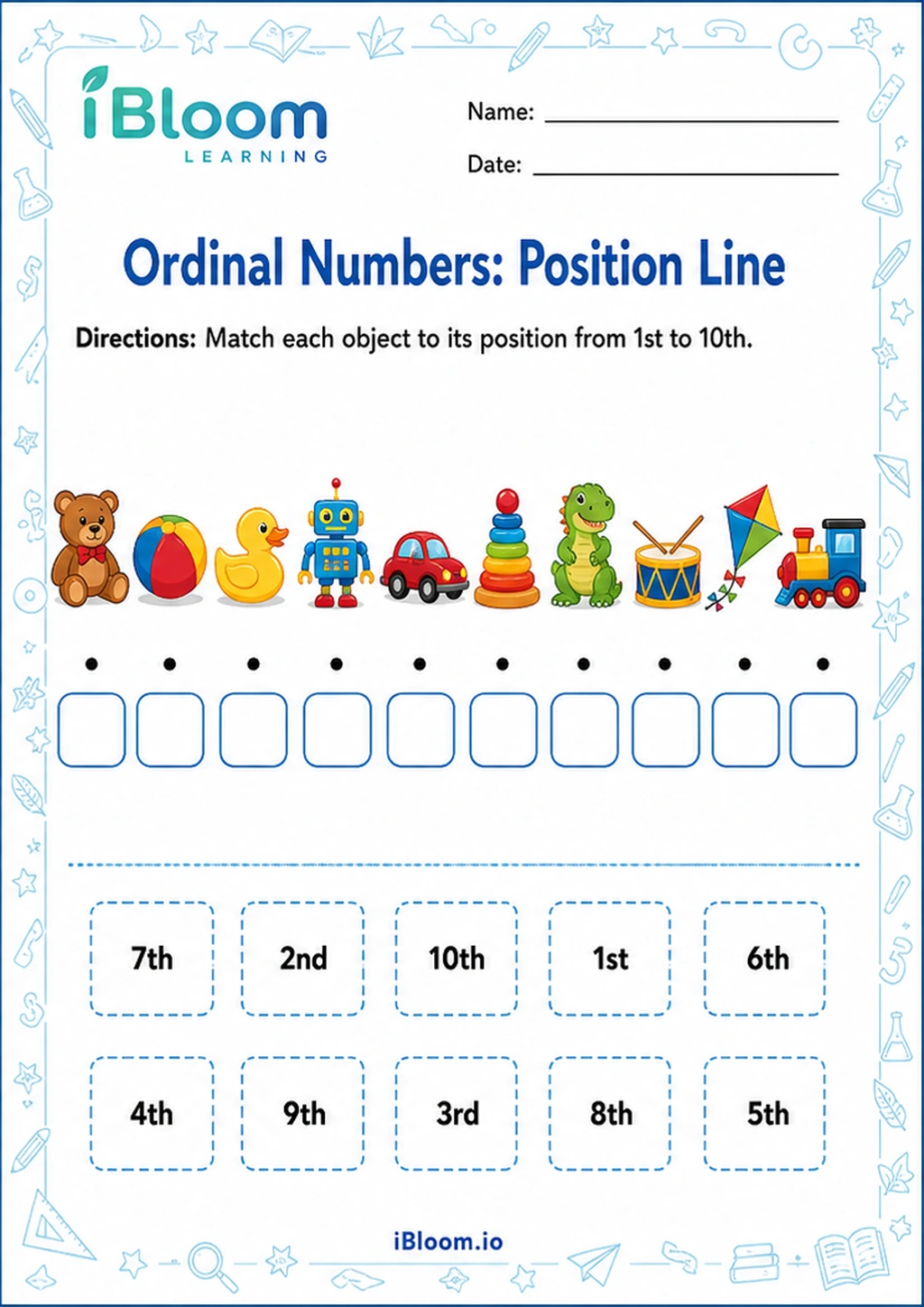 Ordinal Numbers: Position LineUKG printable practice for Ordinal Numbers.UKGFree PDF preview
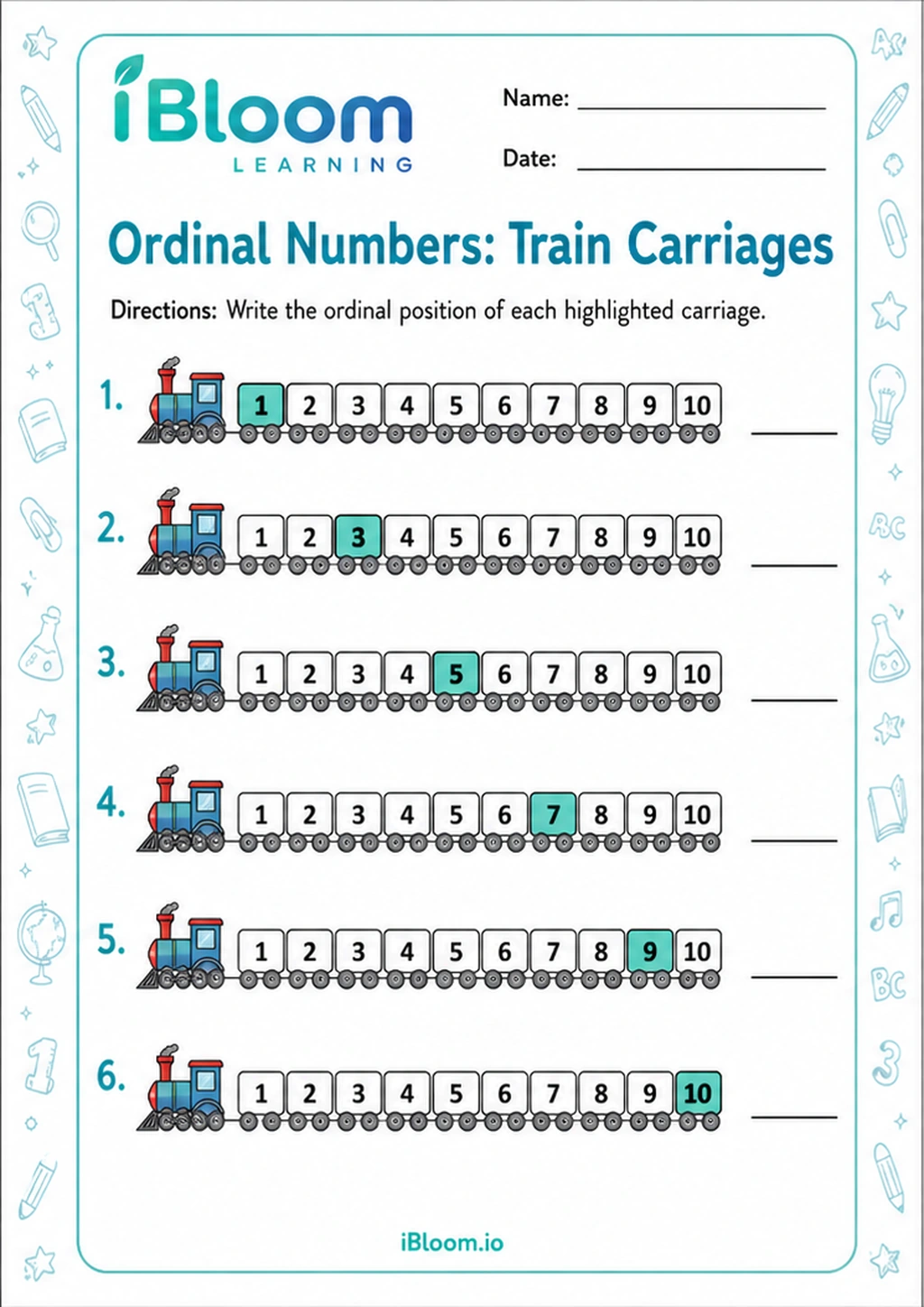 Ordinal Numbers: Train CarriagesUKG printable practice for Ordinal Numbers.UKGFree PDF preview
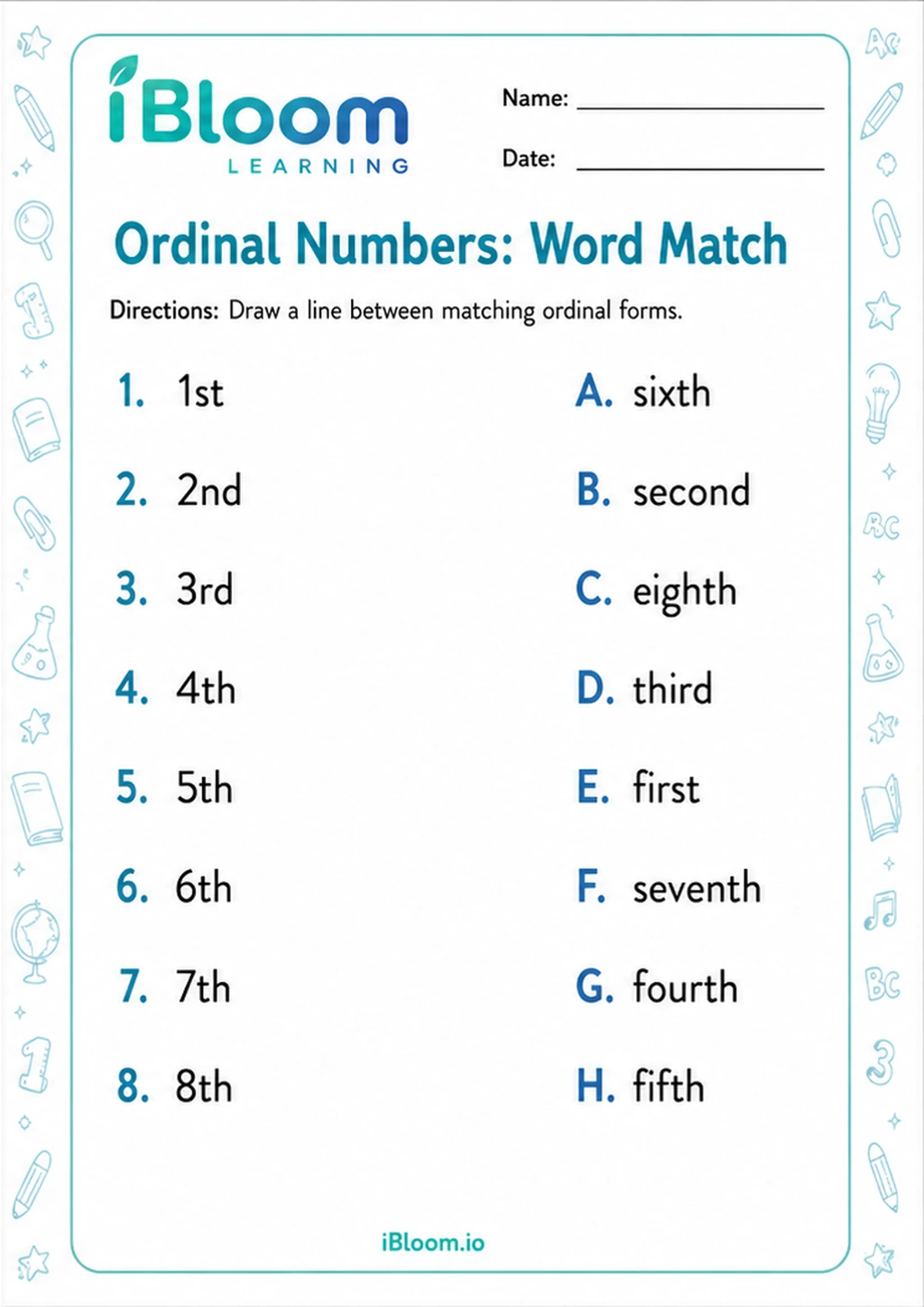 Ordinal Numbers: Word MatchUKG printable practice for Ordinal Numbers.UKGFree PDF preview
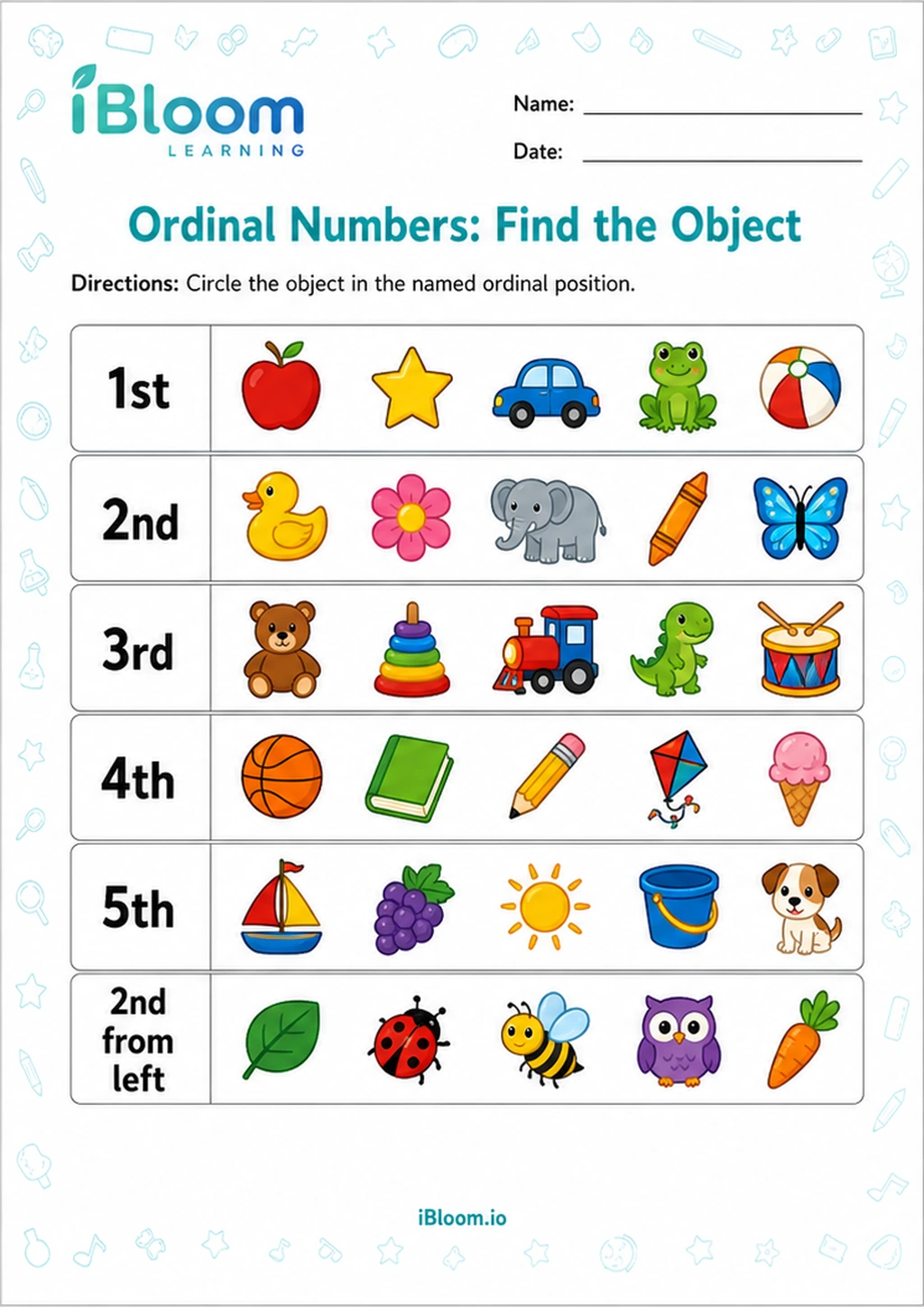 Ordinal Numbers: Find the ObjectUKG printable practice for Ordinal Numbers.UKGFree PDF preview
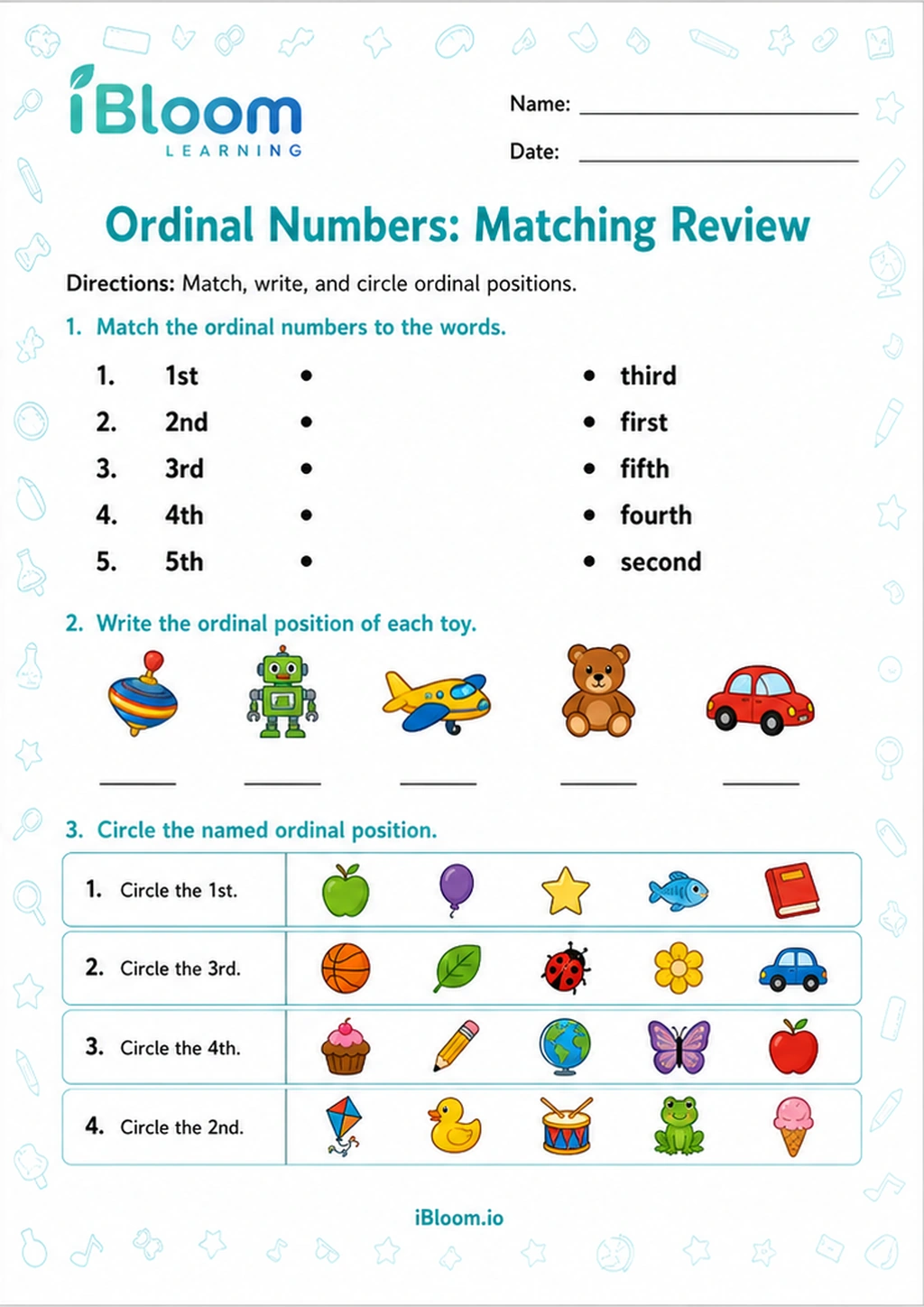 Ordinal Numbers: Matching ReviewUKG printable practice for Ordinal Numbers.UKGFree PDF preview
Practice that builds confidence
What children learn
These matching practice worksheets help Nursery, LKG and UKG children understand ordinal numbers by linking position words such as first, second, third and last with objects in a row.
The printable activities include clear picture-based tasks where children match an ordinal label to the correct item, connect positions in simple sequences, and practise reading ordinal numerals such as 1st, 2nd and 3rd.
Matching is a gentle way to build ordinal number sense because children do not have to write long answers first. They look at a row, identify the position of an object, and connect it to the correct ordinal word or numeral. This supports vocabulary such as first, second, third, fourth, fifth, before, after and last.

Progression in the worksheets
The activities move from highly visual matching to slightly more independent position reading. Early sheets may show familiar objects in a line so children can match “first” to the first object. Later pages can mix ordinal words and numerals, such as matching “2nd” with “second”, or finding the item that is third in a row. This keeps the focus on position, not counting quantity.
Parent routine at home
Before starting a page, place three to five toys in a line. Ask, “Which toy is first?” and “Which one is last?” Then let your child point and say the position aloud before drawing matching lines on the worksheet. If your child is unsure, touch each item from the starting side while saying, “first, second, third,” so the direction is clear.

Classroom uses for teachers
Teachers can use these sheets during maths practice, morning work, small-group reinforcement or revision after an ordinal numbers lesson. They also work well with queue, race and shelf examples. For children who need support, keep the row orientation consistent and read the labels aloud. For children ready for a challenge, ask them to explain why a matched pair is correct.

Common errors to watch for
Young learners often count the total number of objects instead of identifying position. Some may start from the wrong side of the row, especially if the page layout changes. Others confuse cardinal numbers with ordinal numbers, saying “three” when the answer should be “third”. Encourage children to underline or point to the starting place before matching.
Free printable PDF download
Use this ordinal numbers matching worksheets for UKG page to preview the activity, print it, or download it as a PDF for quick practice. It works well for homework, homeschool lessons, tutoring, morning work, revision, and classroom centers.
Answers and answer key support
After the child completes the worksheet independently, parents and teachers can use the answer support or answer key information to check the work, review mistakes, and choose the next practice step.
Why iBloom worksheets help
iBloom matching worksheets use simple layouts, child-friendly pictures and focused ordinal vocabulary so children can practise one idea at a time. A helpful strategy is: “Start, point, say, match.” Start at the correct end, point to each item, say the ordinal word, then draw the line to the matching label.
Helpful answers
Frequently asked questions
What do children practise in these ordinal matching worksheets?
Children practise matching position words and ordinal numerals, such as first, second, third, 1st and 2nd, to the correct object in a row.
Are these worksheets suitable for Nursery children?
Yes. Nursery children can use the simpler pages with adult support, especially when the activity uses pictures and only a few positions like first and last.
How can I help my child if they match from the wrong side?
Point to the starting side before each question and say the positions aloud from that side. Repeating “start, point, say, match” helps build the habit.
Do children need to know number writing before using these sheets?
No. The main skill is recognising position. Some sheets may include ordinal numerals like 1st and 2nd, but children can match them visually with support.
How are ordinal numbers different from normal counting numbers?
Counting numbers tell how many objects there are, while ordinal numbers tell the position of an object, such as first in line or third on the shelf.
Is this ordinal numbers matching worksheets for UKG free?
Yes. You can preview it for free and use the printable worksheet for home or classroom practice.
Can I download this ordinal numbers matching worksheets for UKG as a PDF?
Yes. Use the worksheet download option to save a printable PDF, or print the worksheet directly from the page.
Does this ordinal numbers matching worksheets for UKG include answers or an answer key?
When the activity has fixed answers, iBloom includes answer support so parents and teachers can check the completed worksheet.