Free printable practice
Reading Comprehension Practice Activities
Printable Nursery, LKG and UKG reading comprehension activities with sentences, short stories, passages and simple exercises for early readers.
Explore Reading Comprehension
Free printable worksheet PDFs
Preview every available page, then download the free worksheet PDF for home, homeschool, tutoring, or classroom practice.
Preview the exact activity before downloading it.
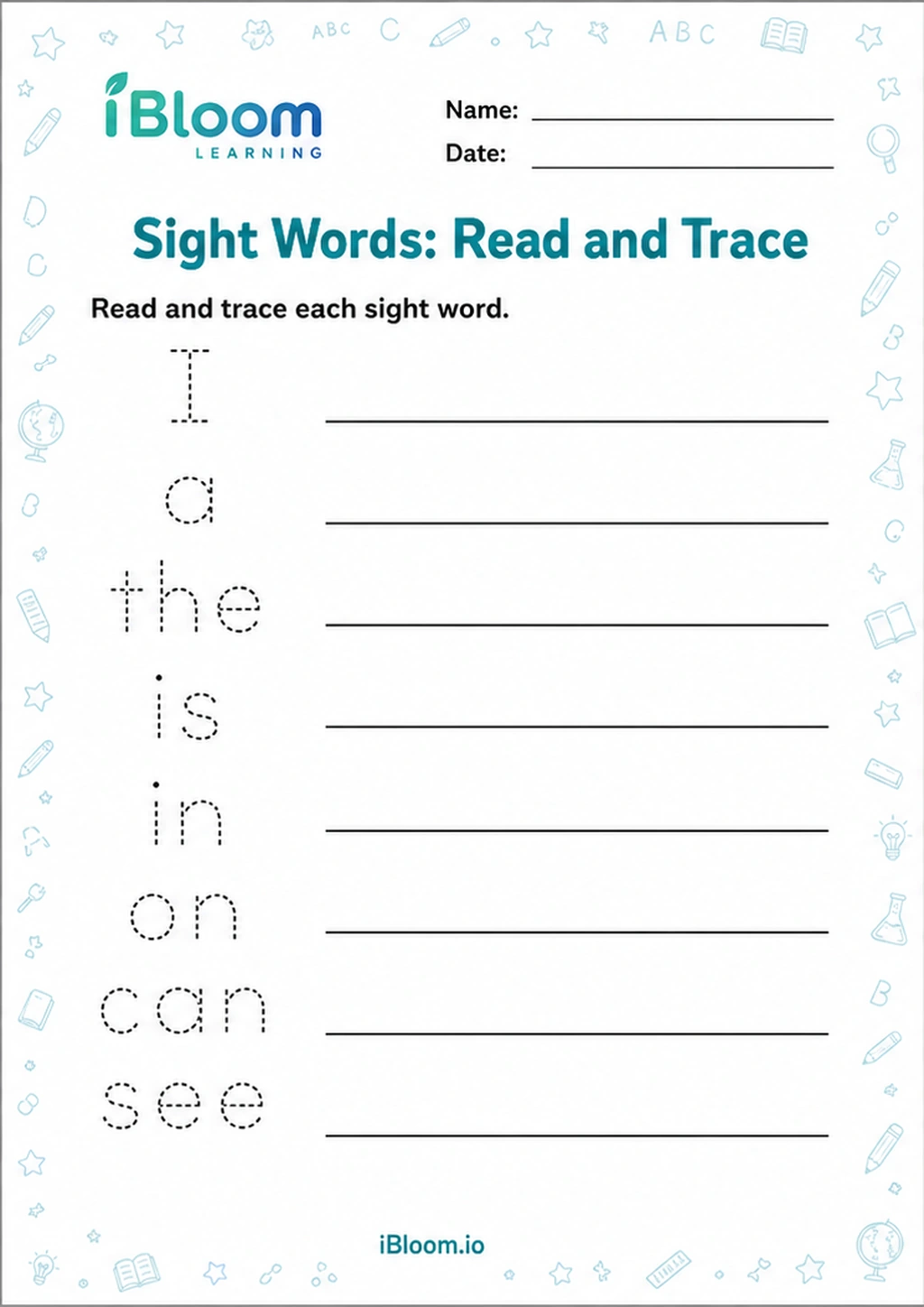 Sight Words: Read and TraceUKG printable practice for Sight Words.UKGFree PDF preview
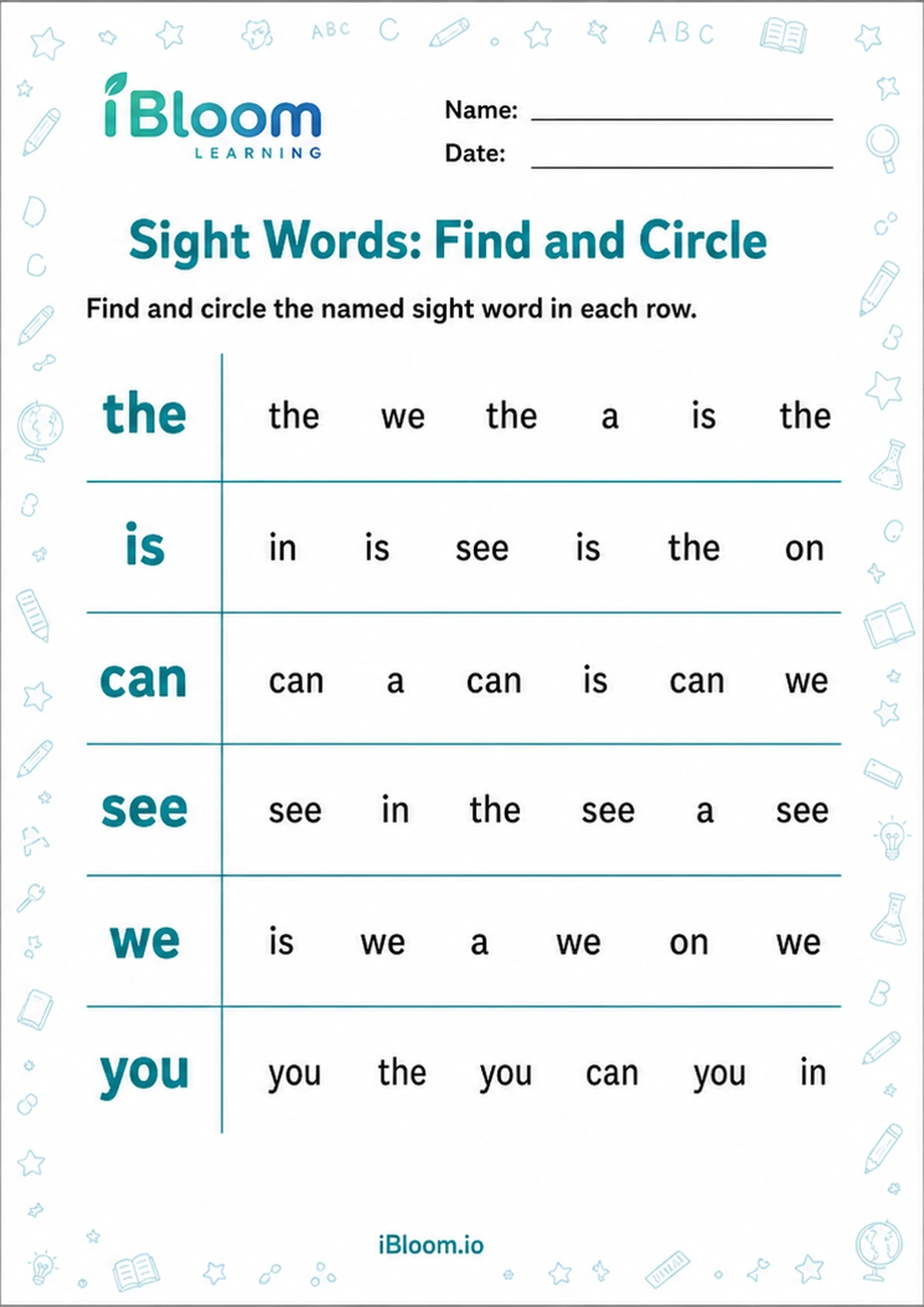 Sight Words: Find and CircleUKG printable practice for Sight Words.UKGFree PDF preview
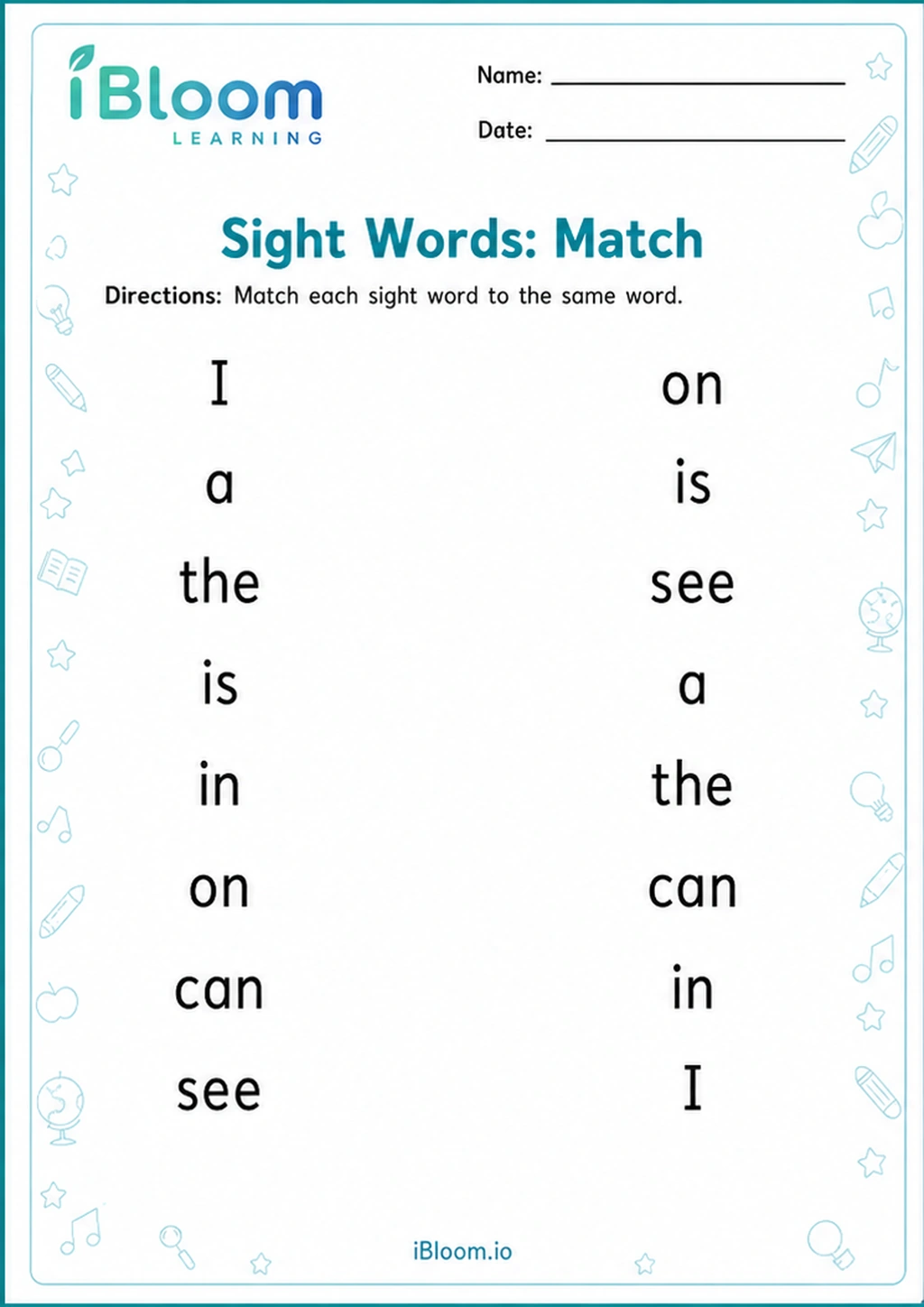 Sight Words: MatchUKG printable practice for Sight Words.UKGFree PDF preview
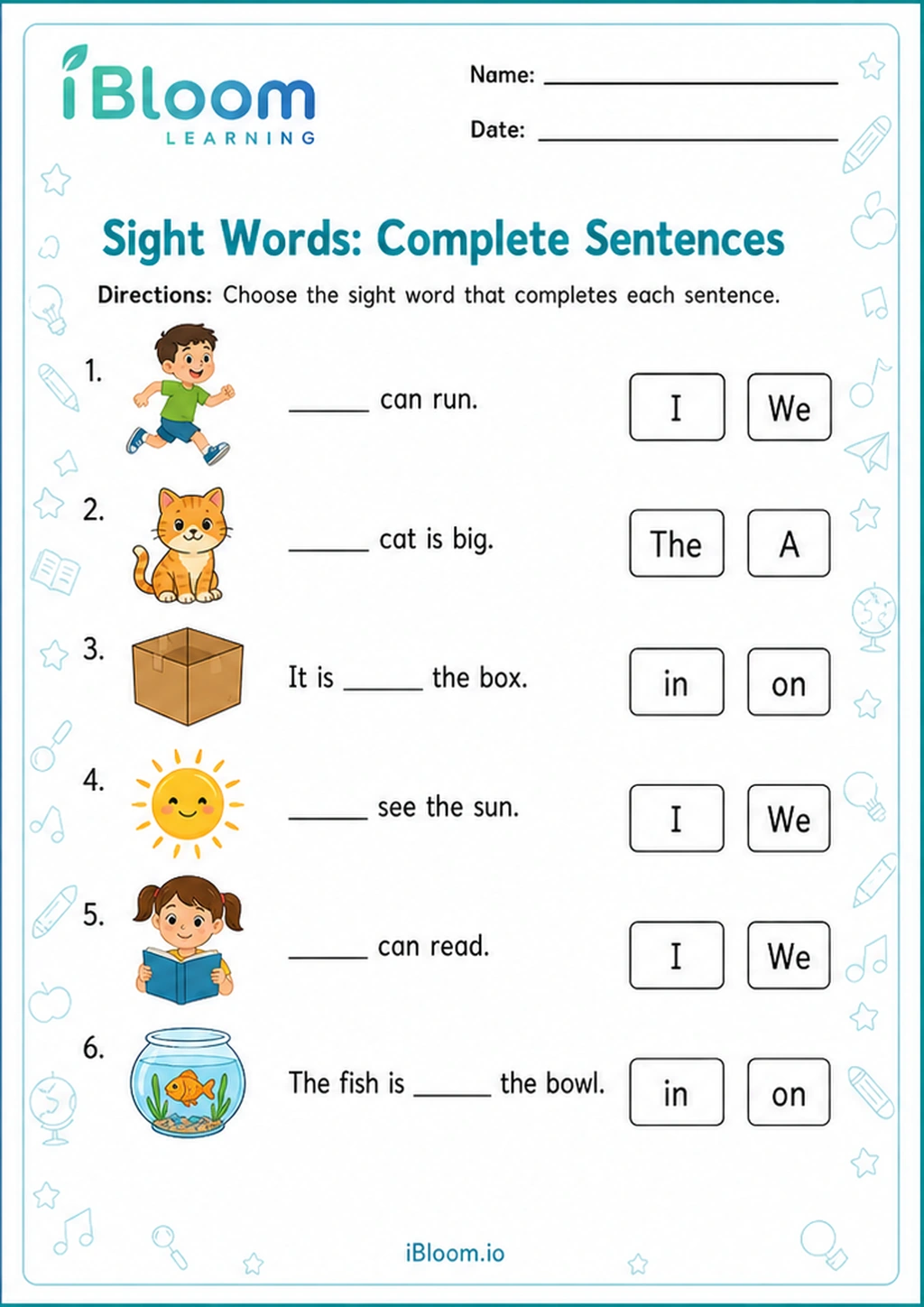 Sight Words: Complete SentencesUKG printable practice for Sight Words.UKGFree PDF preview
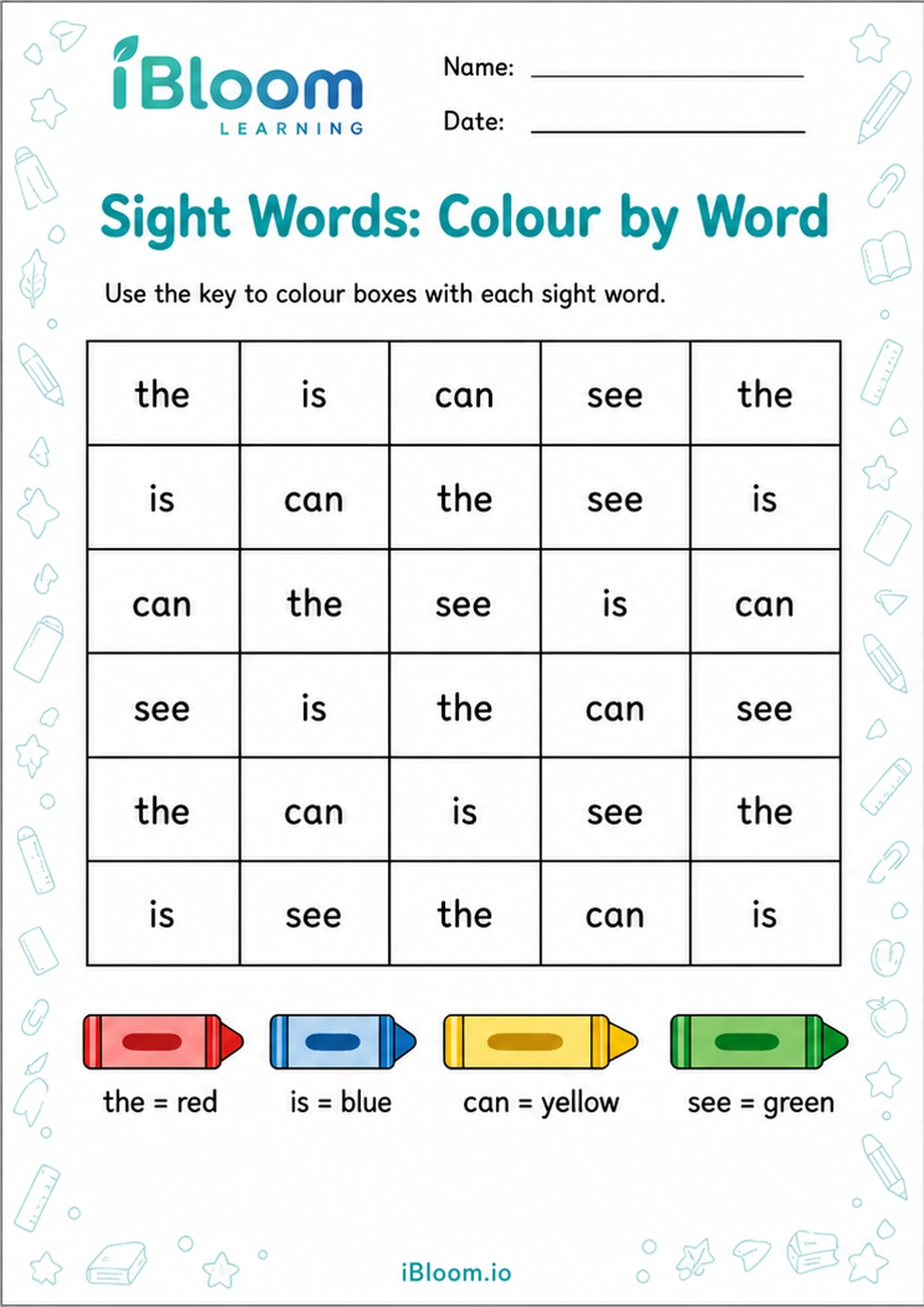 Sight Words: Colour by WordUKG printable practice for Sight Words.UKGFree PDF preview
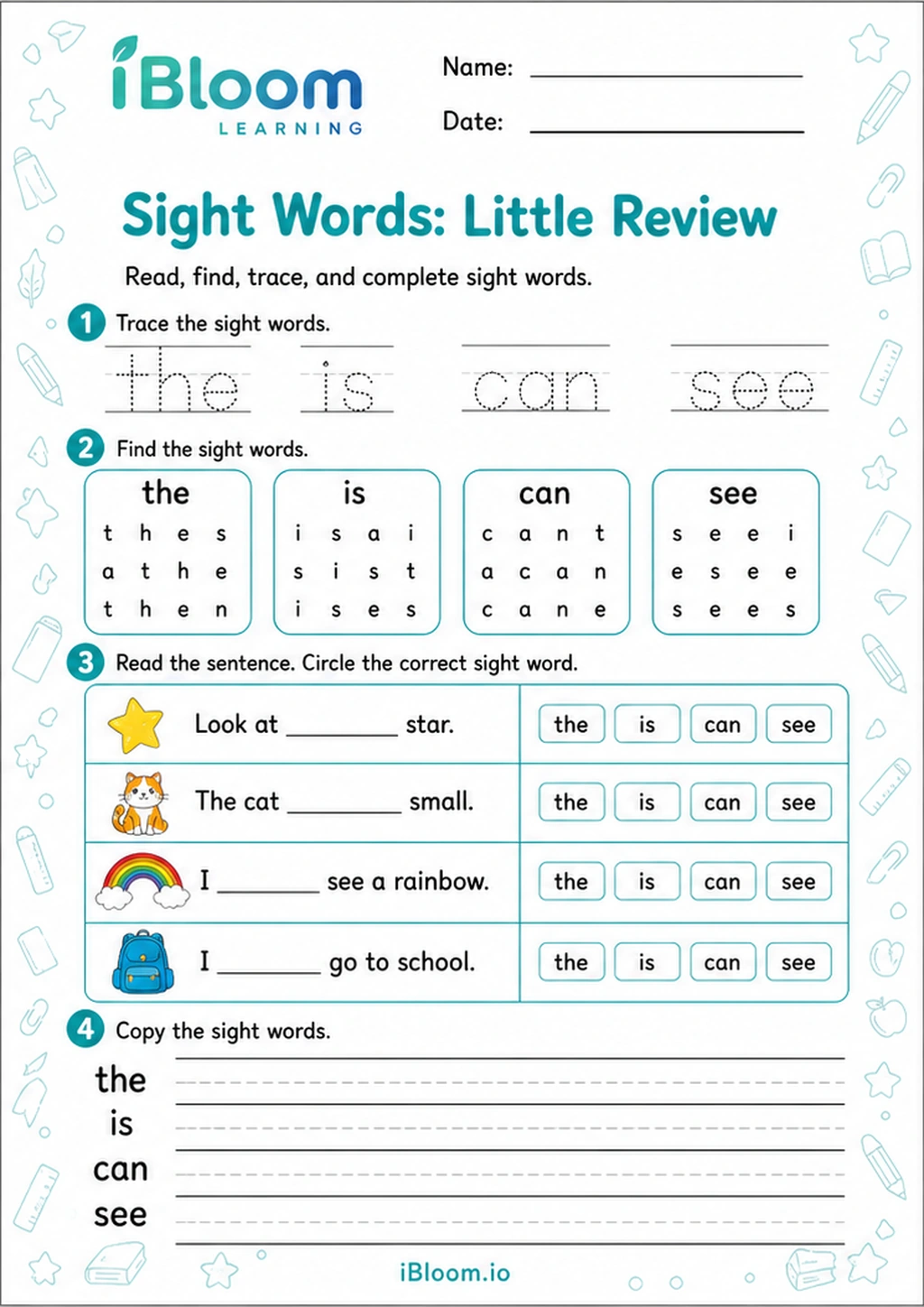 Sight Words: Little ReviewUKG printable practice for Sight Words.UKGFree PDF preview
Practice that builds confidence
Building early comprehension
These Nursery, LKG and UKG reading comprehension worksheets help young children listen to, read and understand simple English sentences, short passages and children’s stories. The focus is on meaning: who the story is about, what happens, where it happens and what details can be found in the text.
The printable activities include reading sentences, leveled stories, paragraph passages and comprehension exercises. Children practise matching, choosing answers, completing simple responses and using picture or text clues to show that they understand what they read.
At this stage, comprehension grows from oral language, picture talk and short printed text. Children may begin with one clear sentence, then move towards a few connected sentences in a leveled story or paragraph passage. The worksheets encourage them to notice characters, actions, objects and simple story events instead of only sounding out words.

What the activities practise
Reading Sentences activities help children connect a sentence with its meaning. Leveled Stories give a gentle step up, with familiar words and repeated patterns. Paragraphs Passages introduce the idea that two or more sentences can be about one topic. Exercises may ask children to tick the correct answer, match a picture, circle a detail or answer a simple “who”, “what” or “where” question. Children’s Story pages support listening, retelling and talking about beginning, middle and end.
A simple parent routine
Read the title or first line aloud, then ask your child to look at the picture and predict what the text may be about. Let the child read, or read together if the words are still new. After each short section, ask one question that can be answered from the page: “Who has the ball?” or “What did the child eat?” End by asking the child to point to the word, sentence or picture that helped them answer.

Classroom use for teachers
Teachers can use these printables for small-group reading, morning work, literacy centers or quick comprehension checks after a story session. A Nursery group may respond mostly through pointing and matching, while LKG and UKG children can begin giving short oral answers or tracing/writing simple responses. The same passage can also be used for vocabulary discussion and sentence reading fluency.

Common errors to watch for
Some children guess from the picture without checking the sentence. Others read the words aloud but cannot explain the meaning. Watch for missed question words: “who” needs a person or animal, “where” needs a place, and “what” asks about an action or thing. Encourage children to go back to the text rather than answer from memory alone.
Free printable PDF download
Use this Nursery LKG UKG reading comprehension worksheet page to preview the activity, print it, or download it as a PDF for quick practice. It works well for homework, homeschool lessons, tutoring, morning work, revision, and classroom centers.
Answers and answer key support
After the child completes the worksheet independently, parents and teachers can use the answer support or answer key information to check the work, review mistakes, and choose the next practice step.
Why iBloom worksheets help
The pages are designed for early years progression, from sentence meaning to short stories and passages. A helpful child strategy is: read, stop, point, answer. Children read a small part, stop to think, point to the clue and then answer in a word, phrase or simple sentence.
Helpful answers
Frequently asked questions
Are these worksheets suitable for Nursery children who cannot read independently?
Yes. Nursery children can use the pages with adult support by listening to the sentence or story, looking at the picture and answering through pointing, matching or speaking.
What reading skills do LKG and UKG children practise here?
They practise understanding simple sentences, following short stories, finding details in small passages and answering basic who, what and where questions.
How should I use a leveled story worksheet at home?
Read the title, talk about the picture, let your child read or repeat short lines, then ask one question at a time and encourage your child to point to the clue in the text.
Do the worksheets include only stories?
No. The collection includes reading sentences, leveled stories, paragraph passages, comprehension exercises and children’s story activities.
What if my child guesses answers from the pictures?
Pictures are helpful, but ask your child to check the sentence too. A good habit is to say, “Show me the word or line that helped you know.”
Is this Nursery LKG UKG reading comprehension worksheet free?
Yes. You can preview it for free and use the printable worksheet for home or classroom practice.
Can I download this Nursery LKG UKG reading comprehension worksheet as a PDF?
Yes. Use the worksheet download option to save a printable PDF, or print the worksheet directly from the page.
Does this Nursery LKG UKG reading comprehension worksheet include answers or an answer key?
When the activity has fixed answers, iBloom includes answer support so parents and teachers can check the completed worksheet.