Free printable practice
Reading Sentences Practice Activities
Nursery, LKG and UKG children build early reading confidence by reading simple sentences, sight words, riddles and fluency phrases with meaning.
Explore Reading Sentences
Free printable worksheet PDFs
Preview every available page, then download the free worksheet PDF for home, homeschool, tutoring, or classroom practice.
Preview the exact activity before downloading it.
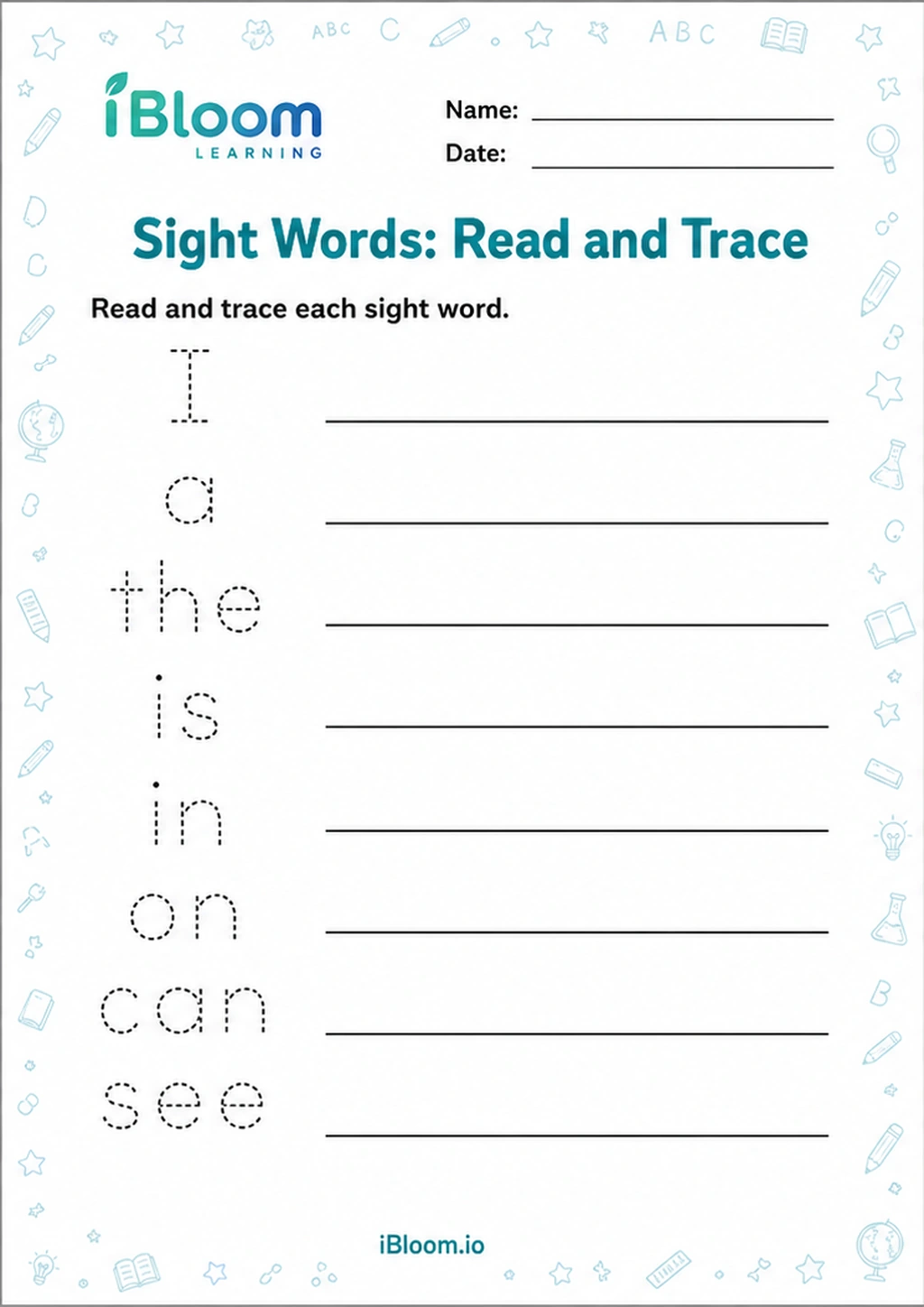 Sight Words: Read and TraceUKG printable practice for Sight Words.UKGFree PDF preview
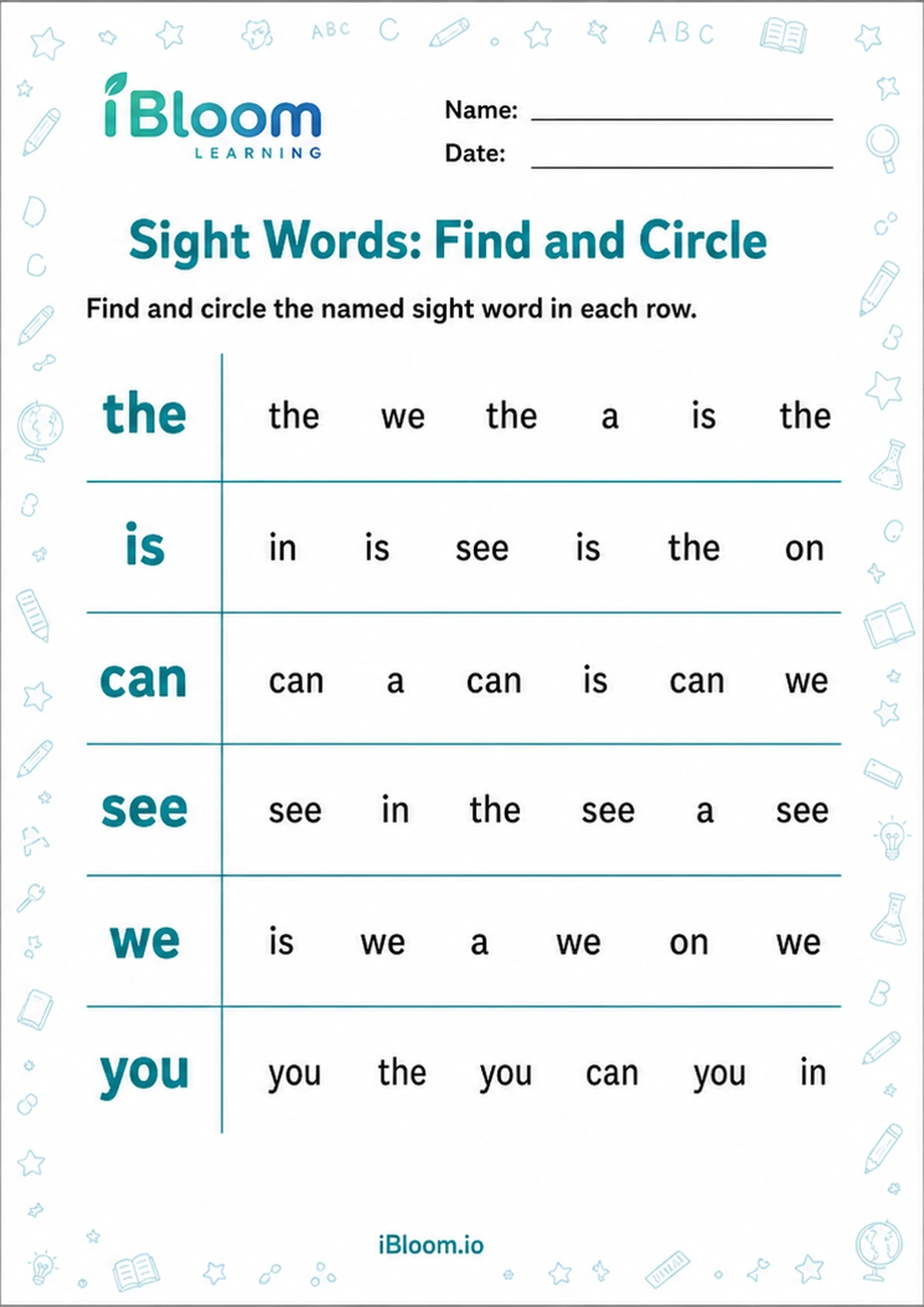 Sight Words: Find and CircleUKG printable practice for Sight Words.UKGFree PDF preview
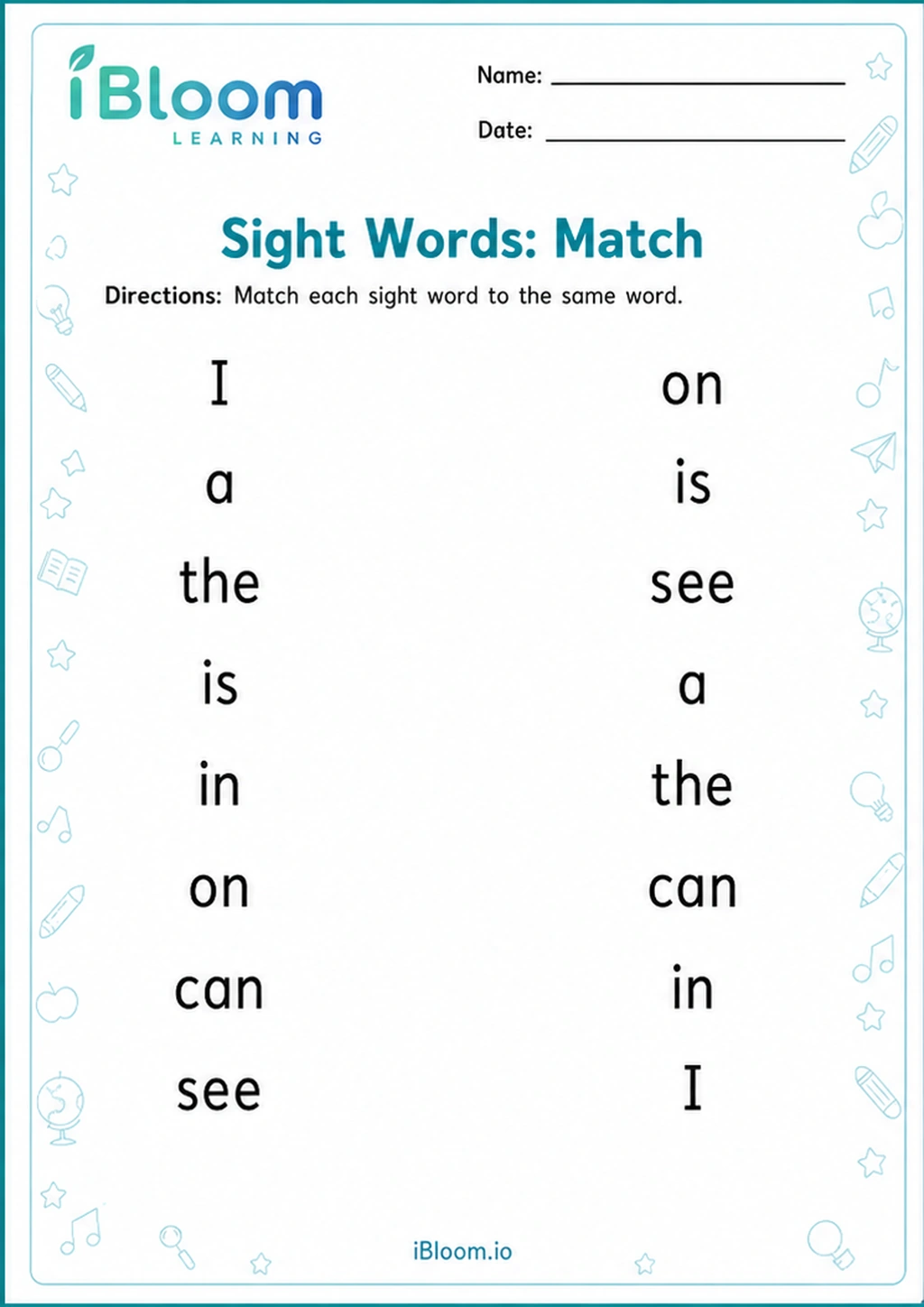 Sight Words: MatchUKG printable practice for Sight Words.UKGFree PDF preview
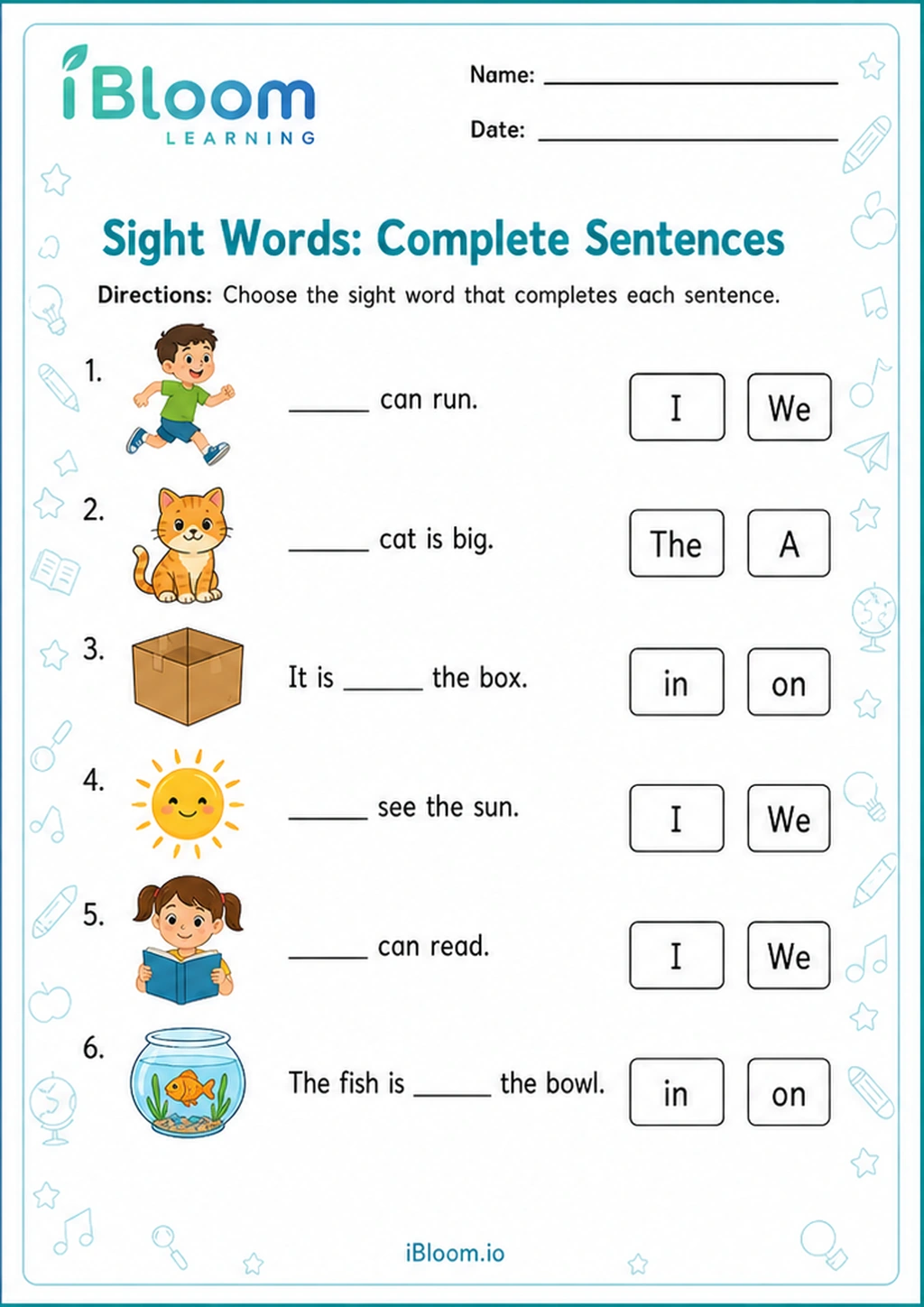 Sight Words: Complete SentencesUKG printable practice for Sight Words.UKGFree PDF preview
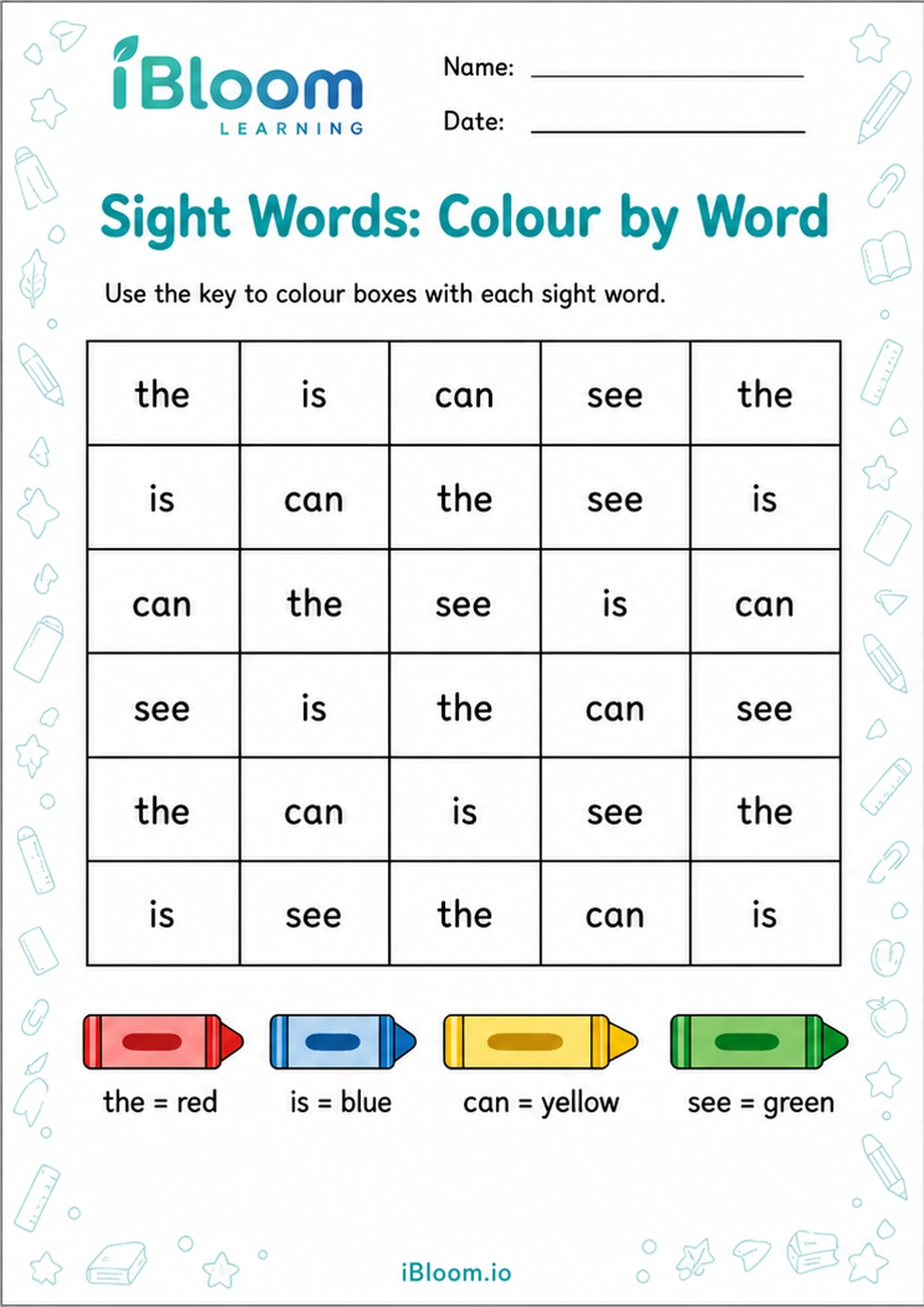 Sight Words: Colour by WordUKG printable practice for Sight Words.UKGFree PDF preview
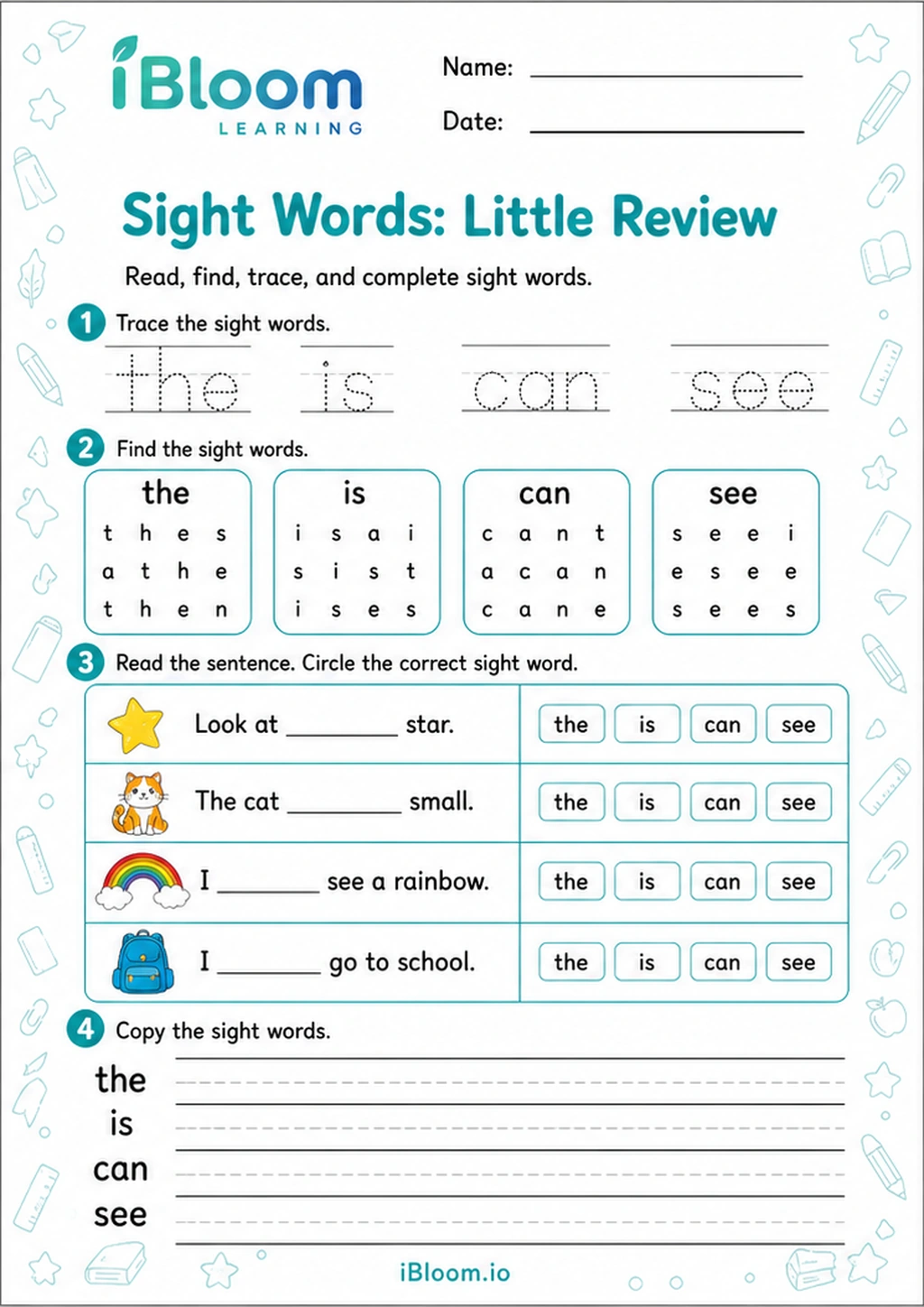 Sight Words: Little ReviewUKG printable practice for Sight Words.UKGFree PDF preview
Practice that builds confidence
From words to sentences
These reading sentences worksheets support Nursery, LKG and UKG children as they move from recognising words to reading short sentences with understanding. They practise sight words, word order, sentence meaning and simple comprehension.
The printable activities include roll and read tasks, riddles, sentence scrambles, complete-the-sentence pages, counting words, tracing and illustrating sentences. Children read, match, arrange, answer and draw so that reading stays active and meaningful.
Early readers need to see that a sentence is more than a row of words. These worksheets help children notice that sentences begin with meaning, move from left to right, and often tell about a person, animal, object or action. Sight words and fluency phrases give them repeated exposure to common words they cannot always sound out easily.

Skills in the activity set
Roll and Read pages add playful repetition. Riddles and Answer Riddles pages ask children to use clues. Illustrate Sentences checks whether they understood what they read. Sentence Scramble and Sentence Unscramble activities build awareness of word order, while Counting Words helps children see spaces between words. Complete Sentences and Sentences Trace Comprehend combine reading, handwriting and meaning.
Parent routine for daily reading
Choose one short page and read the first sentence aloud while pointing to each word. Let your child repeat it, then ask one simple question such as “Who is in the sentence?” or “What is happening?” If there is a picture task, ask them to draw only what the sentence says. This keeps the focus on careful reading, not guessing.

Classroom uses for teachers
Teachers can use these printables in reading corners, small-group phonics follow-up, morning work or literacy centres. A teacher-led group can practise fluency phrases aloud, while independent children complete matching, tracing or illustrating tasks. Sentence scrambles are especially useful for checking whether children understand that words must be in a sensible order.

Common errors to watch for
Young children may memorise a pattern and stop looking at each word. Some guess from pictures, skip small sight words, or read every word separately without hearing the sentence. Encourage finger tracking, rereading and talking about the sentence after reading. If a scrambled sentence sounds funny, ask, “Does it make sense?”
Free printable PDF download
Use this reading sentences worksheets for Nursery LKG UKG page to preview the activity, print it, or download it as a PDF for quick practice. It works well for homework, homeschool lessons, tutoring, morning work, revision, and classroom centers.
Answers and answer key support
After the child completes the worksheet independently, parents and teachers can use the answer support or answer key information to check the work, review mistakes, and choose the next practice step.
Why iBloom worksheets help
The collection uses varied child-friendly formats, so the same core skill is practised in many ways. Children read, trace, count, arrange, answer and draw, which supports both fluency and comprehension. A useful strategy for children is: look at the words, read slowly, think what it means, then read again smoothly.
Helpful answers
Frequently asked questions
What age group are these reading sentences worksheets for?
They are designed for Nursery, LKG and UKG children who are beginning to read short phrases and simple sentences.
Do children need to know all phonics sounds before using these pages?
No. The worksheets combine simple decodable words, sight words and picture-supported meaning, so they can be used alongside phonics learning.
How do sentence scramble activities help early readers?
They help children understand word order and sentence sense. Children learn that a sentence must sound right and tell a clear idea.
Why are riddles included in reading sentence practice?
Riddles encourage children to read for clues, not just say words aloud. This builds early comprehension and thinking.
How can I tell if my child understands the sentence?
Ask your child to point to the words, explain the sentence in their own words, answer a simple question or draw what the sentence says.
Is this reading sentences worksheets for Nursery LKG UKG free?
Yes. You can preview it for free and use the printable worksheet for home or classroom practice.
Can I download this reading sentences worksheets for Nursery LKG UKG as a PDF?
Yes. Use the worksheet download option to save a printable PDF, or print the worksheet directly from the page.
Does this reading sentences worksheets for Nursery LKG UKG include answers or an answer key?
When the activity has fixed answers, iBloom includes answer support so parents and teachers can check the completed worksheet.