Free printable practice
Hot Cold Practice Activities
Printable Nursery, LKG and UKG science activities that help children sort, compare and talk about hot and cold objects safely.
Free printable worksheet PDFs
Preview every available page, then download the free worksheet PDF for home, homeschool, tutoring, or classroom practice.
Preview the exact activity before downloading it.
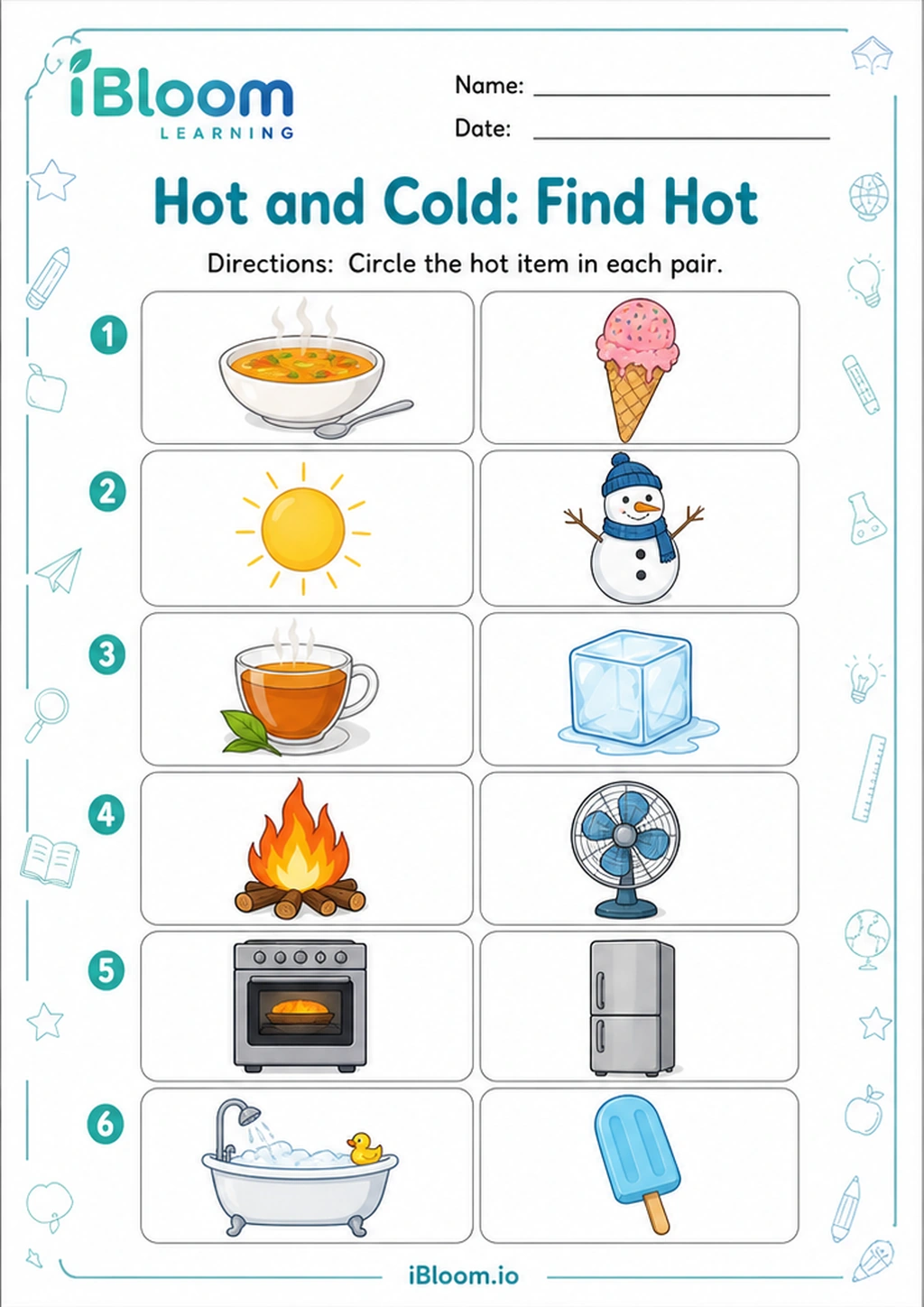 Hot and Cold: Find HotLKG printable practice for Hot and Cold.LKGFree PDF preview
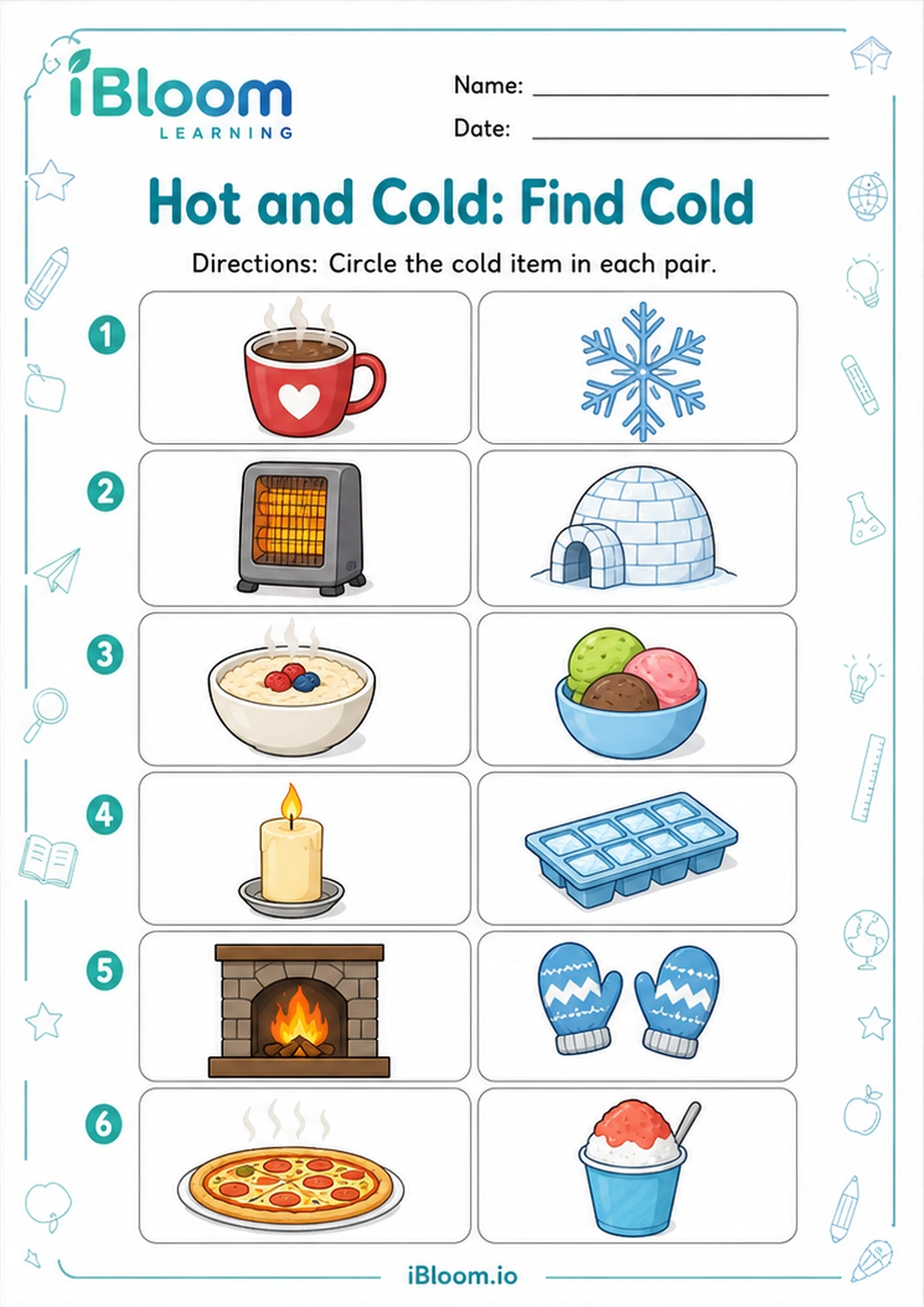 Hot and Cold: Find ColdLKG printable practice for Hot and Cold.LKGFree PDF preview
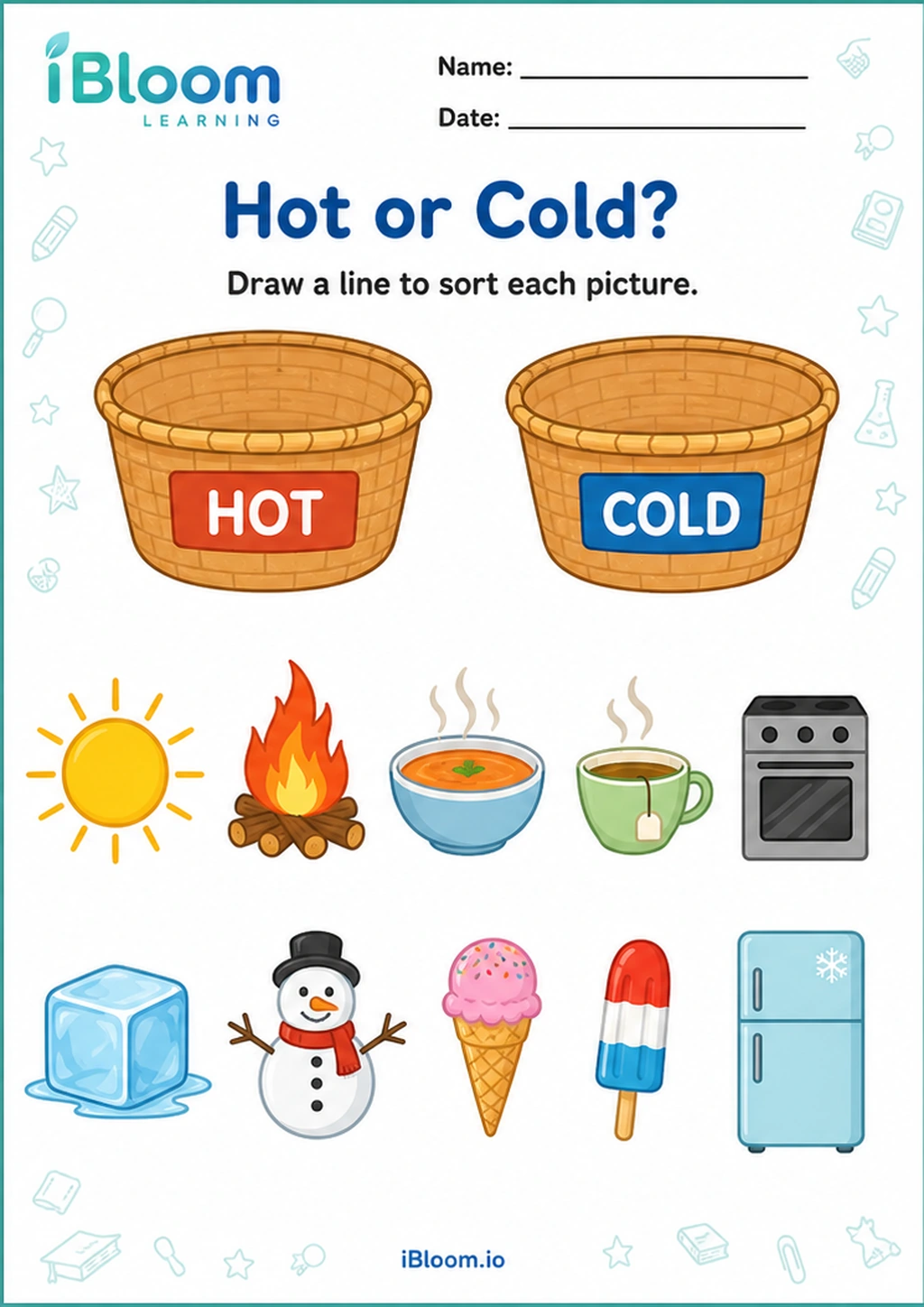 Hot or Cold?LKG printable practice for Hot and Cold.LKGFree PDF preview
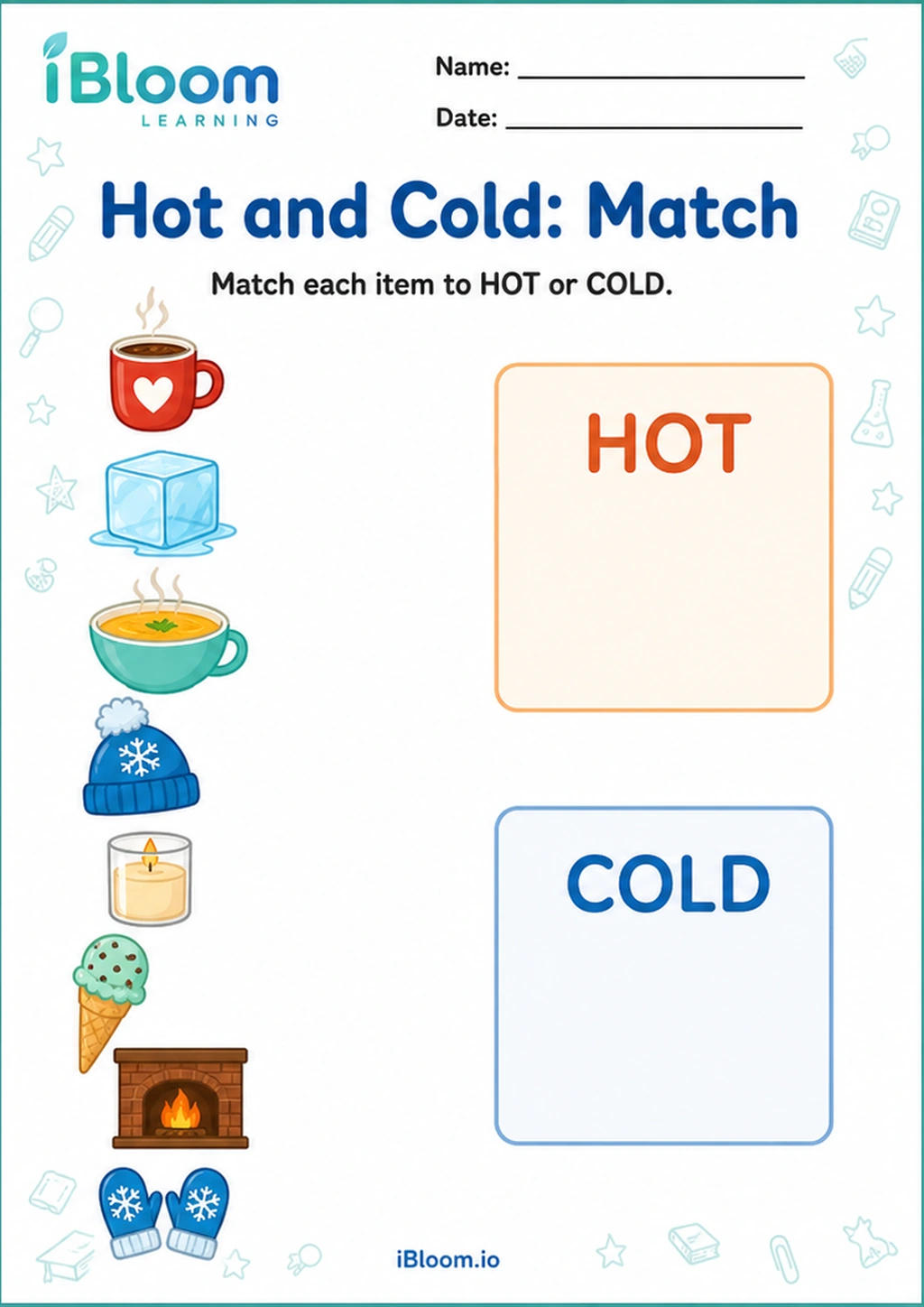 Hot and Cold: MatchLKG printable practice for Hot and Cold.LKGFree PDF preview
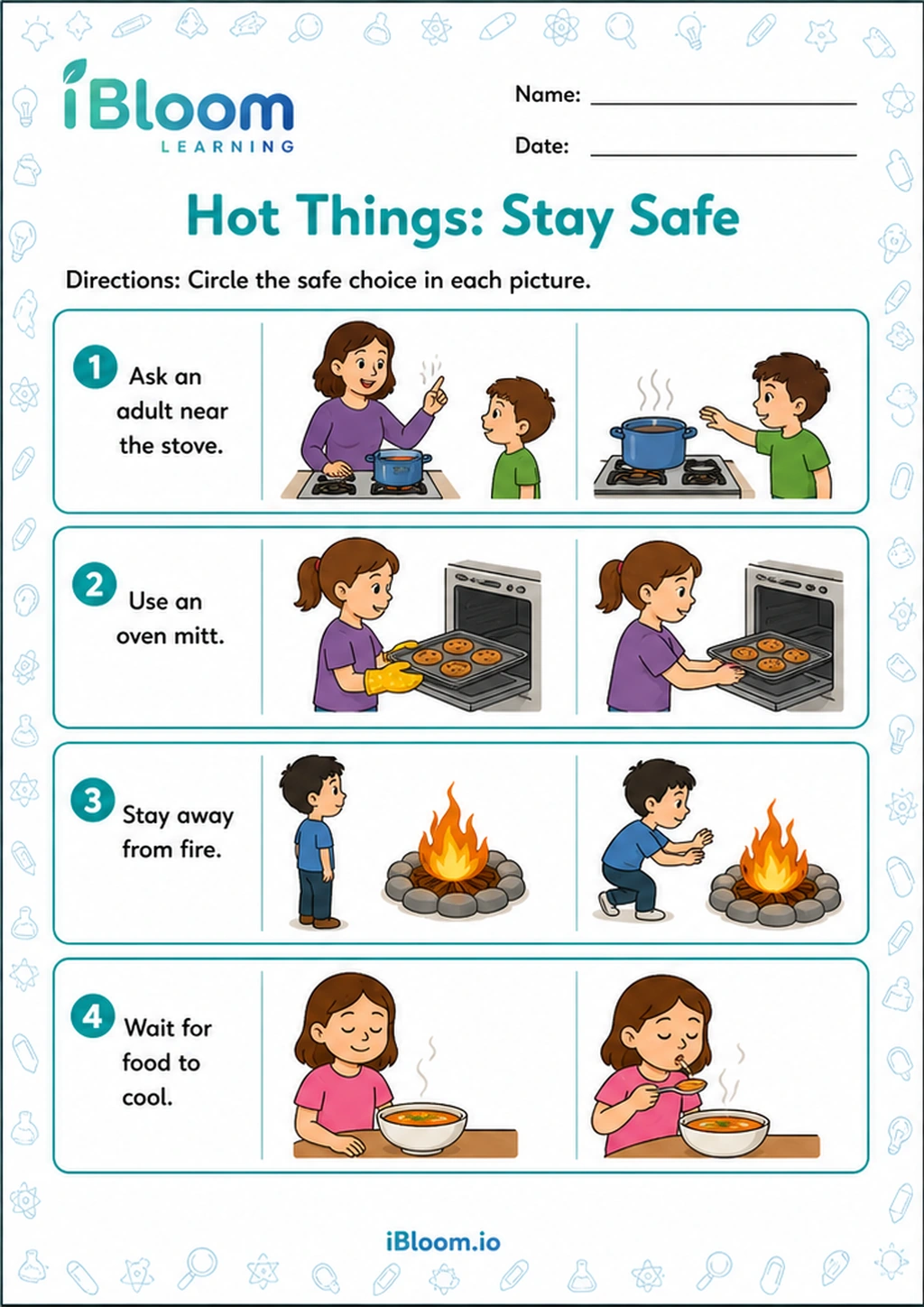 Hot Things: Stay SafeLKG printable practice for Hot and Cold.LKGFree PDF preview
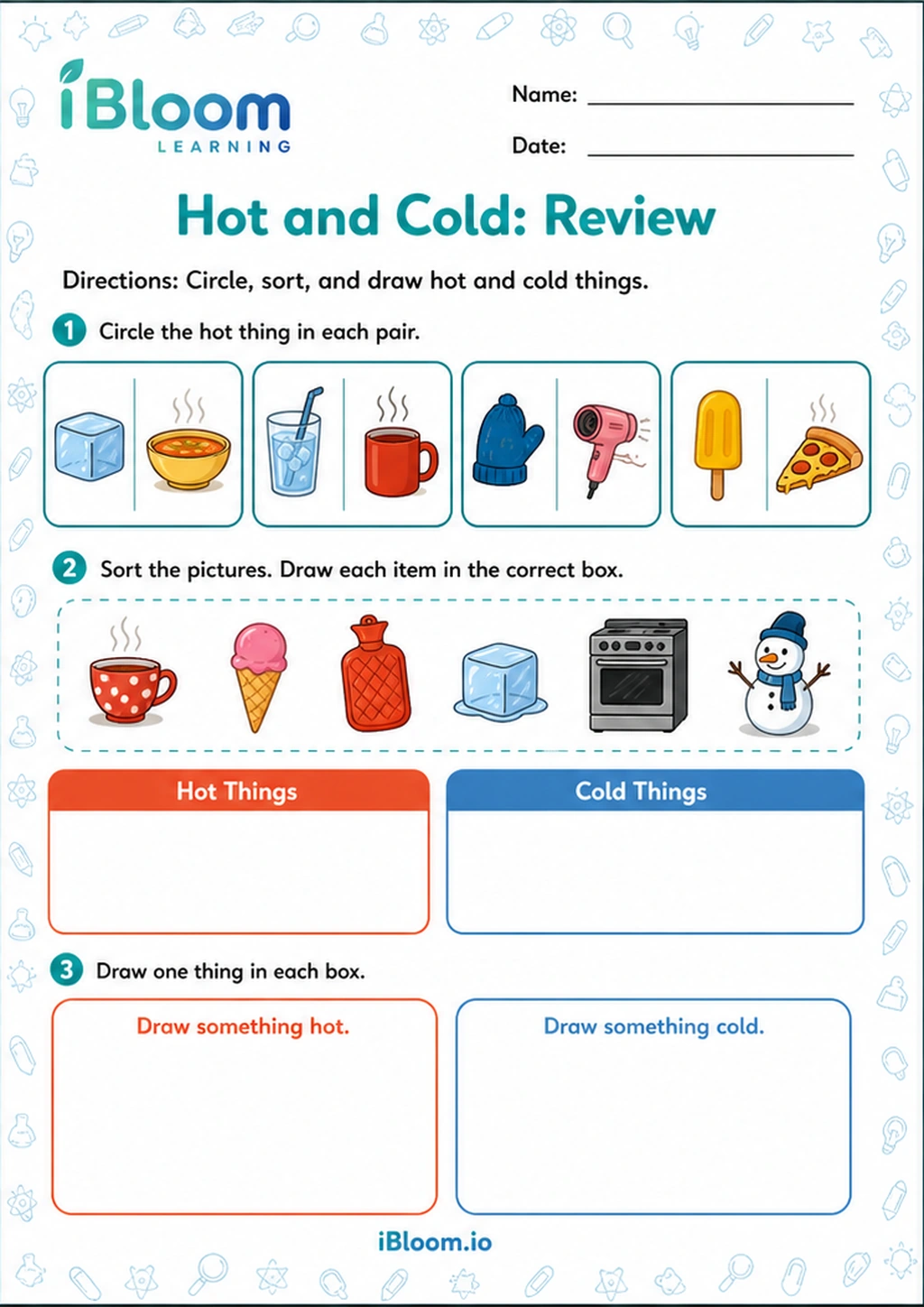 Hot and Cold: ReviewLKG printable practice for Hot and Cold.LKGFree PDF preview
Practice that builds confidence
What children learn
These Hot Cold practice activities introduce young learners to a simple energy idea: some things feel hot, some feel cold, and we must notice the difference safely. Children practise identifying everyday examples such as ice cream, tea, soup, the sun, snow, fans and warm clothes.
The printable worksheets include picture sorting, circling, matching and colouring tasks suited to Nursery, LKG and UKG. Each activity builds vocabulary and observation skills while helping children connect science words with familiar home and classroom objects.
Hot and cold are early science words linked to temperature and energy. At this level, children do not need formal measurements; they learn by observing pictures, listening to words, and comparing familiar objects. A cup of hot milk, a sunny day or a cooking pan belongs with hot things. Ice cubes, cold water and winter clothes can help children talk about cold situations.

Progression across the worksheets
The activities usually begin with simple recognition: “Which picture is hot?” or “Circle the cold object.” Children then move to matching hot objects together, sorting pictures into two groups, and colouring objects based on the instruction. This progression is helpful for Nursery children who are building picture vocabulary, and for LKG and UKG children who are ready to explain their choices in short sentences.
Parent routine at home
Use the worksheet with a short real-life talk. Before writing or colouring, ask your child to name two hot things and two cold things at home. Keep it safe: children should not touch boiling water, flames, irons or hot vessels. Instead, use safe examples such as warm sunlight, a closed lunch box with hot food, a fridge, chilled fruit or an ice cube shown by an adult. After the worksheet, ask, “How do you know it is hot or cold?” to encourage reasoning.

Classroom uses for teachers
Teachers can use these printables during science lessons on energy, seasonal discussions, morning circle time or picture vocabulary practice. They also work well in small groups: one child names the object, another says hot or cold, and a third places it in the correct group. The pages can be added to centres with crayons, picture cards and oral language prompts.

Common errors to watch for
Young children may call the sun “cold” if the picture is blue, or may think all drinks are cold because they drink water cold. Some may confuse “hot” with “spicy”. Gently bring them back to temperature words: hot, warm, cold, cool, ice, heat and safe touch. Remind them that we can look and ask an adult before touching unknown objects.
Free printable PDF download
Use this hot cold worksheets for nursery lkg ukg page to preview the activity, print it, or download it as a PDF for quick practice. It works well for homework, homeschool lessons, tutoring, morning work, revision, and classroom centers.
Answers and answer key support
After the child completes the worksheet independently, parents and teachers can use the answer support or answer key information to check the work, review mistakes, and choose the next practice step.
Why iBloom worksheets help
The iBloom Hot Cold worksheets use clear everyday pictures and simple tasks so children can focus on the concept, not complicated instructions. A child-friendly strategy is: look at the picture, say its name, think “Does it give heat or feel chilly?”, then mark the answer. This builds observation, vocabulary and safe science habits together.
Helpful answers
Frequently asked questions
What do children practise in Hot Cold worksheets?
Children practise recognising, naming and sorting everyday objects as hot or cold using pictures, matching, circling and colouring activities.
Are these worksheets suitable for Nursery children?
Yes. Nursery children can use the picture-based tasks with adult support, while LKG and UKG children can also explain why an object is hot or cold.
How can I teach hot and cold safely at home?
Use safe examples such as ice cubes, chilled fruit, warm sunlight or a closed food container. Avoid asking children to touch flames, irons, boiling water or hot vessels.
What vocabulary should my child learn with this topic?
Useful words include hot, cold, warm, cool, heat, ice, sun, fire, fridge and safe. Children should also practise saying simple sentences such as “Tea is hot” or “Ice is cold.”
Why do some children confuse hot, cold and spicy?
Young children may use “hot” to mean spicy food or bright colour. These worksheets help them focus on temperature by comparing clear everyday examples.
Is this hot cold worksheets for nursery lkg ukg free?
Yes. You can preview it for free and use the printable worksheet for home or classroom practice.
Can I download this hot cold worksheets for nursery lkg ukg as a PDF?
Yes. Use the worksheet download option to save a printable PDF, or print the worksheet directly from the page.
Does this hot cold worksheets for nursery lkg ukg include answers or an answer key?
When the activity has fixed answers, iBloom includes answer support so parents and teachers can check the completed worksheet.