Free printable practice
Blends Practice Activities
Printable Nursery, LKG and UKG blends worksheets that help children join sounds smoothly while reading and writing early words.
Free printable worksheet PDFs
Preview every available page, then download the free worksheet PDF for home, homeschool, tutoring, or classroom practice.
Preview the exact activity before downloading it.
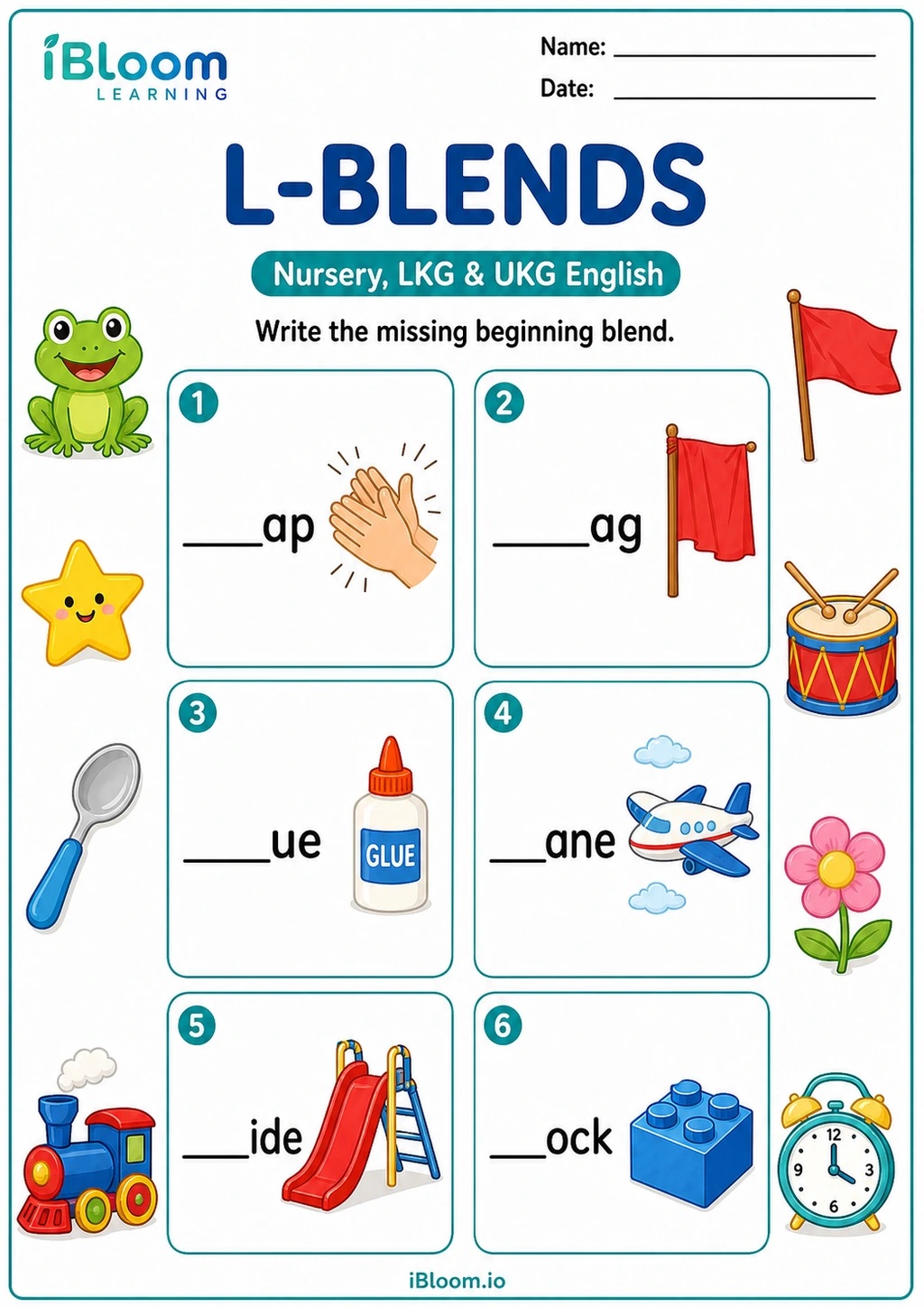 L-BlendsFocused consonant blends practice for Nursery, LKG & UKG learners.Nursery, LKG & UKGFree PDF preview
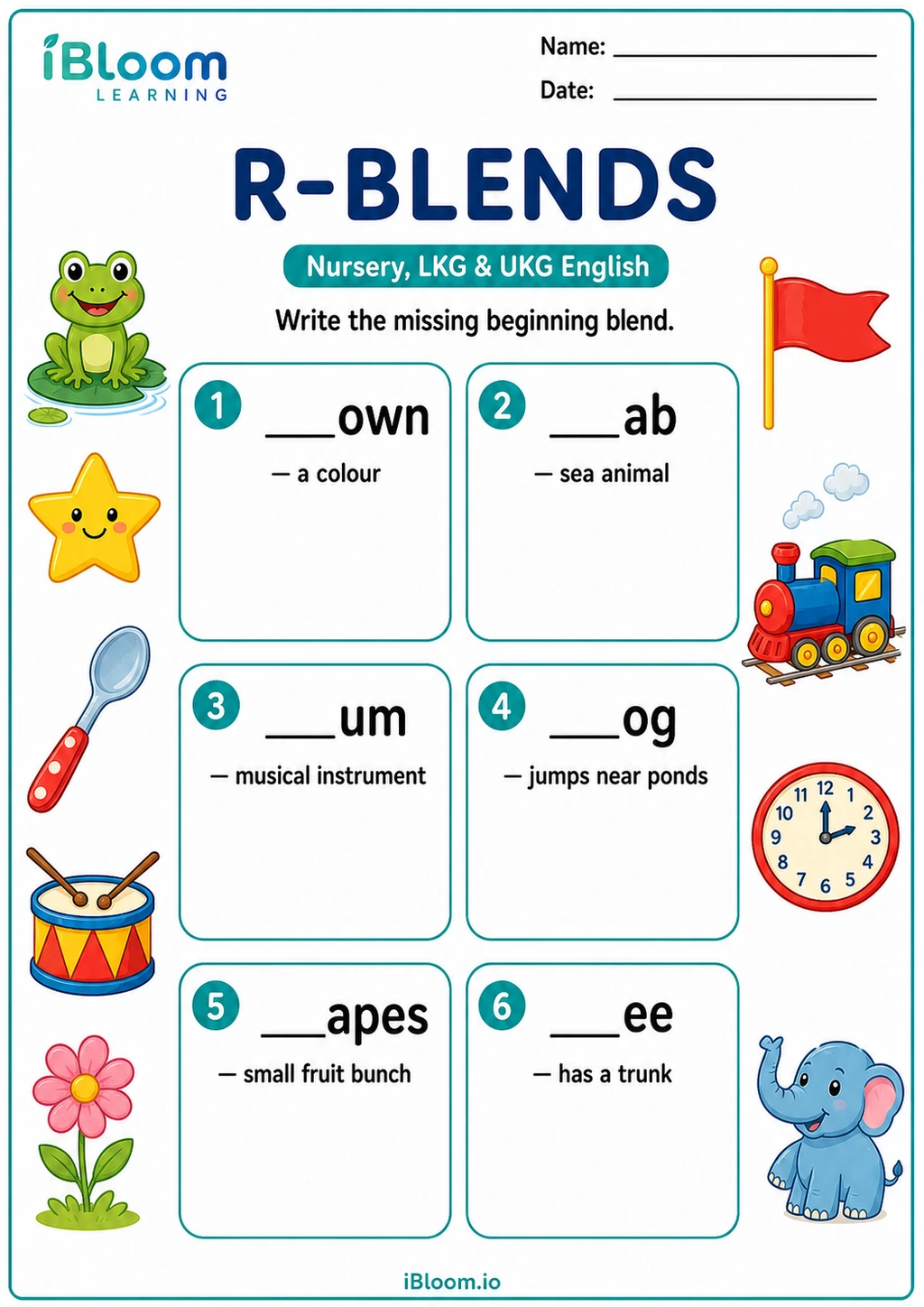 R-BlendsFocused consonant blends practice for Nursery, LKG & UKG learners.Nursery, LKG & UKGFree PDF preview
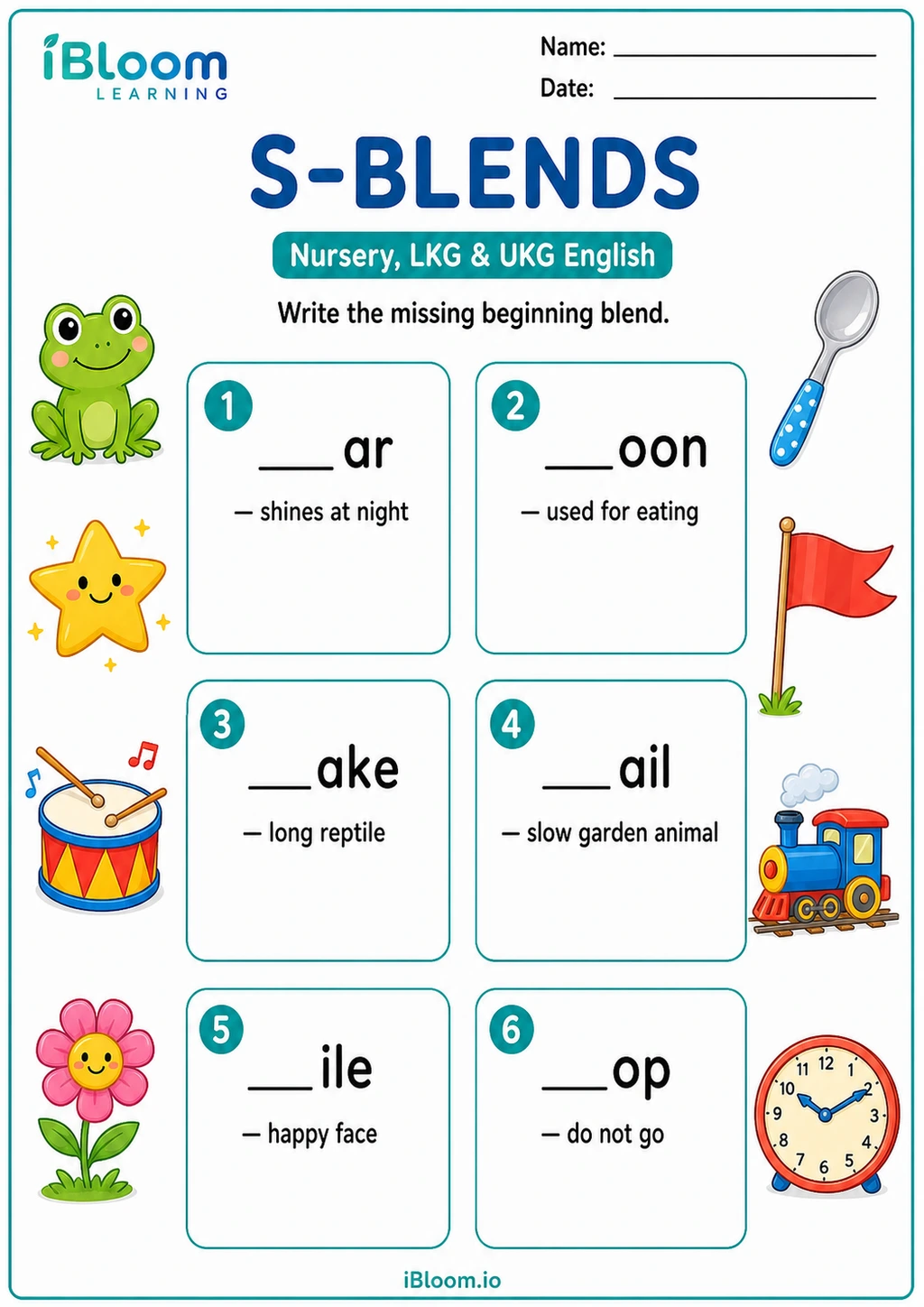 S-BlendsFocused consonant blends practice for Nursery, LKG & UKG learners.Nursery, LKG & UKGFree PDF preview
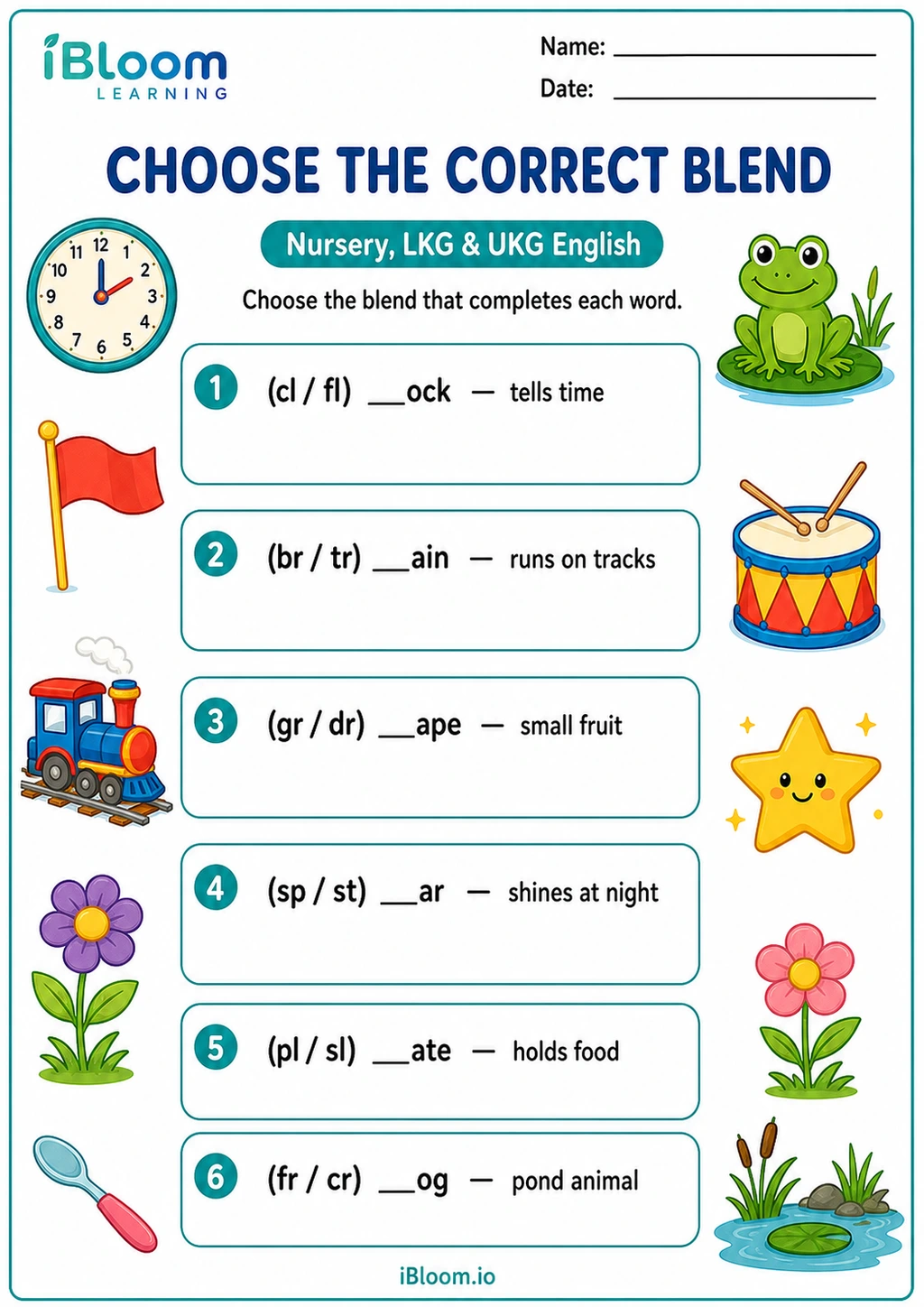 Choose the Correct BlendFocused consonant blends practice for Nursery, LKG & UKG learners.Nursery, LKG & UKGFree PDF preview
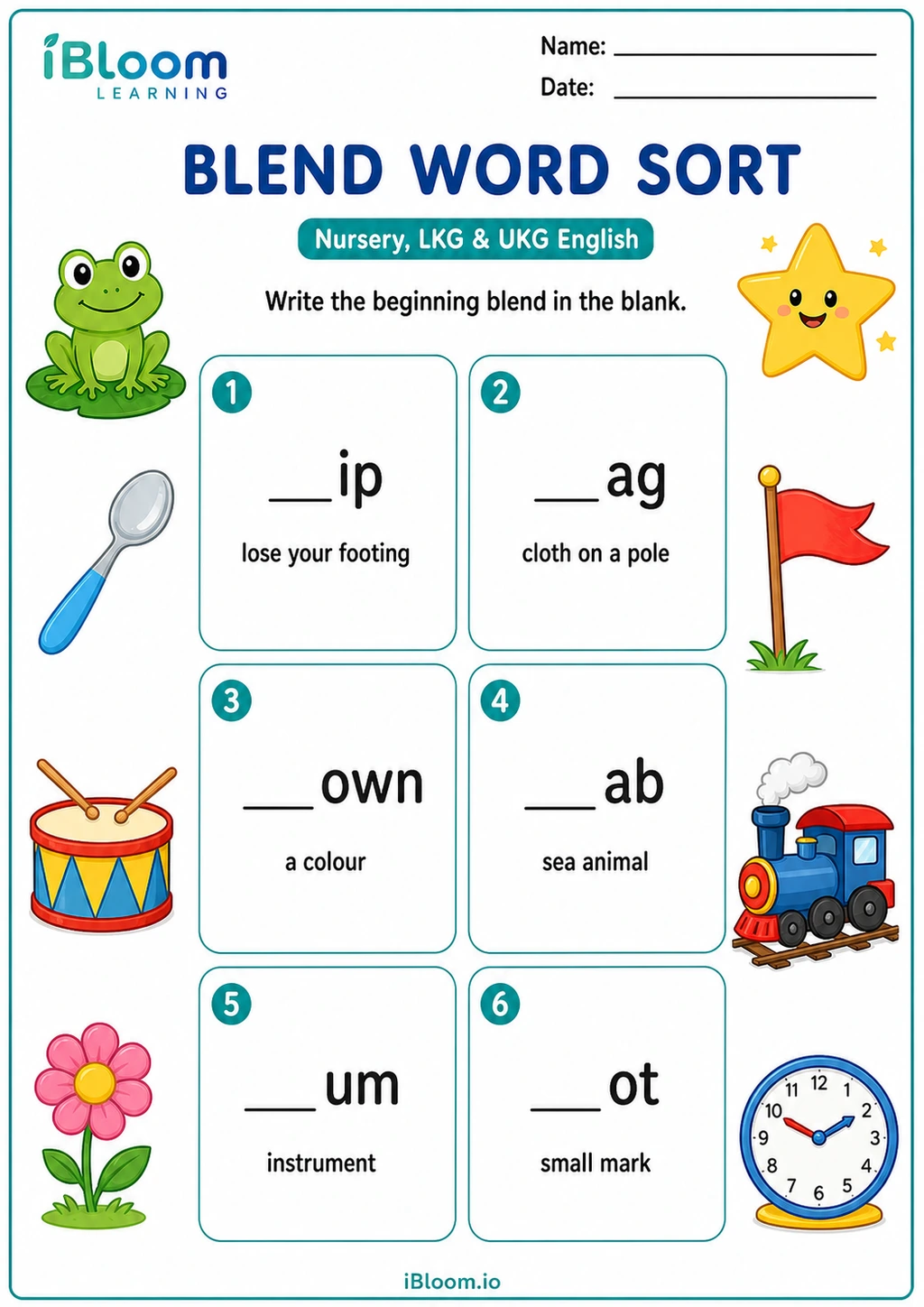 Blend Word SortFocused consonant blends practice for Nursery, LKG & UKG learners.Nursery, LKG & UKGFree PDF preview
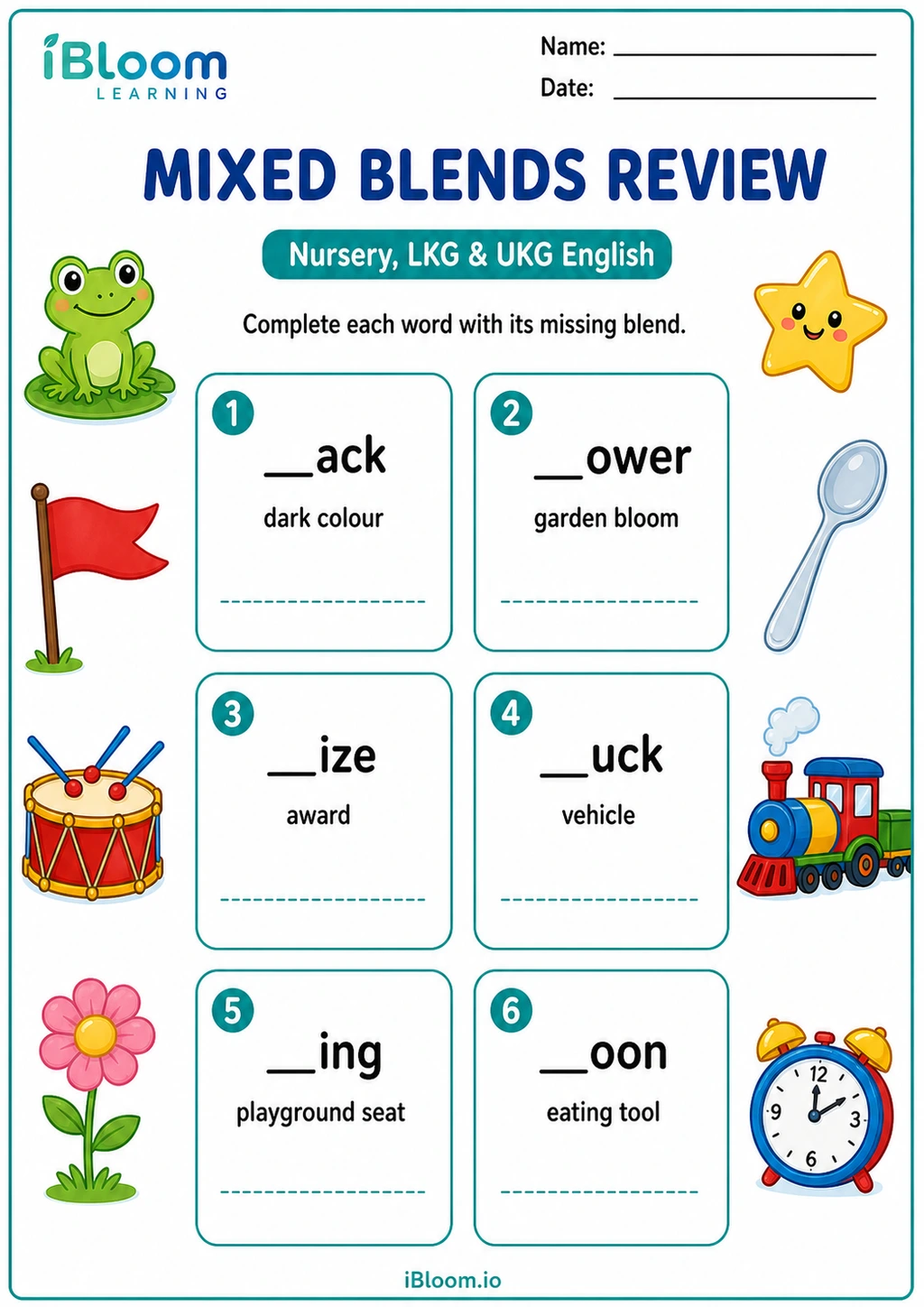 Mixed Blends ReviewFocused consonant blends practice for Nursery, LKG & UKG learners.Nursery, LKG & UKGFree PDF preview
Practice that builds confidence
What children learn
These blends practice activities help Nursery, LKG and UKG children listen to two sounds together and say them smoothly in simple words. Children practise hearing beginning blends such as bl, cl, fl, gr, pl, sm, sn and st, while strengthening their vowel awareness through easy CVC-style word reading.
The printable worksheets include picture matching, tracing, circling the correct blend, completing words, colouring tasks and oral sound practice. Each page is designed for young learners who are still building letter-sound confidence and need clear, repeated exposure.
Blends are pairs of consonant sounds that sit close together, usually at the start of a word, as in bl in blue, st in star or pl in plant. Children do not change the sounds into one new sound; they say each sound quickly and smoothly. This is different from digraphs such as sh or ch, where two letters make one sound.

Skill progression
The worksheets move from listening and speaking to reading and writing. A child may first identify whether frog starts with fr or fl, then match a picture to its blend, trace the letters, and finally complete a word. Since this page sits in the Vowels section, activities also support blending consonants with vowel sounds, helping children read short words more confidently.
A simple parent routine
Choose one blend for the day, such as st. Say it slowly: /s/ /t/, then faster: /st/. Ask your child to find or name three words that begin with it, such as star, stop and stick. Next, complete one worksheet together. End by letting the child point to the blend in each word and read the whole word aloud.

Classroom use
Teachers can use these pages for phonics corners, small-group reading support, morning practice or revision after letter-sound lessons. Picture-based tasks work well for Nursery and LKG oral work, while UKG children can attempt word completion and simple reading independently. Pages can also be used for quick observation of who can hear the first two sounds clearly.

Common errors to watch for
Children may drop one sound, reading stop as top, or add an extra vowel sound, saying buh-lue instead of blue. Some may confuse visually similar blends such as bl and pl. Encourage slow pointing under each letter, clear mouth movement and repeated oral practice before writing.
Free printable PDF download
Use this blends practice worksheets for nursery lkg ukg page to preview the activity, print it, or download it as a PDF for quick practice. It works well for homework, homeschool lessons, tutoring, morning work, revision, and classroom centers.
Answers and answer key support
After the child completes the worksheet independently, parents and teachers can use the answer support or answer key information to check the work, review mistakes, and choose the next practice step.
Why iBloom worksheets help
iBloom worksheets combine pictures, large letter forms and short tasks so young children are not overloaded. The same blend appears in different formats—listen, match, trace, circle and write—so children build recognition through meaningful repetition. A child-friendly strategy is: say the first sound, slide to the next sound, then read the word.
Helpful answers
Frequently asked questions
What are blends for Nursery, LKG and UKG children?
Blends are two consonant sounds said closely together, such as bl, st, cl and gr. Children learn to hear both sounds and say them smoothly in words like blue, star and green.
Are these worksheets suitable if my child is still learning vowels?
Yes. The activities support vowel learning because children practise joining beginning blends with vowel sounds to read simple words more clearly.
Should children memorise blend words?
They should not only memorise them. It is better to help children hear each sound, say the blend, and then read the word with the vowel sound.
Which blends are commonly practised on these pages?
The pages focus on early beginning blends such as bl, cl, fl, gr, pl, sm, sn and st, using familiar picture words where possible.
How can I help if my child says an extra vowel between the blend sounds?
Model the blend slowly without adding a vowel, then slide the sounds together. For example, say /s/ /t/, then /st/, before reading star or stop.
Is this blends practice worksheets for nursery lkg ukg free?
Yes. You can preview it for free and use the printable worksheet for home or classroom practice.
Can I download this blends practice worksheets for nursery lkg ukg as a PDF?
Yes. Use the worksheet download option to save a printable PDF, or print the worksheet directly from the page.
Does this blends practice worksheets for nursery lkg ukg include answers or an answer key?
When the activity has fixed answers, iBloom includes answer support so parents and teachers can check the completed worksheet.