Free printable practice
Write Short Vowels Practice Activities
Printable short vowel writing worksheets for Nursery, LKG and UKG children to practise a, e, i, o and u through tracing, copying and word-based phonics tasks.
Free printable worksheet PDFs
Preview every available page, then download the free worksheet PDF for home, homeschool, tutoring, or classroom practice.
Preview the exact activity before downloading it.
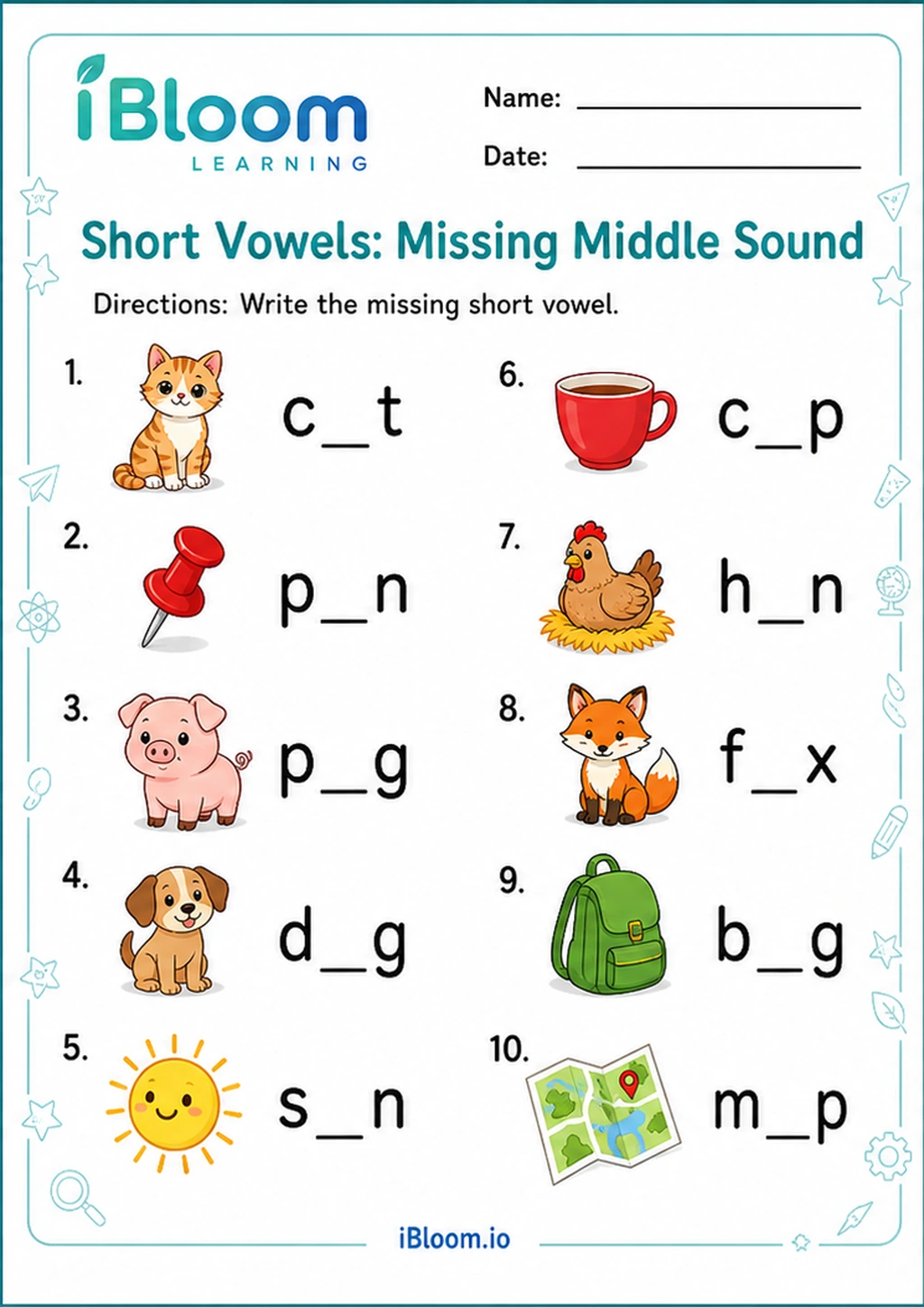 Short Vowels: Missing Middle SoundUKG printable practice for Writing Short Vowels.UKGFree PDF preview
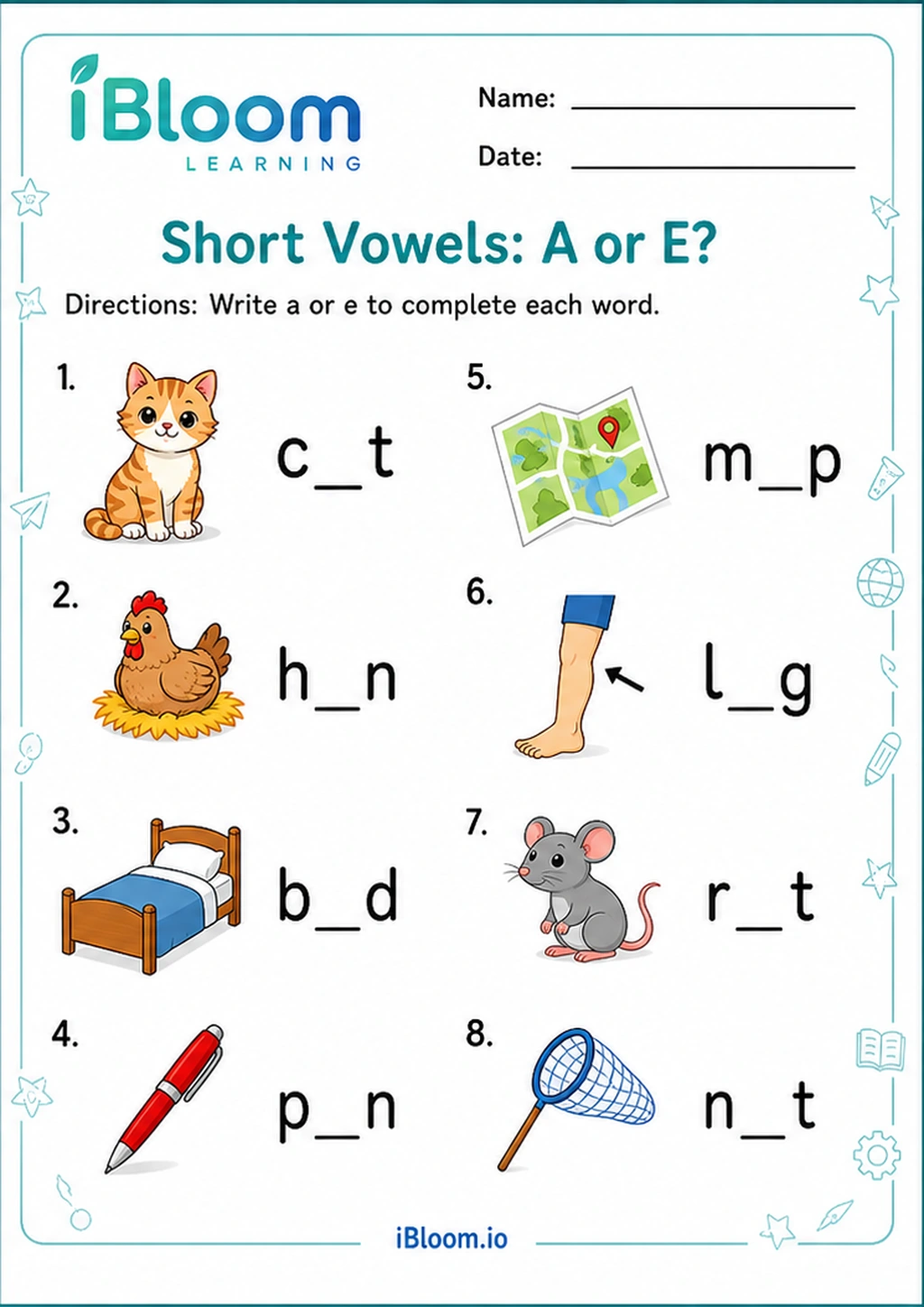 Short Vowels: A or E?UKG printable practice for Writing Short Vowels.UKGFree PDF preview
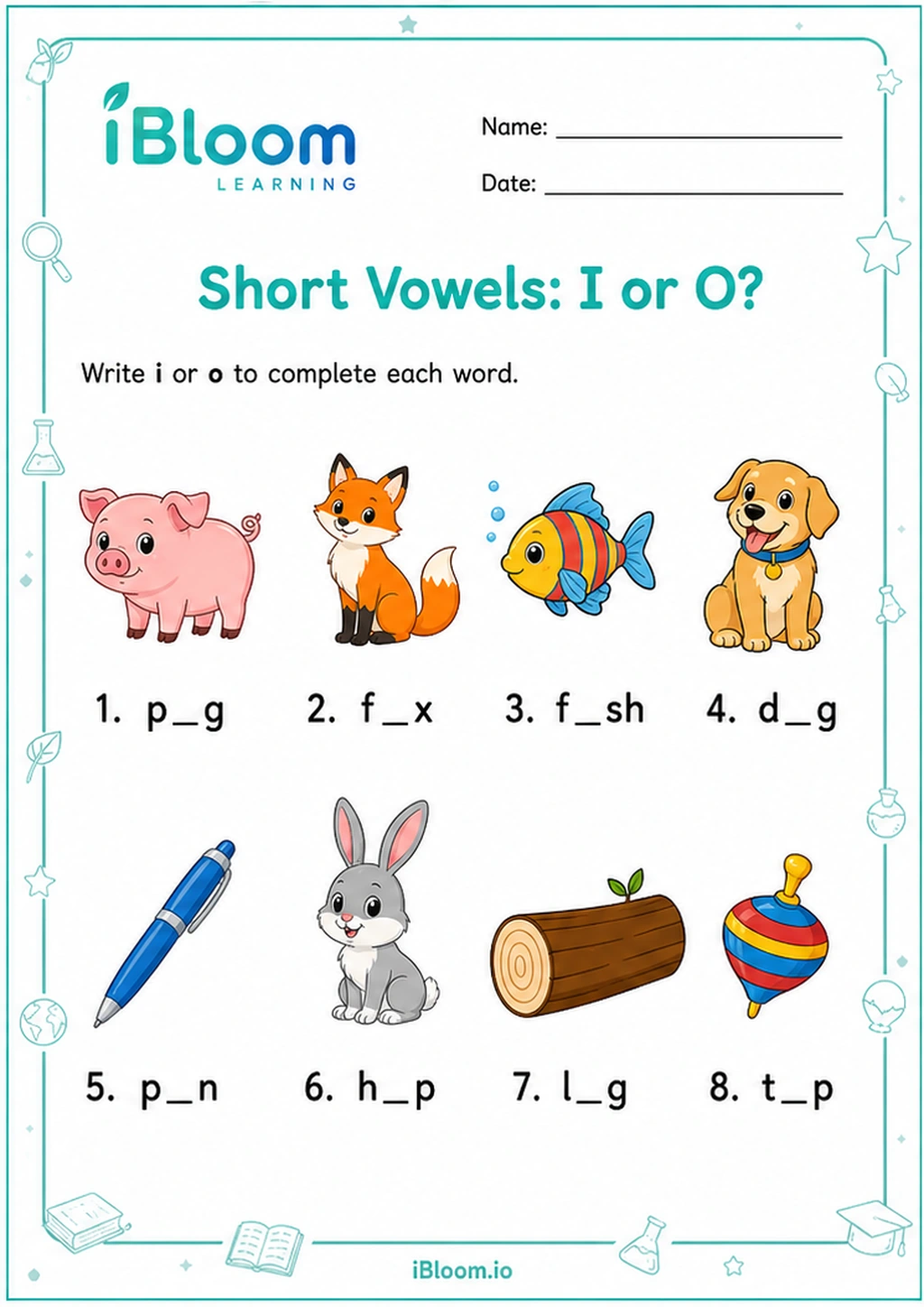 Short Vowels: I or O?UKG printable practice for Writing Short Vowels.UKGFree PDF preview
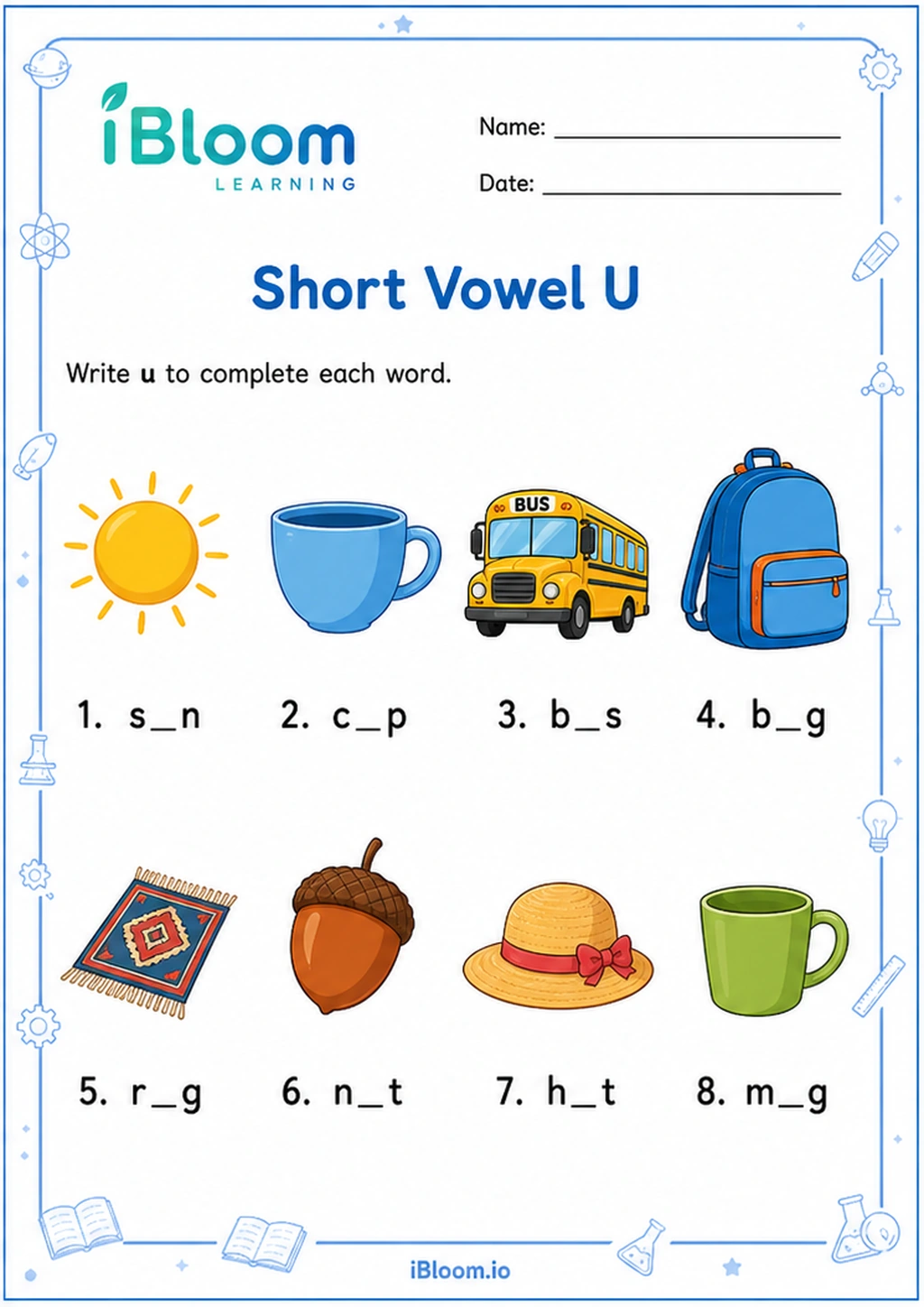 Short Vowel UUKG printable practice for Writing Short Vowels.UKGFree PDF preview
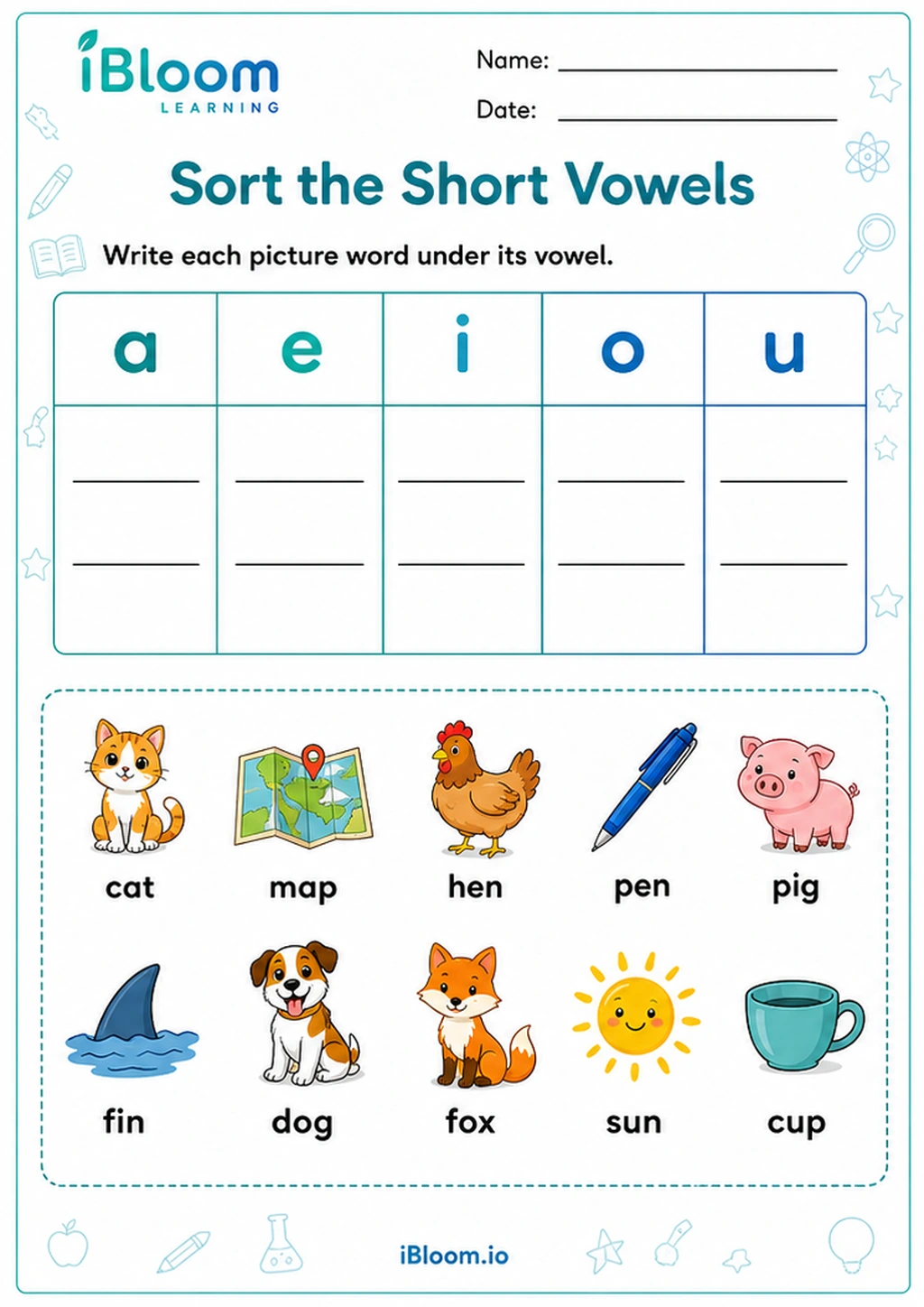 Sort the Short VowelsUKG printable practice for Writing Short Vowels.UKGFree PDF preview
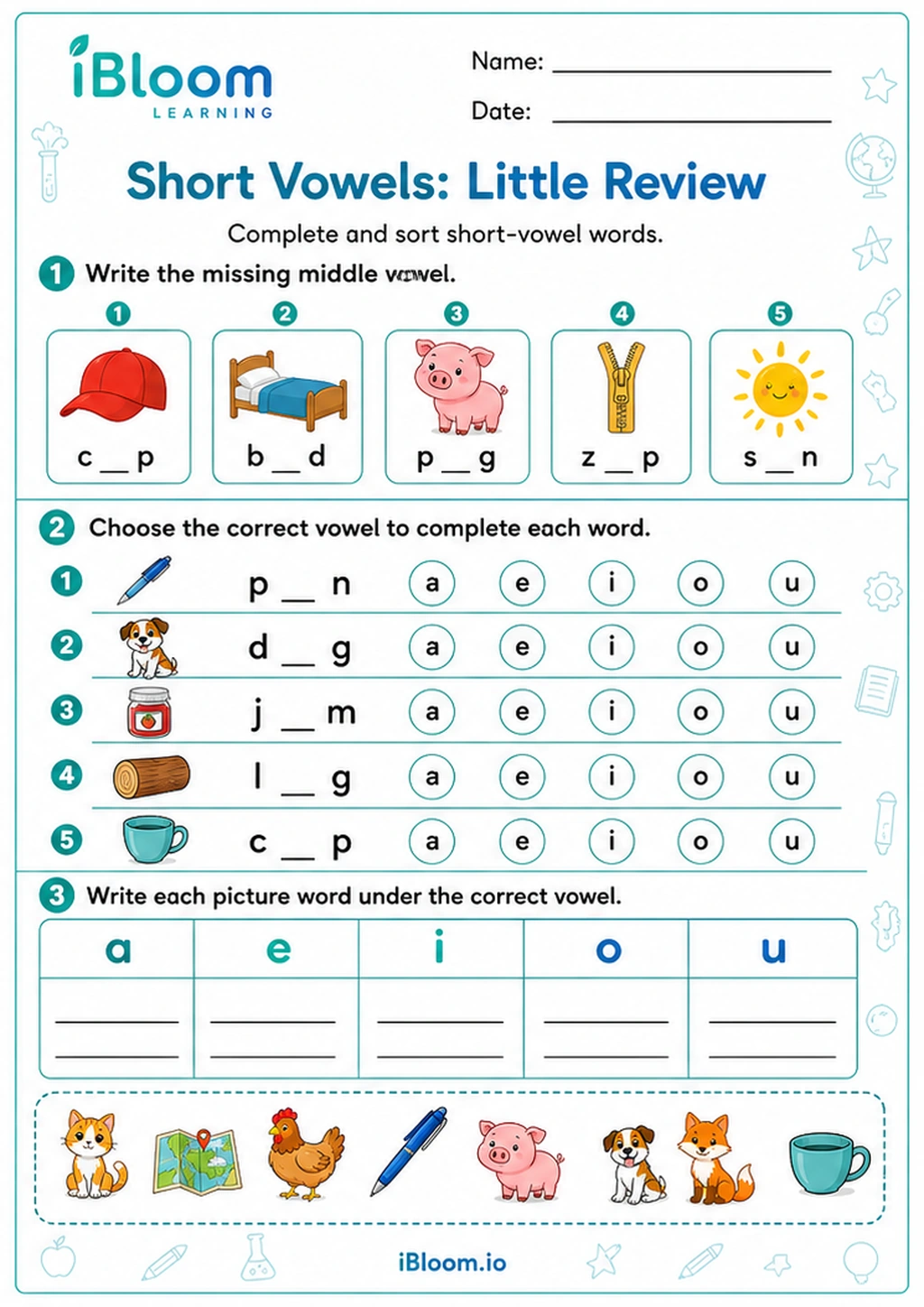 Short Vowels: Little ReviewUKG printable practice for Writing Short Vowels.UKGFree PDF preview
Practice that builds confidence
Building short vowel awareness
These Nursery, LKG and UKG worksheets help children practise writing the short vowel letters a, e, i, o and u while connecting each letter to its sound. Children build early phonics confidence by seeing vowels inside simple words and saying the sounds aloud as they write.
The printable activities include letter tracing, independent writing, picture-based vowel tasks and missing-vowel practice. They are designed for small hands, early pencil control and repeated exposure to short vowel sounds in a clear, child-friendly format.
Short vowels are often the first vowel sounds children meet in early reading: /a/ as in apple, /e/ as in egg, /i/ as in igloo, /o/ as in octopus and /u/ as in umbrella. These worksheets sit within the Nursery, LKG and UKG Vowels section, so the focus is not spelling long words but noticing, saying and writing the five vowel letters correctly.

From tracing to independent writing
The practice moves from guided marks to more independent attempts. A child may begin by tracing a large lowercase vowel, then copy the same letter on a line, and later write the missing vowel in a simple picture word. This gradual sequence supports pencil grip, left-to-right movement and letter formation without overwhelming beginners.
Parent routine at home
Use one page at a time. First, point to the vowel and say the sound clearly, keeping it short: a-a-apple, e-e-egg. Ask your child to trace the letter with a finger before using a pencil. After writing, let the child circle the neatest letter and say one more word with the same vowel sound. Keep correction gentle: model the letter again rather than asking for repeated rubbing and rewriting.

Classroom use for teachers
Teachers can use these printables during phonics practice, handwriting time, morning work or small-group revision. Pages can be placed in literacy centres for extra practice after a vowel sound has been introduced. They also work well for quick observation: note which children can identify the sound, which can form the letter, and which confuse similar vowel sounds.

Common errors to watch for
Young learners may write vowels too large, reverse letter shapes, confuse e and i sounds, or say the letter name instead of the short sound. Some children may add an extra sound, such as saying “ay” for short a. Encourage them to look at the picture, stretch the word slowly, and listen for the middle or beginning vowel sound depending on the task.
Free printable PDF download
Use this write short vowels worksheet page to preview the activity, print it, or download it as a PDF for quick practice. It works well for homework, homeschool lessons, tutoring, morning work, revision, and classroom centers.
Answers and answer key support
After the child completes the worksheet independently, parents and teachers can use the answer support or answer key information to check the work, review mistakes, and choose the next practice step.
Why iBloom worksheets help
iBloom worksheets give repeated, focused practice without clutter. The activities combine sound, picture and writing so children are not just copying letters; they are linking print to speech. A simple child-friendly strategy is: “Say it, tap it, write it.” Say the vowel sound, tap the letter once, then write it carefully.
Helpful answers
Frequently asked questions
Which vowels are practised in these worksheets?
Children practise writing the five short vowels: a, e, i, o and u. The activities focus on recognising the letter shape, saying the short sound and writing the vowel neatly.
Are these worksheets suitable for Nursery children?
Yes. Nursery children can use the tracing and large-letter practice pages, while LKG and UKG children can move towards copying and filling missing vowels in simple words.
Should my child say the letter name or the vowel sound?
For these worksheets, encourage the short vowel sound first, such as /a/ in apple or /e/ in egg. Letter names can be revised separately after the sound is understood.
What if my child mixes up e and i?
This is common in early phonics. Say both sounds clearly, use familiar picture words, and ask the child to listen carefully before writing. Short, repeated practice is more helpful than correcting many words at once.
Can teachers use these pages in phonics centres?
Yes. The worksheets work well for literacy centres, handwriting practice, vowel revision, small-group support and quick checks of sound-letter understanding.
Is this write short vowels worksheet free?
Yes. You can preview it for free and use the printable worksheet for home or classroom practice.
Can I download this write short vowels worksheet as a PDF?
Yes. Use the worksheet download option to save a printable PDF, or print the worksheet directly from the page.
Does this write short vowels worksheet include answers or an answer key?
When the activity has fixed answers, iBloom includes answer support so parents and teachers can check the completed worksheet.