






About this worksheet
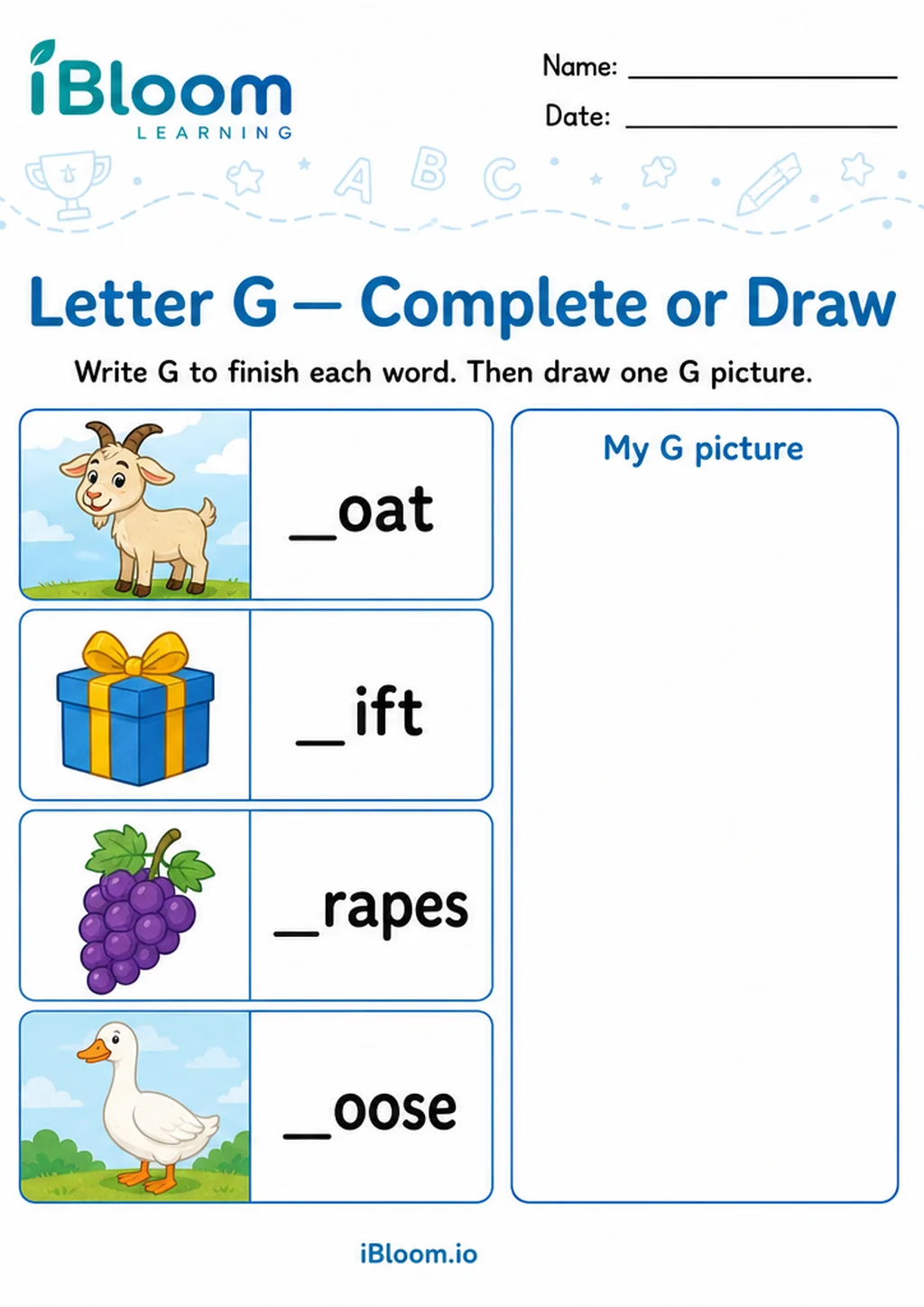
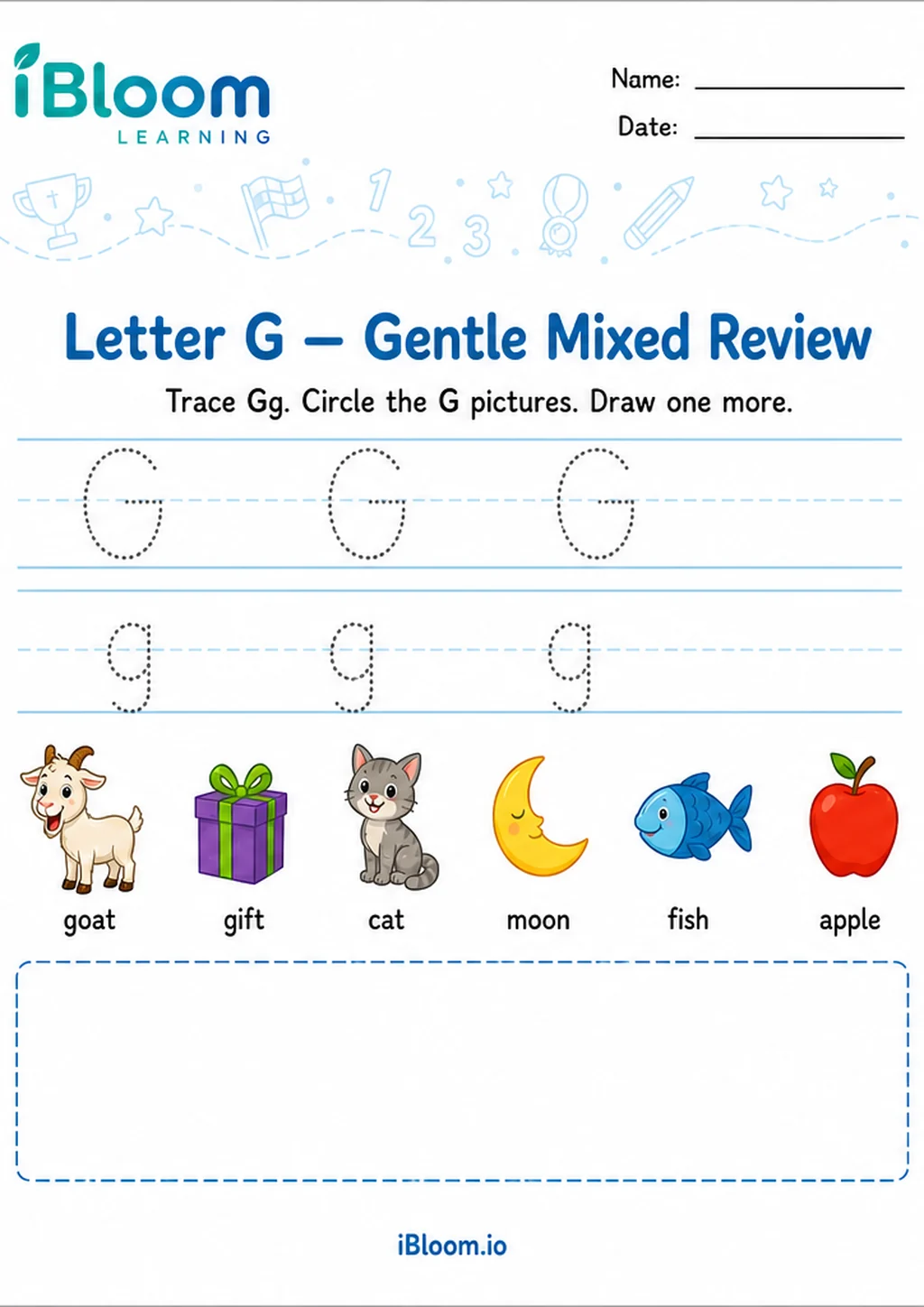
This printable Letter F page rebuilds the original complete-or-draw activity with picture clues the worksheet template can show clearly. Preschool and kindergarten learners identify familiar F words such as fish, fox, and frog, choose the missing first letter, trace F, and draw one more F word. It includes a separate answer key.
How can a picture help with the first sound?
Name the pictured object before choosing. Fish begins with /f/, while dish begins with a different sound. Part A repeats this listening step with several familiar words.
- 1Say “fish.”
- 2Listen for /f/ at the beginning.
- 3Choose fish rather than dish.
What happens after the picture choices?
After the picture clues and missing-letter choices, children trace uppercase F and draw one familiar word that begins with F.
How to use this worksheet
- 1Name each picture before choosing.
- 2Stretch the first sound in the word.
- 3Choose F when the word starts with /f/.
- 4Trace the dotted shapes with a finger or pencil.
- 5Draw and name one more F word.
Helpful sound reminders
The mistake
Choosing a word because it rhymes with fish.
The fix
Listen to the first sound, not the ending.
The mistake
Naming the letter F but not saying its sound.
The fix
Connect the letter name to /f/ in fish.
The mistake
Choosing a word with F later in the word.
The fix
Say the word slowly and check the sound right at the beginning.
What to practice next
Make more practice
Questions parents and teachers ask
Which words begin with F on this page?
The page uses picture words including fish, fire, fox, frog, flower, and foot. Say each name aloud and listen for /f/ at the beginning. The choices contrast F words with words that start with another sound. The adult can model the first sound once and then let the child try.
What does “complete” mean on this worksheet?
In Part B, children identify the first letter that completes familiar picture words. The task is shown as a letter choice beside each word, so children can focus on hearing /f/ and recognizing F. The adult can model the first sound once and then let the child try.
Why is there a letter tracing activity?
Tracing uppercase F gives children a chance to look closely at the letter used to complete each pictured word. The page then moves from recognizing F to drawing a familiar F word. These two activities connect letter recognition with the beginning sound /f/.
What should the child draw?
Any familiar thing whose name begins with F works, such as a fish, fan, fox, or flower. Ask the child to name the drawing afterward and listen together for the /f/ sound at the start. The adult can model the first sound once and then let the child try.
How many activities are included?
There are 16 activities: eight picture choices, six first-letter choices, one trace task, and one drawing task. The answer key gives the intended selections and a note for the open-ended drawing. The adult can model the first sound once and then let the child try.