






About this worksheet
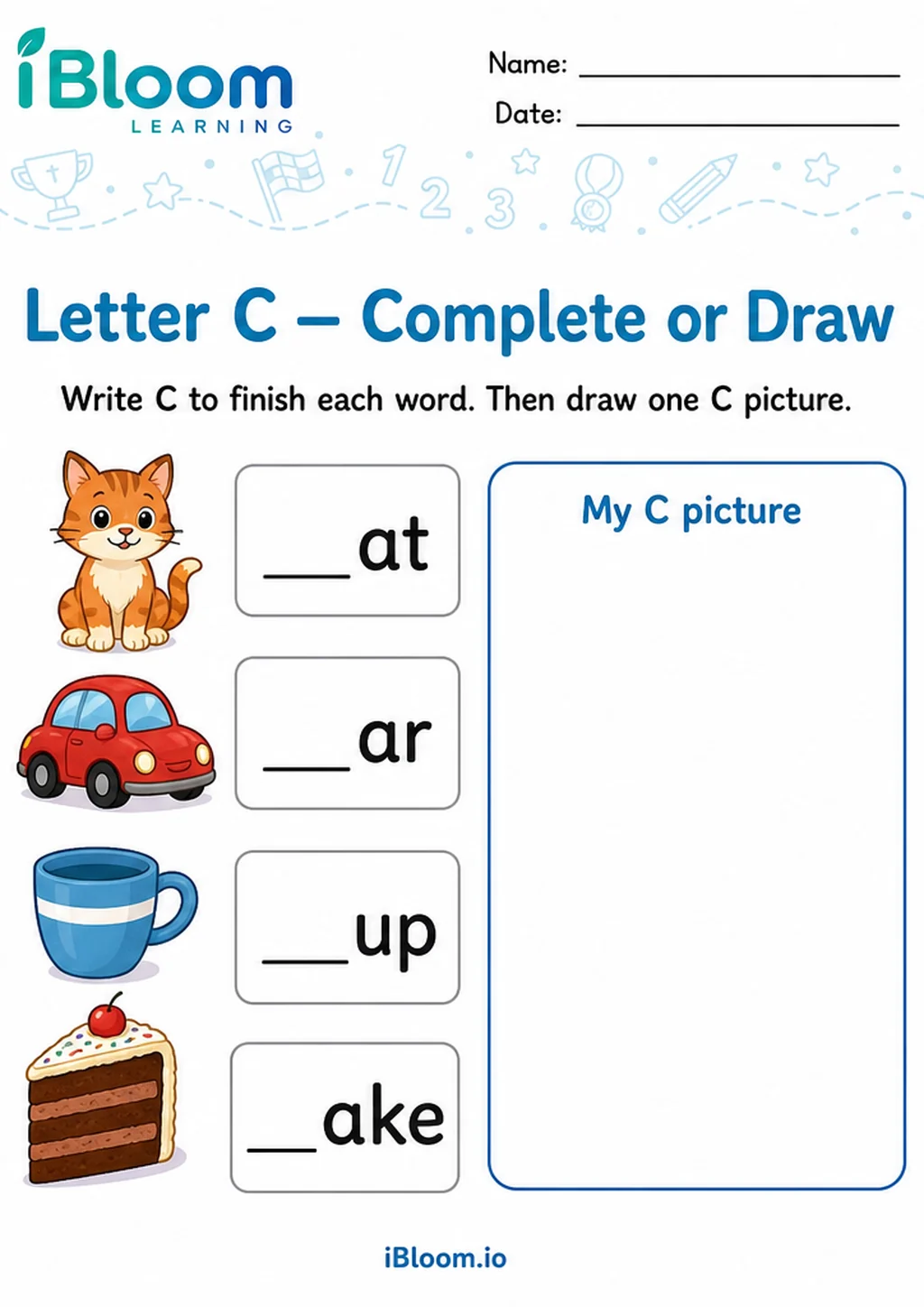
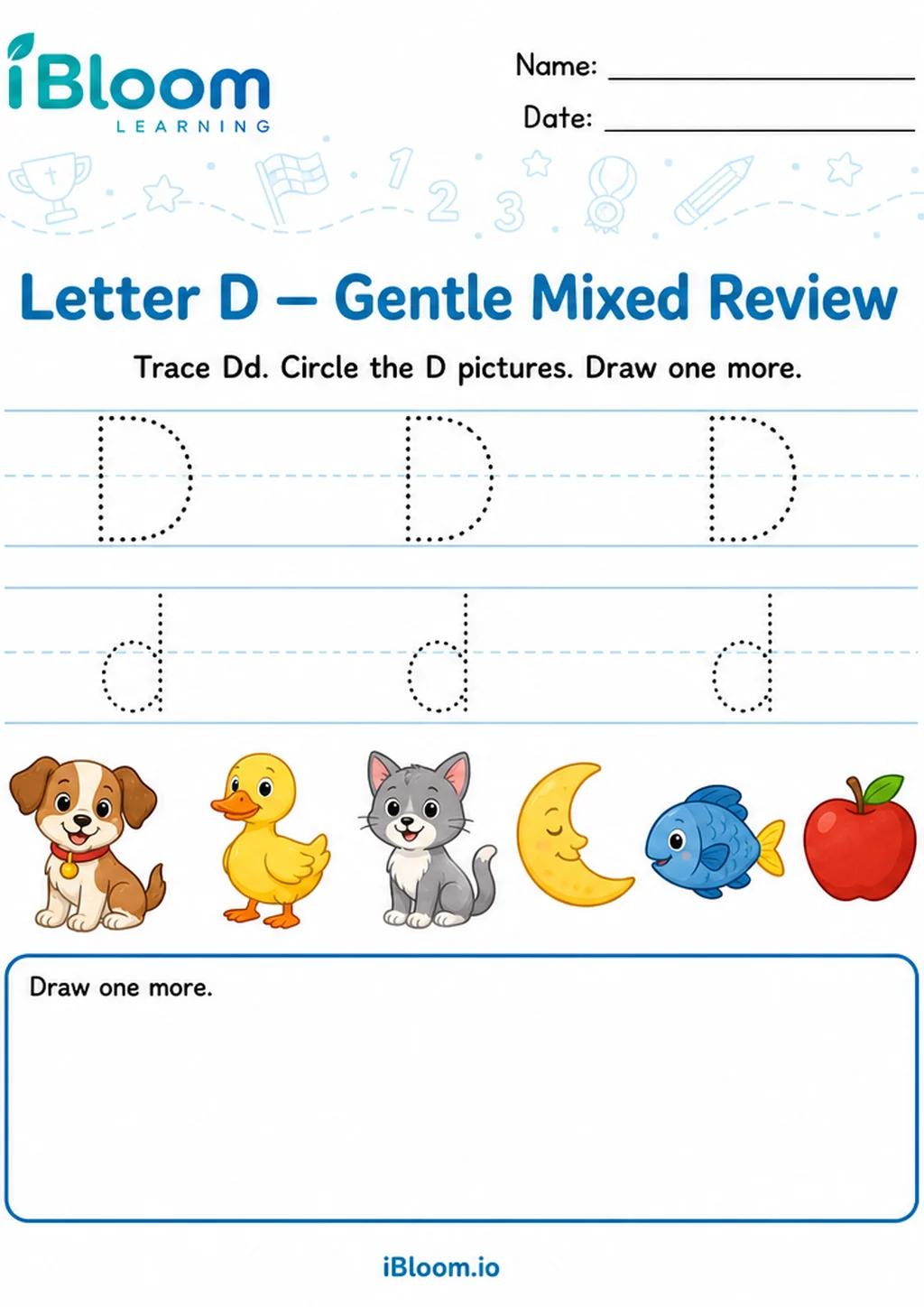
This free Letter F worksheet is for preschool and kindergarten learners practicing the beginning consonant /f/. Children trace uppercase F and lowercase f, then trace short words that begin with the same sound. Four of the word rows pair the printed word with a familiar picture clue. Saying each word aloud connects its first sound with the letter F. The sound-letter practice aligns with CCSS RF.K.3.a, and a separate answer key shows each tracing model.
Aligned to RF.K.3.a
What does the Letter F review include?
Part A introduces uppercase F and lowercase f, then pairs three short F words with picture clues. Children name the pictured item, say its first sound and trace the matching word. Part B continues with more short F words, including several without a picture.
The second part shifts from recognizing F to forming it. Learners trace uppercase and lowercase F, followed by short words that begin with the same sound.
- Part A, questions 1–6: trace F, f and short words with picture clues
- Part B, questions 7–14: trace additional short F words
- Say /f/ when tracing the first letter in each word
How can a child connect the picture to the first sound?
Name the pictured item, then say its first sound. In “fish,” the lips come together to make /f/ before the rest of the word. Invite the child to repeat the word while tracing its first letter.
A picture clue helps the learner connect the printed word with something familiar. Say the word slowly, then point to its first letter F.
- 1Name the picture: fish.
- 2Listen for the first sound in fish.
- 3Trace “fish” and say /f/ at the start.
How should children trace uppercase and lowercase F?
Start uppercase F at the top, draw its long line down, then add the two shorter lines across. Lowercase f also begins high, curves down and crosses near the top. Follow the printed model slowly.
A clear trace matters more than speed. Ask the child to say /f/ while tracing the first letter in fish, fox or frog.
What can we practice after letter F?
Point out F at the beginning of familiar words during shared reading or while looking at everyday labels. Children can say the word, say its first sound slowly and name the matching letter.
When F feels familiar, use the Letter G page for another consonant review or try a beginning-sounds generator for fresh picture sets.
How to use the worksheet
- 1Say the letter name F and its sound /f/ before starting.
- 2Name the pictured item on a row with an image.
- 3Trace each printed letter or word slowly.
- 4Say /f/ when tracing the first letter in an F word.
- 5Use the answer key to compare letter shapes.
Common mix-ups and quick reminders
The mistake
Starting uppercase F at the bottom of the line.
The fix
Begin at the top, draw the long line down, then add the two shorter bars.
The mistake
Making lowercase f look like uppercase F.
The fix
Follow the lowercase model’s curve and crossbar placement.
The mistake
Tracing a pictured word without saying its first sound.
The fix
Name the picture, say /f/, then trace the first letter and the whole word.
Common Core alignment
The tracing rows connect a consonant letter with its primary sound in familiar words.
Connect consonant letters with their primary sounds.
On this sheet: Children connect F with its primary /f/ sound in familiar words.
Show the official wordingHide the official wording
Demonstrate basic knowledge of one-to-one letter-sound correspondences by producing the primary sound or many of the most frequent sounds for each consonant.
What to practice next
Make more practice
Further reading
Questions parents and teachers ask
Which letter sound does this page practice?
The page practices the consonant F and its primary sound, /f/, as in fish, fox and frog. Children trace uppercase F, lowercase f and short F words. Four rows pair a familiar picture clue with a word to trace.
Does the worksheet include pictures?
Yes. Four tracing rows include picture clues: fish, fox, frog and flower. An adult can name each picture with the child so the learner can listen for the first sound before tracing the printed word. The remaining rows practice letter forms and short F words.
How many questions are included?
There are 14 tracing rows: three letter forms and 11 short F words. Four word rows include a matching picture clue. Part A introduces the letters and pictured words; Part B continues with more words. The key shows each model.
Should my child say the letter name or its sound?
Both are useful here. The child names the printed letter F, then says /f/ as the first sound in a word such as fish. Keeping the letter name separate from the sound helps connect what is heard with what is printed.
What is a useful next activity?
Invite your child to find F at the start of a familiar word, say the word slowly and point to its first letter. The Letter G worksheet offers another consonant review, while a tracing generator can provide additional handwriting rows.