Free printable practice
Phonics Practice Activities
Class 1 phonics worksheets that help children hear, blend, segment, and change sounds in words for stronger early reading.
Explore Phonics
Free printable worksheet PDFs
Preview every available page, then download the free worksheet PDF for home, homeschool, tutoring, or classroom practice.
Preview the exact activity before downloading it.
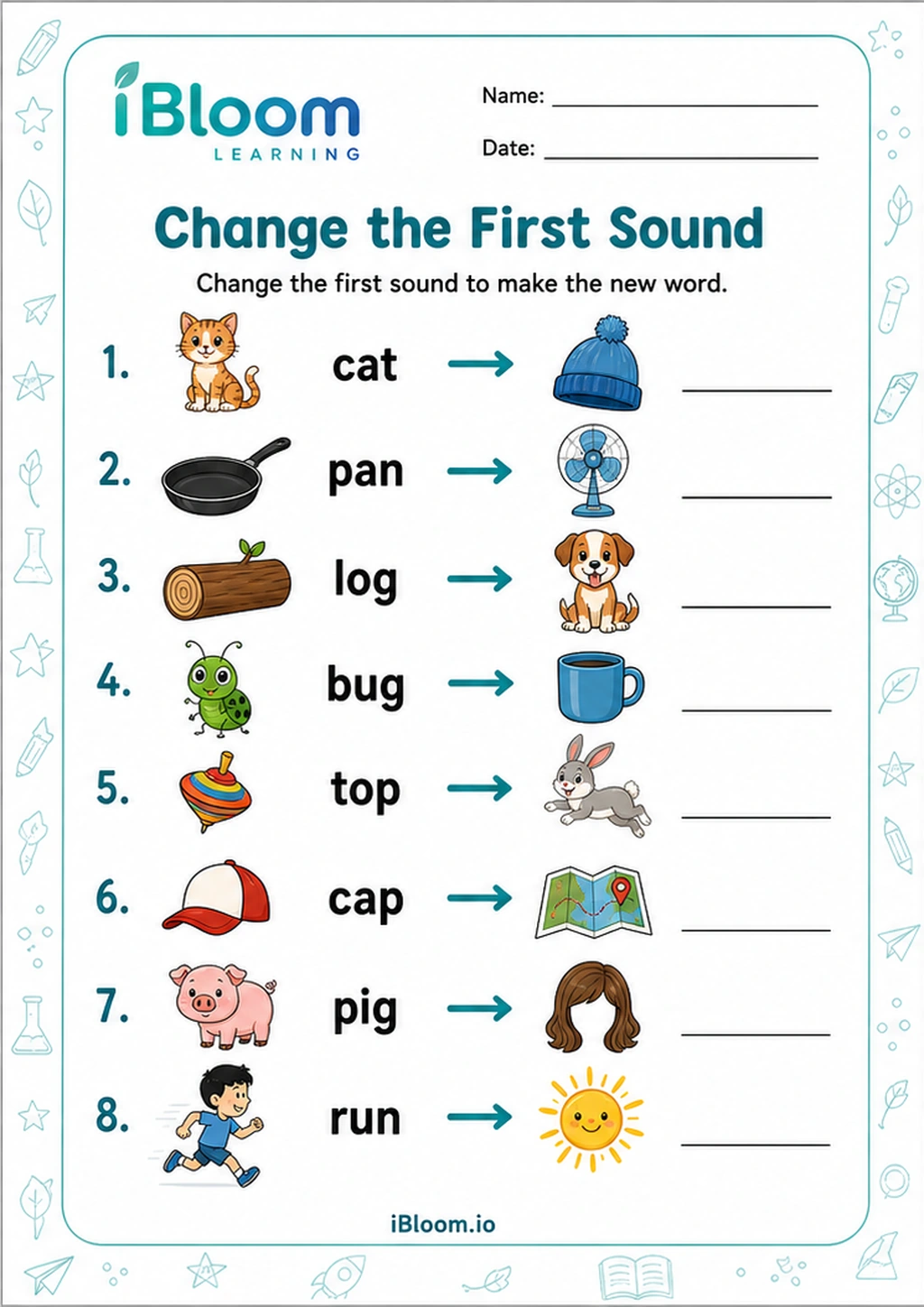 Change the First SoundClass 1 printable practice for Phoneme Substitution.Class 1Free PDF preview
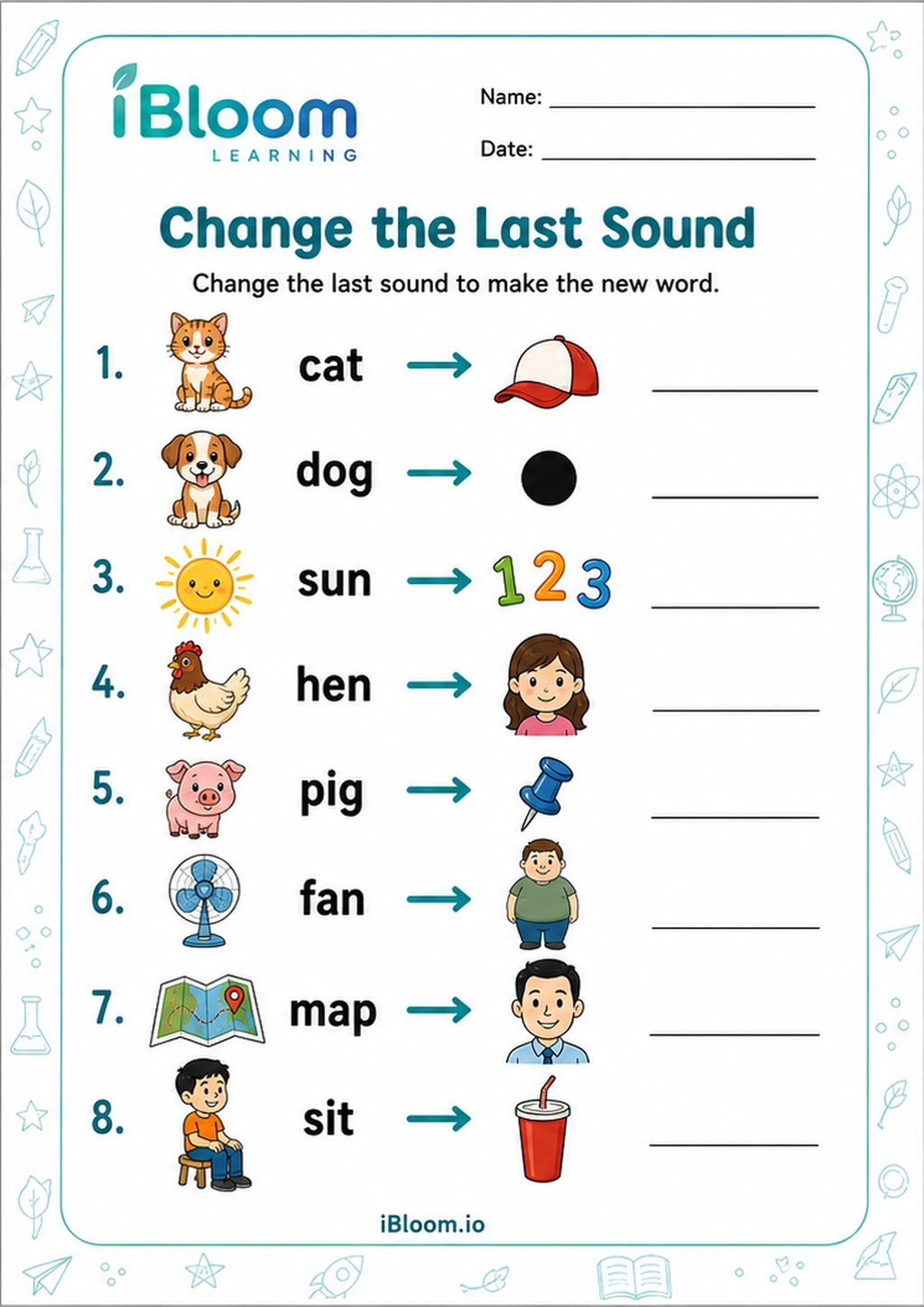 Change the Last SoundClass 1 printable practice for Phoneme Substitution.Class 1Free PDF preview
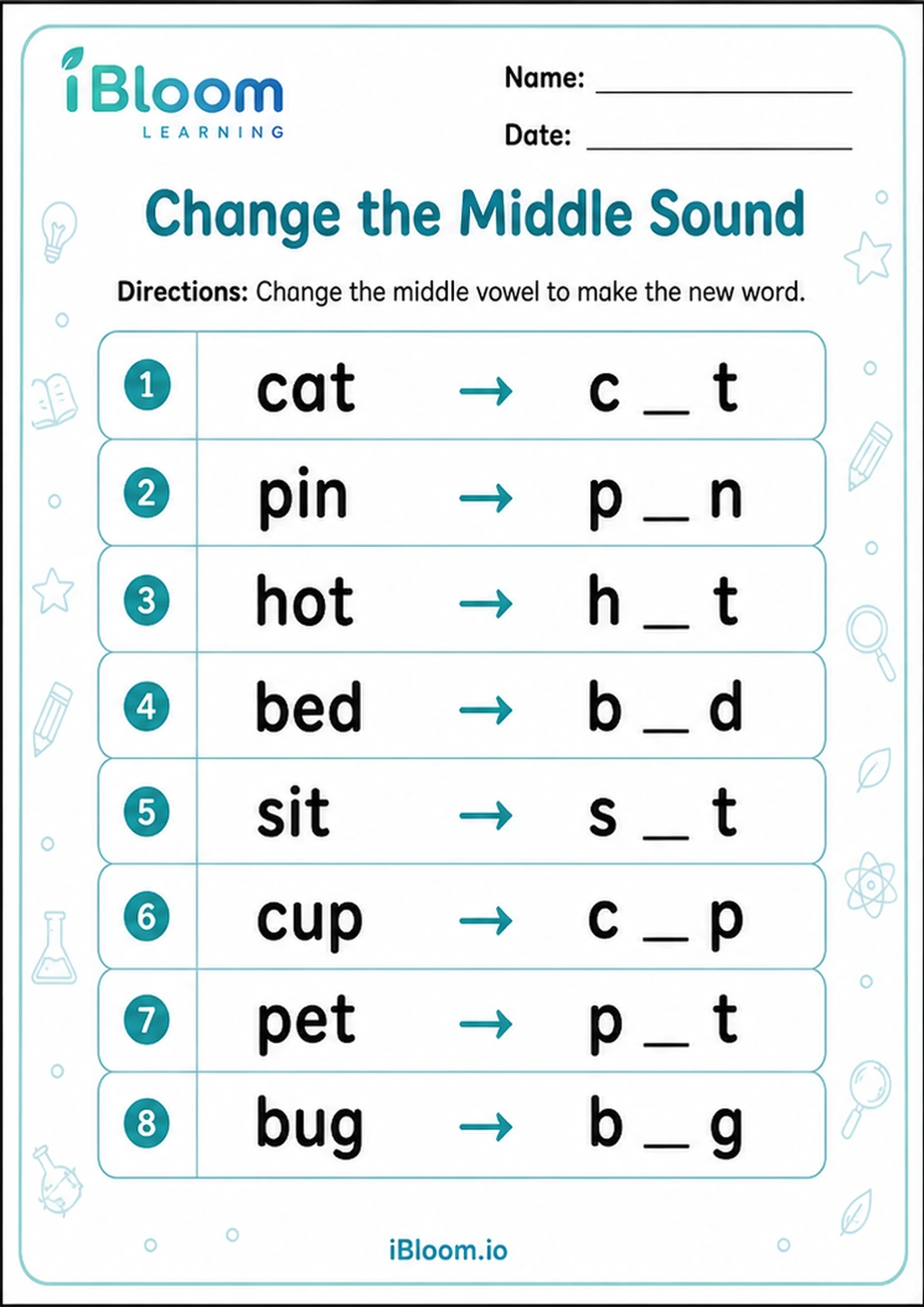 Change the Middle SoundClass 1 printable practice for Phoneme Substitution.Class 1Free PDF preview
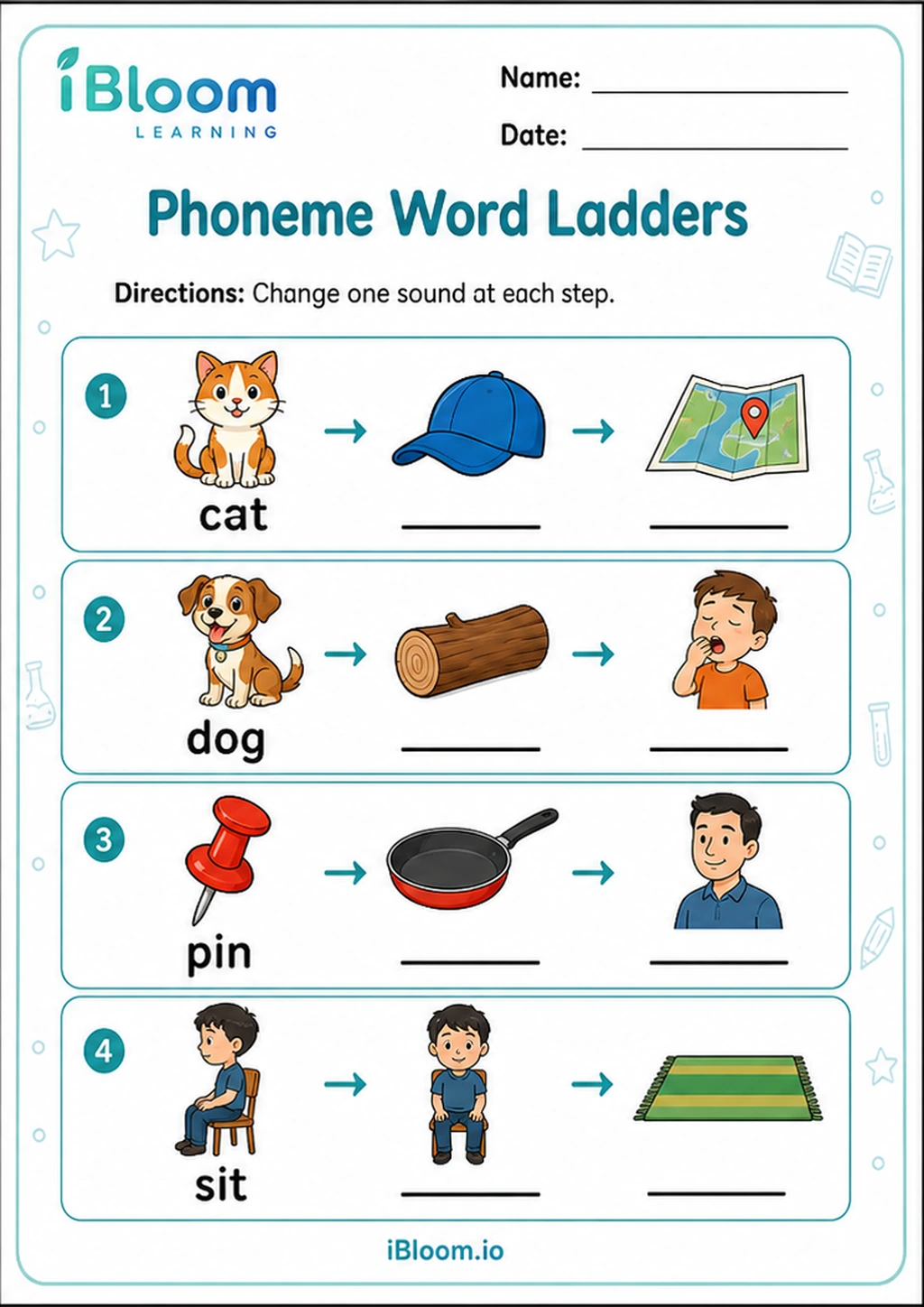 Phoneme Word LaddersClass 1 printable practice for Phoneme Substitution.Class 1Free PDF preview
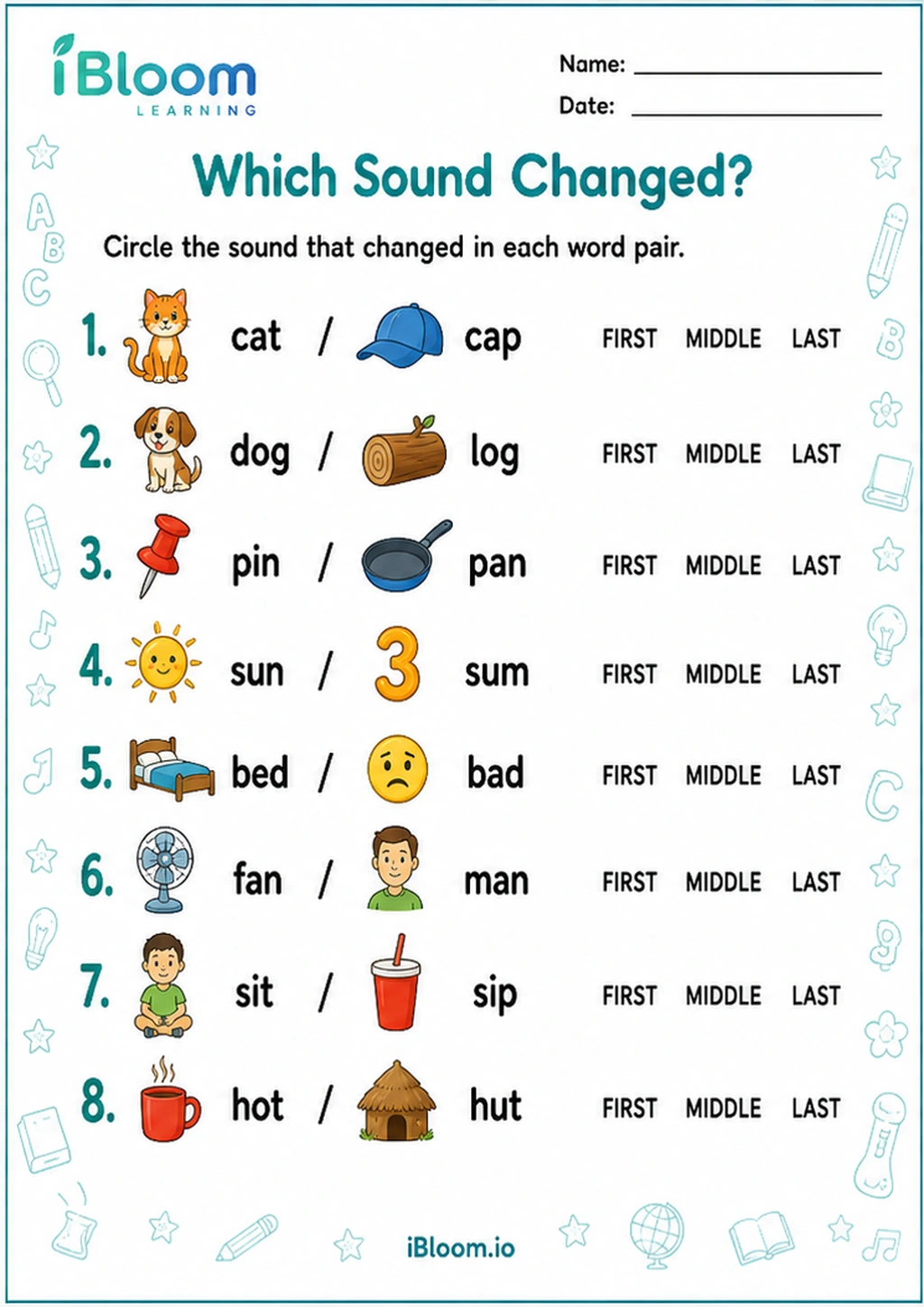 Which Sound Changed?Class 1 printable practice for Phoneme Substitution.Class 1Free PDF preview
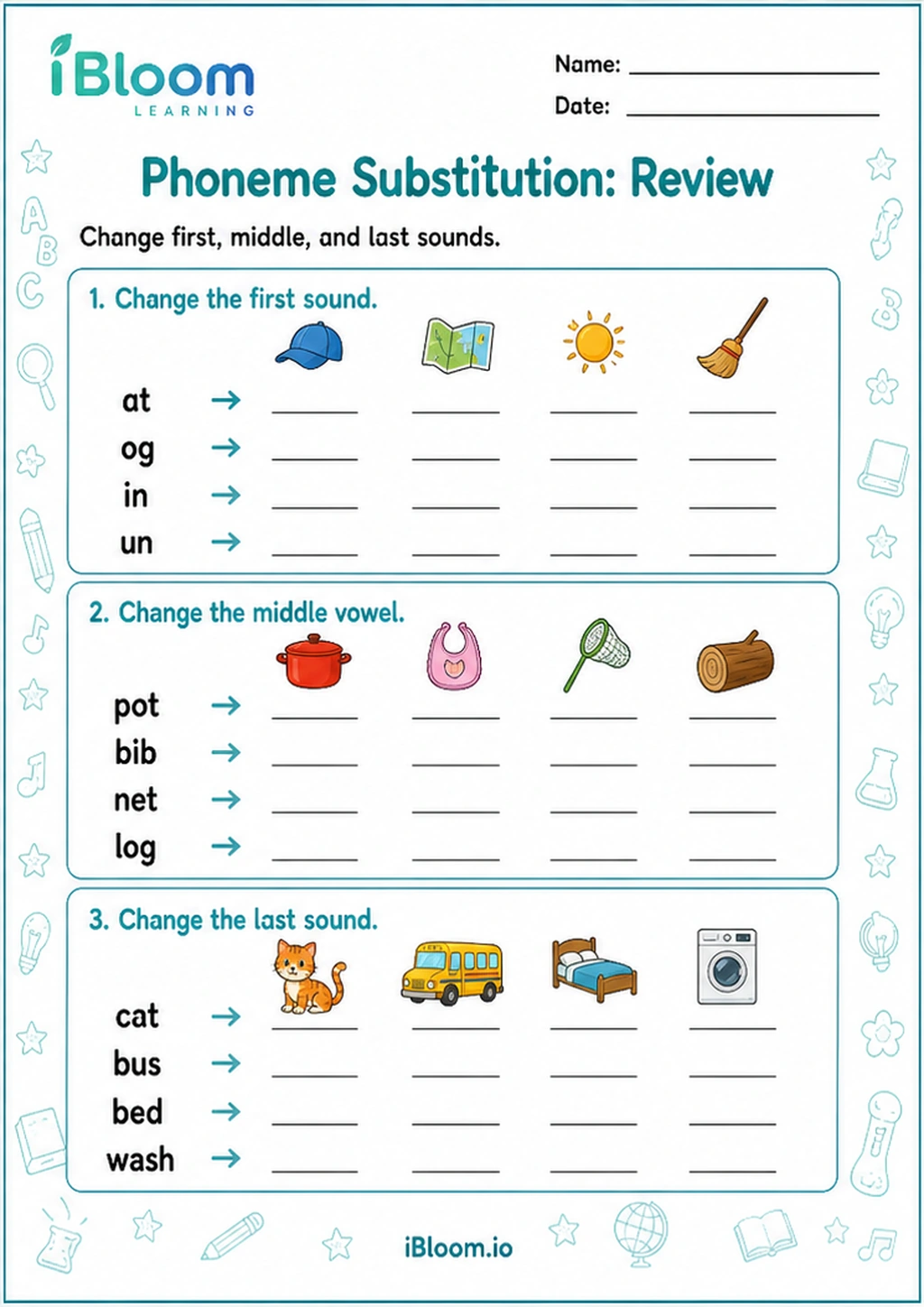 Phoneme Substitution: ReviewClass 1 printable practice for Phoneme Substitution.Class 1Free PDF preview
Practice that builds confidence
How the phonics skills build
These Class 1 phonics practice activities help children connect spoken sounds with written letters and letter groups. Learners practise CVC words, short and long vowels, consonant blends, digraphs, rhyming words, word families, syllables, and phoneme skills used in early reading.
The printable worksheets include sound matching, blending, segmentation, substitution, isolation, and comparison tasks. Children move from hearing individual sounds to reading and building words, supporting the Reading Comprehension > Class 1 > Phonics learning path.
Class 1 phonics is not just naming letters. Children learn that words are made of sounds, and that sounds can be represented by single letters or groups of letters. These worksheets begin with familiar CVC words such as cat, pin, and hop, then extend to word families, rhyming words, short and long vowels, consonant blends, and digraph sounds such as sh, ch, th, and wh.

From hearing sounds to reading words
Activities cover phoneme isolation, phoneme segmentation, blending phonemes, blending sounds, phoneme differences, phoneme substitution, and phoneme similar tasks. A child may identify the first sound in sun, split map into m-a-p, blend b-a-t into bat, or change the first sound in pan to make man. This helps children understand that small sound changes create new words.
Parent routine for home practice
Choose one worksheet and read the instructions aloud. Ask your child to say each picture name slowly, tap one finger for each sound, then write or circle the answer. Keep the routine oral before written: say it, stretch it, tap it, then read it. For rhyming and word families, make a quick list together, such as bag, tag, rag, and wag.

Classroom uses for teachers
Teachers can use these printables for phonics centres, small-group revision, morning work, or quick checks after a sound lesson. Digraph and blend pages work well after explicit board practice, while syllable and phoneme segmentation sheets are useful for oral warm-ups before reading simple passages. Mixed pages help identify which children need more support with listening for sounds.

Common errors to watch for
Some children confuse a blend with a digraph: in bl both sounds are heard, while in sh the letters make one sound. Others may hear the starting sound but miss the ending sound, or add an extra vowel while blending, saying buh-a-tuh instead of bat. Long and short vowel confusion is also common, so pair listening practice with clear examples.
Free printable PDF download
Use this class 1 phonics worksheet page to preview the activity, print it, or download it as a PDF for quick practice. It works well for homework, homeschool lessons, tutoring, morning work, revision, and classroom centers.
Answers and answer key support
After the child completes the worksheet independently, parents and teachers can use the answer support or answer key information to check the work, review mistakes, and choose the next practice step.
Why iBloom worksheets help
The pages focus on one manageable phonics idea at a time, then connect it to real word reading. Picture support, sound-based prompts, and repeated word patterns help children practise confidently. A child-friendly strategy is: look at the word, say each sound, slide the sounds together, and ask, does it sound like a word I know?
Helpful answers
Frequently asked questions
What phonics skills are included in these Class 1 worksheets?
They include CVC words, rhyming words, word families, syllables, short and long vowels, consonant blends, digraphs, blending, segmentation, phoneme isolation, phoneme substitution, and sound comparison.
How can I help my child blend sounds without guessing?
Ask your child to point to each letter or letter group, say the sounds slowly, then slide them together. If needed, cover part of the word and reveal it sound by sound.
What is the difference between a consonant blend and a digraph?
In a consonant blend, both sounds can be heard, as in bl or st. In a digraph, two letters work together to make one sound, such as sh, ch, th, or wh.
Are these worksheets useful before reading comprehension passages?
Yes. Strong phonics helps children decode words more accurately, which makes it easier to understand simple Class 1 reading passages.
What should I do if my child confuses short and long vowels?
Use clear word pairs and say them aloud, such as cap and cape or bit and bite. Ask your child to listen for the vowel sound before writing or choosing an answer.
Is this class 1 phonics worksheet free?
Yes. You can preview it for free and use the printable worksheet for home or classroom practice.
Can I download this class 1 phonics worksheet as a PDF?
Yes. Use the worksheet download option to save a printable PDF, or print the worksheet directly from the page.
Does this class 1 phonics worksheet include answers or an answer key?
When the activity has fixed answers, iBloom includes answer support so parents and teachers can check the completed worksheet.