Free printable practice
Phoneme Substitution Practice Activities
Class 1 phonics worksheets that help children change one sound in a word to make a new word, strengthening listening, spelling and early reading.
Free printable worksheet PDFs
Preview every available page, then download the free worksheet PDF for home, homeschool, tutoring, or classroom practice.
Preview the exact activity before downloading it.
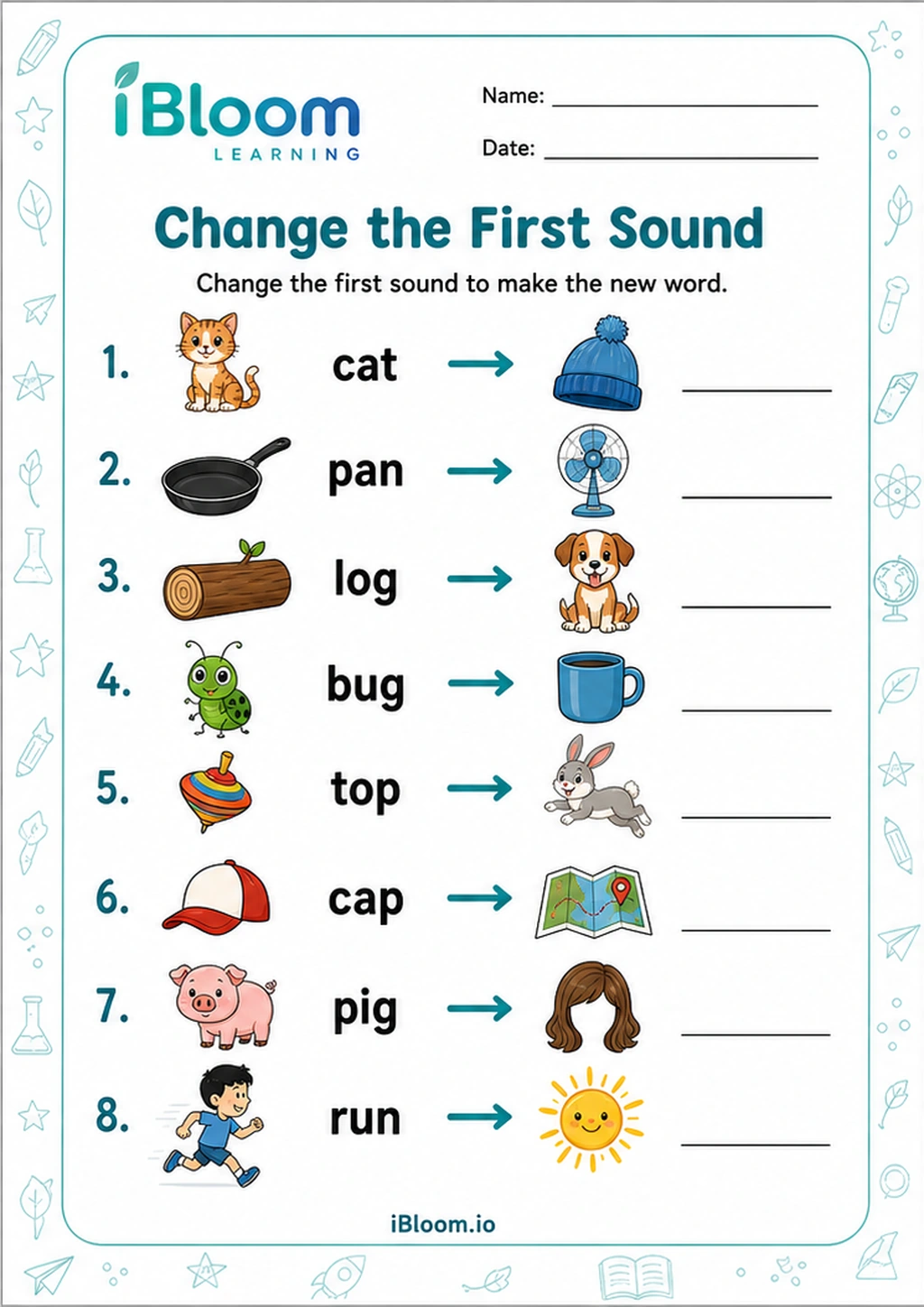 Change the First SoundClass 1 printable practice for Phoneme Substitution.Class 1Free PDF preview
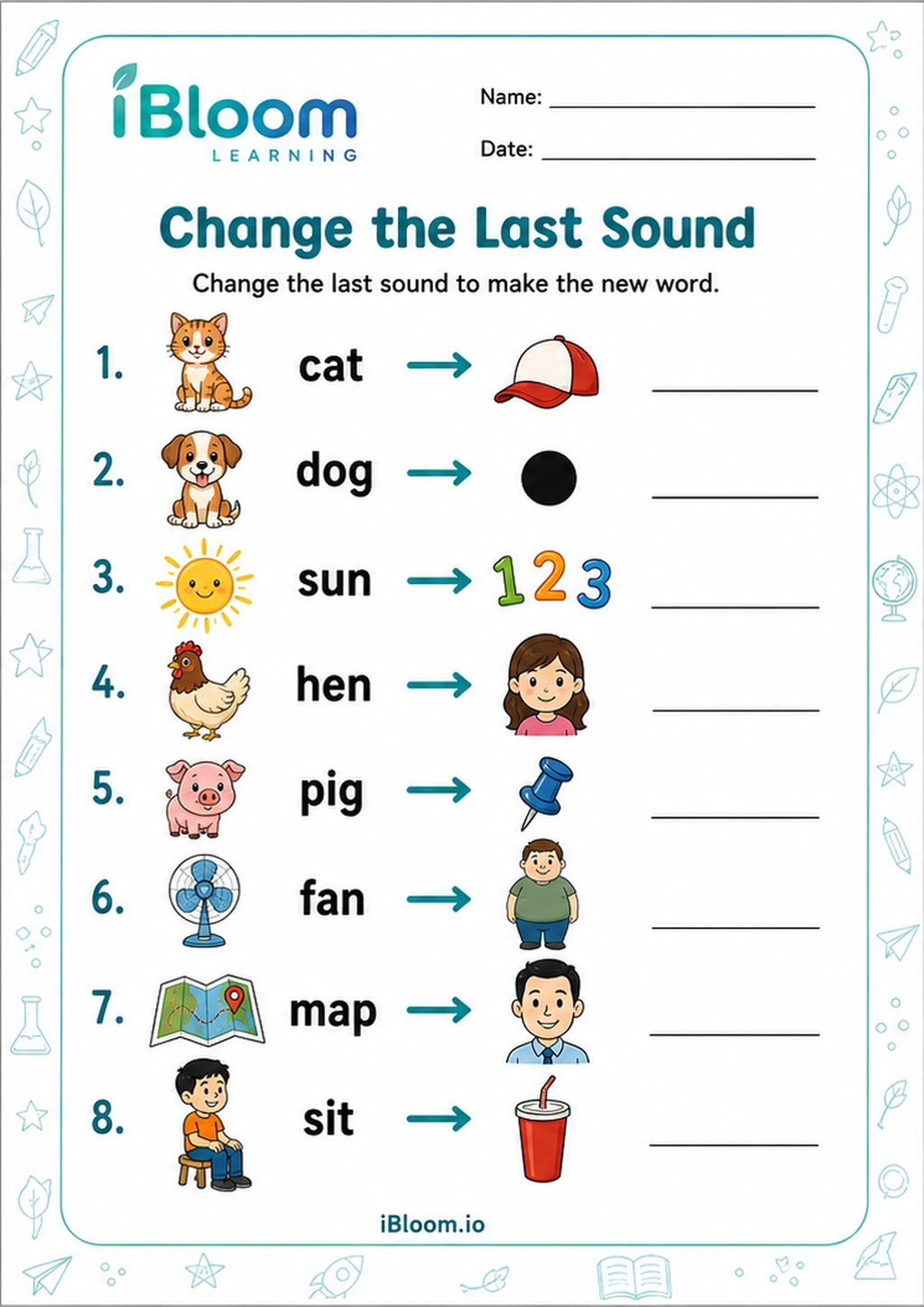 Change the Last SoundClass 1 printable practice for Phoneme Substitution.Class 1Free PDF preview
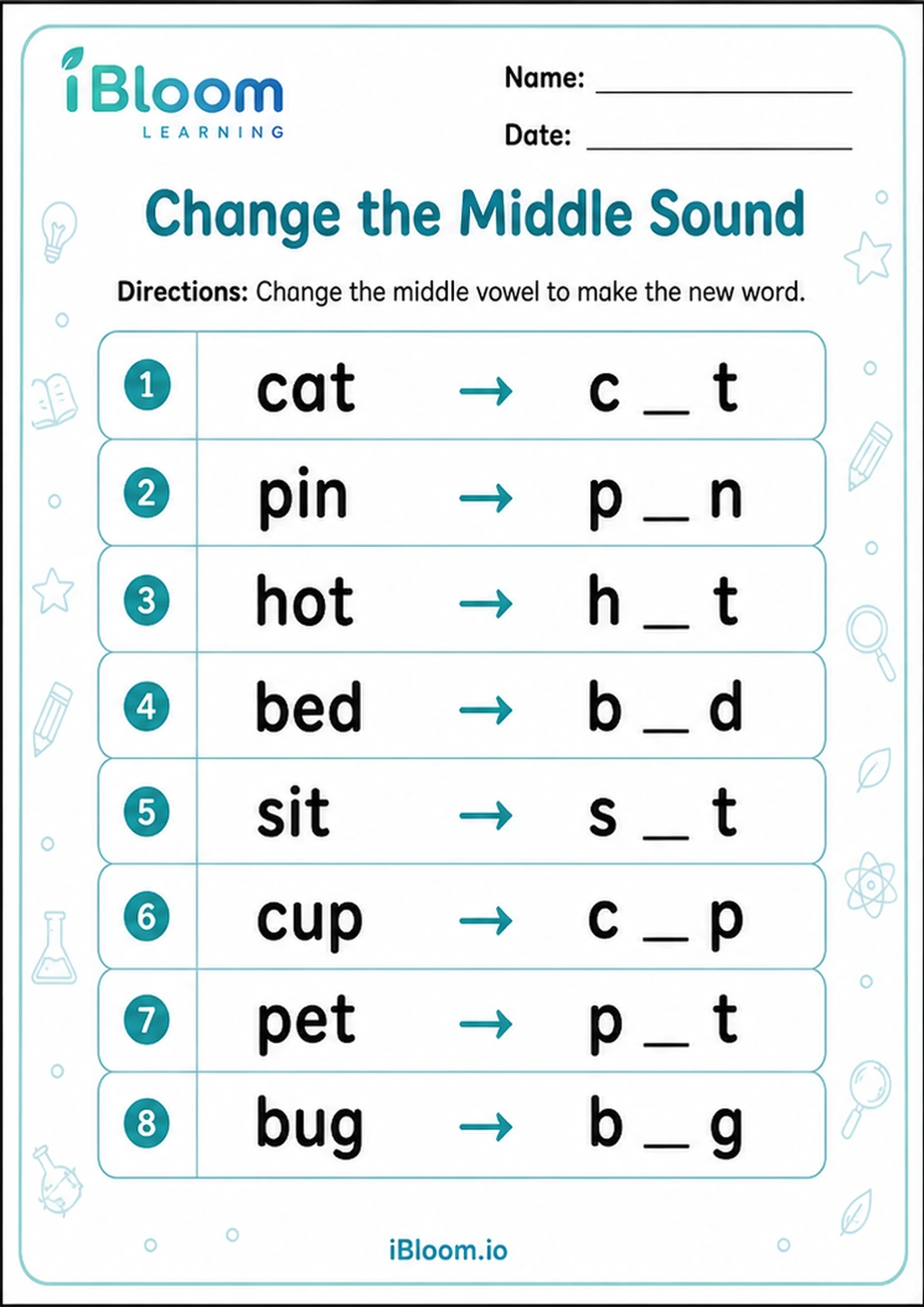 Change the Middle SoundClass 1 printable practice for Phoneme Substitution.Class 1Free PDF preview
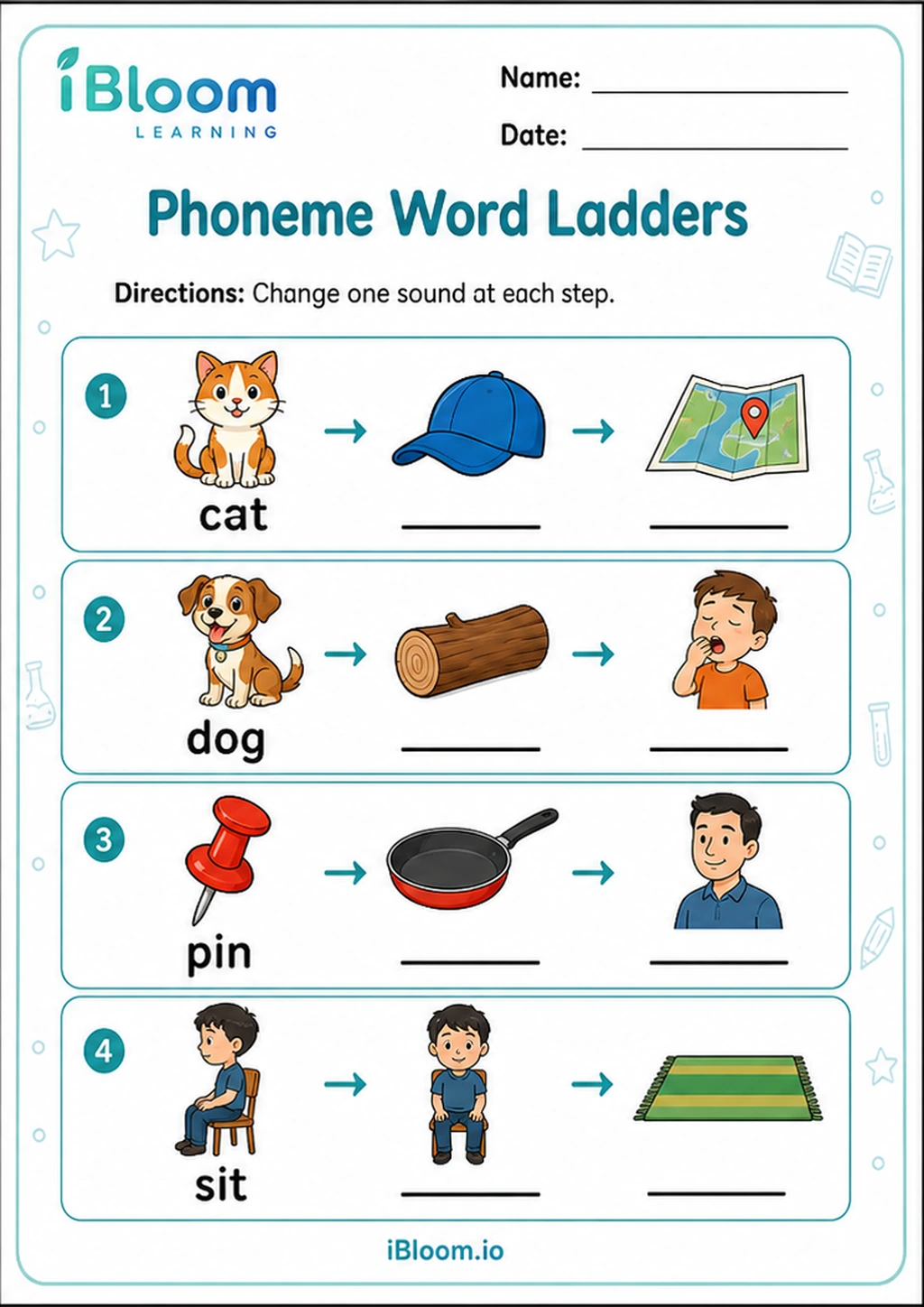 Phoneme Word LaddersClass 1 printable practice for Phoneme Substitution.Class 1Free PDF preview
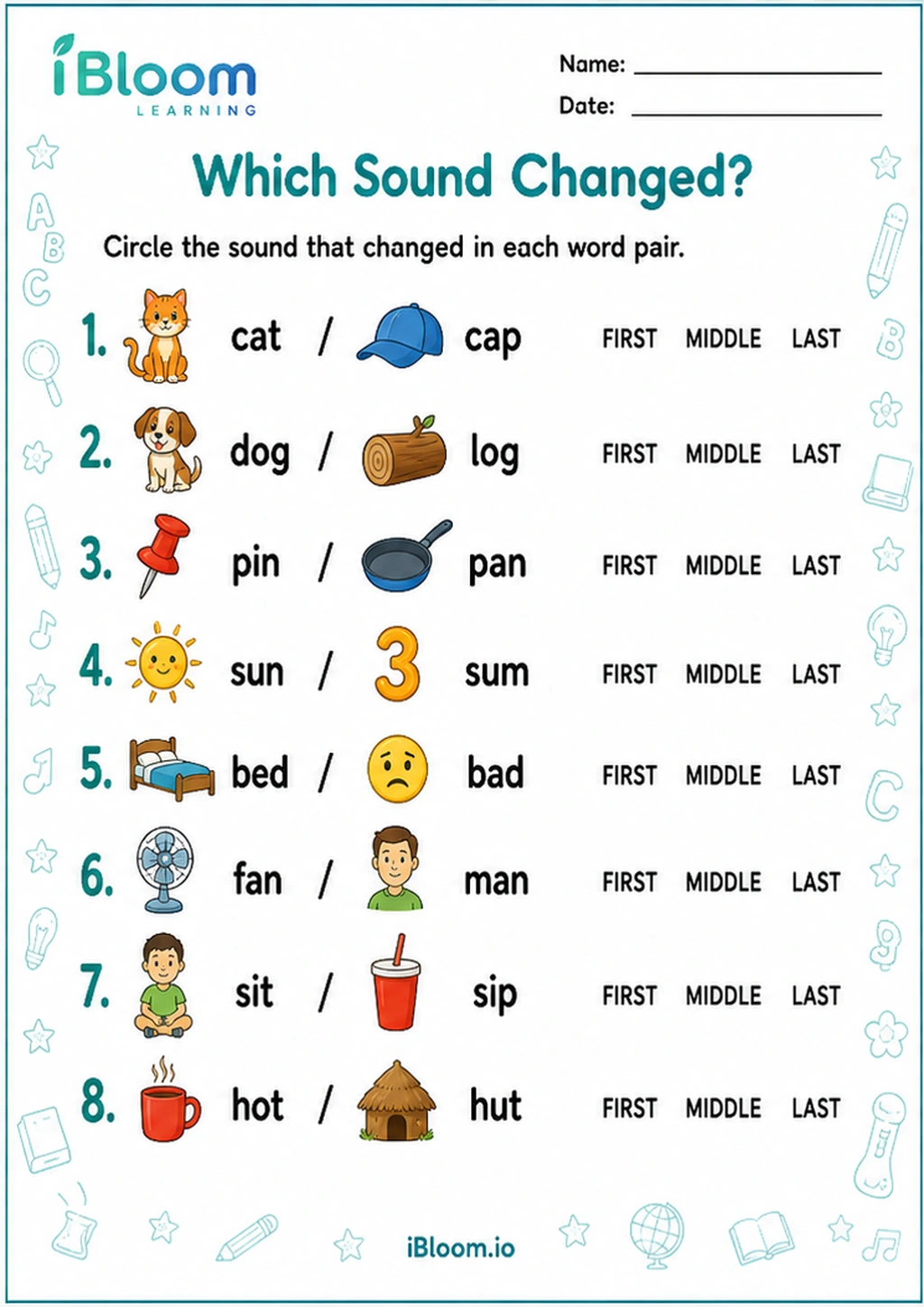 Which Sound Changed?Class 1 printable practice for Phoneme Substitution.Class 1Free PDF preview
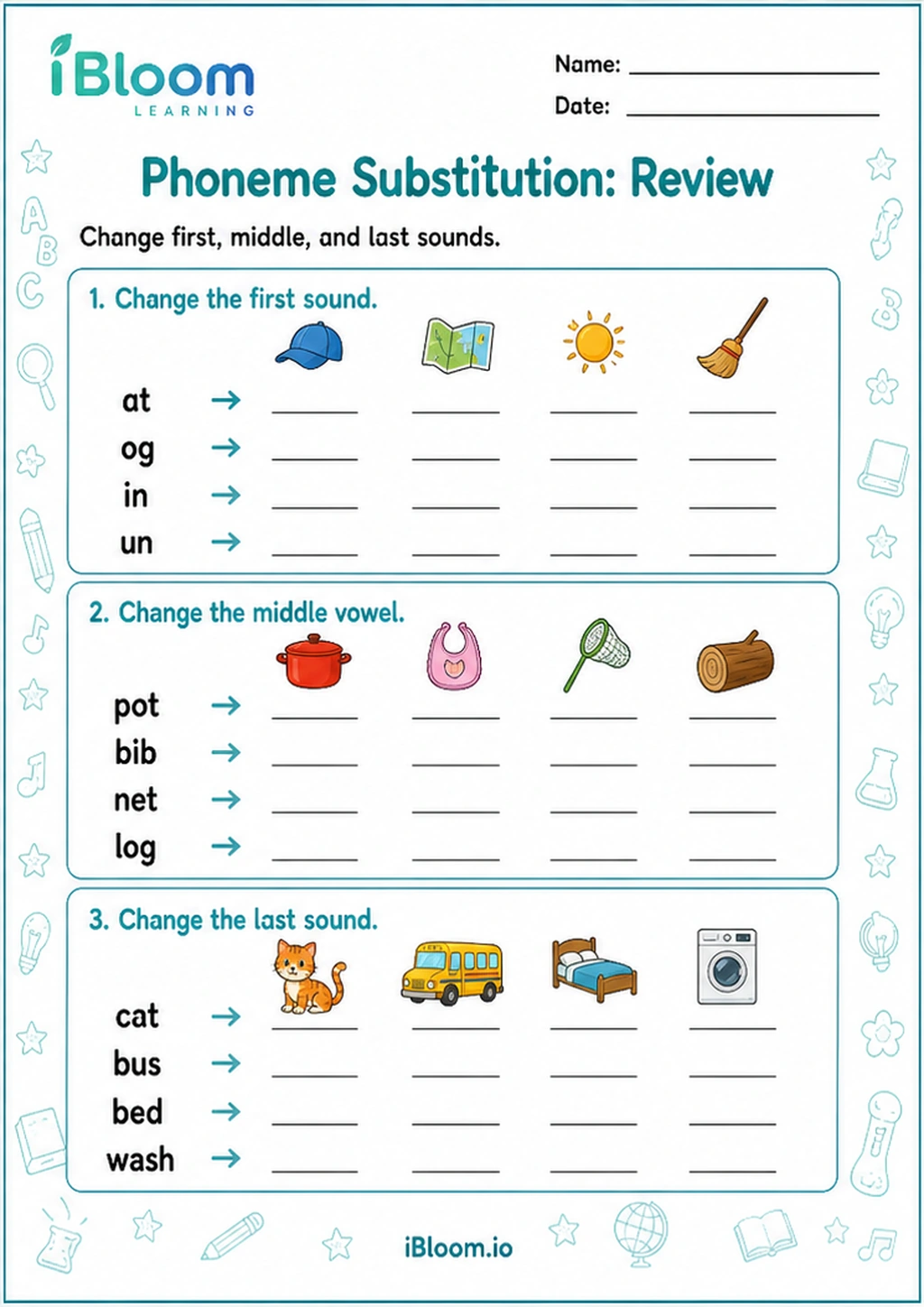 Phoneme Substitution: ReviewClass 1 printable practice for Phoneme Substitution.Class 1Free PDF preview
Practice that builds confidence
What phoneme substitution means
These Class 1 phoneme substitution worksheets help children listen closely to each sound in a word and change one sound to make a new word. Learners practise saying words like cat, bat, cap and map while noticing how a small sound change can change the whole word.
The printable activities include simple word and picture prompts, sound-change tasks, letter choices and short writing responses. They support phonics within Reading Comprehension by building the sound awareness children need before reading longer words and sentences confidently.
Phoneme substitution is the skill of replacing one speech sound in a word with another. In Class 1, this usually begins with short, familiar words. A child may change the first sound in cat to make bat, change the last sound in pin to make pig, or change the middle sound in pan to make pen. This practice strengthens the link between listening, speaking, letters and spelling.

How the worksheets progress
The activities move from easier sound changes to more careful listening. Children first work with beginning sounds because they are easier to hear. They then try ending sounds and, when ready, middle vowel sounds. Picture support helps them confirm meaning, while letter prompts encourage them to connect phonemes with graphemes. The focus stays on one change at a time so the child can hear exactly what has shifted.
Parent routine at home
Choose two or three words from a worksheet and say them aloud before writing. Ask, “If we change /m/ in mat to /s/, what word do we get?” Let your child say the new word, point to the matching picture if given, and then write it. Keep the routine oral first, then written. If your child struggles, stretch the word slowly: m-a-t, then replace only the first sound.

Classroom uses for teachers
Teachers can use these printables in phonics groups, reading readiness practice, morning work or literacy centers. They are also useful for quick checks after teaching initial, final or medial sounds. Pair work works well: one child reads or says the base word, and the other creates the new word. The page then becomes a record of listening accuracy and spelling choices.

Common errors to watch for
Some children change more than one sound, such as turning cat into dog, which shows they are thinking of a new word but not substituting carefully. Others may confuse letter names with letter sounds or miss short vowel changes. Encourage them to tap one sound per finger and ask, “Which sound stayed the same?” This keeps attention on the exact sound position.
Free printable PDF download
Use this class 1 phoneme substitution worksheet page to preview the activity, print it, or download it as a PDF for quick practice. It works well for homework, homeschool lessons, tutoring, morning work, revision, and classroom centers.
Answers and answer key support
After the child completes the worksheet independently, parents and teachers can use the answer support or answer key information to check the work, review mistakes, and choose the next practice step.
Why iBloom worksheets help
iBloom worksheets give repeated, focused practice without overwhelming young readers. The mix of oral prompts, pictures, letters and writing helps children hear the sound change, see the spelling pattern and use the new word meaningfully. A child-friendly strategy is: say the word, tap the sounds, swap one sound, then say the new word.
Helpful answers
Frequently asked questions
What is phoneme substitution for Class 1 children?
It is the ability to change one sound in a spoken word to make a new word, such as changing the /c/ sound in cat to /b/ to make bat.
Should my child say the sounds aloud before writing?
Yes. Phoneme substitution is first a listening and speaking skill. Saying the word aloud helps the child hear which sound is being replaced before choosing or writing letters.
Which sound changes are easiest to start with?
Beginning sound changes are usually easiest, such as mat to sat. Ending sounds can come next, followed by middle vowel changes like pin to pan.
How do these worksheets support reading comprehension?
They build strong phonics and word recognition skills. When children can hear and manipulate sounds, they decode words more accurately, which supports smoother reading and better understanding.
What should I do if my child changes the whole word instead of one sound?
Ask the child to tap each sound in the original word and identify which sounds must stay the same. Then practise replacing only one sound at the beginning, middle or end.
Is this class 1 phoneme substitution worksheet free?
Yes. You can preview it for free and use the printable worksheet for home or classroom practice.
Can I download this class 1 phoneme substitution worksheet as a PDF?
Yes. Use the worksheet download option to save a printable PDF, or print the worksheet directly from the page.
Does this class 1 phoneme substitution worksheet include answers or an answer key?
When the activity has fixed answers, iBloom includes answer support so parents and teachers can check the completed worksheet.