Free printable practice
Comprehension Exercises Practice Activities
Class 4 reading comprehension worksheets that build literal understanding, inference, vocabulary, text structure, and thoughtful response skills.
Explore Comprehension Exercises
Free printable worksheet PDFs
Preview every available page, then download the free worksheet PDF for home, homeschool, tutoring, or classroom practice.
Preview the exact activity before downloading it.
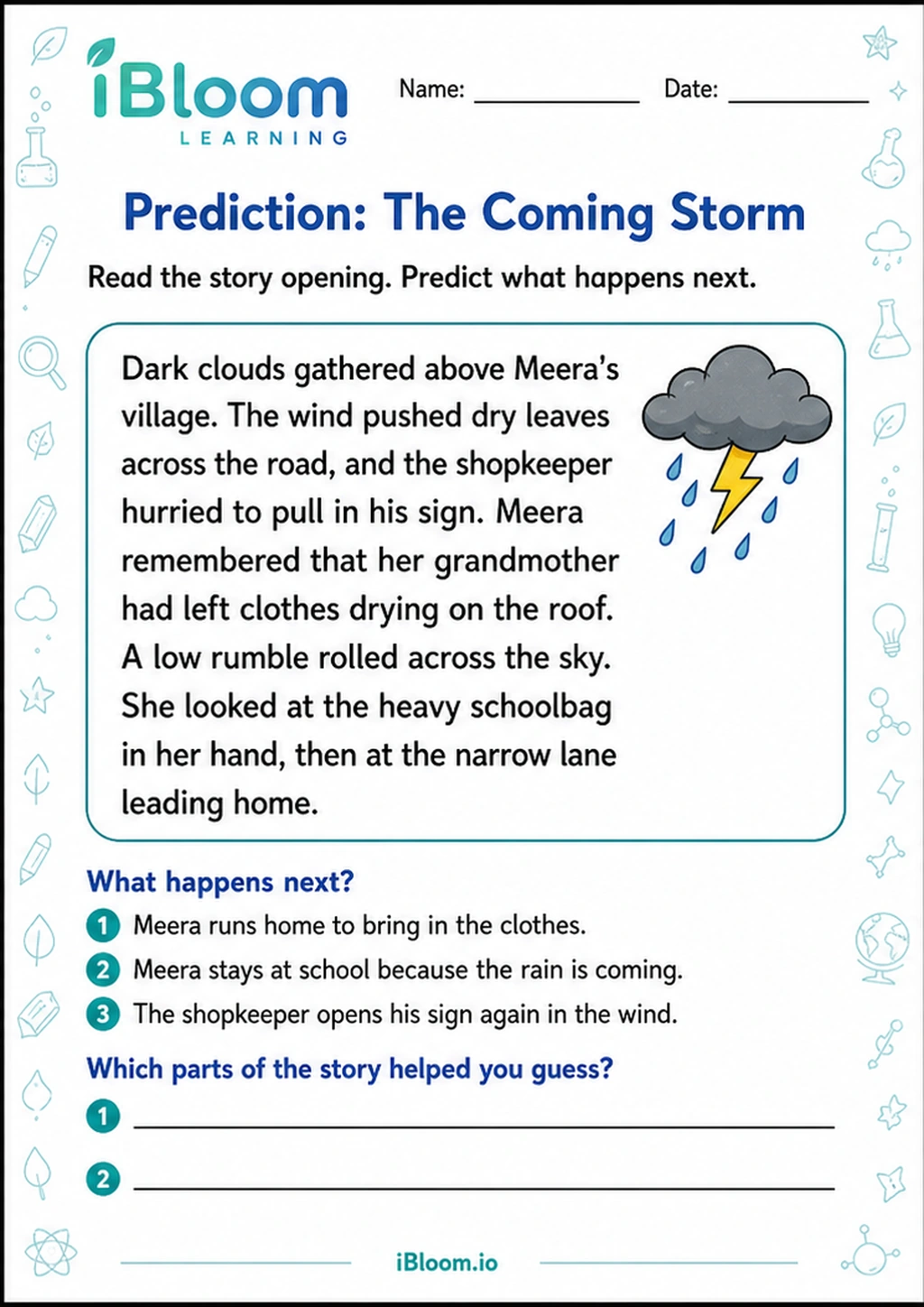 Prediction: The Coming StormClass 4 printable practice for Making Predictions.Class 4Free PDF preview
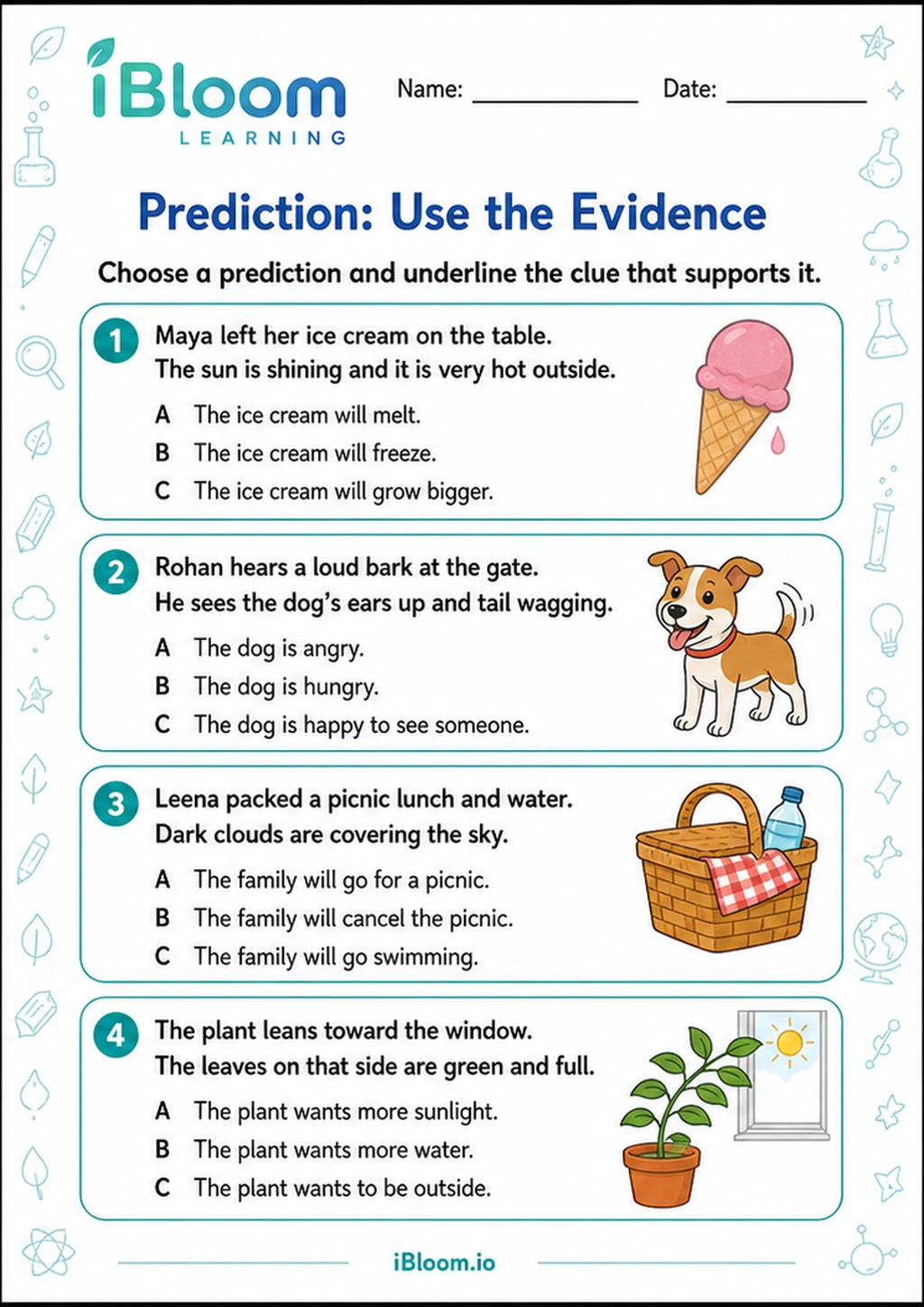 Prediction: Use the EvidenceClass 4 printable practice for Making Predictions.Class 4Free PDF preview
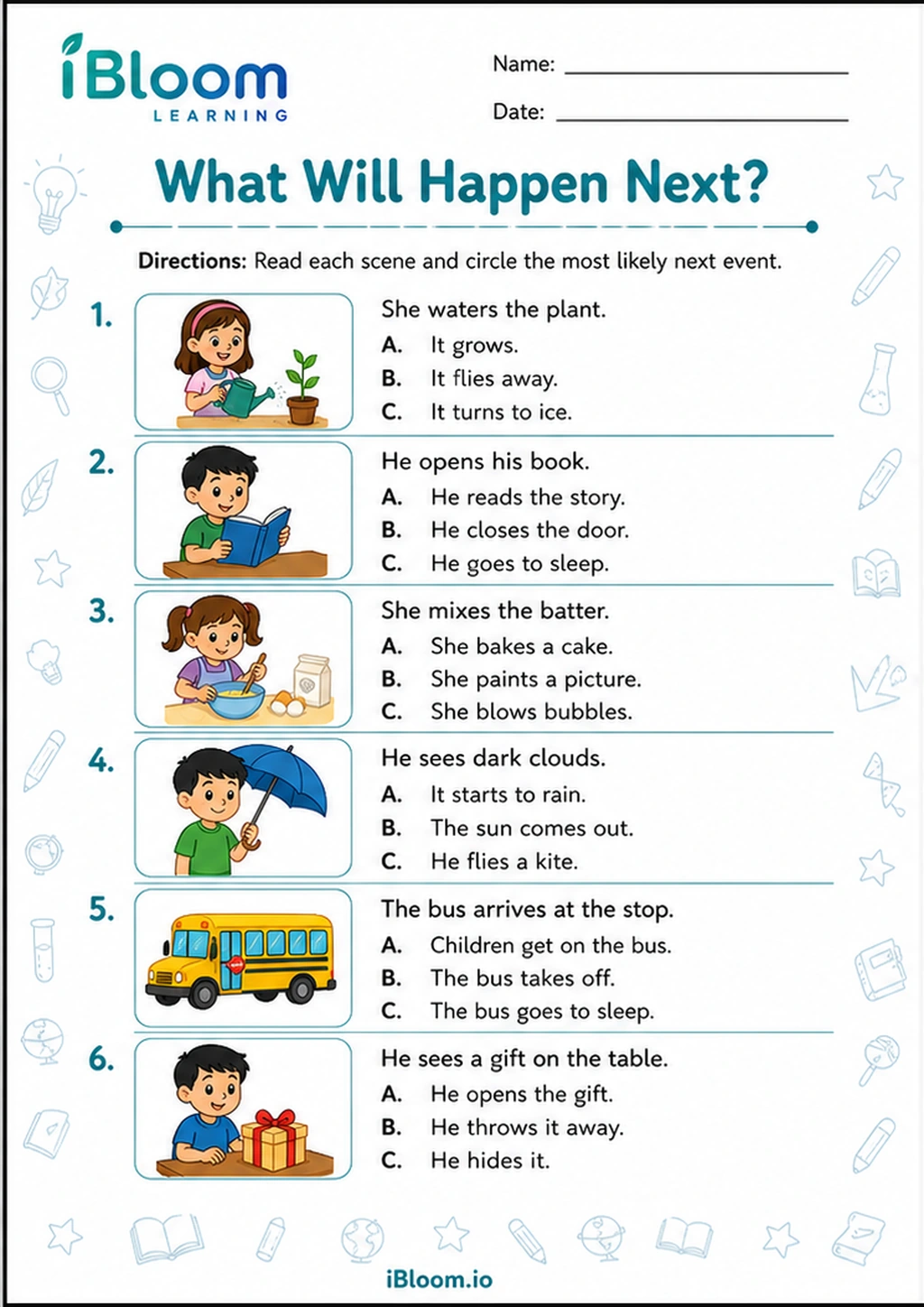 What Will Happen Next?Class 4 printable practice for Making Predictions.Class 4Free PDF preview
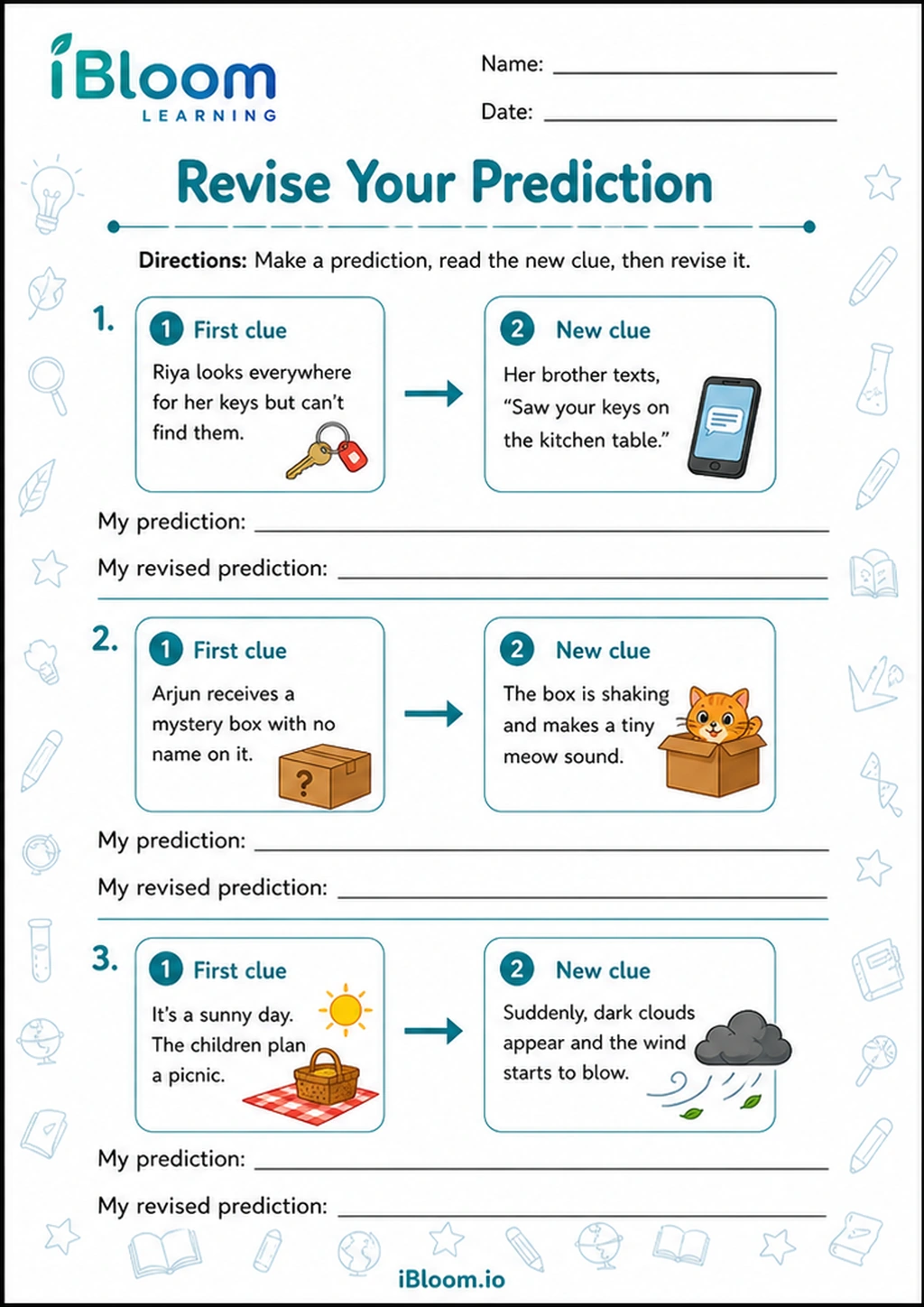 Revise Your PredictionClass 4 printable practice for Making Predictions.Class 4Free PDF preview
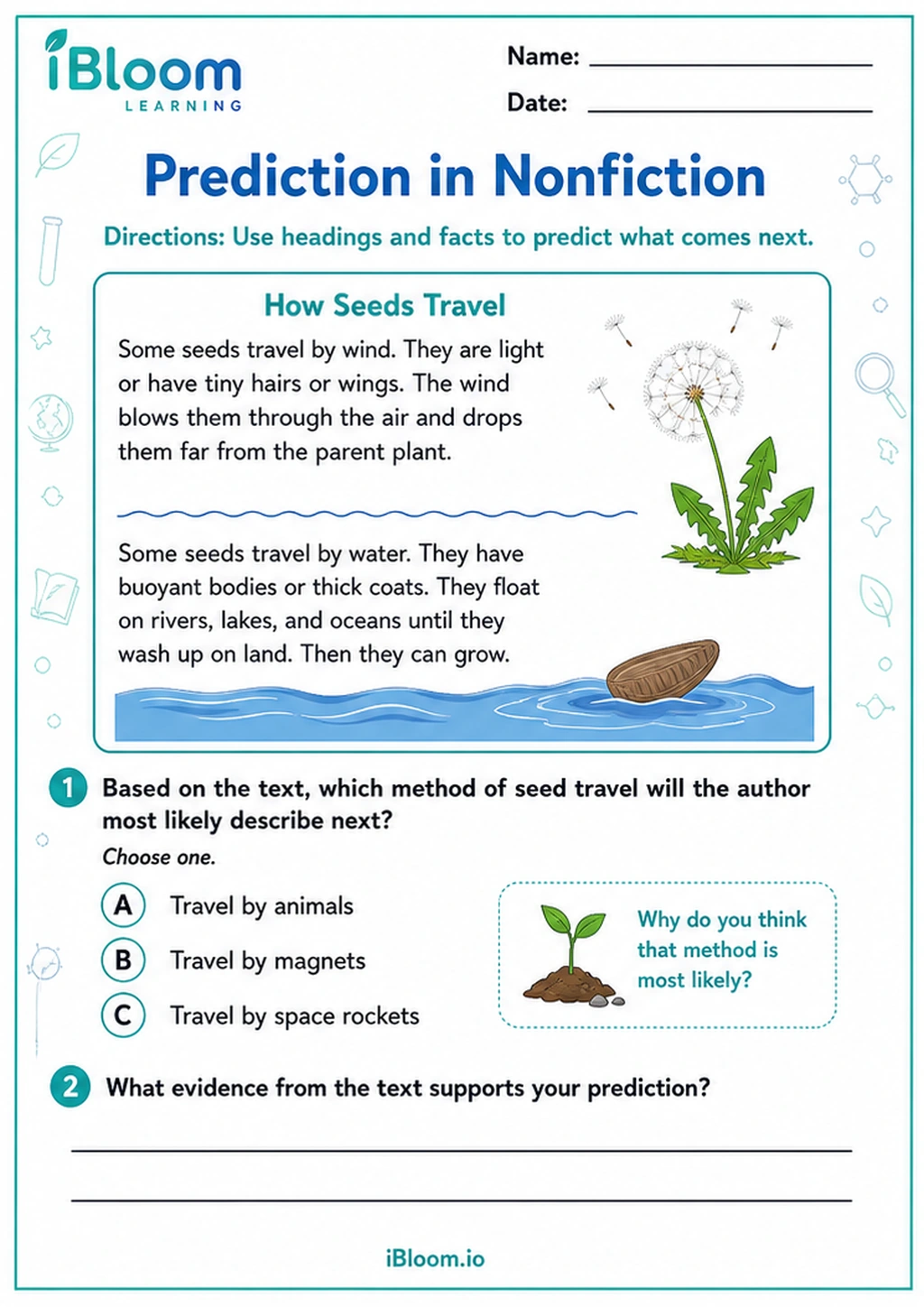 Prediction in NonfictionClass 4 printable practice for Making Predictions.Class 4Free PDF preview
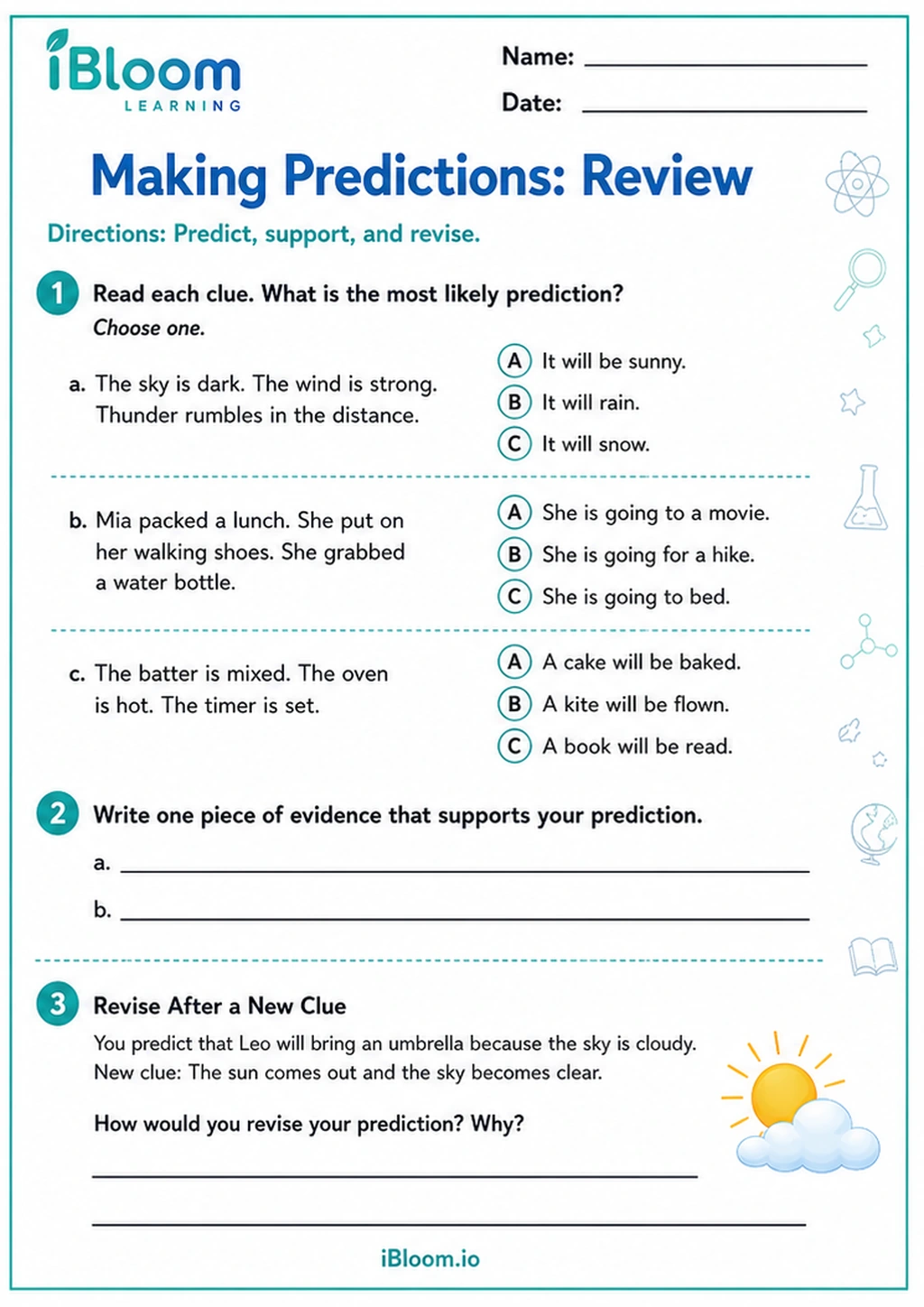 Making Predictions: ReviewClass 4 printable practice for Making Predictions.Class 4Free PDF preview
Practice that builds confidence
Building meaning from a passage
These Class 4 comprehension exercises help children read short passages with purpose and answer questions that go beyond copying lines. They practise main idea, sequencing, character, setting and plot, context clues, prediction, compare and contrast, cause and effect, and the 5W1H question words: who, what, when, why, where and how.
The printable activities also include fact and opinion, author’s purpose, personification, point of view, and conclusions and inferences. Children meet varied question types so they learn to return to the text, use evidence, and explain their thinking clearly in their own words.
Class 4 readers are ready to move from simple recall to connected understanding. These worksheets ask children to find the main idea, notice important details, identify the order of events, and explain how character, setting and plot work together. Questions may ask what happened first, why a character acted in a certain way, or which sentence best tells what the passage is mostly about.

Thinking beyond the exact words
Several activities strengthen inference. Children use clues in the passage to make predictions, draw conclusions, and understand context clues for unfamiliar words. They also practise cause and effect, compare and contrast, fact and opinion, author’s purpose, point of view and personification, so they learn that writers make choices and readers must notice them.
A simple parent routine
At home, ask your child to read the passage once for the story or information, then again with a pencil. Before answering, have them underline proof for one question and circle a clue word such as because, however, first, finally, I think, or feels like. After completing the worksheet, ask: “Which line helped you know that?” This keeps the focus on evidence, not guessing.

Classroom use for teachers
Teachers can use these printables for reading practice, small-group instruction, morning work, homework, or comprehension centers. One group might work on sequencing while another compares two characters or identifies author’s purpose. The mix of literal, vocabulary, inference and response questions makes it easier to see which pupils need support with locating information and which need help explaining ideas.

Common errors to watch for
Children may choose an answer because it sounds familiar instead of checking the text. Some confuse main idea with a small detail, prediction with a random guess, or fact with opinion. In inference questions, they may write personal thoughts without text clues. Encourage complete answers that name the idea and add a short reason from the passage.
Free printable PDF download
Use this class 4 comprehension exercises worksheet page to preview the activity, print it, or download it as a PDF for quick practice. It works well for homework, homeschool lessons, tutoring, morning work, revision, and classroom centers.
Answers and answer key support
After the child completes the worksheet independently, parents and teachers can use the answer support or answer key information to check the work, review mistakes, and choose the next practice step.
Why iBloom worksheets help
Each worksheet focuses on a clear comprehension skill while still keeping reading meaningful. The activities give children repeated practice with the vocabulary of comprehension: main idea, sequence, evidence, clue, compare, contrast, cause, effect, opinion, purpose and point of view. A child-friendly strategy is: read, find the clue, think, then answer. This simple habit builds confidence across stories, poems and informational texts.
Helpful answers
Frequently asked questions
What skills are included in these Class 4 comprehension exercises?
They cover main idea, sequencing, character, setting, plot, context clues, prediction, compare and contrast, cause and effect, 5W1H questions, fact and opinion, author’s purpose, personification, point of view, conclusions and inferences.
How can my child avoid guessing inference answers?
Ask your child to point to the clue in the passage before writing the answer. A good inference combines what the text says with what the reader can logically understand from it.
Are these worksheets suitable for homework in Class 4?
Yes. The printable format works well for homework because children can read independently, mark text clues, and answer a mix of direct and thinking-based questions.
How do these activities help with vocabulary?
Context clues tasks teach children to use nearby words, examples, descriptions and sentence meaning to work out unfamiliar words instead of immediately asking for the meaning.
Can teachers use these for small-group reading?
Yes. Teachers can group pupils by skill, such as main idea, sequencing or cause and effect, and use the worksheets for guided practice, discussion and quick assessment.
Is this class 4 comprehension exercises worksheet free?
Yes. You can preview it for free and use the printable worksheet for home or classroom practice.
Can I download this class 4 comprehension exercises worksheet as a PDF?
Yes. Use the worksheet download option to save a printable PDF, or print the worksheet directly from the page.
Does this class 4 comprehension exercises worksheet include answers or an answer key?
When the activity has fixed answers, iBloom includes answer support so parents and teachers can check the completed worksheet.