Free printable practice
Who What When Why Where How Practice Activities
Class 4 reading comprehension worksheets that help children find who, what, when, why, where and how answers in short passages.
Free printable worksheet PDFs
Preview every available page, then download the free worksheet PDF for home, homeschool, tutoring, or classroom practice.
Preview the exact activity before downloading it.
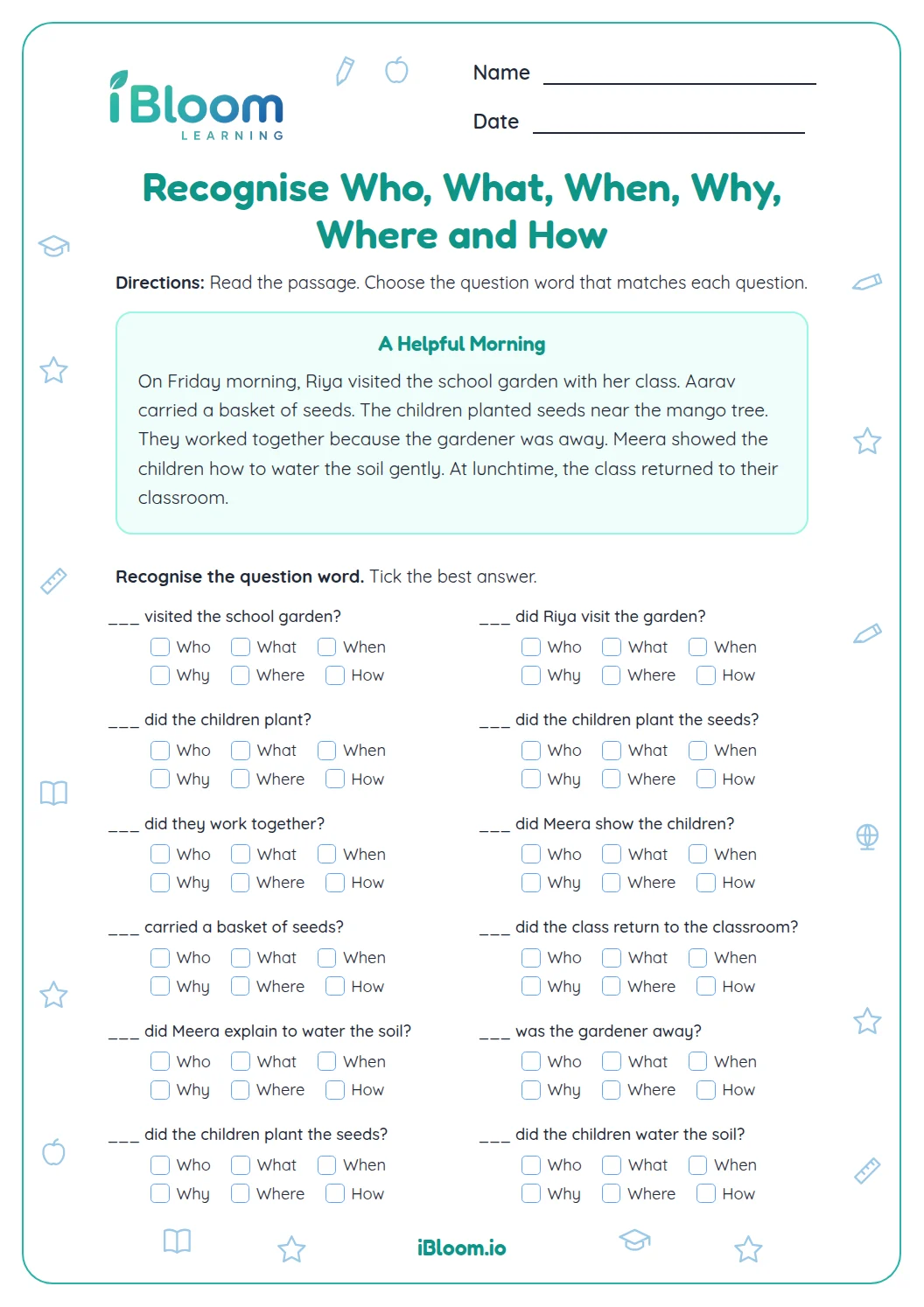 Comprehension Exercises: Who What When Why Where How — Recognise the SkillRecognise the Skill for comprehension exercises: who what when why where how in Class 4. Read a short passage and choose whether each question asks who, what, when, why, where or how.Class 4Free PDF preview
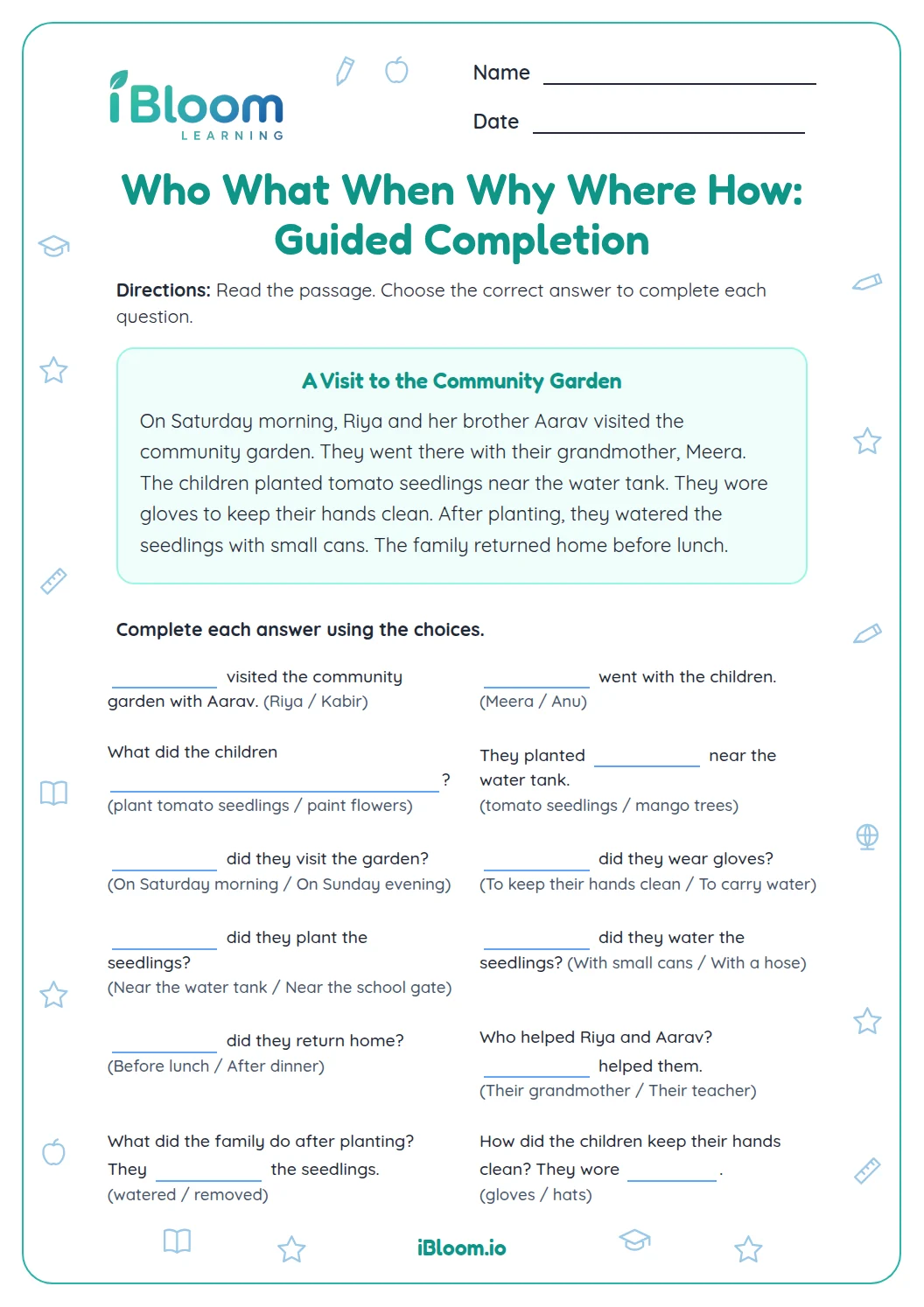 Comprehension Exercises: Who What When Why Where How — Guided CompletionGuided Completion for comprehension exercises: who what when why where how in Class 4. Read the short passage, then complete guided who, what, when, why, where and how questions using the choices.Class 4Free PDF preview
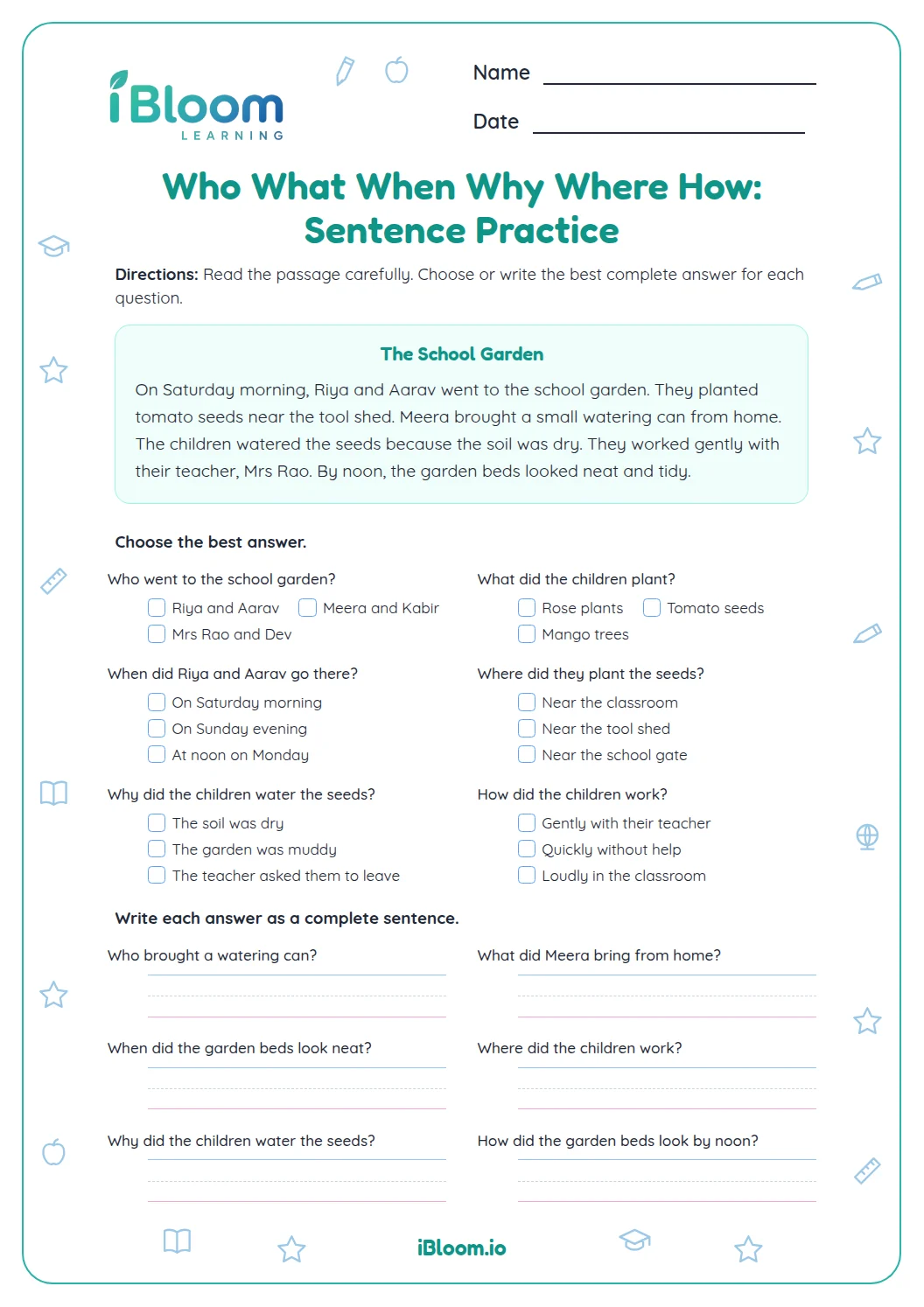 Comprehension Exercises: Who What When Why Where How — Sentence PracticeSentence Practice for comprehension exercises: who what when why where how in Class 4. Read a short passage, identify who, what, when, why, where and how, then answer in complete sentences.Class 4Free PDF preview
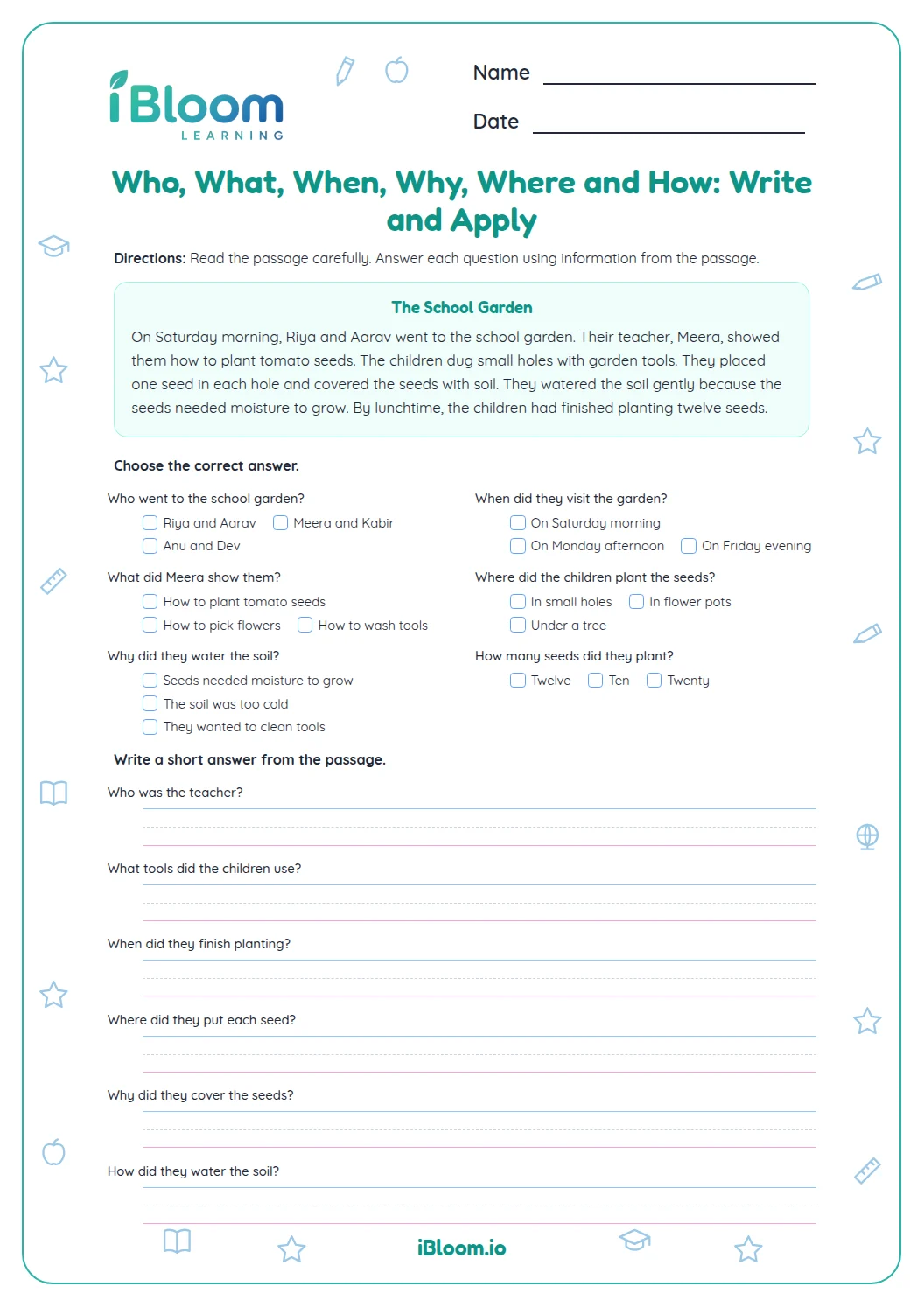 Comprehension Exercises: Who What When Why Where How — Write and ApplyWrite and Apply for comprehension exercises: who what when why where how in Class 4. Read a short passage, identify who, what, when, why, where and how, then write or choose accurate answers.Class 4Free PDF preview
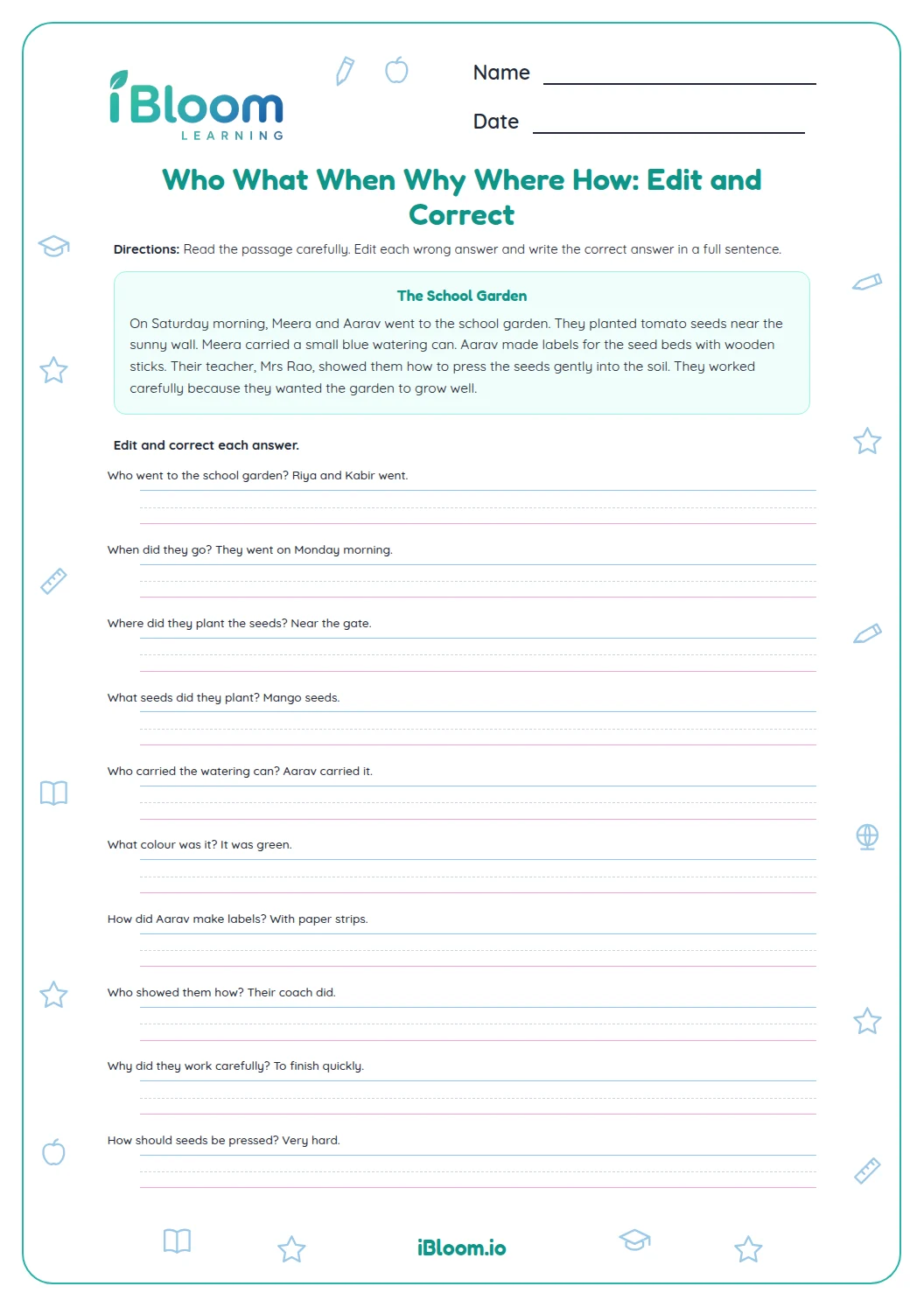 Comprehension Exercises: Who What When Why Where How — Edit and CorrectEdit and Correct for comprehension exercises: who what when why where how in Class 4. Read the passage, find each incorrect answer, and rewrite it correctly using who, what, when, why, where and how.Class 4Free PDF preview
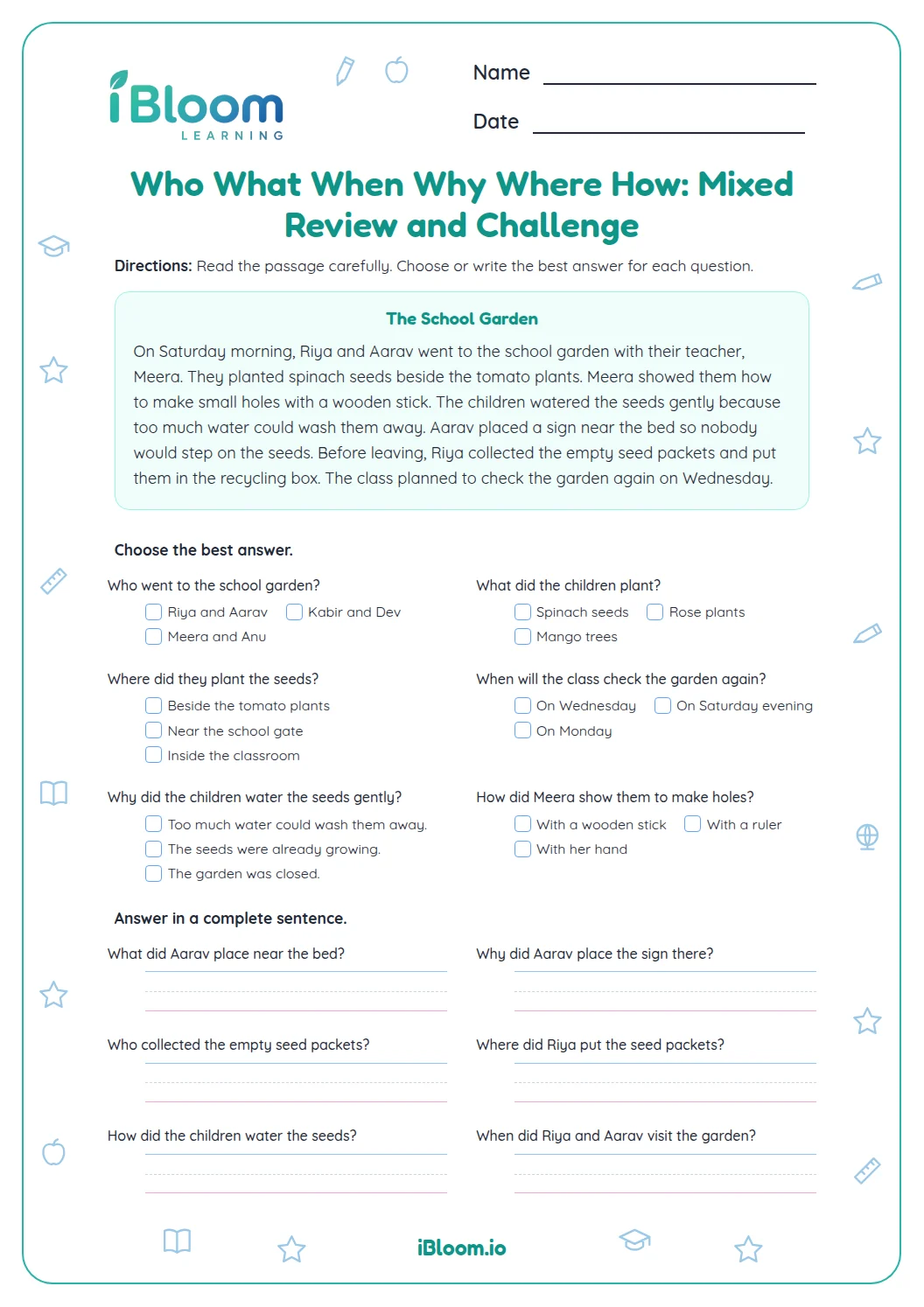 Comprehension Exercises: Who What When Why Where How — Mixed Review and ChallengeMixed Review and Challenge for comprehension exercises: who what when why where how in Class 4. Read a short passage, then answer mixed who, what, when, why, where and how questions using details from the text.Class 4Free PDF preview
Practice that builds confidence
Reading for the 5W1H answers
These Class 4 reading comprehension worksheets help children practise answering the six key question types: who, what, when, why, where and how. Children learn to look back at the passage, identify relevant details and explain answers in clear sentences.
The printable activities include short comprehension passages followed by focused 5W1H questions. They are useful for building careful reading habits, improving answer writing and helping children move beyond guessing from memory.
Who, what, when, why, where and how questions guide children to notice the most important parts of a text. In Class 4, this skill supports stronger comprehension because children must connect a question word with the right kind of information: a person, action, time, reason, place or method.

Understanding each question word
A who question usually asks about a character or person. What asks for an event, object or idea. When points to time, such as morning, last Sunday or after school. Where asks for a place. Why needs a reason, and how often asks for the way something happened. These worksheets give repeated practice in matching the question type to evidence in the passage.
Progression in the activities
Children may begin with direct answers that are stated clearly in the text, then move towards questions that need them to join two clues. For example, a why answer may not be in one word; it may need a complete explanation based on what the character did. This builds the habit of rereading instead of choosing the first familiar sentence.
A simple home routine
Ask your child to read the passage once for meaning and a second time with a pencil. They can underline names for who, circle time words for when and mark place words for where. After answering, encourage them to point to the sentence that proves each answer. This small routine turns comprehension into an evidence-based activity.

Classroom use for teachers
Teachers can use these worksheets for reading practice, revision, small-group support or independent work. They also work well in comprehension centres: one group reads aloud, another highlights clues, and another writes full-sentence answers. A quick class discussion can compare short answers with better, text-supported responses.

Common errors and a child-friendly strategy
Watch for children mixing up why and how, copying long sentences without selecting the answer, or giving personal opinions when the passage gives a fact. A helpful strategy is: read the question word, say what type of answer is needed, find the clue, then write. Why iBloom worksheets help: the focused 5W1H format gives children enough repetition to build confidence while still reading each passage carefully.
Free printable PDF download
Use this class 4 who what when why where how worksheet page to preview the activity, print it, or download it as a PDF for quick practice. It works well for homework, homeschool lessons, tutoring, morning work, revision, and classroom centers.
Answers and answer key support
After the child completes the worksheet independently, parents and teachers can use the answer support or answer key information to check the work, review mistakes, and choose the next practice step.
Helpful answers
Frequently asked questions
What do children practise in these Who What When Why Where How worksheets?
They practise reading short passages and answering questions that ask for people, actions, times, places, reasons and methods. The focus is on finding the correct detail in the text and writing a clear answer.
Are these worksheets suitable for Class 4 reading comprehension?
Yes. The activities are designed for Class 4 children who are ready to read short passages independently and answer different types of comprehension questions using clues from the passage.
How can I help my child avoid guessing the answers?
Ask your child to underline the sentence or words that prove the answer. Before writing, they should identify what the question word is asking for, such as a person for who or a reason for why.
Why do children often confuse why and how questions?
Why asks for a reason, while how asks for the way something happened or was done. Children can improve by saying, “Do I need a reason or a method?” before looking for the answer.
Can teachers use these worksheets for group work?
Yes. Teachers can use them for independent comprehension practice, small-group reading, revision tasks or classroom centres where children highlight clues and discuss answer choices.
Is this class 4 who what when why where how worksheet free?
Yes. You can preview it for free and use the printable worksheet for home or classroom practice.
Can I download this class 4 who what when why where how worksheet as a PDF?
Yes. Use the worksheet download option to save a printable PDF, or print the worksheet directly from the page.
Does this class 4 who what when why where how worksheet include answers or an answer key?
When the activity has fixed answers, iBloom includes answer support so parents and teachers can check the completed worksheet.