Free printable practice
Topics Practice Activities
A broad Reading Comprehension topic collection for practising predictions, inferences, story work, vocabulary clues, sequencing, main ideas and more.
Explore Topics
Free printable worksheet PDFs
Preview every available page, then download the free worksheet PDF for home, homeschool, tutoring, or classroom practice.
Preview the exact activity before downloading it.
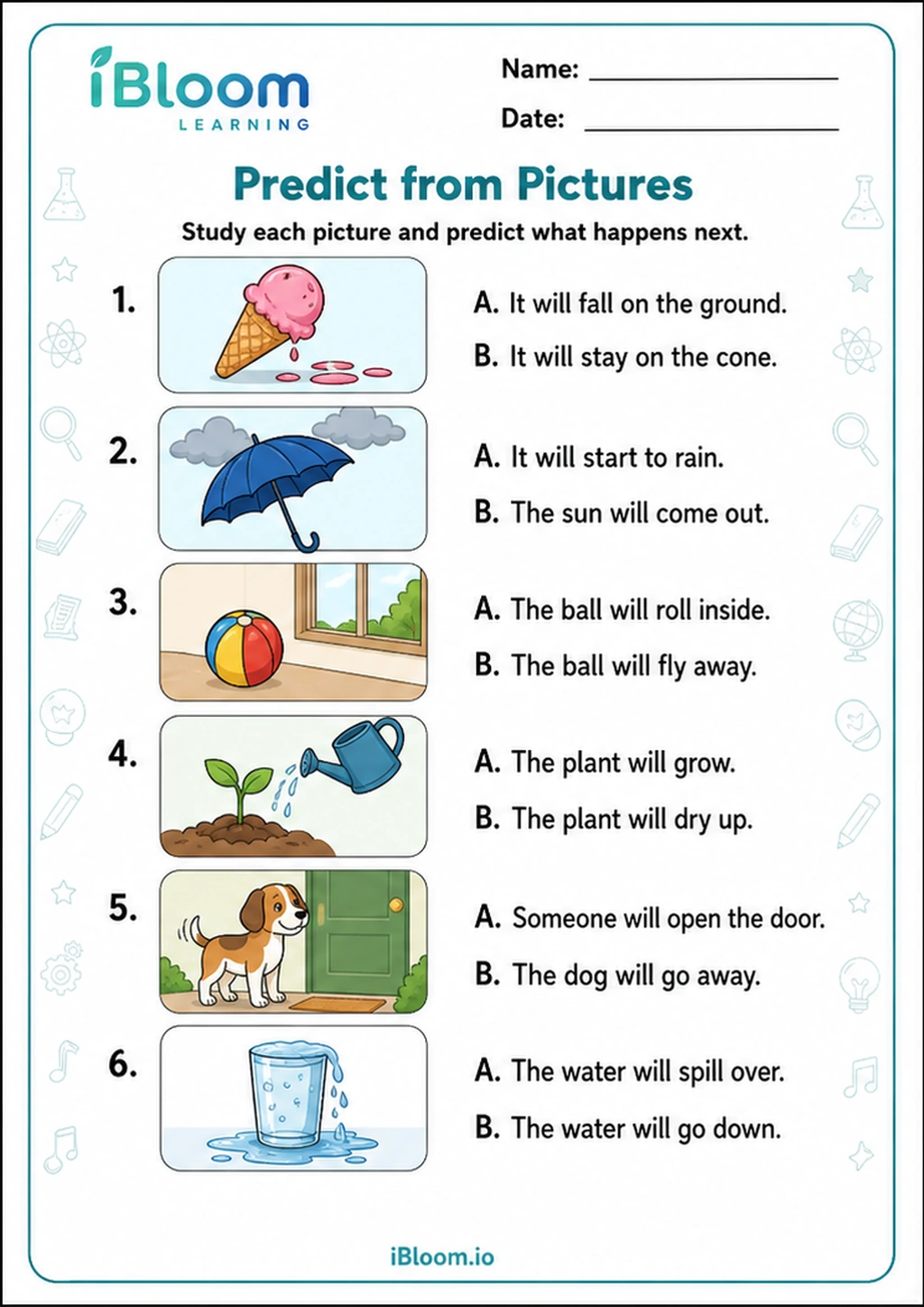 Predict from PicturesClass 3 printable practice for Prediction Practice.Class 3Free PDF preview
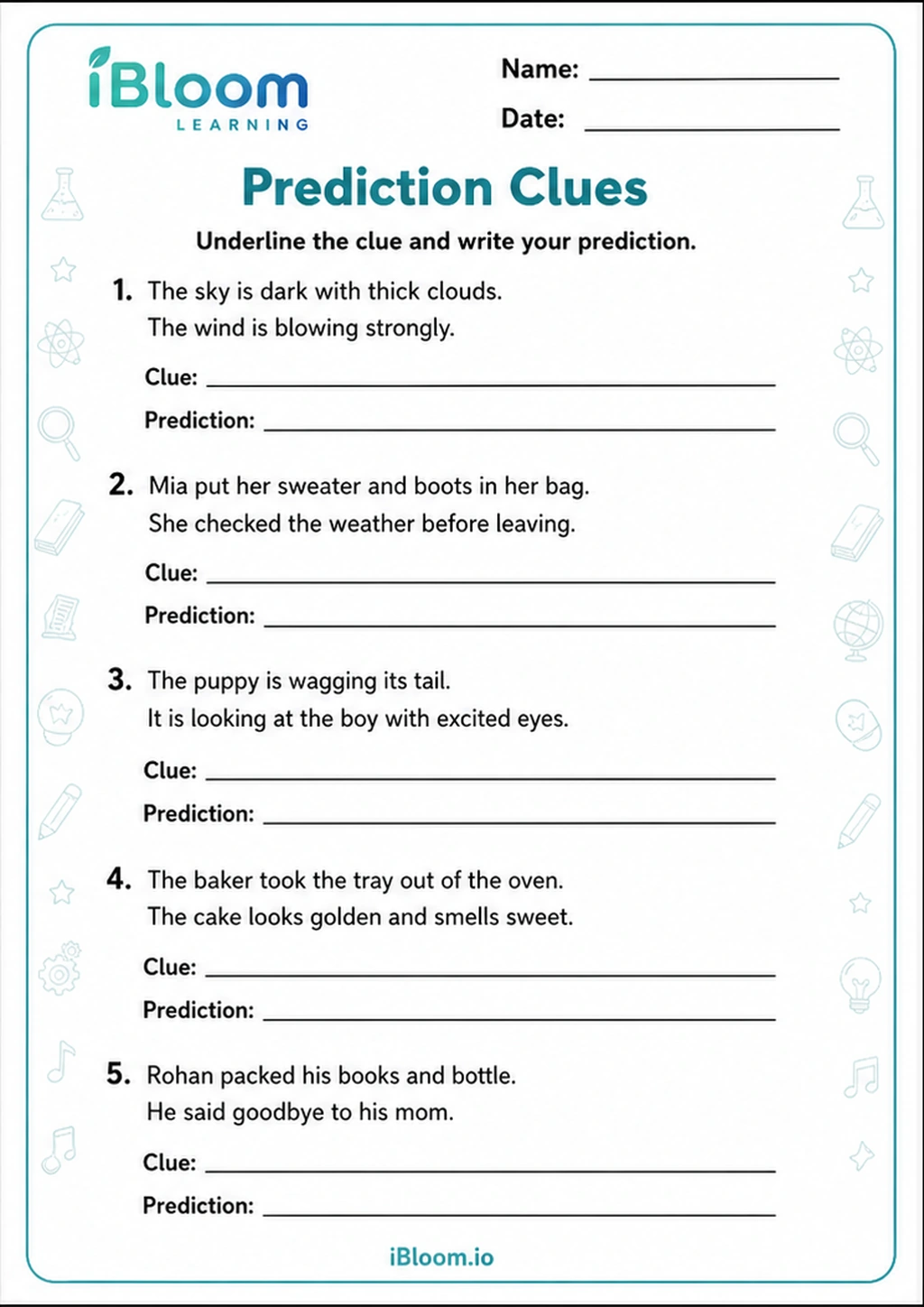 Prediction CluesClass 3 printable practice for Prediction Practice.Class 3Free PDF preview
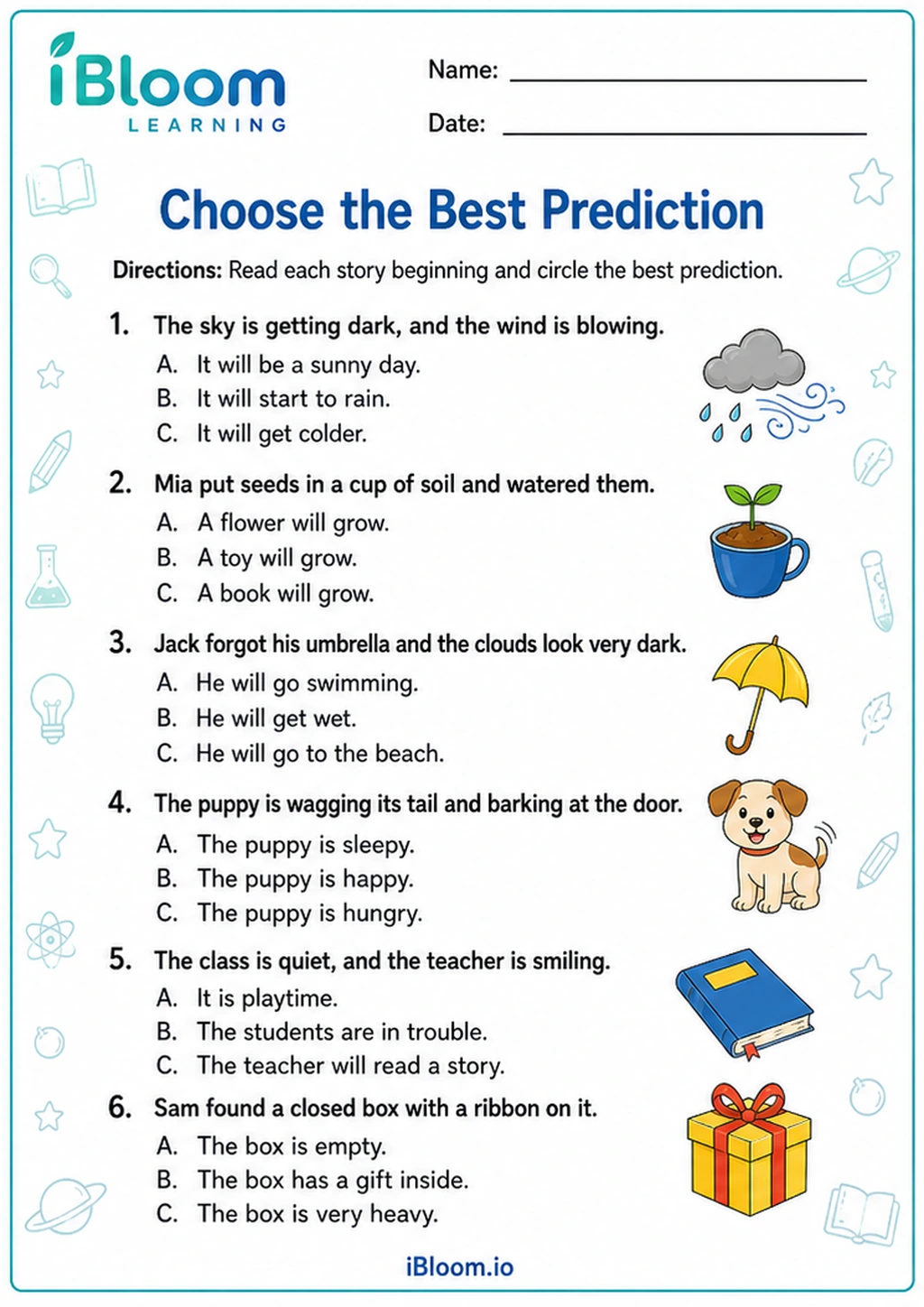 Choose the Best PredictionClass 3 printable practice for Prediction Practice.Class 3Free PDF preview
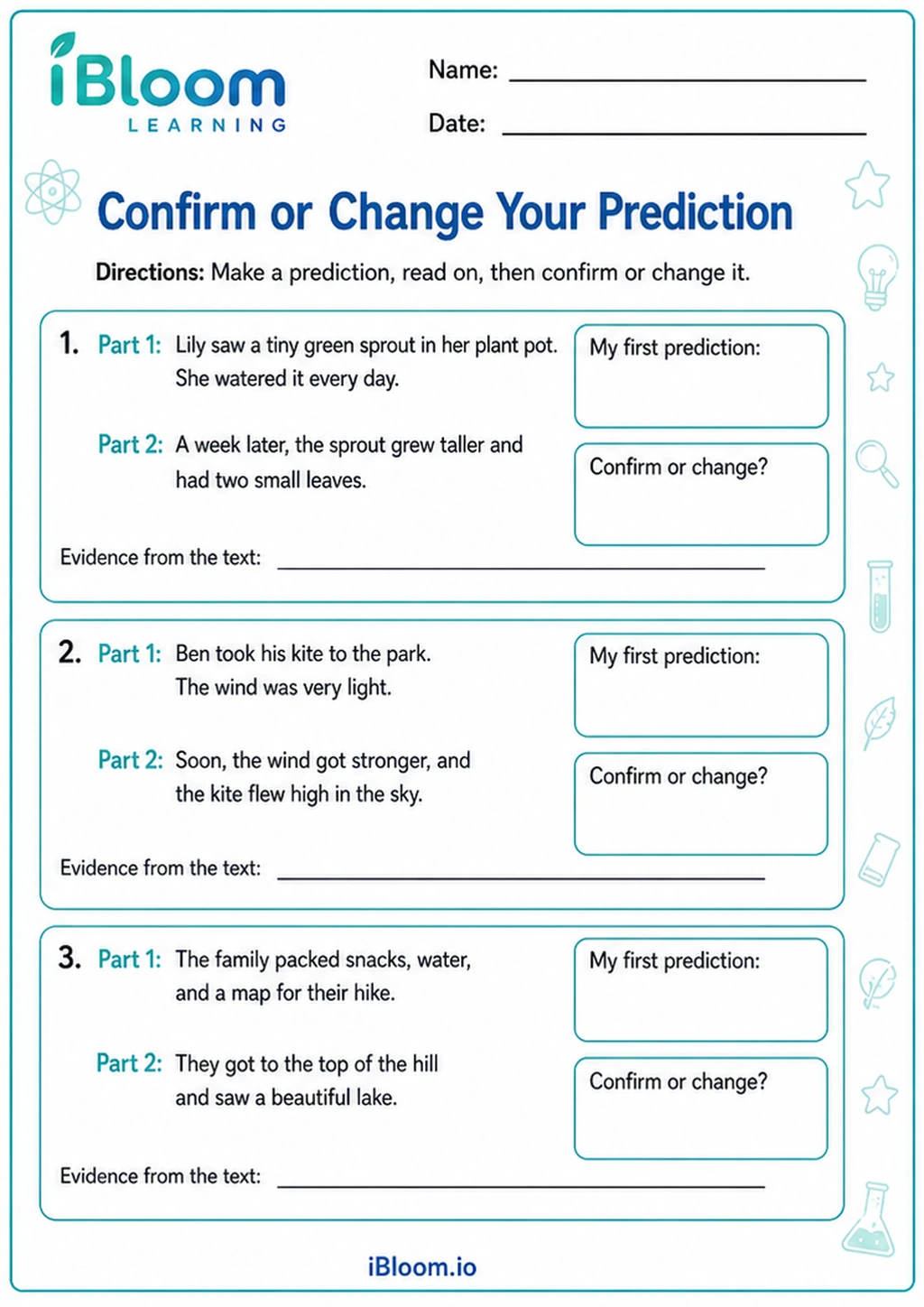 Confirm or Change Your PredictionClass 3 printable practice for Prediction Practice.Class 3Free PDF preview
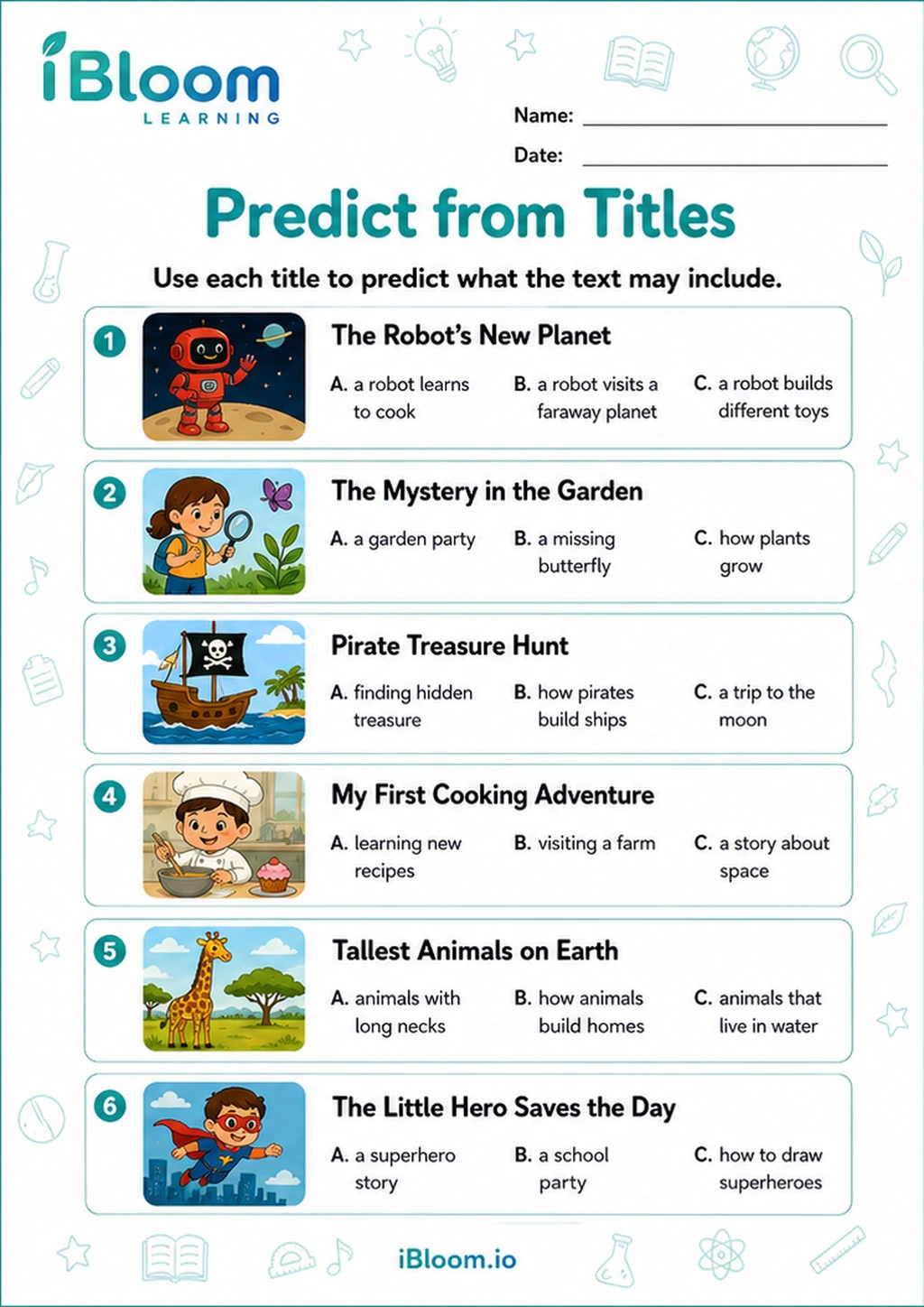 Predict from TitlesClass 3 printable practice for Prediction Practice.Class 3Free PDF preview
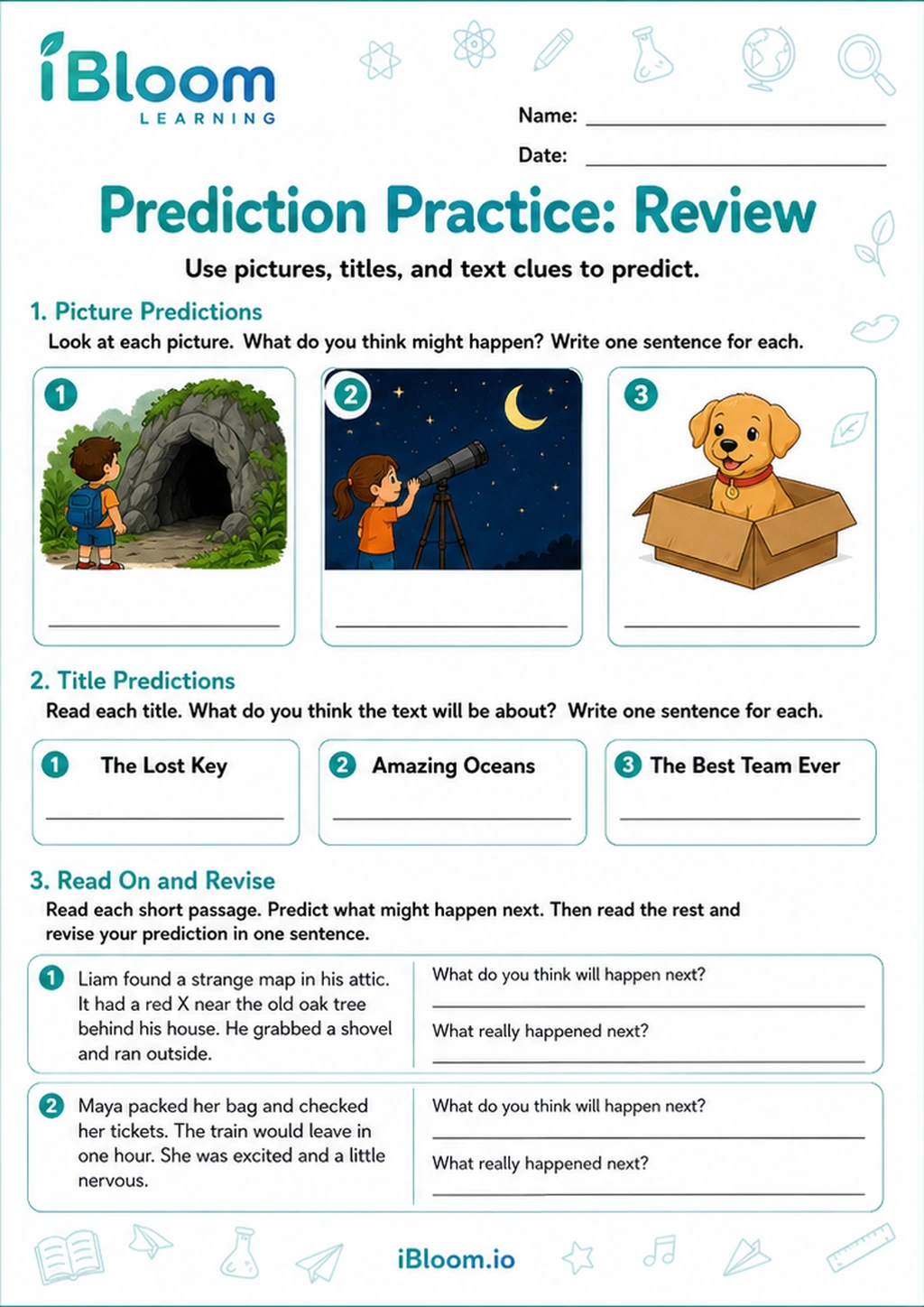 Prediction Practice: ReviewClass 3 printable practice for Prediction Practice.Class 3Free PDF preview
Practice that builds confidence
What this collection covers
These Reading Comprehension Topics worksheets help children practise the main ways readers make sense of a text: predicting, finding main ideas and details, sequencing events, comparing ideas, noticing cause and effect, and using clues to infer what is not directly stated.
The printable activities bring together short stories, leveled stories, fables and historic passages, sentence and paragraph tasks, phonics, sight words, context clues, fact and opinion, fact and fiction, story elements, and conclusion questions so practice stays varied and purposeful.
This Topics page is a starting point for many reading comprehension skills. Children may read a story, sort facts from opinions, choose a likely prediction, identify characters and setting, use phonics or sight words to read fluently, or answer questions about the main idea, details, sequence, cause and effect, and comparison.

Building comprehension step by step
The skills progress from noticing what the text says to explaining what the text means. Sentence and paragraph tasks support basic understanding. Stories, fables, historic passages and leveled stories give children practice with different text types. Context clues, conclusions and inferences ask them to combine text evidence with their own thinking.
A simple parent routine
At home, ask your child to read the passage once for the gist and again with a pencil. Before answering, have them underline one clue for each question. After the worksheet, ask three quick prompts: “What happened first?”, “How do you know?” and “Which word or sentence helped you?” This routine works well across prediction, sequencing, main idea, fact opinion and cause effect activities.

Classroom uses for teachers
Teachers can use these printables for guided reading, revision folders, literacy centres, homework, early finisher work or small-group intervention. A teacher might group learners by skill: one group works on story elements, another on context clues, while another compares two details from a passage.

Common errors and a child-friendly strategy
Watch for children choosing answers from memory instead of the passage, confusing a detail with the main idea, treating opinions as facts, or making predictions without text clues. Teach the strategy: “Read, point, prove.” Read the question, point to the clue, then prove the answer in your own words.
Free printable PDF download
Use this reading comprehension topics worksheet page to preview the activity, print it, or download it as a PDF for quick practice. It works well for homework, homeschool lessons, tutoring, morning work, revision, and classroom centers.
Answers and answer key support
After the child completes the worksheet independently, parents and teachers can use the answer support or answer key information to check the work, review mistakes, and choose the next practice step.
Why iBloom worksheets help
iBloom worksheets separate big comprehension into clear topics, so children can practise one skill at a time and then connect it to full passages. The mix of fiction, informational passages, vocabulary work and thinking questions helps reading feel active, not just answer-based.
Helpful answers
Frequently asked questions
What skills are included in this Reading Comprehension Topics collection?
It includes prediction, conclusions and inferences, fact and opinion, story elements, phonics, context clues, stories, fact and fiction, leveled stories, sequencing, fables and historic passages, sentences and paragraphs, sight words, main ideas and details, compare and contrast, and cause and effect.
How should my child choose which worksheet to do first?
Start with the skill your child finds easiest, such as sequencing or story elements, then move towards inference, context clues, conclusions and cause effect questions that require deeper thinking.
Are these worksheets only for story reading?
No. The collection includes story-based work as well as informational reading through historic passages, fact and fiction tasks, main idea activities, and compare contrast practice.
How can I help if my child guesses comprehension answers?
Ask your child to point to the word, sentence or event in the passage that supports the answer. The simple habit of finding text evidence reduces guessing.
Can teachers use these activities in literacy centres?
Yes. Teachers can place different topic worksheets in centres, such as context clues, sequencing, main ideas or story elements, so pupils practise targeted comprehension skills independently or in small groups.
Is this reading comprehension topics worksheet free?
Yes. You can preview it for free and use the printable worksheet for home or classroom practice.
Can I download this reading comprehension topics worksheet as a PDF?
Yes. Use the worksheet download option to save a printable PDF, or print the worksheet directly from the page.
Does this reading comprehension topics worksheet include answers or an answer key?
When the activity has fixed answers, iBloom includes answer support so parents and teachers can check the completed worksheet.