Free printable practice
Prediction Practice Activities
Printable prediction worksheets that help children use clues, pictures, titles, and story events to make sensible reading predictions.
Free printable worksheet PDFs
Preview every available page, then download the free worksheet PDF for home, homeschool, tutoring, or classroom practice.
Preview the exact activity before downloading it.
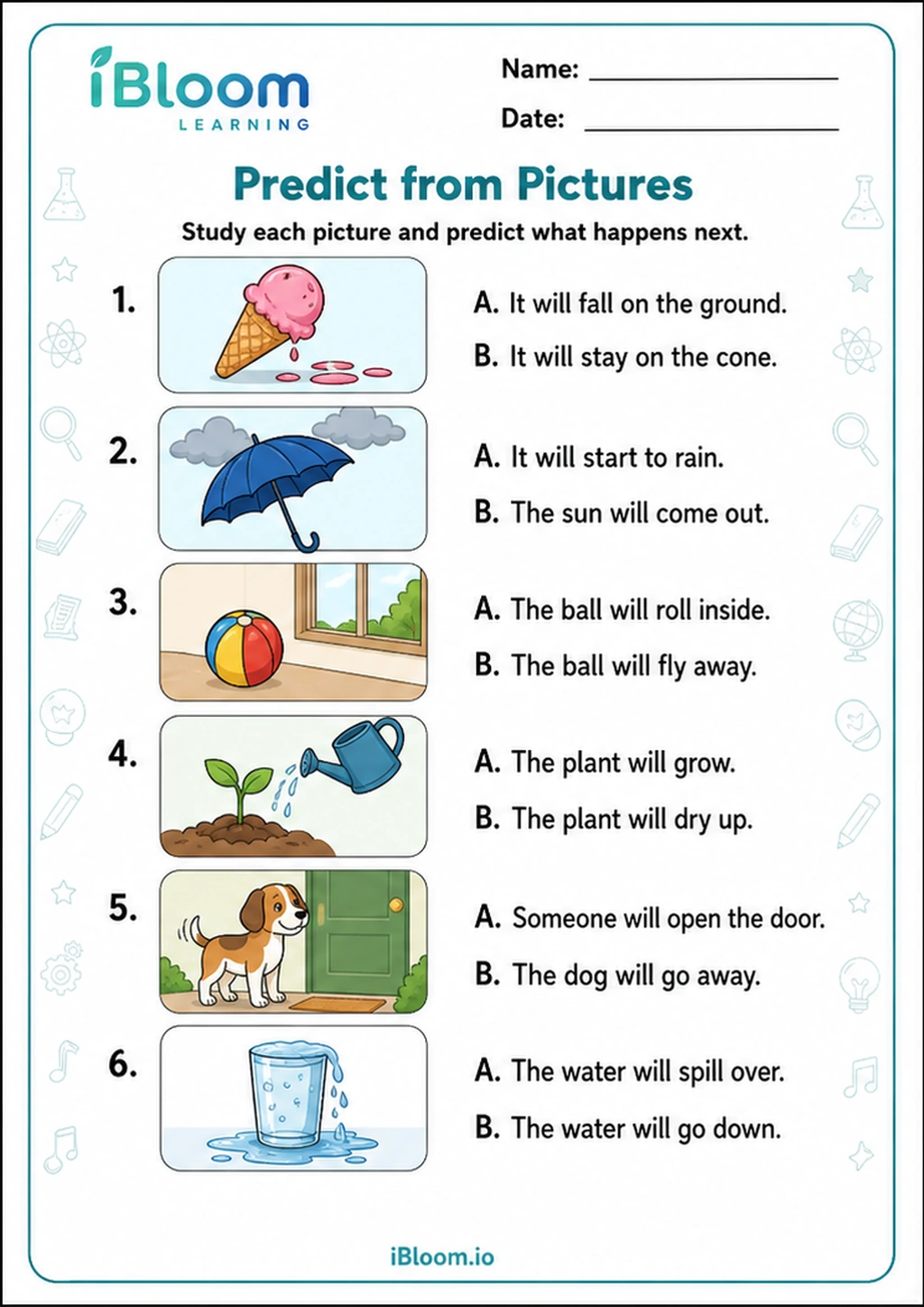 Predict from PicturesClass 3 printable practice for Prediction Practice.Class 3Free PDF preview
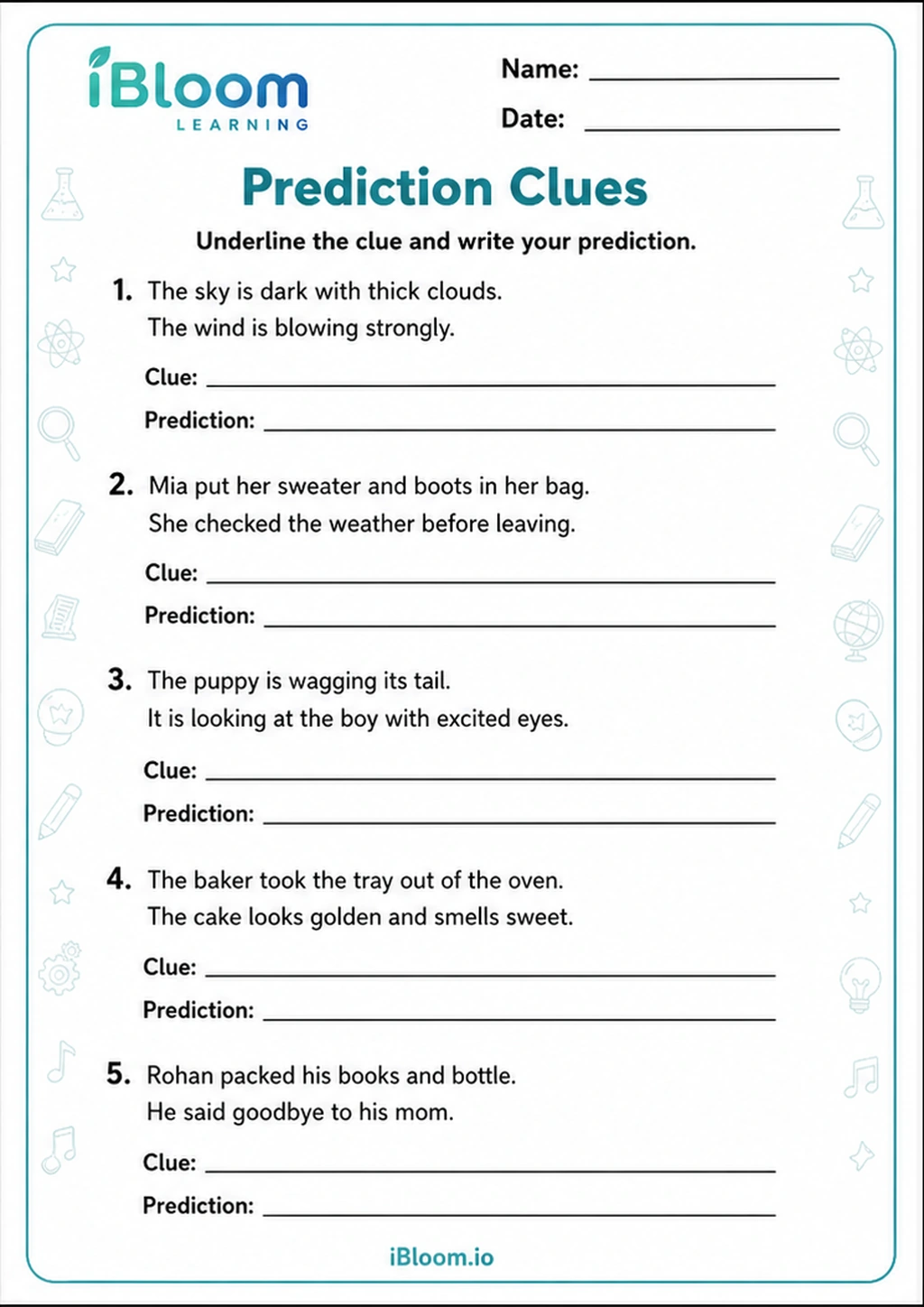 Prediction CluesClass 3 printable practice for Prediction Practice.Class 3Free PDF preview
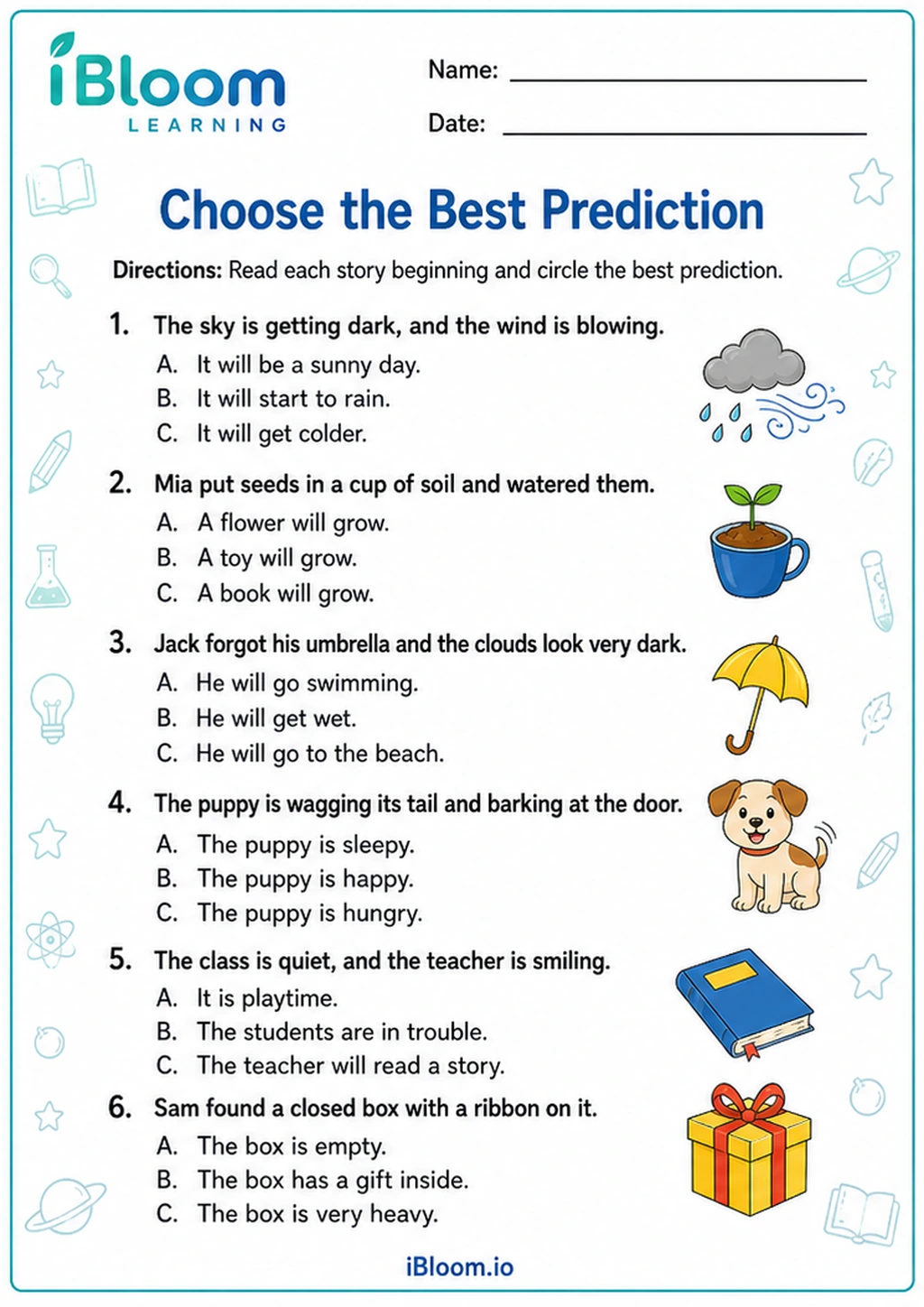 Choose the Best PredictionClass 3 printable practice for Prediction Practice.Class 3Free PDF preview
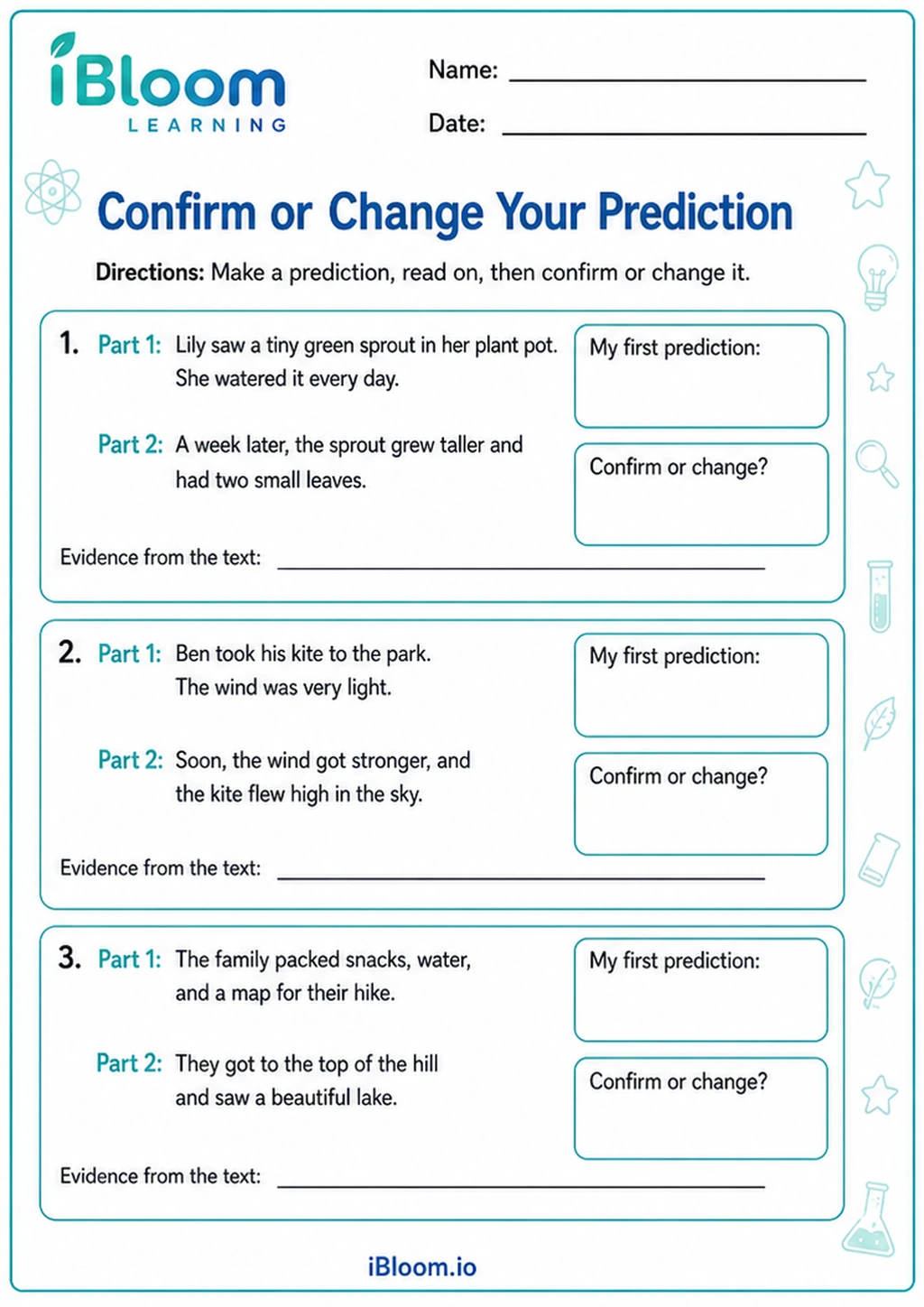 Confirm or Change Your PredictionClass 3 printable practice for Prediction Practice.Class 3Free PDF preview
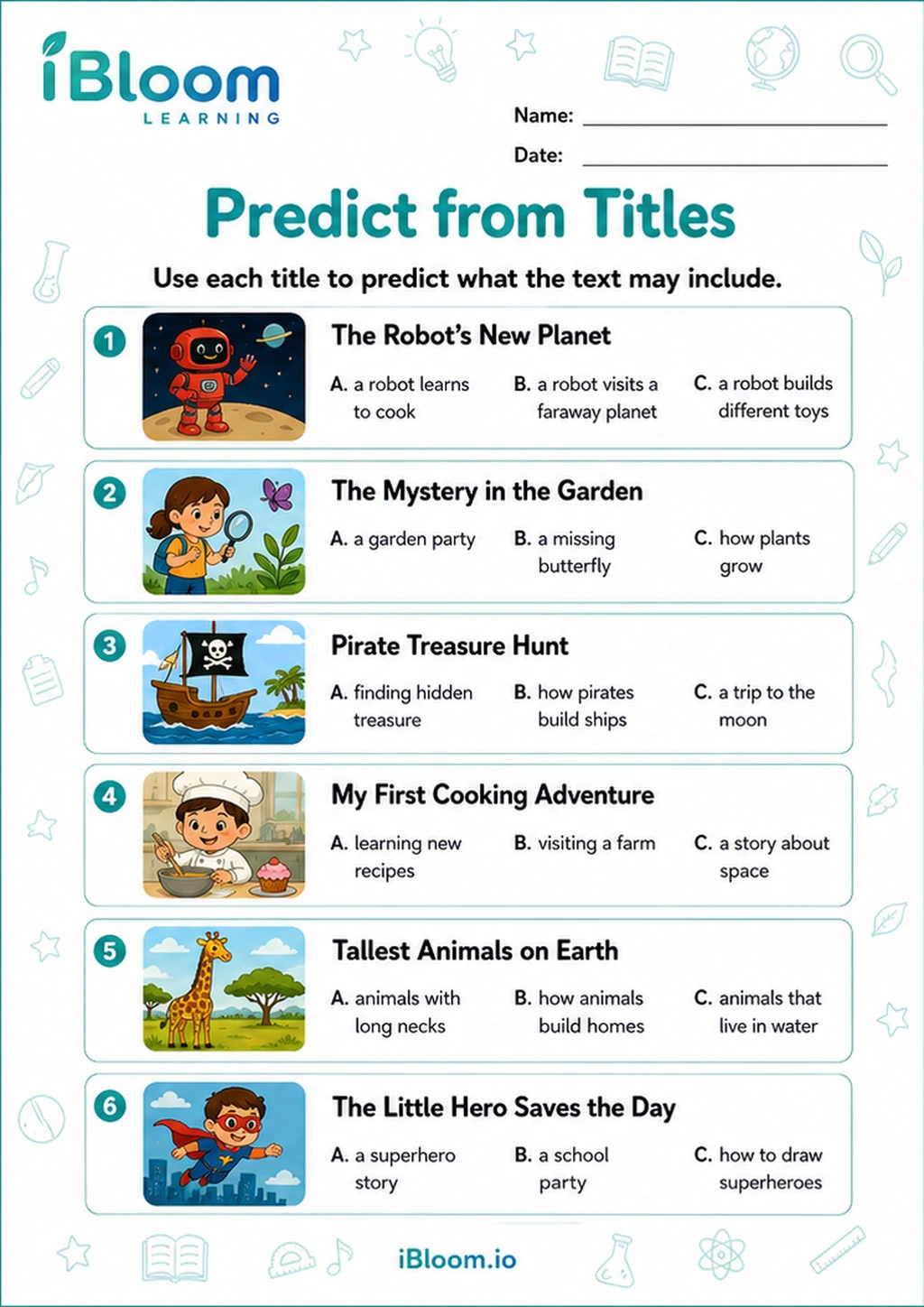 Predict from TitlesClass 3 printable practice for Prediction Practice.Class 3Free PDF preview
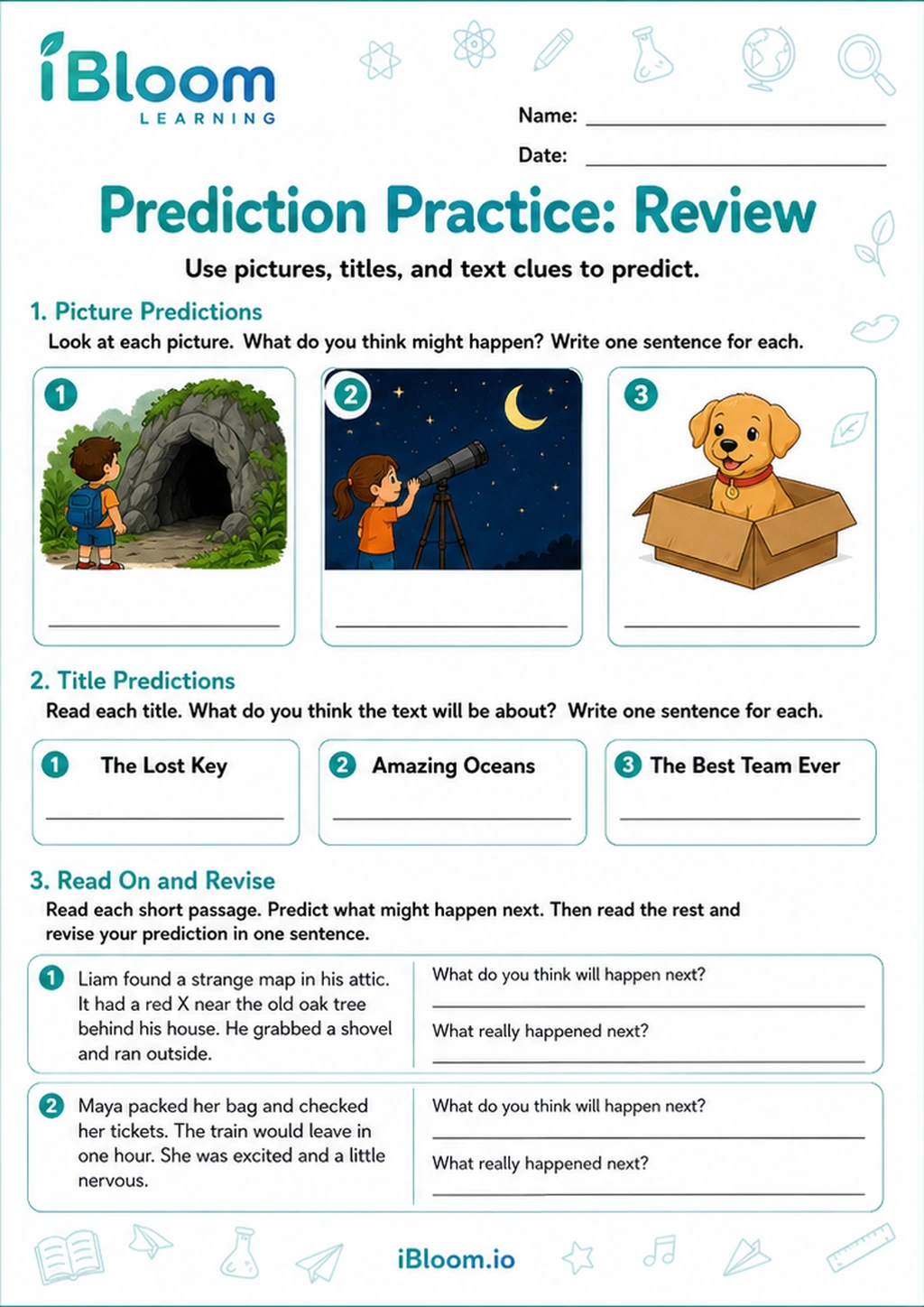 Prediction Practice: ReviewClass 3 printable practice for Prediction Practice.Class 3Free PDF preview
Practice that builds confidence
What prediction means in reading
Prediction practice helps children think ahead while they read. These worksheets guide learners to use story clues, picture details, titles, character actions, and prior knowledge to guess what may happen next.
The printable activities include short passages, image-based prompts, sentence starters, and questions that ask children to explain their thinking. They build confidence in reading comprehension by showing that a good prediction is supported by evidence from the text.
Prediction is not random guessing. Children learn to look at information they already have, connect it with what they know, and say what is likely to happen next. In these reading comprehension worksheets, they may predict a character’s next action, the ending of a short story, or what a text might be about from its title or picture.

How the skill develops
The practice begins with visible clues such as cover pictures, headings, and simple story events. Children then move towards combining clues: what a character wants, what problem has appeared, and how similar stories usually continue. They also learn to check their prediction after reading more, which is an important part of becoming an active reader.
A simple routine for parents
Before reading, ask, “What do you think this will be about?” During reading, pause after an important event and ask, “What might happen next? Which clue helped you?” After reading, let your child compare the prediction with the actual ending. Encourage answers such as “I think… because…” so the focus stays on evidence, not just the final answer.

Classroom uses for teachers
Teachers can use these sheets for guided reading groups, comprehension centres, morning work, or quick assessment after a read-aloud. They are useful for oral discussion as well as written responses. Pair work works well: one child gives a prediction and the other finds the clue that supports it.

Common errors to watch for
Some children make predictions based only on personal likes, such as “I want the dog to win,” without using the passage. Others copy a sentence from the text but do not say what may happen next. Remind them that a strong prediction has two parts: a likely idea and a clue. If the text changes, they can revise their thinking.
Free printable PDF download
Use this prediction practice worksheet page to preview the activity, print it, or download it as a PDF for quick practice. It works well for homework, homeschool lessons, tutoring, morning work, revision, and classroom centers.
Answers and answer key support
After the child completes the worksheet independently, parents and teachers can use the answer support or answer key information to check the work, review mistakes, and choose the next practice step.
Why iBloom worksheets help
iBloom prediction worksheets keep the task clear and child-friendly. Prompts, pictures, and short reading pieces give children enough support to practise independently while still thinking deeply. A helpful strategy is: look for clues, think about what you know, say “because,” and check after reading.
Helpful answers
Frequently asked questions
What do children practise in prediction worksheets?
Children practise using clues from pictures, titles, sentences, and story events to say what may happen next or what a text may be about.
How is a prediction different from a guess?
A prediction is supported by evidence. Children should be able to explain their answer with a clue from the passage or picture, often using a sentence such as “I think this because…”
Can these worksheets be used before reading a story?
Yes. Many prediction activities work well before reading because children can look at the title, illustration, or first few lines and think about what the text might include.
What should I do if my child’s prediction is wrong?
Treat it as part of reading. Ask your child to compare the prediction with what actually happened and discuss which new clue changed the idea.
Are prediction activities useful for classroom discussion?
Yes. They encourage children to speak, listen, justify answers, and return to the text for proof, making them useful for guided reading and group comprehension lessons.
Is this prediction practice worksheet free?
Yes. You can preview it for free and use the printable worksheet for home or classroom practice.
Can I download this prediction practice worksheet as a PDF?
Yes. Use the worksheet download option to save a printable PDF, or print the worksheet directly from the page.
Does this prediction practice worksheet include answers or an answer key?
When the activity has fixed answers, iBloom includes answer support so parents and teachers can check the completed worksheet.