Free printable practice
Animals Practice Activities
Printable Class 2 Science and EVS animal worksheets covering habitats, body coverings, life cycles, food chains, offspring, needs, sounds, and classification.
Explore Animals
Free printable worksheet PDFs
Preview every available page, then download the free worksheet PDF for home, homeschool, tutoring, or classroom practice.
Preview the exact activity before downloading it.
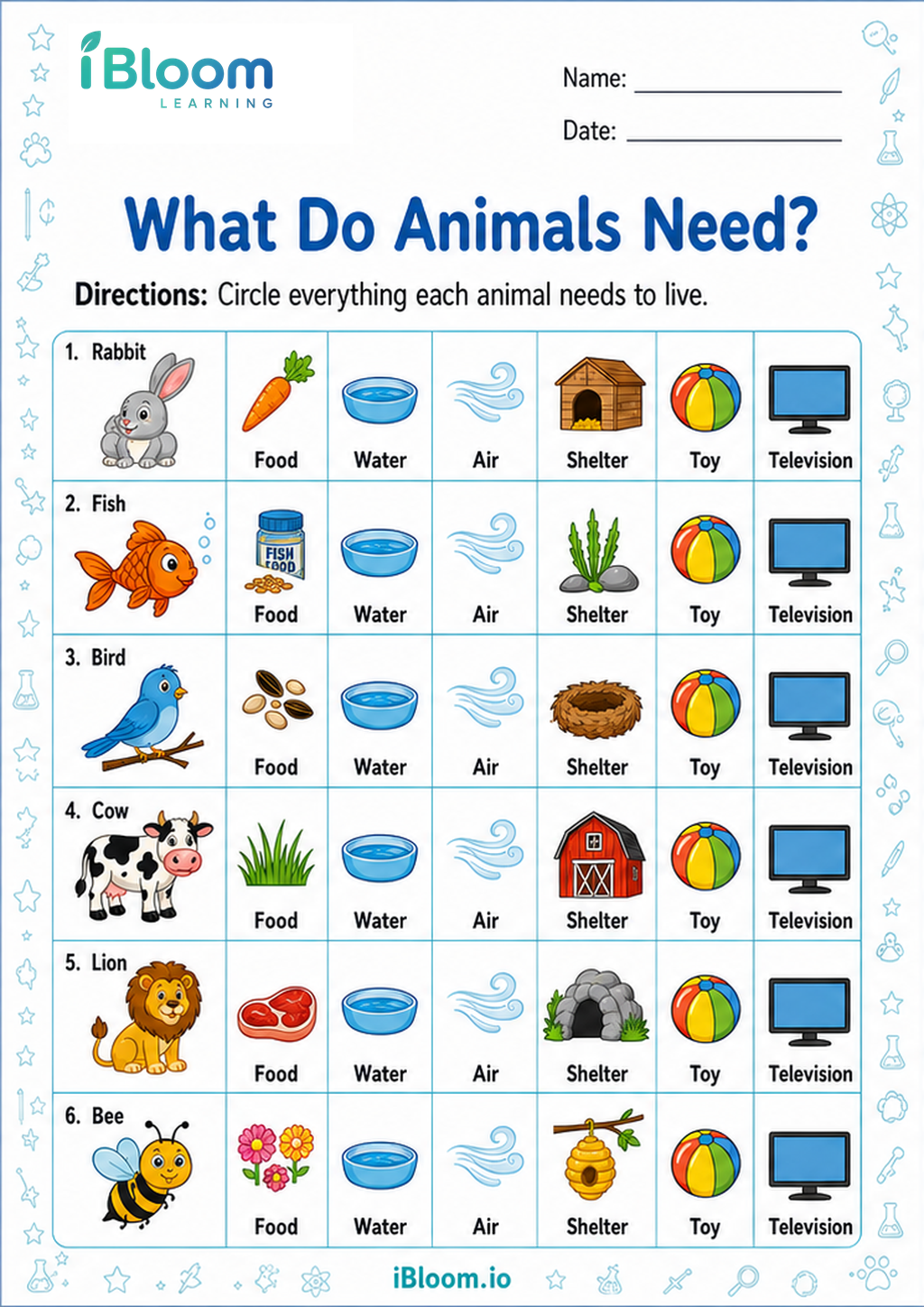 What Do Animals Need?Class 2 printable practice for Animal Needs.Class 2Free PDF preview
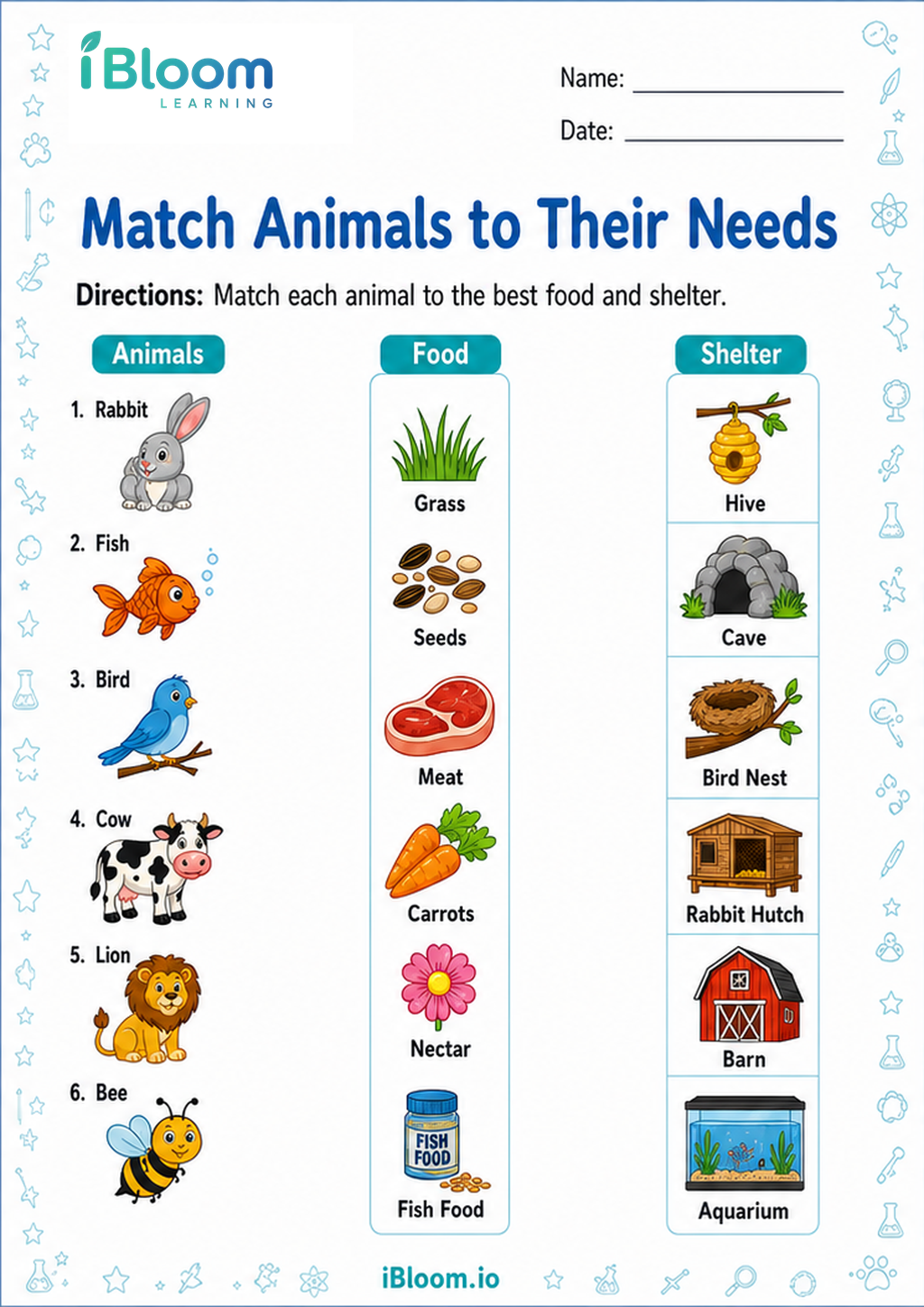 Match Animals to Their NeedsClass 2 printable practice for Animal Needs.Class 2Free PDF preview
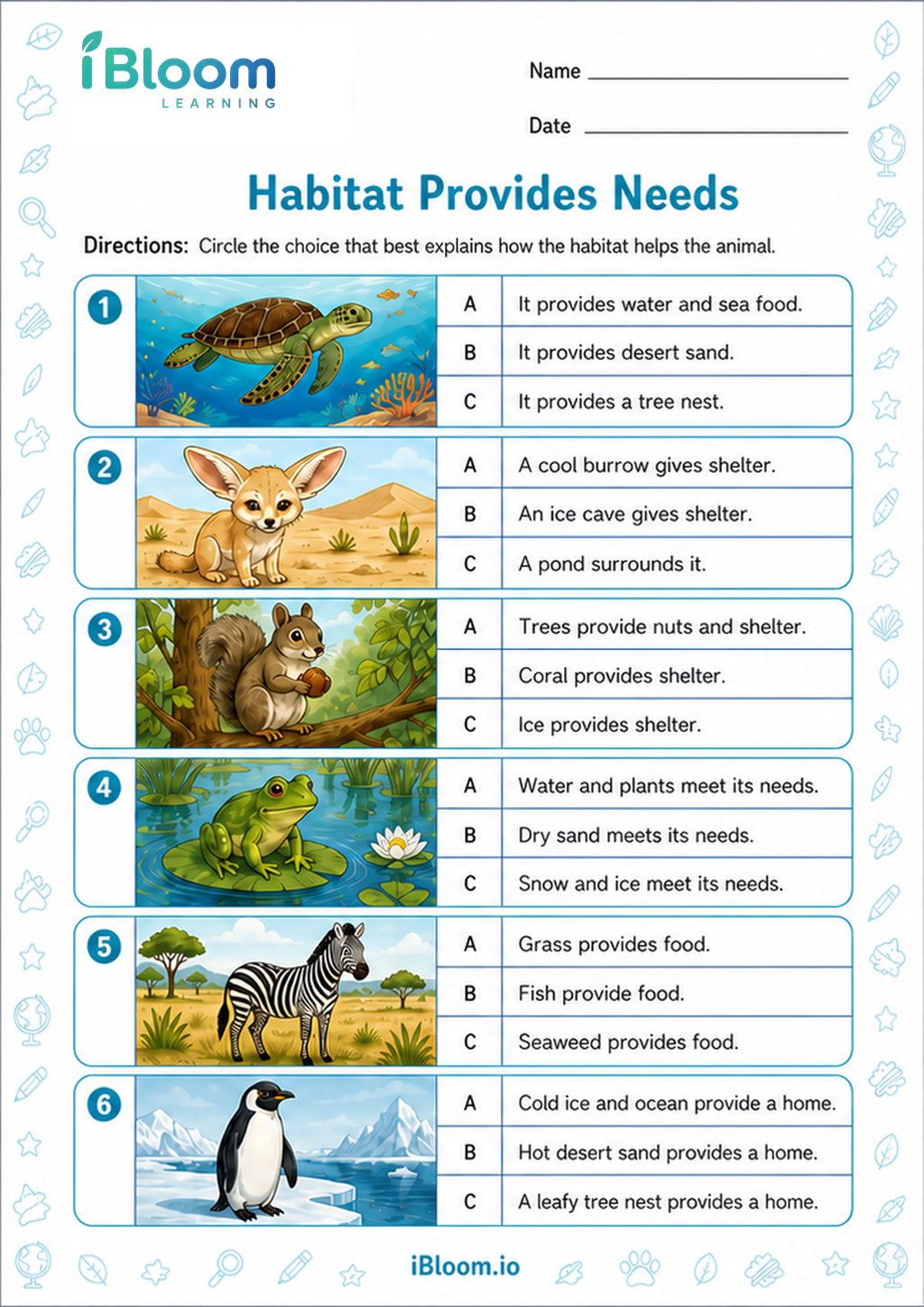 Habitat Provides NeedsClass 2 printable practice for Animal Needs.Class 2Free PDF preview
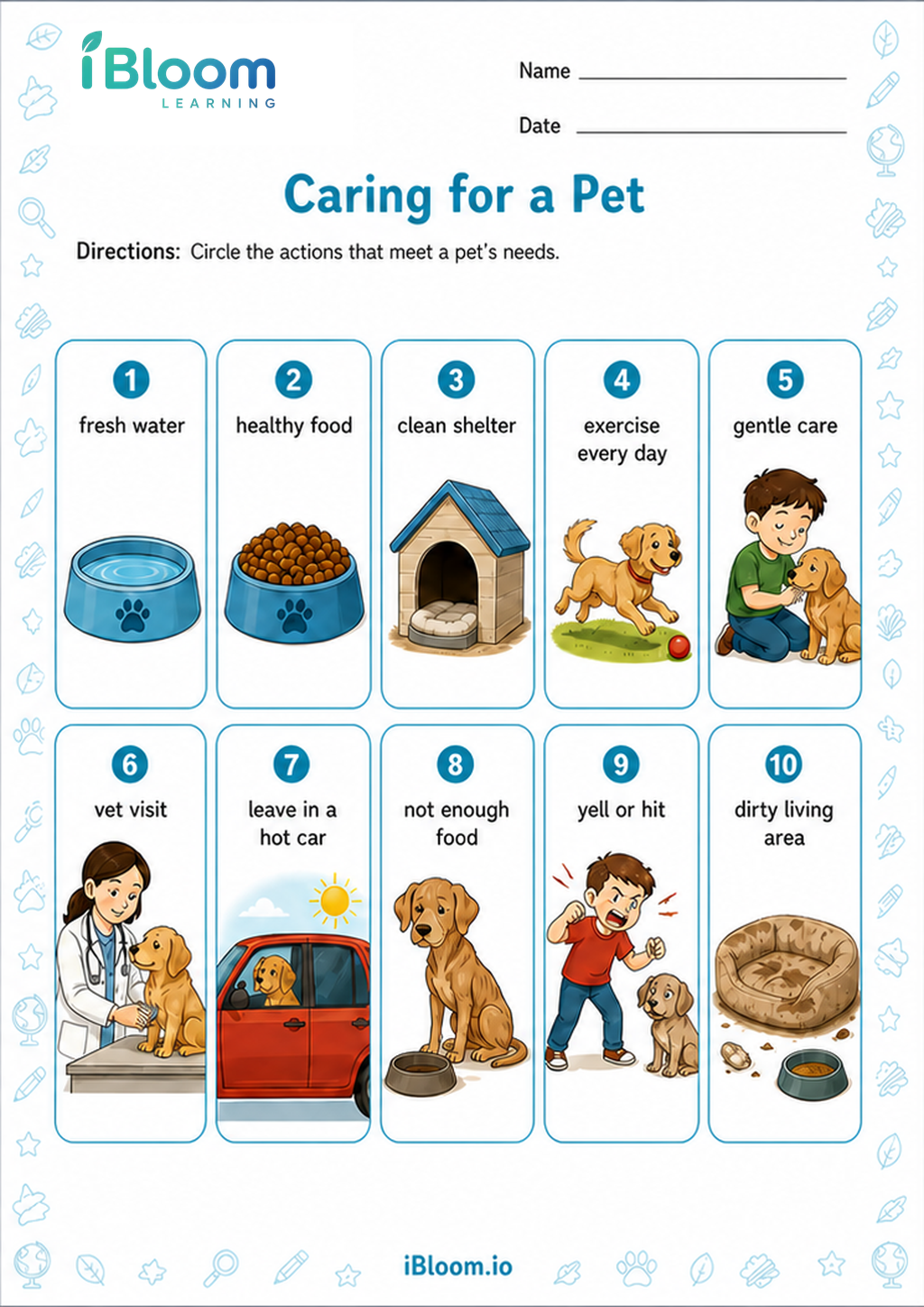 Caring for a PetClass 2 printable practice for Animal Needs.Class 2Free PDF preview
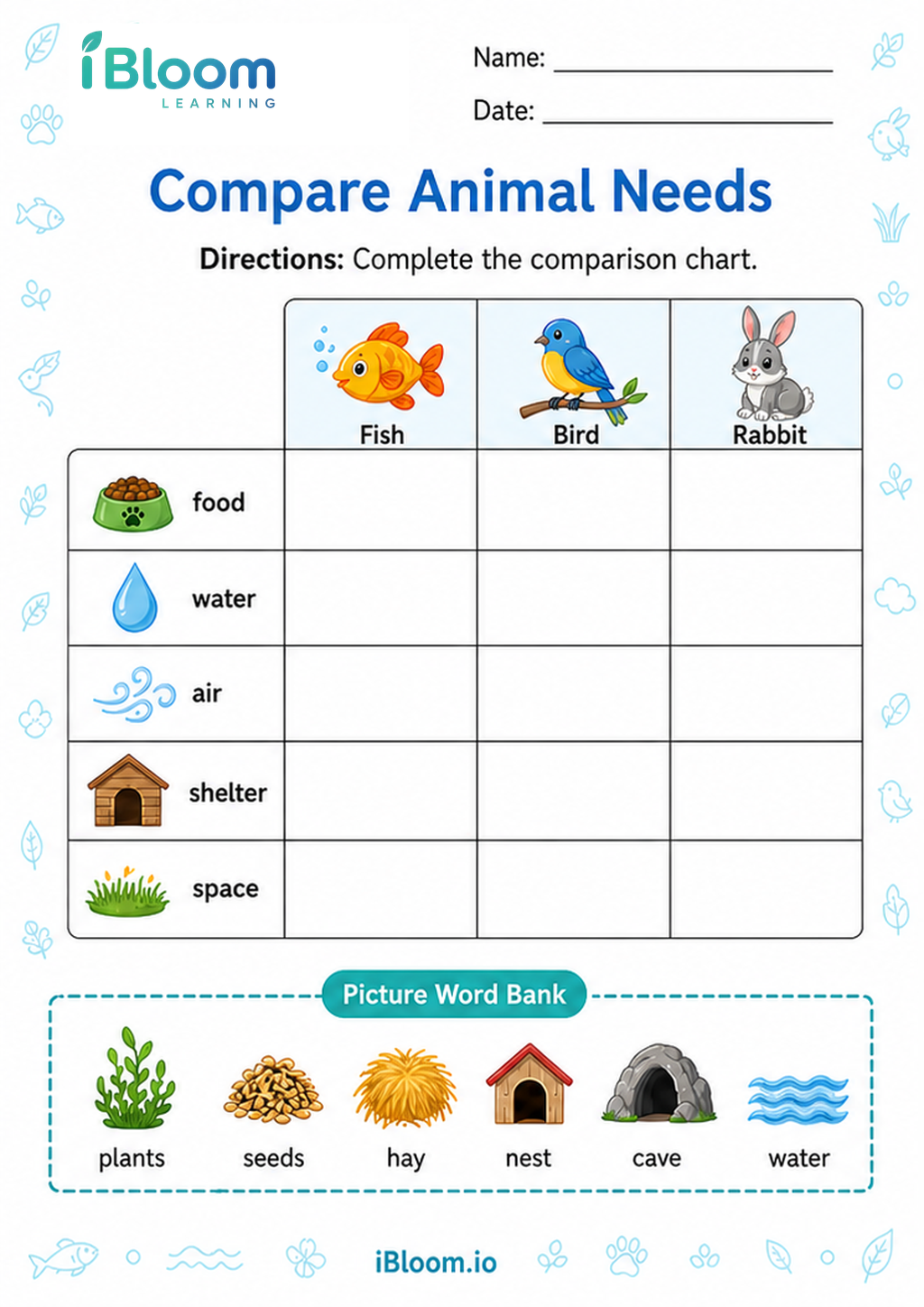 Compare Animal NeedsClass 2 printable practice for Animal Needs.Class 2Free PDF preview
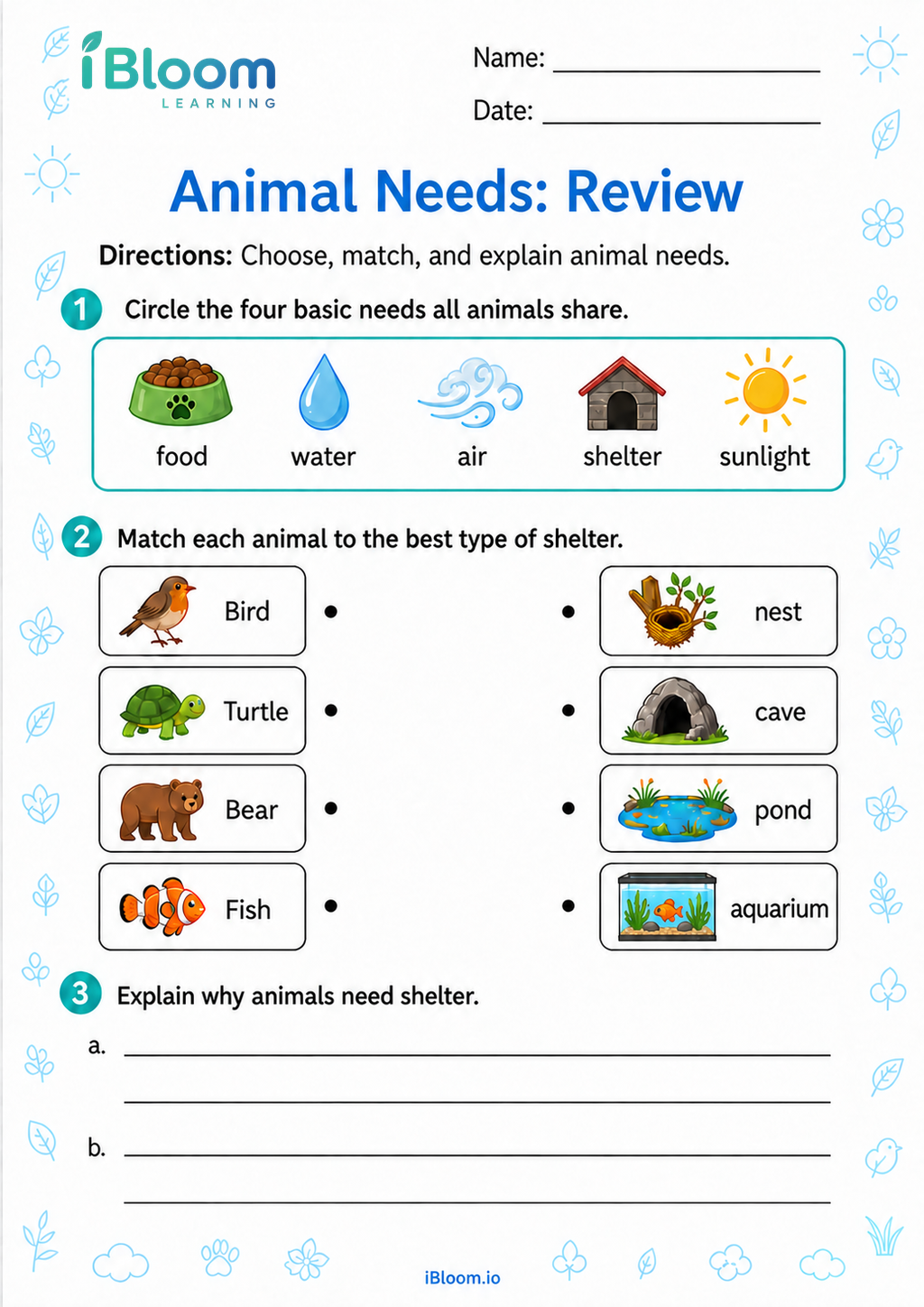 Animal Needs: ReviewClass 2 printable practice for Animal Needs.Class 2Free PDF preview
Practice that builds confidence
What children learn about animals
These Class 2 Science and EVS animal worksheets help children observe, compare, and talk about living things in a clear, age-appropriate way. Learners practise naming animal types, matching animals to habitats, identifying body coverings, recognising offspring, and noticing inherited traits.
The printable activities include picture-based sorting, matching, labelling, simple food chain work, animal sound practice, life cycle sequencing, and questions about animal needs, anatomy, foods, and adaptations. Each page builds everyday science vocabulary through familiar examples from home, school, farms, forests, ponds, and other habitats.
This collection supports the Animals topic in the Class 2 Science and EVS path. Children move from simple recognition to careful grouping: which animals live on land, in water, on trees, or in more than one place; which have fur, feathers, scales, shells, or skin; and how body parts help animals move, eat, stay safe, and care for young ones.

From needs to habitats and adaptations
The worksheets connect animal needs with animal habitats. Children see that animals need food, water, air, shelter, and space, then link these needs to places such as ponds, deserts, forests, grasslands, farms, and homes. Adapting habitats activities help them notice practical features, such as a bird using wings, a fish using fins, or a camel coping with dry places, without overloading them with advanced biology.
Classification, offspring, and life cycles
Children practise classifying animal types in simple ways, such as wild and domestic animals, water and land animals, or animals by covering and food habits. Offspring tasks build vocabulary like calf, chick, kitten, puppy, and cub. Life cycle pages encourage sequencing, especially where young animals grow and change. Inherited traits activities prompt children to notice that young animals often resemble their parents in shape, covering, colour pattern, or body features.
Parent routine for home practice
Choose one worksheet and one real-life observation. After a page on animal foods, ask your child what a cow, sparrow, dog, or butterfly eats. After a habitat page, look outside or at a picture book and ask, “What does this animal need to live here?” Keep answers oral first, then let the child complete the matching, circling, or labelling task. End by asking them to say one new word, such as habitat, covering, offspring, food chain, or shelter.

Classroom uses for teachers
Teachers can use these printables for EVS warm-ups, group sorting tasks, science centers, notebook pasting, assessment after a lesson, or discussion prompts. Picture cards can be cut and sorted by habitat, food, sound, covering, or animal type. Food chain worksheets are useful for showing simple links, such as plant to grasshopper to frog, while sound pages strengthen observation and language together.

Common errors and a child-friendly strategy
Watch for children calling every young animal a baby, mixing up where an animal lives with what it eats, or sorting by one visible feature only. Some may think all birds fly or all water animals are fish. Teach the quick strategy: “Look, name, ask.” Look at the body, name the covering or part, then ask what it helps the animal do. This habit makes answers more thoughtful.
Free printable PDF download
Use this Class 2 animals worksheet page to preview the activity, print it, or download it as a PDF for quick practice. It works well for homework, homeschool lessons, tutoring, morning work, revision, and classroom centers.
Answers and answer key support
After the child completes the worksheet independently, parents and teachers can use the answer support or answer key information to check the work, review mistakes, and choose the next practice step.
Why iBloom worksheets help
iBloom worksheets use clear illustrations, familiar Indian classroom vocabulary, and varied tasks so children do more than memorise animal names. They compare, match, label, sequence, and explain, helping Class 2 learners build confident EVS understanding step by step.
Helpful answers
Frequently asked questions
What animal topics are covered in these Class 2 worksheets?
They cover animal habitats, body coverings, offspring, inherited traits, animal needs, anatomy, food chains, life cycles, animal sounds, food habits, classification, and simple adaptations.
Are these worksheets suitable for Science and EVS practice?
Yes. The activities are written for the Class 2 Science and EVS Animals topic and use observation, matching, sorting, labelling, and simple explanation tasks.
How do the habitat worksheets help children?
They help children connect animals with the places they live, such as ponds, forests, farms, homes, and dry areas, and think about how those places provide food, water, air, and shelter.
Do these worksheets include animal babies and life cycles?
Yes. Children practise matching animals with their offspring, using words such as chick, calf, cub, puppy, and kitten, and sequencing simple stages in animal life cycles.
Can teachers use these worksheets for classroom sorting activities?
Yes. Many pages work well as cut-and-sort or group discussion tasks where children classify animals by habitat, covering, food, sound, or type.
What mistakes should parents watch for while helping at home?
Common mistakes include confusing an animal’s habitat with its food, assuming all birds fly, calling every young animal a baby, or grouping animals only by appearance instead of by need or feature.
Is this Class 2 animals worksheet free?
Yes. You can preview it for free and use the printable worksheet for home or classroom practice.
Can I download this Class 2 animals worksheet as a PDF?
Yes. Use the worksheet download option to save a printable PDF, or print the worksheet directly from the page.