Free printable practice
Environment Practice Activities
Class 2 EVS worksheets on energy, natural resources, renewable resources, and simple ways children can conserve resources at home and school.
Explore Environment
Free printable worksheet PDFs
Preview every available page, then download the free worksheet PDF for home, homeschool, tutoring, or classroom practice.
Preview the exact activity before downloading it.
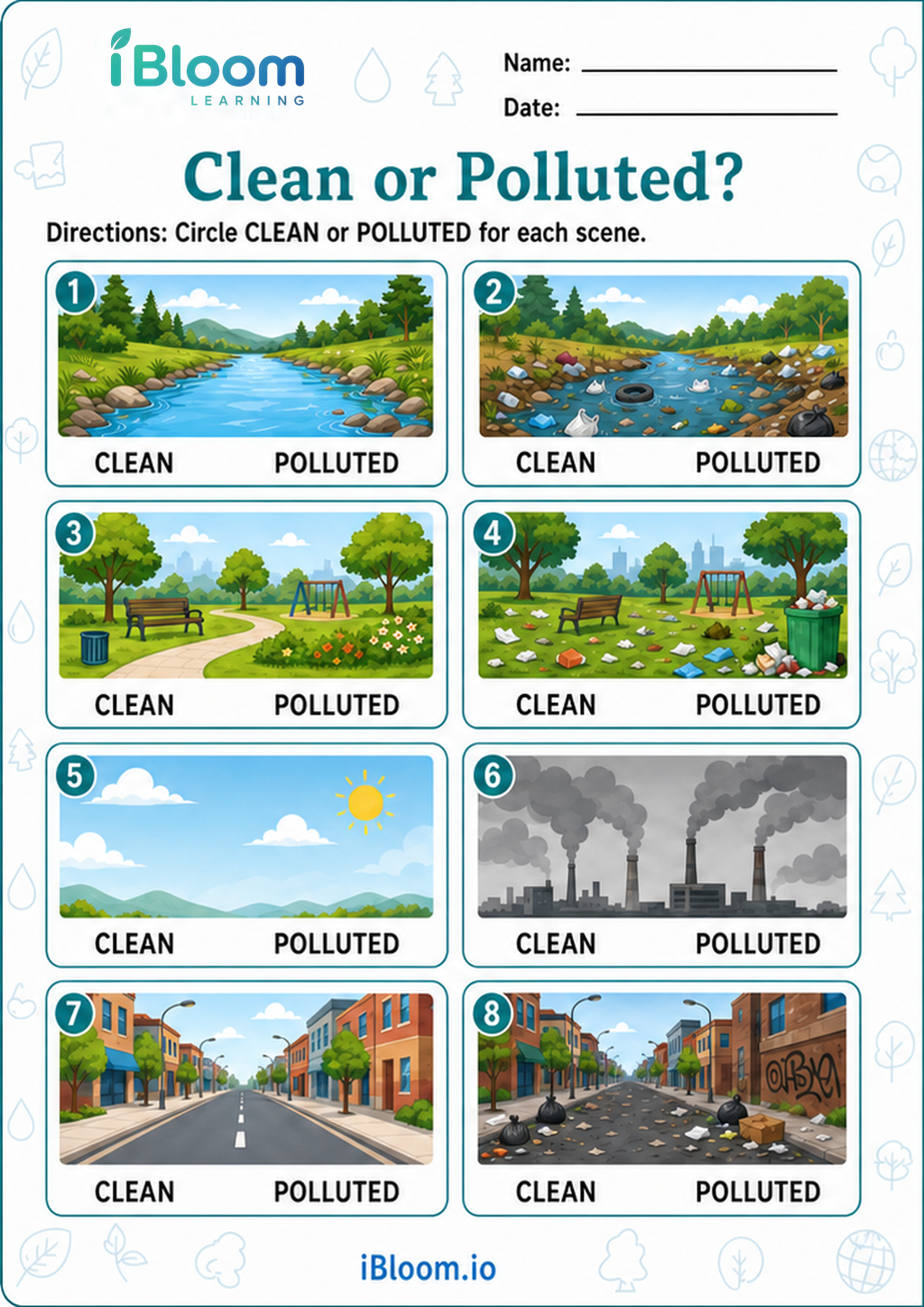 Clean or Polluted?Class 2 printable practice for Our Environment.Class 2Free PDF preview
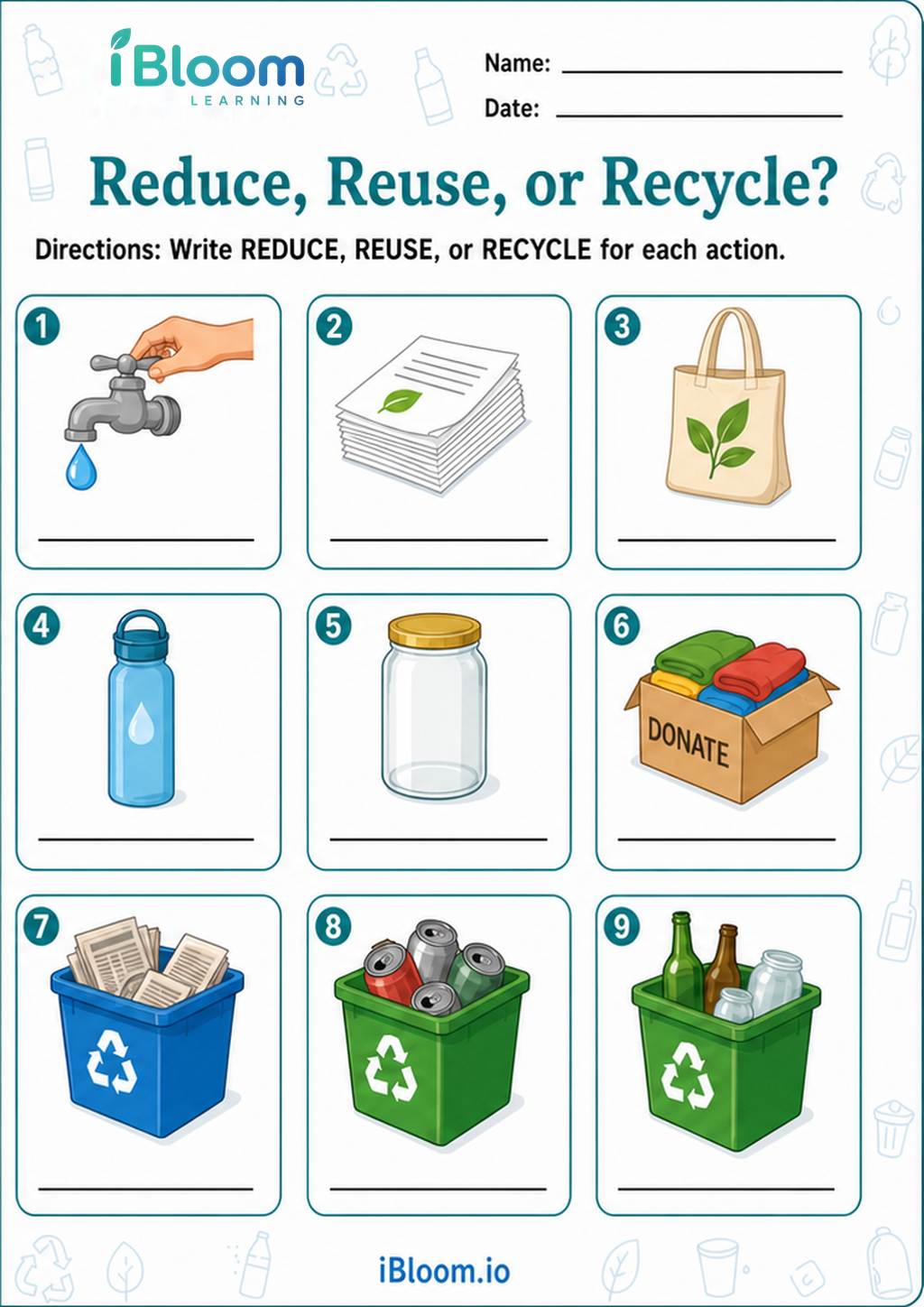 Reduce, Reuse, or Recycle?Class 2 printable practice for Our Environment.Class 2Free PDF preview
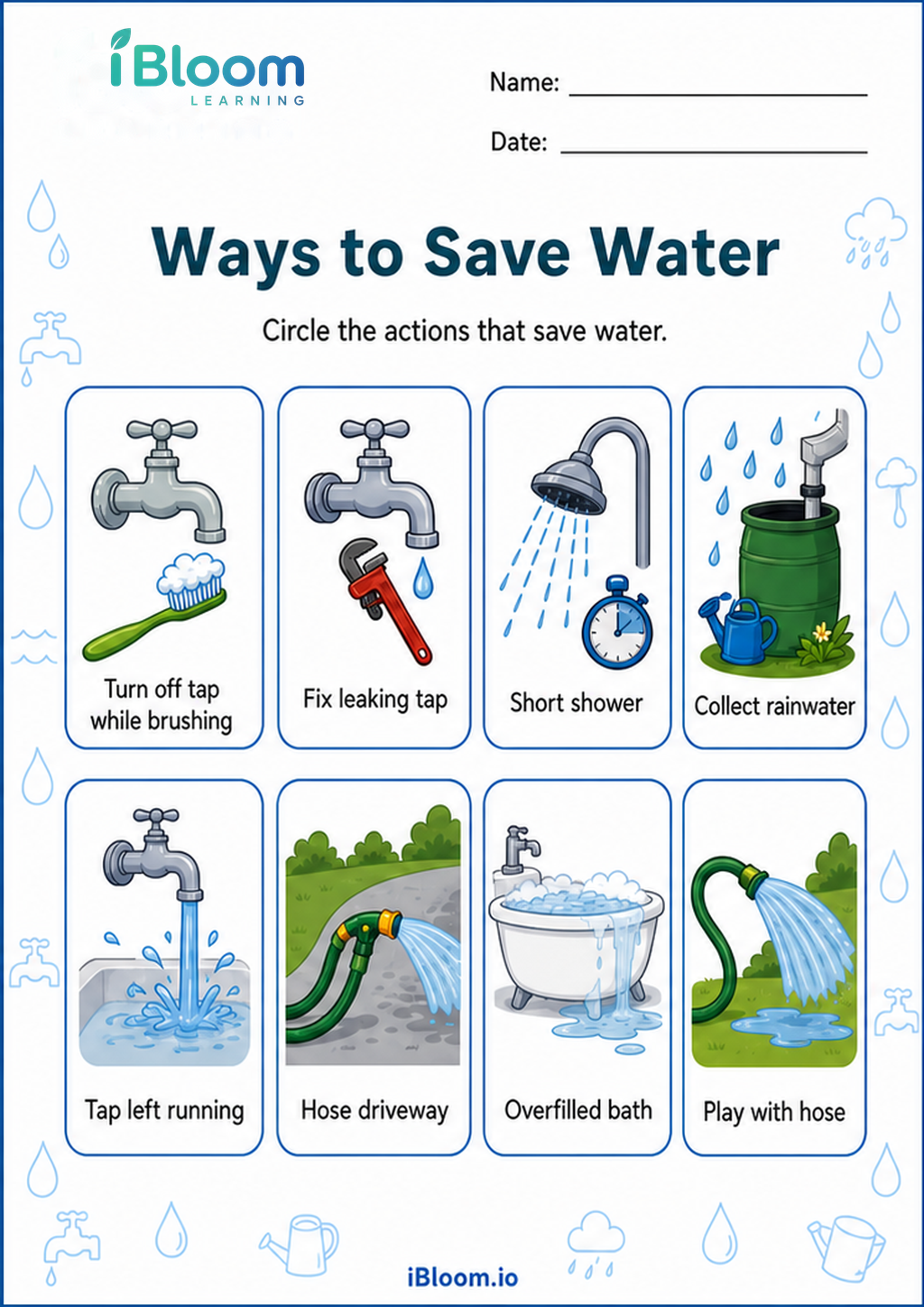 Ways to Save WaterClass 2 printable practice for Our Environment.Class 2Free PDF preview
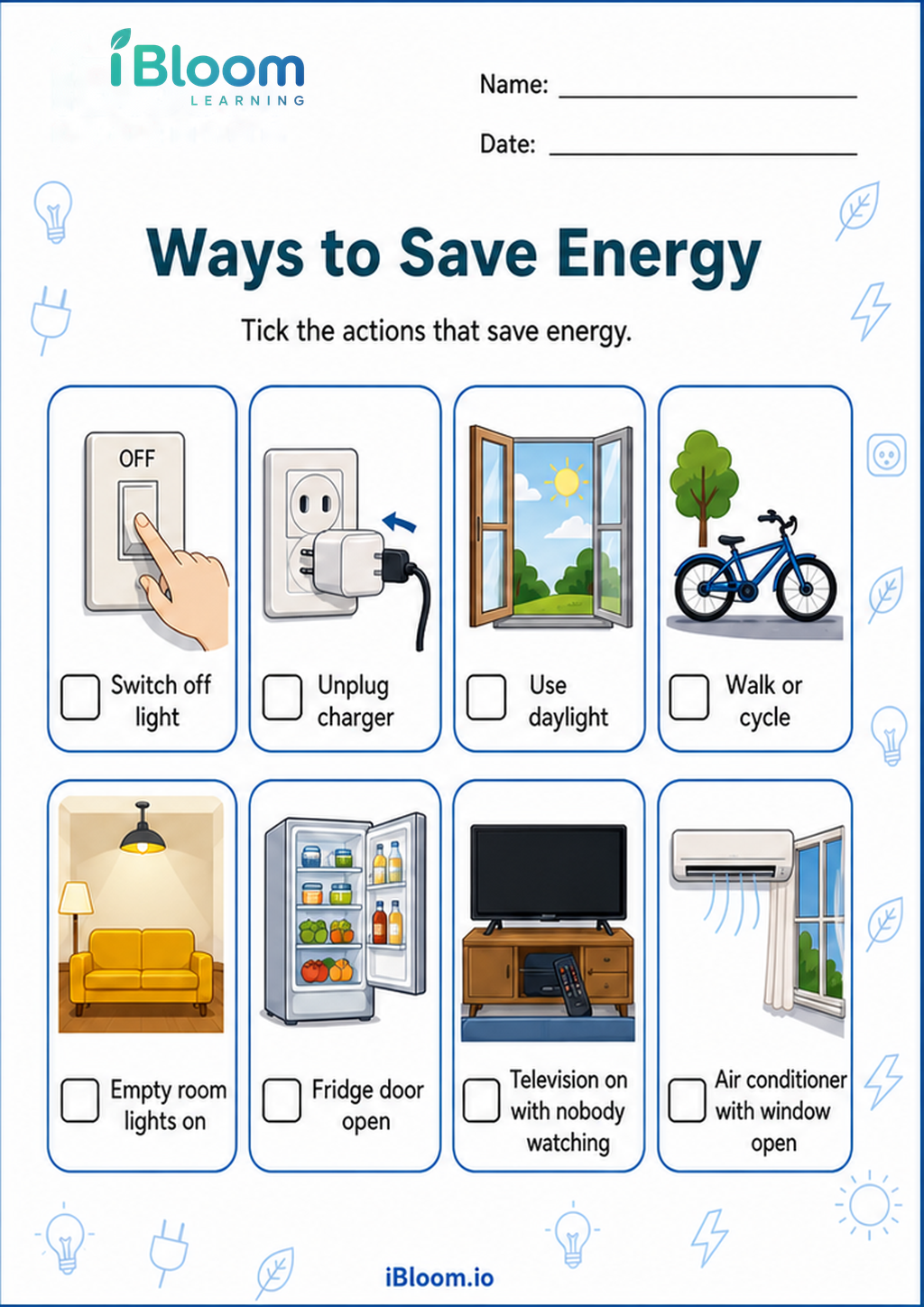 Ways to Save EnergyClass 2 printable practice for Our Environment.Class 2Free PDF preview
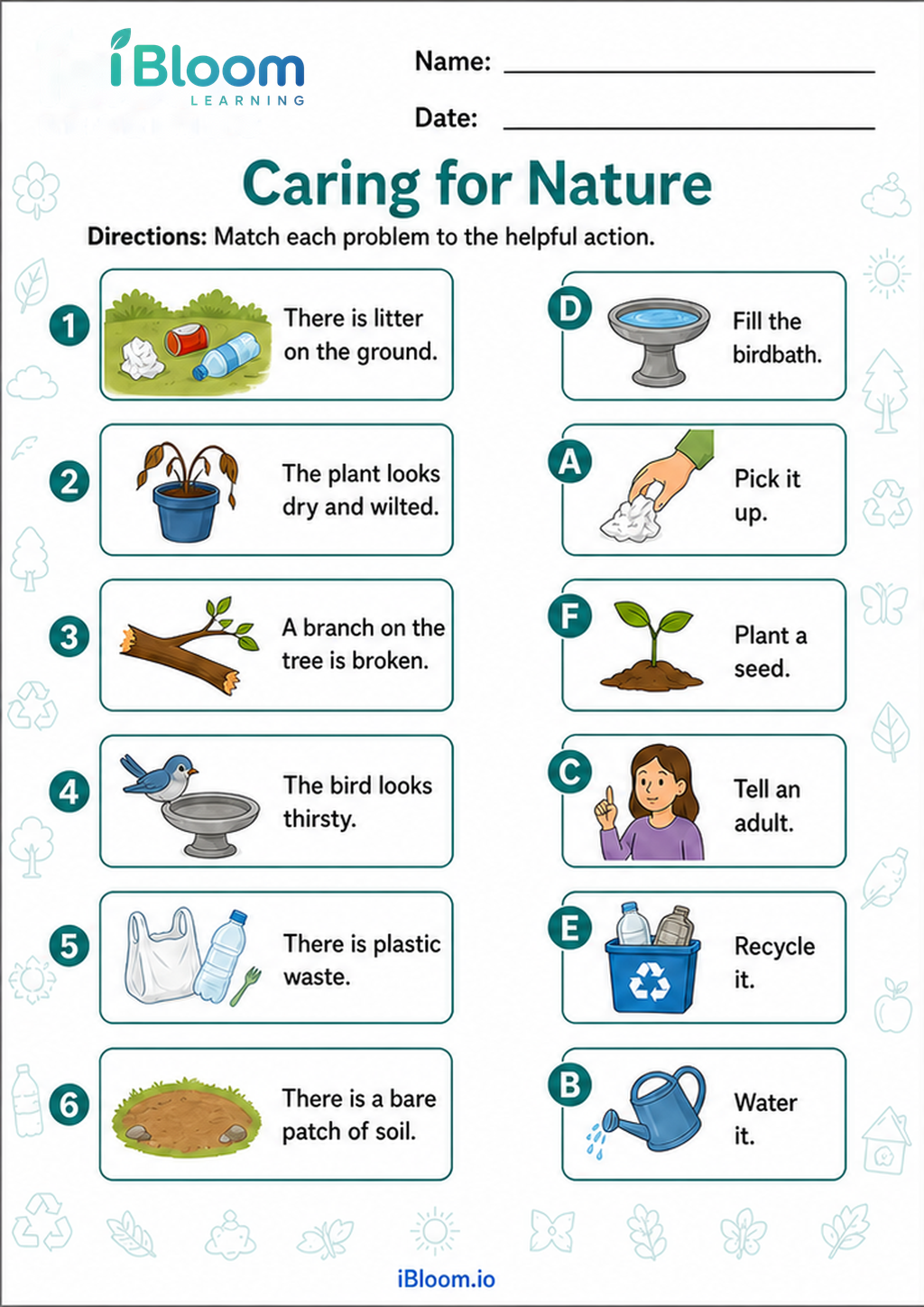 Caring for NatureClass 2 printable practice for Our Environment.Class 2Free PDF preview
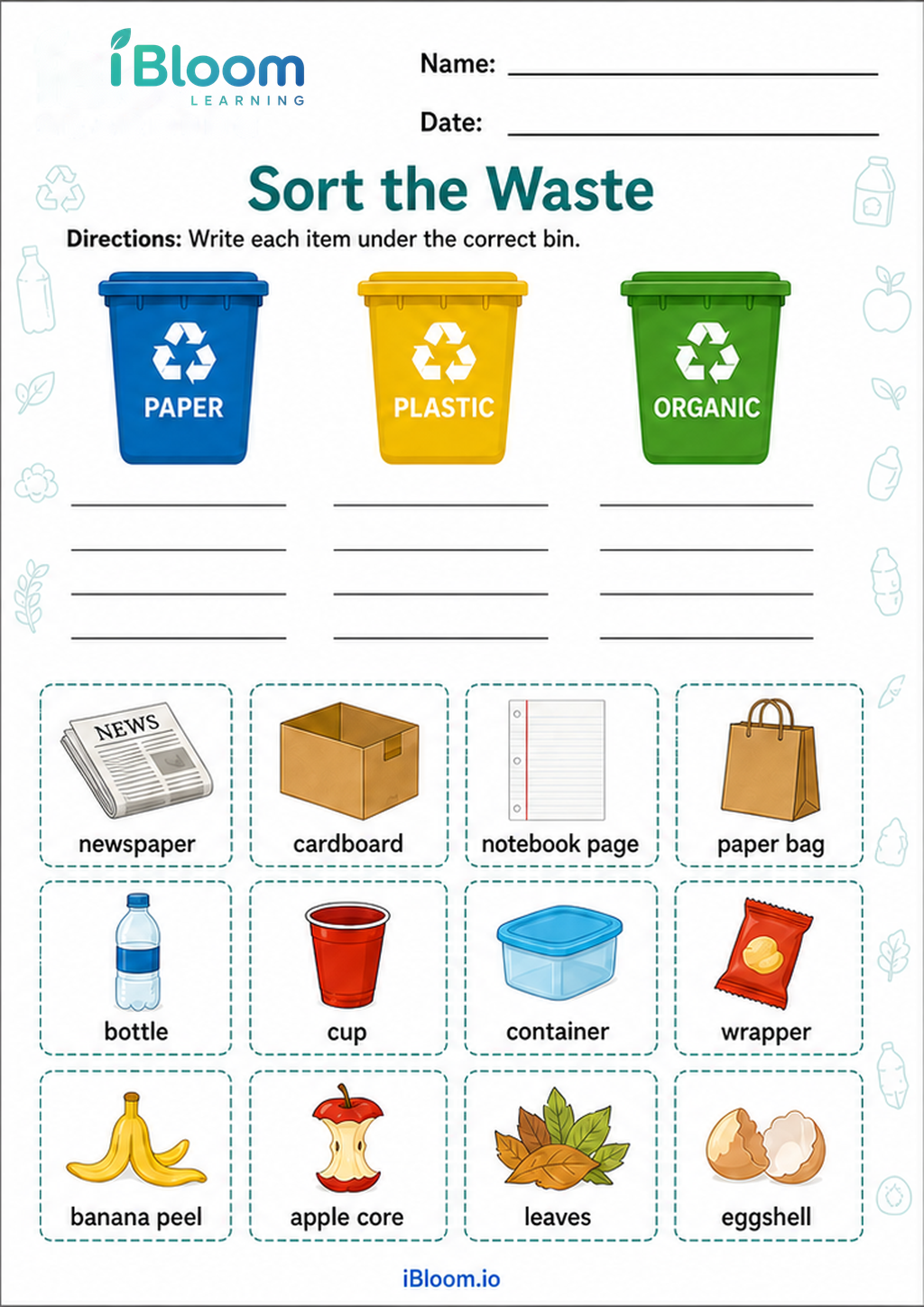 Sort the WasteClass 2 printable practice for Our Environment.Class 2Free PDF preview
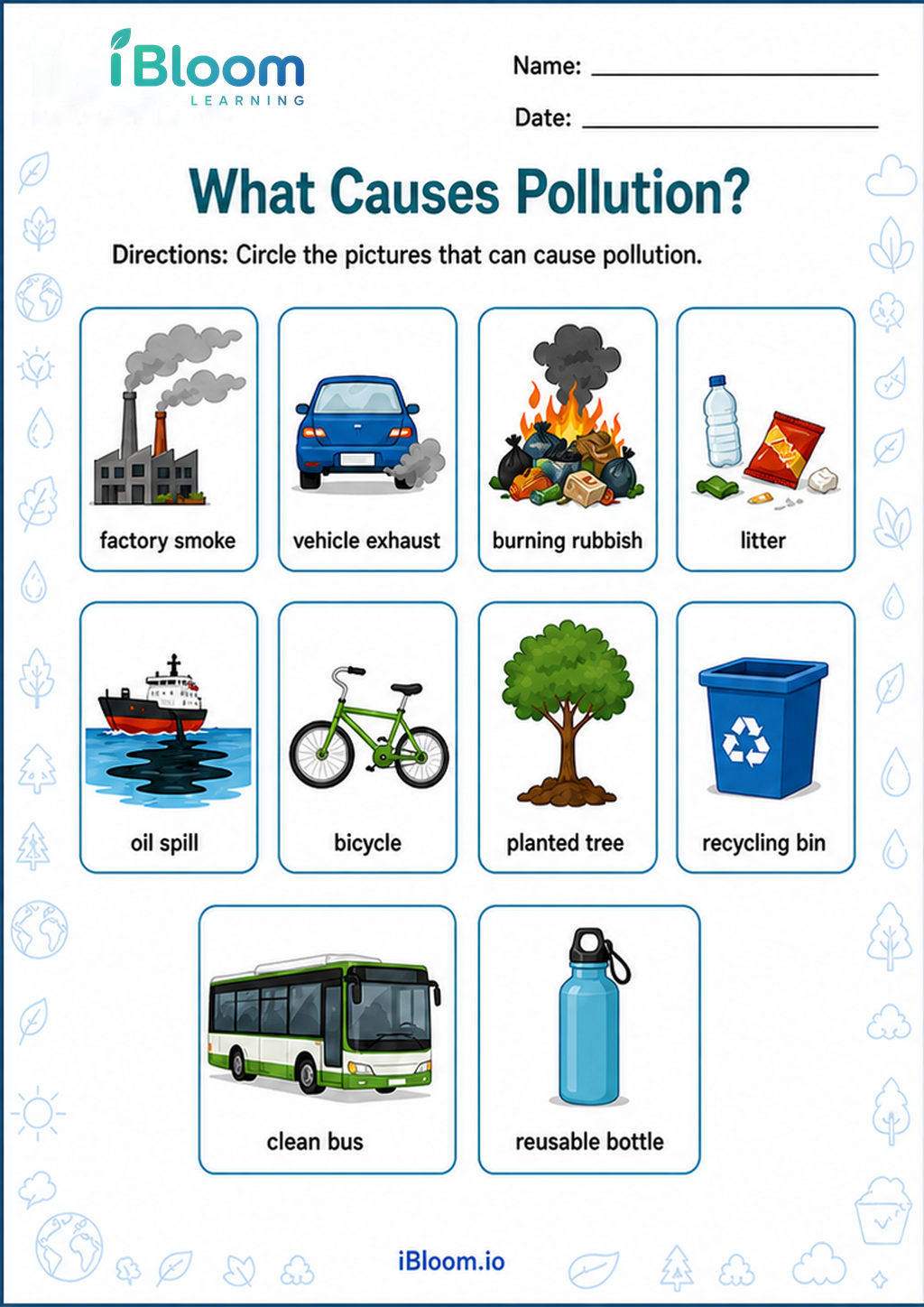 What Causes Pollution?Class 2 printable practice for Our Environment.Class 2Free PDF preview
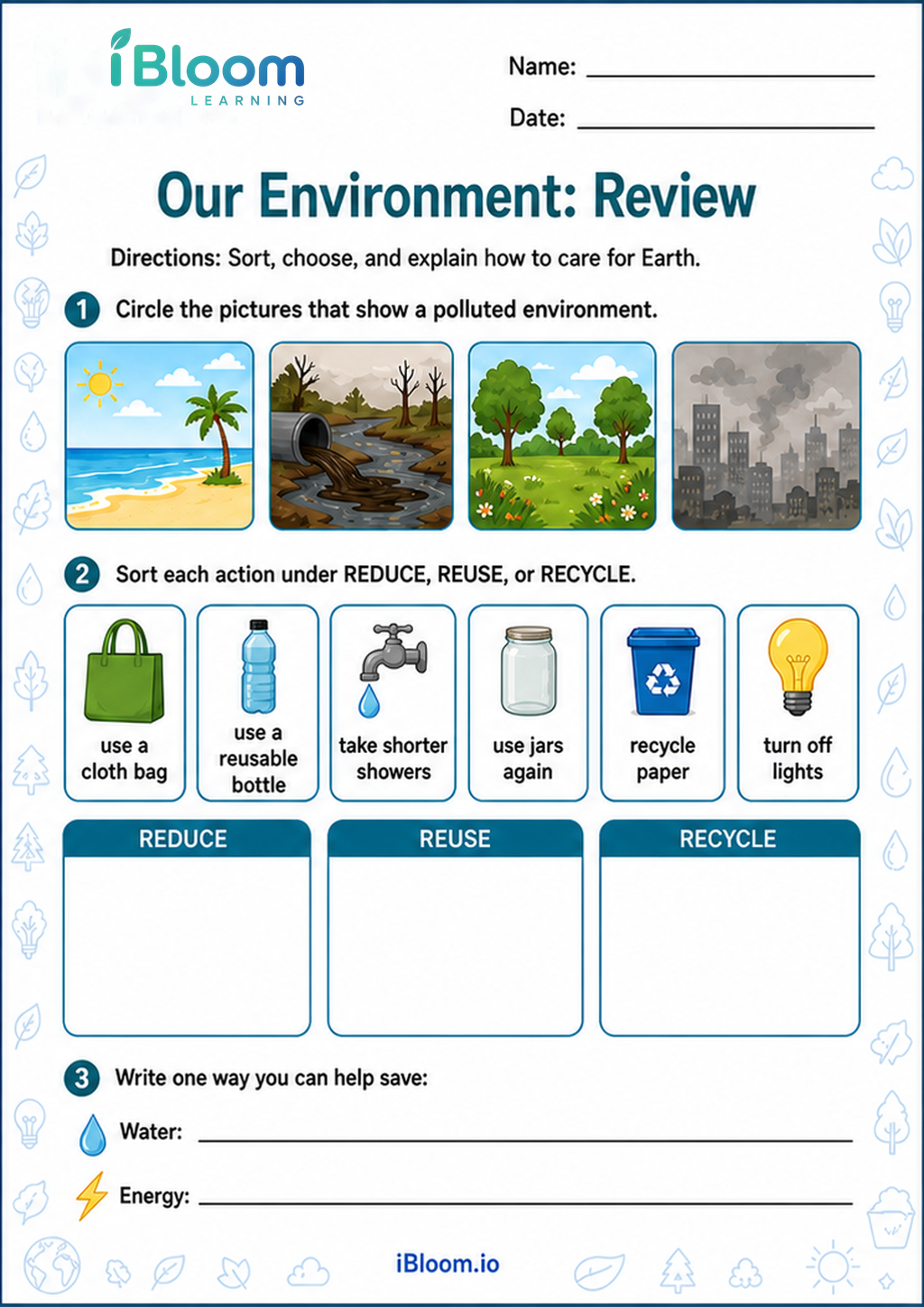 Our Environment: ReviewClass 2 printable practice for Our Environment.Class 2Free PDF preview
Practice that builds confidence
What children learn about the environment
These Class 2 Science and EVS environment worksheets help children understand how people use energy and natural resources in daily life. Learners identify common resources such as water, air, soil, sunlight, plants, and fuels, and begin to sort them into renewable and non-renewable examples.
The printable activities include picture-based questions, matching, sorting, short answers, observation prompts, and conservation choices. Children practise noticing waste, naming better habits, and connecting classroom learning with real actions at home, school, and their neighbourhood.
At this level, environment learning is practical and close to a child’s world. The worksheets ask children to look at familiar situations: switching on lights, using water from a tap, travelling by bus, watering plants, or throwing away paper. From these examples, they learn that energy helps us do work and that natural resources come from nature.

Energy and natural resources
Children meet simple vocabulary such as energy, sunlight, wind, water, soil, fuel, forest, and minerals. Activities may ask them to circle things that need energy, match a resource to its use, or identify which resources help plants, animals, and people live. The focus is not on long definitions, but on recognising real examples and using the words correctly.
Renewables and conservation habits
The renewables section introduces the idea that some resources, such as sunlight and wind, are naturally available again and again, while others must be used carefully because they can run out or take a very long time to form. Resource conservation tasks guide children to choose sensible actions: turning off a fan, closing a tap, reusing paper, planting trees, sharing books, and avoiding food waste.
A simple parent routine
At home, choose one daily activity and turn it into an EVS discussion. While filling a bottle, ask, “Where does this water come from?” While leaving a room, ask, “What should we switch off?” Let your child complete one worksheet section, then find one matching example in the house. End by asking them to say one conservation promise in their own words.

Classroom uses for teachers
Teachers can use these printables for EVS reinforcement, morning work, group discussions, or environment-themed display boards. Picture sorting works well in pairs, while short-answer tasks can follow a story, a nature walk, or a discussion on school resources. The sheets also support class conversations on responsible habits without making the topic too abstract.

Common errors and a child-friendly strategy
Children may think electricity itself is a natural resource, confuse renewable with “useful”, or believe conservation means “do not use anything”. Remind them: “Use what you need, do not waste it.” A helpful strategy is Look–Name–Choose: look at the resource, name where it comes from, and choose a careful action. Why iBloom worksheets help: they move from pictures and everyday examples to simple reasoning, so Class 2 learners build both EVS vocabulary and responsible environmental habits.
Free printable PDF download
Use this Class 2 environment worksheet page to preview the activity, print it, or download it as a PDF for quick practice. It works well for homework, homeschool lessons, tutoring, morning work, revision, and classroom centers.
Answers and answer key support
After the child completes the worksheet independently, parents and teachers can use the answer support or answer key information to check the work, review mistakes, and choose the next practice step.
Helpful answers
Frequently asked questions
What environment topics are covered in these Class 2 worksheets?
They cover energy, natural resources, renewable resources, and resource conservation using examples from home, school, and the neighbourhood.
Are the worksheets suitable for EVS revision?
Yes. The activities use matching, sorting, picture questions, and short answers, making them useful for revising Class 2 Science and EVS environment lessons.
How do these worksheets explain renewable resources to young children?
They use simple examples such as sunlight and wind to show resources that are naturally available again and again, while also encouraging careful use of all resources.
What conservation habits can children practise through these sheets?
Children practise choosing actions such as switching off lights and fans, closing taps, reusing paper, planting trees, and avoiding waste.
Can parents use these environment worksheets at home?
Yes. Parents can connect each worksheet to daily routines like using water, saving electricity, sorting waste, or caring for plants.
Is this Class 2 environment worksheet free?
Yes. You can preview it for free and use the printable worksheet for home or classroom practice.
Can I download this Class 2 environment worksheet as a PDF?
Yes. Use the worksheet download option to save a printable PDF, or print the worksheet directly from the page.
Does this Class 2 environment worksheet include answers or an answer key?
When the activity has fixed answers, iBloom includes answer support so parents and teachers can check the completed worksheet.