Free PDF download
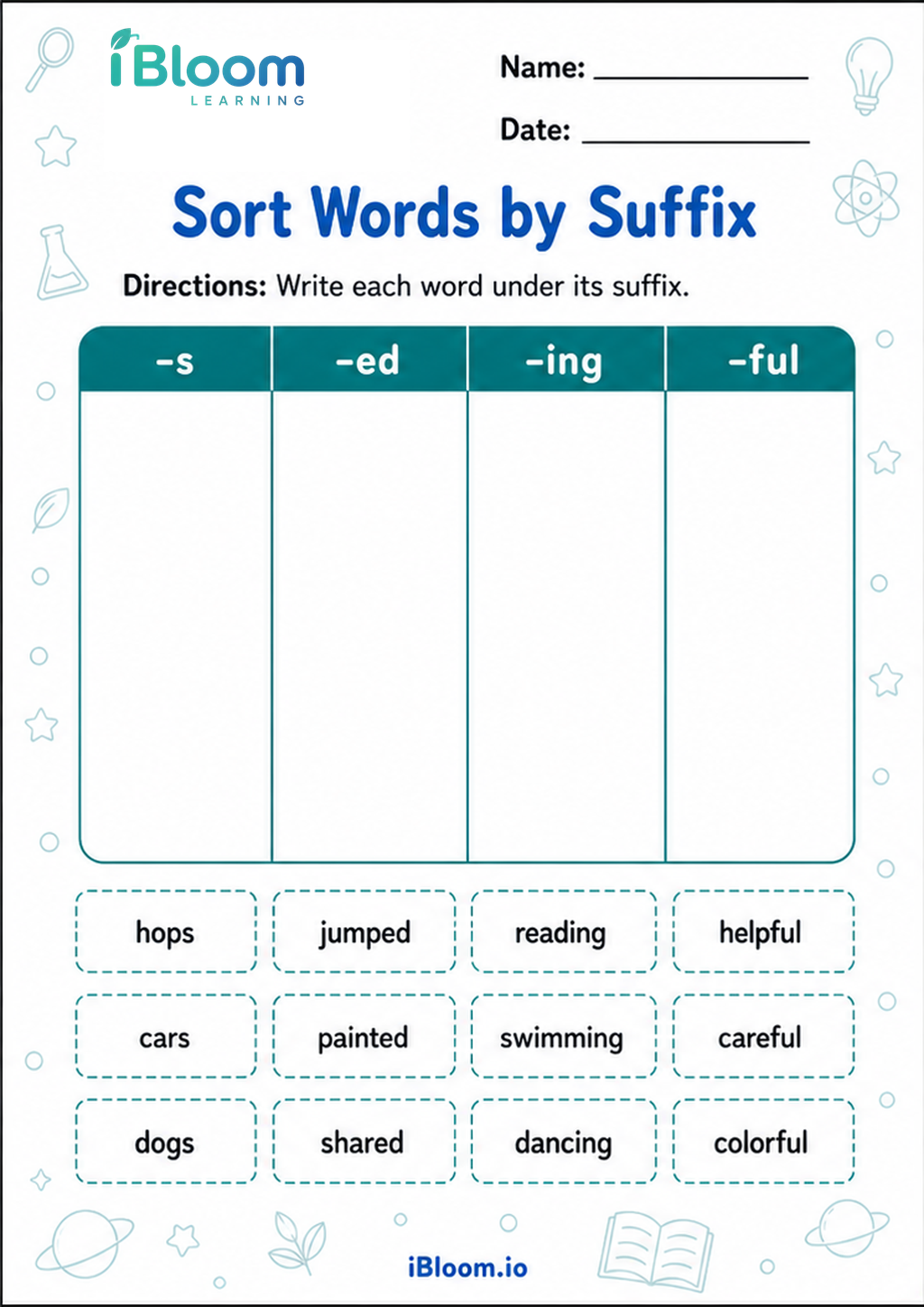
Preview every page of the Sort Words by Suffix worksheet, then download the printable PDF free for homework, tutoring, homeschool, or classroom practice.
Focused Suffixes printable practice
Class 1 printable practice for Suffixes.
Download and curriculum guide
Preview every page of the Sort Words by Suffix worksheet, then download the printable PDF free for homework, tutoring, homeschool, or classroom practice.
Skill codes: Class 1 English Suffixes. Use these codes with the learning objective above when comparing this worksheet with your school or district scope and sequence.
This free worksheet PDF is available to parents, teachers, and homeschool families across India. Compare the activity with your board, school, and current class syllabus before assigning it.
Curriculum codes identify useful skill references; they do not mean that every state, district, or board has formally approved this worksheet.
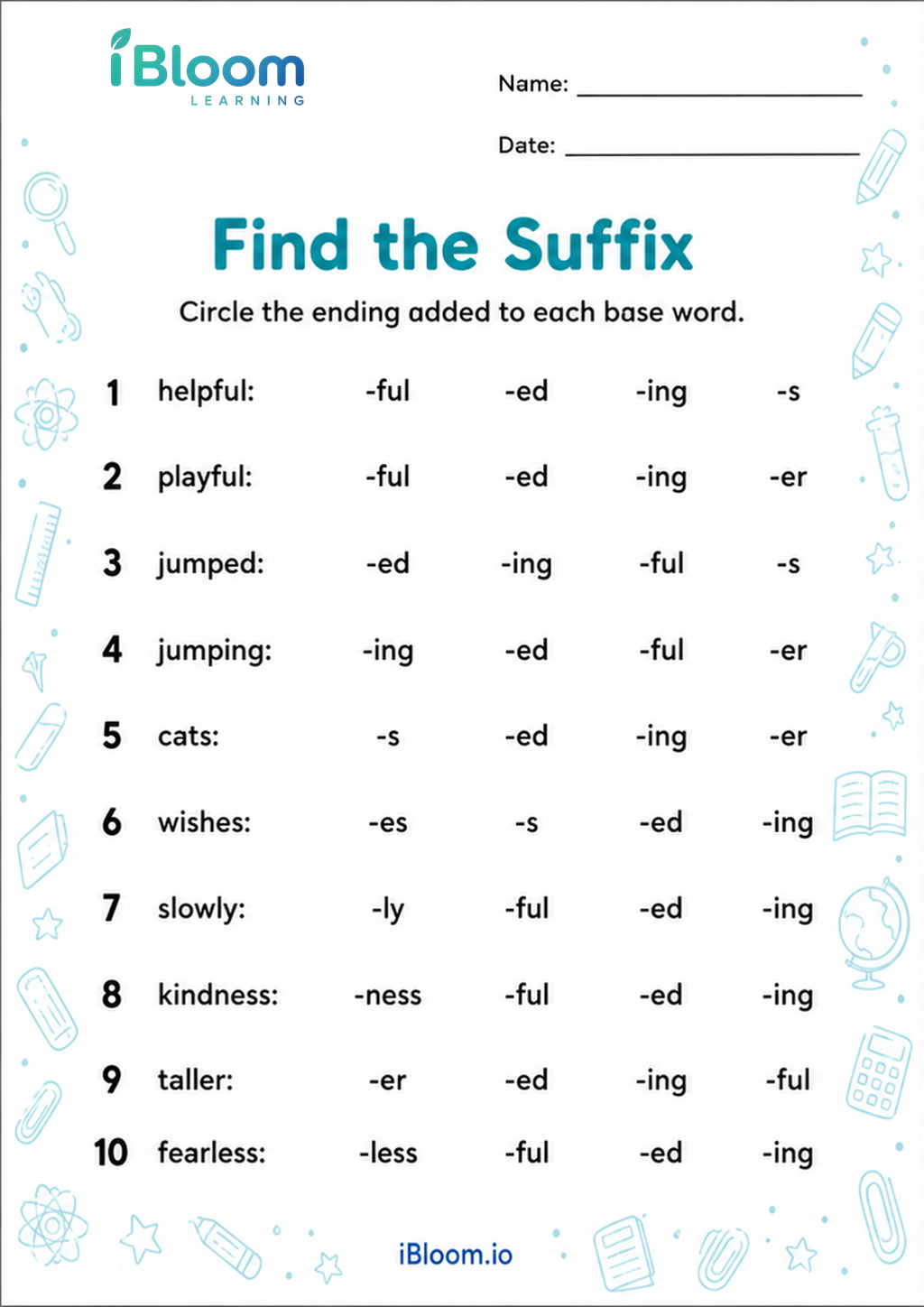
Class 1 printable practice for Suffixes.
Preview free PDF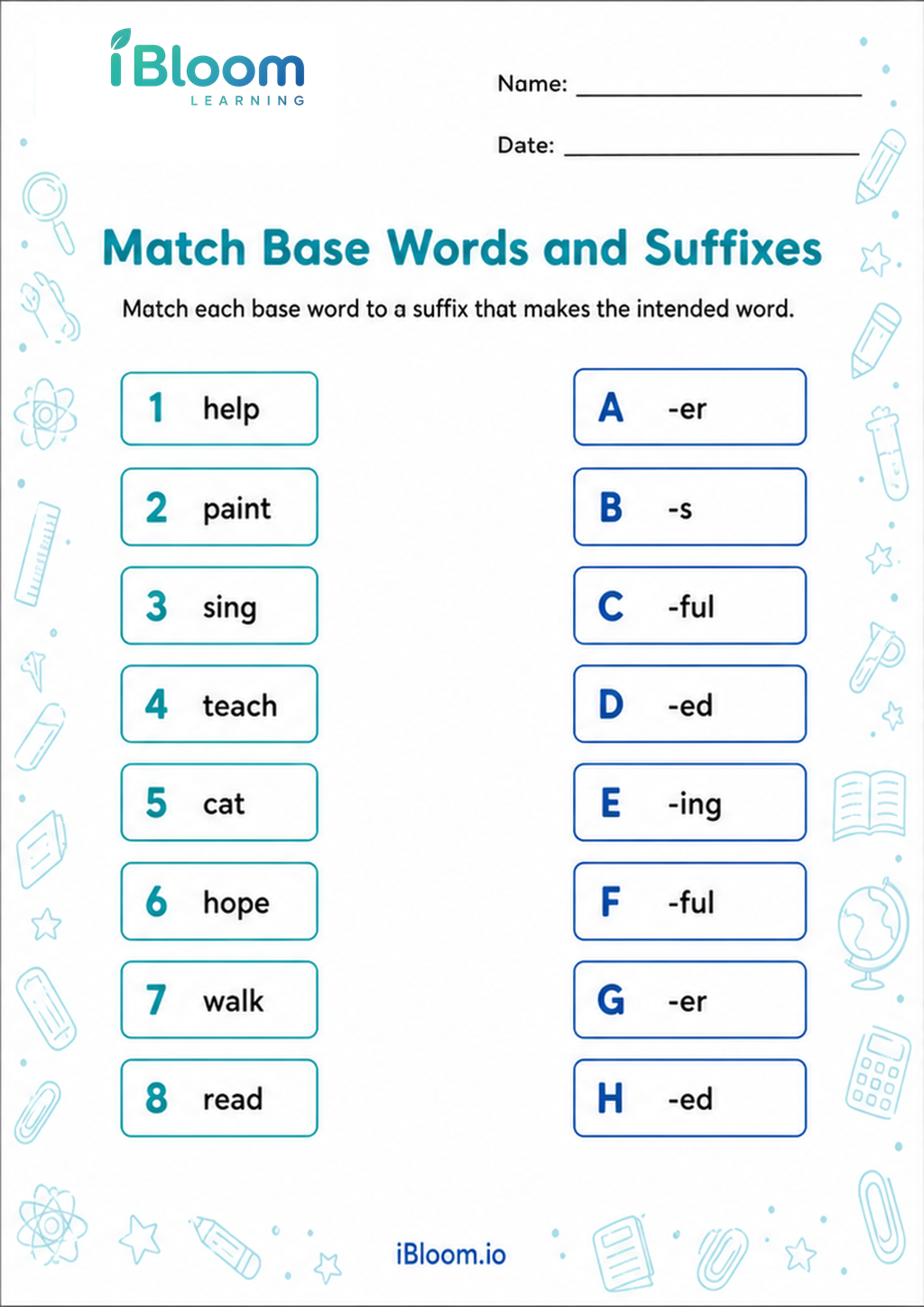
Class 1 printable practice for Suffixes.
Preview free PDF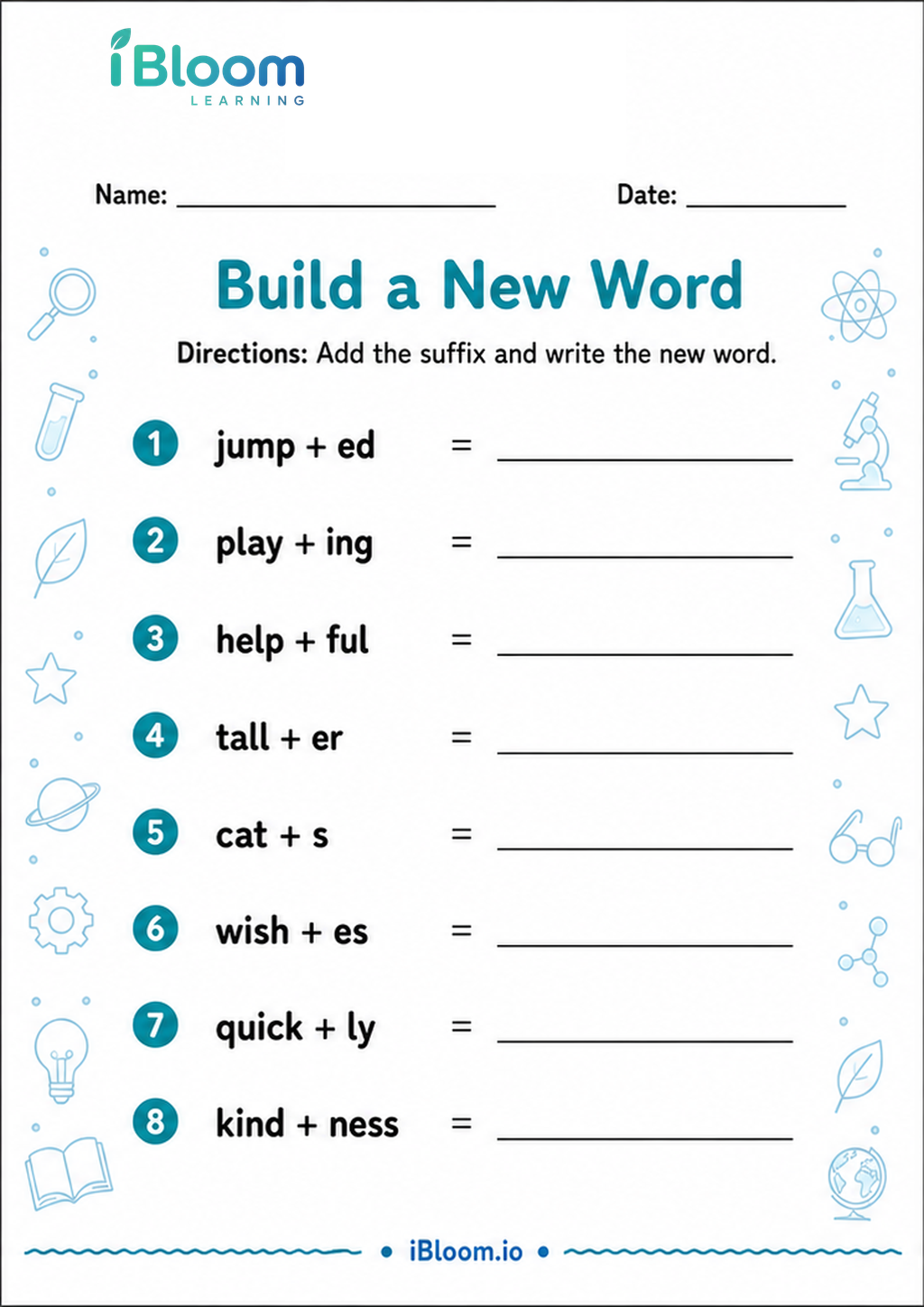
Class 1 printable practice for Suffixes.
Preview free PDF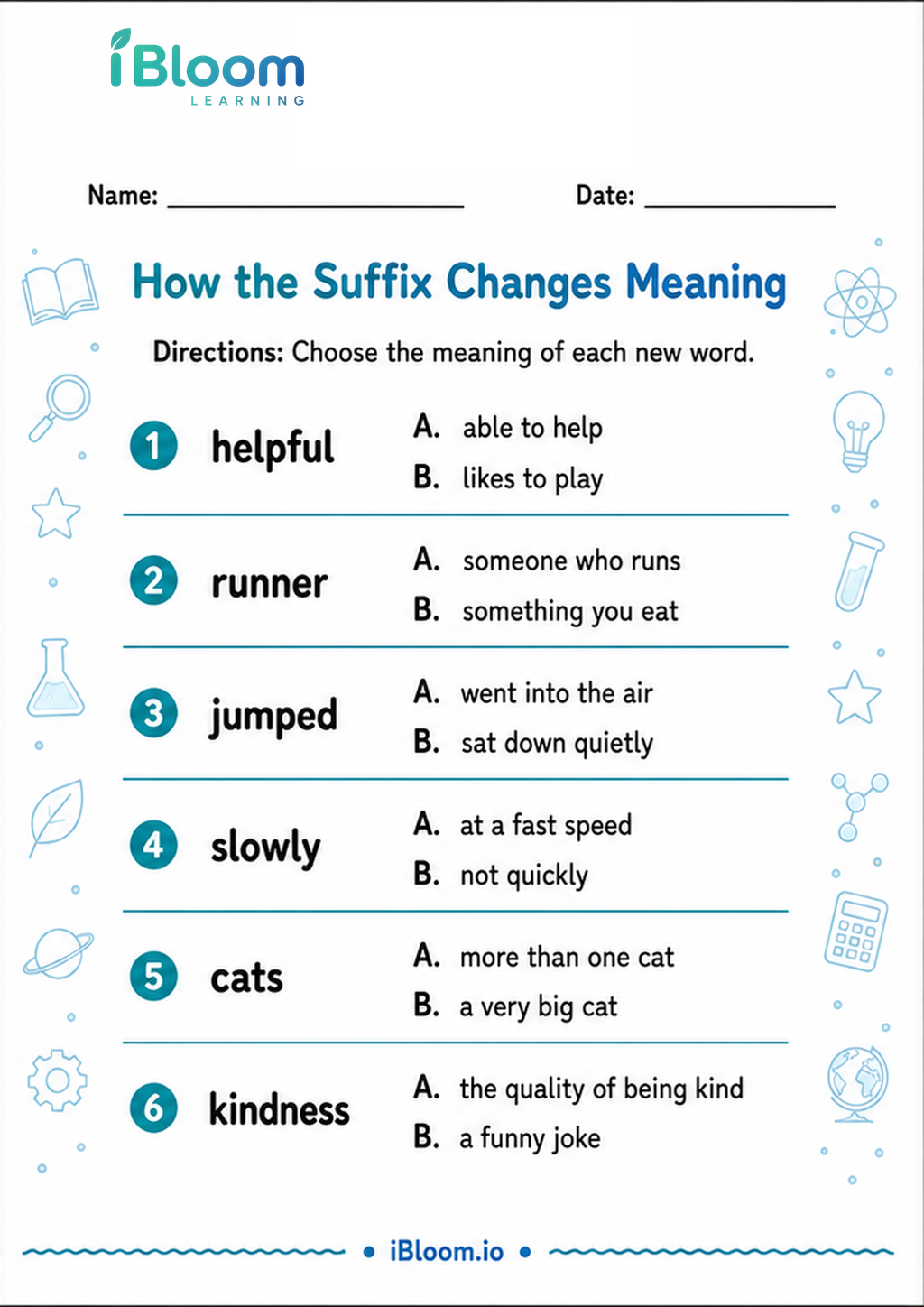
Class 1 printable practice for Suffixes.
Preview free PDF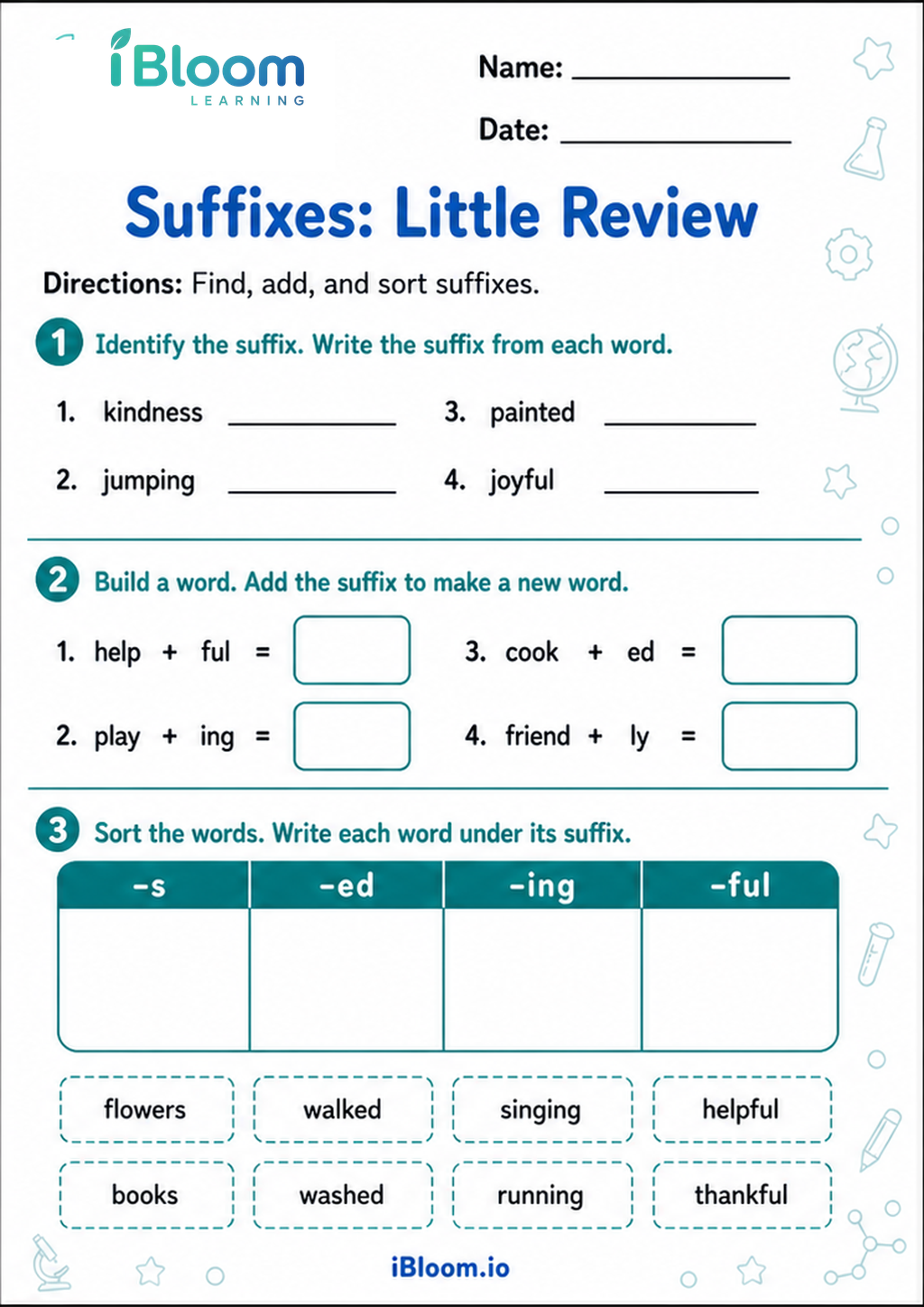
Class 1 printable practice for Suffixes.
Preview free PDFPractice that builds confidence
Focused suffixes practice for Class 1 learners.
This printable builds confidence with suffixes through a clear, self-contained activity.

A worksheet supports learning best when it matches the concept being taught in class and follows a clear oral or hands-on explanation.
Before giving the page to a child, check the class level, vocabulary, number range, writing load, and directions.
Explain the purpose in simple words, such as, “We will practise the number that comes before and after,” so the child understands the learning goal instead of seeing the page as a surprise test.

Ten focused minutes on a suitable activity can be more valuable than a long session with several worksheets. Nursery, LKG, and UKG learners need especially short practice combined with play, stories, songs, movement, drawing, and real materials. Primary learners can work for longer when the task is connected to current classwork and the amount of writing is reasonable.

Use printable pages for board-guided practice, activity periods, learning stations, pair work, classwork, remedial support, homework, revision, or a short formative assessment. Introduce important English vocabulary before the task, particularly in multilingual classrooms. Model one response and ask students to say or discuss an answer before writing when oral language support is needed.
Differentiate while keeping the same concept. Provide manipulatives, a number chart, alphabet strip, picture vocabulary, word bank, sentence frame, read-aloud support, or a reduced question set for children who need access. Extend learning by asking confident students to explain a rule, create a new example, compare methods, write a related question, or connect the topic with daily life.
Use completed work to plan the next teaching step. A pattern of errors may show that a child needs a concrete example, clearer language, more practice with a prerequisite skill, or simply slower pacing. Avoid treating one worksheet score as a full judgment of ability. Combine it with classroom observation, oral responses, notebook work, projects, reading, and conversation with the learner.

iBloom Learning organises printable practice by subject, class, and focused topic so Indian parents and teachers can find a suitable activity without sorting through unrelated material. The library uses familiar stages such as Nursery, LKG, UKG, and the primary classes, with regional wording and examples where they affect understanding. Every page explains the skill, suggests practical ways to teach it, and provides a clear preview before printing.
These worksheets are designed to support classroom teaching and home revision, not replace explanation, play, reading, experiments, manipulatives, or conversation. The focused format gives children space to apply one idea and helps adults notice whether difficulty comes from the concept, English vocabulary, handwriting, attention, or an earlier foundational skill.
For parents, the structure makes it easier to connect practice with current schoolwork and keep sessions short. For teachers, the pages can support board-guided examples, activity periods, small groups, remedial teaching, homework, revision, and quick checks for understanding. Guidance for multilingual learners encourages adults to build the concept through familiar language and experiences while gradually strengthening the English needed for school tasks.
Choose the worksheet that fits the learner in front of you, adjust the number of questions, and use the child's method to plan what happens next. Completing more pages is not the goal. Meaningful progress appears when a child can describe an idea, solve or respond with less support, and apply the learning in class and daily life.
Helpful answers
No. Answers are stored internally for checking.
Choose worksheets that match current classwork and use short, regular sessions. One suitable page with discussion is usually more helpful than several unrelated pages.
Yes. A familiar language can help the child understand the concept. Adults can then connect that understanding with the English words and instructions used at school.
Preteach important vocabulary, model one item, allow oral discussion, and provide pictures, word banks, sentence frames, or peer support while keeping the same learning goal.
Pause, return to a prerequisite skill or concrete example, reduce the number of questions, and try again after the child can explain the basic idea.
Yes. Select the same topic and method currently taught in class, keep the task manageable, and review the child's reasoning instead of focusing only on the final score.
No. They are focused practice resources that complement teaching, textbooks, activities, reading, experiments, manipulatives, oral language, and feedback.