Free printable practice
Identify Suffixes Practice Activities
Class 1 suffix worksheets that help children spot word endings such as -s, -ed, and -ing and understand how they change a base word.
Free printable worksheet PDFs
Preview every available page, then download the free worksheet PDF for home, homeschool, tutoring, or classroom practice.
Preview the exact activity before downloading it.
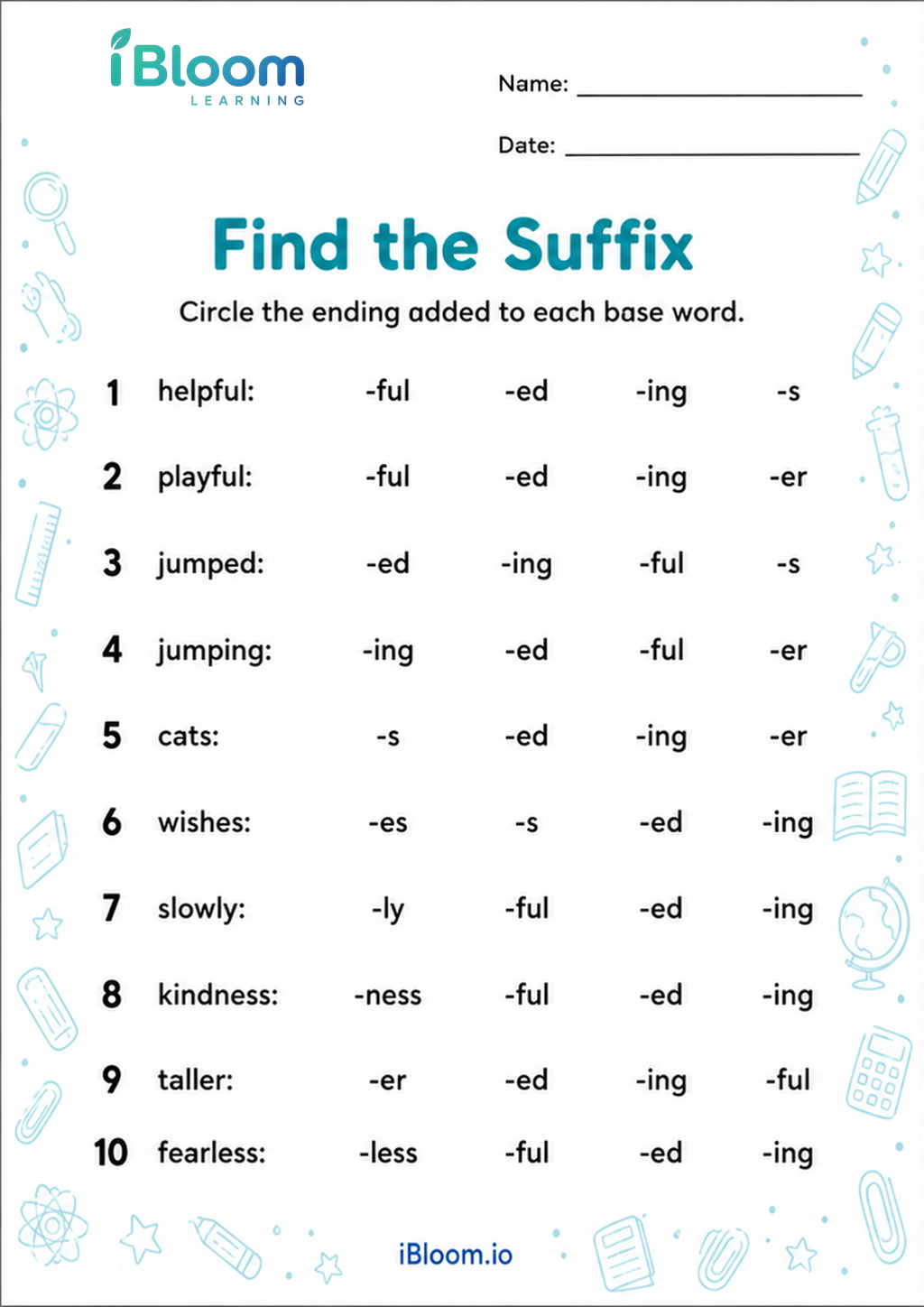 Find the SuffixClass 1 printable practice for Suffixes.Class 1Free PDF preview
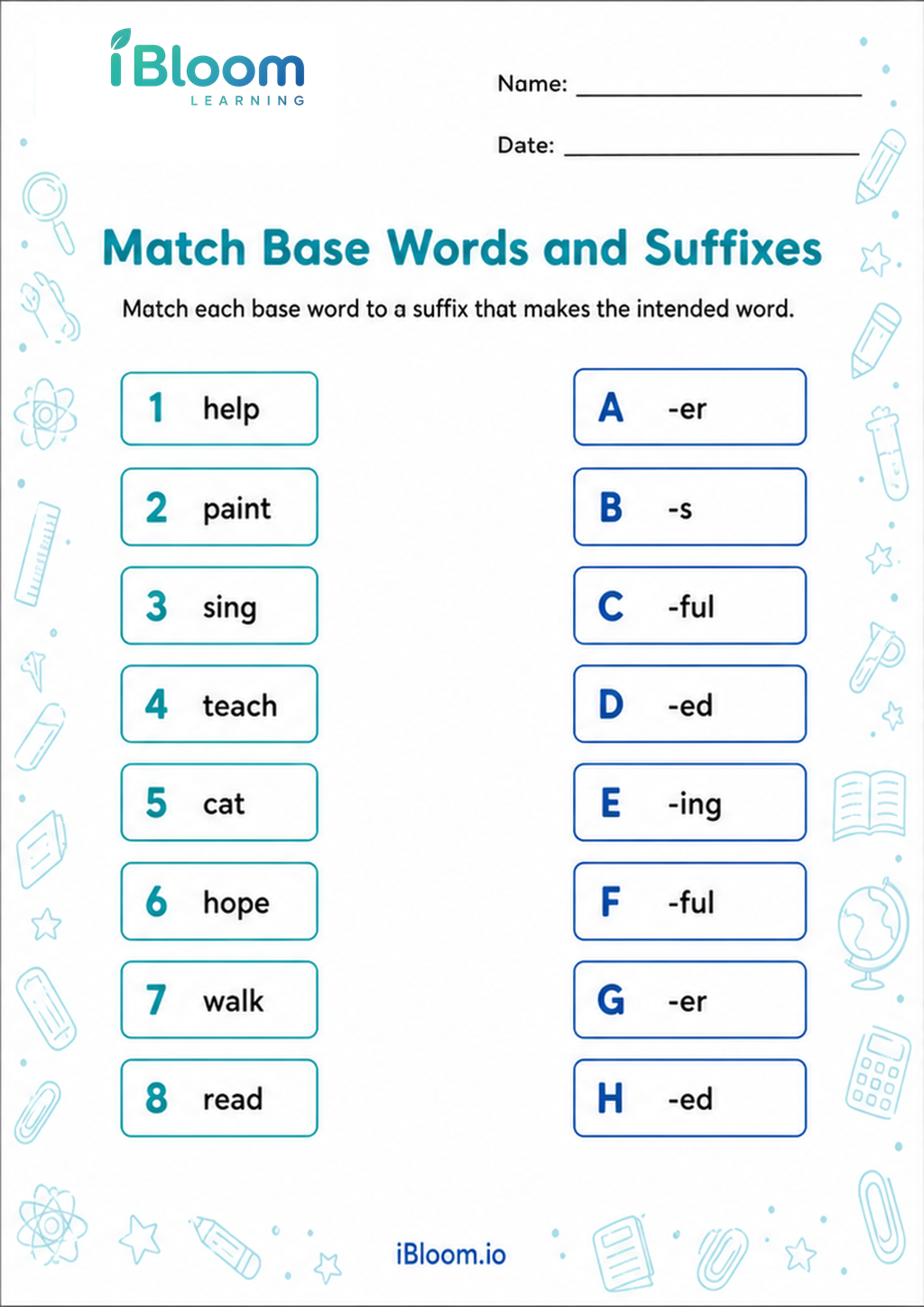 Match Base Words and SuffixesClass 1 printable practice for Suffixes.Class 1Free PDF preview
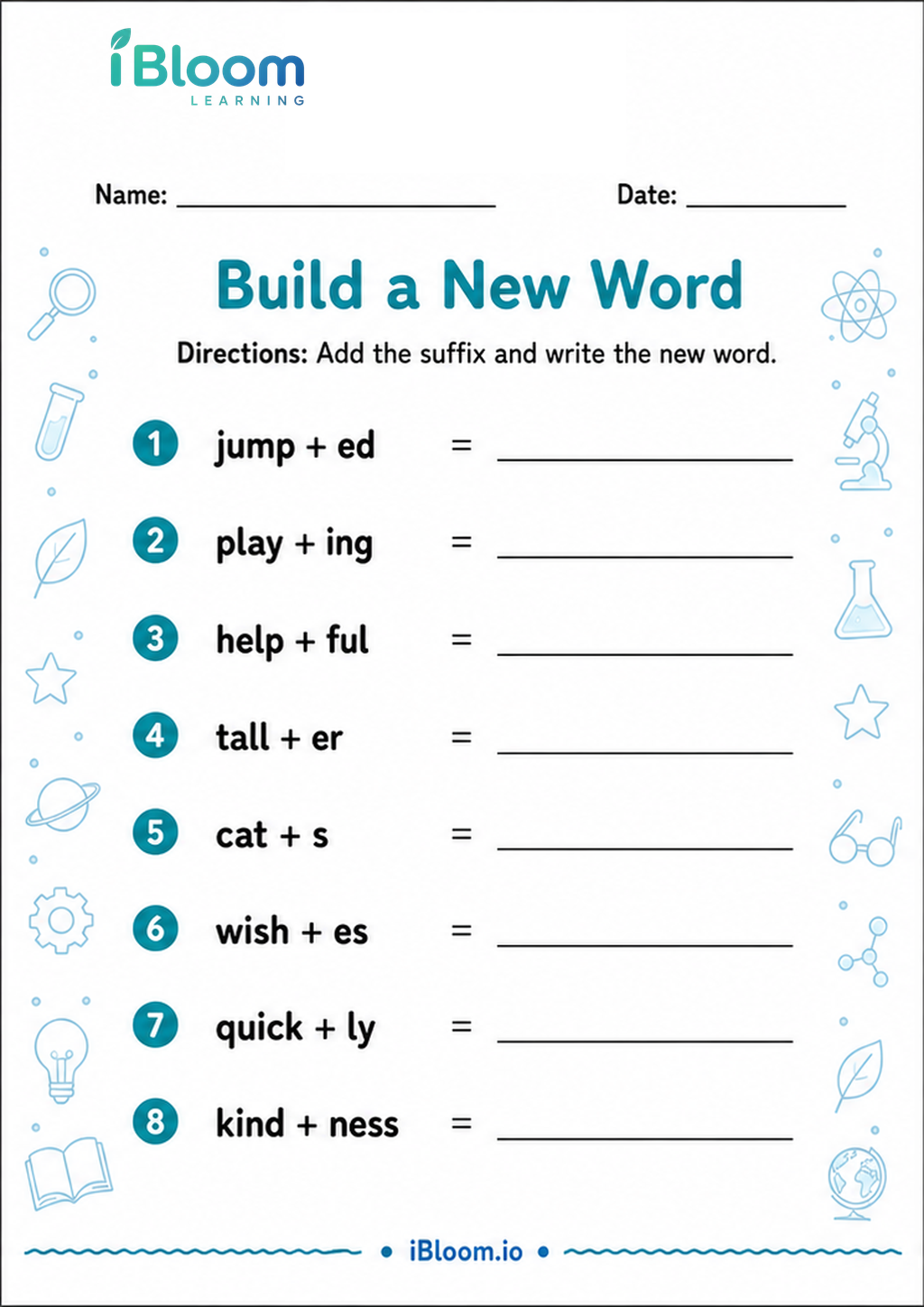 Build a New WordClass 1 printable practice for Suffixes.Class 1Free PDF preview
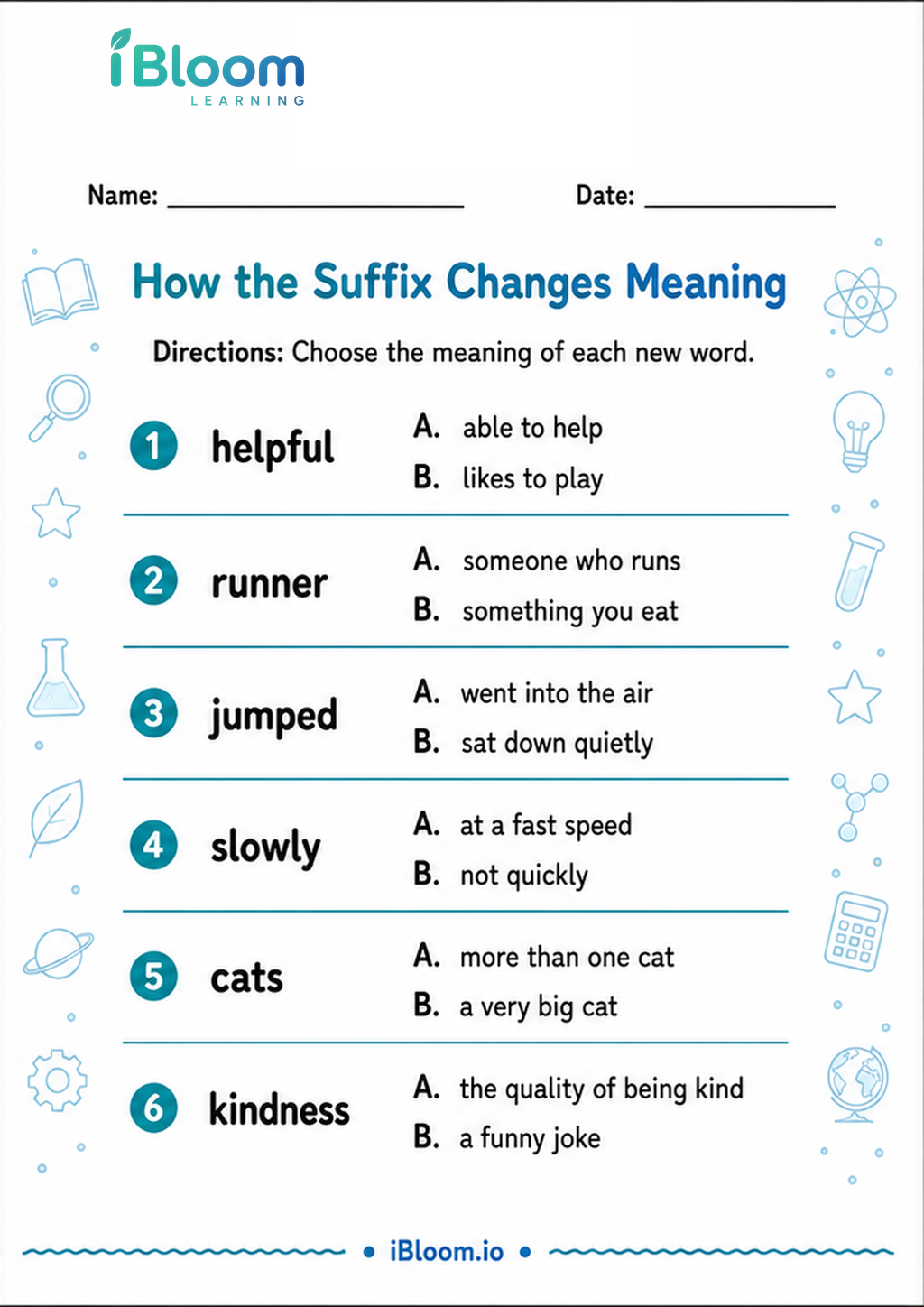 How the Suffix Changes MeaningClass 1 printable practice for Suffixes.Class 1Free PDF preview
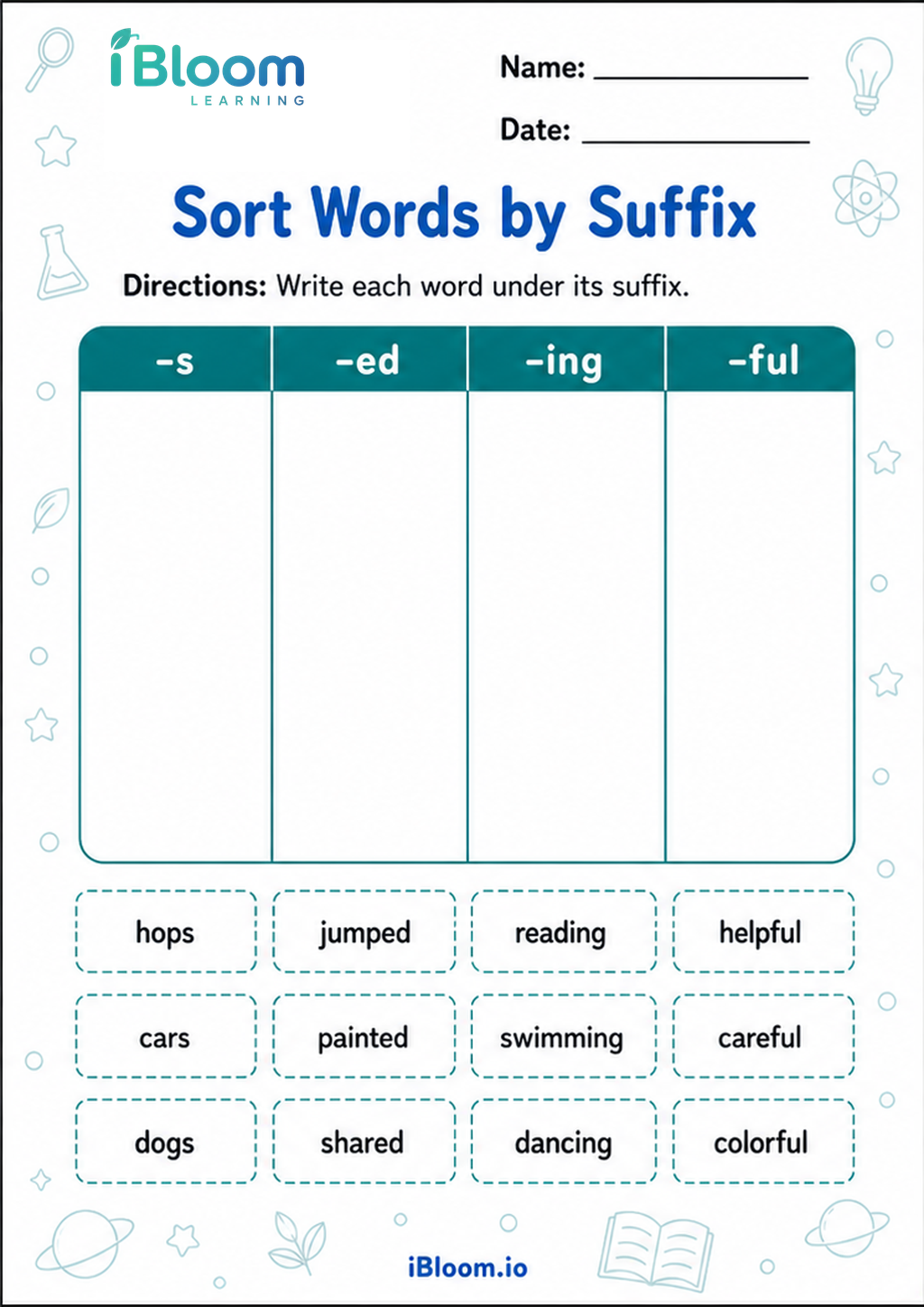 Sort Words by SuffixClass 1 printable practice for Suffixes.Class 1Free PDF preview
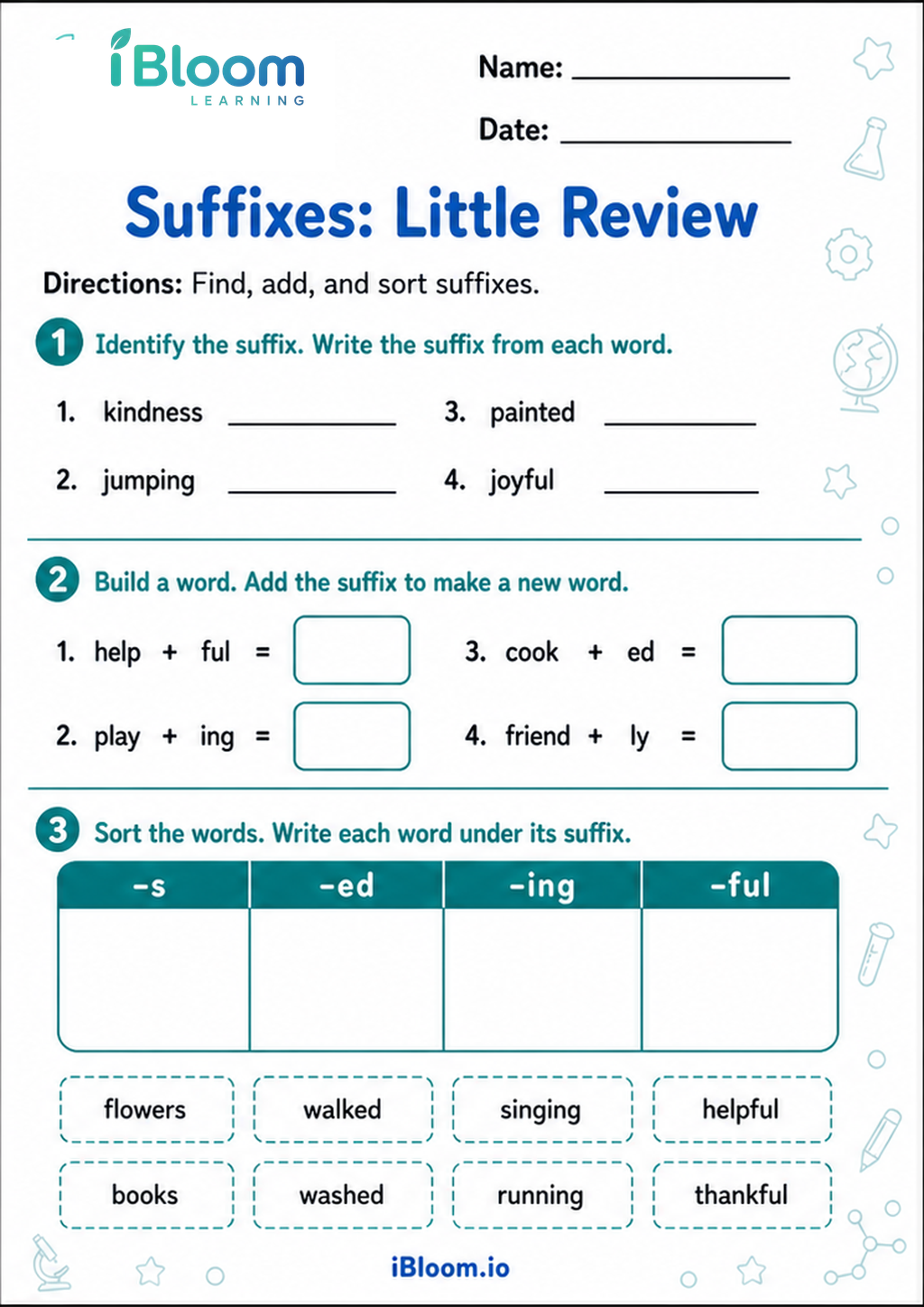 Suffixes: Little ReviewClass 1 printable practice for Suffixes.Class 1Free PDF preview
Practice that builds confidence
What children learn
These Class 1 vocabulary worksheets help children identify suffixes as small word parts added to the end of a base word. Children practise noticing endings such as -s, -es, -ed, -ing, and -er in simple, age-appropriate words.
The printable activities include circling suffixes, matching base words to changed words, sorting words by ending, and choosing the word that contains a suffix. Each task builds careful word observation before children are asked to use suffixes in their own reading and writing.
A suffix is an ending added to a base word, such as play + ing = playing or jump + ed = jumped. In Class 1, the goal is not to memorise long grammar rules. Children learn to look at the end of a word, separate the base word from the added part, and say what has changed in meaning.

Practice progression
The worksheets begin with clear spotting tasks, where the suffix is easy to see. Children then compare pairs such as look and looking, help and helped, or box and boxes. Later activities ask them to group words by endings, identify the odd one out, and choose whether a word has a suffix or is simply a longer word.
Parent routine at home
Choose five words from a storybook or school reader. Ask your child to tap the base word once and the suffix once, for example walk / ed. Say the word aloud, cover the suffix, and check whether the smaller word still makes sense. End by asking your child to draw or act one word, such as jumping, to connect the ending with meaning.

Classroom use for teachers
Teachers can use these printables for vocabulary warm-ups, literacy centres, revision after a phonics lesson, or small-group support. They also work well after shared reading: children can hunt for words ending in -ing, -ed, or -s and record them on the worksheet before discussing the base words.

Common errors to watch for
Some children circle the first letters instead of the ending, especially when they are used to phonics work. Others think every word ending in s has a suffix, so words such as bus need careful discussion. Children may also confuse a suffix with a whole word; remind them that a suffix is attached to another word part.
Free printable PDF download
Use this class 1 identify suffixes worksheet page to preview the activity, print it, or download it as a PDF for quick practice. It works well for homework, homeschool lessons, tutoring, morning work, revision, and classroom centers.
Answers and answer key support
After the child completes the worksheet independently, parents and teachers can use the answer support or answer key information to check the work, review mistakes, and choose the next practice step.
Why iBloom worksheets help
The activities use short words, clear spacing, and repeated visual patterns so young learners can focus on the suffix. A helpful strategy is: read the word, find the smaller word, look at the ending, then say what the ending does. This gives children a simple routine they can use beyond the worksheet.
Helpful answers
Frequently asked questions
What suffixes should a Class 1 child identify first?
Start with common and visible endings such as -s, -es, -ed, and -ing. These appear often in early readers and are easier for children to connect with meaning.
Does my child need to spell suffix words correctly in these worksheets?
The main focus is identifying the suffix and base word. Spelling can be discussed gently, but children should first learn to notice the ending and understand that it changes the word.
How can I explain suffixes simply at home?
Tell your child that a suffix is a little ending added to a word. Use examples like play, playing and jump, jumped, then ask what part stayed the same and what was added.
Why do some words ending in s not count as suffix words?
A word like cats has the base word cat plus the suffix -s. But a word like bus already ends in s; the s is part of the word, not an added suffix.
Can these worksheets support reading as well as vocabulary?
Yes. When children recognise endings such as -ing or -ed, they read longer words more confidently because they can break the word into a base word and a familiar suffix.
Is this class 1 identify suffixes worksheet free?
Yes. You can preview it for free and use the printable worksheet for home or classroom practice.
Can I download this class 1 identify suffixes worksheet as a PDF?
Yes. Use the worksheet download option to save a printable PDF, or print the worksheet directly from the page.
Does this class 1 identify suffixes worksheet include answers or an answer key?
When the activity has fixed answers, iBloom includes answer support so parents and teachers can check the completed worksheet.