Related Addition And Subtraction Facts Up To 10 worksheet for Class 2

Lesson-Wise Builder
A premium AI tool that creates syllabus-aligned questions and worksheets for any lesson in seconds.
Related addition and subtraction facts to 10 use the same three numbers to make a connected set of true equations. In this Class 2 activity, the learner studies three given numbers, decides which is the whole and which two are the parts, and selects every addition or subtraction fact that belongs to that number family.
How the Interactive Fact-Family Worksheet Works
The visible activity presents a set of three numbers and asks the learner to select all addition facts or all subtraction facts for those numbers. Each group contains equations that belong, equations using a different total, and equations with the wrong operation. A careful learner checks both the operation sign and all three values before selecting an equation.
- Find the largest of the three numbers. For these within-10 families, it is the whole.
- Treat the other two numbers as parts.
- For addition, join the two parts and check that their total is the whole.
- For subtraction, begin with the whole and subtract one part to get the other.
- Select every matching equation; there can be more than one correct choice.
Worked Examples from the Activity
Numbers 2, 7 and 9
The first visible question asks for all addition facts for 2, 7 and 9. The correct choices are 7 + 2 = 9 and 2 + 7 = 9. The order of the addends can change without changing the sum. An option such as 5 + 2 = 7 uses a different set of numbers, while 2 + 9 = 11 does not have 9 as the whole. Statements with a minus sign are subtraction facts, so they do not answer an addition prompt even when they are true.
Numbers 6, 1 and 5
Here 6 is the whole and 1 and 5 are the parts. The matching addition facts are 5 + 1 = 6 and 1 + 5 = 6. The connected subtraction facts are 6 - 1 = 5 and 6 - 5 = 1. An equation such as 5 + 6 = 11 is true, but it does not belong to the 1, 5 and 6 family.
Numbers 9, 7 and 2
A later visible prompt asks for subtraction facts for 9, 7 and 2. Start with the whole, 9. The two related subtraction equations are 9 - 7 = 2 and 9 - 2 = 7. Starting with 7 would change the whole and produce a different relationship.
Why One Family Has Four Equations
Addition is commutative: 2 + 7 and 7 + 2 have the same total. Subtraction is not commutative: 9 - 7 and 7 - 9 do not describe the same result. That is why both subtraction facts begin with the whole. The family shows that addition and subtraction are inverse operations, or operations that can undo each other.
A number bond shows the same part-part-whole structure as a fact family. A fact triangle or fact-family house places the whole apart from the two parts so children can write the four related number sentences. Counters, ten frames and three number cards can make the relationship concrete before a child works only with symbols.
How to Check Whether an Equation Belongs
- Check the numbers: the equation must use the same two parts and whole.
- Check the operation: an addition prompt needs a plus sign; a subtraction prompt needs a minus sign.
- Check the whole: addition should end at the whole, and subtraction should start from it.
- Check the value: calculate both sides of the equals sign.
- Check all choices: “select all” means the learner should look for both related equations, not stop after one.
This routine also supports missing-number questions. If 7 + □ = 9, subtraction reveals the missing part: 9 - 7 = 2. If 9 - □ = 7, the missing part is again 2.
Parent, Teacher and Tutor Guidance
A short home-practice routine
Choose three number cards that make a total no greater than 10. Ask the child to name the whole, name the parts and say the two addition facts aloud. Turn the cards into two subtraction facts next. Five focused minutes with an explanation is more useful than rushing through many equations.
Classroom and small-group use
Use the activity as a warm-up, maths-centre task, guided-practice check or exit ticket. After learners select their answers, ask: “Which number is the whole?”, “Why does this equation belong?” and “What would its inverse fact be?” A partner sort with true, false and does-not-belong cards reveals whether children understand the relationship rather than relying on recall alone.
Support and extension
For support, build each number with counters or a ten frame and physically separate the whole into two parts. For extension, hide one number, ask the learner to complete the family, compare two related equations, or explain why a tempting option is incorrect. Keep every example within 10 so it remains aligned with this activity.
Common Fact-Family Mistakes
- Using any true equation: a statement can be mathematically true but still use numbers outside the given family.
- Starting subtraction with a part: related subtraction facts begin with the whole.
- Treating subtraction like addition: the order of addends may switch, but reversing a subtraction changes its meaning.
- Stopping after one answer: both orders of the addends usually appear when the prompt says to select all addition facts.
- Ignoring the equals sign: the values on both sides must balance.
More Practice with Number Facts to 10
Try families such as 3, 4 and 7; 2, 6 and 8; 1, 8 and 9; or 4, 6 and 10. For each set, write two addition and two subtraction equations, draw a number bond, and explain how one addition fact can check one subtraction fact. Learners can also sort mixed equations, find the one that does not belong, complete a missing addend, or correct a false number sentence.
Related facts strengthen mental maths because a known fact can unlock another one. A child who knows 3 + 7 = 10 can reason that 10 - 7 = 3 without counting from the beginning. This is the useful bridge from visual part-whole models to fluent calculation.
Frequently Asked Questions
What is a fact family in Class 2 maths?
It is a set of related equations built from the same two parts and whole. For 2, 7 and 9, the family contains two addition facts and two subtraction facts.
How can a child find the whole?
For a fact family within 10, first look for the largest of the three given numbers. Check that the other two add to it before using it as the whole.
Why can the addends switch places?
Addition is commutative, so changing the order of the addends does not change their sum. This is why 7 + 2 and 2 + 7 both equal 9.
Why do subtraction facts start with the largest number?
Subtraction begins with the whole and removes one part to find the other. Beginning with a part would not represent the same family.
How should an adult help when a child mixes the operations?
Ask the child to circle the sign, identify the whole and build the numbers with counters. Then have the child say whether the task is joining parts or taking one part from a whole.
What should a learner practise next?
Practise completing fact families with a hidden part, matching number bonds to equations and using a known addition fact to solve its related subtraction fact, while keeping totals within 10.
More practice for this grade
More Math worksheets
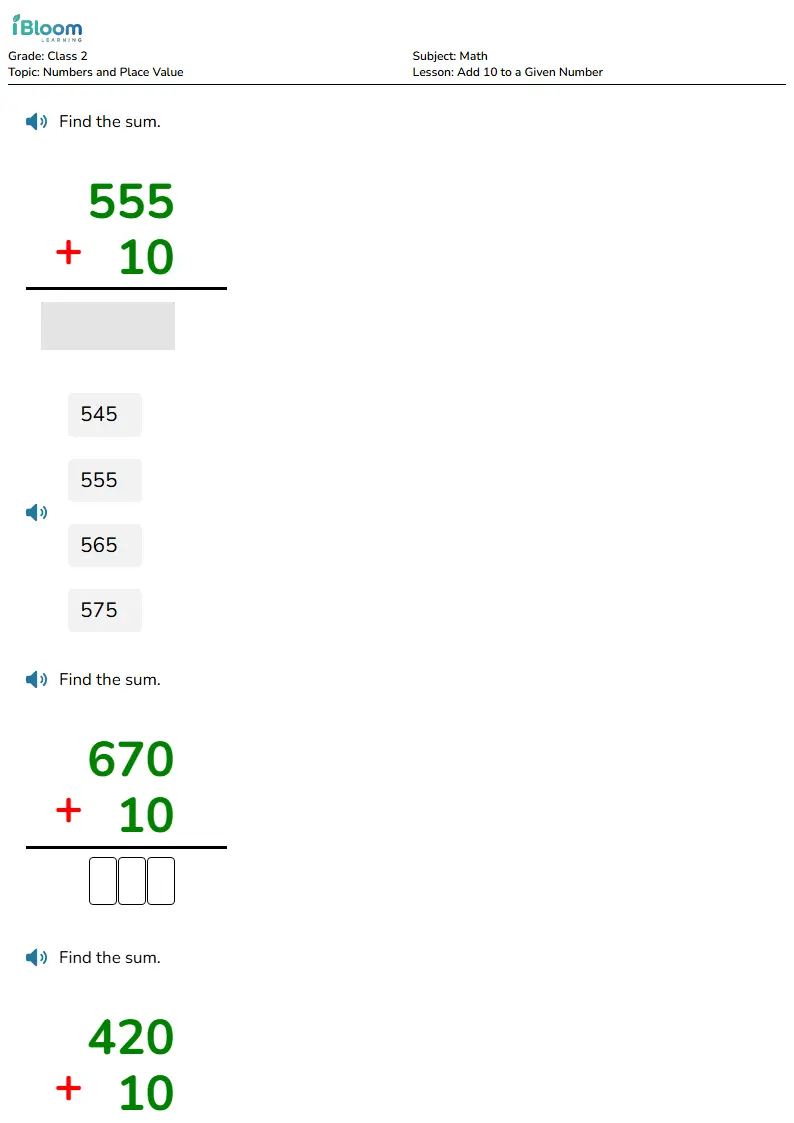
Free Add 10 to a Given Number Worksheets for Class 2
Looking for class 2 math help? Download free, interactive add 10 to a given number worksheets. AI-personalized and Common Core-aligned. Practice math with iBloom.
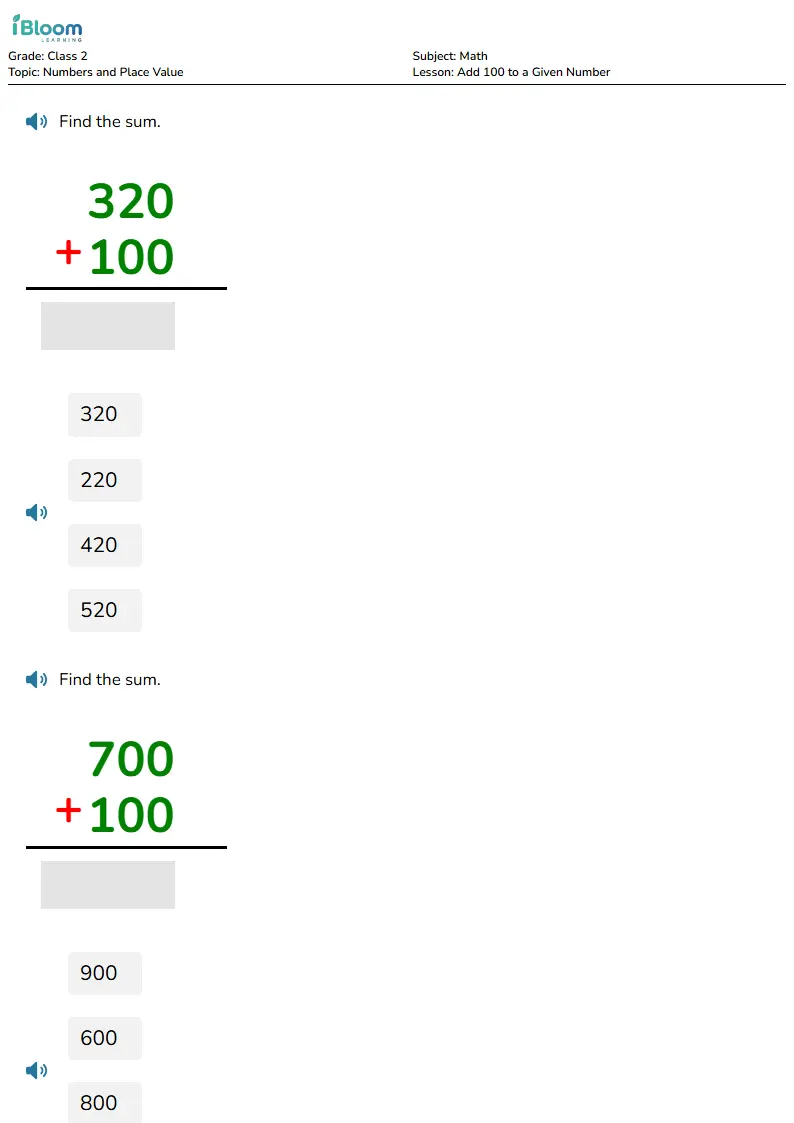
Free Add 100 to a Given Number Worksheets for Class 2
Looking for class 2 math help? Download free, interactive add 100 to a given number worksheets. AI-personalized and Common Core-aligned. Practice math with iBloom.
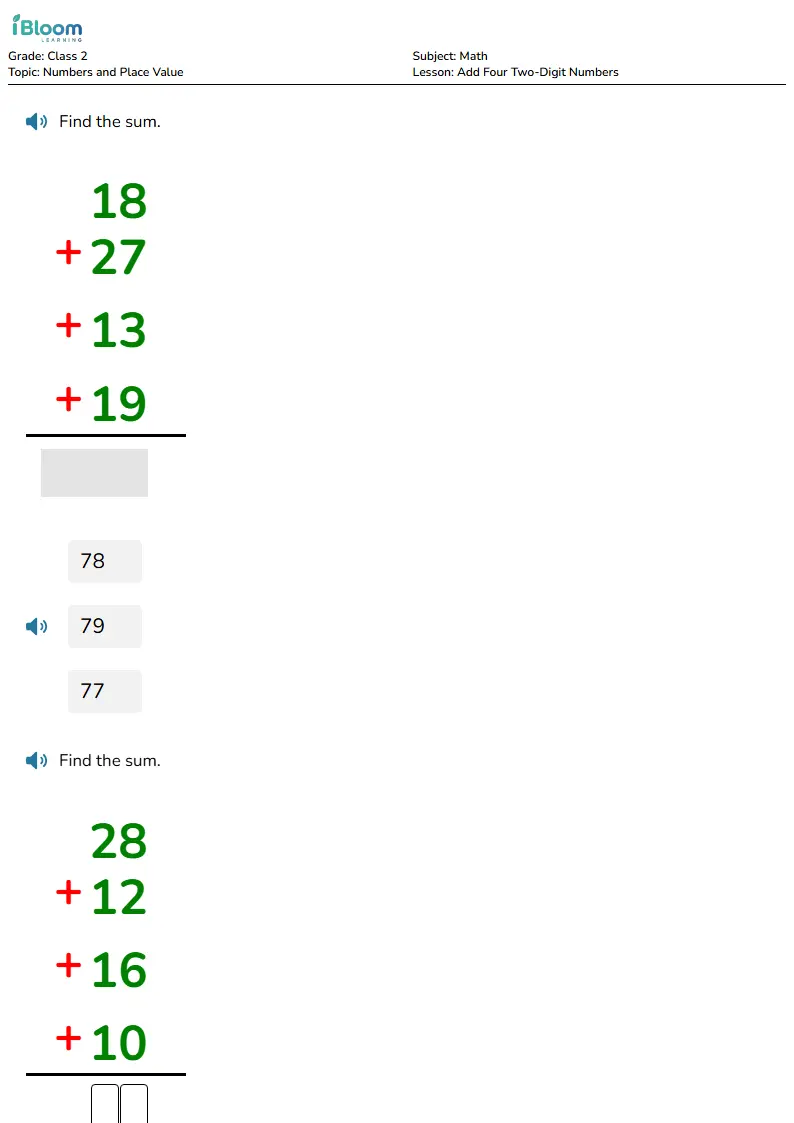
Free Add Four Two-Digit Numbers Worksheets for Class 2
Looking for class 2 math help? Download free, interactive add four two-digit numbers worksheets. AI-personalized and Common Core-aligned. Practice math with iBloom.
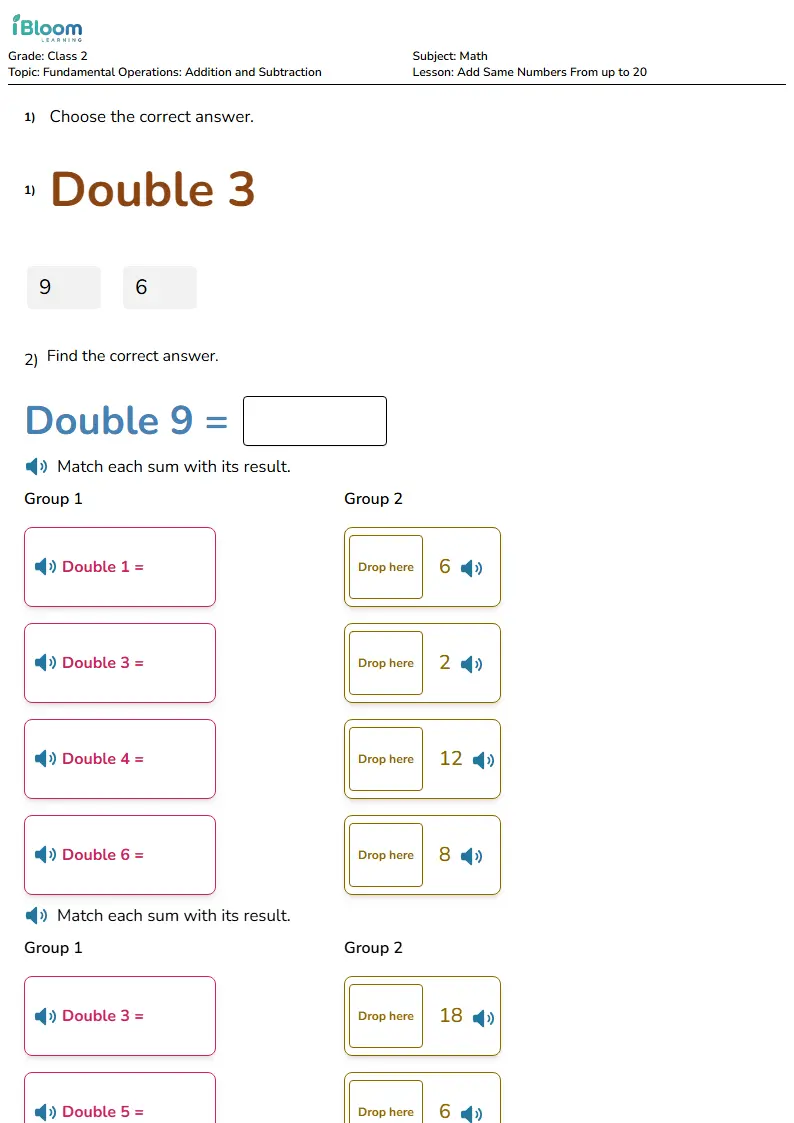
Doubles to 20 Worksheet for Class 2
Practise doubles facts from 1 + 1 to 9 + 9 with Class 2 children through multiple-choice, fill-in and matching tasks for accurate sums within 20.
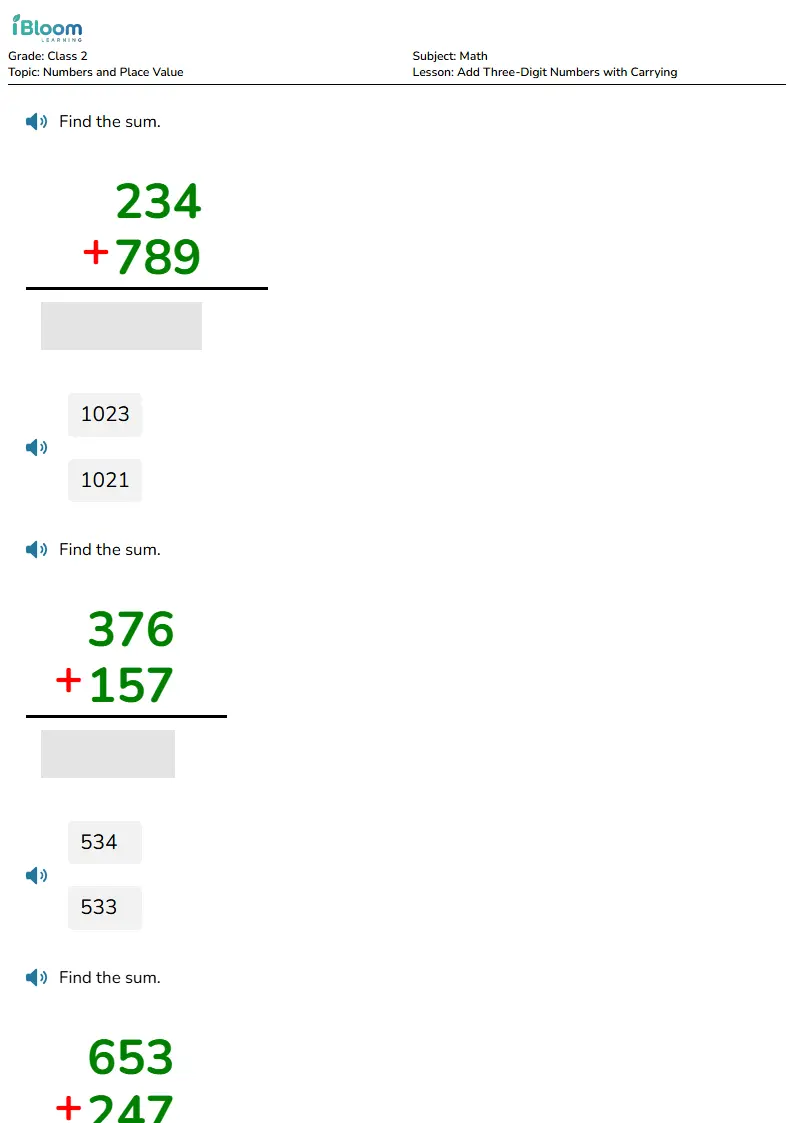
Free Add Three-Digit Numbers with Carrying Worksheets for Class 2
Looking for class 2 math help? Download free, interactive add three-digit numbers with carrying worksheets. AI-personalized and Common Core-aligned. Practice math with iBloom.
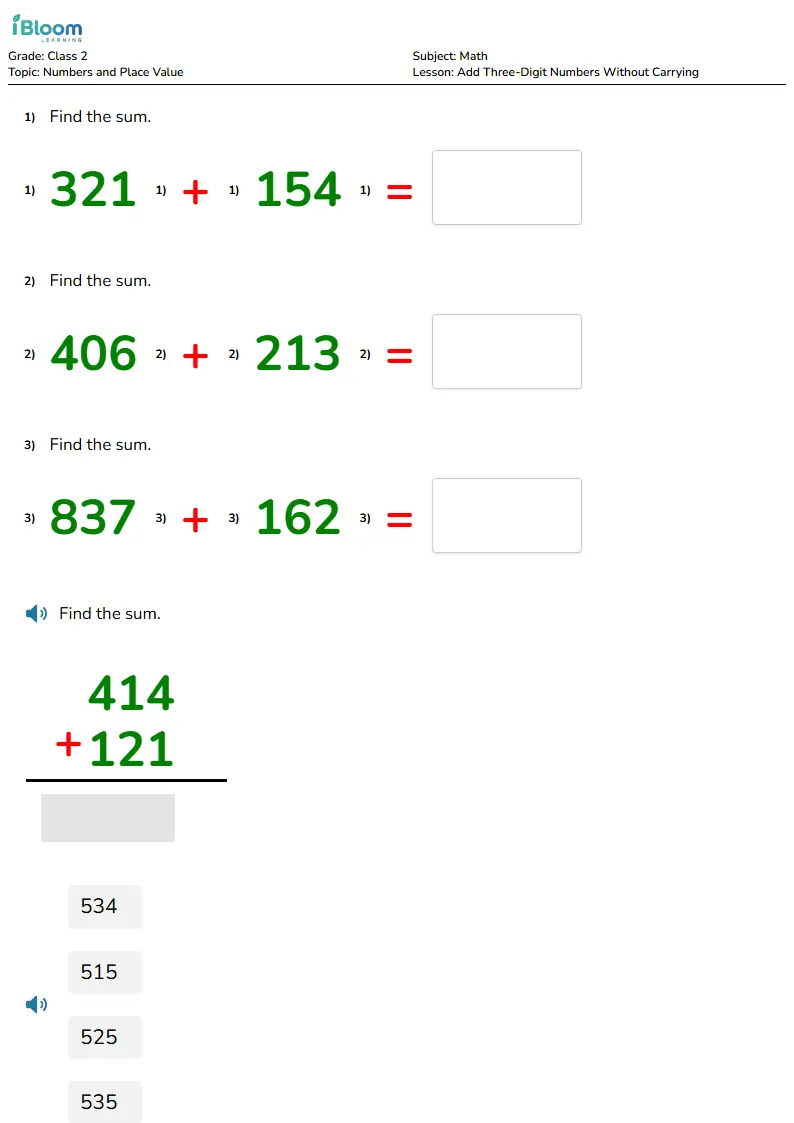
3-Digit Addition Without Carrying Worksheet | Class 2
Class 2 practice for three-digit addition without carrying: line up hundreds, tens and ones in horizontal and vertical sums, then check the answer.
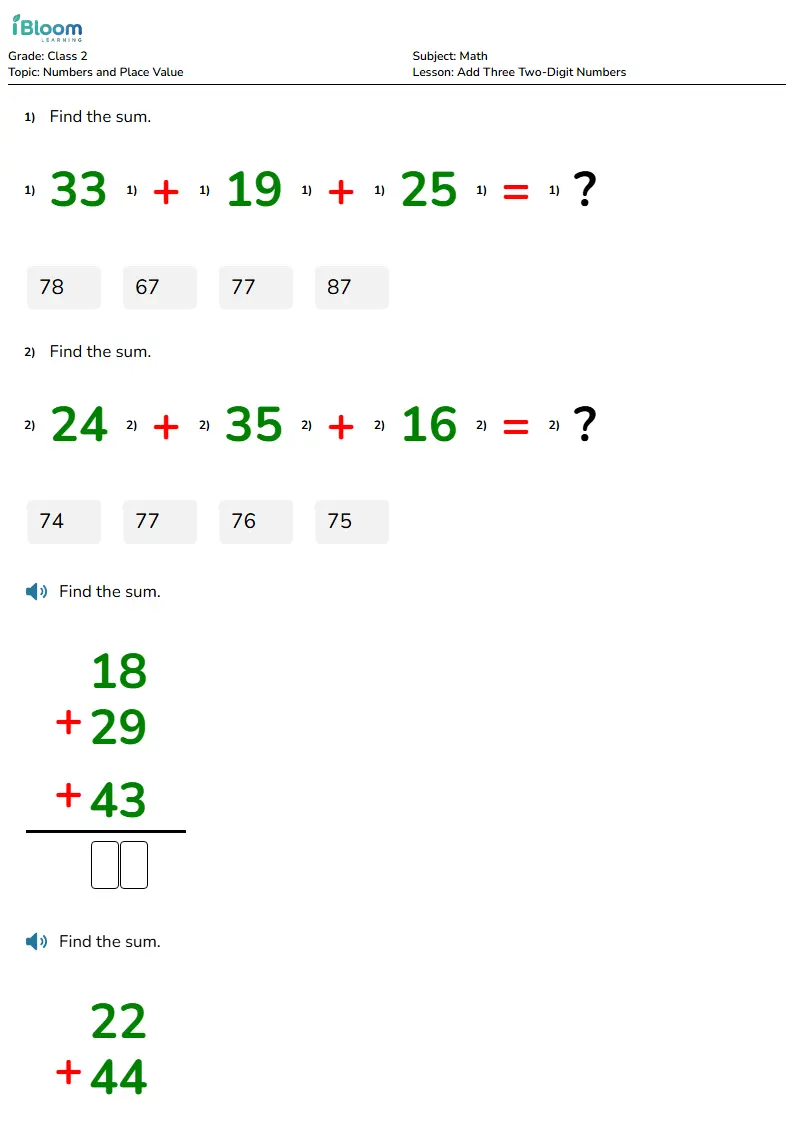
Free Add Three Two-Digit Numbers Worksheets for Class 2
Looking for class 2 math help? Download free, interactive add three two-digit numbers worksheets. AI-personalized and Common Core-aligned. Practice math with iBloom.
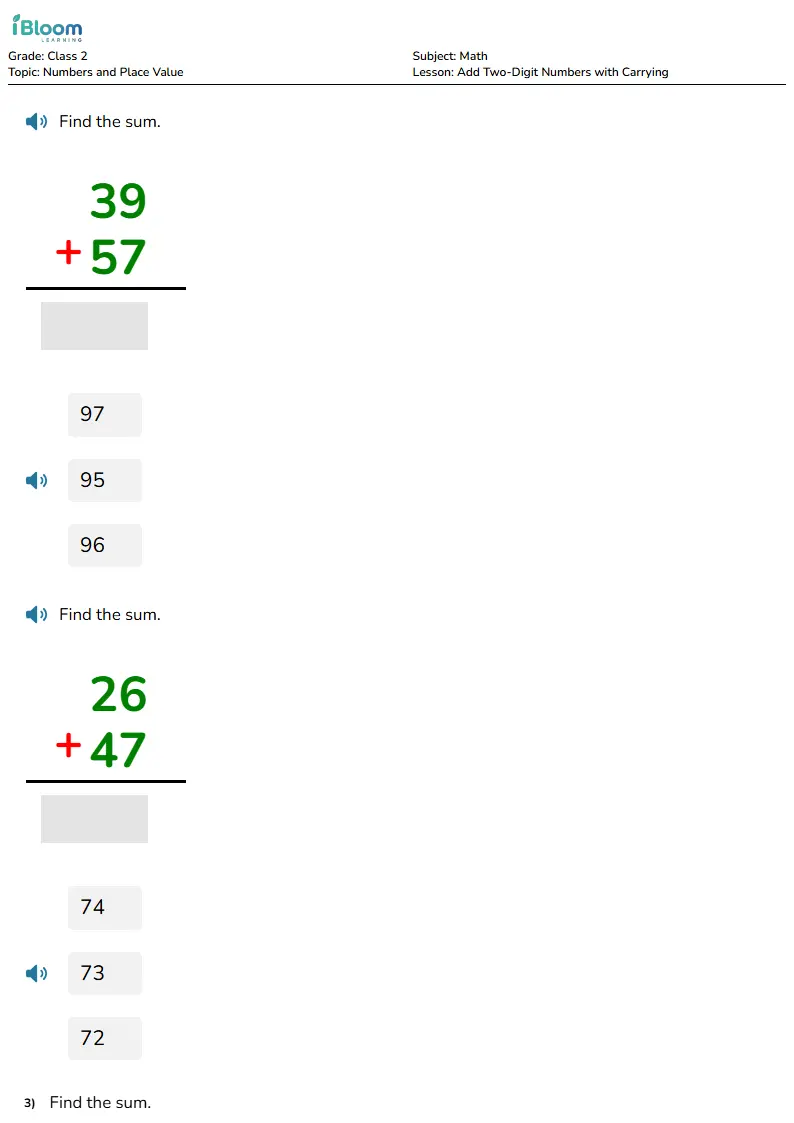
Free Add Two-Digit Numbers with Carrying Worksheets for Class 2
Looking for class 2 math help? Download free, interactive add two-digit numbers with carrying worksheets. AI-personalized and Common Core-aligned. Practice math with iBloom.
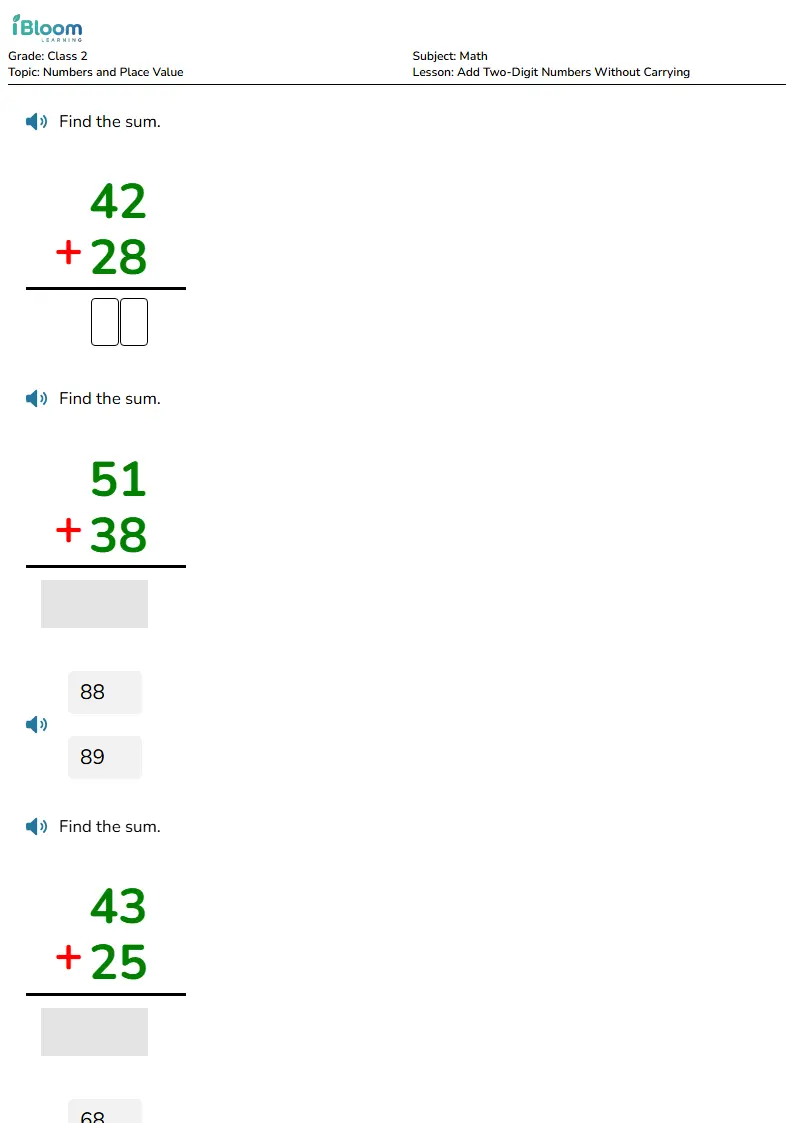
Free Add Two-Digit Numbers Without Carrying Worksheets for Class 2
Looking for class 2 math help? Download free, interactive add two-digit numbers without carrying worksheets. AI-personalized and Common Core-aligned. Practice math with iBloom.
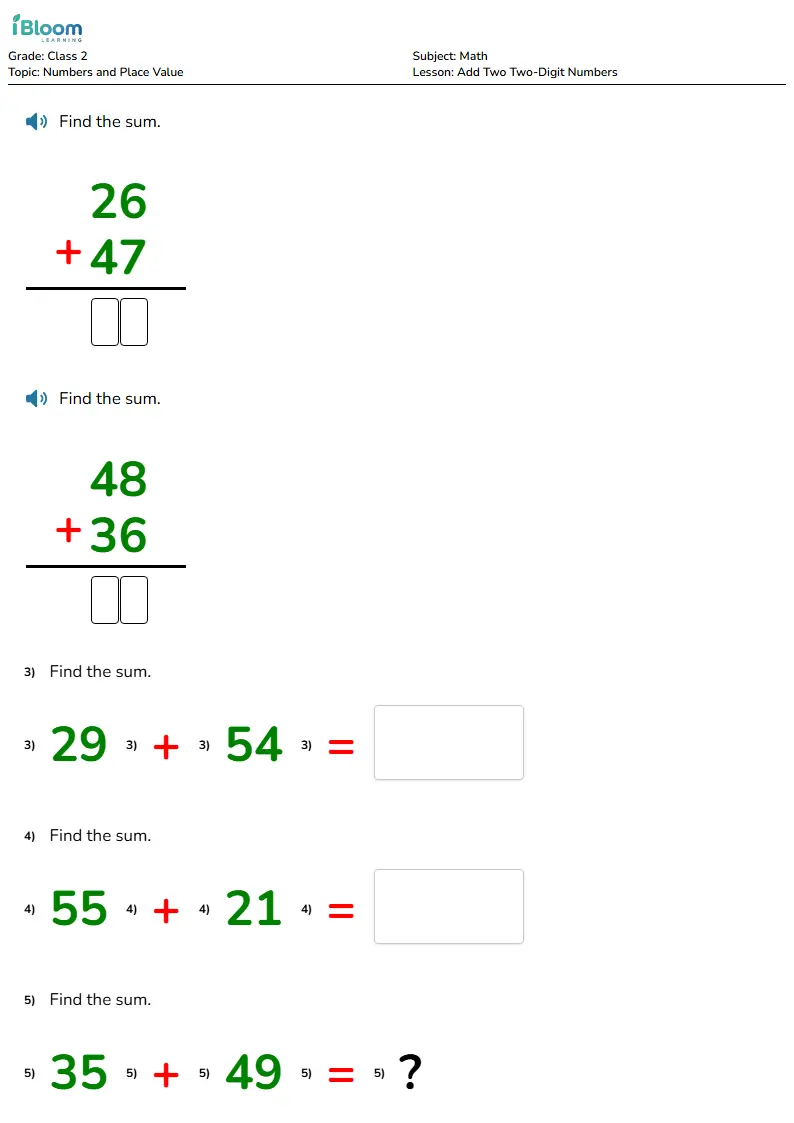
Free Add Two Two-Digit Numbers Worksheets for Class 2
Looking for class 2 math help? Download free, interactive add two two-digit numbers worksheets. AI-personalized and Common Core-aligned. Practice math with iBloom.
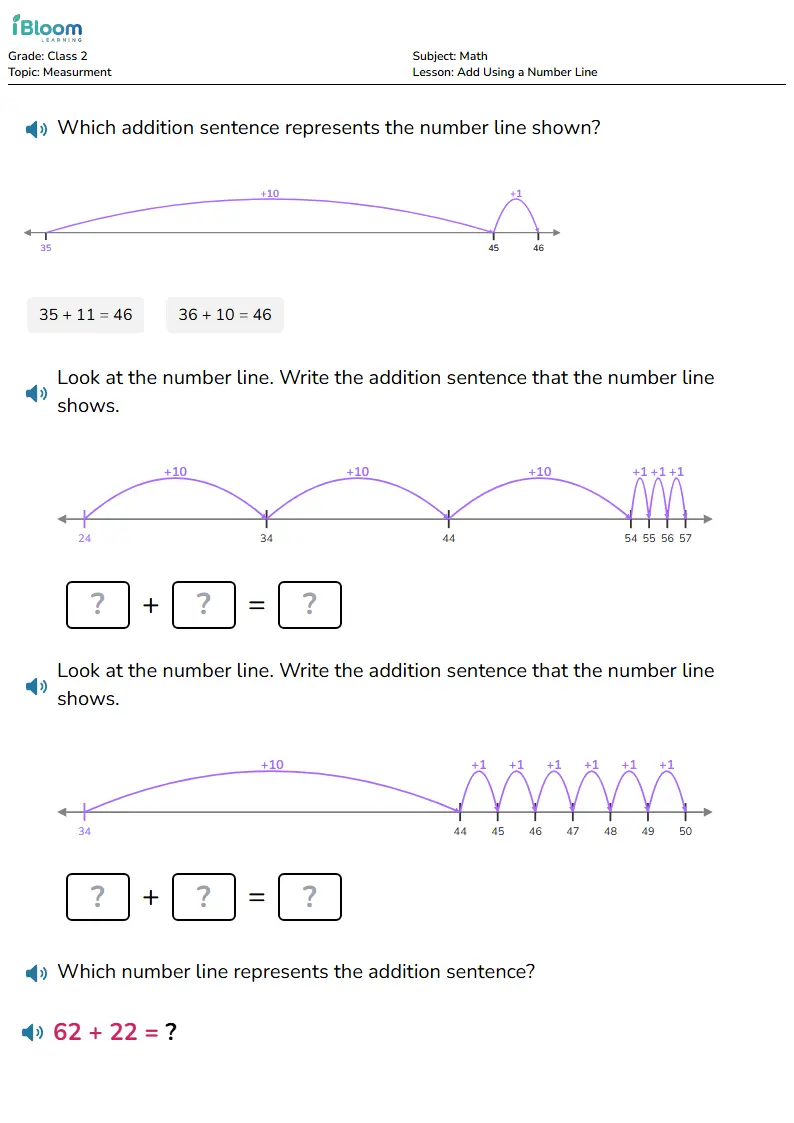
Free Add Using a Number Line Worksheets for Class 2
Looking for class 2 math help? Download free, interactive add using a number line worksheets. AI-personalized and Common Core-aligned. Practice math with iBloom.
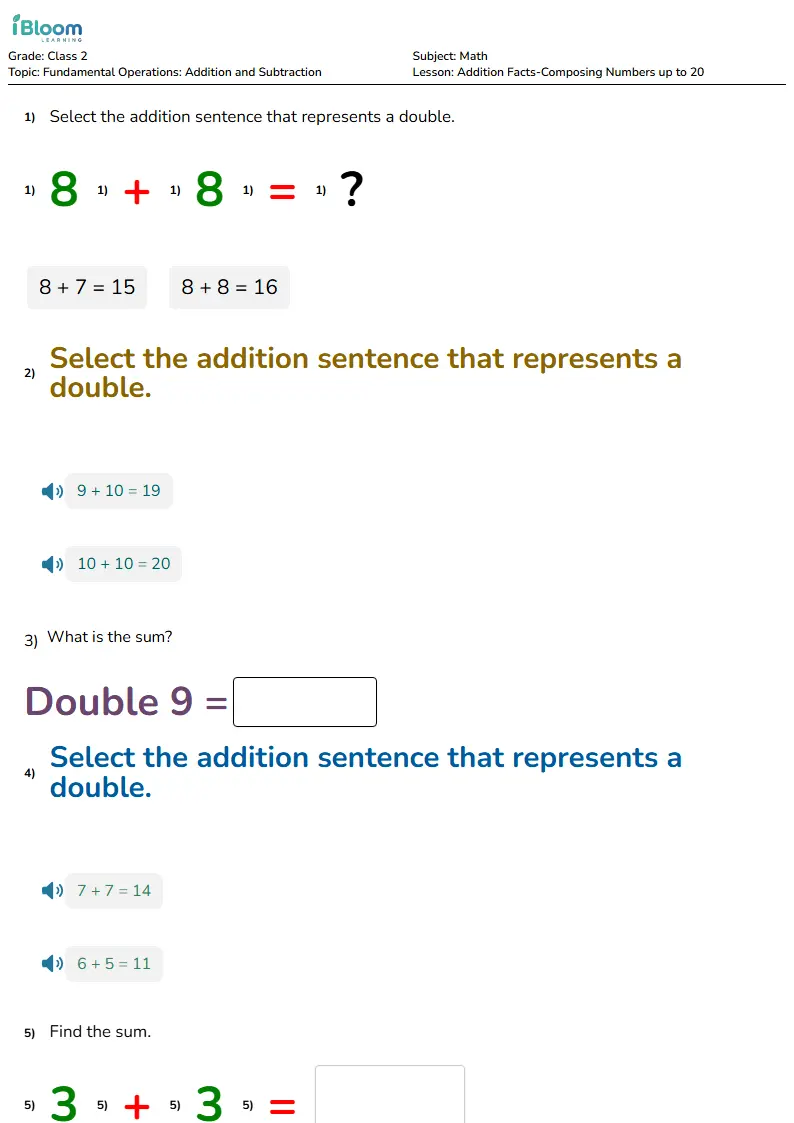
Free Addition Facts-Composing Numbers up to 20 Worksheets for Class 2
Looking for class 2 math help? Download free, interactive addition facts-composing numbers up to 20 worksheets. AI-personalized and Common Core-aligned. Practice math with iBloom.
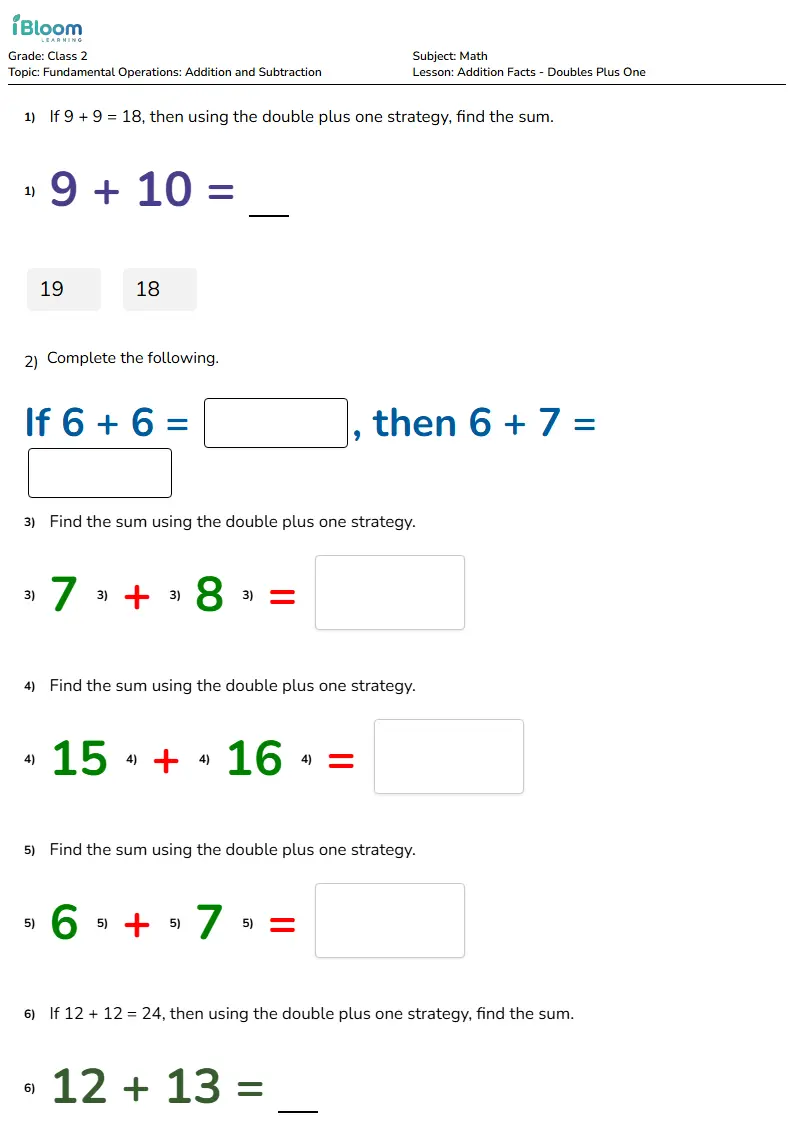
Free Addition Facts - Doubles Plus One Worksheets for Class 2
Looking for class 2 math help? Download free, interactive addition facts - doubles plus one worksheets. AI-personalized and Common Core-aligned. Practice math with iBloom.
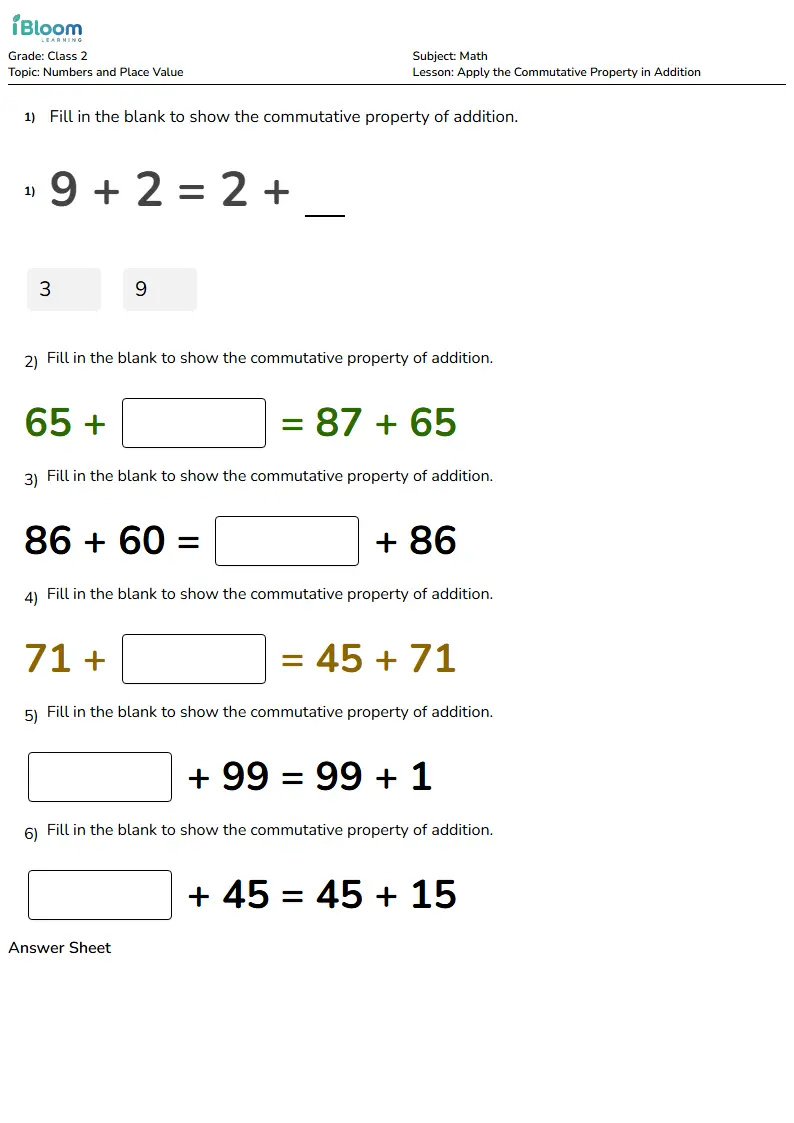
Free Apply the Commutative Property in Addition Worksheets for Class 2
Looking for class 2 math help? Download free, interactive apply the commutative property in addition worksheets. AI-personalized and Common Core-aligned. Practice math with iBloom.
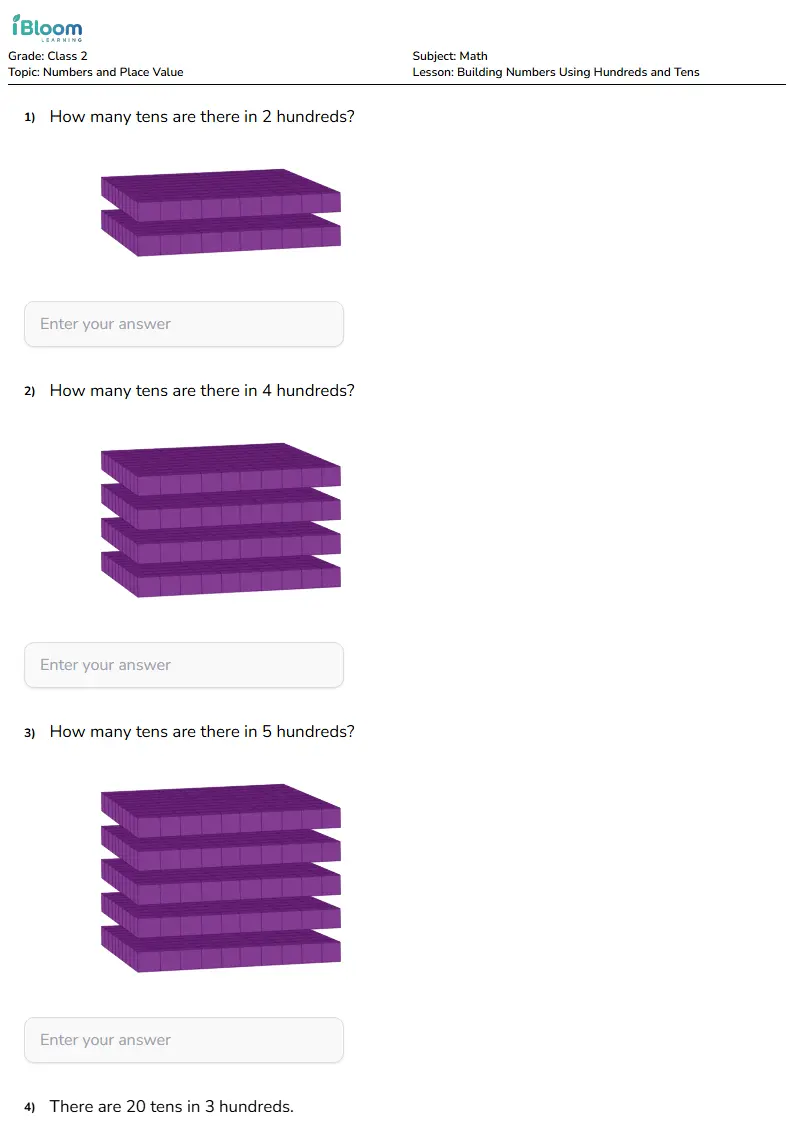
Free Building Numbers Using Hundreds and Tens Worksheets for Class 2
Looking for class 2 math help? Download free, interactive building numbers using hundreds and tens worksheets. AI-personalized and Common Core-aligned. Practice math with iBloom.
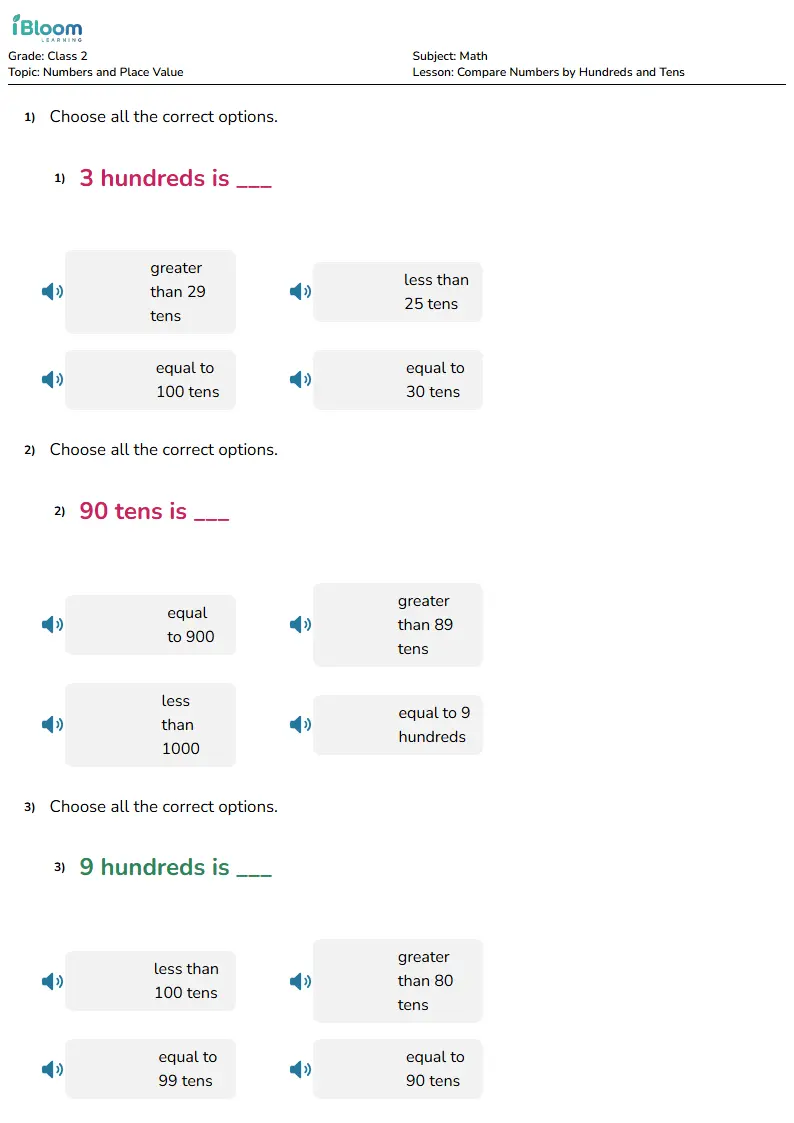
Free Compare Numbers by Hundreds and Tens Worksheets for Class 2
Looking for class 2 math help? Download free, interactive compare numbers by hundreds and tens worksheets. AI-personalized and Common Core-aligned. Practice math with iBloom.
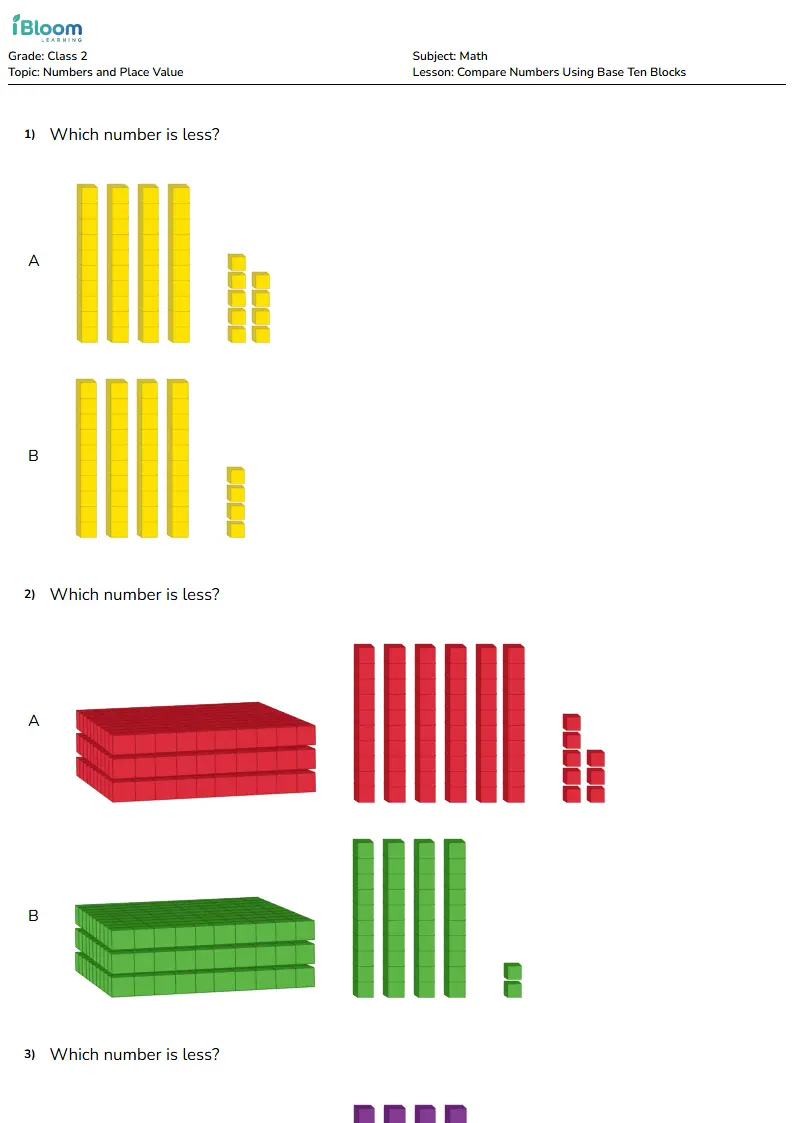
Free Compare Numbers Using Base Ten Blocks Worksheets for Class 2
Looking for class 2 math help? Download free, interactive compare numbers using base ten blocks worksheets. AI-personalized and Common Core-aligned. Practice math with iBloom.
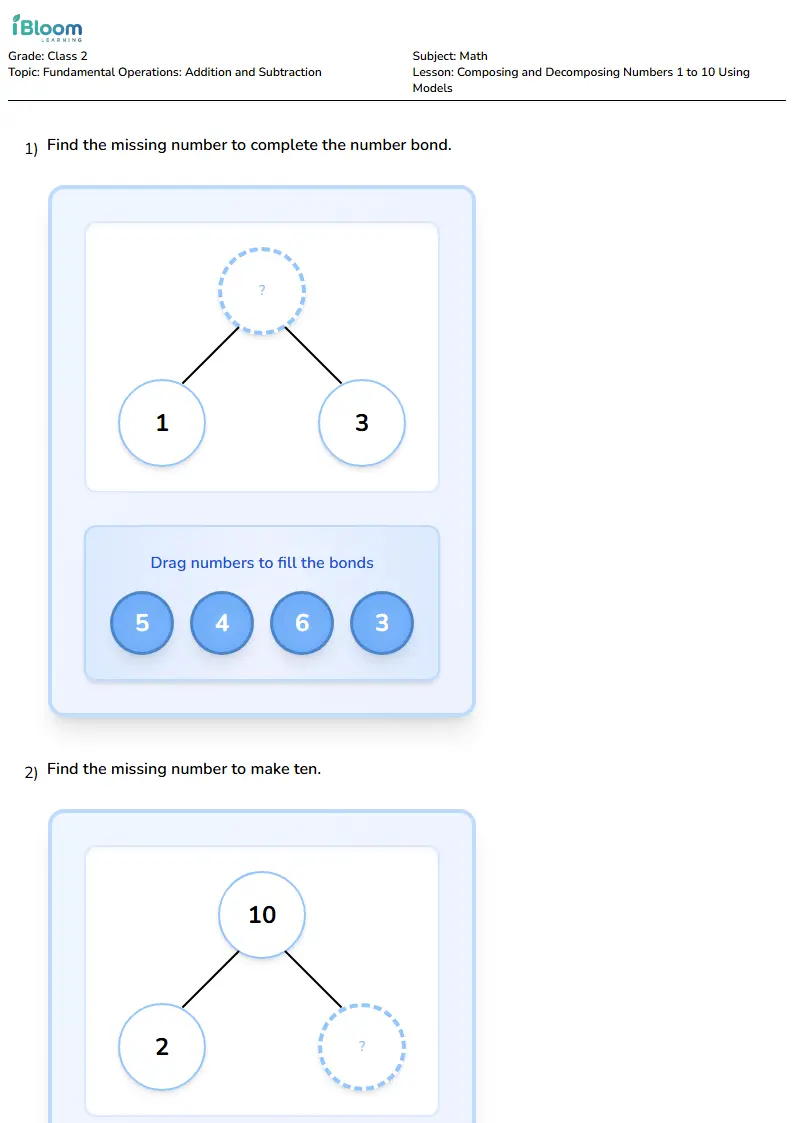
Free Composing and Decomposing Numbers 1 to 10 Using Models Worksheets for Class 2
Looking for class 2 math help? Download free, interactive composing and decomposing numbers 1 to 10 using models worksheets. AI-personalized and Common Core-aligned. Practice math with iBloom.
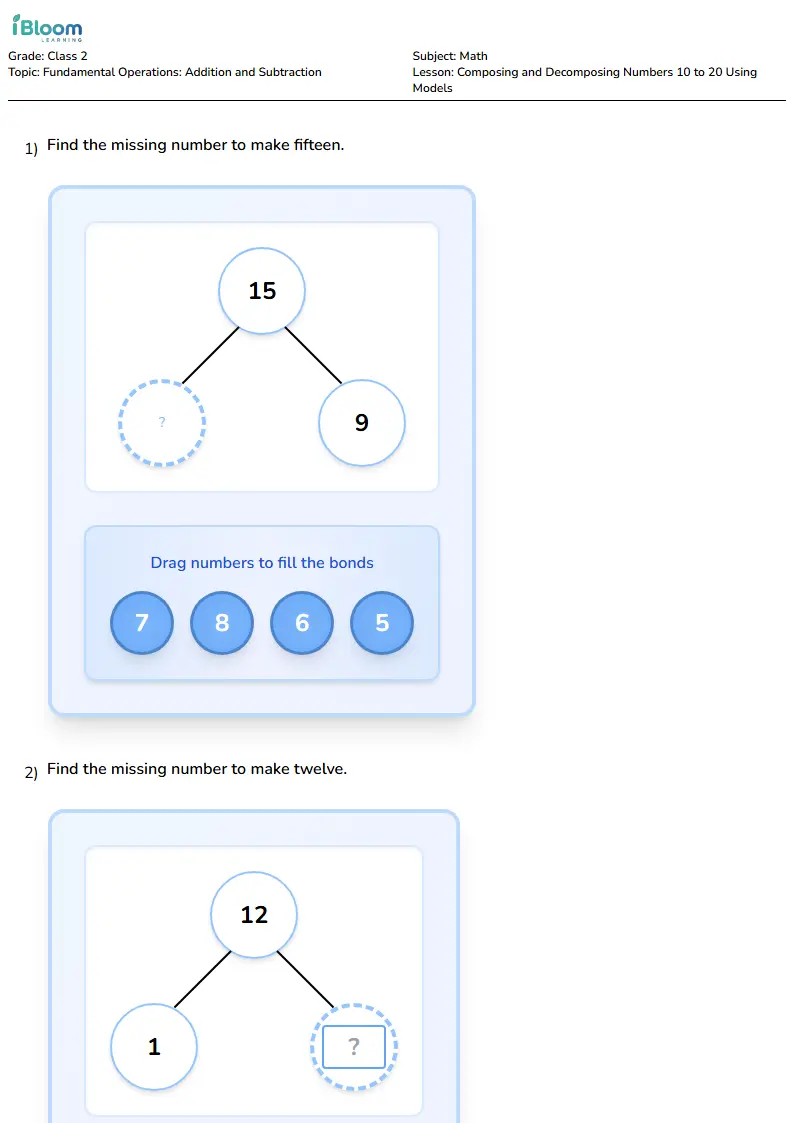
Free Composing and Decomposing Numbers 10 to 20 Using Models Worksheets for Class 2
Looking for class 2 math help? Download free, interactive composing and decomposing numbers 10 to 20 using models worksheets. AI-personalized and Common Core-aligned. Practice math with iBloom.
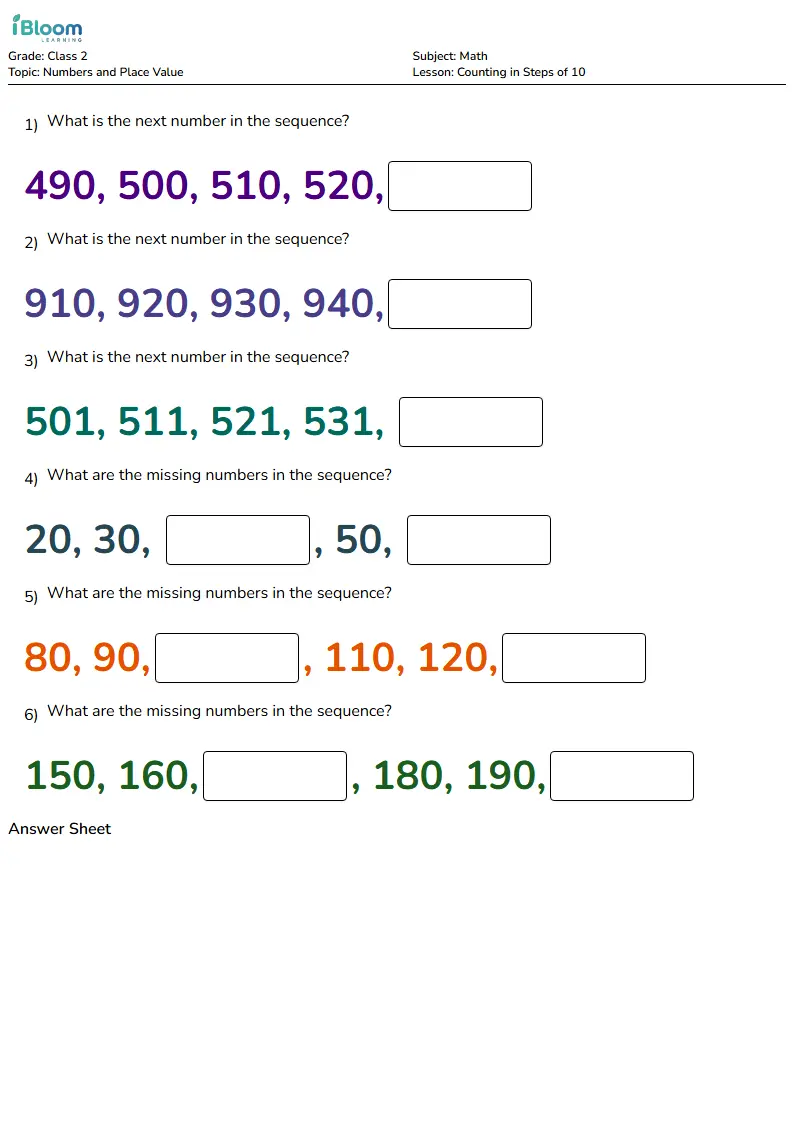
Free Counting in Steps of 10 Worksheets for Class 2
Looking for class 2 math help? Download free, interactive counting in steps of 10 worksheets. AI-personalized and Common Core-aligned. Practice math with iBloom.
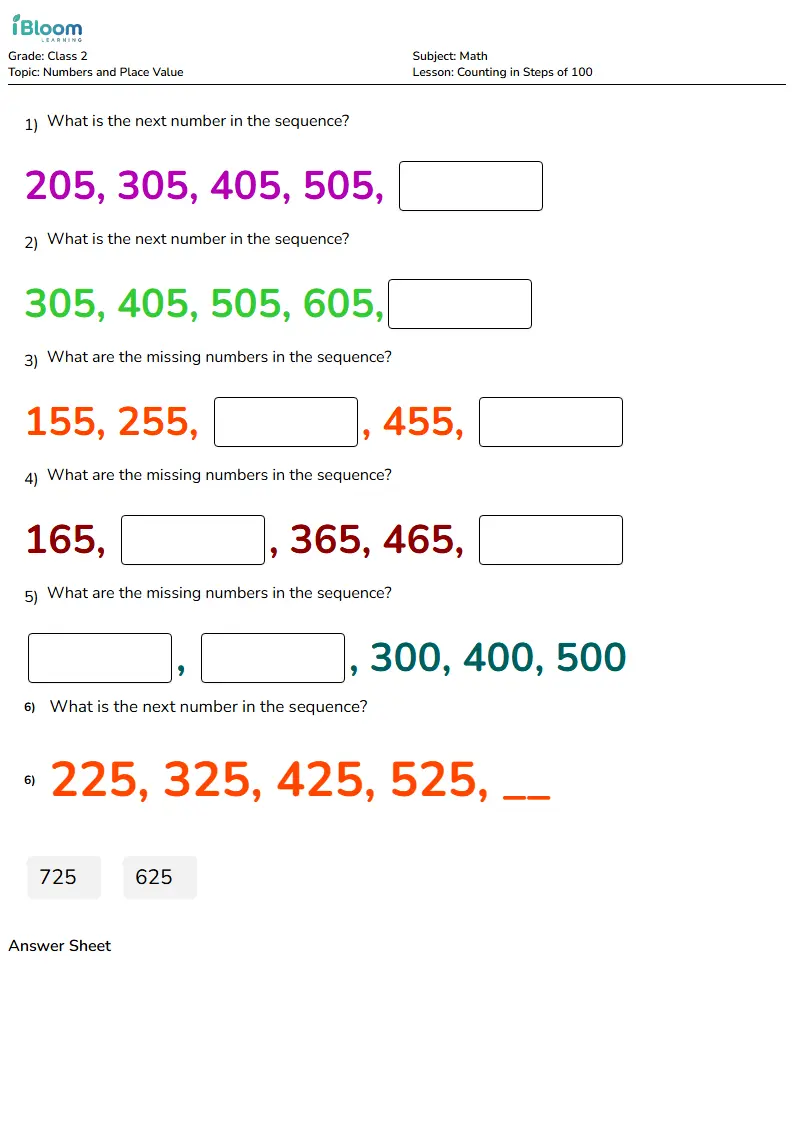
Free Counting in Steps of 100 Worksheets for Class 2
Looking for class 2 math help? Download free, interactive counting in steps of 100 worksheets. AI-personalized and Common Core-aligned. Practice math with iBloom.
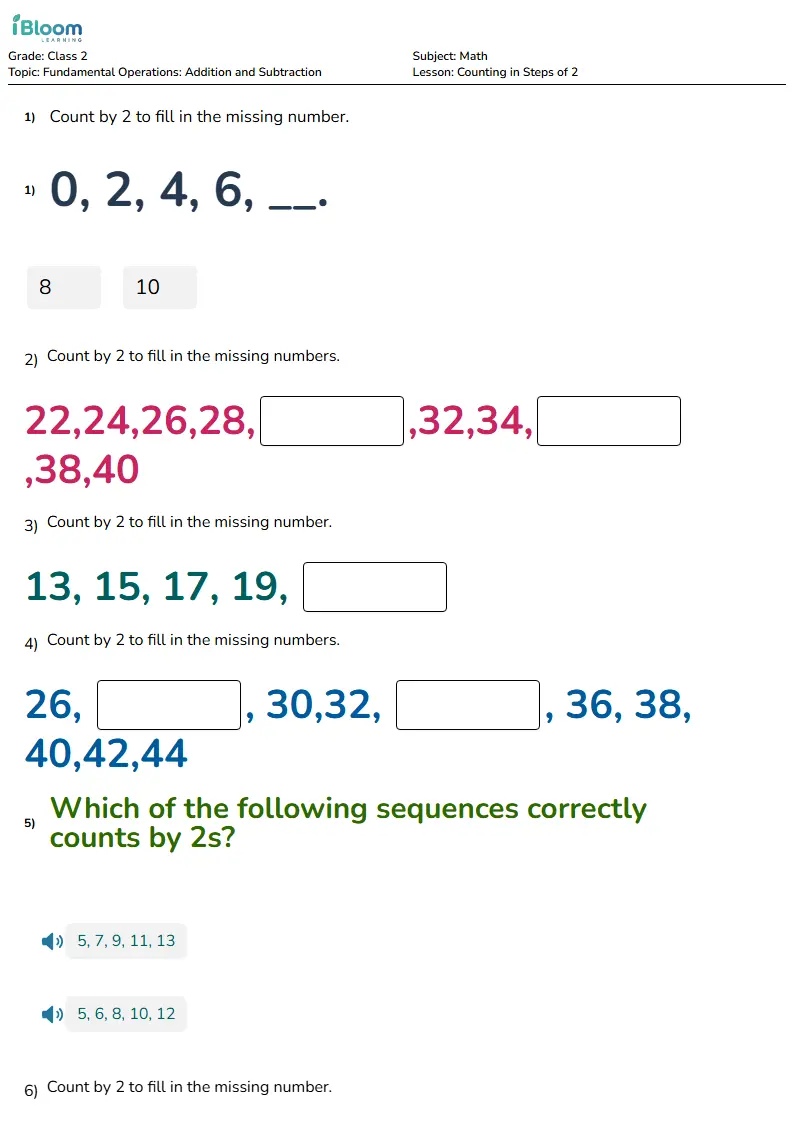
Free Counting in Steps of 2 Worksheets for Class 2
Looking for class 2 math help? Download free, interactive counting in steps of 2 worksheets. AI-personalized and Common Core-aligned. Practice math with iBloom.
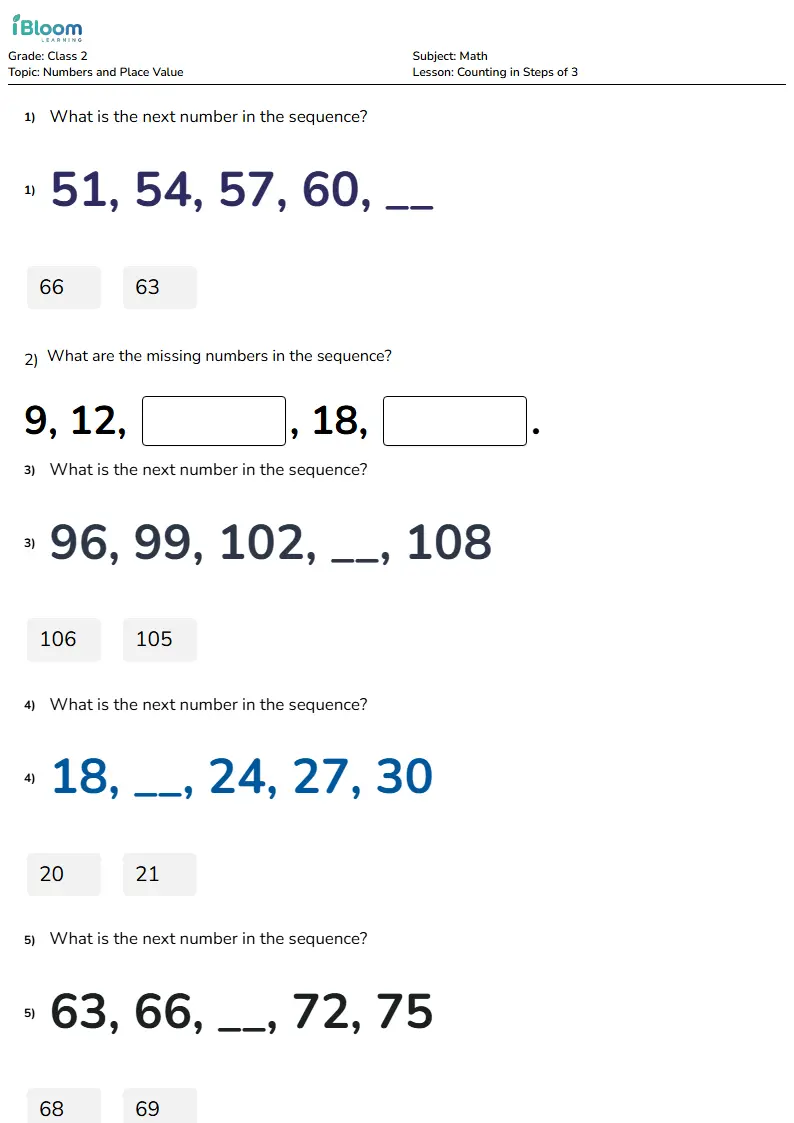
Free Counting in Steps of 3 Worksheets for Class 2
Looking for class 2 math help? Download free, interactive counting in steps of 3 worksheets. AI-personalized and Common Core-aligned. Practice math with iBloom.
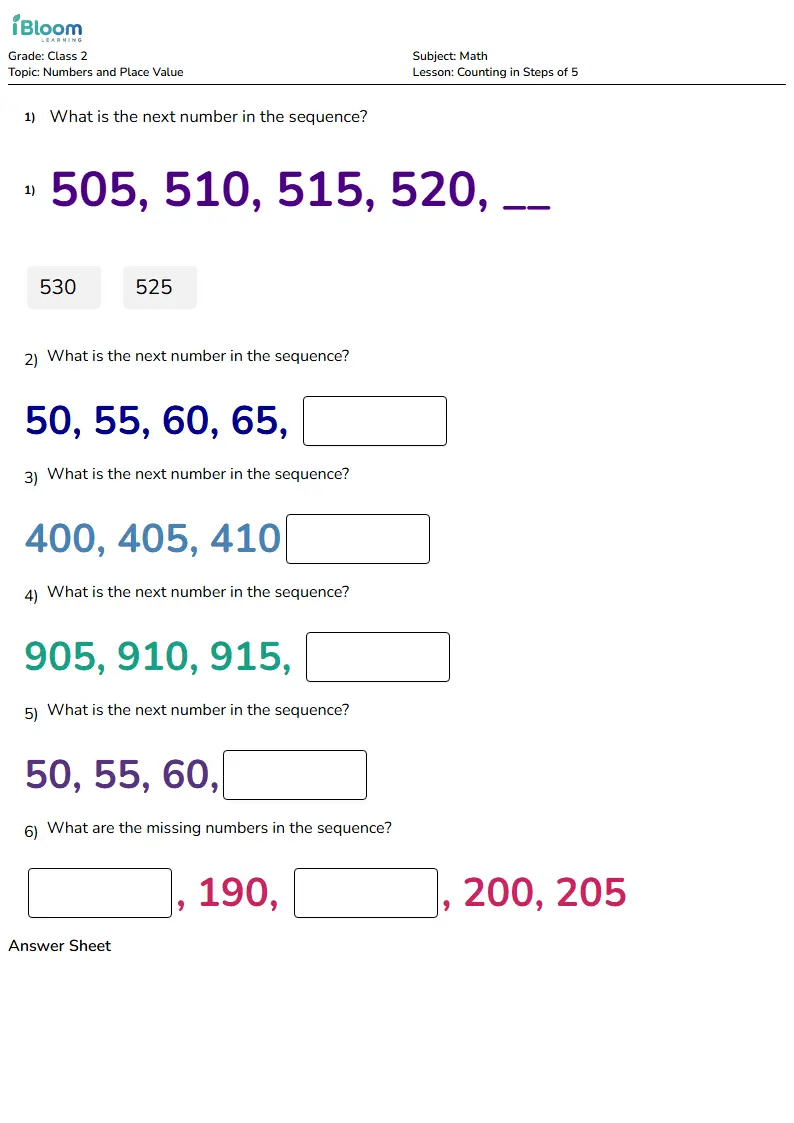
Free Counting in Steps of 5 Worksheets for Class 2
Looking for class 2 math help? Download free, interactive counting in steps of 5 worksheets. AI-personalized and Common Core-aligned. Practice math with iBloom.