Language That Paints Pictures worksheet for Class 3

Lesson-Wise Builder
A premium AI tool that creates syllabus-aligned questions and worksheets for any lesson in seconds.
Figurative language practice for Class 3 helps learners notice when words do more than report a fact. In the preserved activity image, each item asks which of two sentences is an example of figurative language. The first complete pair contrasts “The car was making noise.” with “The car coughed and sputtered.” The second contrasts “Her eyes were diamonds.” with “Her eyes sparkled.” The image begins a third item, but its answer choices are cut off, so this guide does not invent or explain them.
What the activity asks learners to do
The learner reads both choices, notices which sentence creates an imaginative picture, and selects the figurative sentence. A useful answer includes more than a choice: it names the exact words that make the sentence figurative and explains what those words suggest.
The two fully visible pairs focus on different devices. The car sentence uses a human action to describe a machine, which makes coughed the key personification clue. The eyes sentence says that eyes were diamonds, which is a metaphor. These are specific observations from the evidence image; they are not claims about unseen questions.
Use the picture as support, not as the answer
The illustrations help learners imagine the noisy car and shining eyes. However, the sentence wording decides the answer. Ask the learner to cover the picture for a moment, read both choices, and point to the exact word or comparison that changes the meaning.
Literal and figurative meanings
A literal sentence normally means what its words directly state. A figurative sentence uses an imaginative action or comparison to add a feeling, sound, or picture. The literal meaning still matters because the learner must work out the real idea beneath the image.
- “The car was making noise” gives the main information directly.
- “The car coughed and sputtered” makes the rough engine noise easier to imagine.
- “Her eyes were diamonds” does not mean jewels replaced her eyes; it suggests brightness, beauty, or a diamond-like shine.
- “Her eyes sparkled” is the more direct description in the displayed pair. The word can still sound vivid, so learners should compare the whole pair rather than assume every lively verb is a named figurative device.
A quick literal test
Ask two questions: Could these words be exactly true? and What ordinary meaning is the writer communicating? A car cannot cough with lungs, and eyes are not actual diamonds. Those impossible literal readings point learners toward the intended figurative meanings.
Worked example: the car coughed and sputtered
The first visible prompt asks which sentence is an example of figurative language. “The car was making noise” reports the fact plainly. “The car coughed and sputtered” gives the car a human action. The strongest personification clue is coughed because people and animals cough, but a car has no throat or lungs.
The word sputtered can also describe an engine sound directly. That nuance is useful: the learner does not need to call every word in the sentence personification. The phrase becomes clearly figurative because the car is described as coughing. Together, the words suggest an uneven, struggling engine sound.
Model answer
“The car coughed and sputtered” is figurative because coughed gives the car a human action. It means that the engine made rough, broken sounds. This response names the choice, quotes the evidence, labels the device, and paraphrases the meaning.
Worked example: her eyes were diamonds
The second visible prompt again asks for the figurative sentence. “Her eyes were diamonds” directly compares eyes with diamonds without using like or as. That pattern makes it a metaphor. The writer is not stating that the person has jewels in place of eyes. The comparison transfers qualities associated with diamonds, such as shine or brilliance, to the eyes.
In the displayed pair, “Her eyes sparkled” gives the more direct description, while “Her eyes were diamonds” creates the unmistakable comparison. Encourage the learner to explain the image rather than stop at the label metaphor.
Change the metaphor into a simile
“Her eyes were like diamonds” keeps a similar mental picture but adds like, so it becomes a simile. Comparing these two versions makes the difference visible without changing the underlying idea of bright, striking eyes.
Personification, metaphor, and simile
- Personification
- A nonhuman thing is given a human action, feeling, or quality. Example: “The sleepy door groaned.” The door does not feel sleepy, but the description helps a reader imagine its slow, creaking movement.
- Metaphor
- One thing is said to be another unlike thing. Example: “The classroom was a beehive.” It suggests busy movement and sound; it does not mean insects filled the room.
- Simile
- Two unlike things are compared using like or as. Example: “The classroom buzzed like a beehive.”
At Class 3 level, a practical clue is enough: look for a human action on a nonhuman subject, an is/was comparison, or the comparison words like and as. Some writing can be discussed in more than one way, so meaning should come before a rushed label.
Three quick questions
- Is a thing acting as if it were human? Check personification.
- Does the sentence say one unlike thing is another? Check metaphor.
- Does it compare using like or as? Check simile.
A step-by-step routine for each choice
- Read the prompt. Confirm that the task asks for figurative language rather than simply the more detailed sentence.
- Read both choices aloud. Hearing the words can make an unusual action or comparison easier to notice.
- Try the literal meaning. Ask whether the sentence could be exactly true.
- Underline the clue. In the visible examples, the useful clues are coughed and were diamonds.
- Name the device. Decide whether the clue is personification, metaphor, or simile.
- Paraphrase the idea. State the ordinary meaning in clear words.
- Explain with because. Join the choice, evidence, and meaning in one complete response.
Try the routine on a new pair
Compare “The sun rose above the trees” and “The sun smiled over the trees.” The second sentence is personification because the sun is given the human action smiled. Its ordinary meaning is that the sunlight made the morning seem warm or cheerful. This is a new teaching example, not a claim about an unseen activity item.
Common mistakes and helpful corrections
- Choosing from the picture alone: ask the learner to point to the decisive words before choosing.
- Selecting the longer sentence: length does not determine figurative meaning. Test what the words say.
- Calling every lively verb figurative: a verb can be vivid and still describe something directly. Identify the unusual action or comparison in context.
- Saying that sputtered alone proves personification: return to coughed, the clearer human-action clue in the car sentence.
- Reading the diamond metaphor as a fact: ask what quality of a diamond the writer wants the reader to imagine.
- Calling every comparison a simile: a simile needs like or as; “eyes were diamonds” is a metaphor.
- Memorising labels without meaning: require a short paraphrase after the label.
- Inventing details from a partial image: discuss only the question text and choices that are fully visible.
Check understanding without guessing
A correct click or selection does not show the whole thought process. Use one or two follow-up prompts: Which exact word made you stop? What would the sentence mean in ordinary words? Why is the other choice more direct? Would adding like change the device?
Listen for three parts in the response: the clue, the device, and the meaning. For the car item, a learner might identify coughed, name personification, and explain that the engine sounded rough. For the eyes item, a learner might identify were diamonds, name metaphor, and explain that the eyes looked very bright.
A simple oral check
Say, “The leaves danced in the wind.” Ask the learner to explain that leaves do not dance like people; the words describe lively movement. Then say, “The leaves moved in the wind,” and ask how the two versions differ. This contrast checks meaning without requiring a long written response.
Parent guidance for short practice
Keep home practice focused on one sentence pair at a time. Read both choices together, let the child think, and ask for one reason. If the answer is incorrect, avoid supplying the label immediately. Point to the unusual word and ask whether the subject could literally do that action.
- Use a spoon, clock, school bag, or window to create harmless personification examples.
- Compare a familiar colour or shine with another object to make a simple metaphor.
- Turn the same metaphor into a simile by adding like or as.
- Ask the child to draw the picture formed by one sentence, then explain its ordinary meaning.
- End after the child gives one accurate explanation in their own words.
Support for multilingual learners
The learner may explain the ordinary meaning in a familiar home language first. Then return to the English clue word and device name. The important bridge is between the image in the sentence and its real meaning; a longer English answer is not necessary before that idea is secure.
Teacher guidance and differentiation
Model one comparison as a think-aloud: read both choices, test each literal meaning, underline the clue, and explain the picture it creates. In partner talk, one learner can name the device while the other paraphrases the meaning. Ask them to switch roles for the next pair.
For learners who need support, reduce the task to two cards labelled direct and picture-making. Let them sort sentences before introducing all three device names. For learners ready for an extension, ask them to rewrite one direct sentence as personification, metaphor, and simile, then discuss how each version changes the image.
What to observe
- Does the learner use sentence wording rather than the illustration alone?
- Can the learner explain why a literal reading does not fit?
- Can the learner distinguish an is/was metaphor from a like/as simile?
- Can the learner identify a human action assigned to a nonhuman thing?
- Can the learner paraphrase the intended meaning without copying the example?
Practice ideas beyond the displayed questions
Literal-to-figurative rewrite
Start with “The old fan made a squeaking sound.” A learner might write, “The old fan complained all afternoon.” Discuss why complained personifies the fan and what sound the sentence suggests.
Metaphor and simile pair
Begin with the idea of a fast runner. Write “Ravi was a rocket” as a metaphor and “Ravi ran like a rocket” as a simile. Both create speed, but their sentence patterns differ.
Draw, label, explain
Choose one original sentence, draw the mental picture, label the device, and write its ordinary meaning beneath the drawing. This keeps creativity connected to accurate interpretation.
Find the evidence
During story reading, pause at one vivid sentence. Ask whether it gives a human action to a thing, says one thing is another, or compares with like or as. Do not require a device label when the sentence does not clearly fit one of those patterns.
Related language concepts
Figurative language connects with imagery, descriptive word choice, reading comprehension, and creative writing. Imagery is the broader effect of language that helps a reader see, hear, feel, smell, or taste something in the mind. A metaphor can create imagery, but not every descriptive detail is a metaphor.
After learners can identify clear examples, useful next steps are explaining the mood created by a comparison, noticing figurative language in a short passage, and writing a sentence that matches a chosen feeling. Keep the distinction between the verified activity and these extensions clear: the image evidence directly supports sentence selection, personification through coughed, and metaphor through were diamonds.
Continue with related iBloom practice
- use context to understand word meanings: Helps learners test whether a figurative phrase makes sense in its sentence.
- connect descriptive words with pictures: Builds the visualisation skill used to interpret language that paints a picture.
Frequently asked questions
What does language that paints pictures mean?
It means language that helps a reader form a strong mental image or feeling instead of giving only a plain fact. Figurative devices are one way writers create that effect.
Why is the car sentence personification?
The word coughed gives a human or animal action to a car. It suggests a rough, broken engine sound.
Why is the diamonds sentence a metaphor?
It says the eyes were diamonds without using like or as. The comparison suggests qualities such as brightness or brilliance.
Is “Her eyes were like diamonds” also a metaphor?
It expresses a similar comparison, but the word like makes that version a simile.
Can a figurative sentence have more than one vivid word?
Yes. Learners should identify the clearest device clue and then explain the meaning of the whole sentence.
Should the third pictured question be discussed?
Not from this evidence file. Its prompt begins, but the answer choices are not fully visible, so a factual guide should not invent them.
More practice for this grade
More English Language Arts worksheets
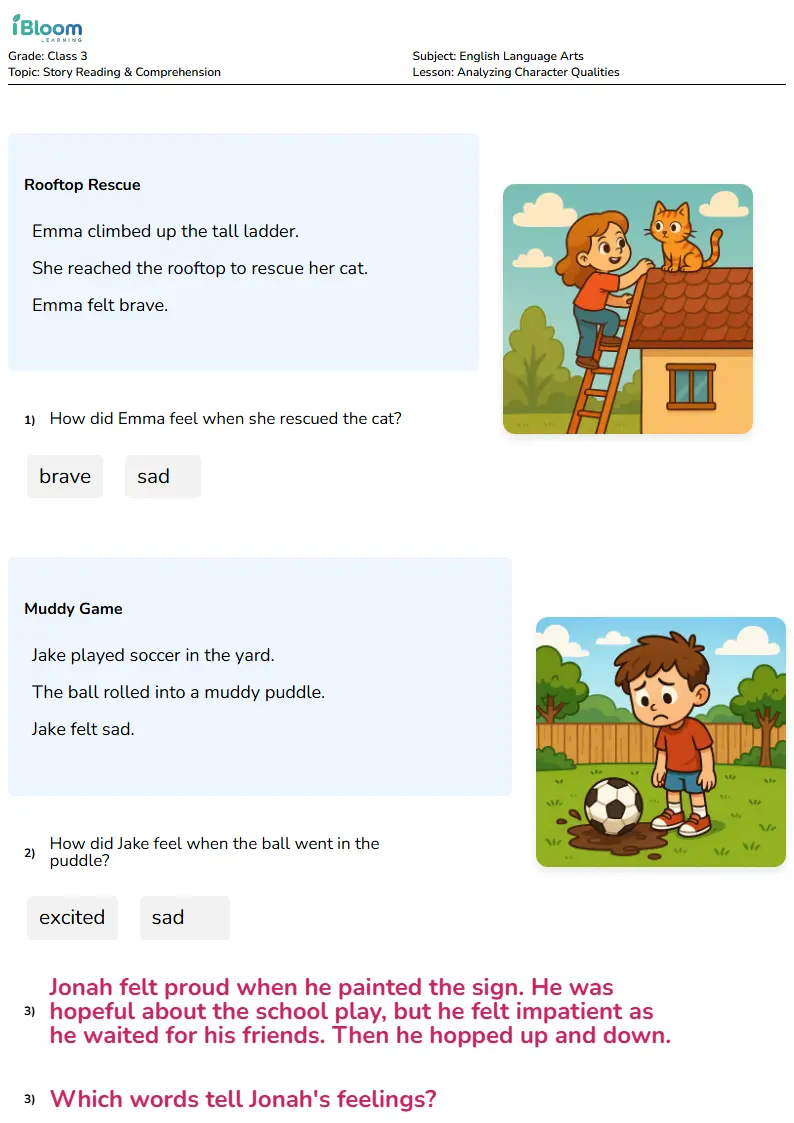
Free Analyzing Character Qualities Worksheets for Class 3
Looking for class 3 english language arts help? Download free, interactive analyzing character qualities worksheets. AI-personalized and Common Core-aligned. Practice early literacy with iBloom.
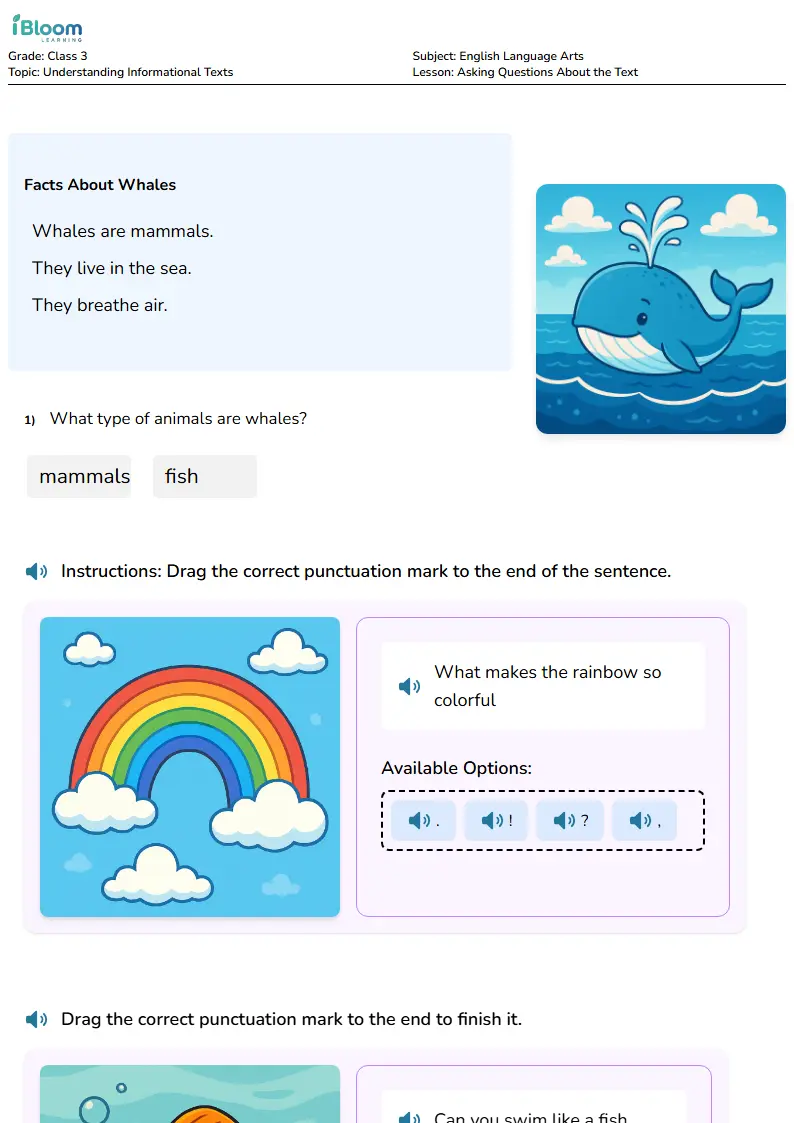
Free Asking Questions About the Text Worksheets for Class 3
Looking for class 3 english language arts help? Download free, interactive asking questions about the text worksheets. AI-personalized and Common Core-aligned. Practice early literacy with iBloom.
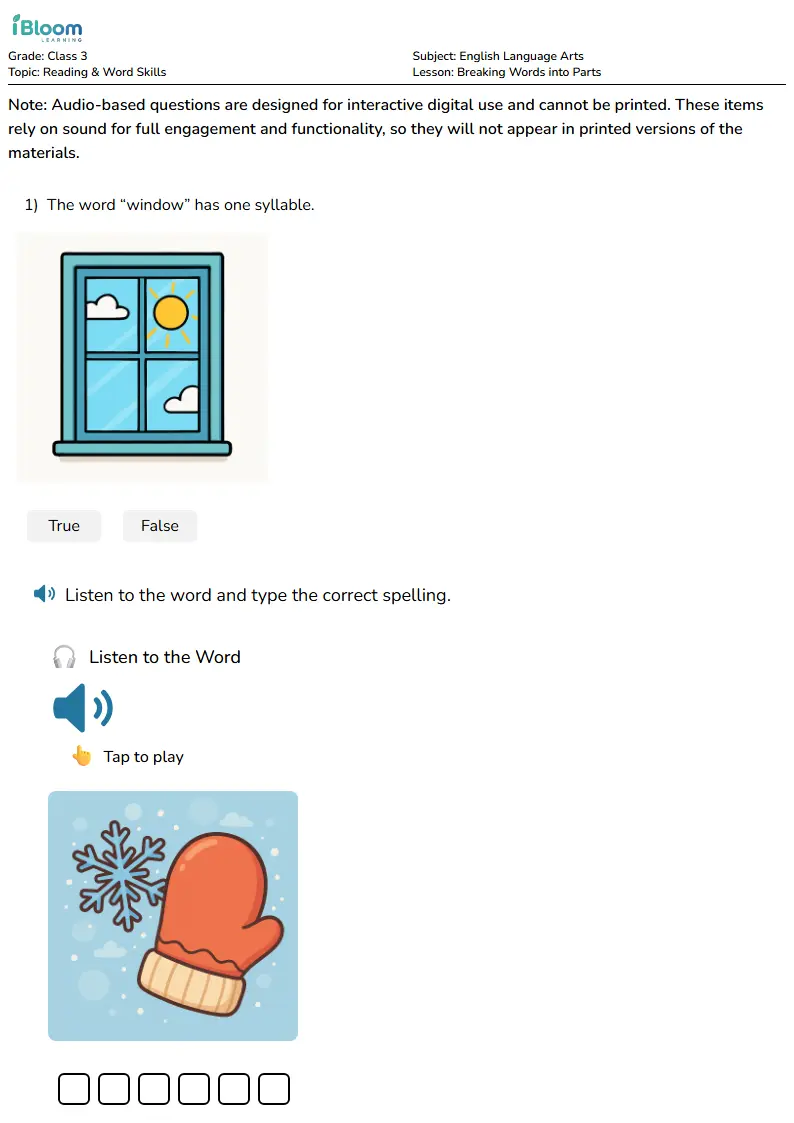
Free Breaking Words into Parts Worksheets for Class 3
Looking for class 3 english language arts help? Download free, interactive breaking words into parts worksheets. AI-personalized and Common Core-aligned. Practice early literacy with iBloom.
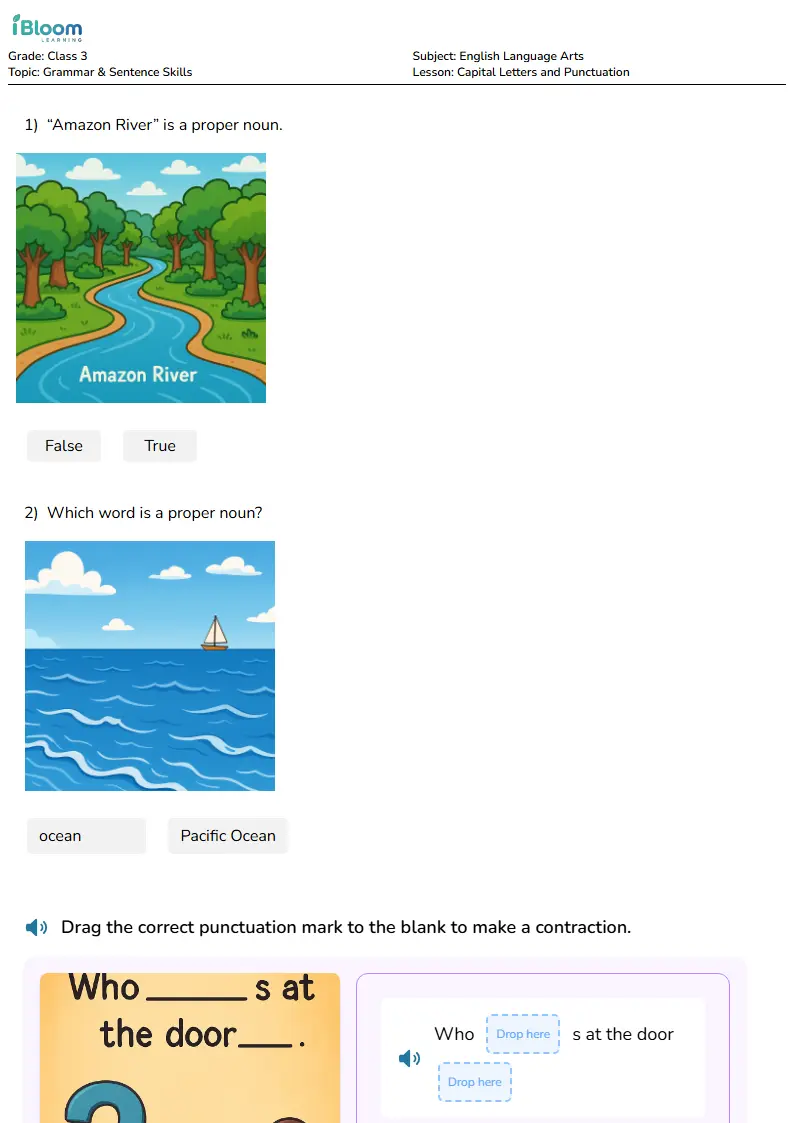
Free Capital Letters and Punctuation Worksheets for Class 3
Looking for class 3 english language arts help? Download free, interactive capital letters and punctuation worksheets. AI-personalized and Common Core-aligned. Practice early literacy with iBloom.
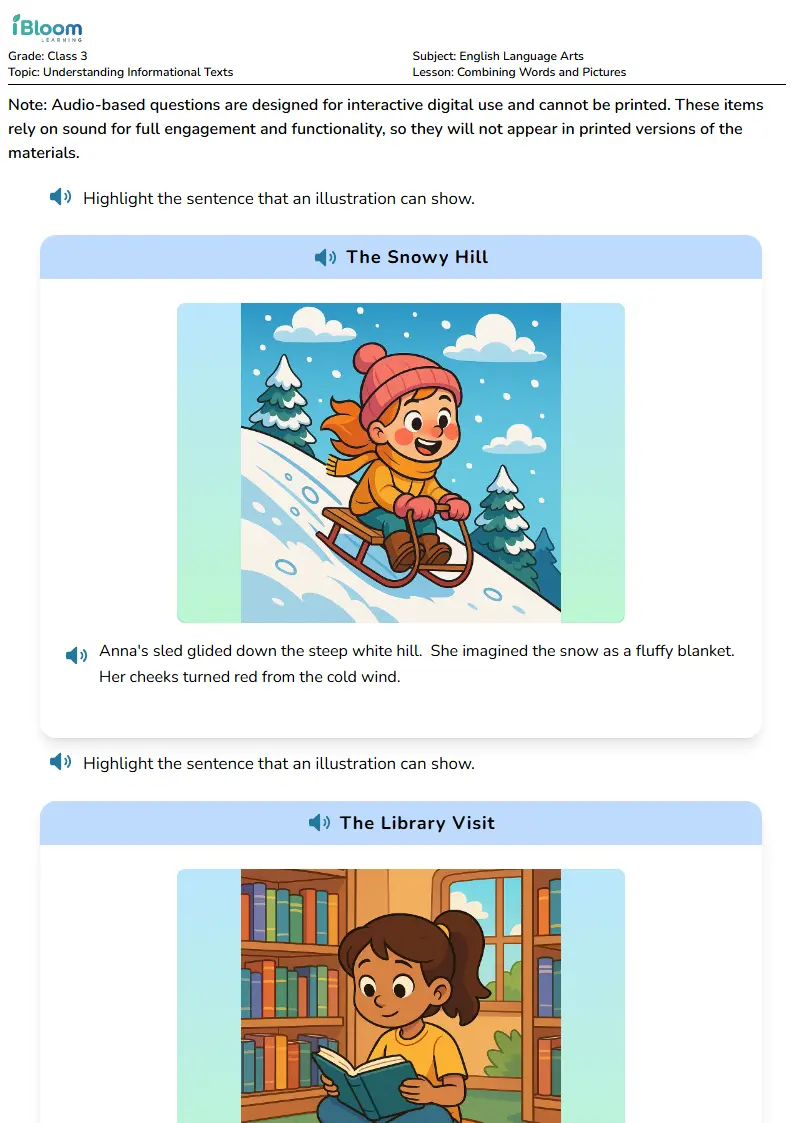
Free Combining Words and Pictures Worksheets for Class 3
Looking for class 3 english language arts help? Download free, interactive combining words and pictures worksheets. AI-personalized and Common Core-aligned. Practice early literacy with iBloom.
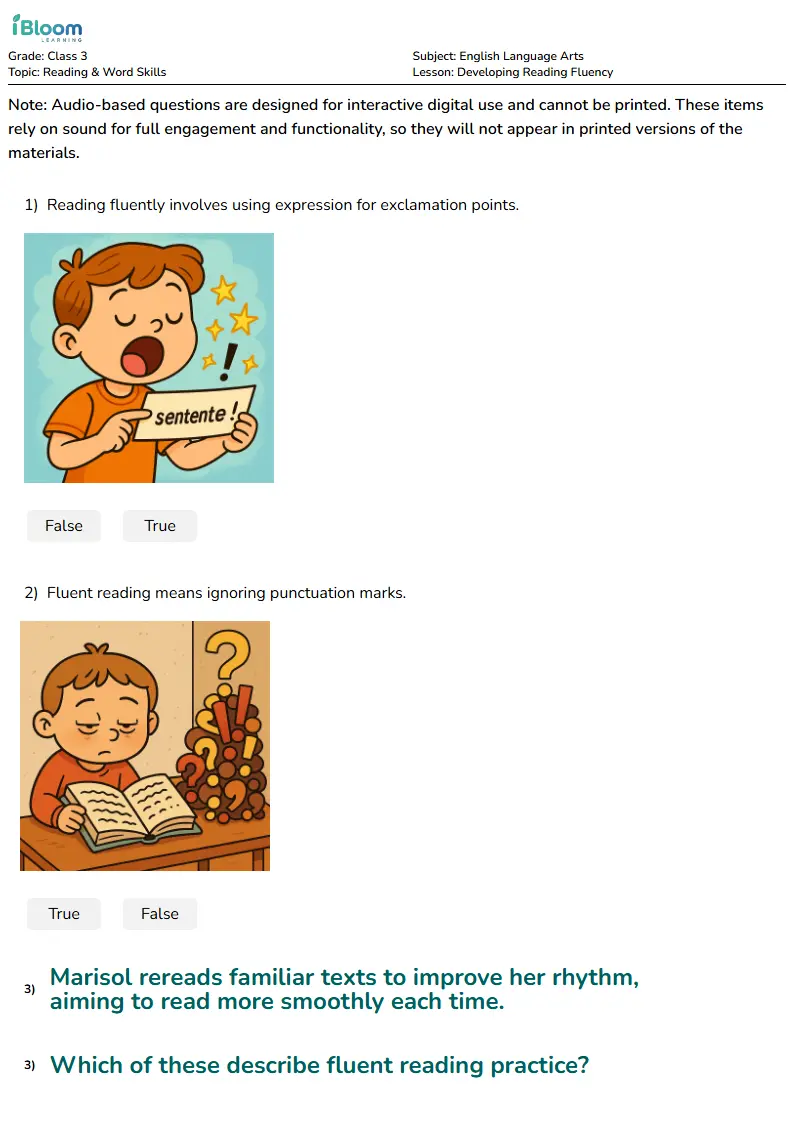
Free Developing Reading Fluency Worksheets for Class 3
Looking for class 3 english language arts help? Download free, interactive developing reading fluency worksheets. AI-personalized and Common Core-aligned. Practice early literacy with iBloom.
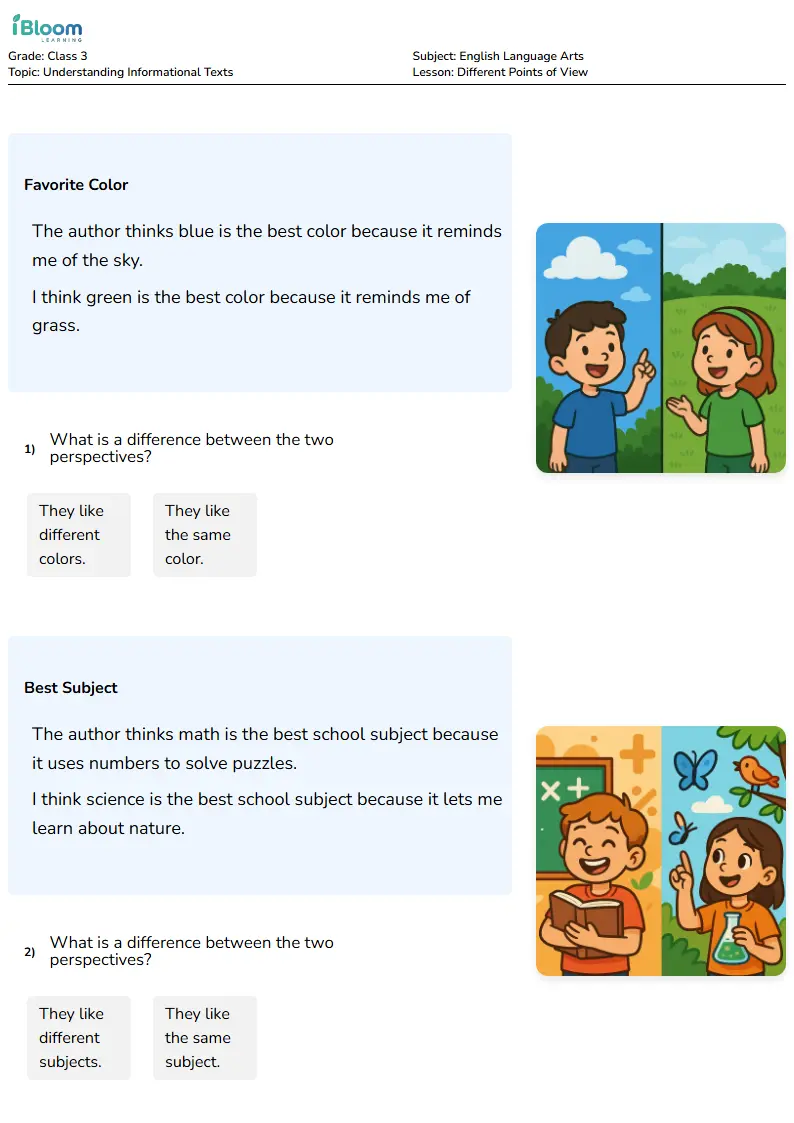
Free Different Points of View Worksheets for Class 3
Looking for class 3 english language arts help? Download free, interactive different points of view worksheets. AI-personalized and Common Core-aligned. Practice early literacy with iBloom.
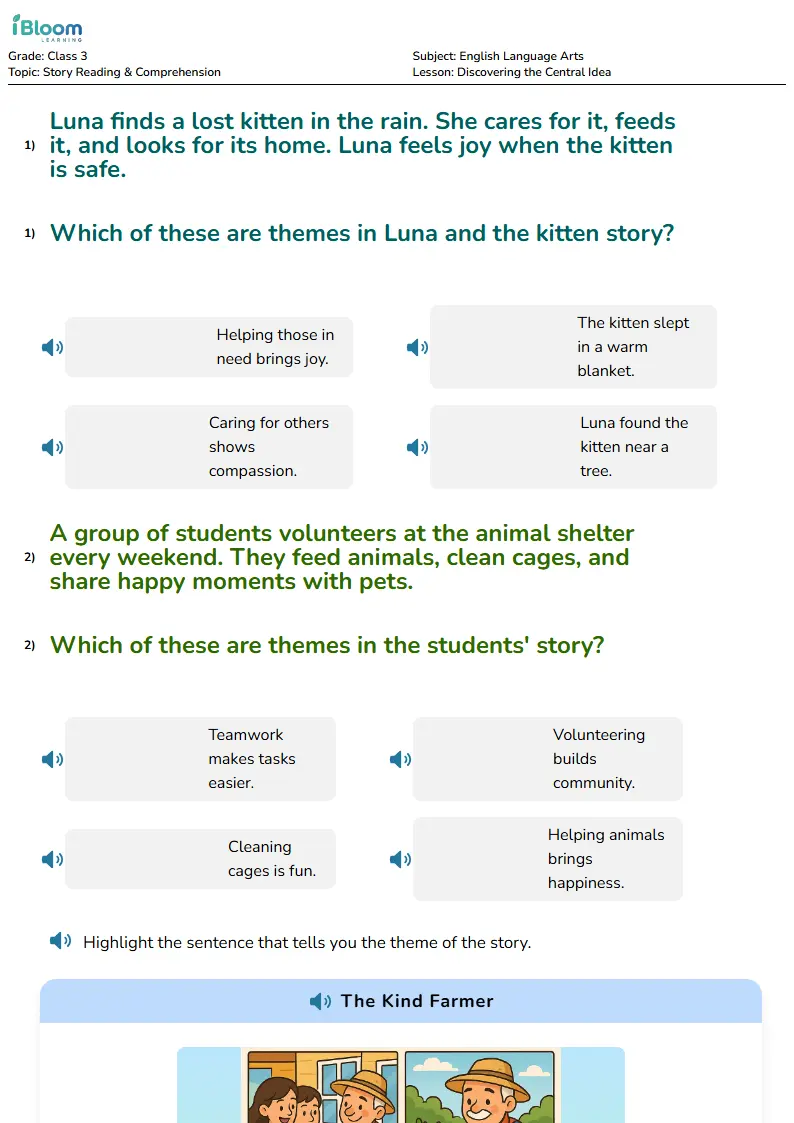
Free Discovering the Central Idea Worksheets for Class 3
Looking for class 3 english language arts help? Download free, interactive discovering the central idea worksheets. AI-personalized and Common Core-aligned. Practice early literacy with iBloom.
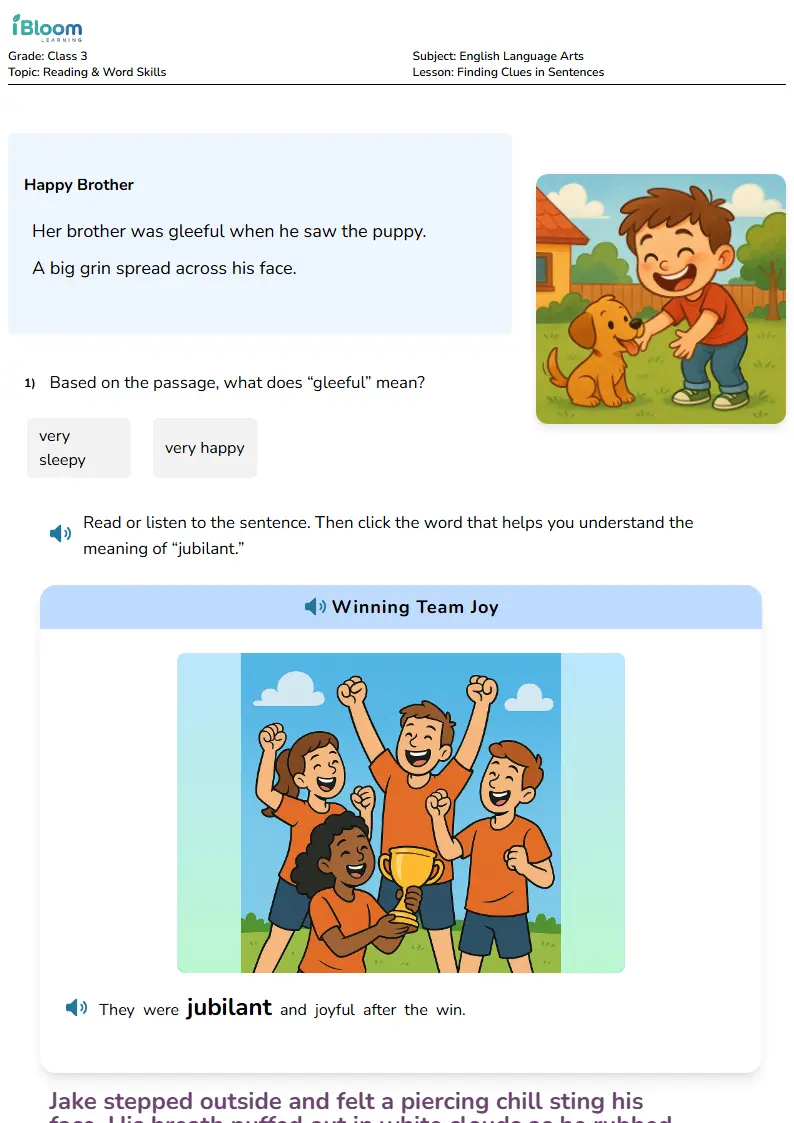
Free Finding Clues in Sentences Worksheets for Class 3
Looking for class 3 english language arts help? Download free, interactive finding clues in sentences worksheets. AI-personalized and Common Core-aligned. Practice early literacy with iBloom.
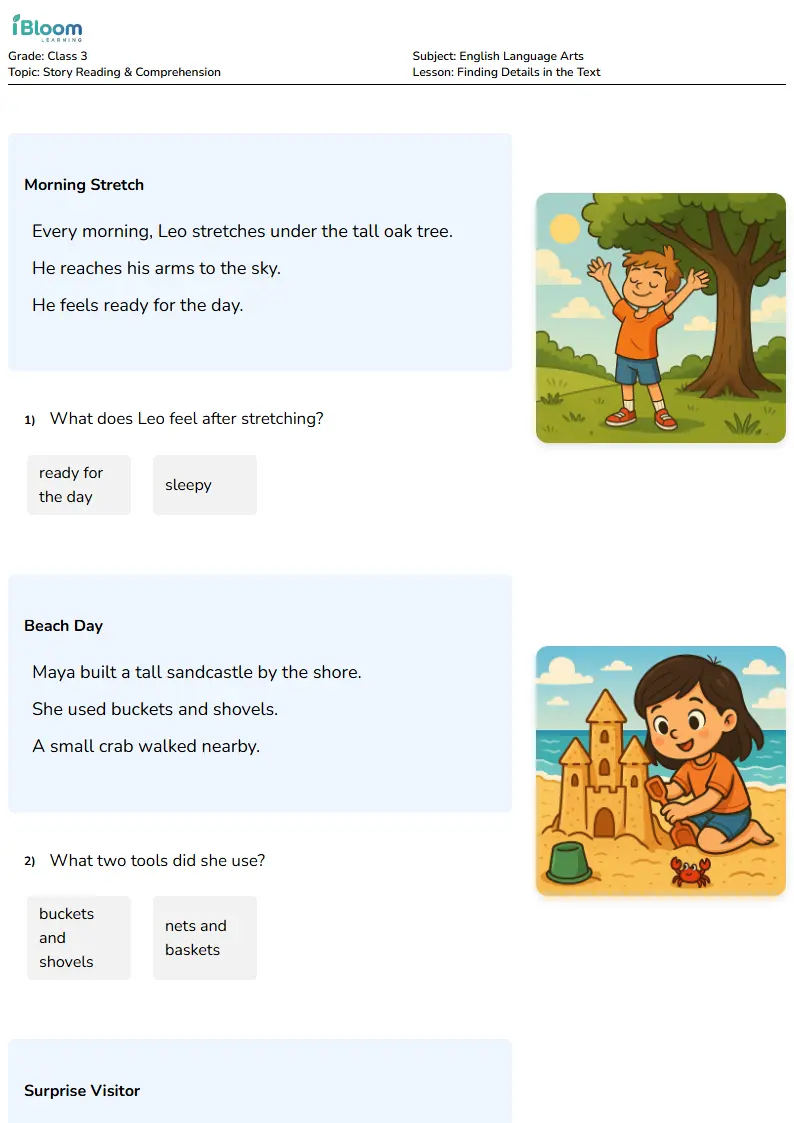
Free Finding Details in the Text Worksheets for Class 3
Looking for class 3 english language arts help? Download free, interactive finding details in the text worksheets. AI-personalized and Common Core-aligned. Practice early literacy with iBloom.
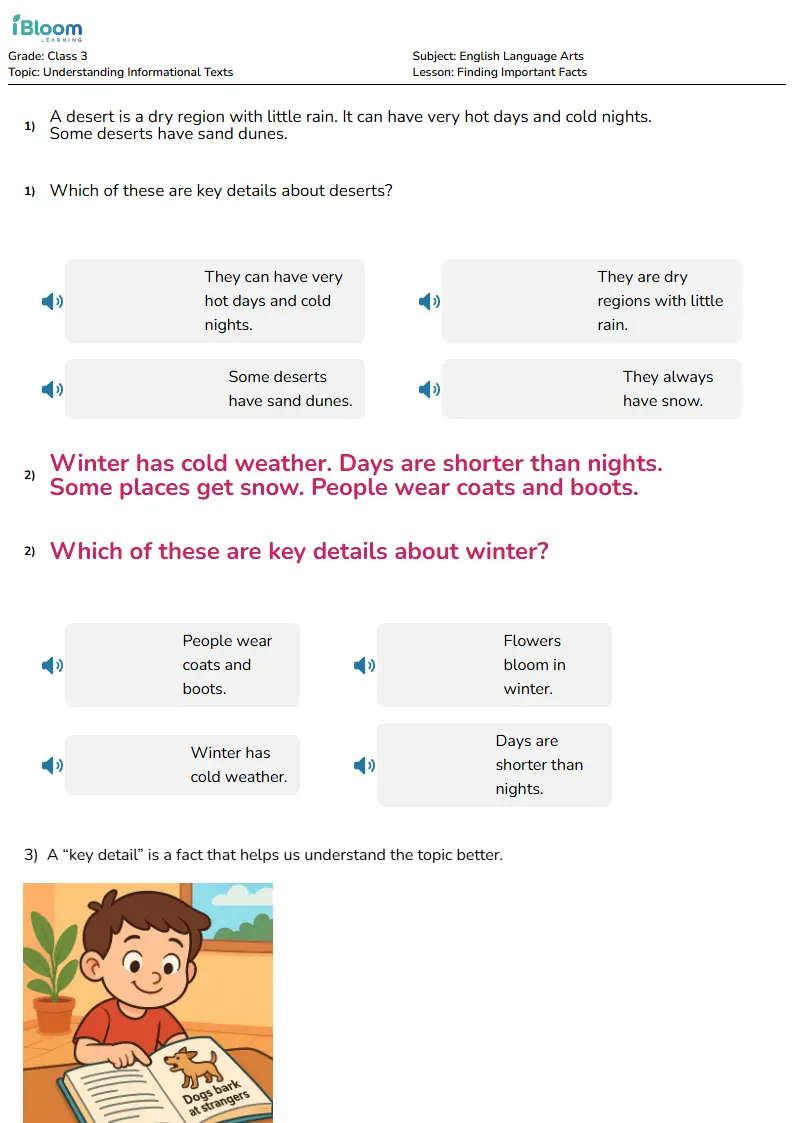
Free Finding Important Facts Worksheets for Class 3
Looking for class 3 english language arts help? Download free, interactive finding important facts worksheets. AI-personalized and Common Core-aligned. Practice early literacy with iBloom.
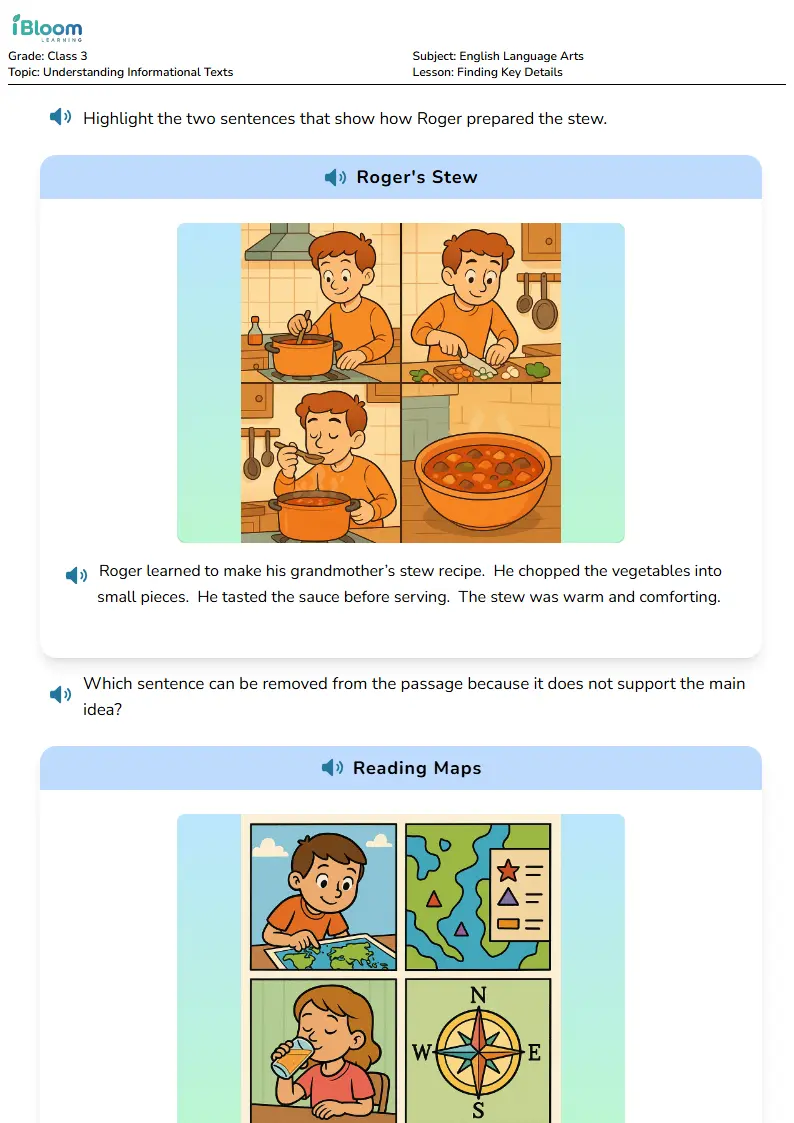
Free Finding Key Details Worksheets for Class 3
Looking for class 3 english language arts help? Download free, interactive finding key details worksheets. AI-personalized and Common Core-aligned. Practice early literacy with iBloom.
Free Finding or Guessing Information? Worksheets for Class 3
Looking for class 3 english language arts help? Download free, interactive finding or guessing information? worksheets. AI-personalized and Common Core-aligned. Practice early literacy with iBloom.
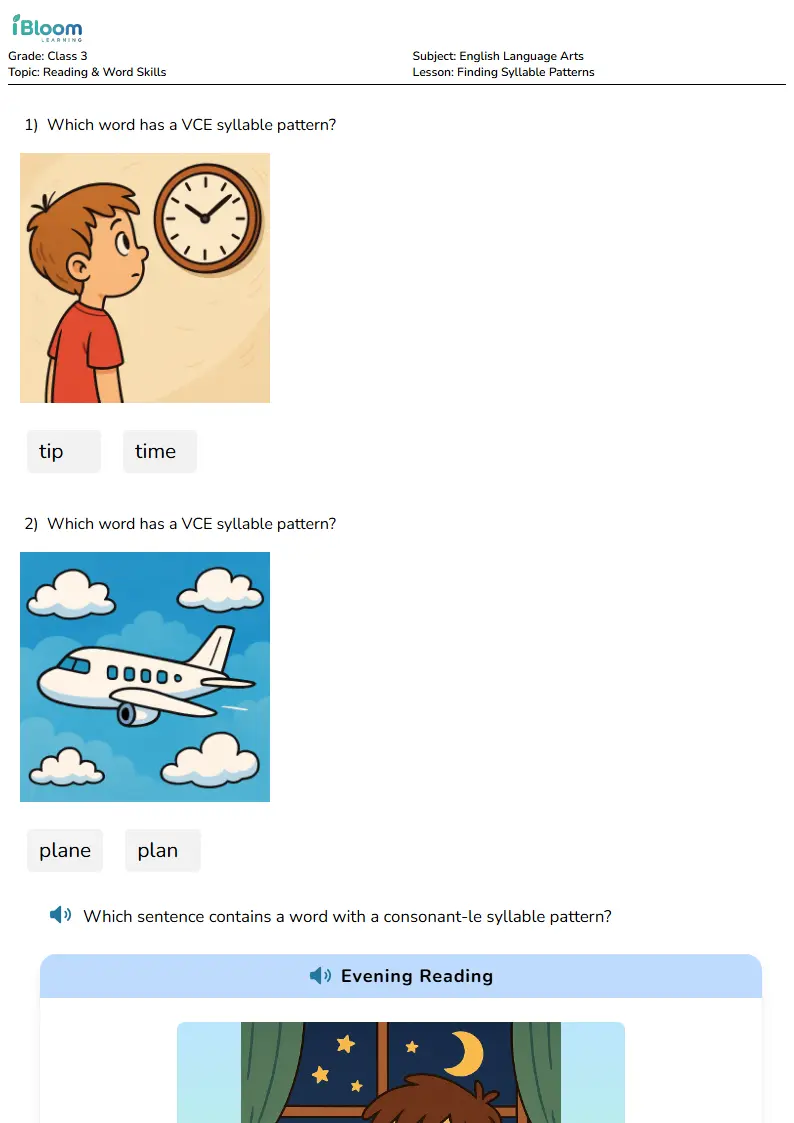
Free Finding Syllable Patterns Worksheets for Class 3
Looking for class 3 english language arts help? Download free, interactive finding syllable patterns worksheets. AI-personalized and Common Core-aligned. Practice early literacy with iBloom.
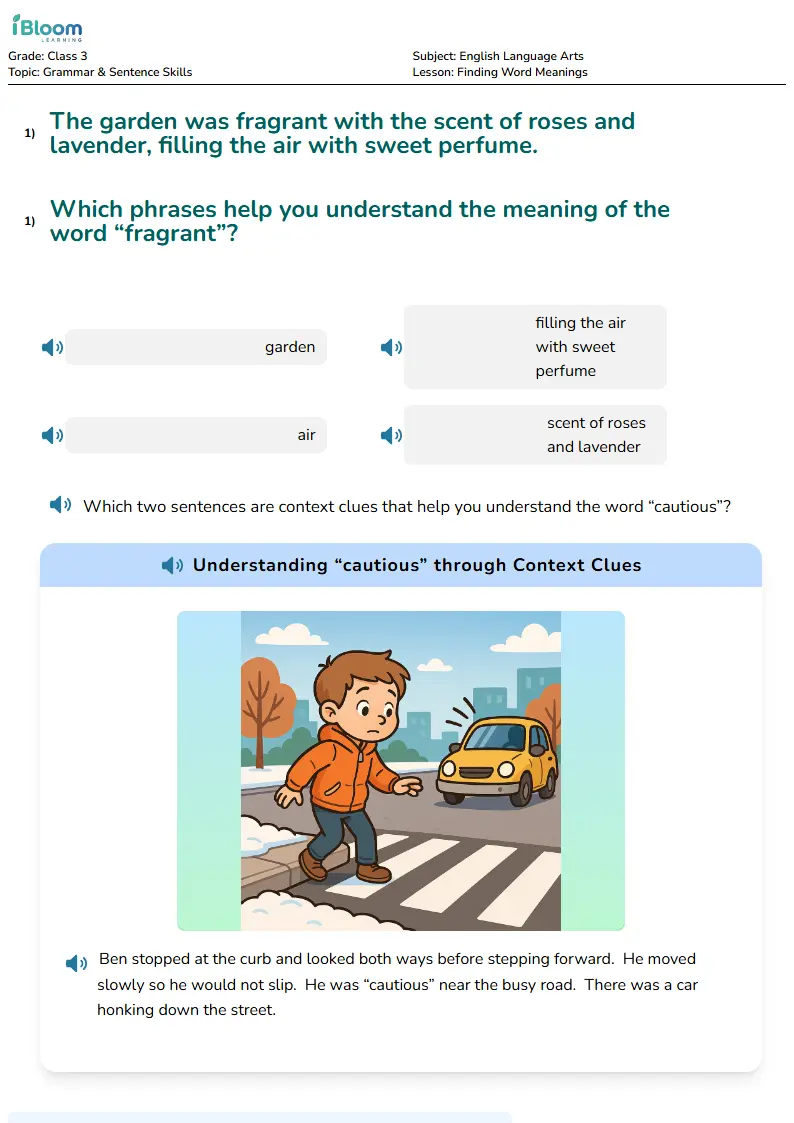
Context Clues for Word Meanings | Class 3
Help Class 3 learners use nearby phrases and sentences to infer word meanings, explain context clues, and practise with fragrant and cautious examples.
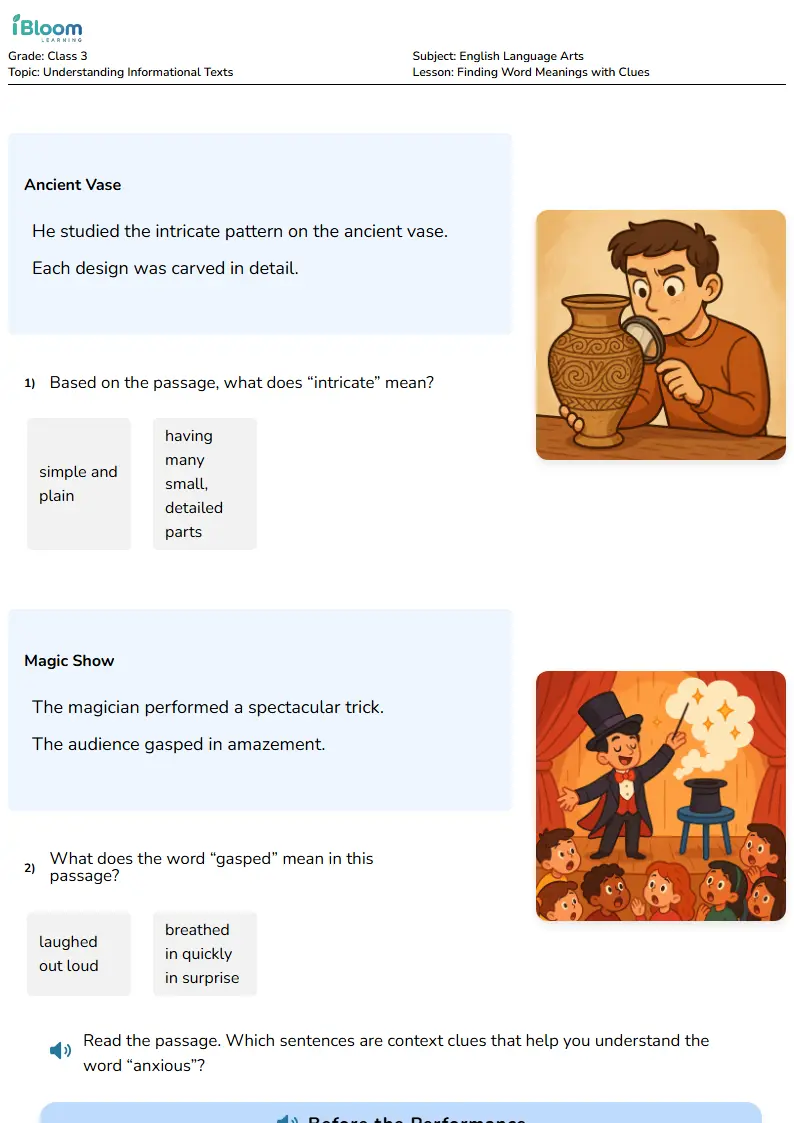
Free Finding Word Meanings with Clues Worksheets for Class 3
Looking for class 3 english language arts help? Download free, interactive finding word meanings with clues worksheets. AI-personalized and Common Core-aligned. Practice early literacy with iBloom.
Free How Are Story Plots Different? Worksheets for Class 3
Looking for class 3 english language arts help? Download free, interactive how are story plots different? worksheets. AI-personalized and Common Core-aligned. Practice early literacy with iBloom.
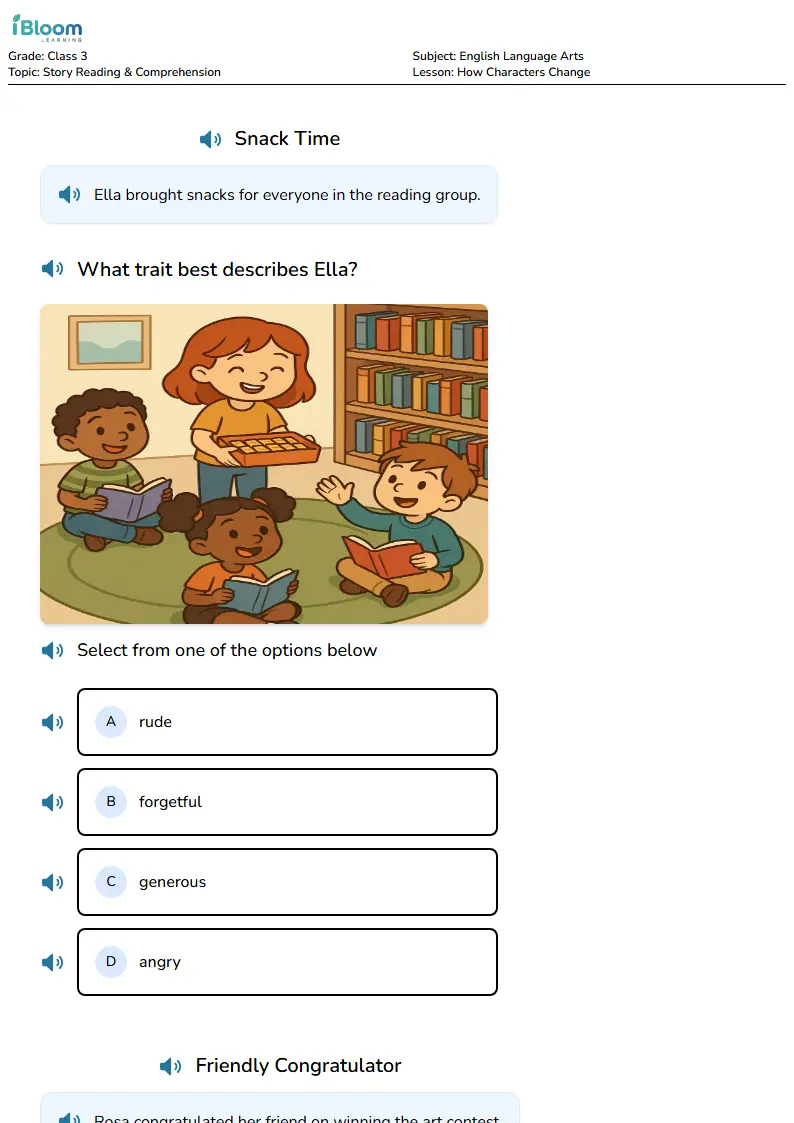
Free How Characters Change Worksheets for Class 3
Looking for class 3 english language arts help? Download free, interactive how characters change worksheets. AI-personalized and Common Core-aligned. Practice early literacy with iBloom.
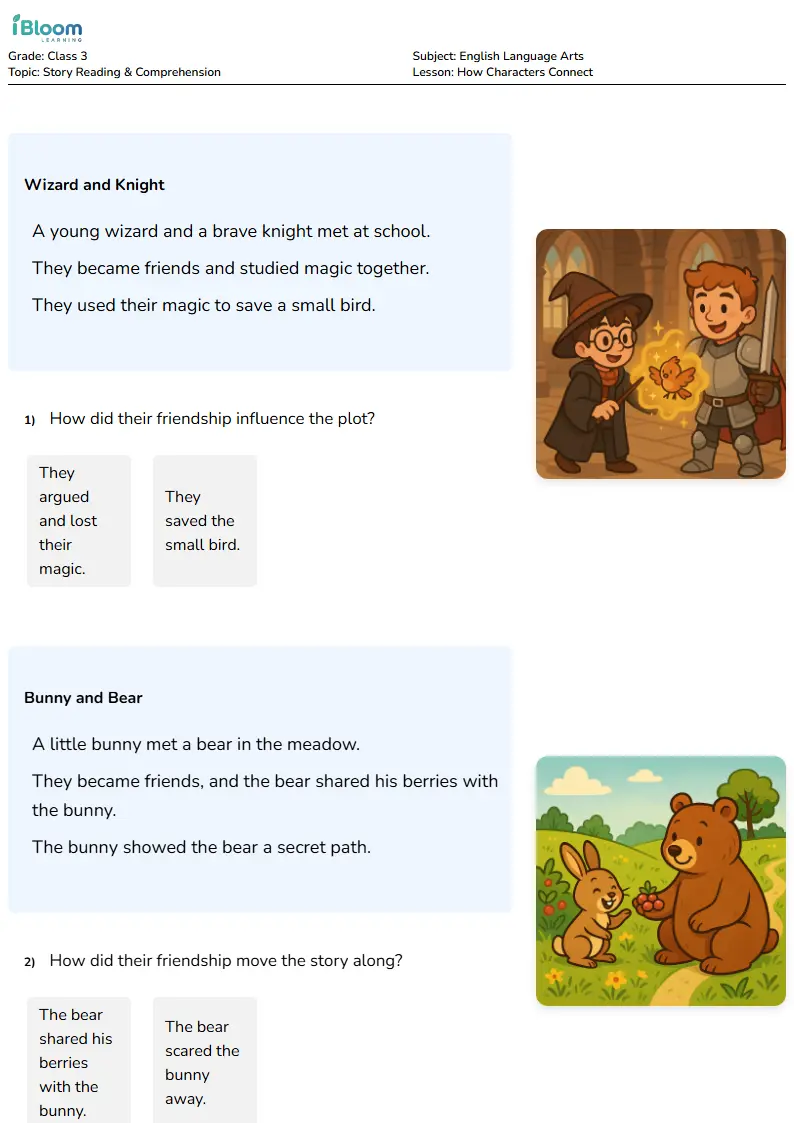
Free How Characters Connect Worksheets for Class 3
Looking for class 3 english language arts help? Download free, interactive how characters connect worksheets. AI-personalized and Common Core-aligned. Practice early literacy with iBloom.
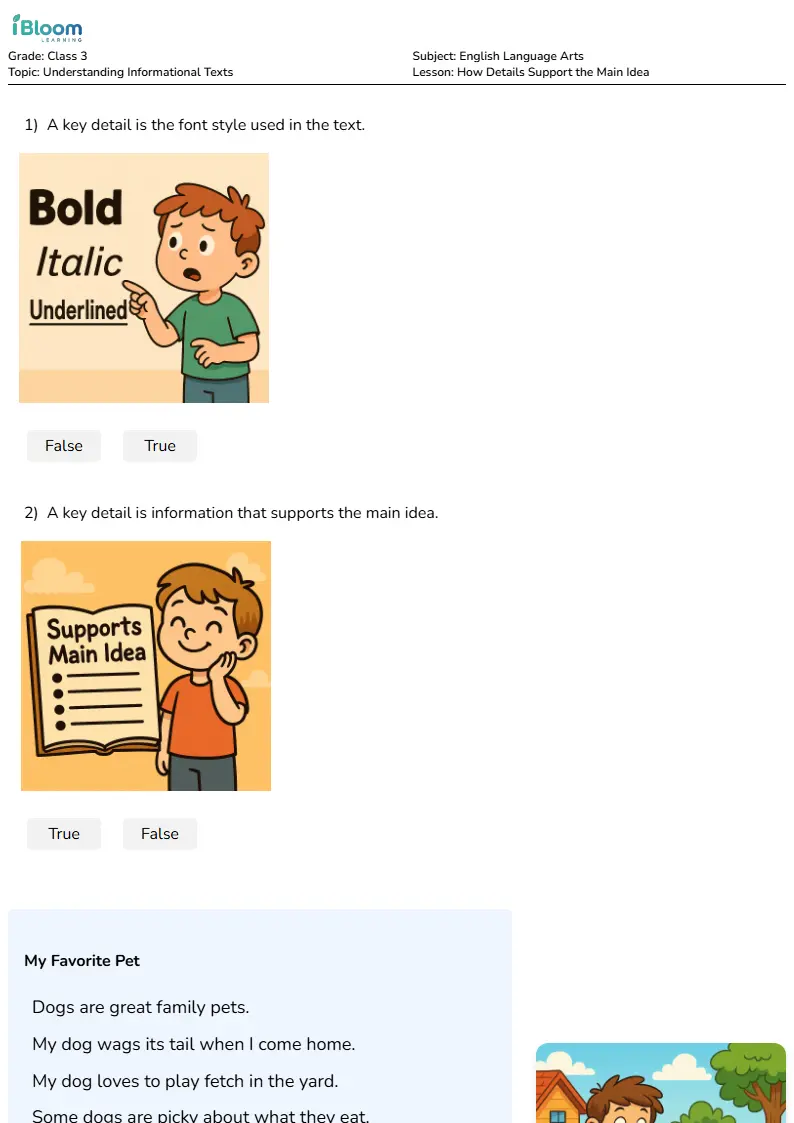
Free How Details Support the Main Idea Worksheets for Class 3
Looking for class 3 english language arts help? Download free, interactive how details support the main idea worksheets. AI-personalized and Common Core-aligned. Practice early literacy with iBloom.
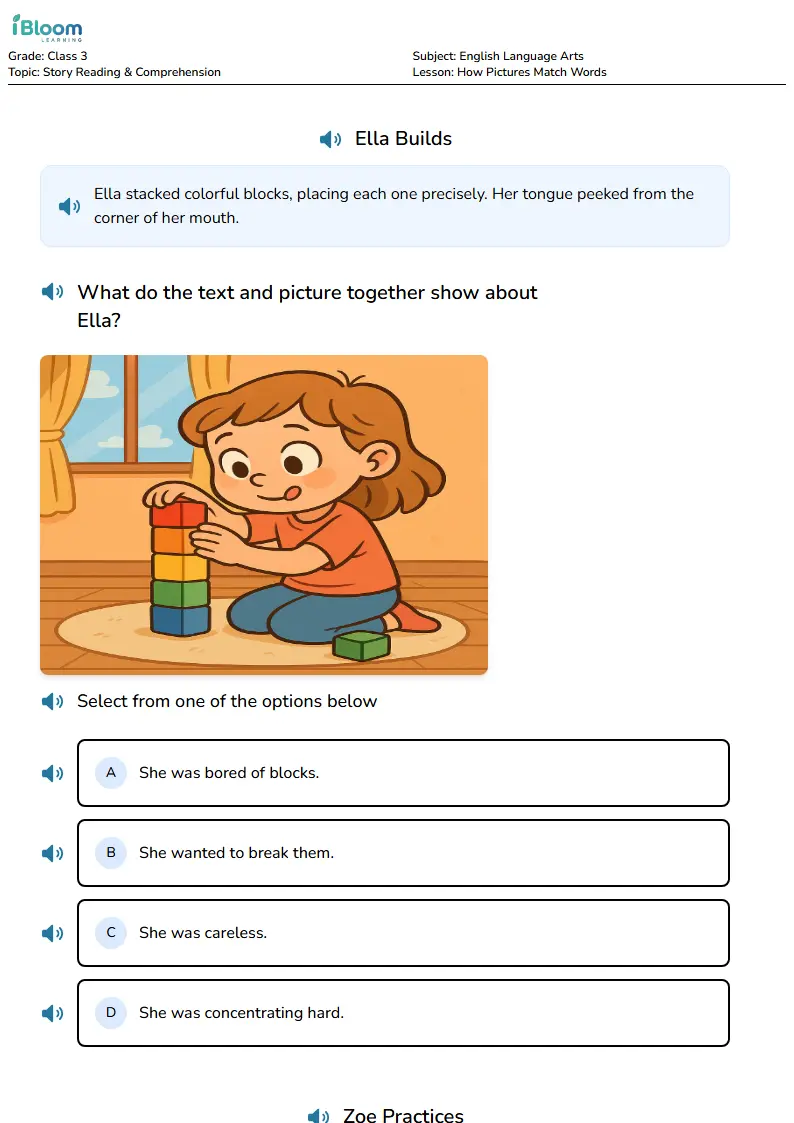
Free How Pictures Match Words Worksheets for Class 3
Looking for class 3 english language arts help? Download free, interactive how pictures match words worksheets. AI-personalized and Common Core-aligned. Practice early literacy with iBloom.
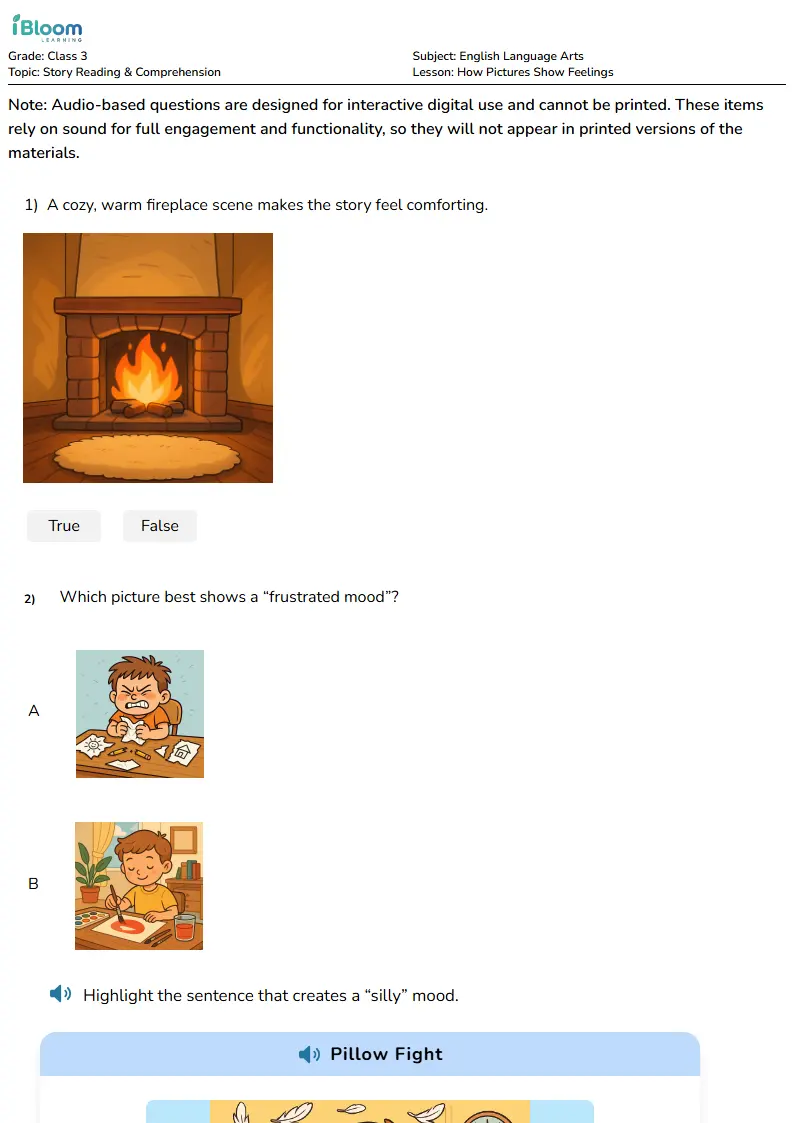
Free How Pictures Show Feelings Worksheets for Class 3
Looking for class 3 english language arts help? Download free, interactive how pictures show feelings worksheets. AI-personalized and Common Core-aligned. Practice early literacy with iBloom.
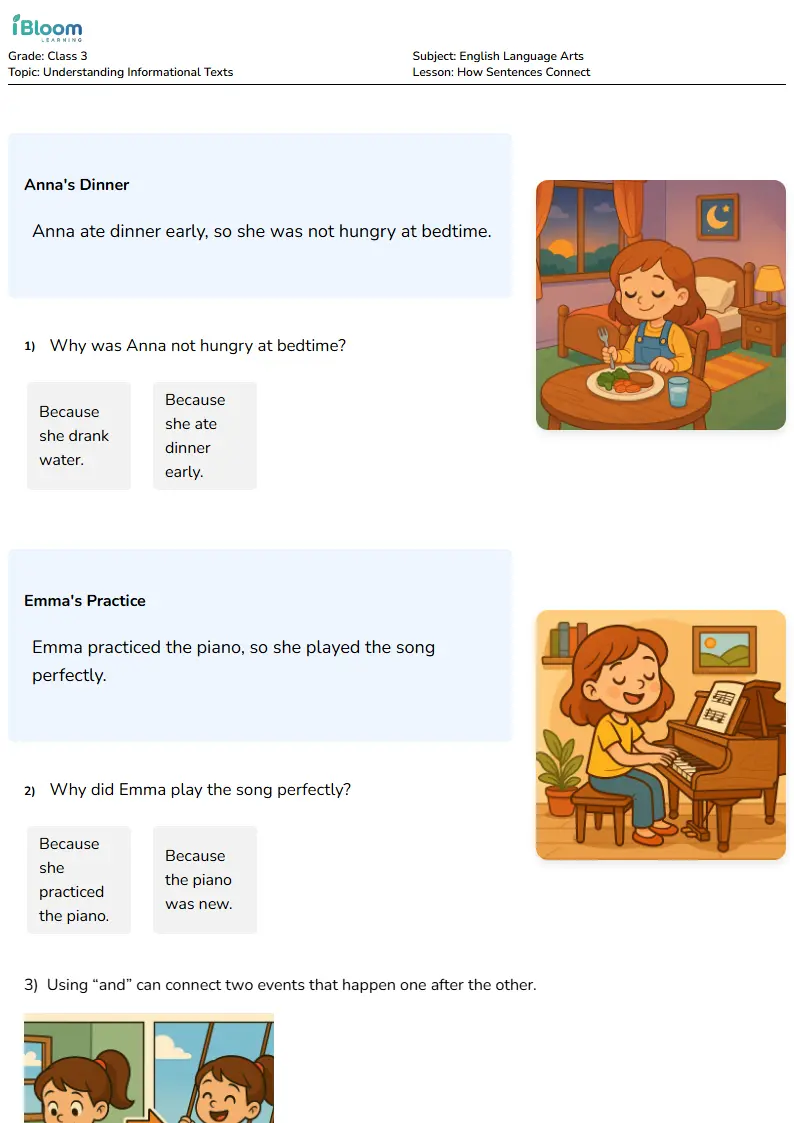
Free How Sentences Connect Worksheets for Class 3
Looking for class 3 english language arts help? Download free, interactive how sentences connect worksheets. AI-personalized and Common Core-aligned. Practice early literacy with iBloom.
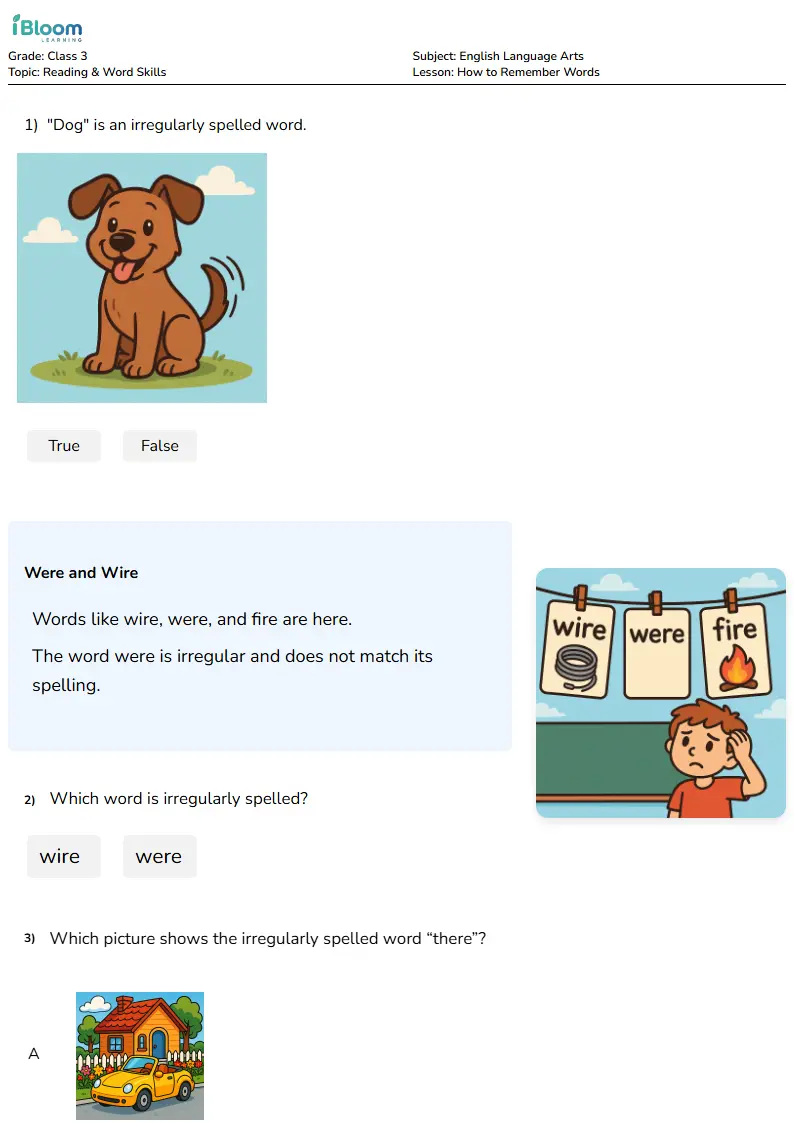
Free How to Remember Words Worksheets for Class 3
Looking for class 3 english language arts help? Download free, interactive how to remember words worksheets. AI-personalized and Common Core-aligned. Practice early literacy with iBloom.