Subtract Two Digit Numbers (With Borrow) worksheet for Class 3

Lesson-Wise Builder
A premium AI tool that creates syllabus-aligned questions and worksheets for any lesson in seconds.
Two-digit subtraction with borrowing becomes easier to understand when a child sees it as a place-value exchange. In a problem such as 65 - 49, five ones cannot be used to remove nine ones. One of the six tens is therefore exchanged for ten ones. The number 65 is renamed as five tens and fifteen ones without changing its value. This page focuses on that reasoning, the order of the column steps, and ways to check a difference rather than relying on a crossed-out digit alone.
A place-value method for borrowing
Write the numbers in columns so that ones are under ones and tens are under tens. Begin with the ones column. If the top ones digit is at least as large as the bottom ones digit, subtract normally. If it is smaller, exchange one ten from the top number for ten ones. Reduce the top tens digit by one and add ten to its ones digit. Then subtract the ones and, finally, the tens.
Say what changes and what stays equal
For 65, an exchange changes six tens and five ones into five tens and fifteen ones. Both forms still represent 65. Language such as “rename,” “regroup,” or “exchange” keeps the focus on place value. The familiar word “borrowing” can still be used, but the child should be able to explain where the extra ten ones came from.
- Align the tens and ones.
- Compare the digits in the ones column.
- Exchange one ten only when the top ones digit is too small.
- Subtract the ones, then subtract the remaining tens.
- Check that the difference is sensible.
Worked examples from the activity
Example: 65 - 49
Exchange one ten from 65, giving five tens and fifteen ones. In the ones column, 15 - 9 = 6. In the tens column, 5 - 4 = 1. The difference is 16. Check by adding: 49 + 16 = 65.
Example: 91 - 57
Rename 91 as eight tens and eleven ones. Subtract 7 from 11 to get 4, then subtract 5 tens from 8 tens to get 3 tens. The difference is 34. An estimate also supports it: 90 - 60 is about 30, so 34 is reasonable.
Example: 81 - 46
Rename 81 as seven tens and eleven ones. The ones difference is 11 - 6 = 5, and the tens difference is 7 - 4 = 3. The answer is 35. Adding 46 and 35 returns 81.
How to reason through the worksheet activity
The verified activity image asks children to find a difference and, for the visible questions, compare several nearby choices. A child should calculate before looking for a matching choice. Nearby options can reflect one missed exchange, an incorrect tens digit, or a small fact error. Ask the child to point to the ones column, describe the exchange, and explain why the selected difference fits.
For the first visible item, the choices include 16, 17, 15, and 18. The calculation establishes 16; the child is not expected to infer it from the pattern of choices. The same principle applies to 91 - 57 and 81 - 46. A spoken explanation provides stronger evidence of understanding than a choice alone.
Common mistakes and useful responses
- Reversing the ones subtraction: A child may do 9 - 5 because nine is larger. Return to the meaning of 65 - 49 and show why the order cannot change.
- Keeping the original tens digit: After exchanging one ten, six tens become five. Mark the exchange clearly and have the child say the new place-value form.
- Misaligning the numbers: Use a simple tens-and-ones chart so each digit keeps its place.
- Changing the bottom number: Only the top number is renamed. The amount being subtracted remains unchanged.
- Choosing before calculating: Cover the choices briefly, solve, and then compare.
Three ways to check a difference
First, use inverse addition: add the difference to the number subtracted. Second, estimate with nearby tens. Third, revisit the place-value exchange and confirm that the renamed top number has the same value as before. These checks catch different errors. Addition tests the exact result, estimation tests its size, and place-value review tests the method.
For 72 - 38, for example, the exact difference is 34. The inverse check is 38 + 34 = 72, while the estimate 70 - 40 is about 30. Both support the result.
Guidance for parents
Keep practice short enough for the child to explain each step. Bundled straws, sticks, or a drawn tens-and-ones chart can make an exchange visible. Instead of saying “borrow from next door,” ask, “Can we remove eight ones from two ones? What can one ten become?” Wait for the child to describe ten ones before recording the change.
If an answer is wrong, identify the exact column where the reasoning changed. One corrected example with a clear explanation is more useful than a long set completed by guessing. Celebrate accurate checking as well as a correct final difference.
Guidance and practice ideas for teachers
Begin with one example that does not need regrouping and one that does. Ask pupils to sort the pair and justify which requires an exchange. During the activity, listen for place-value language and note whether a pupil reduces the tens digit consistently. A wrong option can become a discussion prompt: “What step might produce this number?”
- Model an exchange with six tens and five ones before solving 65 - 49.
- Have partners compare a column method with a place-value drawing.
- Use a missing step, such as 15 - 9 = __, before completing the whole problem.
- Finish with one new example and an inverse-addition check.
Related concepts to strengthen
Secure tens-and-ones knowledge is the main prerequisite. Subtraction without regrouping helps establish column alignment, while addition provides the inverse check. Estimating differences develops number sense. Once a child can explain one exchange in two-digit subtraction, the same place-value idea can later support problems with more digits; the notation grows, but the exchange remains based on ten units in one place equalling one unit in the next place.
Continue with related iBloom practice
- review two-digit subtraction without borrowing: Lets learners secure place-value subtraction before regrouping a ten.
- extend borrowing to three-digit subtraction: Applies the same regrouping idea to hundreds, tens, and ones.
Useful questions and answers
Are borrowing and regrouping different?
They usually describe the same written step here. “Regrouping” or “exchanging” explains that one ten becomes ten ones, which makes the place-value meaning clearer.
When is an exchange needed?
It is needed when the top digit in a column is smaller than the digit being subtracted in that same column.
Should a child start with the tens column?
For this column method, begin with the ones. That reveals whether a ten must be exchanged before the tens are subtracted.
How can understanding be checked?
Ask the child to rename the top number, explain each changed digit, solve, and verify with addition. A correct explanation is stronger evidence than the final answer alone.
What if the exchange is still confusing?
Return to physical tens and ones, use smaller examples across a ten, and remove the written shorthand until the child can show why the value stays equal.
More practice for this grade
More Math worksheets
.webp)
Free Add Three-digit Numbers (With Carry) Worksheets for Class 3
Looking for class 3 math help? Download free, interactive add three-digit numbers (with carry) worksheets. AI-personalized and Common Core-aligned. Practice math with iBloom.
.webp)
Free Add Three-digit Numbers (Without Carry) Worksheets for Class 3
Looking for class 3 math help? Download free, interactive add three-digit numbers (without carry) worksheets. AI-personalized and Common Core-aligned. Practice math with iBloom.
.webp)
Free Add Two-digit Numbers (With Carry) Worksheets for Class 3
Looking for class 3 math help? Download free, interactive add two-digit numbers (with carry) worksheets. AI-personalized and Common Core-aligned. Practice math with iBloom.
.webp)
Free Add Two-digit Numbers (Without Carry) Worksheets for Class 3
Looking for class 3 math help? Download free, interactive add two-digit numbers (without carry) worksheets. AI-personalized and Common Core-aligned. Practice math with iBloom.
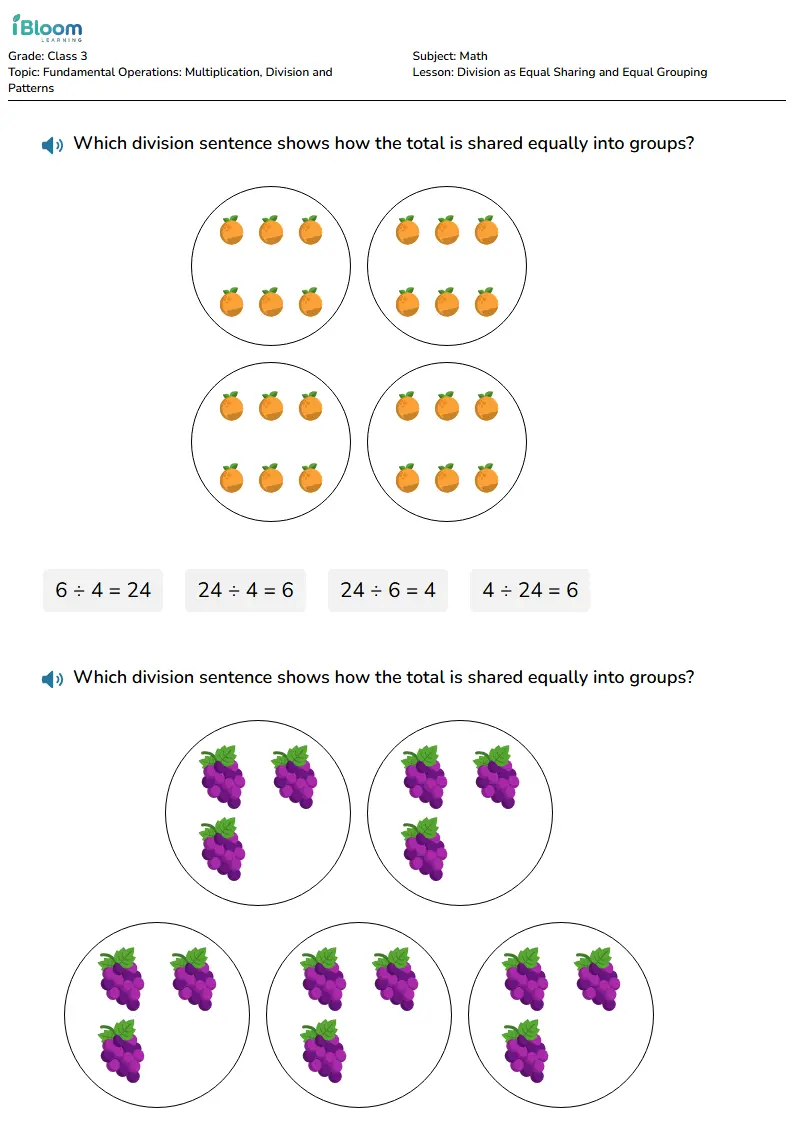
Free Division as Equal Sharing and Equal Grouping Worksheets for Class 3
Looking for class 3 math help? Download free, interactive division as equal sharing and equal grouping worksheets. AI-personalized and Common Core-aligned. Practice math with iBloom.
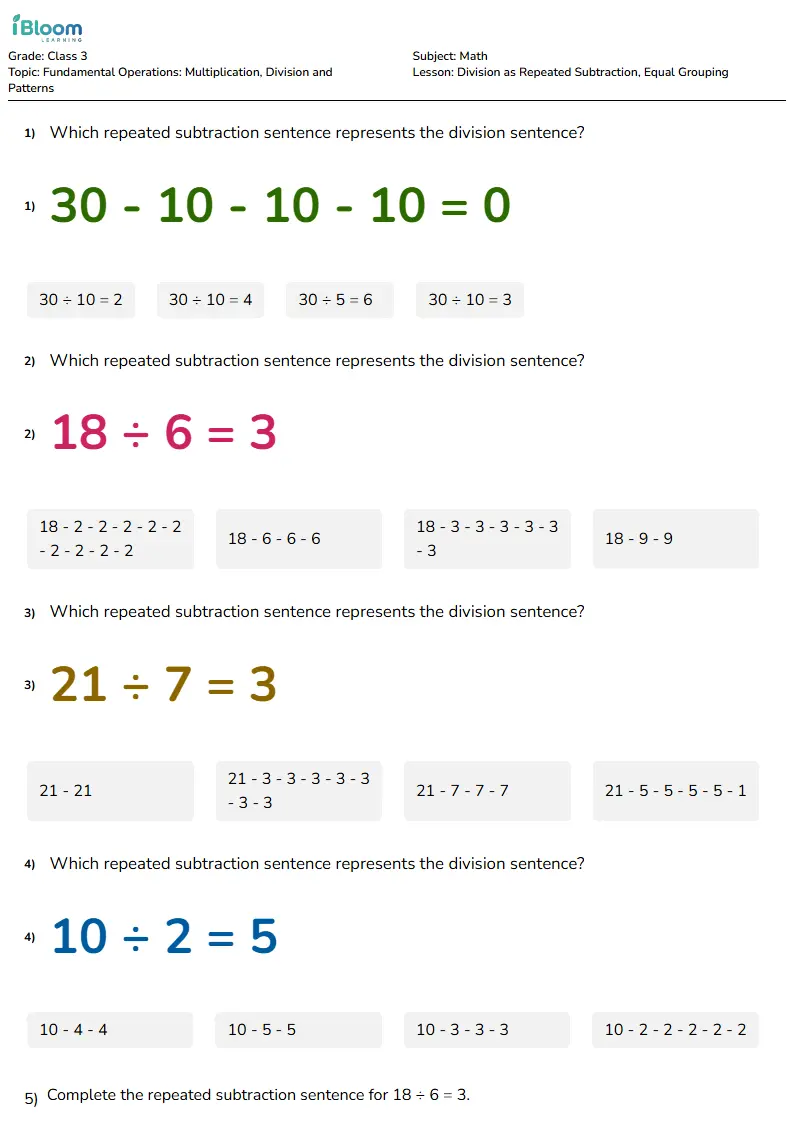
Free Division as Repeated Subtraction, Equal Grouping Worksheets for Class 3
Looking for class 3 math help? Download free, interactive division as repeated subtraction, equal grouping worksheets. AI-personalized and Common Core-aligned. Practice math with iBloom.
.webp)
Free Finding Missing Numbers in Multiplication (2,3) Worksheets for Class 3
Looking for class 3 math help? Download free, interactive finding missing numbers in multiplication (2,3) worksheets. AI-personalized and Common Core-aligned. Practice math with iBloom.
.webp)
Missing Factors in Multiplication | Class 3
Build Class 3 fluency in finding missing factors with 4 and 5 facts through inverse thinking, worked equations, checks, and guided practice.
.webp)
Free Finding Missing Numbers in Multiplication (6,7) Worksheets for Class 3
Looking for class 3 math help? Download free, interactive finding missing numbers in multiplication (6,7) worksheets. AI-personalized and Common Core-aligned. Practice math with iBloom.
.webp)
Free Finding Missing Numbers in Multiplication (8,9) Worksheets for Class 3
Looking for class 3 math help? Download free, interactive finding missing numbers in multiplication (8,9) worksheets. AI-personalized and Common Core-aligned. Practice math with iBloom.
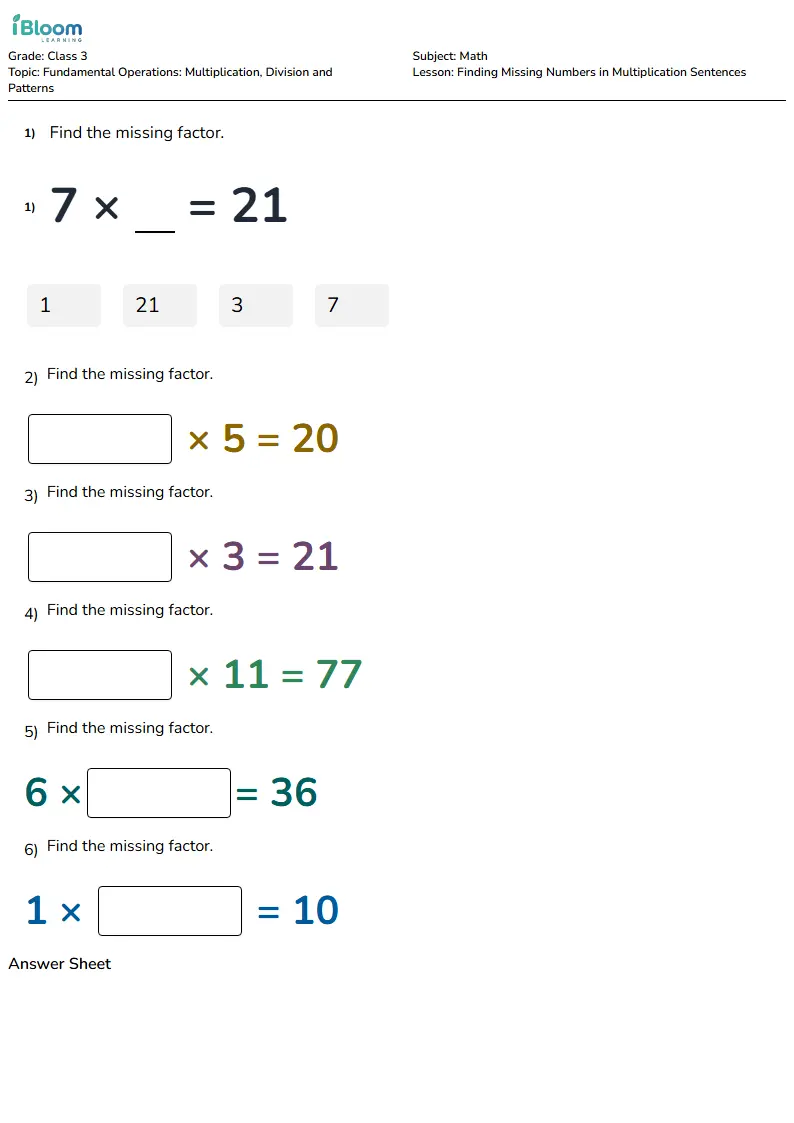
Free Finding Missing Numbers in Multiplication Sentences Worksheets for Class 3
Looking for class 3 math help? Download free, interactive finding missing numbers in multiplication sentences worksheets. AI-personalized and Common Core-aligned. Practice math with iBloom.
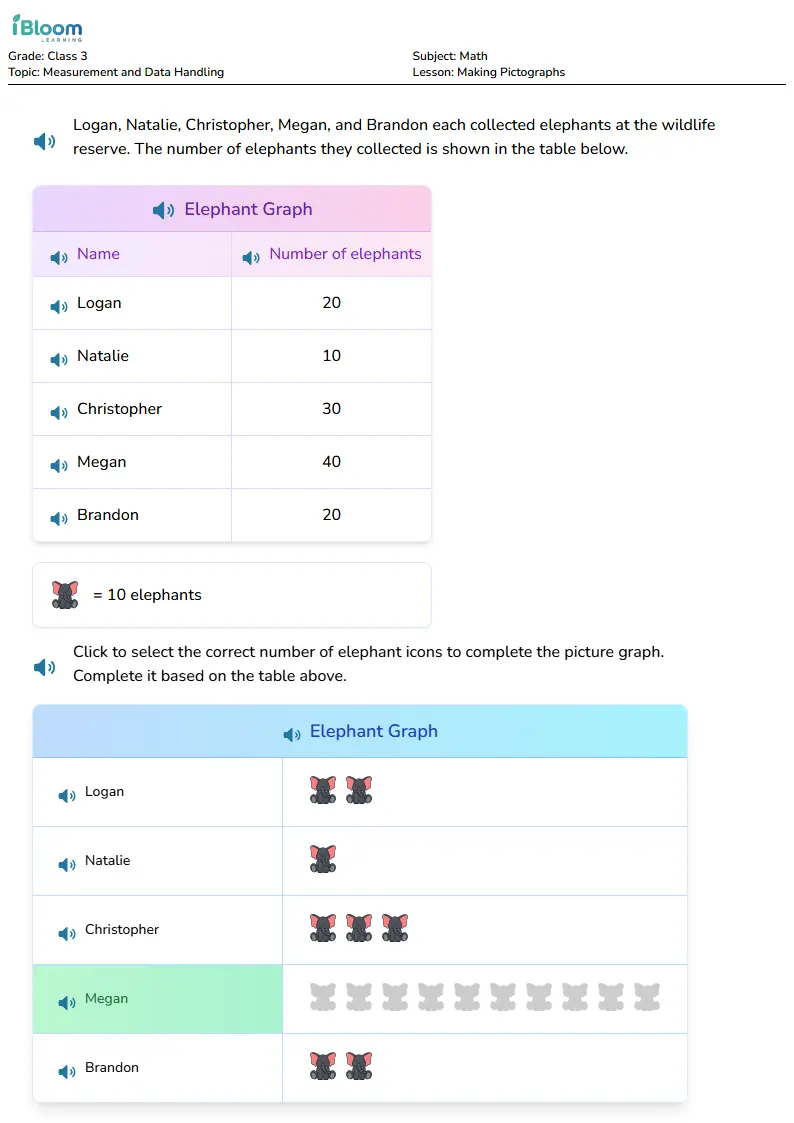
Free Making Pictographs Worksheets for Class 3
Looking for class 3 math help? Download free, interactive making pictographs worksheets. AI-personalized and Common Core-aligned. Practice math with iBloom.
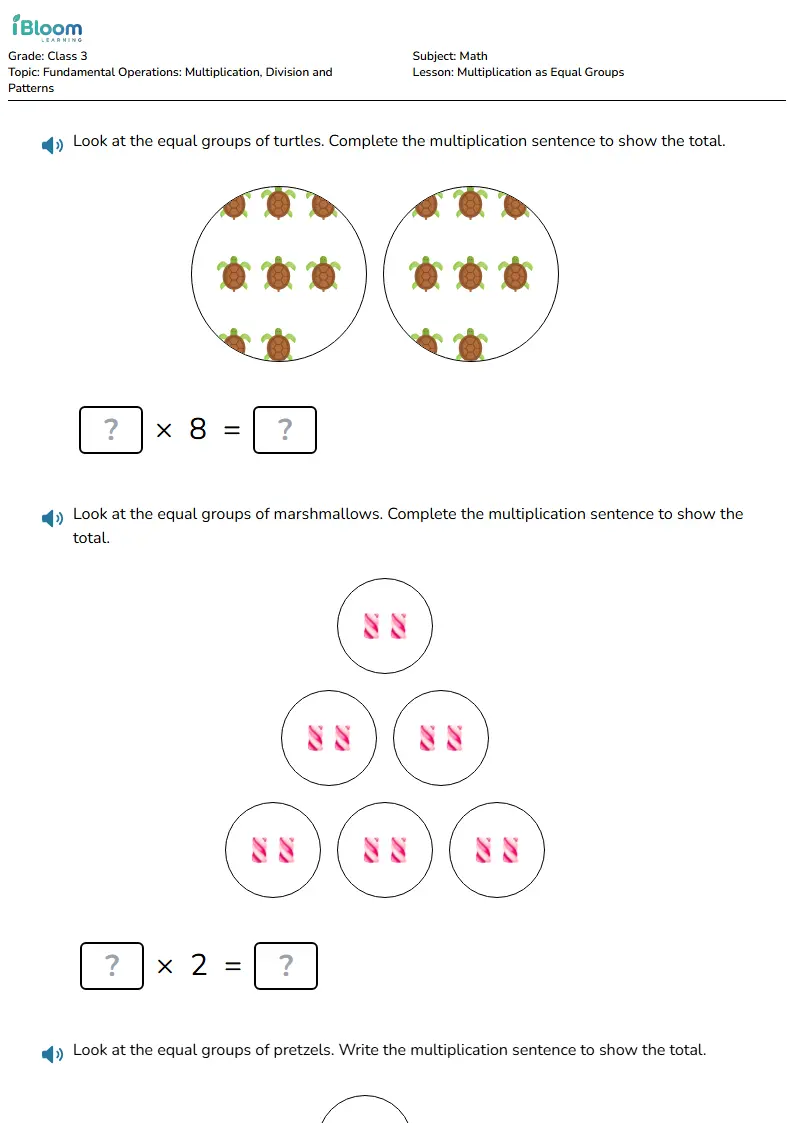
Free Multiplication as Equal Groups Worksheets for Class 3
Looking for class 3 math help? Download free, interactive multiplication as equal groups worksheets. AI-personalized and Common Core-aligned. Practice math with iBloom.
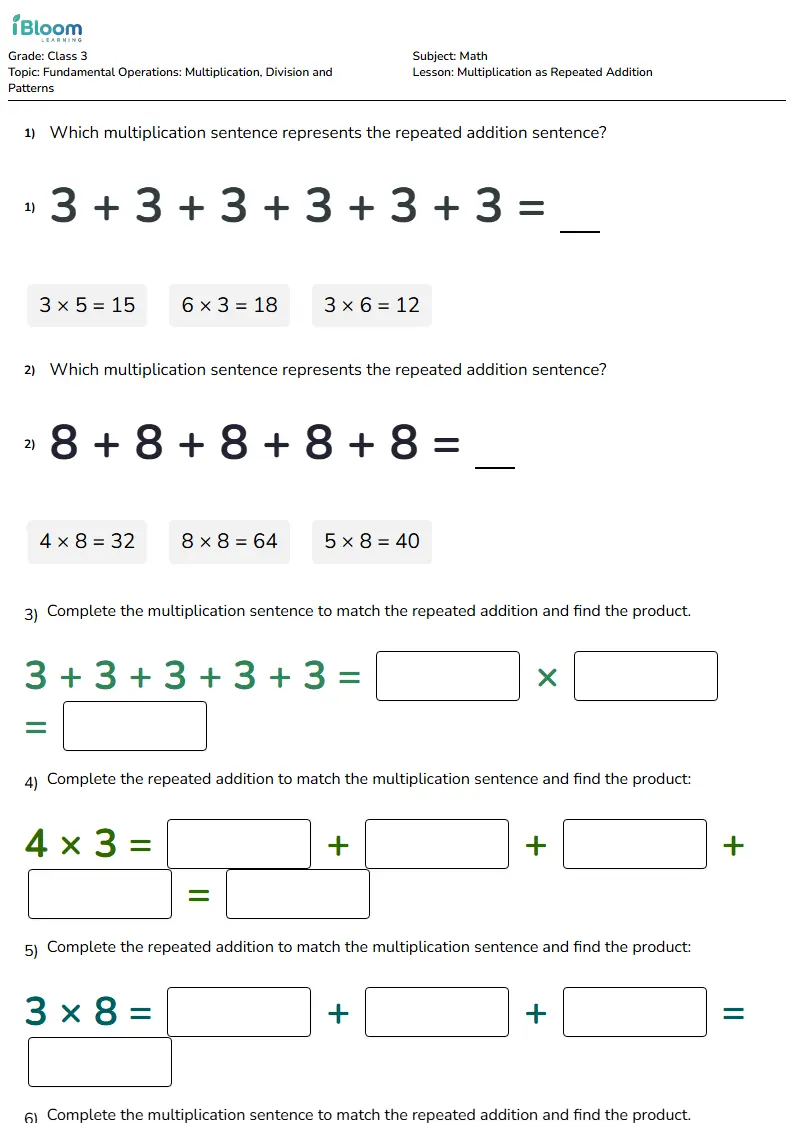
Free Multiplication as Repeated Addition Worksheets for Class 3
Looking for class 3 math help? Download free, interactive multiplication as repeated addition worksheets. AI-personalized and Common Core-aligned. Practice math with iBloom.
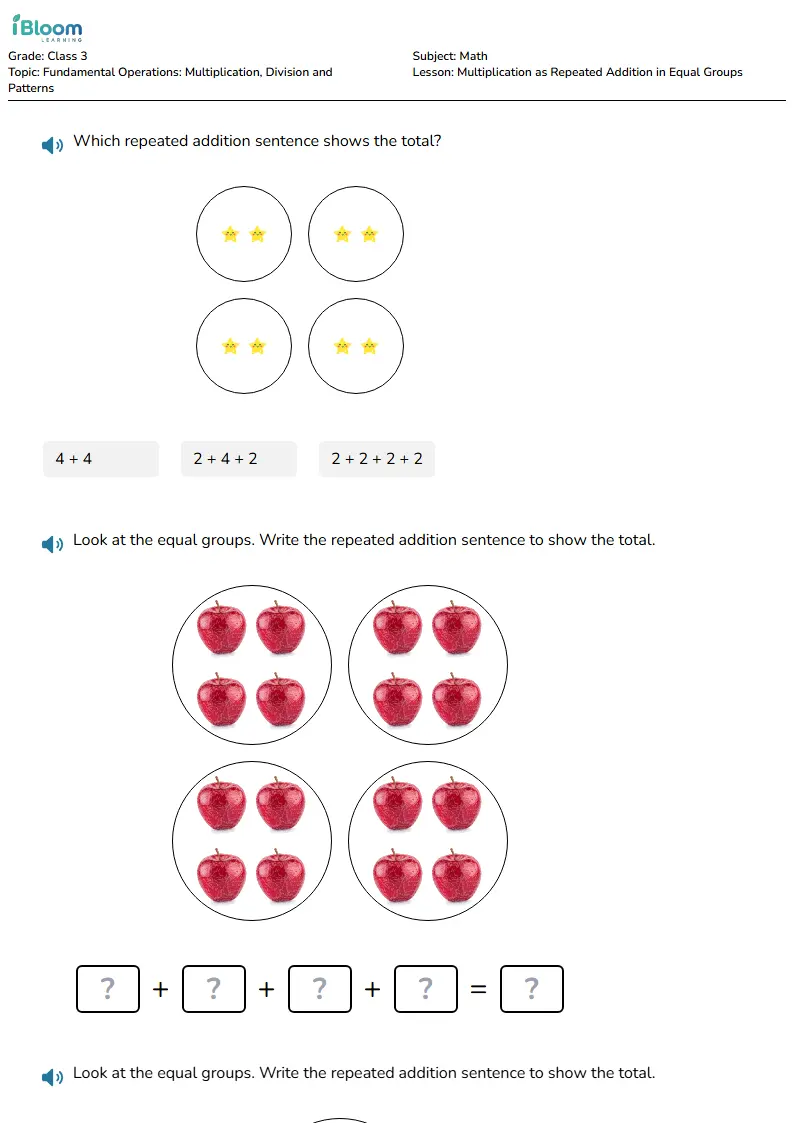
Free Multiplication as Repeated Addition in Equal Groups Worksheets for Class 3
Looking for class 3 math help? Download free, interactive multiplication as repeated addition in equal groups worksheets. AI-personalized and Common Core-aligned. Practice math with iBloom.
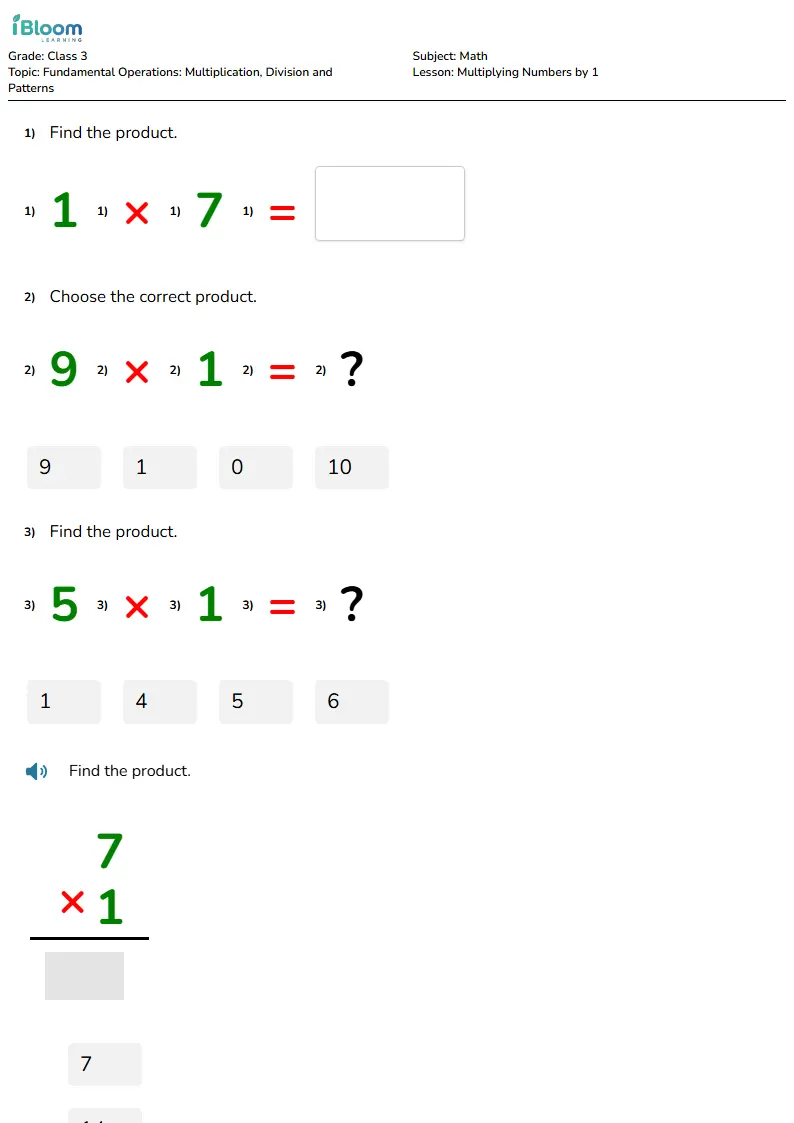
Free Multiplying Numbers by 1 Worksheets for Class 3
Looking for class 3 math help? Download free, interactive multiplying numbers by 1 worksheets. AI-personalized and Common Core-aligned. Practice math with iBloom.
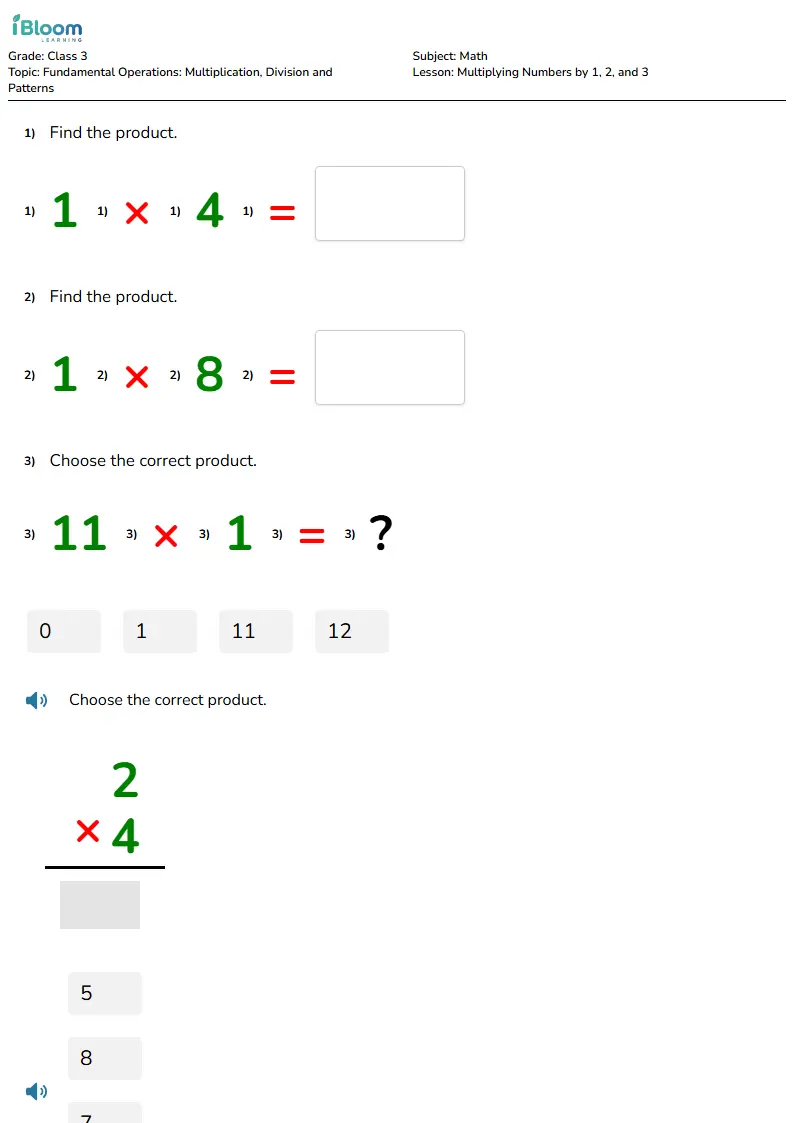
Free Multiplying Numbers by 1, 2, and 3 Worksheets for Class 3
Looking for class 3 math help? Download free, interactive multiplying numbers by 1, 2, and 3 worksheets. AI-personalized and Common Core-aligned. Practice math with iBloom.
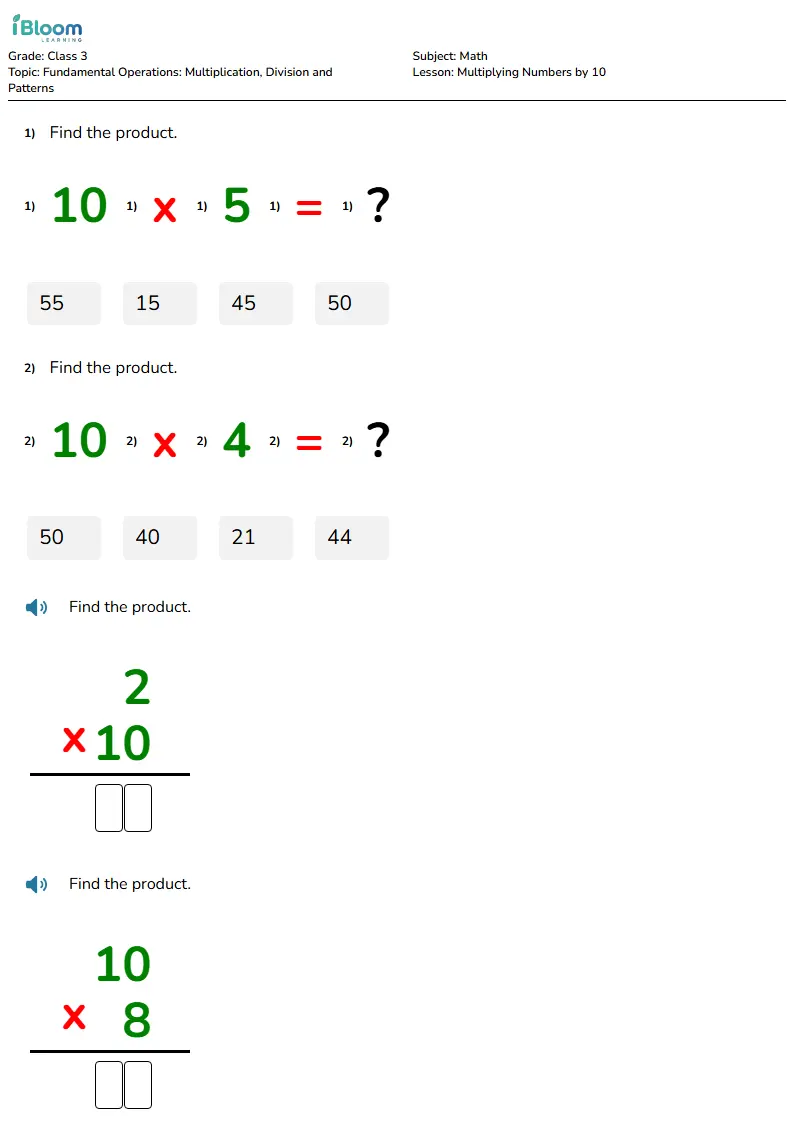
Free Multiplying Numbers by 10 Worksheets for Class 3
Looking for class 3 math help? Download free, interactive multiplying numbers by 10 worksheets. AI-personalized and Common Core-aligned. Practice math with iBloom.
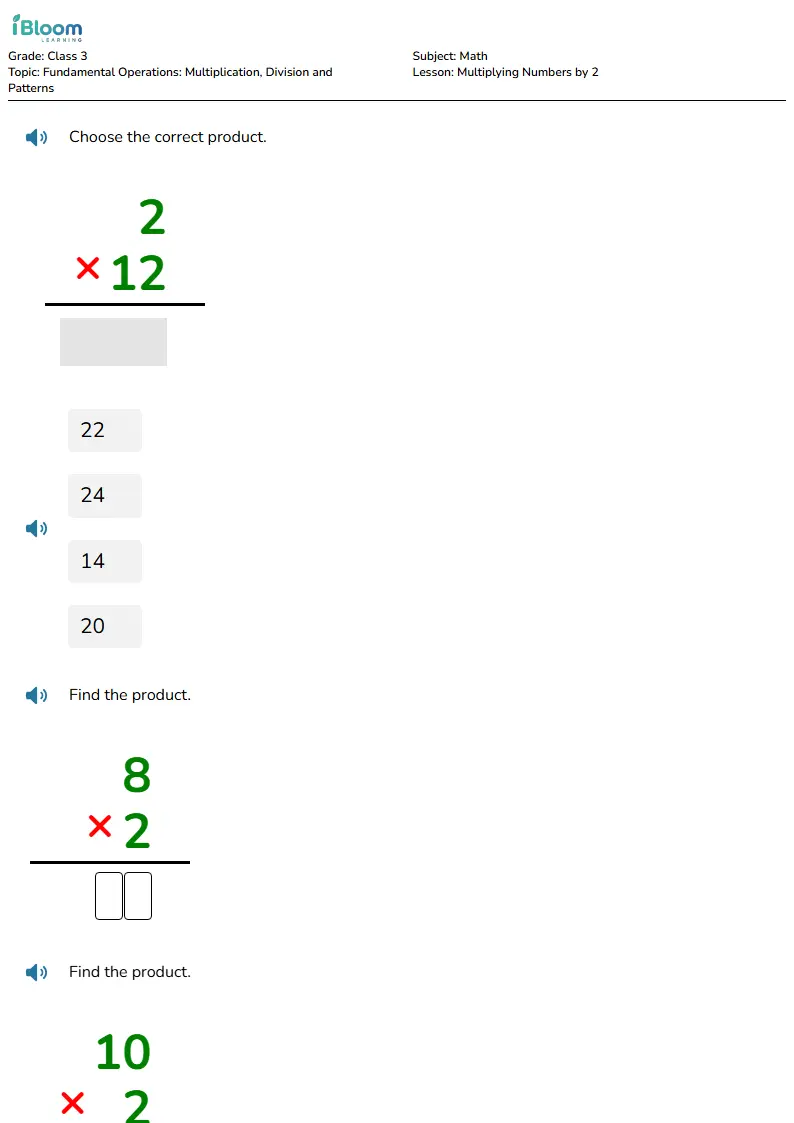
Free Multiplying Numbers by 2 Worksheets for Class 3
Looking for class 3 math help? Download free, interactive multiplying numbers by 2 worksheets. AI-personalized and Common Core-aligned. Practice math with iBloom.
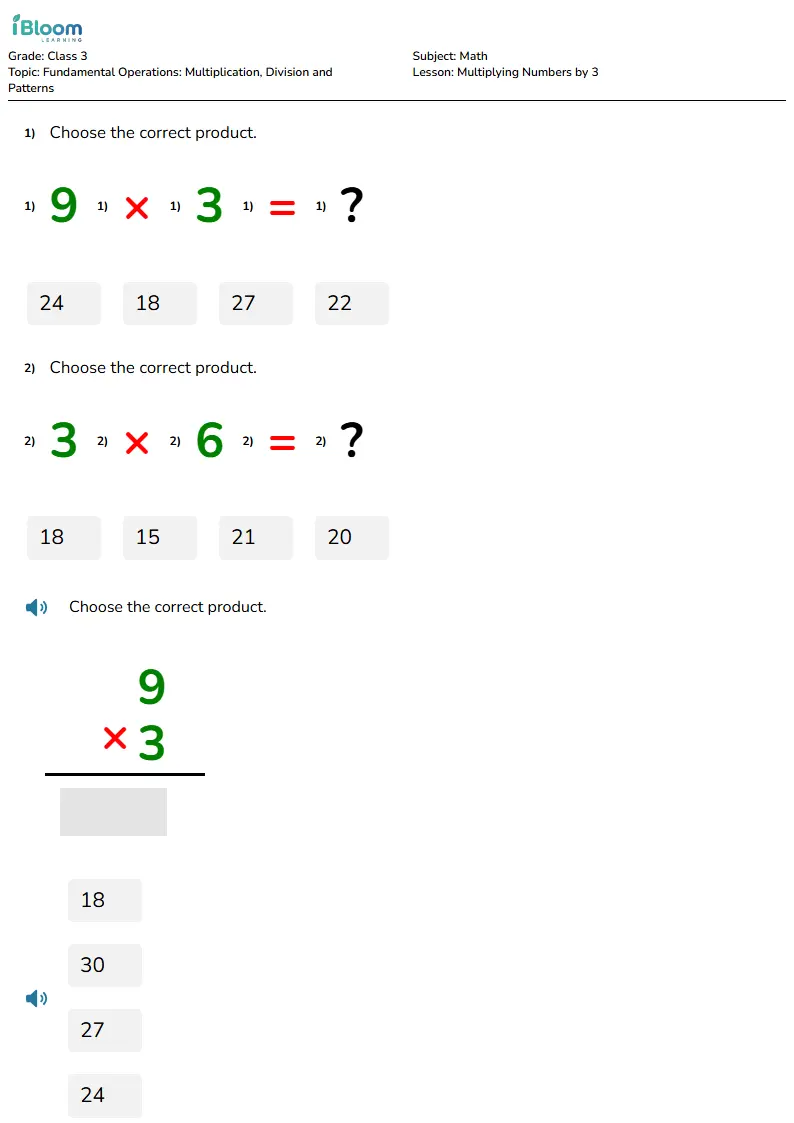
Free Multiplying Numbers by 3 Worksheets for Class 3
Looking for class 3 math help? Download free, interactive multiplying numbers by 3 worksheets. AI-personalized and Common Core-aligned. Practice math with iBloom.
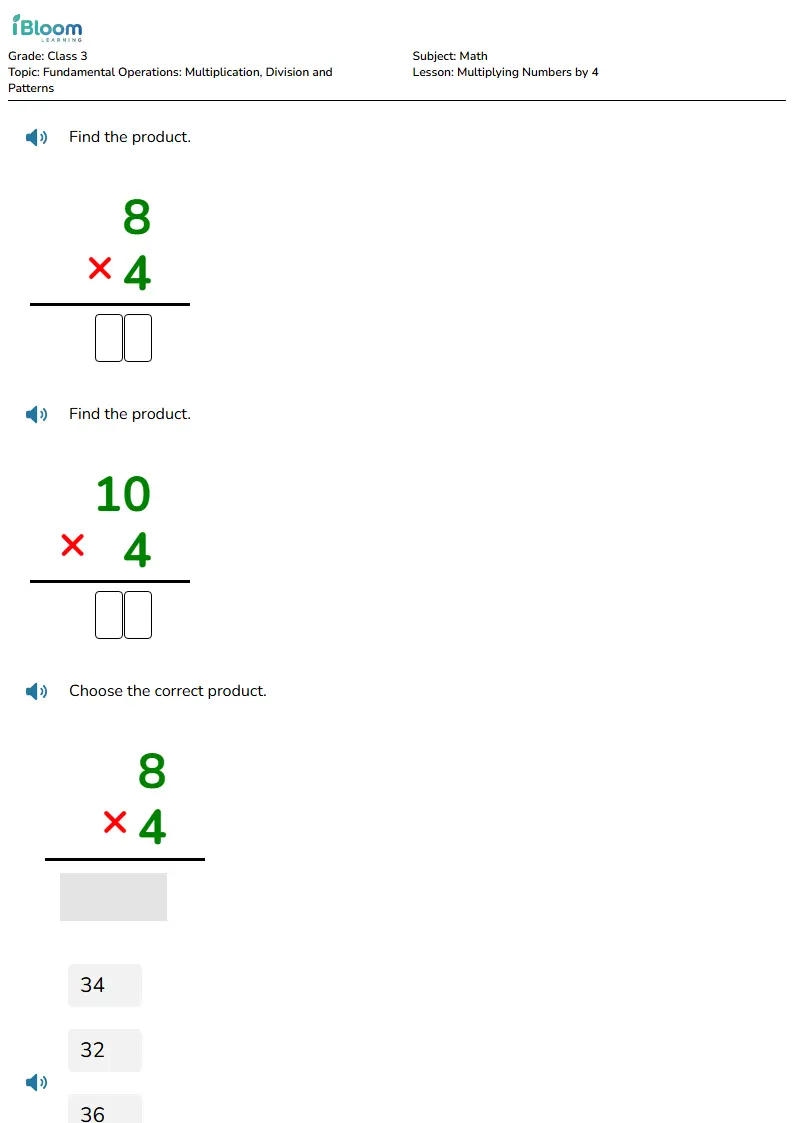
Free Multiplying Numbers by 4 Worksheets for Class 3
Looking for class 3 math help? Download free, interactive multiplying numbers by 4 worksheets. AI-personalized and Common Core-aligned. Practice math with iBloom.
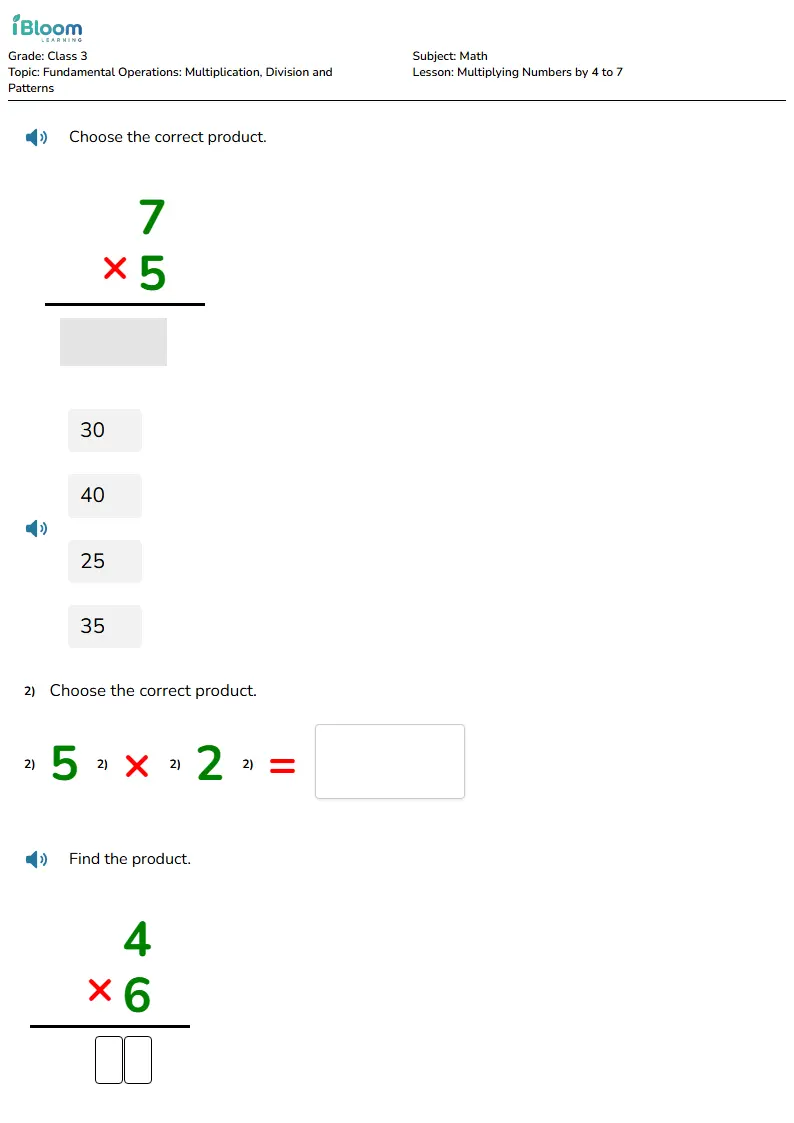
Free Multiplying Numbers by 4 to 7 Worksheets for Class 3
Looking for class 3 math help? Download free, interactive multiplying numbers by 4 to 7 worksheets. AI-personalized and Common Core-aligned. Practice math with iBloom.
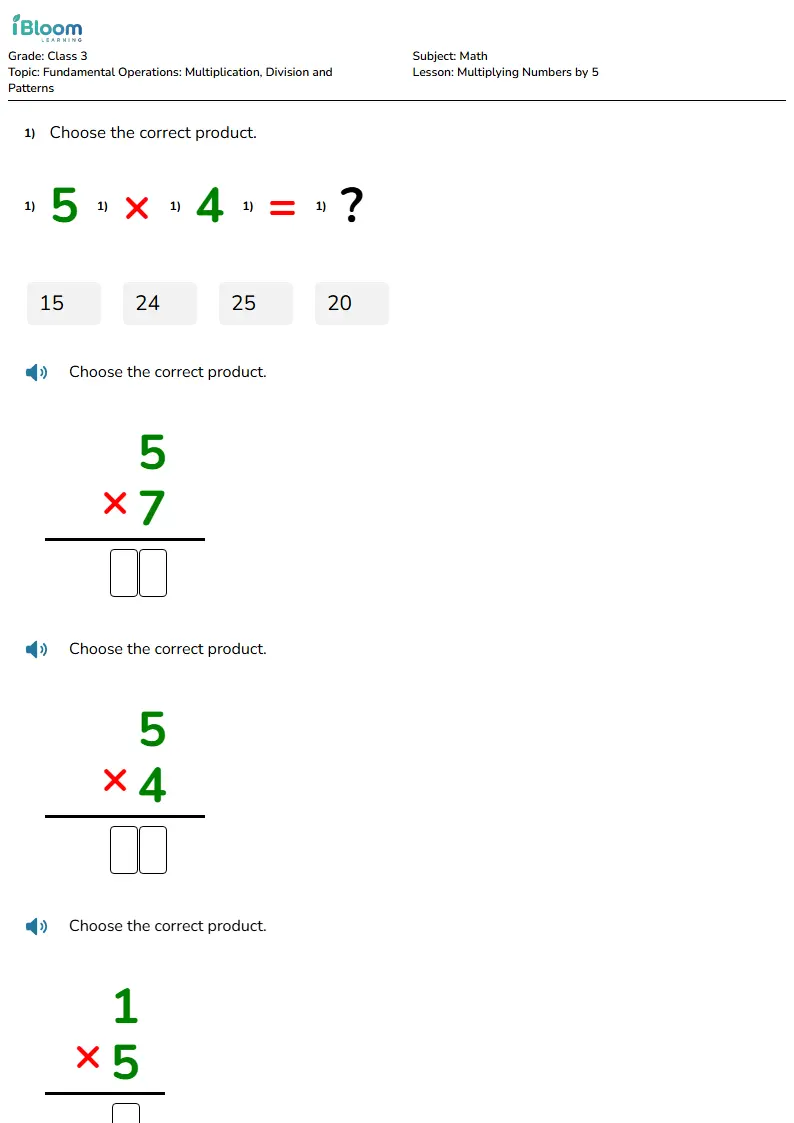
Free Multiplying Numbers by 5 Worksheets for Class 3
Looking for class 3 math help? Download free, interactive multiplying numbers by 5 worksheets. AI-personalized and Common Core-aligned. Practice math with iBloom.
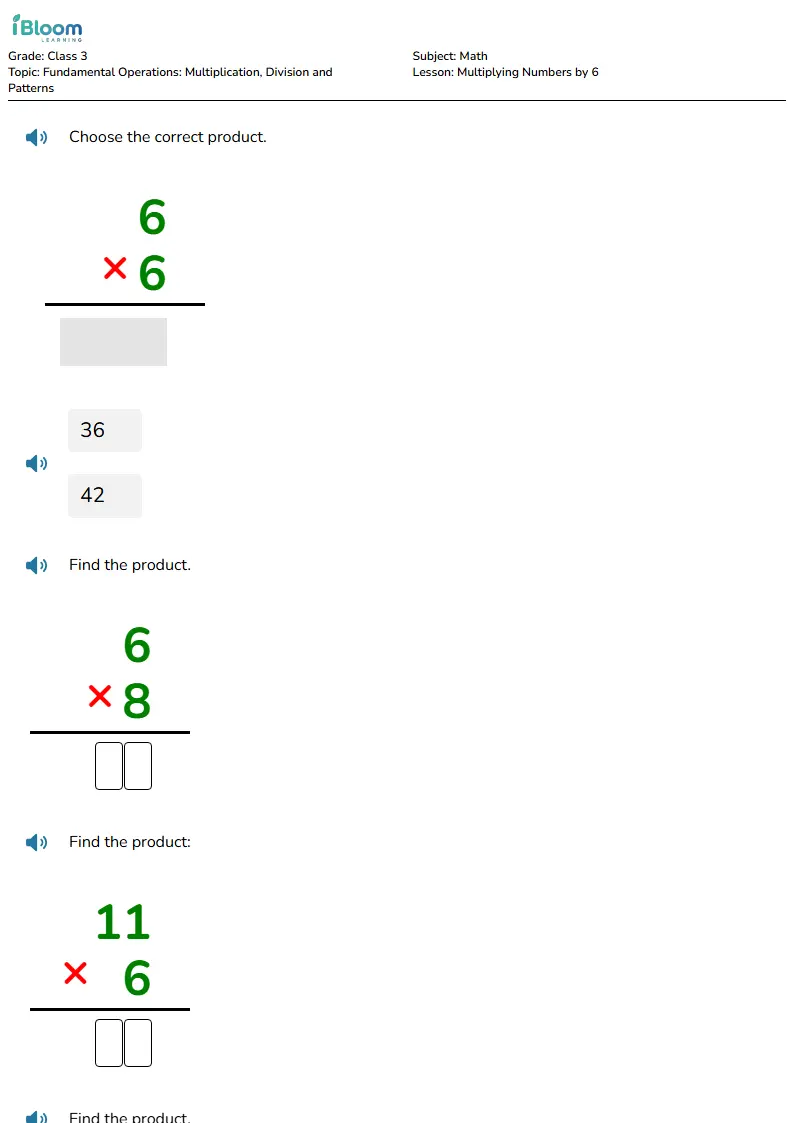
Free Multiplying Numbers by 6 Worksheets for Class 3
Looking for class 3 math help? Download free, interactive multiplying numbers by 6 worksheets. AI-personalized and Common Core-aligned. Practice math with iBloom.