Supporting My Opinion worksheet for Class 5

Lesson-Wise Builder
A premium AI tool that creates syllabus-aligned questions and worksheets for any lesson in seconds.
A supporting an opinion worksheet helps a Class 5 learner decide whether a reason truly strengthens a viewpoint. In this activity, the reader studies a short passage, compares possible supporting reasons, and identifies the weakest choice by checking relevance, specificity, and its connection to the main claim.
What the activity is testing
An opinion becomes convincing when its reasons answer “Why should someone agree?” and its evidence shows that those reasons are grounded in the passage. A sentence can be true, interesting, or strongly worded and still be weak support if it does not advance the viewpoint.
The visible tasks are primarily about evaluating reasons in context. They prepare learners for opinion writing, but they do not require a full persuasive essay. The important habit is to separate the claim, each reason, and the evidence that connects them.
Separate the claim, reason, and evidence
- Claim or viewpoint: the position being supported.
- Reason: an explanation of why the claim makes sense.
- Evidence: a fact, example, observation, or passage detail that makes the reason credible.
- Reasoning: the sentence that explains how the evidence supports the claim.
For example, “Gardening can be a useful STEM activity” is a claim. “Students can use sensors to monitor soil moisture” is a relevant reason because it names a practical use of technology. The sensor detail is evidence of STEM integration, and the learner can explain that measuring soil moisture connects science, data, and a real garden decision.
Four tests for a useful supporting reason
1. Relevance
Does the reason address the exact claim? A detail about gardening may still be irrelevant if the claim is specifically about technology or career learning.
2. Specificity
Does the reason name a concrete fact or example? “It is good” is vague. “Sensors measure soil moisture” gives the reader something definite to evaluate.
3. Logical connection
Can the learner complete the sentence “This supports the claim because…”? If the connection cannot be explained, the reason may merely sit beside the topic.
4. Direction
Does the reason support, contradict, or distract from the viewpoint? A complaint can be relevant to the topic while working against the positive claim.
Worked example: gardening with technology
The STEM Integration passage says students can use sensors to monitor soil moisture, record data in spreadsheets, and write code for automated watering systems. It presents gardening with technology as a STEM activity that develops coding and data skills. It also mentions one student’s complaint that the work feels excessive.
Why several choices are relevant
Monitoring soil moisture directly connects a sensor to a science observation. Recording data in spreadsheets connects the garden project to organising and interpreting information. Coding an automated watering system connects programming to a real task. Each detail develops the positive claim about STEM integration, although some are more complete than others.
Why the complaint is the weakest support
“Some think it feels like too much work” does not support the claim that technology makes gardening a valuable or enjoyable STEM activity. It introduces an objection. The sentence may matter in a balanced discussion, but when the question asks for the weakest supporting reason, its direction is opposite to the claim.
This is a useful distinction: an opposing detail is not automatically false or unimportant. It is simply not supporting evidence for that particular viewpoint.
A second passage: career exploration
The visible Career Exploration passage says gardening can introduce students to botany, landscaping, and environmental science. It mentions horticulturists sharing real-world experience and says participation can add experience relevant to future college or job resumes. The question below this passage is cropped from the supplied image, so no unseen prompt or answer should be assumed.
The passage can still be used to practise reasoning. Named careers are specific examples. A guest speaker is a concrete way to connect learners with real-world knowledge. A general statement about future benefits should be checked against the exact claim before it is ranked. The best evidence depends on whether the viewpoint concerns career awareness, expert insight, skill development, or another focus.
A compact decision routine
- Underline the claim. State the viewpoint in simple words.
- Circle each reason. Keep reasons separate from examples or background details.
- Ask “Why does this support the claim?” Write or say the connection.
- Cross out contradictions and side points. They may belong in another discussion but not as support here.
- Compare what remains. Prefer the reason that is relevant, specific, and backed by passage evidence.
- Explain the choice. Identify both why the selected reason is strong or weak and how another option compares.
How to explain the choice
A complete explanation need not be long. Useful sentence frames include:
- “This reason is strong because it directly shows ___.”
- “The passage supports this reason with the detail ___.”
- “This is the weakest reason because it does not show ___.”
- “That detail is related to the topic, but it does not support the viewpoint because ___.”
- “Compared with ___, this reason is more specific because ___.”
Sentence frames should organise thought, not replace it. The blank must contain a genuine claim-evidence connection.
Home discussion that builds reasoning
Parents can practise with ordinary choices: selecting a book, planning a family activity, or deciding how to care for a plant. Ask the child to give two reasons, then compare them. “Because I want it” states a preference; “because everyone can take part and we already have the materials” provides relevant support.
- Ask, “What is the exact opinion?” before discussing whether it is right.
- Request one passage detail rather than accepting a repeated claim.
- Invite respectful disagreement and require a reason on both sides.
- Help the child replace vague words such as nice or good with a precise outcome.
- When a reason is weak, revise it together instead of simply discarding the opinion.
Teacher and tutor use
Use the activity for a think-aloud on relevance, a small-group reason sort, or a short formative check. Colour coding can make the structure visible: one colour for the claim, another for reasons, and a third for supporting details. Partners can rank reasons and defend the order with text evidence.
Assess reasoning separately from spelling. A learner who chooses correctly but cannot explain the link needs modelling. A learner who writes fluently but uses unrelated evidence needs a relevance check. Remove sentence frames gradually once the child can name the claim, reason, evidence, and connection independently.
Common mistakes
- Choosing the longest option: length does not guarantee relevance or strength.
- Repeating the claim as a reason: ask what new explanation the sentence adds.
- Using a topic detail as evidence: test whether it actually answers why the claim should be accepted.
- Confusing emotion with proof: feelings can explain a viewpoint but may need facts or examples to make the case stronger.
- Ignoring a contradiction: check whether the detail points in the same direction as the claim.
- Picking a true but vague statement: prefer specific evidence that the passage can support.
- Writing only “I agree”: add a reason, evidence, and one sentence explaining the connection.
Independent practice ideas
- Sort six sentences into claim, supporting reason, evidence, objection, and unrelated detail.
- Replace one vague reason with a specific reason drawn from a short passage.
- Rank three reasons and explain why the first is more useful than the third.
- Write one sentence that connects a fact to an opinion using because or therefore.
- Take an opposing detail and explain how it could be used in a balanced response without calling it supporting evidence.
Related concepts
Supporting an opinion connects with distinguishing fact from opinion, identifying claims, selecting relevant evidence, adding facts and examples, using linking words, organising opinion writing, and understanding arguments. The next step is a short paragraph that states a viewpoint, leads with the strongest reason, includes specific evidence, and explains the connection clearly.
Frequently asked questions
Can a reason be related to the topic but still be weak?
Yes. Relevance to the broad topic is not enough. The reason must support the exact claim and make the viewpoint easier to accept.
Is an opposing point always irrelevant?
No. It may be important in a balanced discussion or rebuttal. It is not supporting evidence when it works against the claim named in the question.
How many reasons should a Class 5 response include?
For a short response, one well-explained reason with evidence may be stronger than several vague reasons. Follow the task directions and prioritise quality of support.
What should a learner do after choosing an answer?
Explain the claim-reason connection and compare it with one weaker option. That explanation demonstrates the reasoning behind the choice.
More practice for this grade
More English Language Arts worksheets
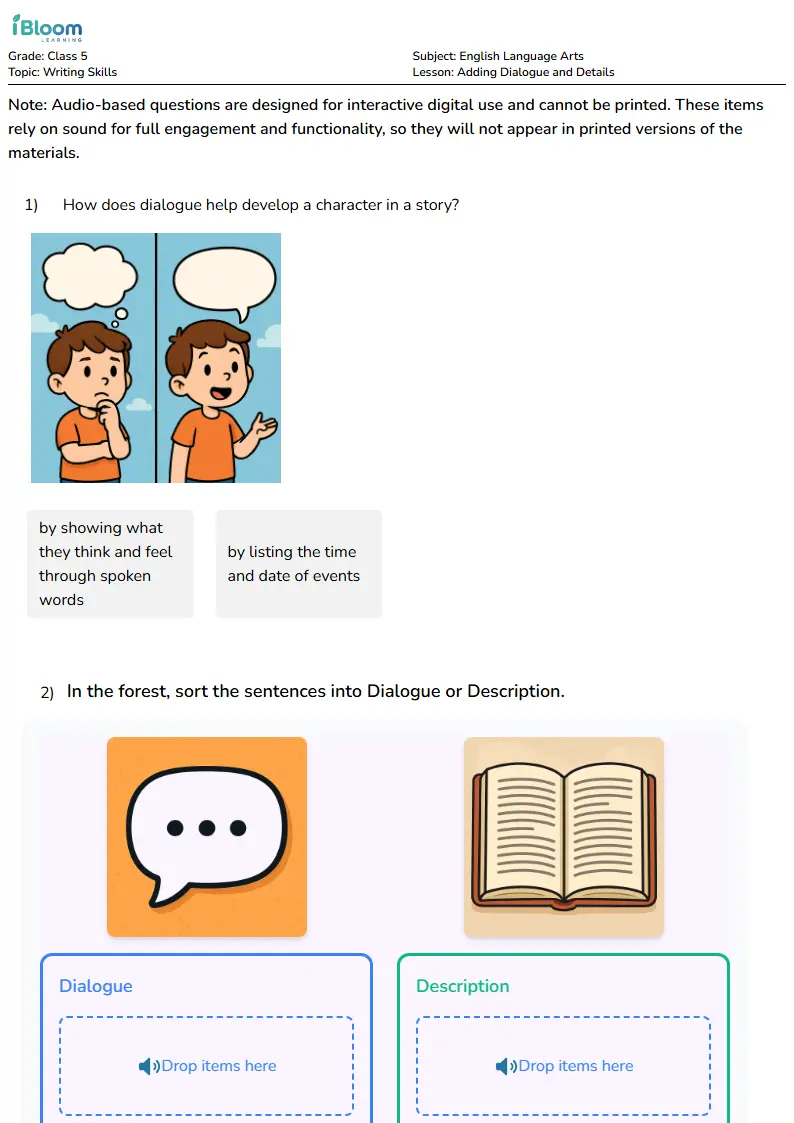
Free Adding Dialogue and Details Worksheets for Class 5
Looking for class 5 english language arts help? Download free, interactive adding dialogue and details worksheets. AI-personalized and Common Core-aligned. Practice early literacy with iBloom.
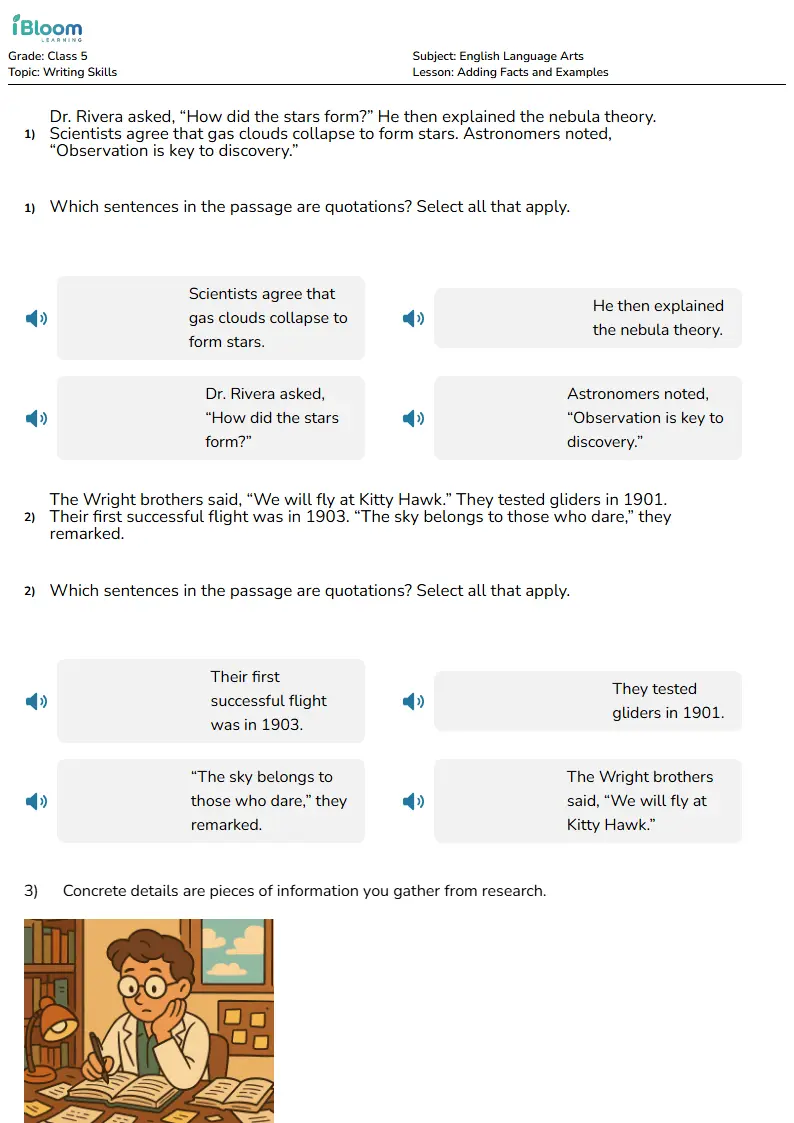
Free Adding Facts and Examples Worksheets for Class 5
Looking for class 5 english language arts help? Download free, interactive adding facts and examples worksheets. AI-personalized and Common Core-aligned. Practice early literacy with iBloom.
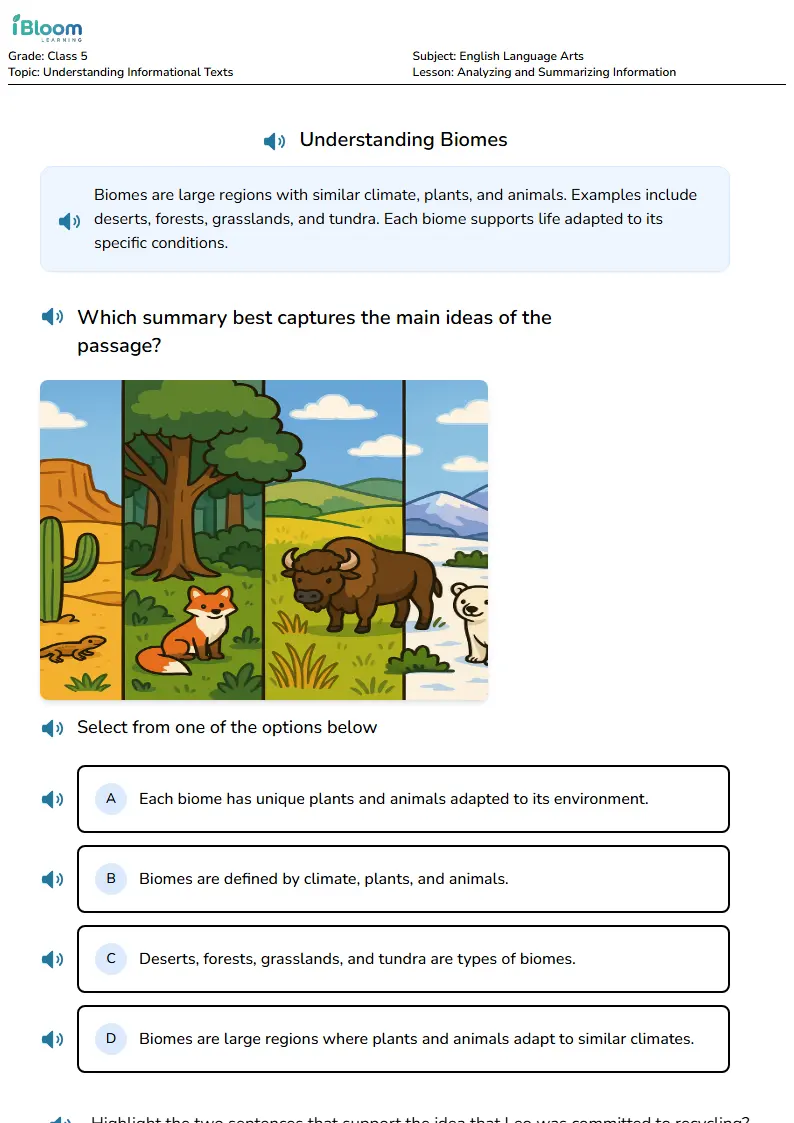
Free Analyzing and Summarizing Information Worksheets for Class 5
Looking for class 5 english language arts help? Download free, interactive analyzing and summarizing information worksheets. AI-personalized and Common Core-aligned. Practice early literacy with iBloom.
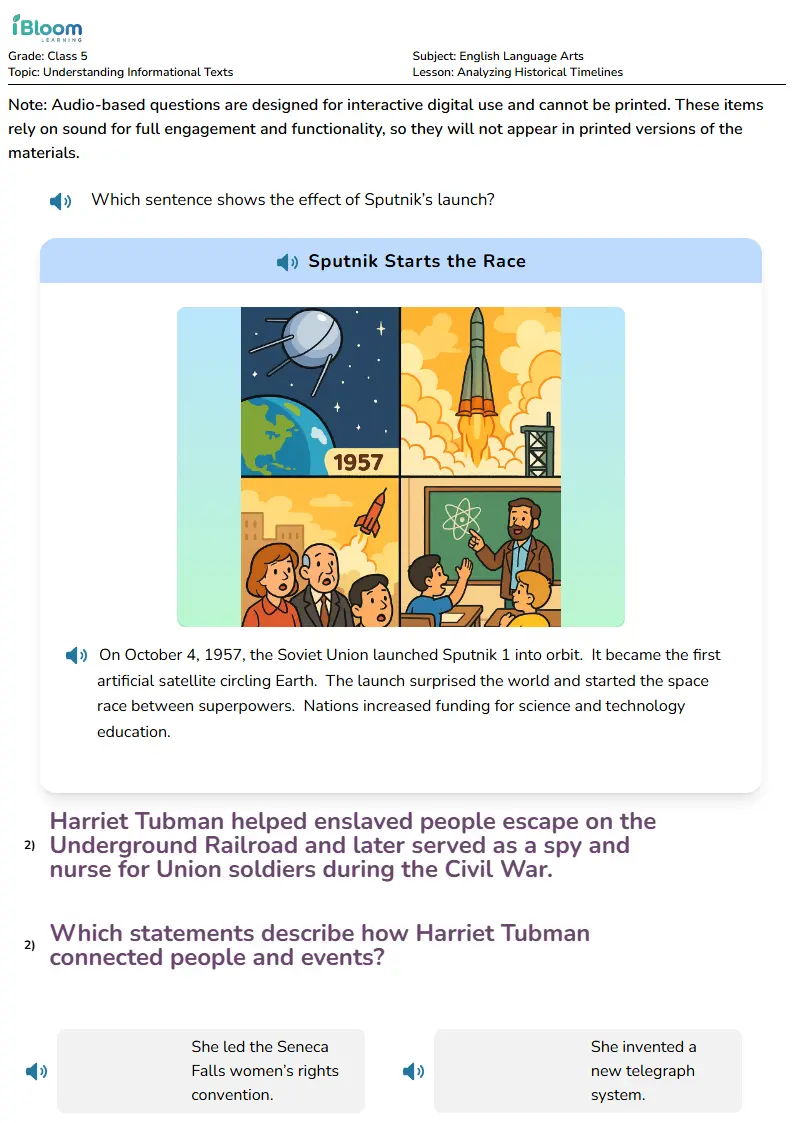
Free Analyzing Historical Timelines Worksheets for Class 5
Looking for class 5 english language arts help? Download free, interactive analyzing historical timelines worksheets. AI-personalized and Common Core-aligned. Practice early literacy with iBloom.
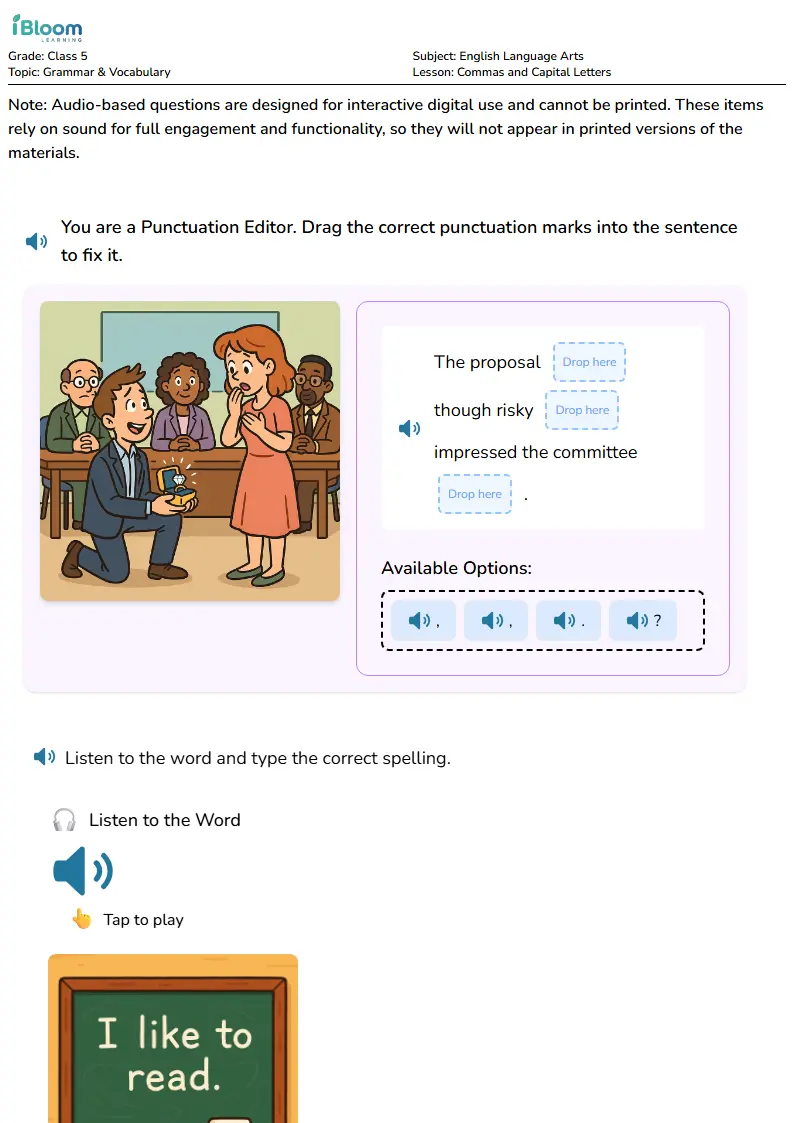
Free Commas and Capital Letters Worksheets for Class 5
Looking for class 5 english language arts help? Download free, interactive commas and capital letters worksheets. AI-personalized and Common Core-aligned. Practice early literacy with iBloom.
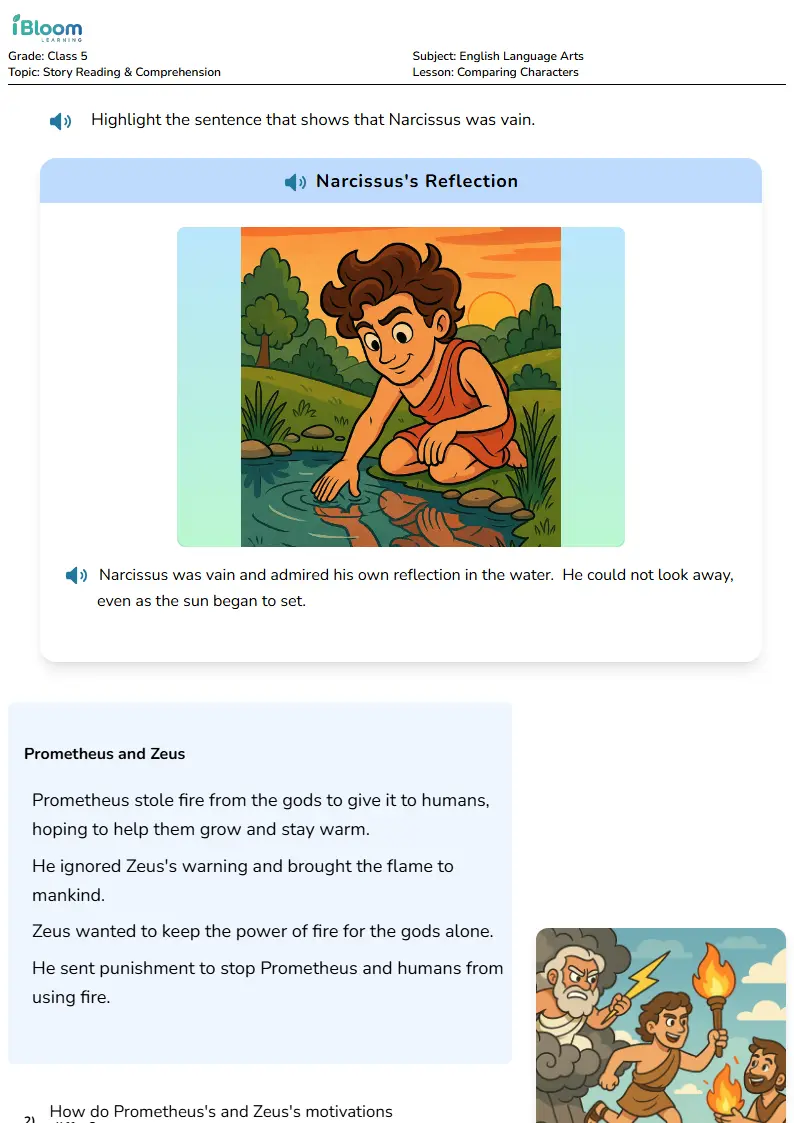
Free Comparing Characters Worksheets for Class 5
Looking for class 5 english language arts help? Download free, interactive comparing characters worksheets. AI-personalized and Common Core-aligned. Practice early literacy with iBloom.
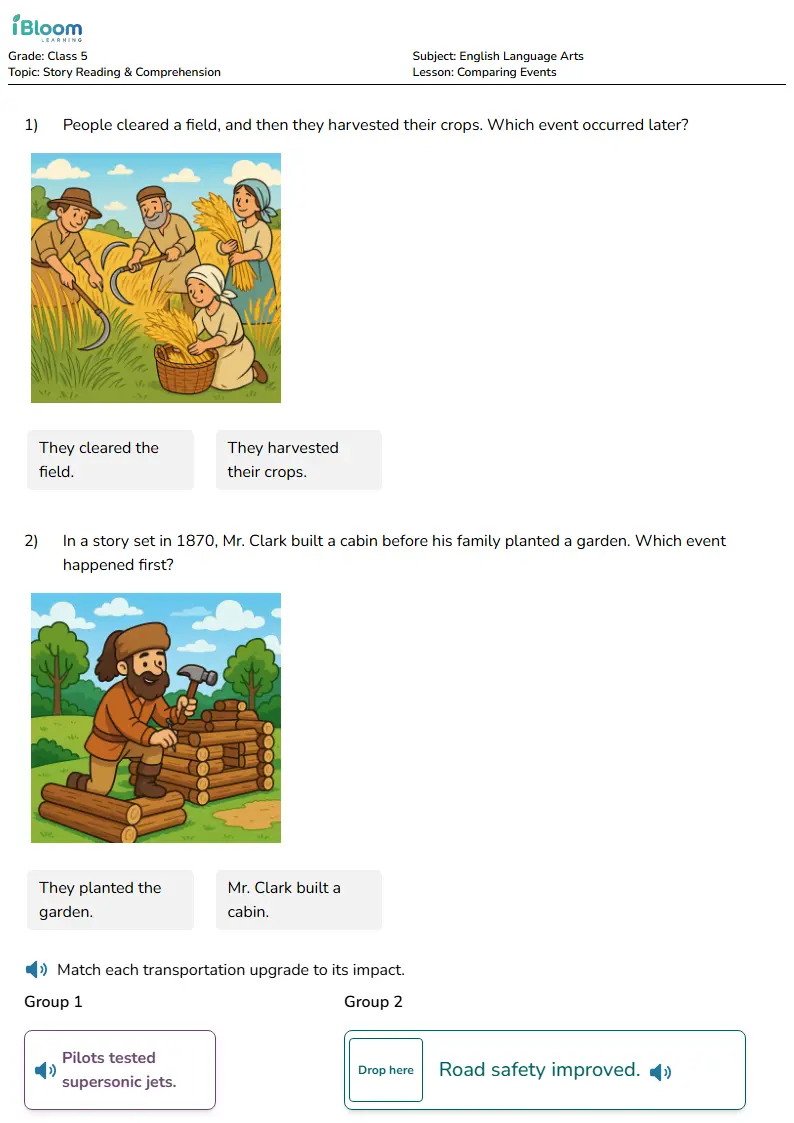
Free Comparing Events Worksheets for Class 5
Looking for class 5 english language arts help? Download free, interactive comparing events worksheets. AI-personalized and Common Core-aligned. Practice early literacy with iBloom.
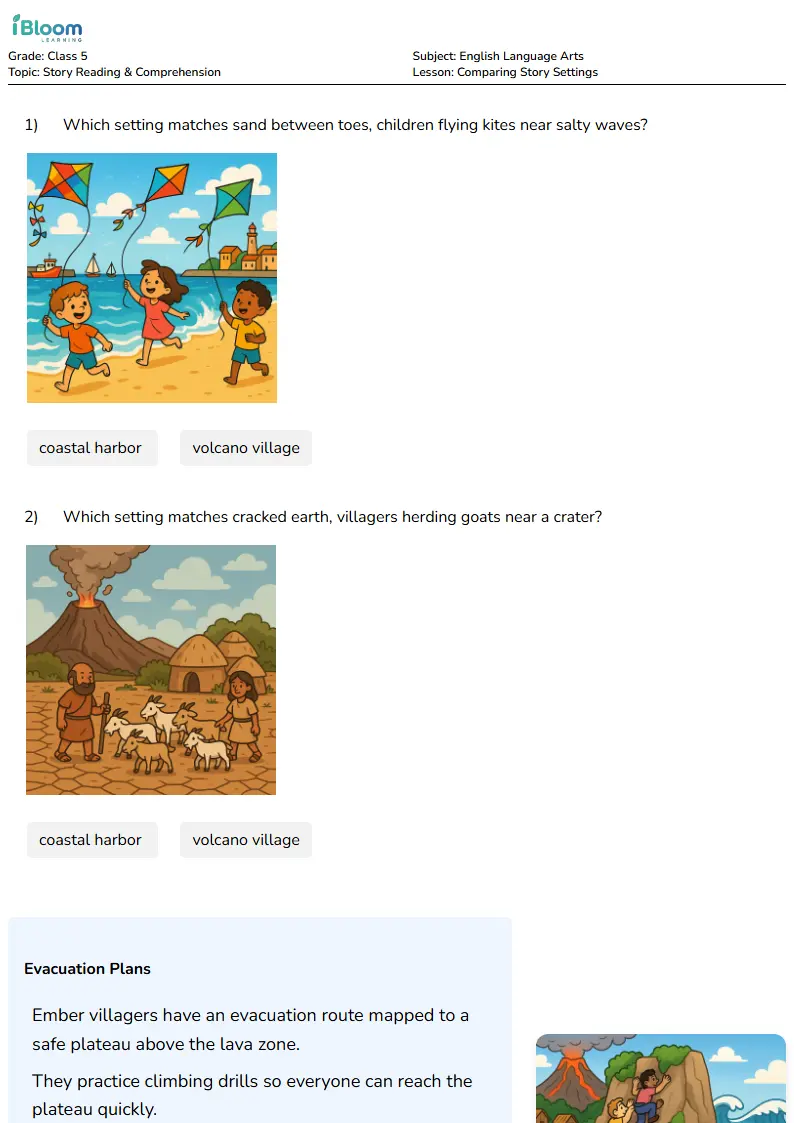
Free Comparing Story Settings Worksheets for Class 5
Looking for class 5 english language arts help? Download free, interactive comparing story settings worksheets. AI-personalized and Common Core-aligned. Practice early literacy with iBloom.
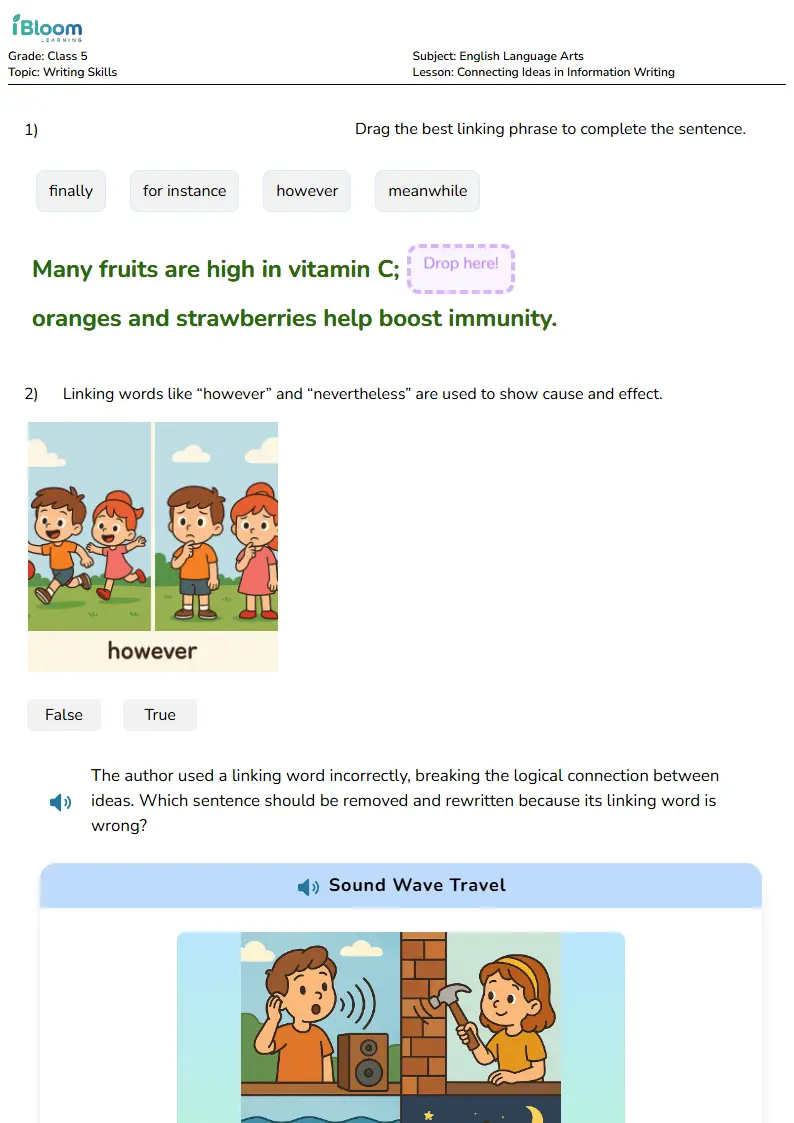
Free Connecting Ideas in Information Writing Worksheets for Class 5
Looking for class 5 english language arts help? Download free, interactive connecting ideas in information writing worksheets. AI-personalized and Common Core-aligned. Practice early literacy with iBloom.
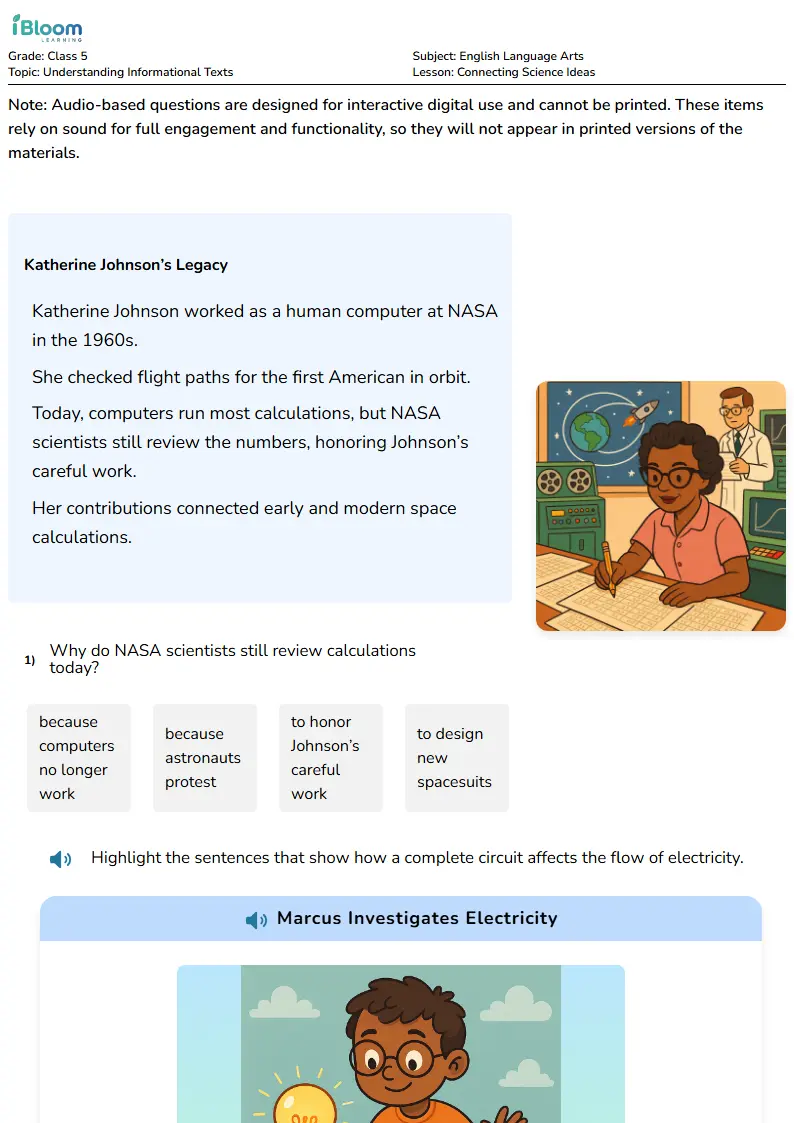
Free Connecting Science Ideas Worksheets for Class 5
Looking for class 5 english language arts help? Download free, interactive connecting science ideas worksheets. AI-personalized and Common Core-aligned. Practice early literacy with iBloom.
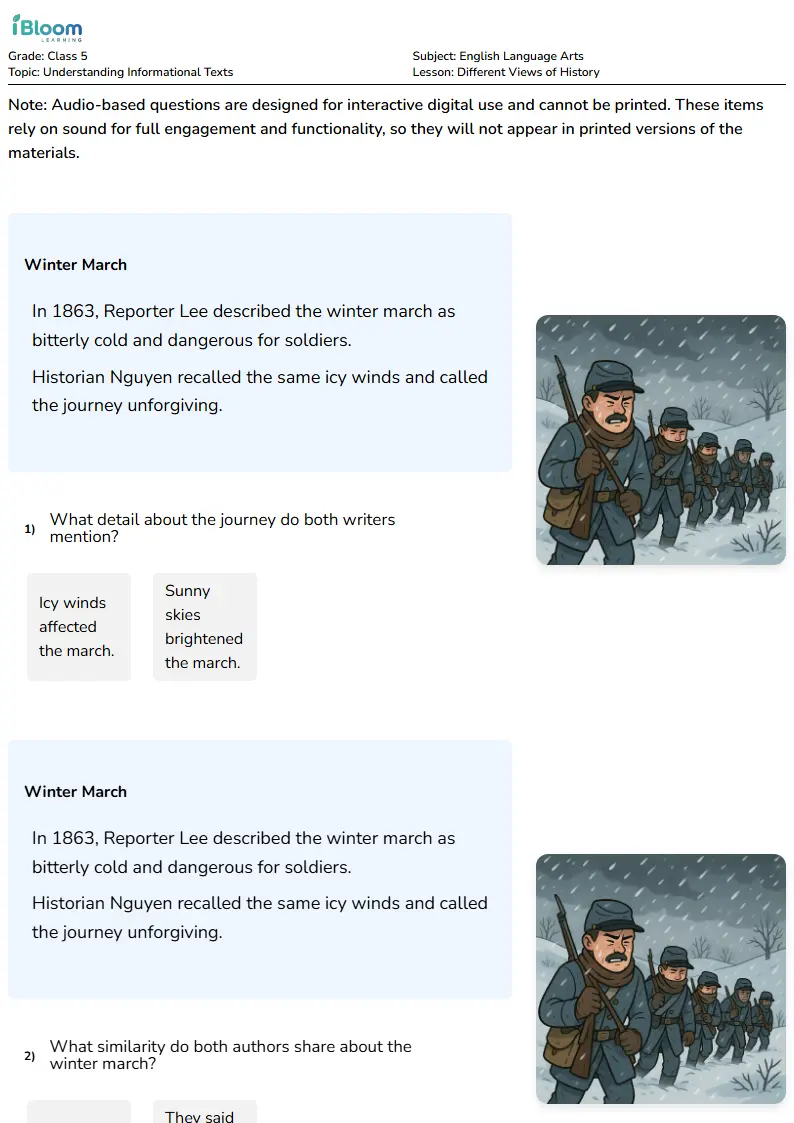
Free Different Views of History Worksheets for Class 5
Looking for class 5 english language arts help? Download free, interactive different views of history worksheets. AI-personalized and Common Core-aligned. Practice early literacy with iBloom.
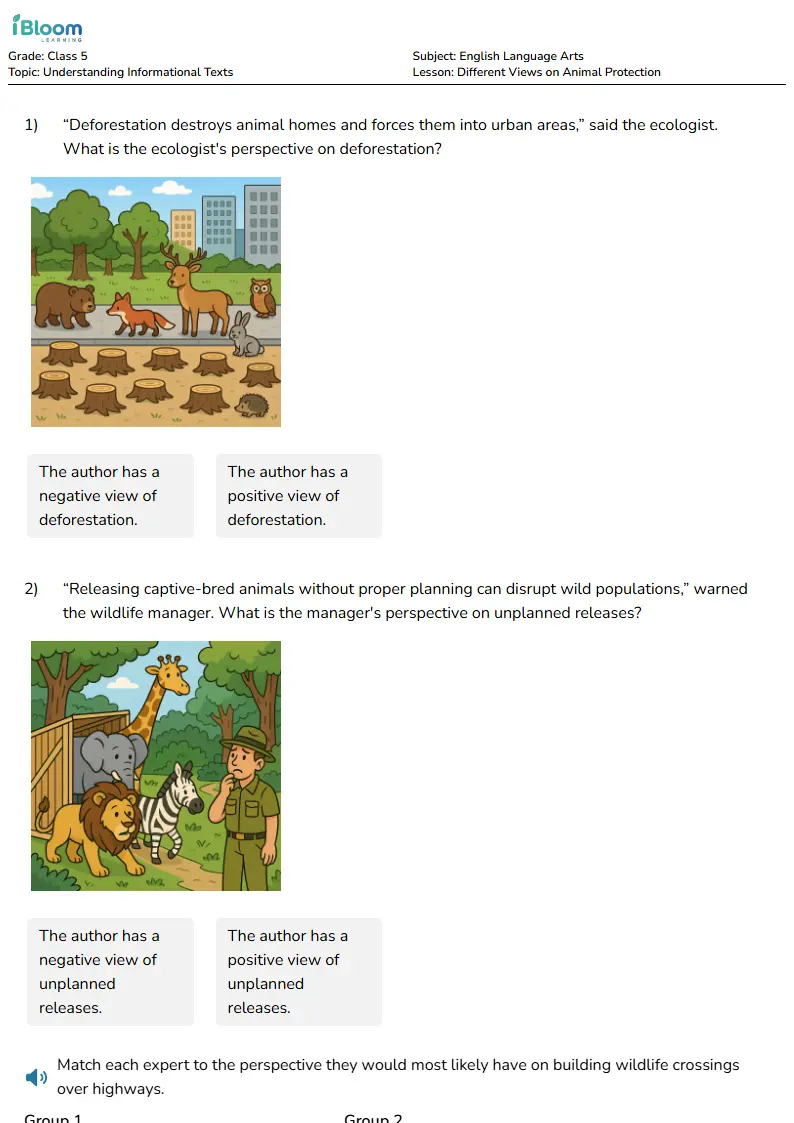
Free Different Views on Animal Protection Worksheets for Class 5
Looking for class 5 english language arts help? Download free, interactive different views on animal protection worksheets. AI-personalized and Common Core-aligned. Practice early literacy with iBloom.
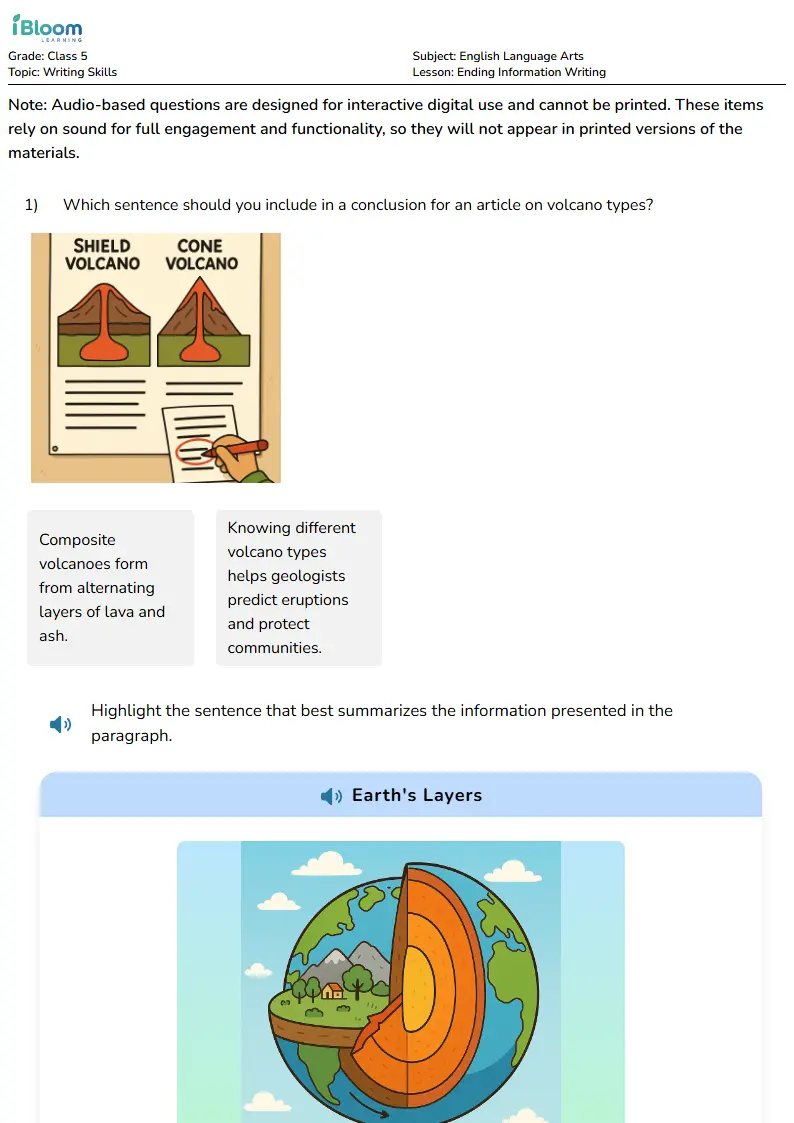
Information Writing Conclusions | Class 5
Help Class 5 learners choose strong conclusions, summarise key ideas, and end informational writing with a clear final insight through digital practice.
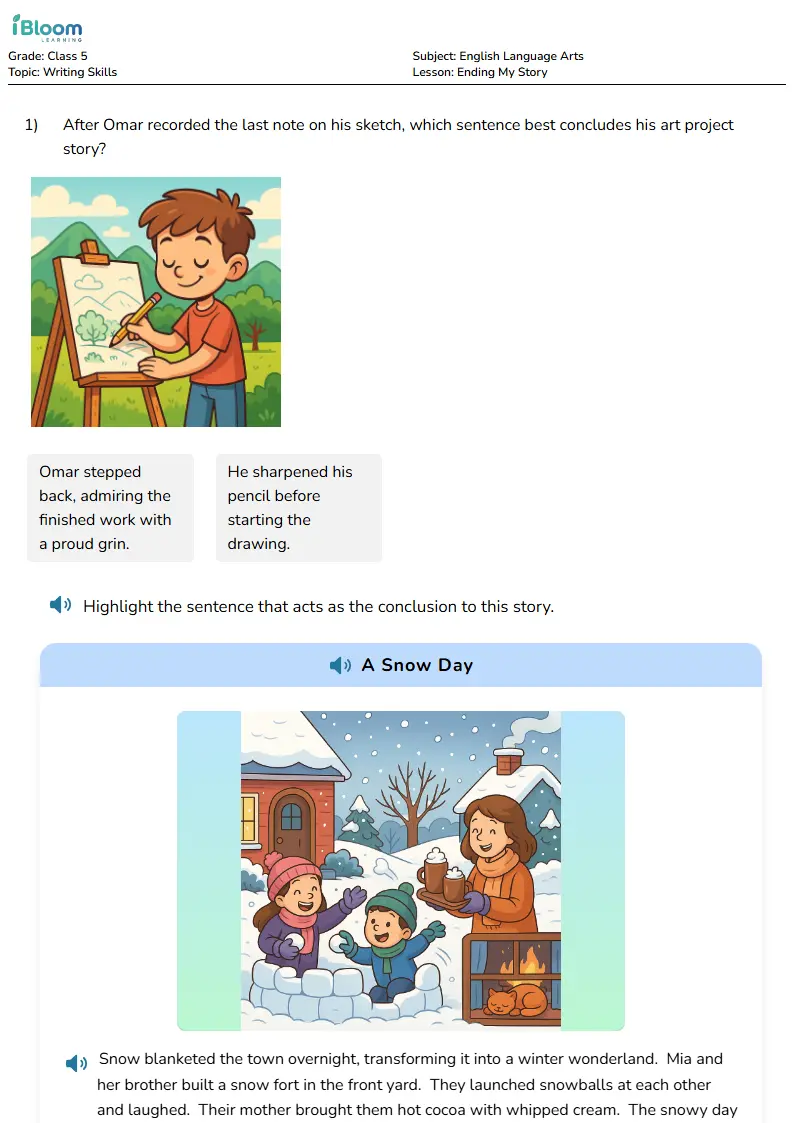
Free Ending My Story Worksheets for Class 5
Looking for class 5 english language arts help? Download free, interactive ending my story worksheets. AI-personalized and Common Core-aligned. Practice early literacy with iBloom.
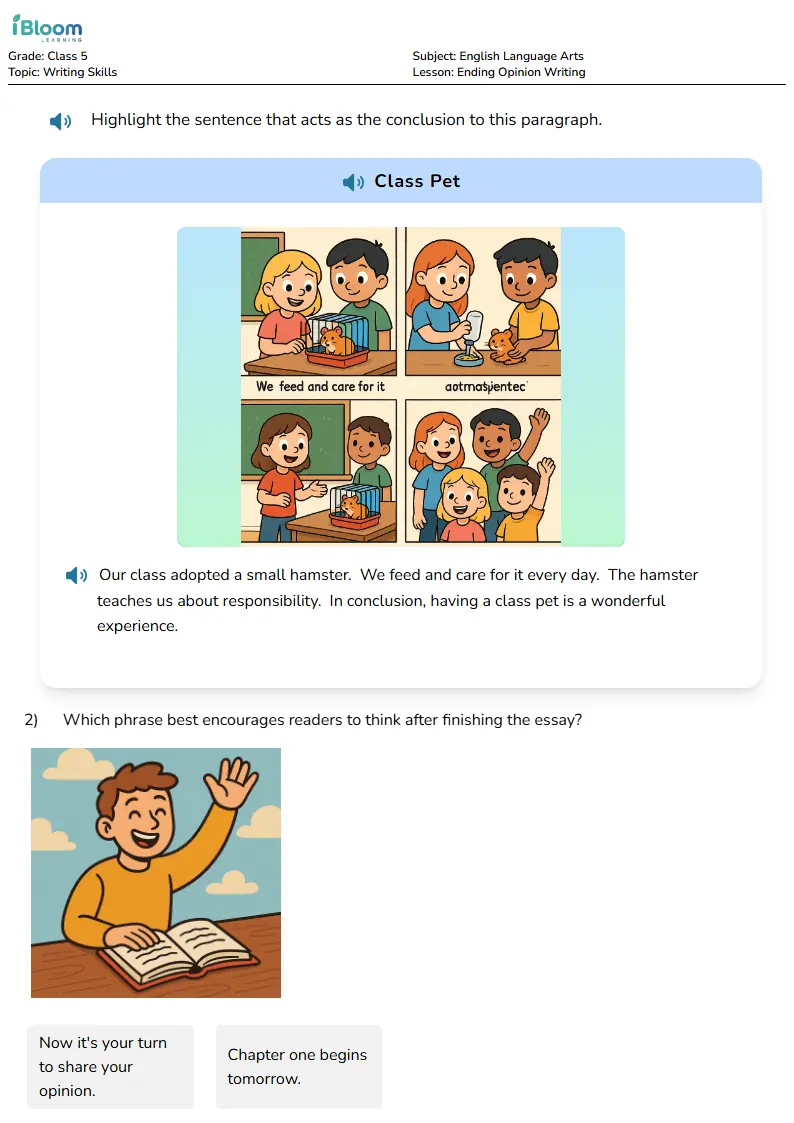
Free Ending Opinion Writing Worksheets for Class 5
Looking for class 5 english language arts help? Download free, interactive ending opinion writing worksheets. AI-personalized and Common Core-aligned. Practice early literacy with iBloom.
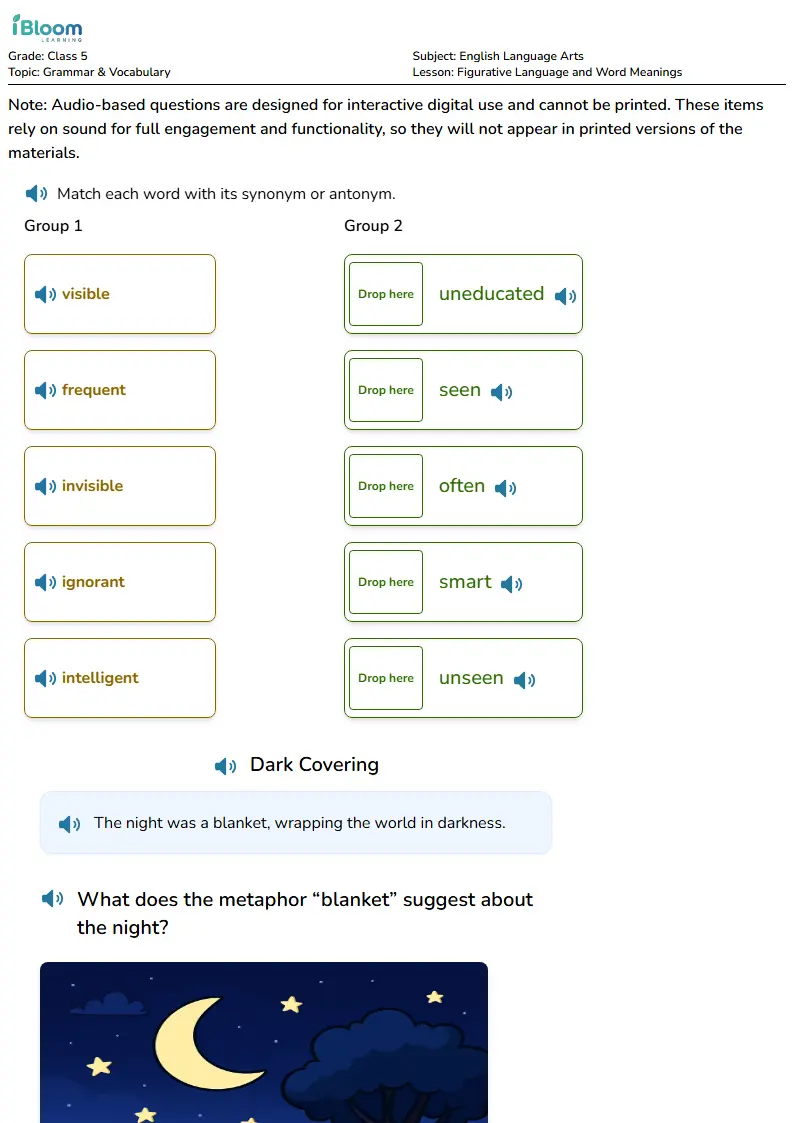
Free Figurative Language and Word Meanings Worksheets for Class 5
Looking for class 5 english language arts help? Download free, interactive figurative language and word meanings worksheets. AI-personalized and Common Core-aligned. Practice early literacy with iBloom.
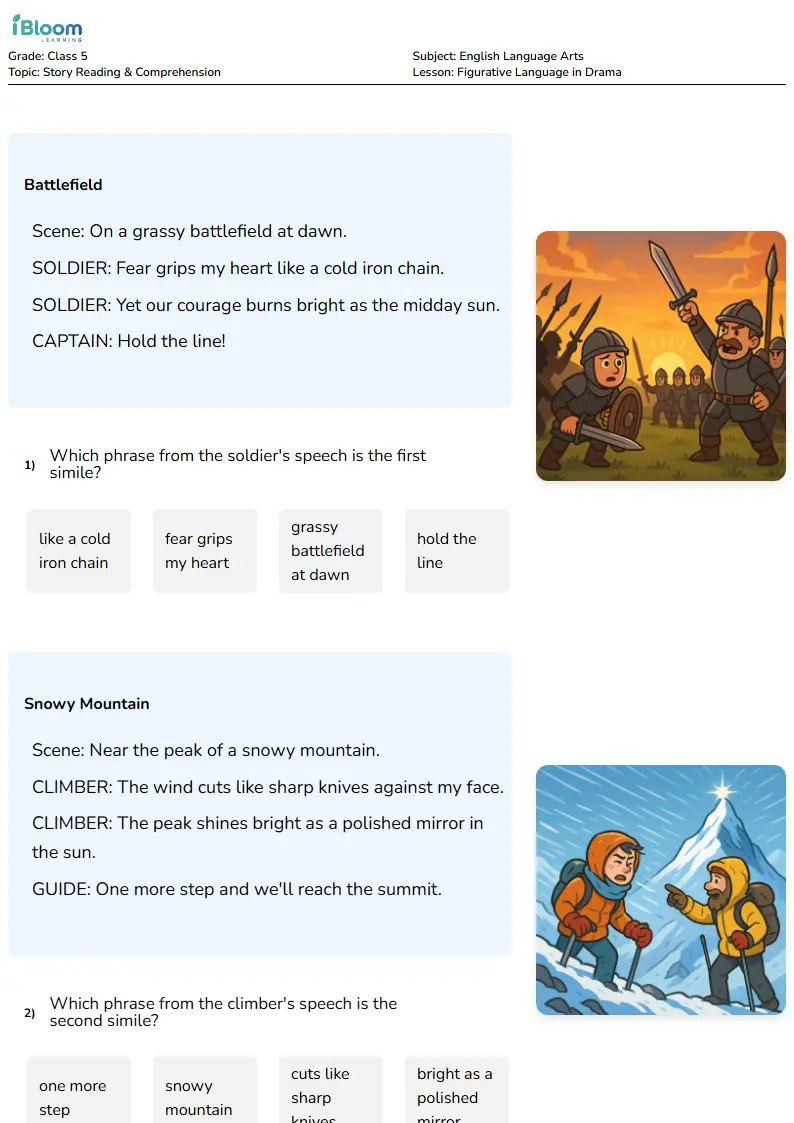
Free Figurative Language in Drama Worksheets for Class 5
Looking for class 5 english language arts help? Download free, interactive figurative language in drama worksheets. AI-personalized and Common Core-aligned. Practice early literacy with iBloom.
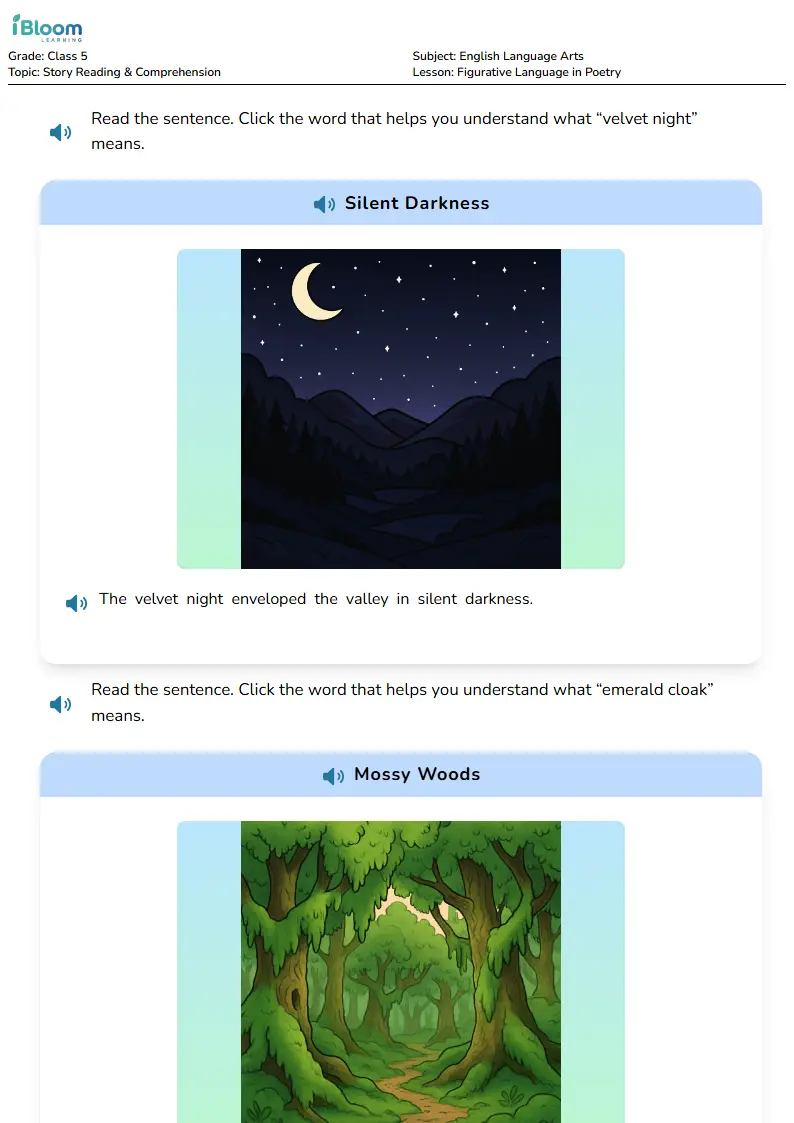
Free Figurative Language in Poetry Worksheets for Class 5
Looking for class 5 english language arts help? Download free, interactive figurative language in poetry worksheets. AI-personalized and Common Core-aligned. Practice early literacy with iBloom.
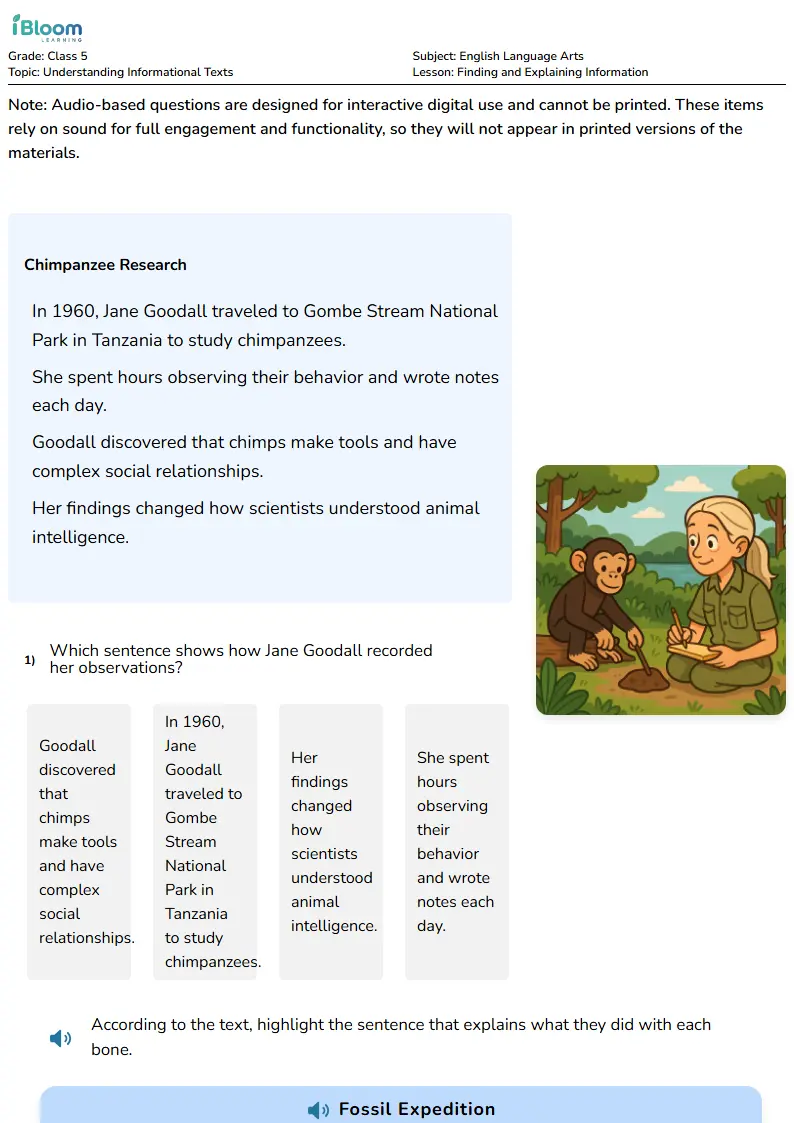
Free Finding and Explaining Information Worksheets for Class 5
Looking for class 5 english language arts help? Download free, interactive finding and explaining information worksheets. AI-personalized and Common Core-aligned. Practice early literacy with iBloom.
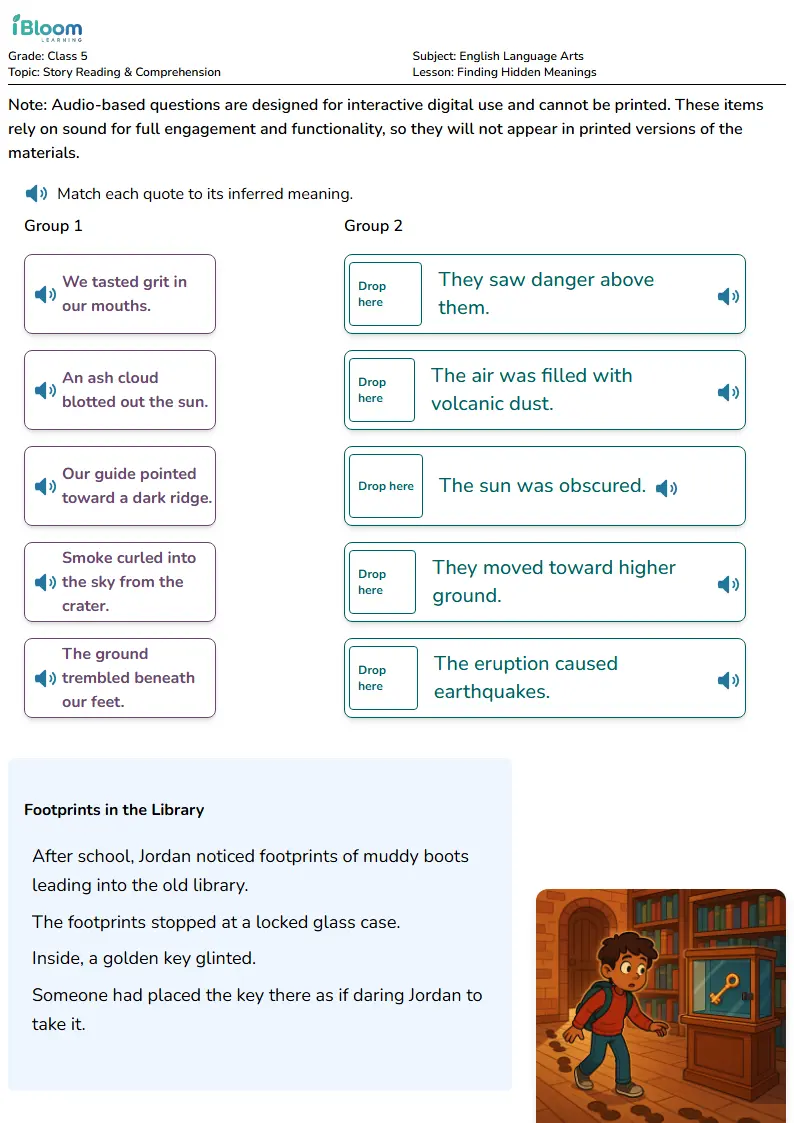
Free Finding Hidden Meanings Worksheets for Class 5
Looking for class 5 english language arts help? Download free, interactive finding hidden meanings worksheets. AI-personalized and Common Core-aligned. Practice early literacy with iBloom.
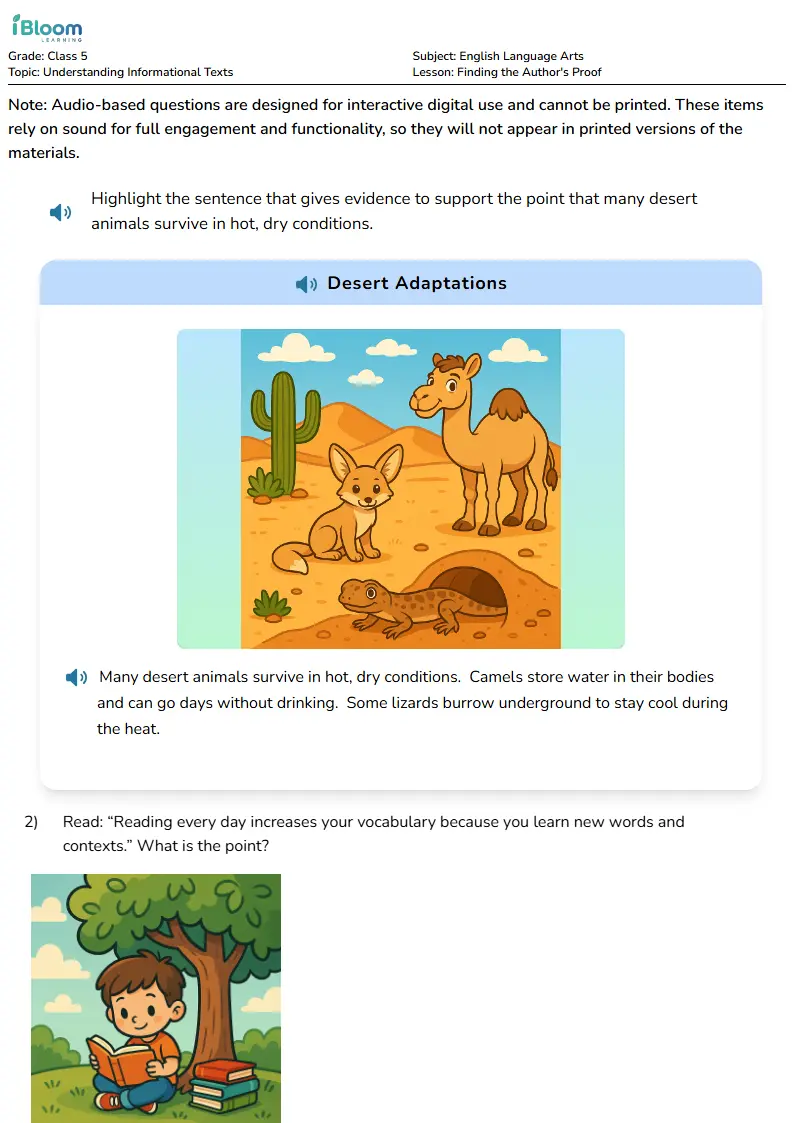
Free Finding the Author's Proof Worksheets for Class 5
Looking for class 5 english language arts help? Download free, interactive finding the author's proof worksheets. AI-personalized and Common Core-aligned. Practice early literacy with iBloom.
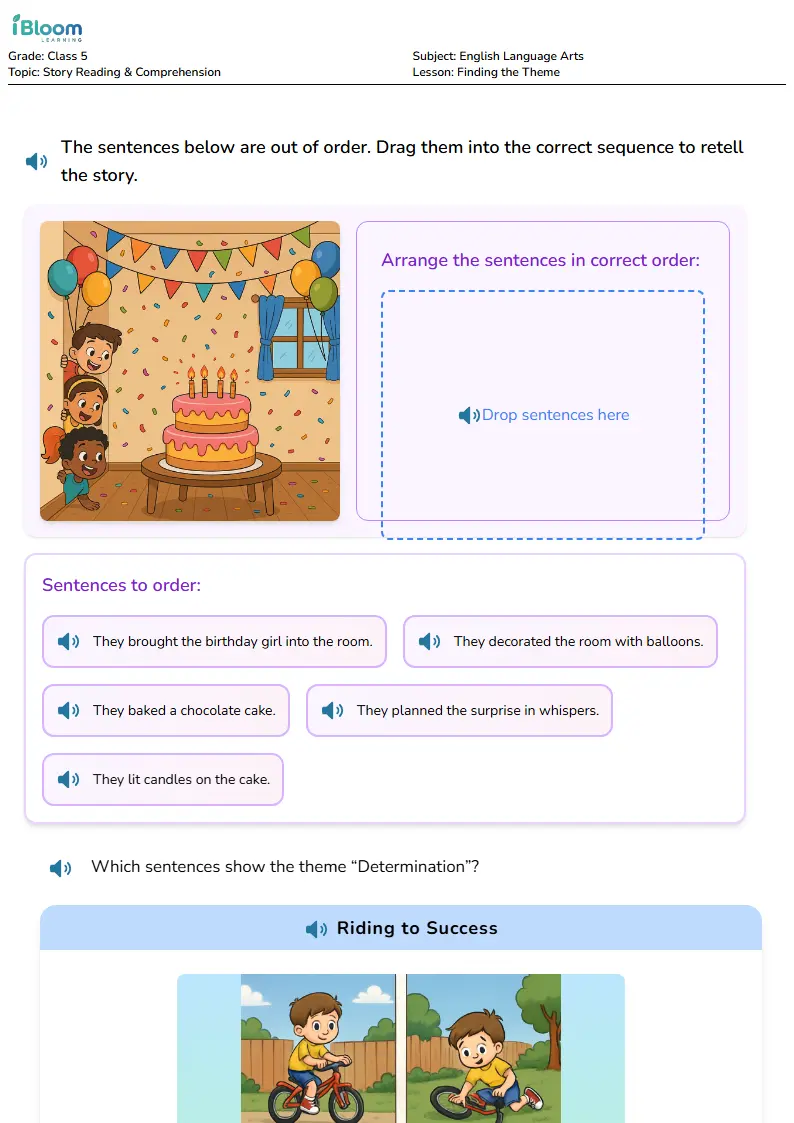
Free Finding the Theme Worksheets for Class 5
Looking for class 5 english language arts help? Download free, interactive finding the theme worksheets. AI-personalized and Common Core-aligned. Practice early literacy with iBloom.
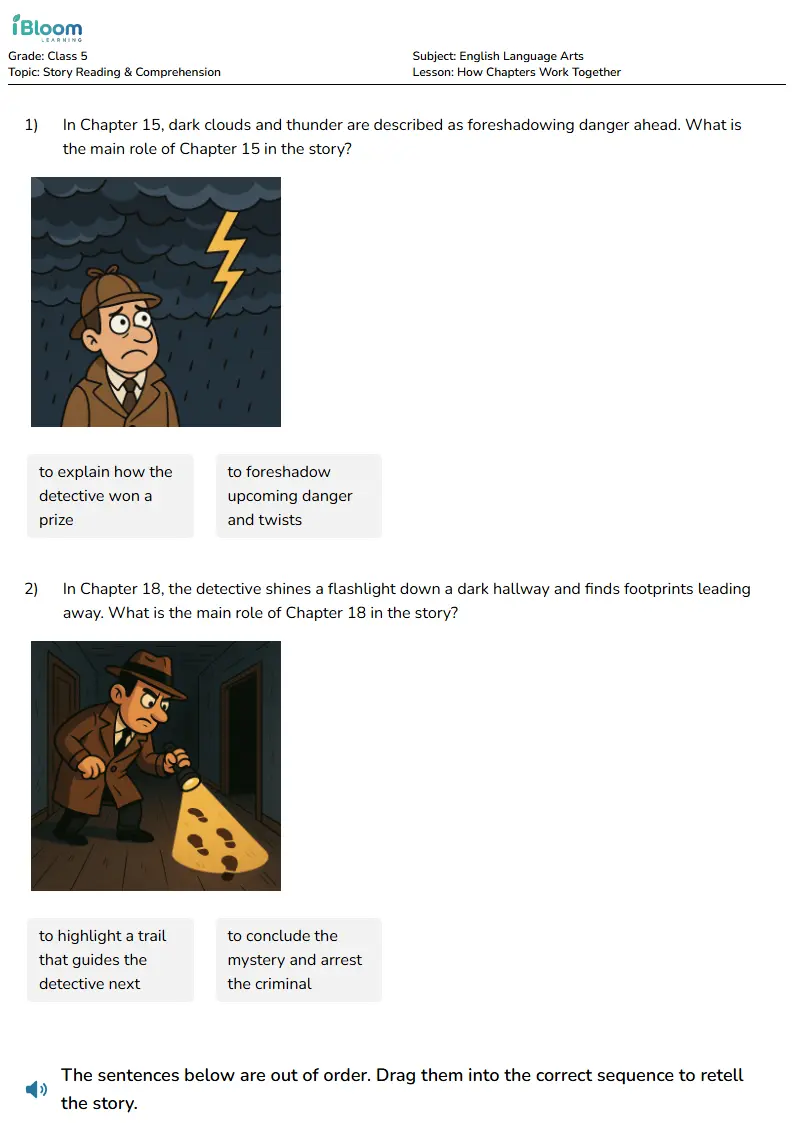
Free How Chapters Work Together Worksheets for Class 5
Looking for class 5 english language arts help? Download free, interactive how chapters work together worksheets. AI-personalized and Common Core-aligned. Practice early literacy with iBloom.
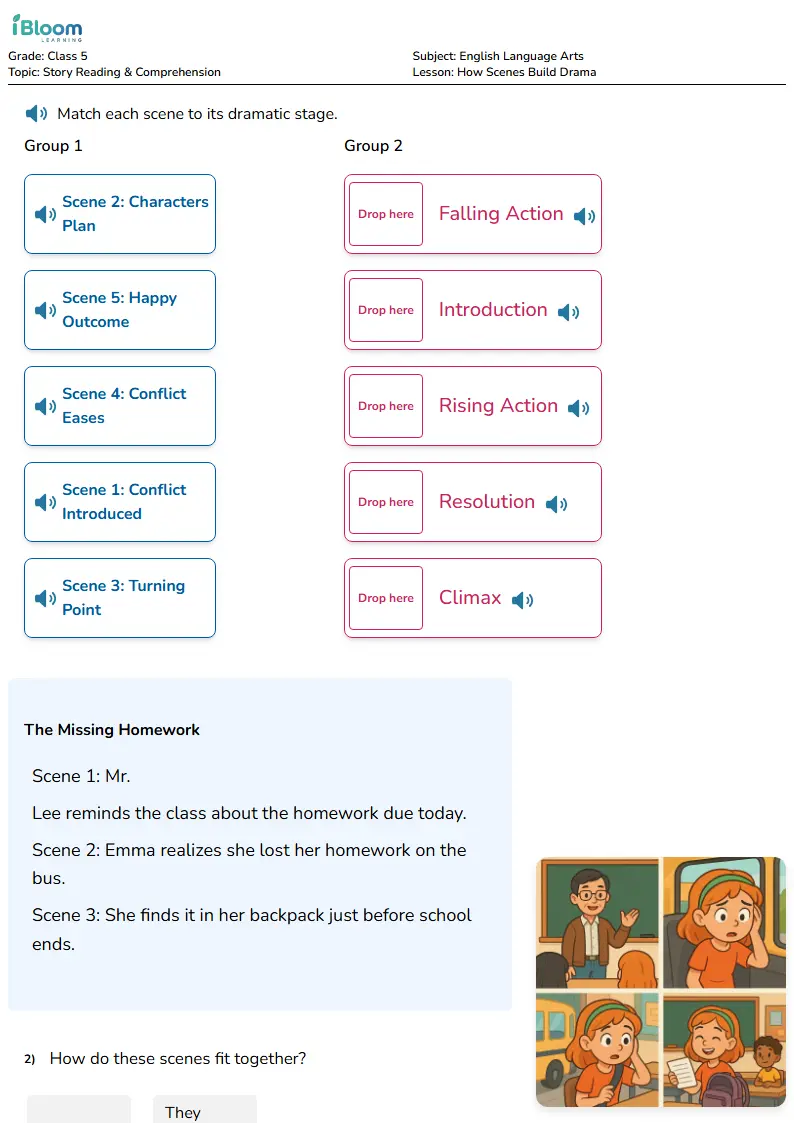
Free How Scenes Build Drama Worksheets for Class 5
Looking for class 5 english language arts help? Download free, interactive how scenes build drama worksheets. AI-personalized and Common Core-aligned. Practice early literacy with iBloom.