Words For Feelings worksheet for LKG
Lesson-Wise Builder
A premium AI tool that creates syllabus-aligned questions and worksheets for any lesson in seconds.
A feelings worksheet for LKG helps a child connect a simple word such as happy, sad, angry or scared with a face, a situation and a sentence. On this page, the goal is to recognise a likely feeling, name it in English and explain one clue. A child can then use the word in a short sentence such as I feel excited when my friend comes to play.
What are feeling words?
Feeling words name how someone may feel inside. They are also called emotion words. For an early learner, the most useful starting words are happy, sad, angry, scared, surprised, excited, worried and calm. As the child becomes confident, add words such as proud, shy, bored, confused, lonely, frustrated, disappointed, embarrassed, jealous, curious and loved.
Feelings are not answers that a child must memorise perfectly. The same situation can lead to different feelings. One child may feel excited on the first day of school while another feels shy or worried. Ask for a reason and accept more than one sensible answer.
Basic feelings vocabulary for LKG
| Feeling word | Possible clue | Example sentence |
|---|---|---|
| Happy | A smile or a cheerful voice | I feel happy when I play with my friend. |
| Sad | Tears or a quiet face | I feel sad when my toy breaks. |
| Angry | A frown or a tense body | I feel angry when someone grabs my crayon. |
| Scared | Wide eyes or moving closer to a trusted adult | I feel scared when thunder is loud. |
| Surprised | Raised eyebrows after something unexpected | I feel surprised when everyone shouts my name. |
| Excited | A bright face or an energetic voice | I feel excited before a birthday game. |
| Worried | A tense face or repeated questions | I feel worried when I cannot find my bag. |
| Calm | A relaxed face and a steady voice | I feel calm while listening to a quiet story. |
| Proud | A smile after finishing something difficult | I feel proud when I complete my picture. |
| Shy | Looking away or speaking softly around new people | I feel shy when I meet a new classmate. |
| Bored | Low interest while waiting | I feel bored when I have nothing to do. |
| Confused | A puzzled look or a request for help | I feel confused when I do not understand the direction. |
These clues are possibilities, not rules. A face alone cannot prove what someone feels. Use the picture, the situation and the character's words together.
How to recognise and name a feeling
- Look: Notice the eyes, eyebrows, mouth, posture and what is happening in the picture.
- Think: Ask what may have happened just before this moment.
- Name: Choose a feeling word that fits the clues.
- Explain: Complete the sentence, I think the person feels ___ because ___.
For example, a child in a picture is holding a finished drawing while the class claps. A useful answer is proud because the child completed the work and others noticed it. Happy may also fit. The explanation shows more understanding than guessing one label.
Helpful face and body clues
- A smile may suggest happy, excited, proud or loved.
- Tears may suggest sad, hurt, worried or even very happy.
- A frown and tight hands may suggest angry or frustrated.
- Wide eyes may suggest scared, surprised or excited.
- A quiet voice and lowered eyes may suggest shy, sad or worried.
Feelings in everyday situations
Read each situation aloud before using the worksheet. Let the child choose a word, point to a matching face and say why it fits.
- A toy breaks during play. The child might feel sad, disappointed or frustrated.
- A friend shares a favourite book. The child might feel happy, thankful or loved.
- It is the morning of a birthday celebration. The child might feel excited or happy.
- A child enters a new classroom. The child might feel shy, curious, worried or excited.
- Thunder sounds suddenly. The child might feel scared or surprised.
- A bag cannot be found. The child might feel worried, confused or upset.
- A difficult puzzle is finally complete. The child might feel proud, happy or relieved.
- A child must wait a long time for a turn. The child might feel bored, impatient or frustrated.
- A teacher gives unexpected praise. The child might feel surprised, happy or proud.
- A game changes without warning. The child might feel confused, disappointed or curious.
There is no need to tell a child what they personally must feel. The task is to practise emotion vocabulary and support a reasonable explanation.
Use feeling words in simple sentences
Once the child can name a feeling, help them use it in speech. Begin with one of these sentence frames:
- I feel ___.
- I feel ___ when ___.
- He feels ___ because ___.
- She might feel ___ when ___.
- The character feels ___ because ___.
Try short examples: I feel happy when Amma reads with me. He feels sad because his block tower fell. She might feel worried because she cannot see her teacher. The character feels proud because she wrote her name.
Words such as glad and happy are close in meaning. Afraid and scared are also close, as are mad and angry, upset and sad, and nervous and worried. Teach one familiar word first, then introduce the related word in a new sentence. Do not make an LKG child memorise a long synonym list at once.
Practice ideas that keep the vocabulary meaningful
- Point and name: Show two or three faces and ask the child to point to the feeling you name.
- Match: Pair each feeling word with a picture or a spoken situation.
- Draw: Invite the child to draw a happy, sad, angry or scared face and explain one feature.
- Sort: Group picture cards by the feeling they may show, then discuss any card that could fit two groups.
- Act: Take turns showing an emotion with safe facial and body clues while the other person guesses.
- Picture talk: Ask, What happened? How might the person feel? What clue helped you?
- Story pause: Stop during a familiar story and ask how a character might feel at that moment.
- Daily check-in: Let the child choose one word for how they feel now without requiring an explanation.
These short extensions support the same skill as the worksheet. Use one activity at a time so the focus stays on recognising, naming and using emotion words.
Parent guide for feelings practice at home
Keep practice brief and conversational. Start with four familiar words: happy, sad, angry and scared. Add surprised, excited, worried and calm when the child can use the first group comfortably. A five-minute conversation can be more useful than drilling many cards.
- Read the worksheet direction aloud.
- Model one example: I think this child feels sad because the toy broke.
- Let the child answer the next item and ask for one clue.
- If the child is unsure, offer two sensible choices instead of giving the answer.
- Finish with one personal but optional sentence: I feel happy when ___.
A multilingual child may explain a situation in the strongest home language first and then learn the English feeling word. The aim is to understand and communicate the word, not to penalise the child for needing language support. Never require a child to disclose a private experience.
Teacher ideas for an LKG classroom
Use the feelings worksheet in a small group, literacy centre, picture-talk routine or morning circle. Display a small feelings word wall, but introduce only a few words at a time. During a read-aloud, pause at a clear event and ask, How might the character feel? What in the picture or story helped you?
Listen for three separate skills: whether the child notices a clue, selects a fitting word and uses the word in a sentence. A child who says sad correctly may still need help explaining why. Another child may give a different but sensible word. Record the language the child can use; do not treat one facial expression as having only one correct label.
For partner practice, one child can choose a situation card and the other can complete The character might feel ___ because ___. Switch roles after one turn. This keeps the activity short and gives every learner a chance to speak.
Common mistakes to avoid
- Calling feelings good or bad: Use comfortable or uncomfortable instead. All feelings can be named; actions still need safe boundaries.
- Reading only the mouth: Consider the whole picture and the situation, not just a smile or frown.
- Demanding one answer: Happy, excited and proud may all fit the same scene when the reason is clear.
- Confusing a feeling with an action: Angry is a feeling; shouting or hitting is an action.
- Adding too many advanced words: Build from a small core set and revisit it in different situations.
- Correcting personal feelings: Adults can discuss a picture answer, but should not tell a child that their own feeling is wrong.
Related iBloom practice
- Words for Feelings lesson for LKG revisits the same core vocabulary in lesson form.
- Using Words for Feelings worksheet for LKG is the next step for applying the words.
- Using Words for Feelings lesson for LKG supports further sentence and context practice.
Frequently Asked Questions
What are feeling words for LKG?
Feeling words name emotions in simple English. Start with happy, sad, angry and scared, then add words such as excited, surprised, worried, calm and proud.
Are feelings and emotions the same?
In an early-learning activity, the words are often used in the same way. Both help a child name how someone may feel. A detailed scientific distinction is not needed for this LKG vocabulary task.
How can a child recognise an emotion?
Look at the face, body, words and situation together. Then choose a likely feeling and explain the clue. Remind the child that a picture may allow more than one reasonable answer.
What if my child chooses a different feeling?
Ask why the word fits. If the reason matches the picture or situation, accept it. If it does not, point out one clue and offer two possible words.
How many feeling words should an LKG child learn at once?
Begin with a small set the child can use confidently. Four familiar words are enough for one practice session. Add one or two new words after the child can recognise and use the earlier words.
Can we use a home language during practice?
Yes. The child can explain the idea in a familiar language first and then repeat the English feeling word or sentence. This keeps the thinking task accessible while building English vocabulary.
How do I use an I feel sentence?
Choose a feeling and add a simple situation: I feel happy when I play outside. The sentence frame connects the emotion word with a clear reason.
More practice for this grade
More English Language Arts worksheets
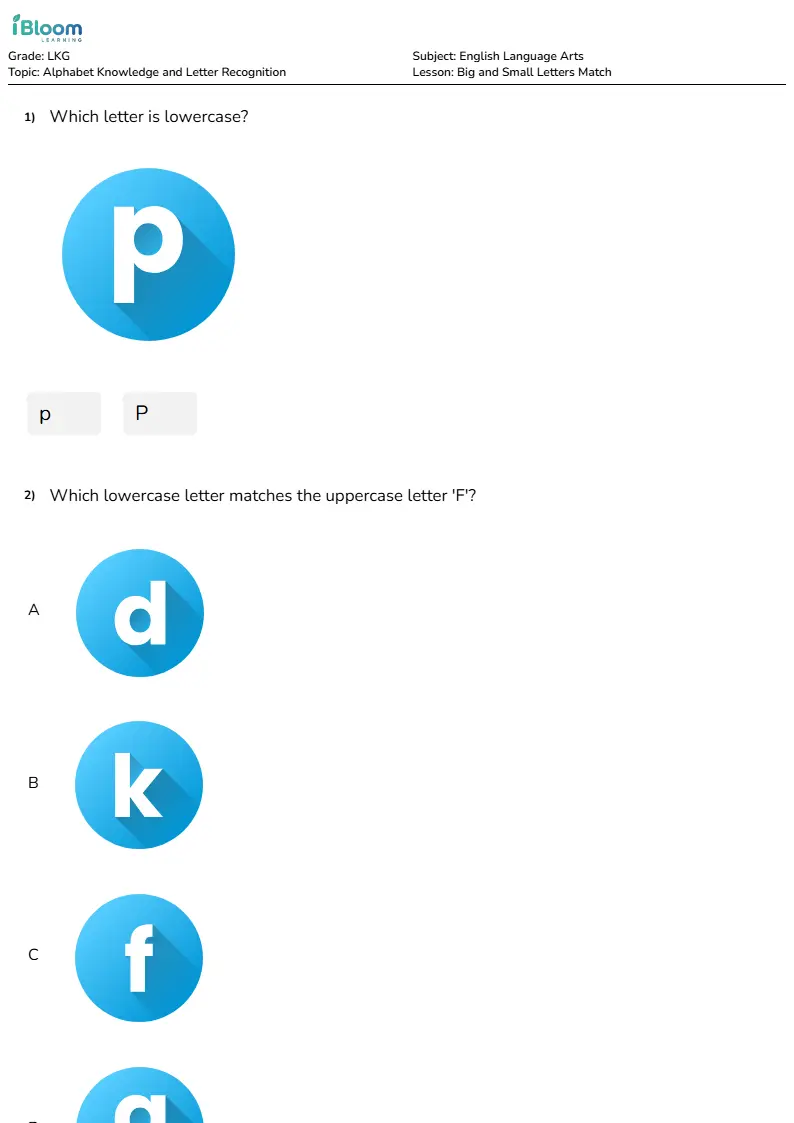
Free Big and Small Letters Match Worksheets for Lkg
Looking for lkg english language arts help? Download free, interactive big and small letters match worksheets. AI-personalized and Common Core-aligned. Practice early literacy with iBloom.
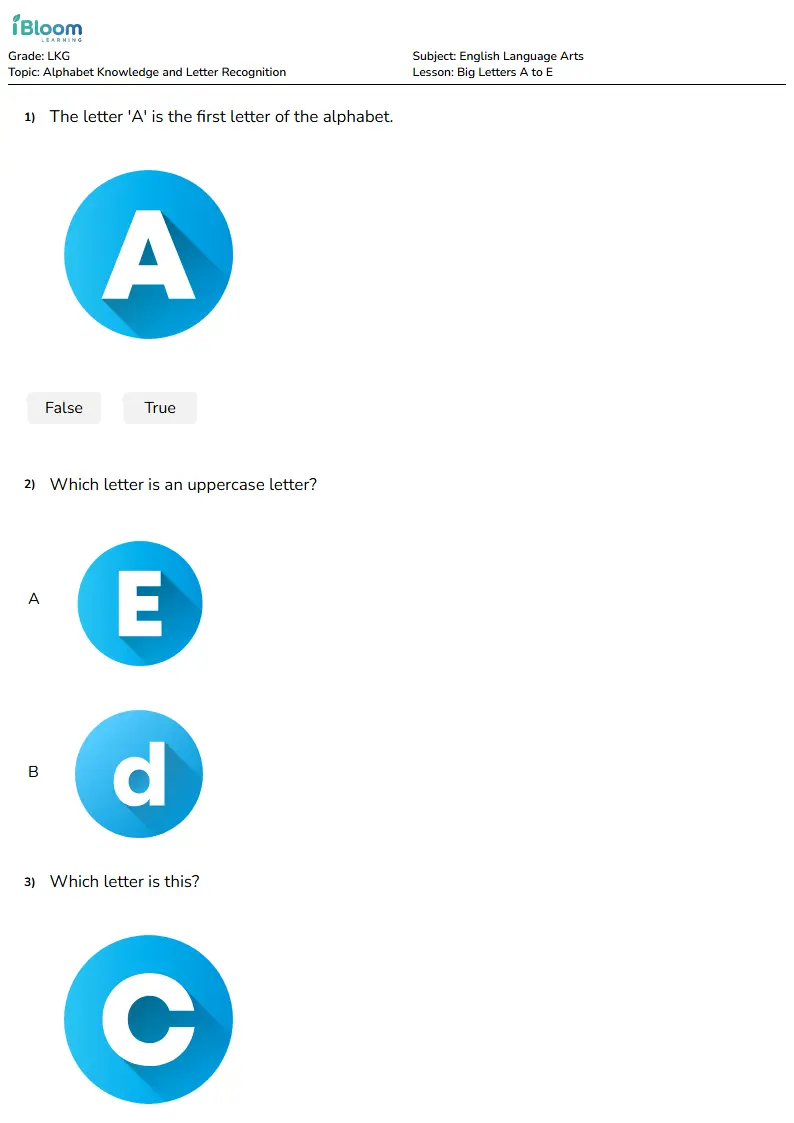
Free Big Letters A to E Worksheets for Lkg
Looking for lkg english language arts help? Download free, interactive big letters a to e worksheets. AI-personalized and Common Core-aligned. Practice early literacy with iBloom.
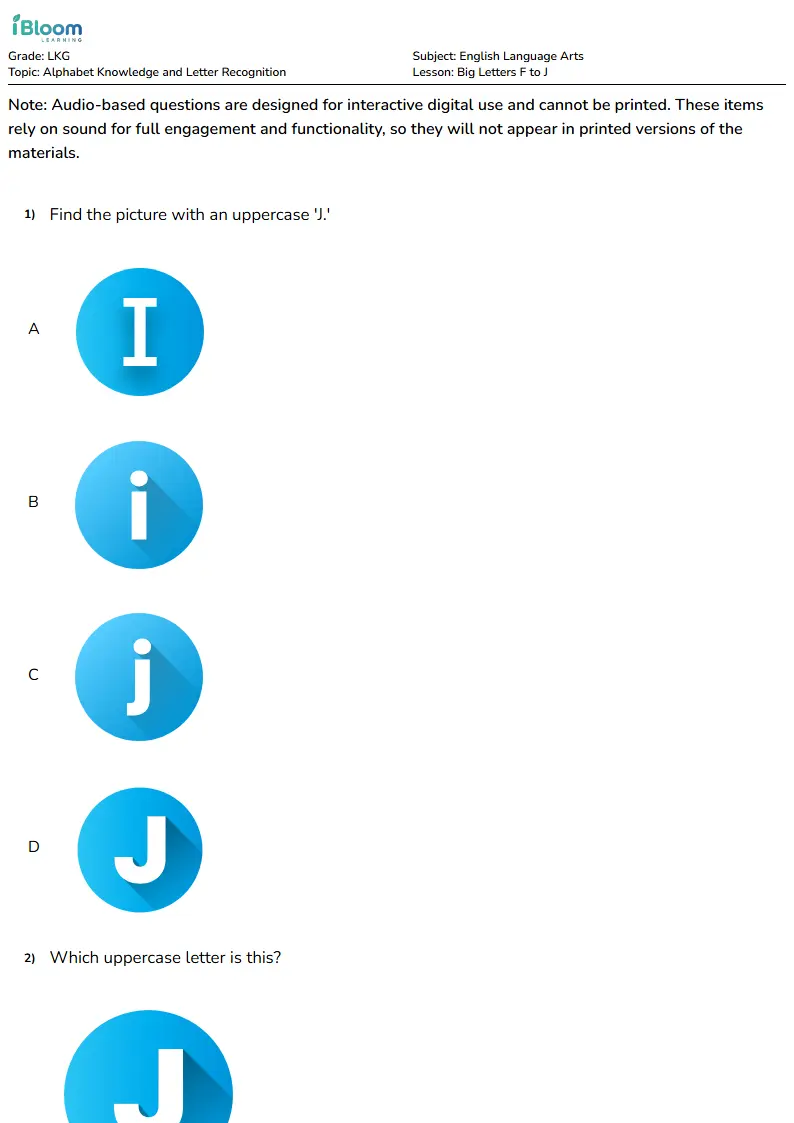
Free Big Letters F to J Worksheets for Lkg
Looking for lkg english language arts help? Download free, interactive big letters f to j worksheets. AI-personalized and Common Core-aligned. Practice early literacy with iBloom.
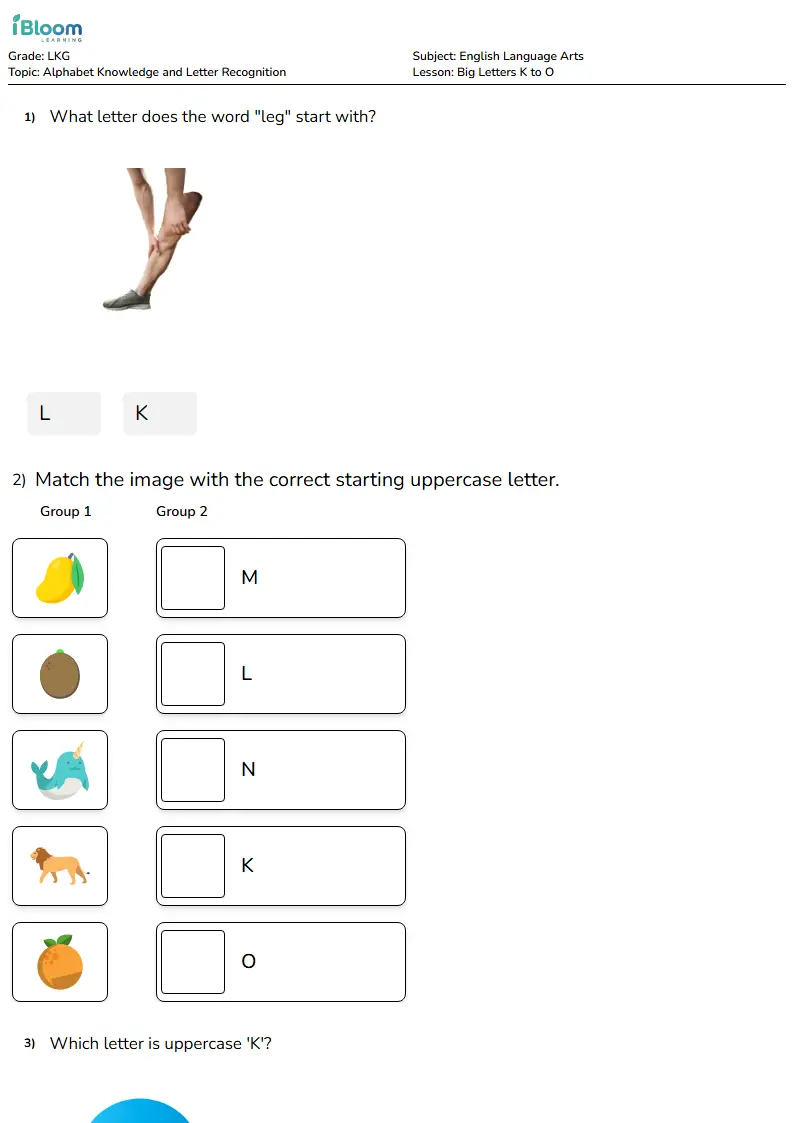
Free Big Letters K to O Worksheets for Lkg
Looking for lkg english language arts help? Download free, interactive big letters k to o worksheets. AI-personalized and Common Core-aligned. Practice early literacy with iBloom.
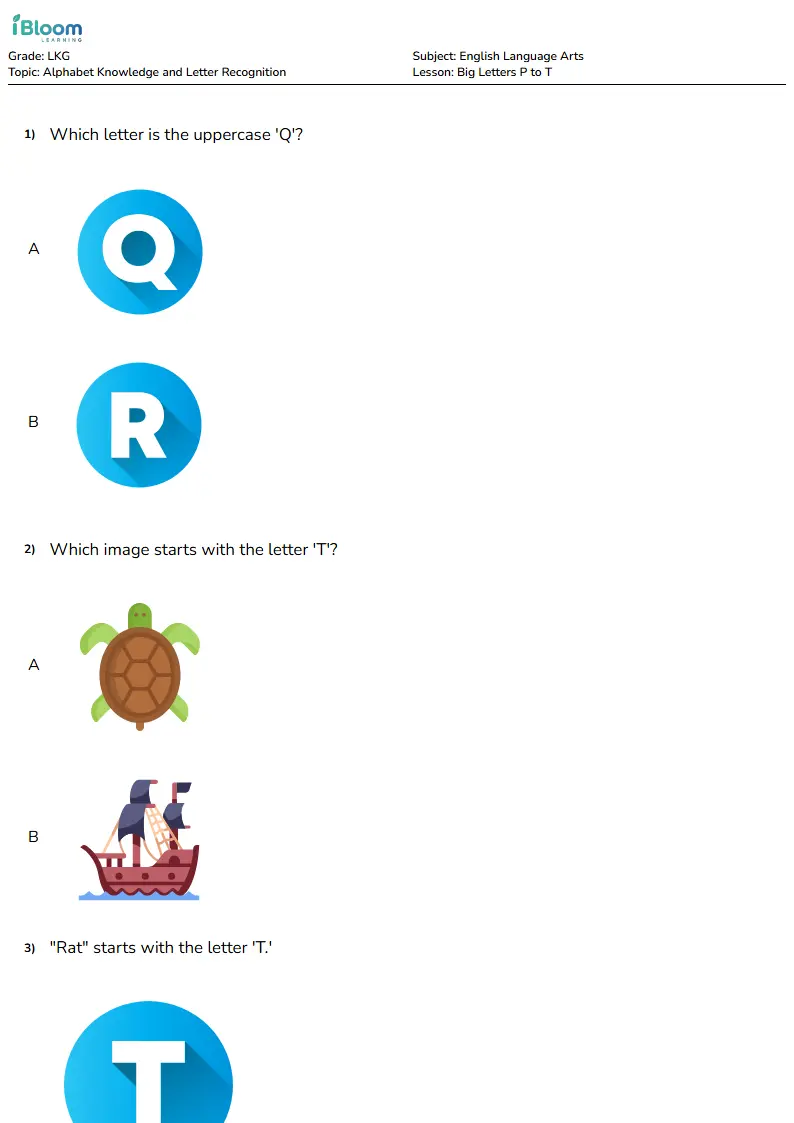
Free Big Letters P to T Worksheets for Lkg
Looking for lkg english language arts help? Download free, interactive big letters p to t worksheets. AI-personalized and Common Core-aligned. Practice early literacy with iBloom.
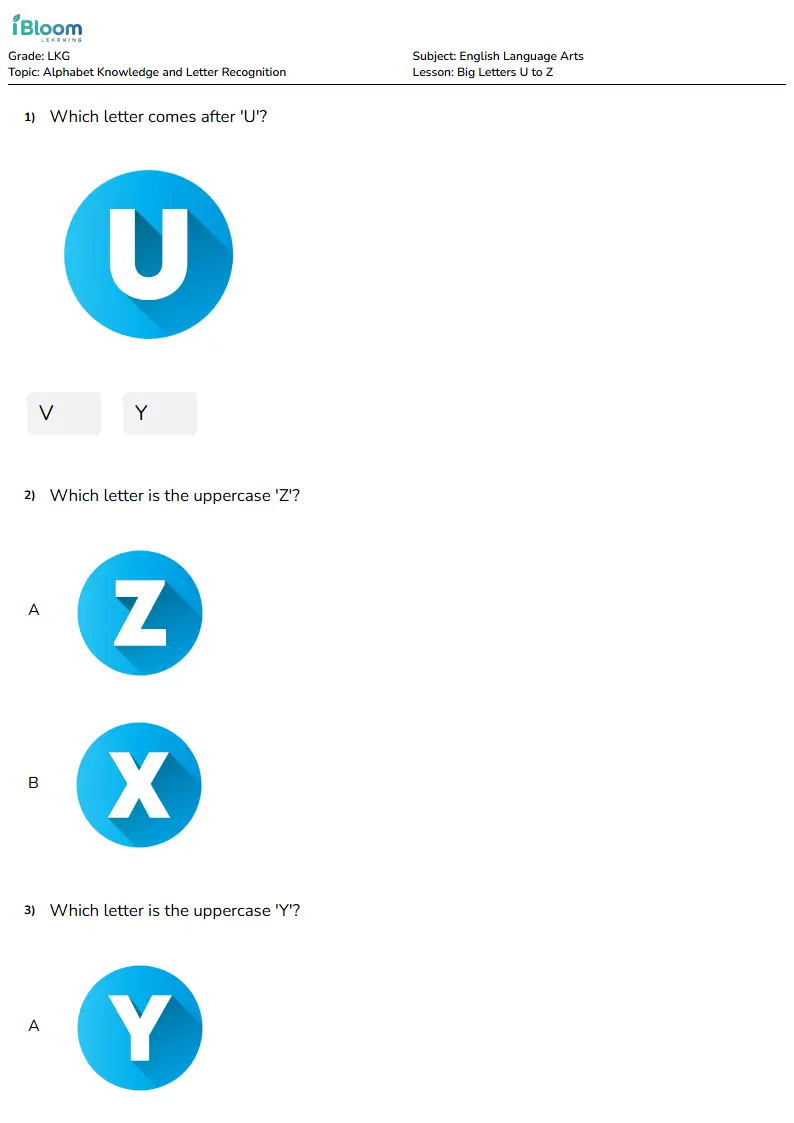
Free Big Letters U to Z Worksheets for Lkg
Looking for lkg english language arts help? Download free, interactive big letters u to z worksheets. AI-personalized and Common Core-aligned. Practice early literacy with iBloom.
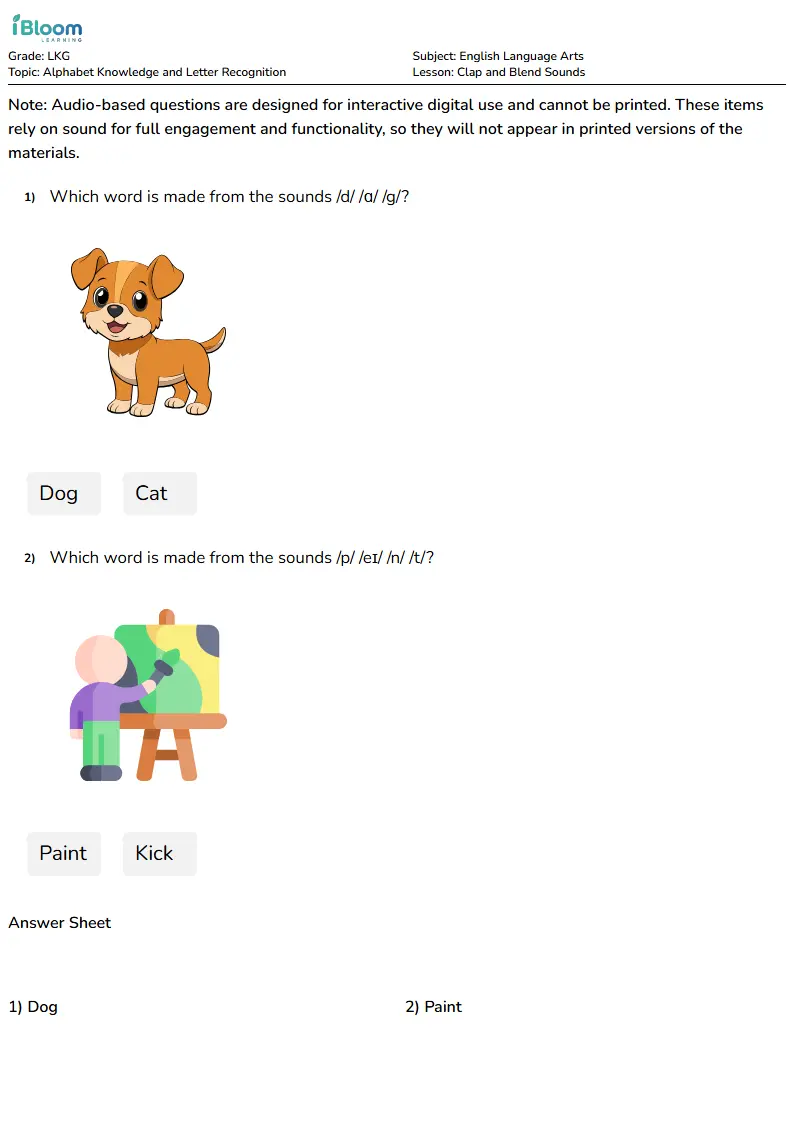
Free Clap and Blend Sounds Worksheets for Lkg
Looking for lkg english language arts help? Download free, interactive clap and blend sounds worksheets. AI-personalized and Common Core-aligned. Practice early literacy with iBloom.
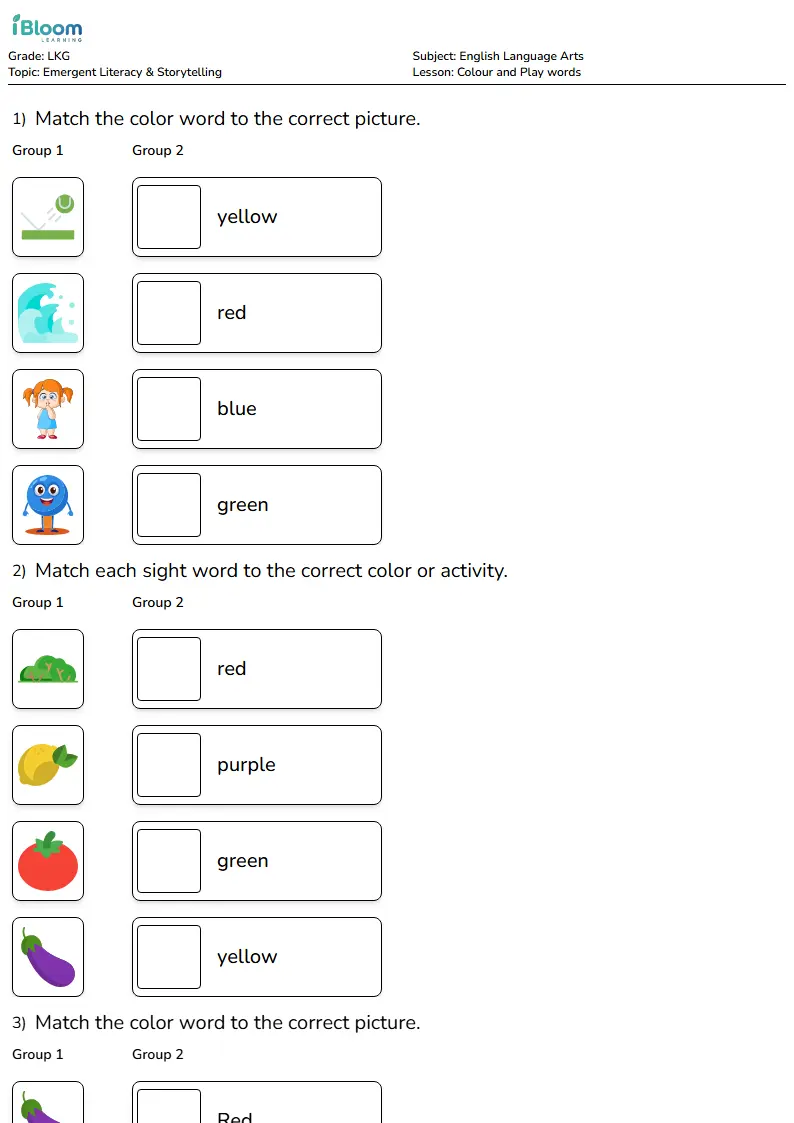
Free Colour and Play words Worksheets for Lkg
Looking for lkg english language arts help? Download free, interactive colour and play words worksheets. AI-personalized and Common Core-aligned. Practice early literacy with iBloom.
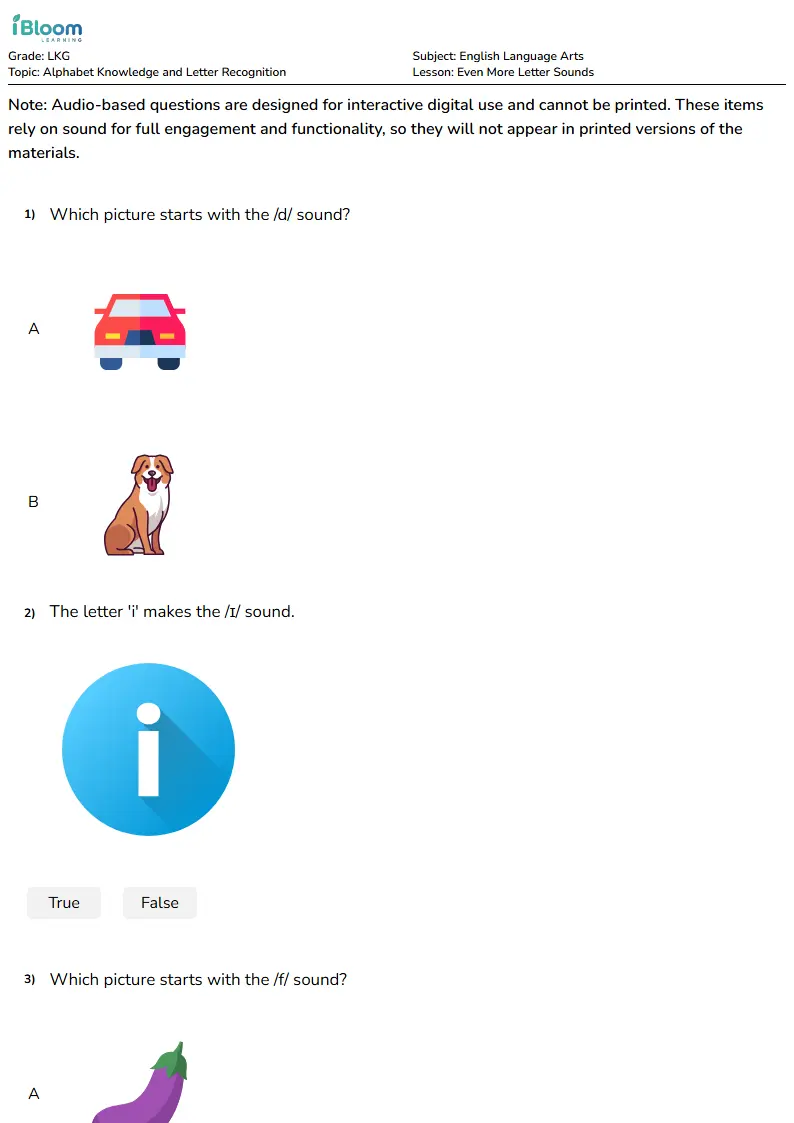
Free Even More Letter Sounds Worksheets for Lkg
Looking for lkg english language arts help? Download free, interactive even more letter sounds worksheets. AI-personalized and Common Core-aligned. Practice early literacy with iBloom.

Free Even More Sight Words Worksheets for Lkg
Looking for lkg english language arts help? Download free, interactive even more sight words worksheets. AI-personalized and Common Core-aligned. Practice early literacy with iBloom.
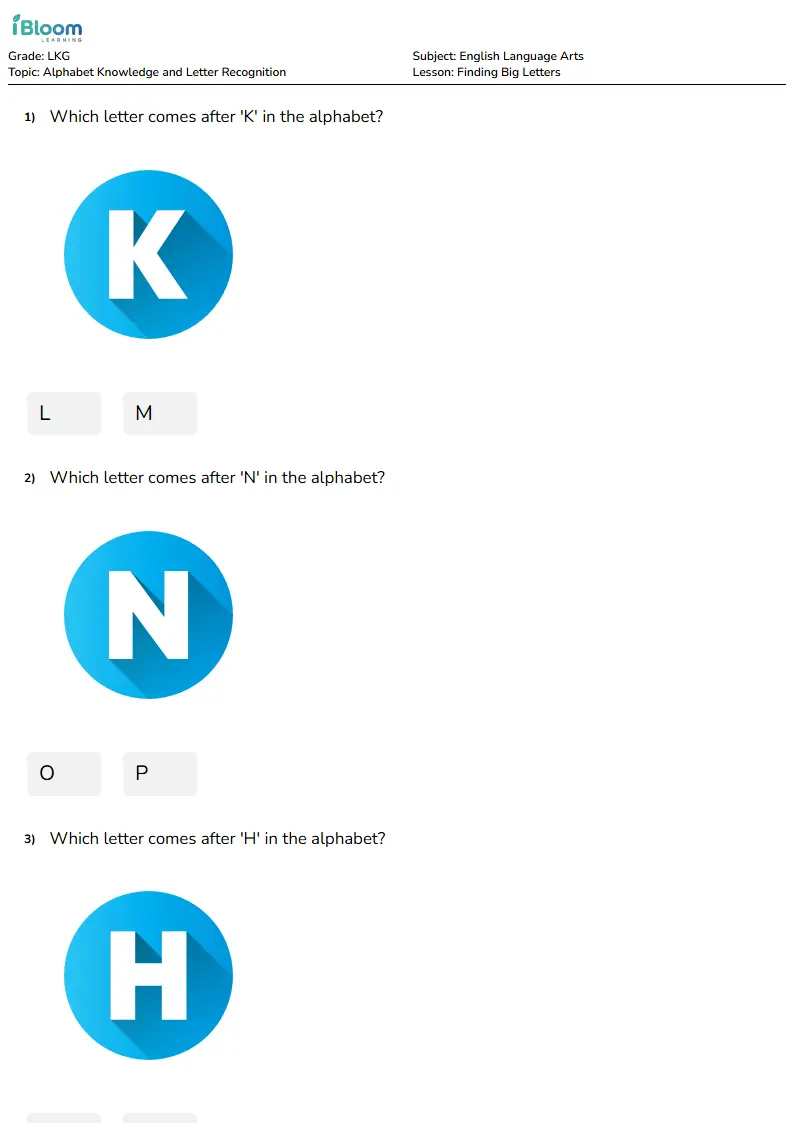
Free Finding Big Letters Worksheets for Lkg
Looking for lkg english language arts help? Download free, interactive finding big letters worksheets. AI-personalized and Common Core-aligned. Practice early literacy with iBloom.
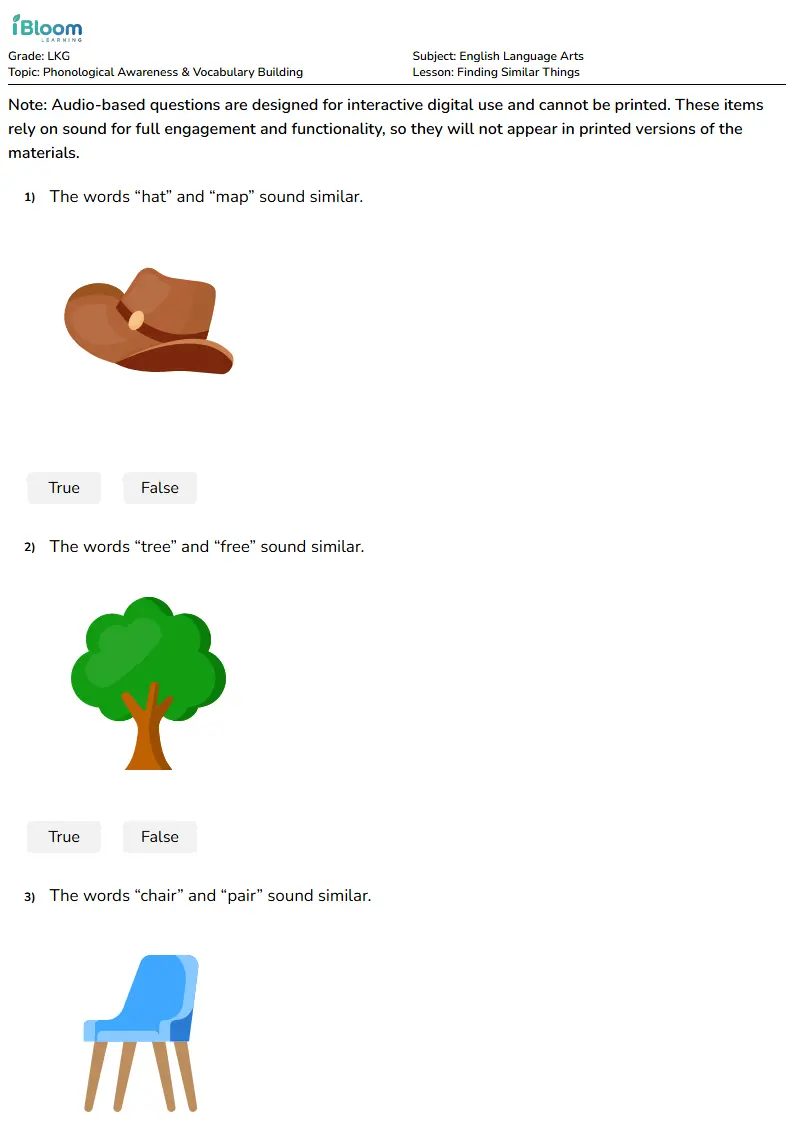
Free Finding Similar Things Worksheets for Lkg
Looking for lkg english language arts help? Download free, interactive finding similar things worksheets. AI-personalized and Common Core-aligned. Practice early literacy with iBloom.
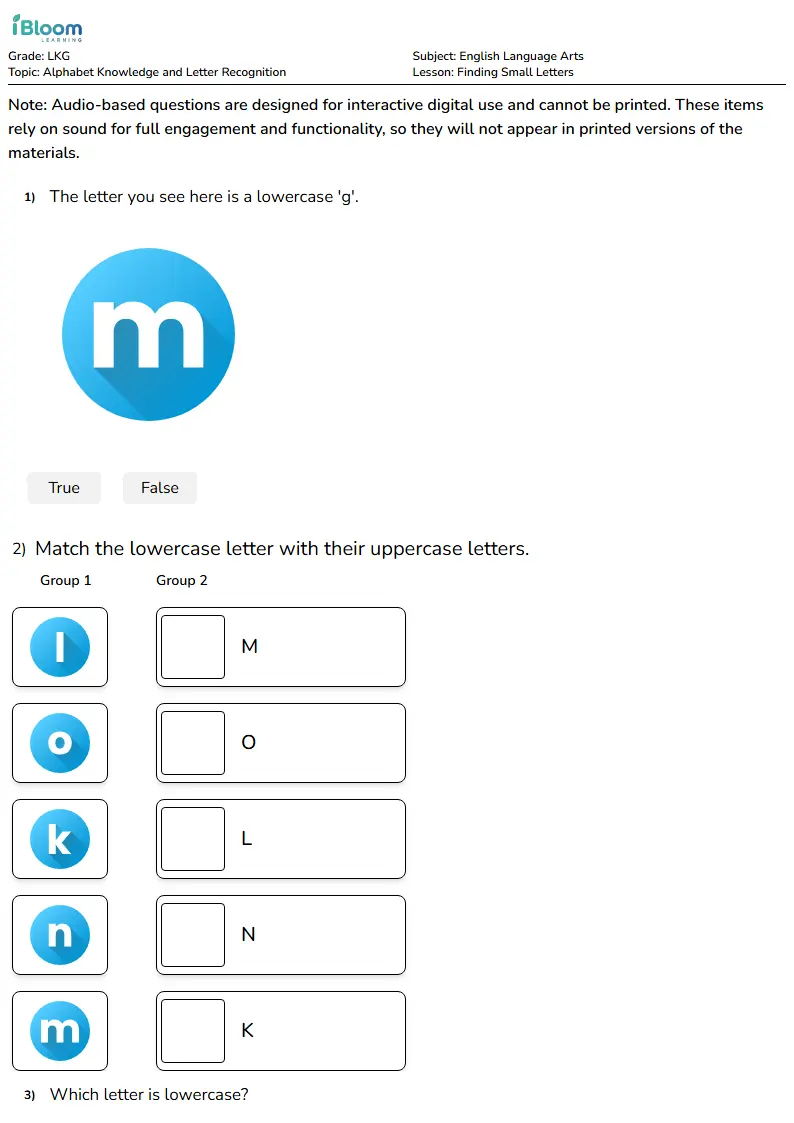
Free Finding Small Letters Worksheets for Lkg
Looking for lkg english language arts help? Download free, interactive finding small letters worksheets. AI-personalized and Common Core-aligned. Practice early literacy with iBloom.
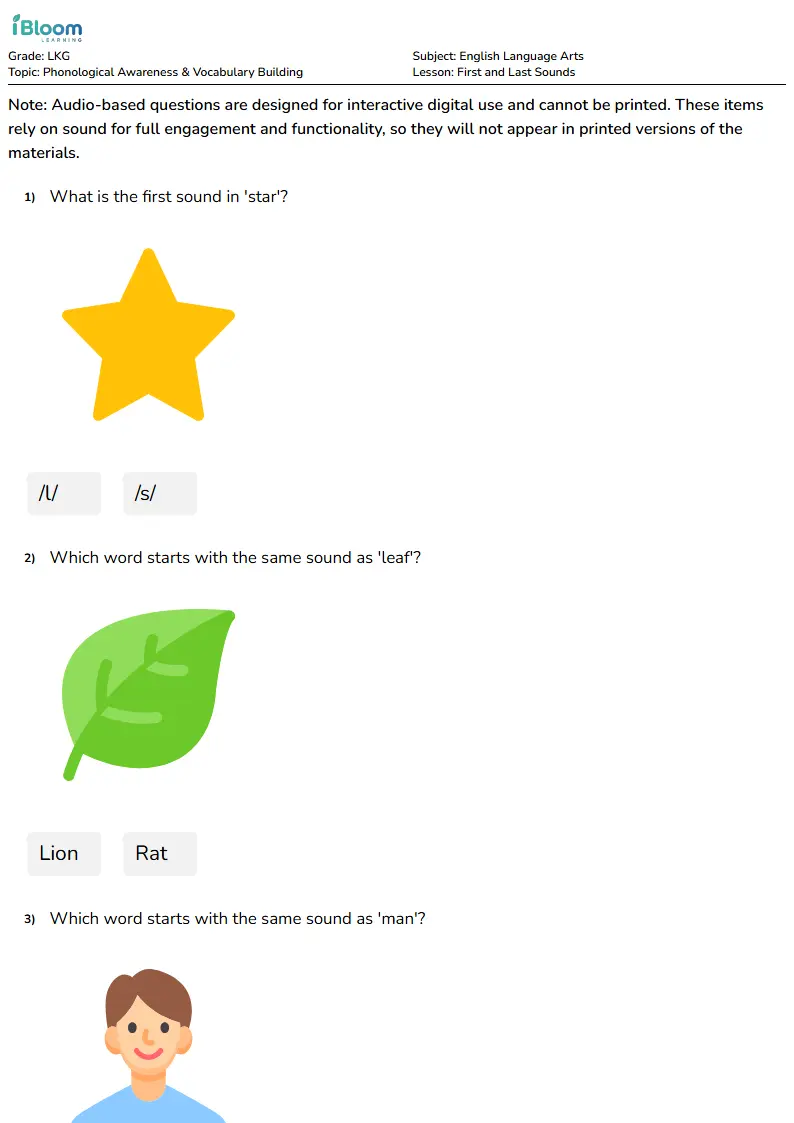
Free First and Last Sounds Worksheets for Lkg
Looking for lkg english language arts help? Download free, interactive first and last sounds worksheets. AI-personalized and Common Core-aligned. Practice early literacy with iBloom.
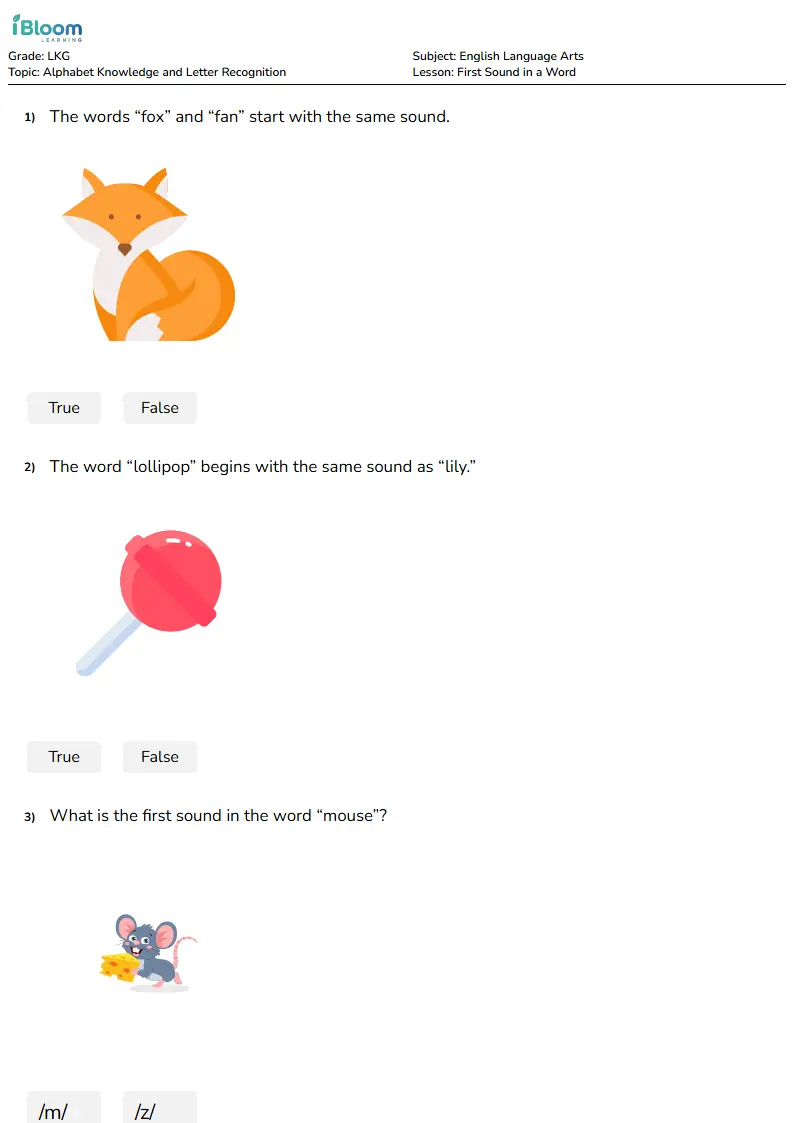
Free First Sound in a Word Worksheets for Lkg
Looking for lkg english language arts help? Download free, interactive first sound in a word worksheets. AI-personalized and Common Core-aligned. Practice early literacy with iBloom.

Free Harder Words I Can Read Worksheets for Lkg
Looking for lkg english language arts help? Download free, interactive harder words i can read worksheets. AI-personalized and Common Core-aligned. Practice early literacy with iBloom.

Free I Know All My Sight Words! Worksheets for Lkg
Looking for lkg english language arts help? Download free, interactive i know all my sight words! worksheets. AI-personalized and Common Core-aligned. Practice early literacy with iBloom.
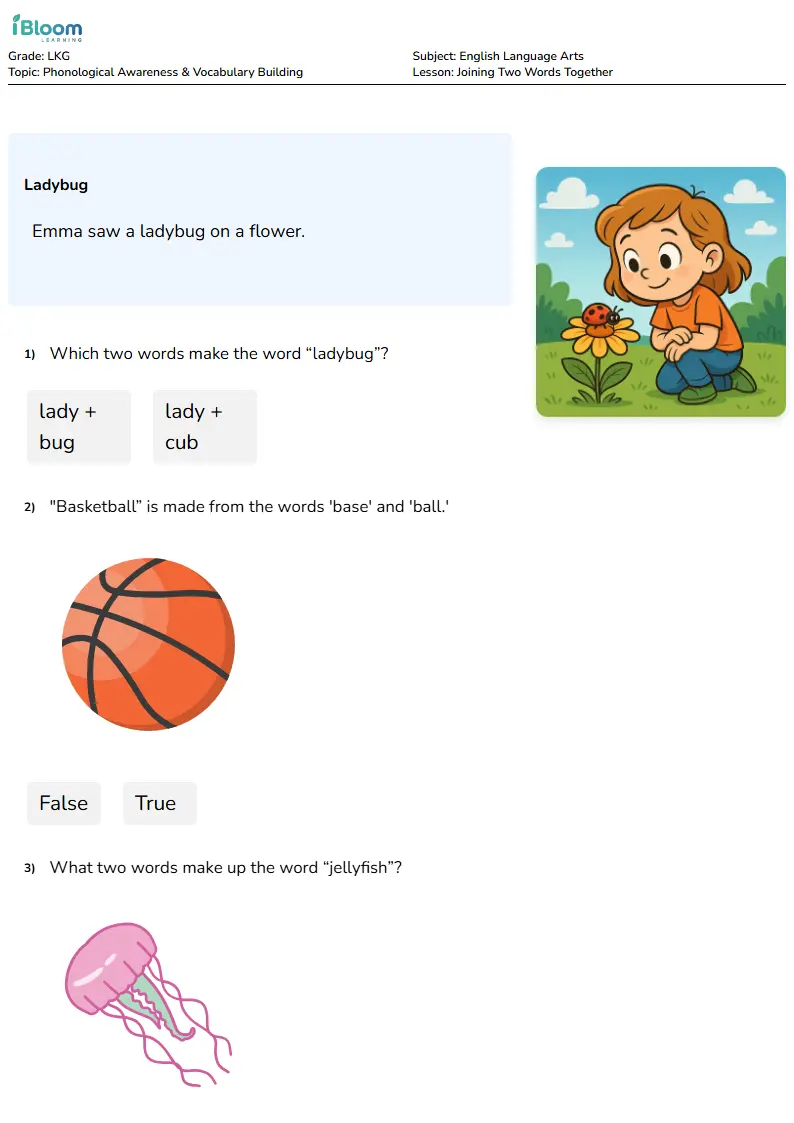
Free Joining Two Words Together Worksheets for Lkg
Looking for lkg english language arts help? Download free, interactive joining two words together worksheets. AI-personalized and Common Core-aligned. Practice early literacy with iBloom.
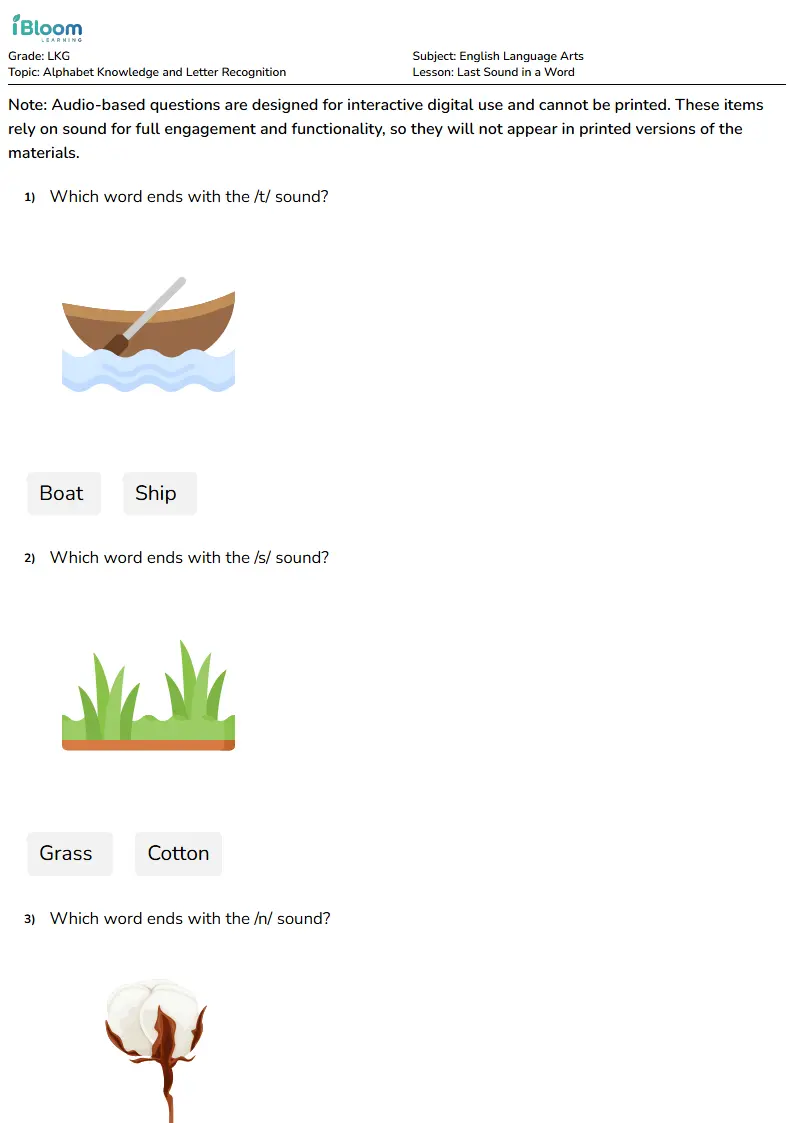
Free Last Sound in a Word Worksheets for Lkg
Looking for lkg english language arts help? Download free, interactive last sound in a word worksheets. AI-personalized and Common Core-aligned. Practice early literacy with iBloom.
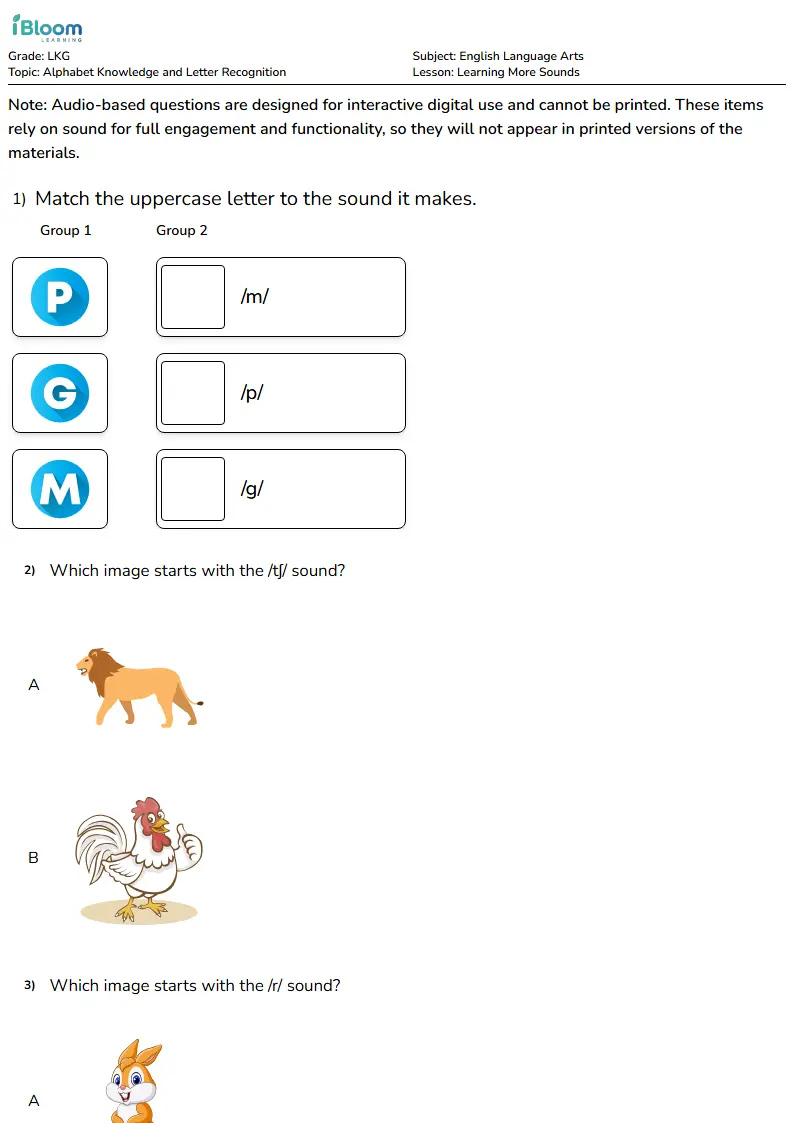
Free Learning More Sounds Worksheets for Lkg
Looking for lkg english language arts help? Download free, interactive learning more sounds worksheets. AI-personalized and Common Core-aligned. Practice early literacy with iBloom.
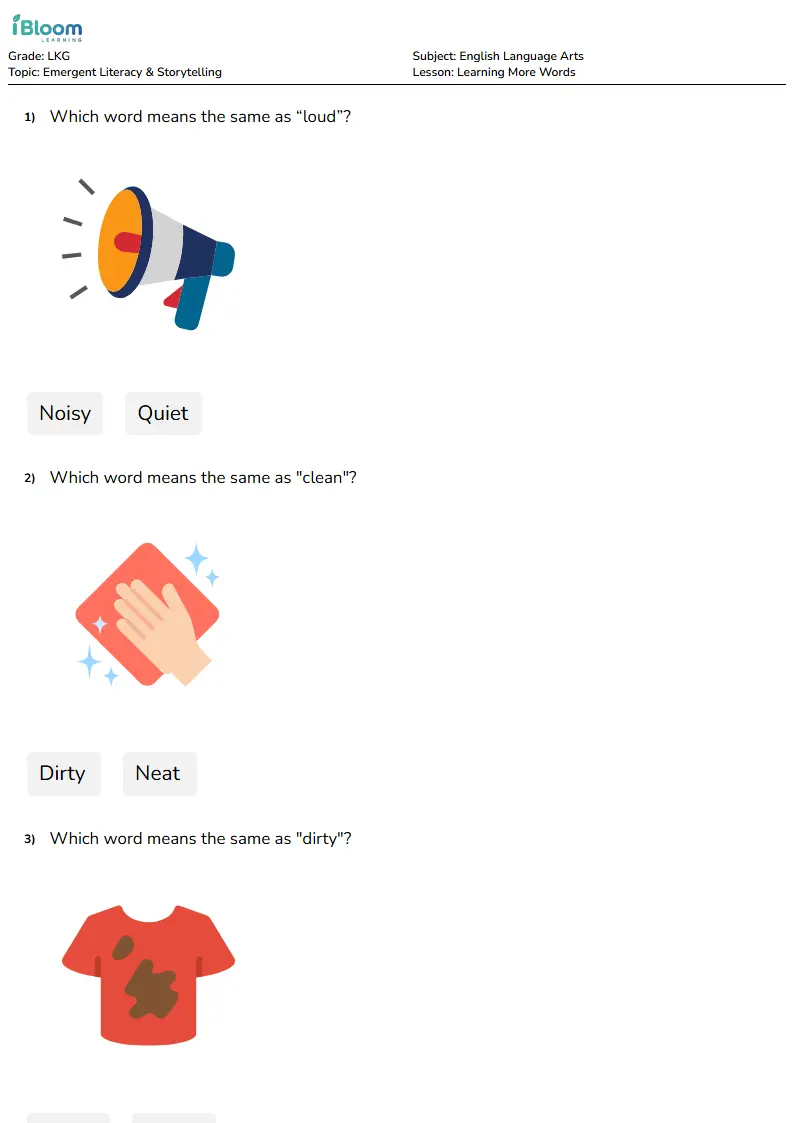
Free Learning More Words Worksheets for Lkg
Looking for lkg english language arts help? Download free, interactive learning more words worksheets. AI-personalized and Common Core-aligned. Practice early literacy with iBloom.
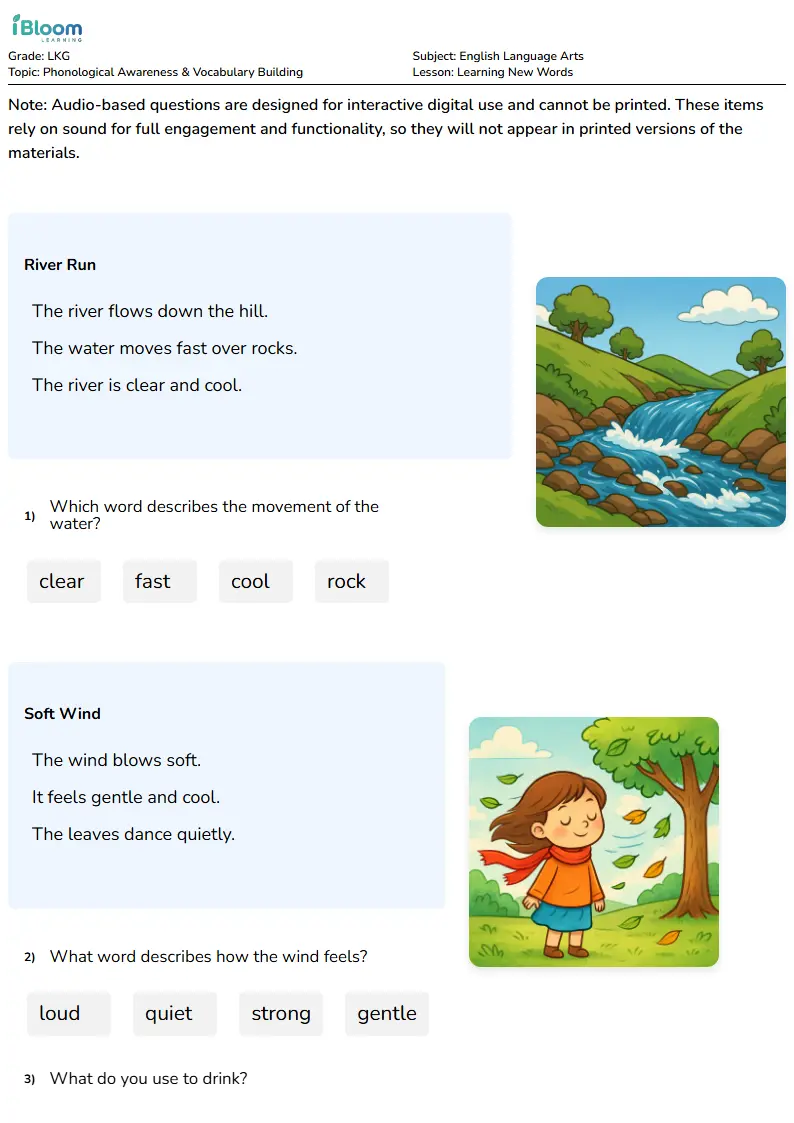
Learning New Words Worksheet for LKG
Help LKG children read River Run and Soft Wind, choose words such as fast and gentle, and answer one everyday vocabulary prompt that uses audio.
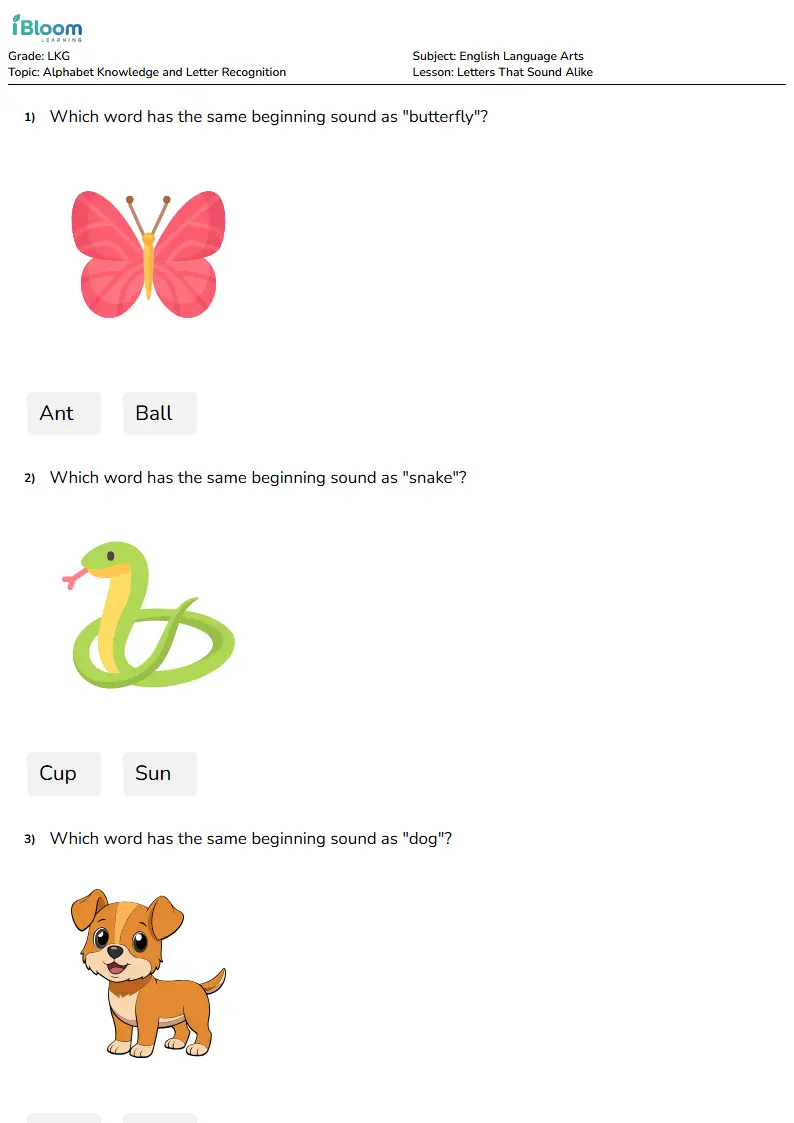
Free Letters That Sound Alike Worksheets for Lkg
Looking for lkg english language arts help? Download free, interactive letters that sound alike worksheets. AI-personalized and Common Core-aligned. Practice early literacy with iBloom.
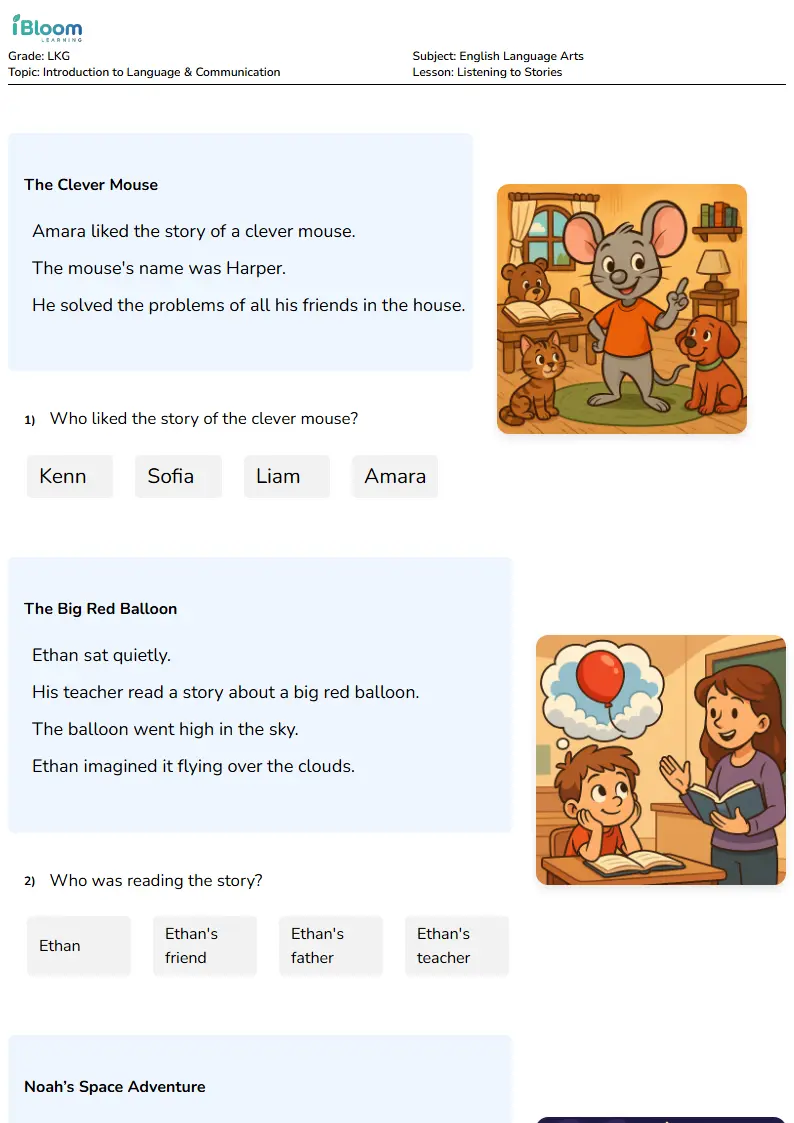
Listening to Stories Worksheet for LKG
Read The Clever Mouse and The Big Red Balloon with an LKG child, then answer who questions and use clear story details to check understanding.