Class 1 English Worksheets
Use Class 1 English worksheets for reading, phonics, words, sentences, punctuation, and picture practice.
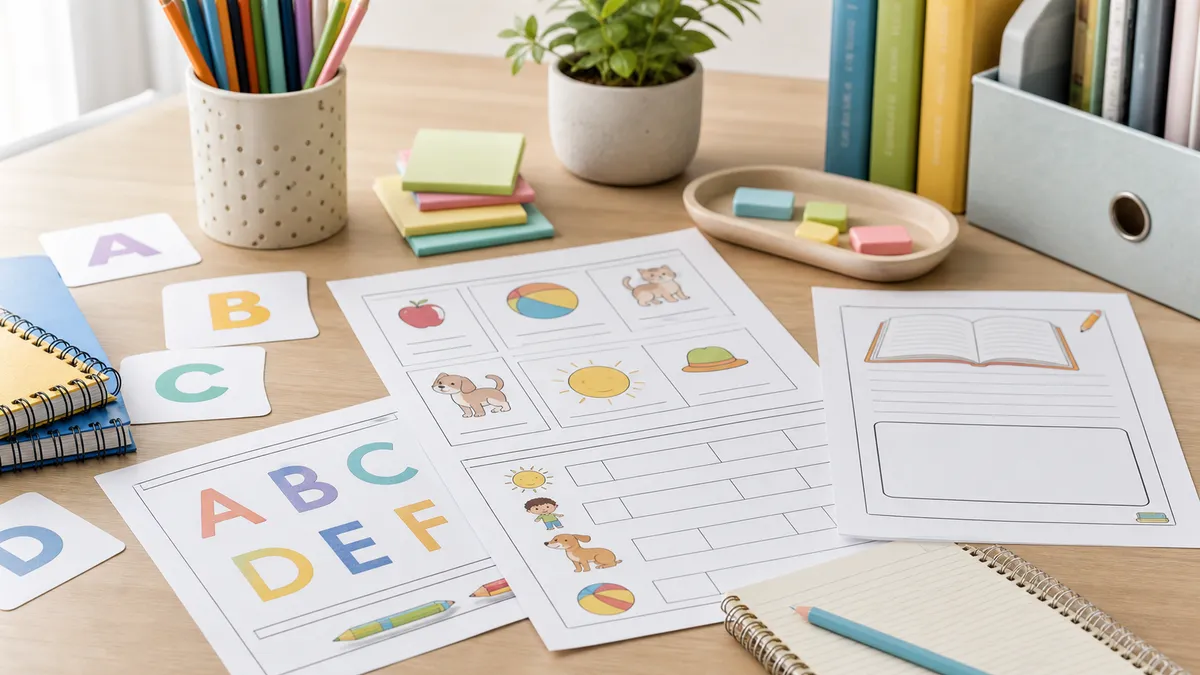
Class 1 English Worksheets is a practical guide for parents, teachers, tutors, and children who need helping families and teachers choose a complete early-English practice path without jumping randomly between worksheets. It builds on iBloom's early-English pages without repeating the existing sentence-building, picture-reading, and phonics guides. Use it with English Worksheets, Building Sentences with Nouns and Verbs for Class 1, and the exact iBloom practice pages linked throughout this article.
Start with the Matching Practice
Use this guide with a direct iBloom worksheet or lesson so children can move from reading the explanation into real practice.
Table of Contents
Worksheet And Lesson Previews
Pictures Help Us Read Worksheets for Class 1 Preview
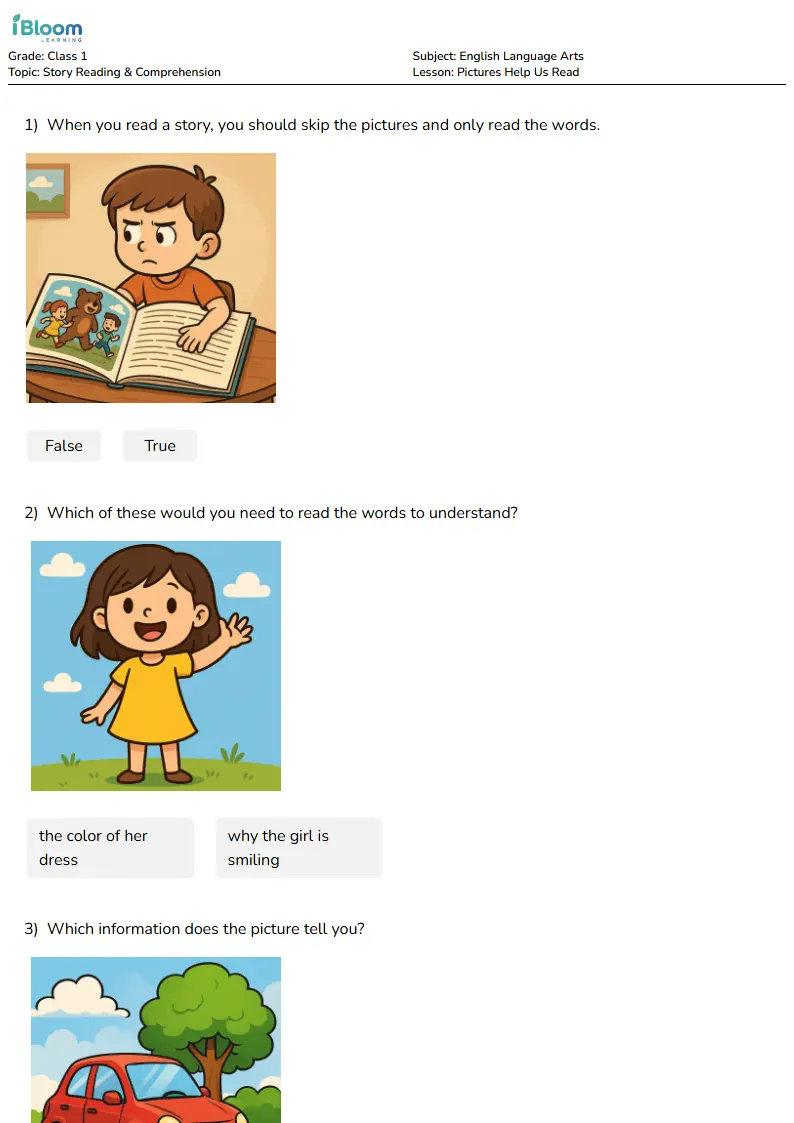
Use this preview to see the kind of practice children will open before you start the routine.
Punctuation Marks We Need Worksheets for Class 1 Preview
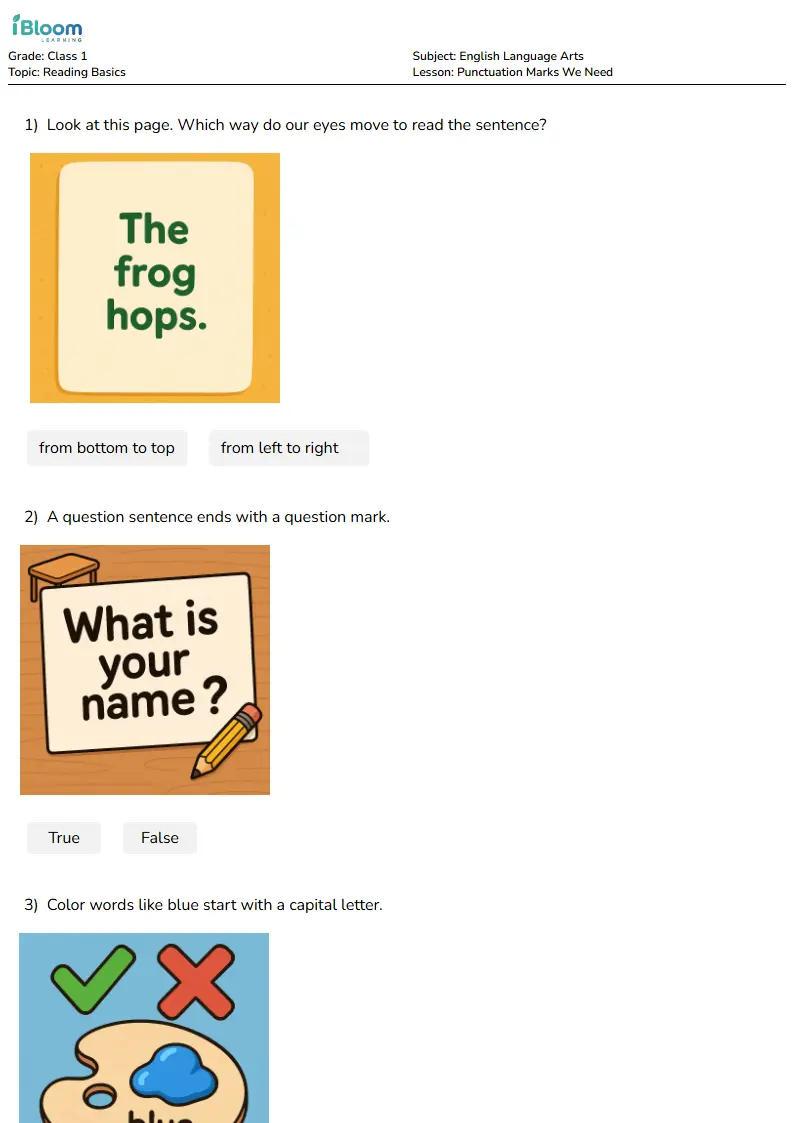
Use this preview to see the kind of practice children will open before you start the routine.
Reading Fluency Practice Worksheets for Class 1 Preview
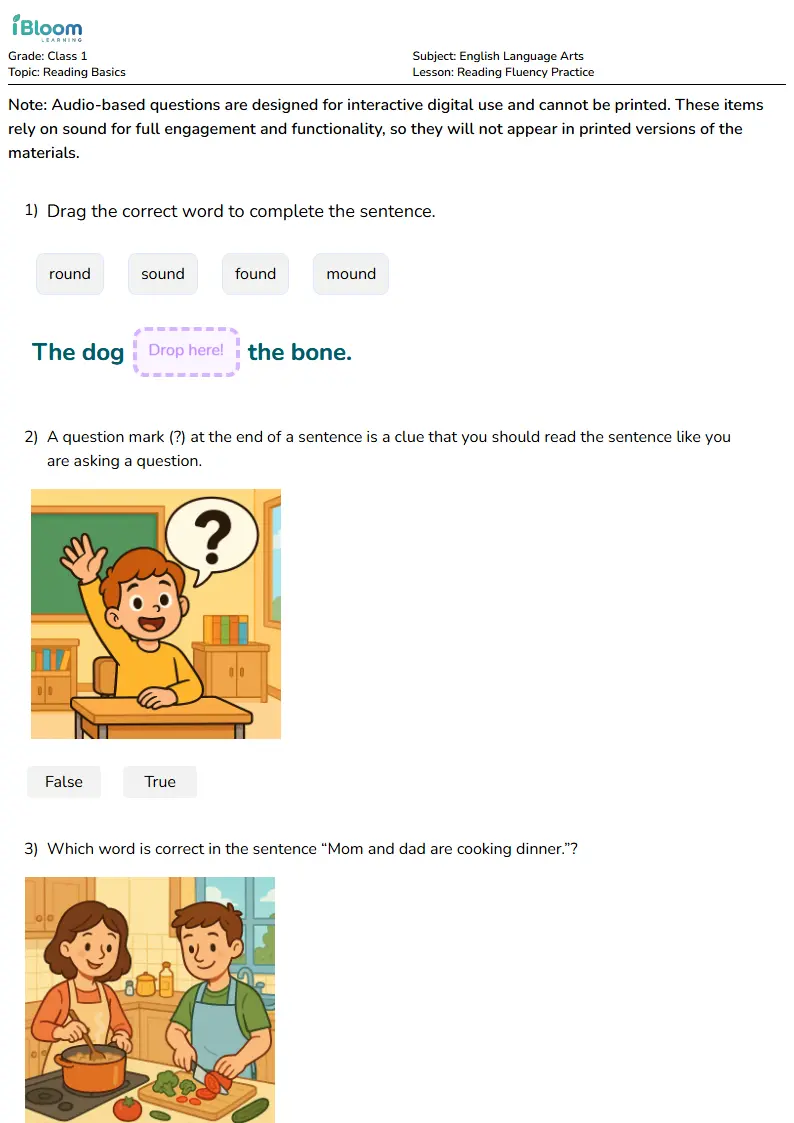
Use this preview to see the kind of practice children will open before you start the routine.
Key Takeaways
- Young children learn English best when reading, speaking, listening, and writing are connected.
- A useful worksheet asks the child to notice a clue, say the answer, and then write when ready.
- Parents can help with short daily routines instead of long correction-heavy sessions.
- Teachers can use iBloom pages as warm-ups, literacy centers, guided practice, or exit tickets.
- Internal practice paths matter because early English skills grow together: phonics, words, sentences, punctuation, and comprehension.
Why This Skill Matters
Early English practice can become confusing when children jump between unrelated worksheets. A child may practise sounds one day, punctuation another day, and picture reading the next day without seeing how those skills connect. Class 1 English Worksheets gives a clearer path: start with a visible clue, say the answer aloud, connect it to a word or sentence, and then write a small response.
Guidance from Reading Rockets, IES early literacy practice guidance, and NICHD reading instruction information supports explicit teaching, phonics, oral language, and repeated reading practice. Children need modeling and repetition, but they also need the work to feel meaningful.
What Good Practice Looks Like
A good early-English worksheet is not only a page of answers. It gives children something to notice: a picture, letter, sound, word, sentence, punctuation mark, or story clue. Then it asks for a small action: match, circle, say, write, explain, or correct.
The best sequence is simple. Model one example. Let the child try one with help. Then let the child complete a few independently. End by asking, "How did you know?" That final explanation turns worksheet practice into real learning.
Examples and Mini-Lessons
| Example | What Children Do | Why It Helps |
|---|---|---|
| Read one word or sentence aloud. | Start with an accessible action | It lowers pressure and builds confidence |
| Point to the picture, sound, or punctuation clue. | Use a clear clue | It makes the answer explainable |
| Write one short answer and reread it. | Reread or explain | It connects reading and writing |
If a child guesses, ask for the clue. If a child answers correctly but cannot explain, ask them to point. If a child can explain orally but struggles to write, offer a sentence starter. The goal is progress from seeing to saying to writing.
Home Practice Routine
Parents can use this routine in 10 minutes:
- Open one iBloom page from the practice path.
- Solve one example together.
- Ask the child to point to the clue.
- Let the child try two questions independently.
- End with one word, sentence, or explanation read aloud.
This works in homes across Delhi, Mumbai, Bengaluru, Chennai, Hyderabad, Pune, Kolkata, Los Angeles, Houston, Chicago, Dallas, Seattle, Boston, Dubai, Abu Dhabi, Sharjah, Ajman, and Al Ain. The school system may differ, but young children everywhere benefit from clear, short, repeated English practice.
Classroom and Tutoring Routine
Teachers can use Class 1 English Worksheets as a mini-lesson, center activity, partner task, or exit ticket. Model one question and think aloud. Ask partners to explain a second. Then give children independent practice and review one common mistake.
Tutors can use the same page diagnostically. If a child cannot hear the sound, begin with oral practice. If a child cannot form the sentence, speak it together first. If a child ignores punctuation, read the sentence aloud with expression. If a child misses picture clues, cover the text and discuss the image before answering.
Regional Practice Notes
In India, this supports CBSE, ICSE, state-board English, and tuition review for Class 1 and nearby early grades. In the United States, it fits kindergarten and first-grade literacy routines, reading groups, and at-home practice. In the UAE, it supports British, American, IB, and Indian curriculum learners who may use different school terms but still need the same reading and writing habits.
iBloom Practice Path
- Start with English Worksheets.
- Add Building Sentences with Nouns and Verbs for Class 1 for the closest existing support article.
- Practise directly with Picture Reading Worksheets for Kids.
- Continue with Pictures Help Us Read worksheet when the child needs another format.
- Use Punctuation Marks We Need worksheet for related practice.
- Keep Reading Fluency Practice worksheet as the next step.
Frequently Asked Questions
How often should children practise early English?
Short daily practice works well. Ten minutes with speaking and explanation is often better than a long worksheet completed silently.
What should parents do when a child guesses?
Ask the child to point to the clue before discussing the answer. The clue might be a picture, sound, word, punctuation mark, or sentence.
Should children write every answer?
Not always. Young learners can point and say first. Writing should come after the child understands the answer.
How can teachers use this in class?
Use one example for modeling, one for partner talk, and a short independent set for practice. Review one common mistake at the end.
Which iBloom page should I use next?
Choose the linked page that matches the exact skill: broad English practice, punctuation, picture comprehension, sentence writing, phonics, or reading fluency.
Practice Path for grade 1 english worksheets
Use this section when a child needs a direct next step after reading the guide. Start with the explanation in this article, then move into a connected iBloom practice path so the child sees the idea in a lesson, a worksheet, and a short review routine.
- english projects for class 1
- picture comprehension worksheets for class 1
- building sentences with nouns and verbs
For parents, the simplest routine is: read one example aloud, let the child try two items, ask for the reason, then revisit the article section that explains the skill. For teachers and tutors, the same path can become a small-group rotation or a homework support set. The goal is steady improvement on the exact skill, not just more pages.
Practice This Skill Next
After reading this guide, children can practise the same skill on iBloom. Start with Pictures Help Us Read worksheet or Punctuation Marks We Need worksheet, then ask the child to explain one answer before moving on.