Free printable practice
Base Ten Blocks Practice Activities
Grade 1 base ten blocks worksheets for counting, decomposing, adding, and regrouping two-digit numbers with tens and ones.
Explore Base Ten Blocks
Free printable worksheet PDFs
Preview every available page, then download the free worksheet PDF for home, homeschool, tutoring, or classroom practice.
Preview the exact activity before downloading it.
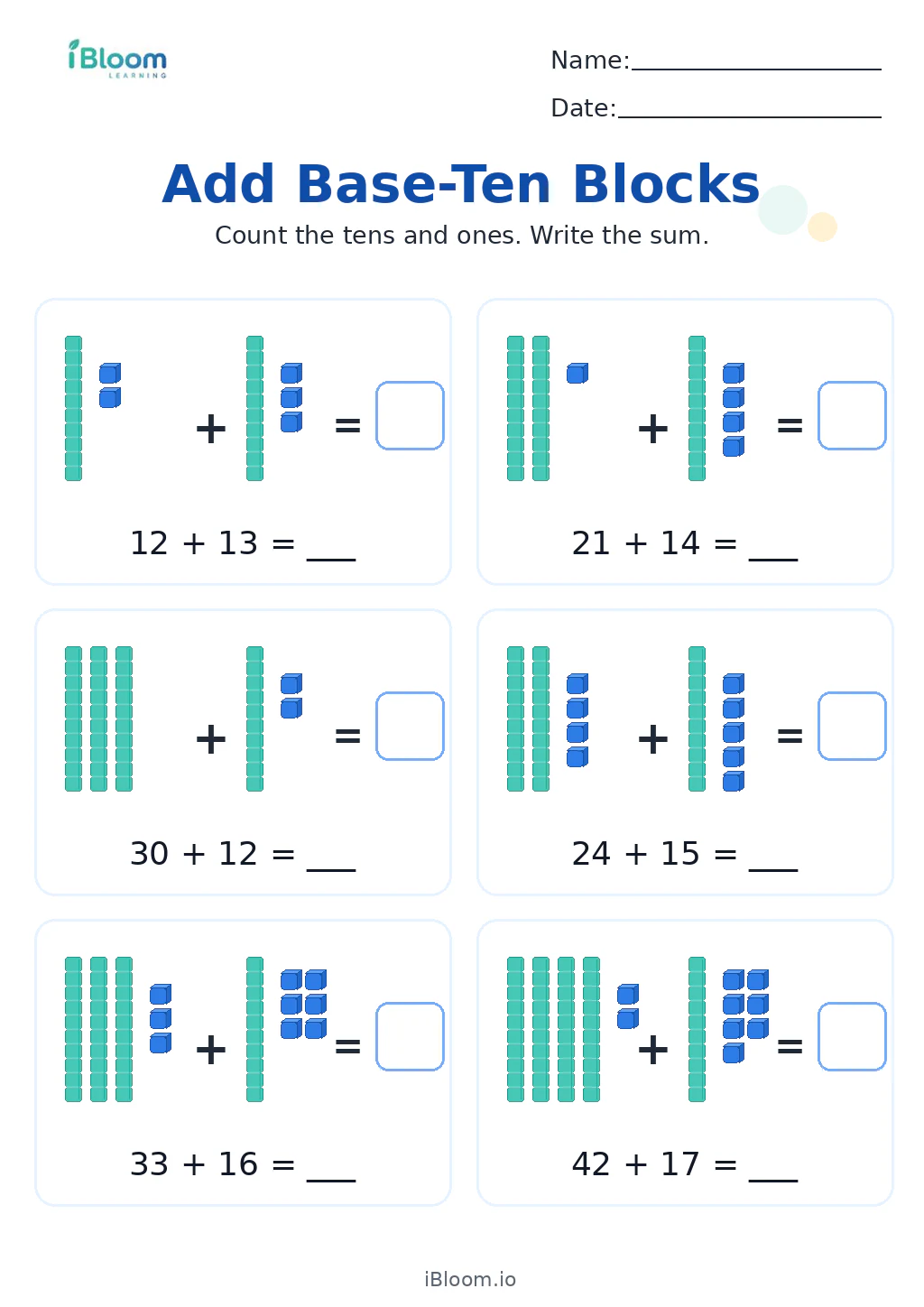 Add Base-Ten BlocksA Grade 1 worksheet for adding tens rods and ones cubes.Grade 1Free PDF preview
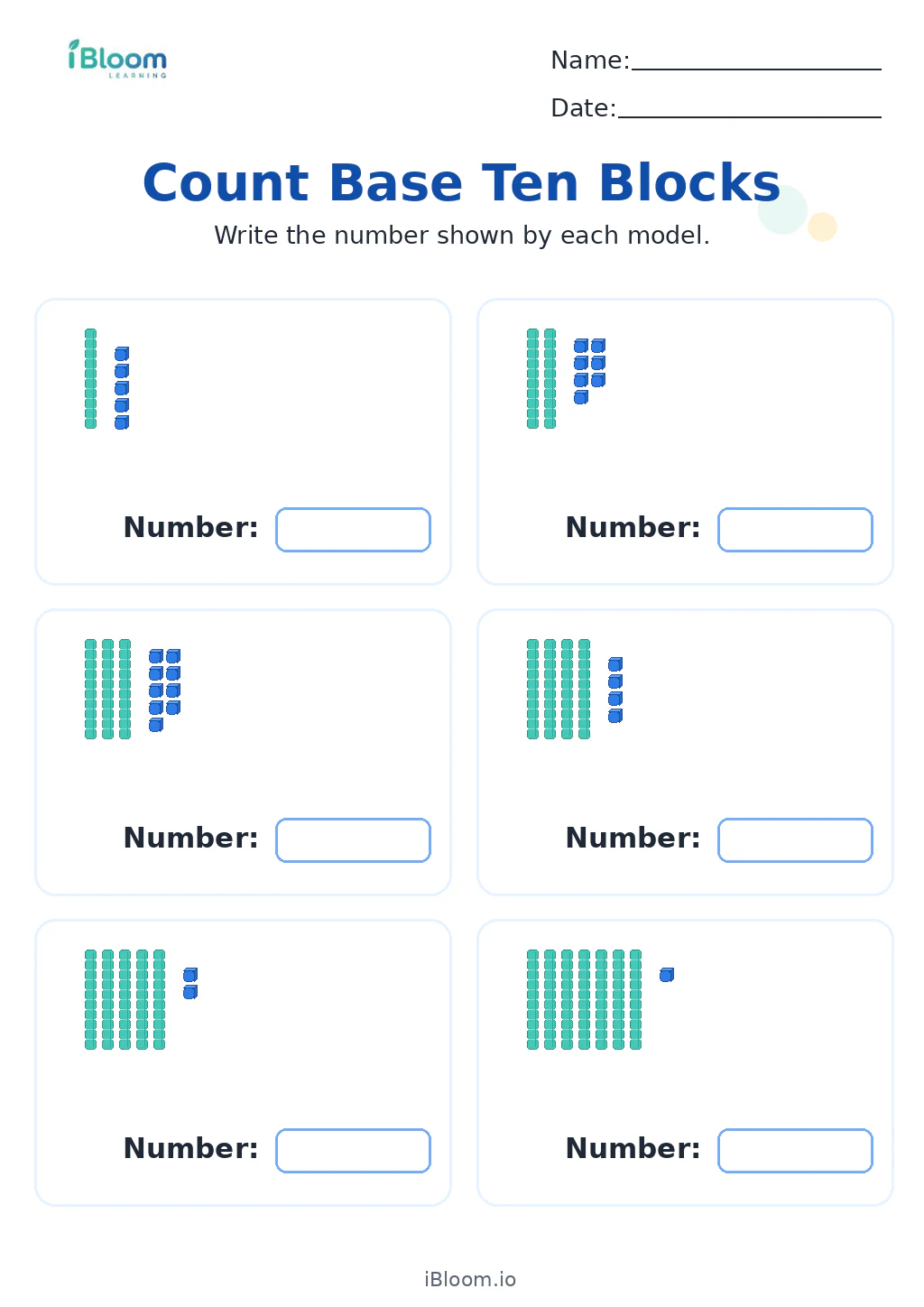 Count Base Ten BlocksA Grade 1 base-ten blocks worksheet where children count tens rods and ones cubes, then write the two-digit number.Grade 1Free PDF preview
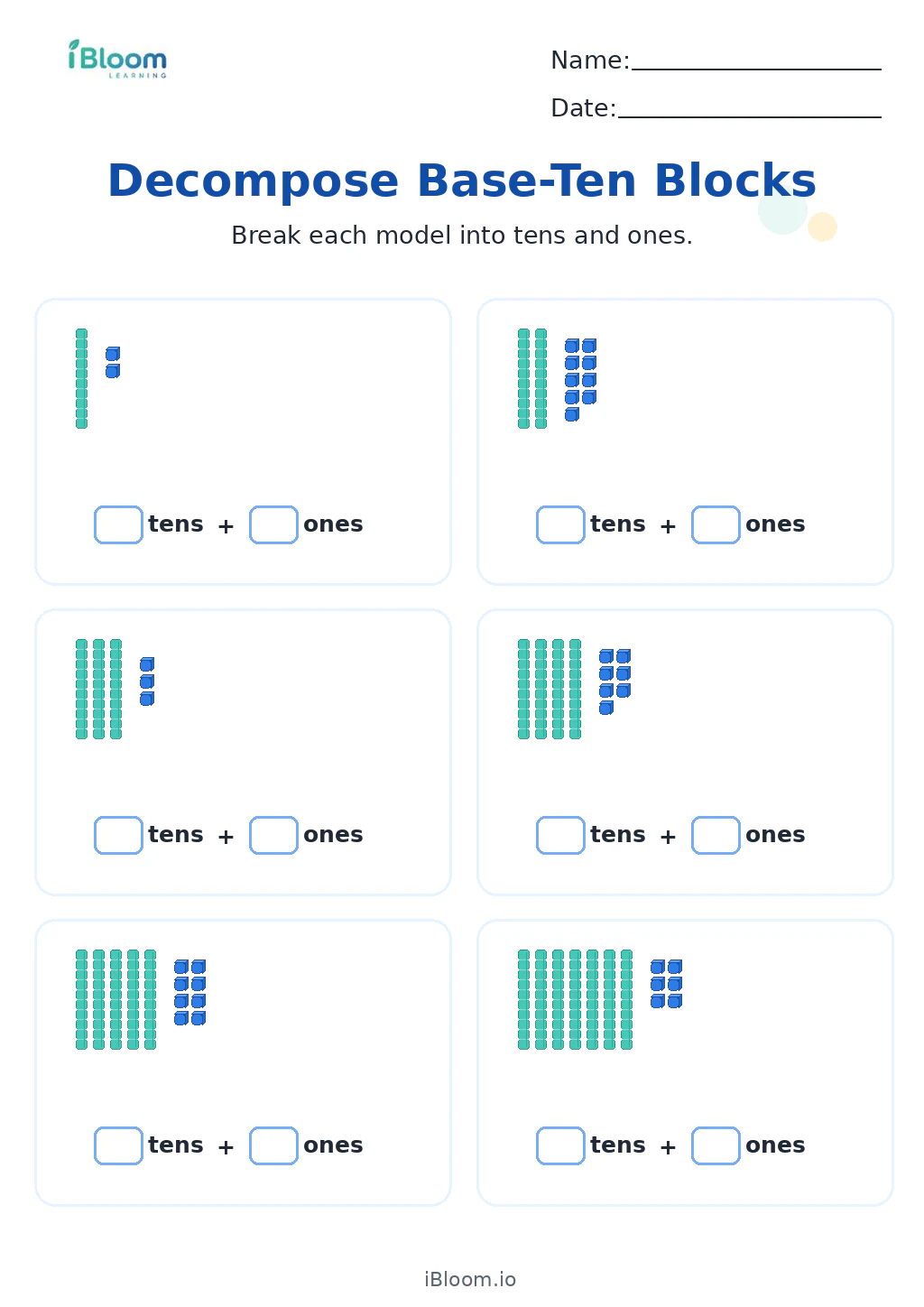 Decompose Base-Ten BlocksA Grade 1 worksheet for decomposing base-ten block models into tens and ones.Grade 1Free PDF preview
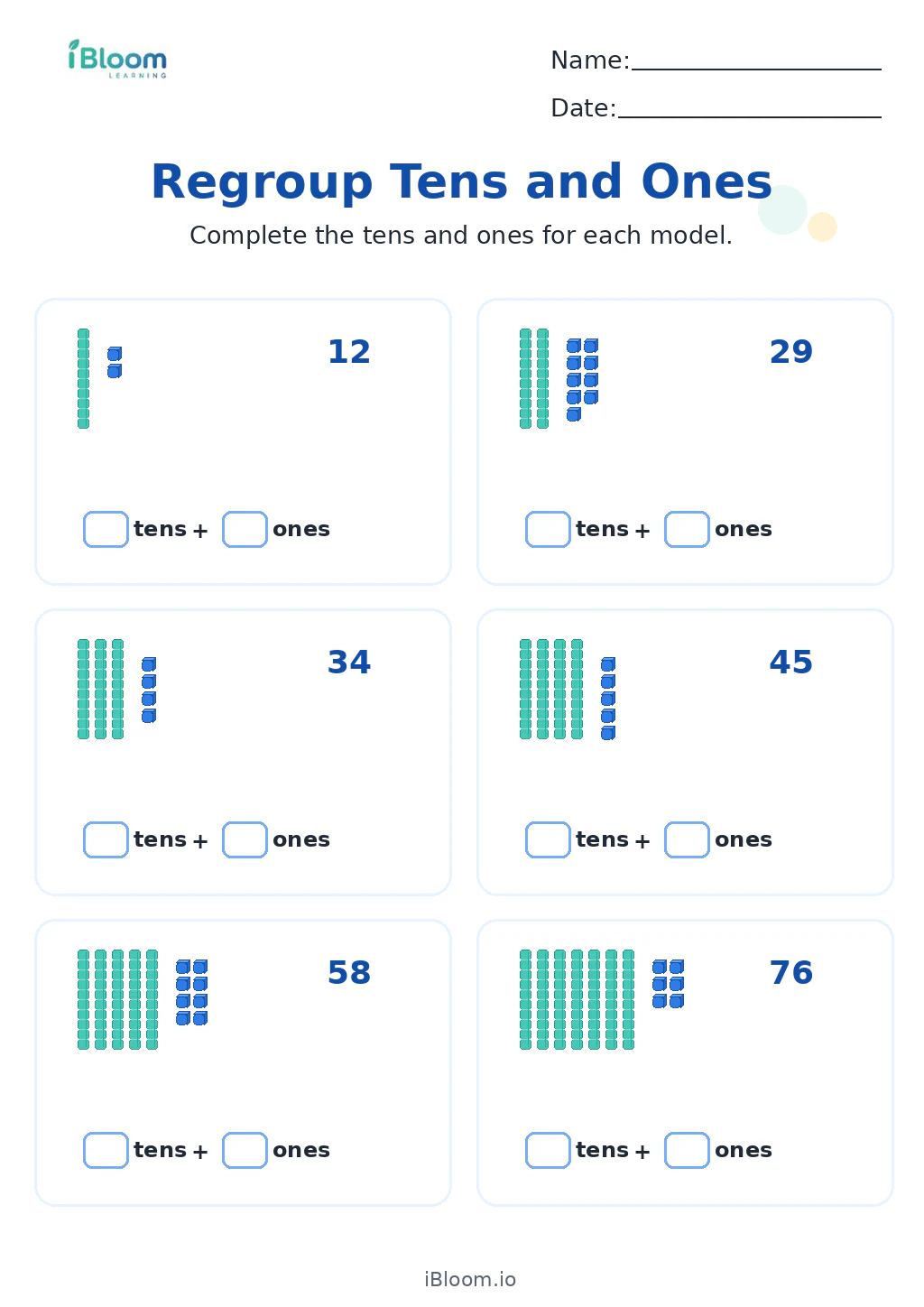 Regroup Tens and OnesA Grade 1 worksheet for regrouping extra ones into a new ten.Grade 1Free PDF preview
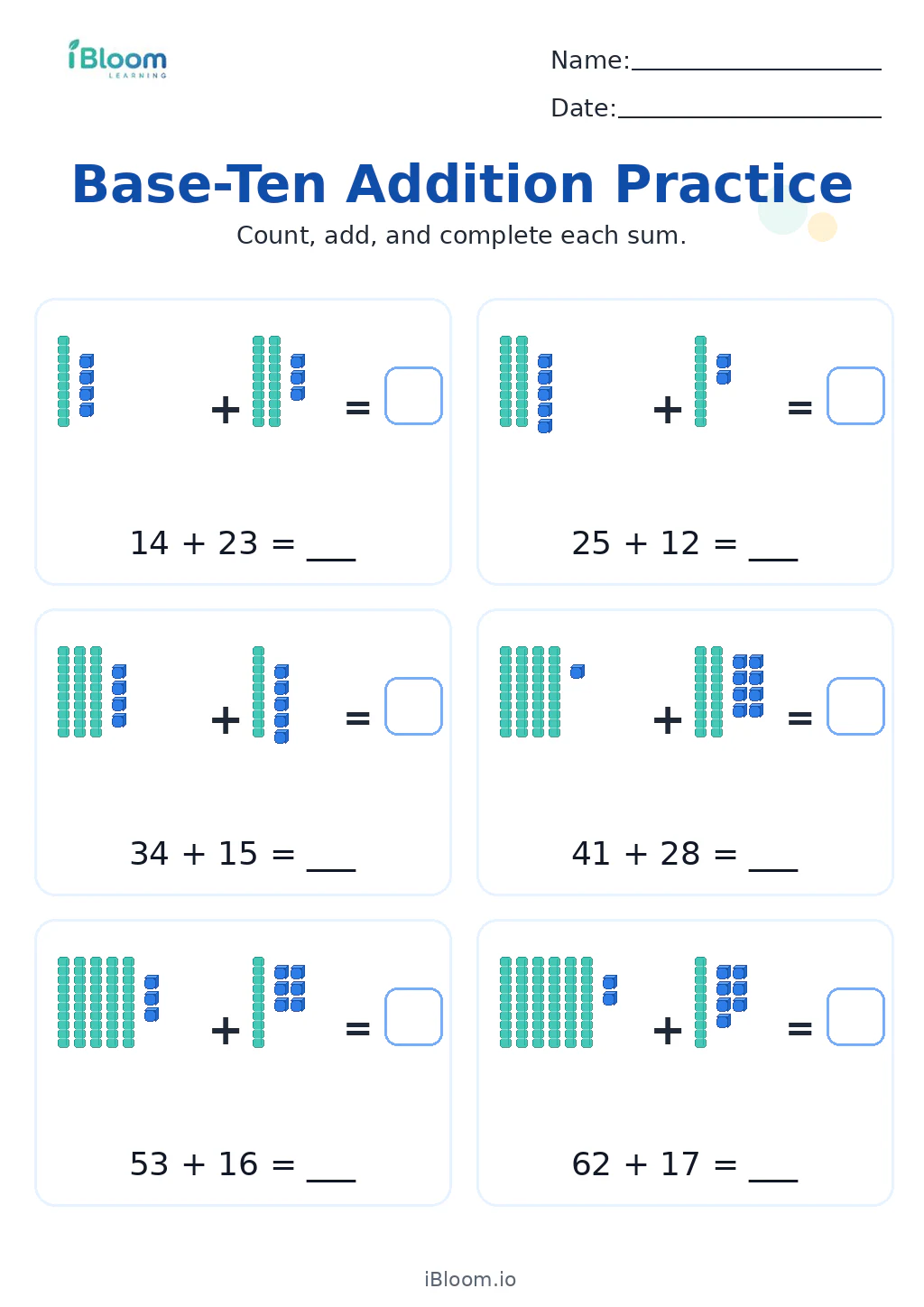 Base-Ten Addition PracticeA second Grade 1 worksheet for adding visible base-ten block groups.Grade 1Free PDF preview
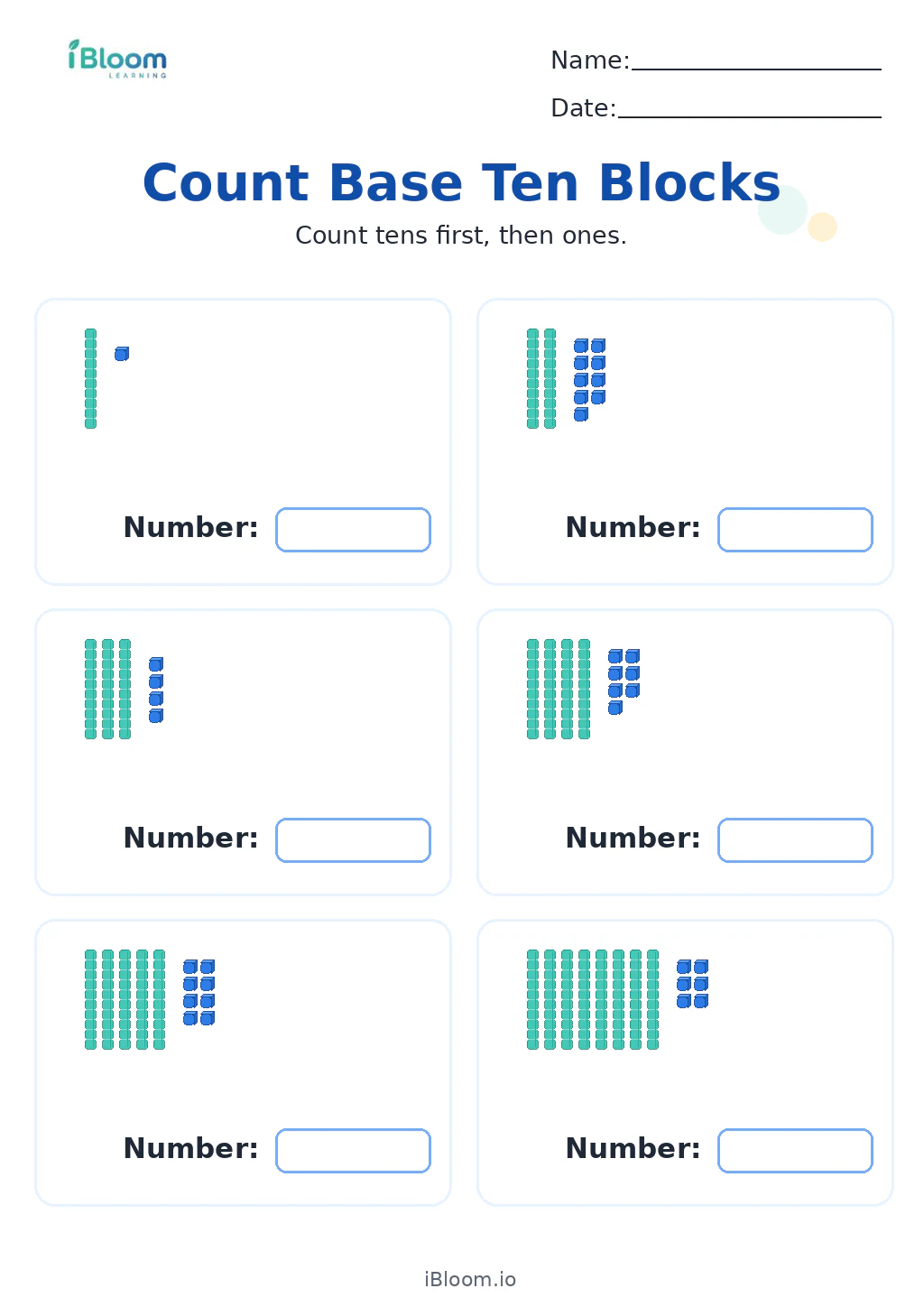 Count Base Ten BlocksA Grade 1 place-value worksheet where children count tens rods and ones cubes to write two-digit numbers.Grade 1Free PDF preview
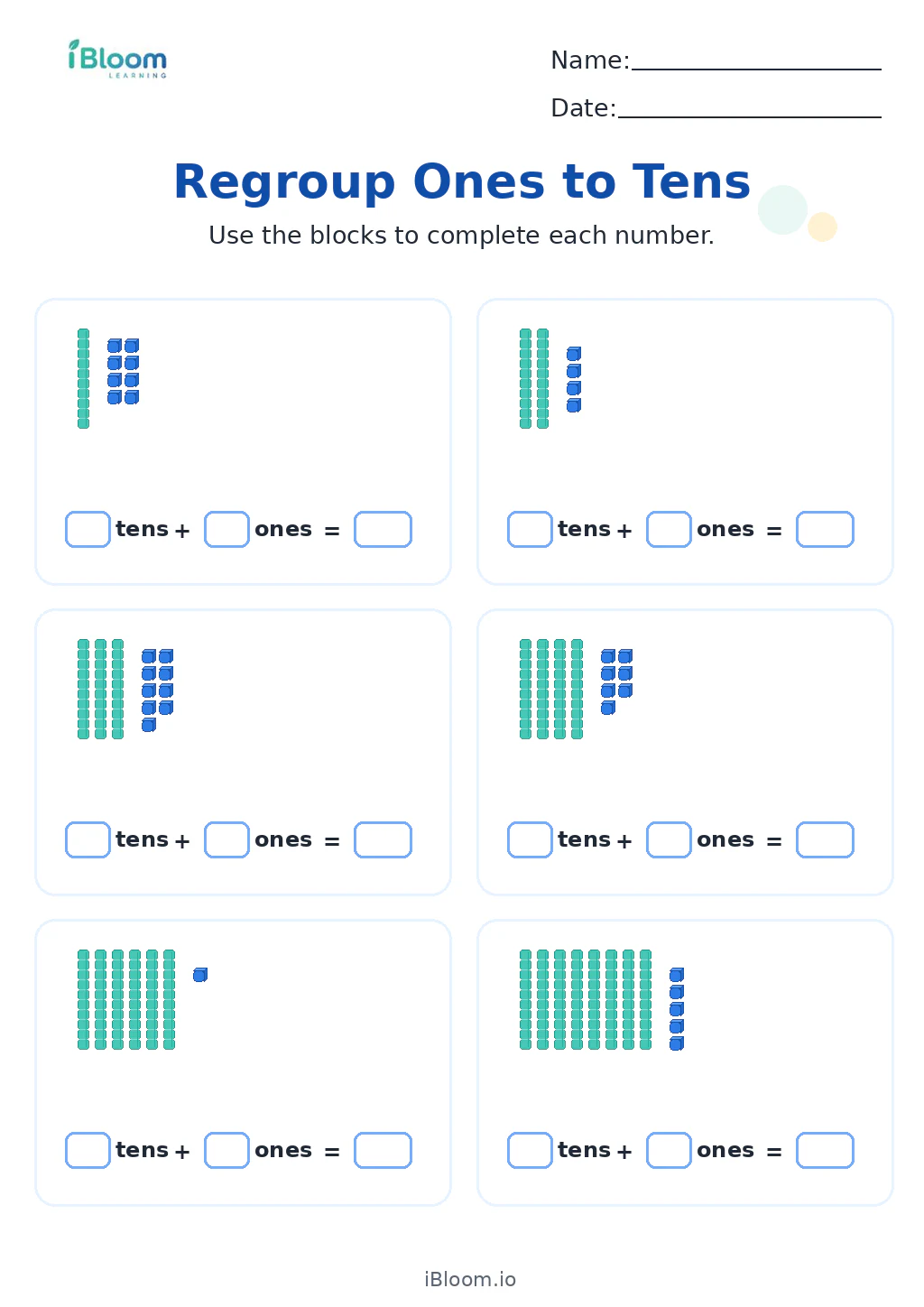 Regroup Ones to TensA second Grade 1 worksheet for regrouping ones and writing the total number.Grade 1Free PDF preview
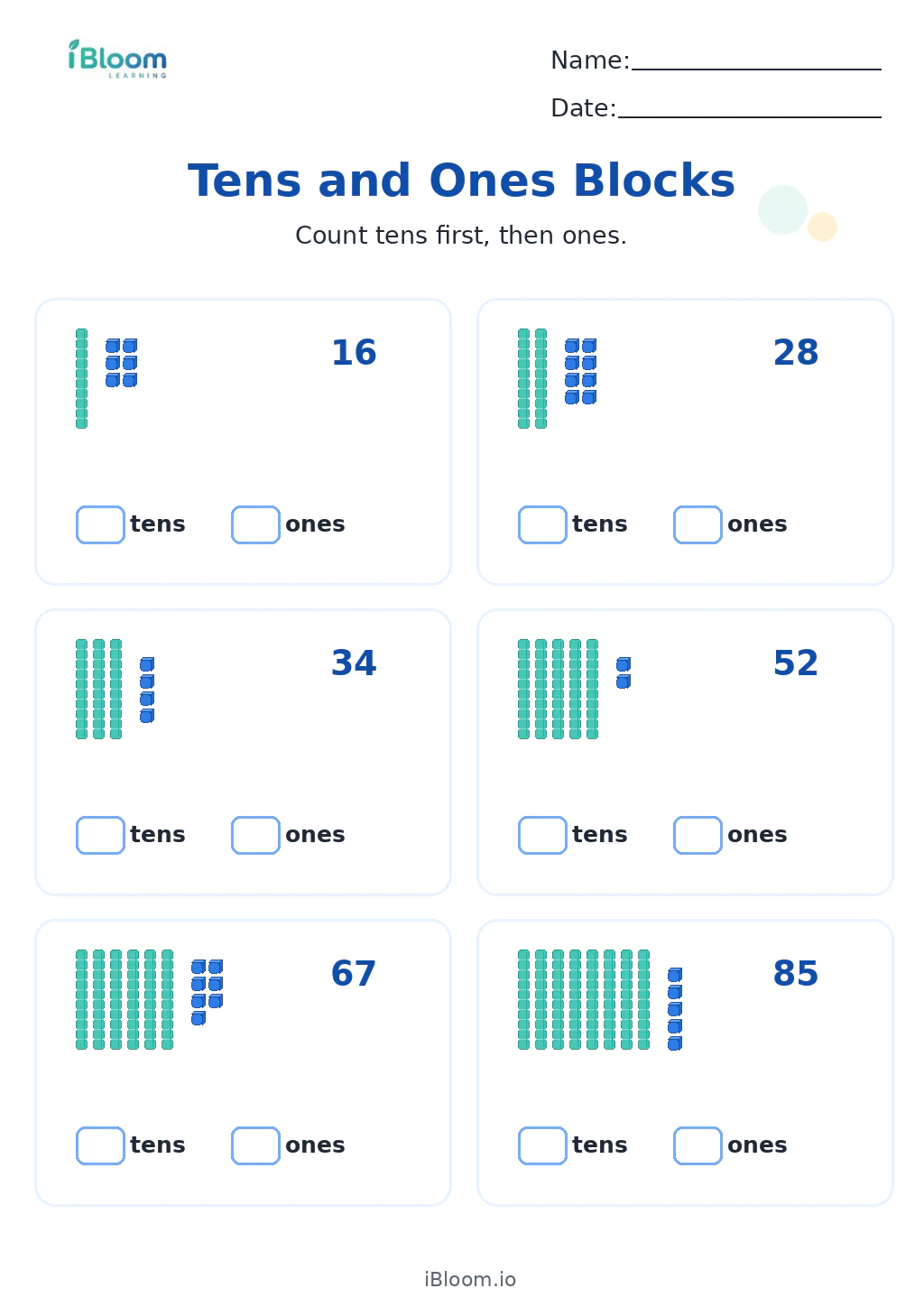 Tens and Ones BlocksA second Grade 1 worksheet for writing tens and ones from block models.Grade 1Free PDF preview
Practice that builds confidence
Build Numbers With Tens and Ones
These Grade 1 math worksheets help children understand place value with base ten blocks: tens rods and ones cubes. Students count blocks, build two-digit numbers, decompose numbers into tens and ones, and connect models to numerals.
The printable activities include visual block models, drawing tasks, matching, and early addition practice. Children gradually move from counting single ones to making a ten, regrouping ones, and explaining numbers in a clearer place-value way.
Base ten blocks make place value visible. A tens rod shows one group of ten, while ones cubes show single units. In these worksheets, children may count 3 tens and 4 ones as 34, draw blocks for a number, or match a model to its numeral. This supports the idea that a two-digit number is not just two separate digits; each digit has a value.

Move From Counting to Adding
The practice progresses from counting and decomposing to adding with models. Children see how ones can be joined, then how 10 ones can be regrouped as 1 ten. For example, when adding two groups of blocks, they count the ones, make a new ten if needed, and then count all tens and remaining ones. This concrete step helps regrouping feel logical instead of memorized.
Parent Routine for Concrete Practice
At home, start with real objects such as bundled straws and loose straws, pennies grouped in tens, or printed block pictures. Say a number like 42 and ask your child to build it, read it, and say, “42 is 4 tens and 2 ones.” Then reverse the task: show 5 tens and 7 ones and ask for the number. Finish with one addition problem using blocks, asking the child to explain any regrouping.

Classroom Uses and Checks
Teachers can use these sheets for place-value centers, small-group reteaching, independent practice, or quick exit checks. They are useful after hands-on block lessons because students must interpret pictures, record numbers, and show thinking on paper. Pairing students to compare models can also encourage math vocabulary such as tens, ones, digit, add, count, compose, and decompose.

Watch for These Errors
Common mistakes include counting each tens rod as 1 instead of 10, reversing digits, or writing 6 tens and 2 ones as 26 instead of 62. Some children also regroup too early or forget to trade 10 ones for 1 ten. A child-friendly strategy is: “Count the tens first, count the ones next, then say the number.” For addition, use: “Join ones, make a ten if you can, then count tens.”
Free printable PDF download
Use this base ten blocks worksheets grade 1 page to preview the activity, print it, or download it as a PDF for quick practice. It works well for homework, homeschool lessons, tutoring, morning work, revision, and classroom centers.
Answers and answer key support
After the child completes the worksheet independently, parents and teachers can use the answer support or answer key information to check the work, review mistakes, and choose the next practice step.
Why iBloom worksheets help
iBloom worksheets give children repeated practice with varied representations, not just rows of problems. The activities connect pictures, numbers, and words so Grade 1 learners can build flexible understanding of counting, decomposing, adding, and regrouping with base ten blocks.
Helpful answers
Frequently asked questions
What do Grade 1 students learn from base ten blocks?
They learn that two-digit numbers are made of tens and ones. For example, 47 means 4 tens and 7 ones, not just the digits 4 and 7 side by side.
How do these worksheets support regrouping?
The worksheets show ones being counted and combined into a new group of ten. This helps children understand why 10 ones can be traded for 1 ten during addition.
Should my child use real blocks before doing the worksheets?
Yes, if possible. Handling blocks or bundled objects first helps children connect the printed pictures to real groups of ten and single ones.
What mistakes should I look for when checking the work?
Watch for counting a tens rod as 1, reversing digits, skipping ones, or forgetting to regroup 10 ones as 1 ten in addition problems.
Can these worksheets be used for math centers?
Yes. They work well for place-value centers, small-group review, partner practice, and independent follow-up after a teacher models tens and ones.
Is this base ten blocks worksheets grade 1 free?
Yes. You can preview it for free and use the printable worksheet for home or classroom practice.
Can I download this base ten blocks worksheets grade 1 as a PDF?
Yes. Use the worksheet download option to save a printable PDF, or print the worksheet directly from the page.
Does this base ten blocks worksheets grade 1 include answers or an answer key?
When the activity has fixed answers, iBloom includes answer support so parents and teachers can check the completed worksheet.