
About this worksheet
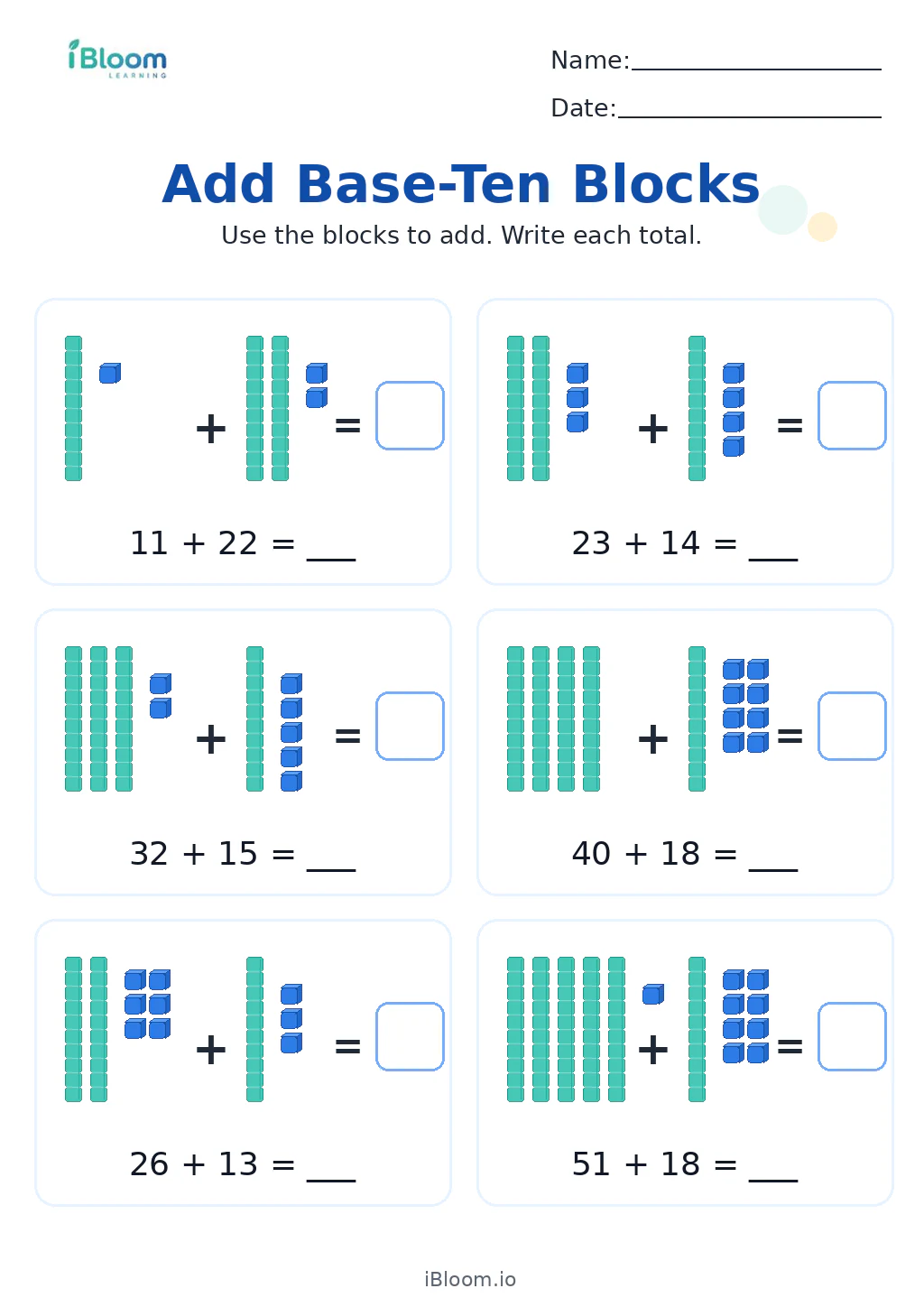
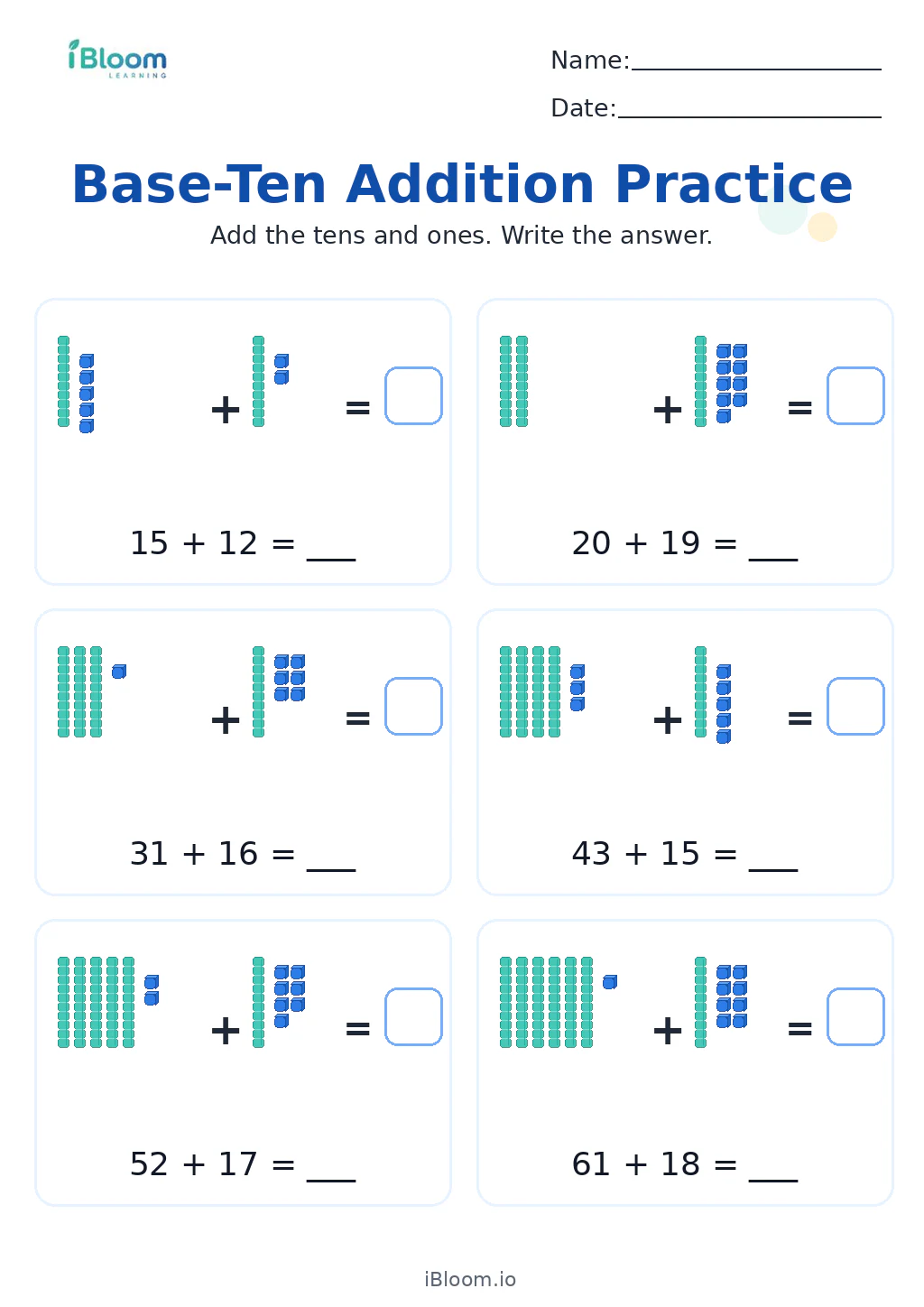
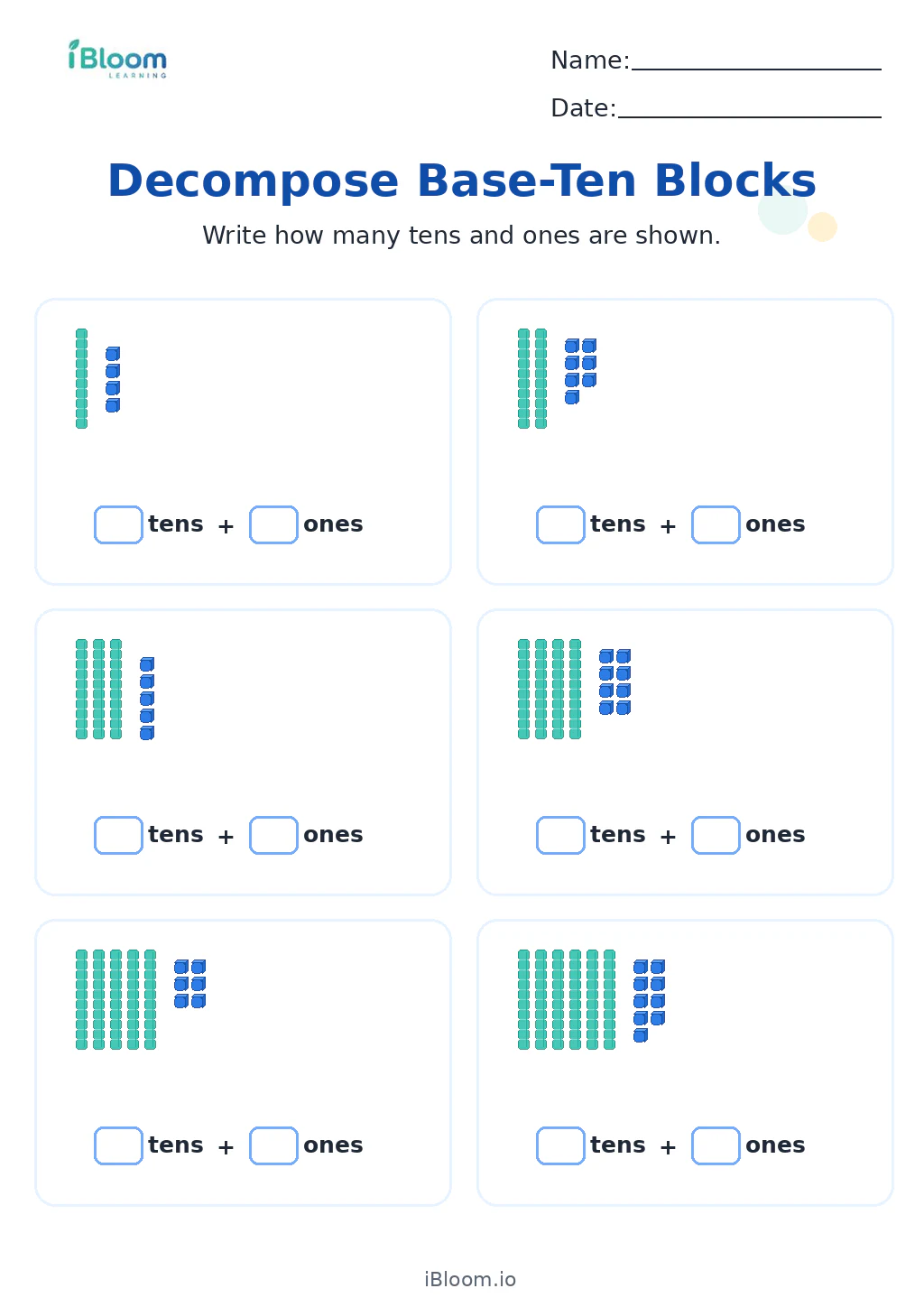
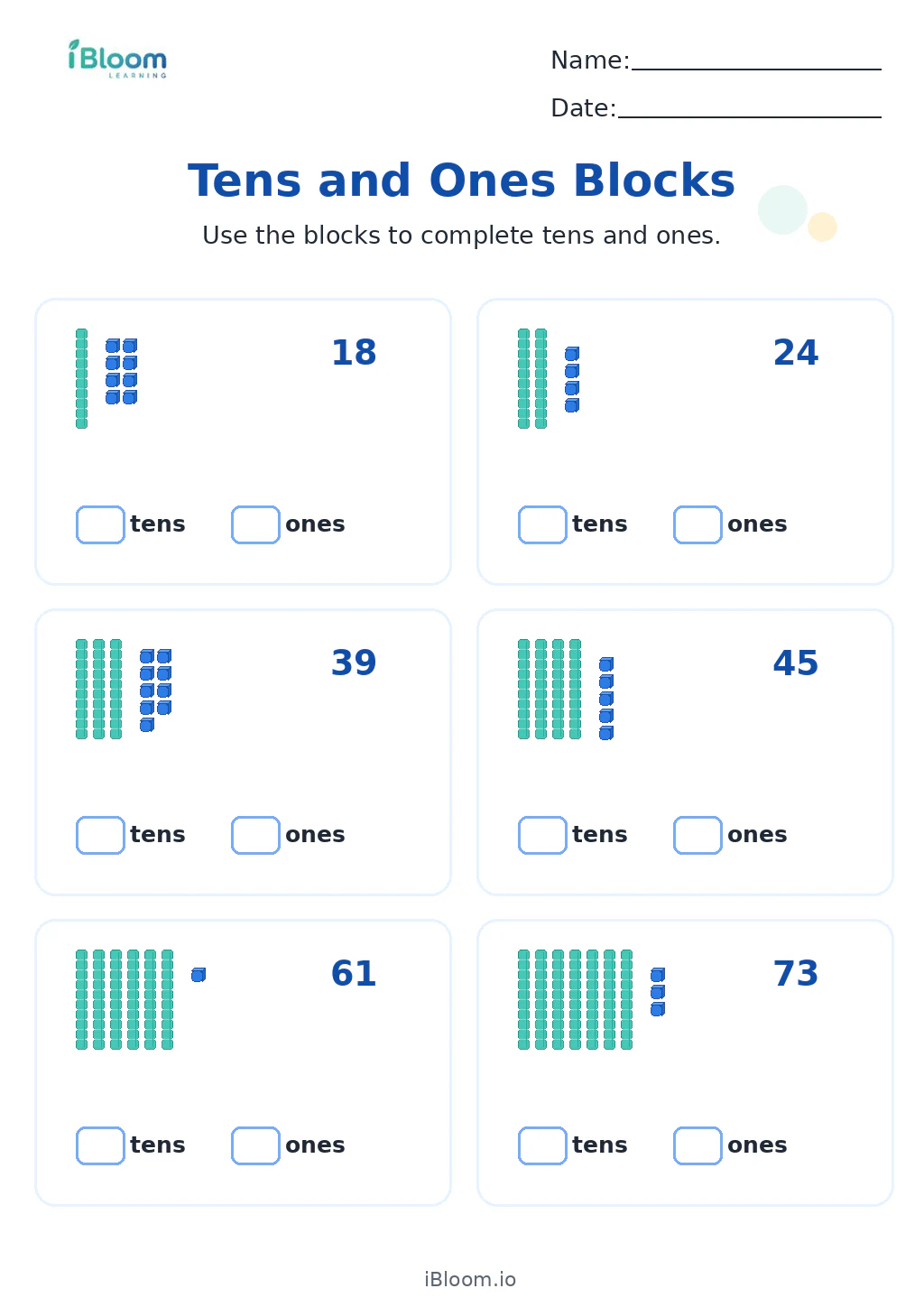
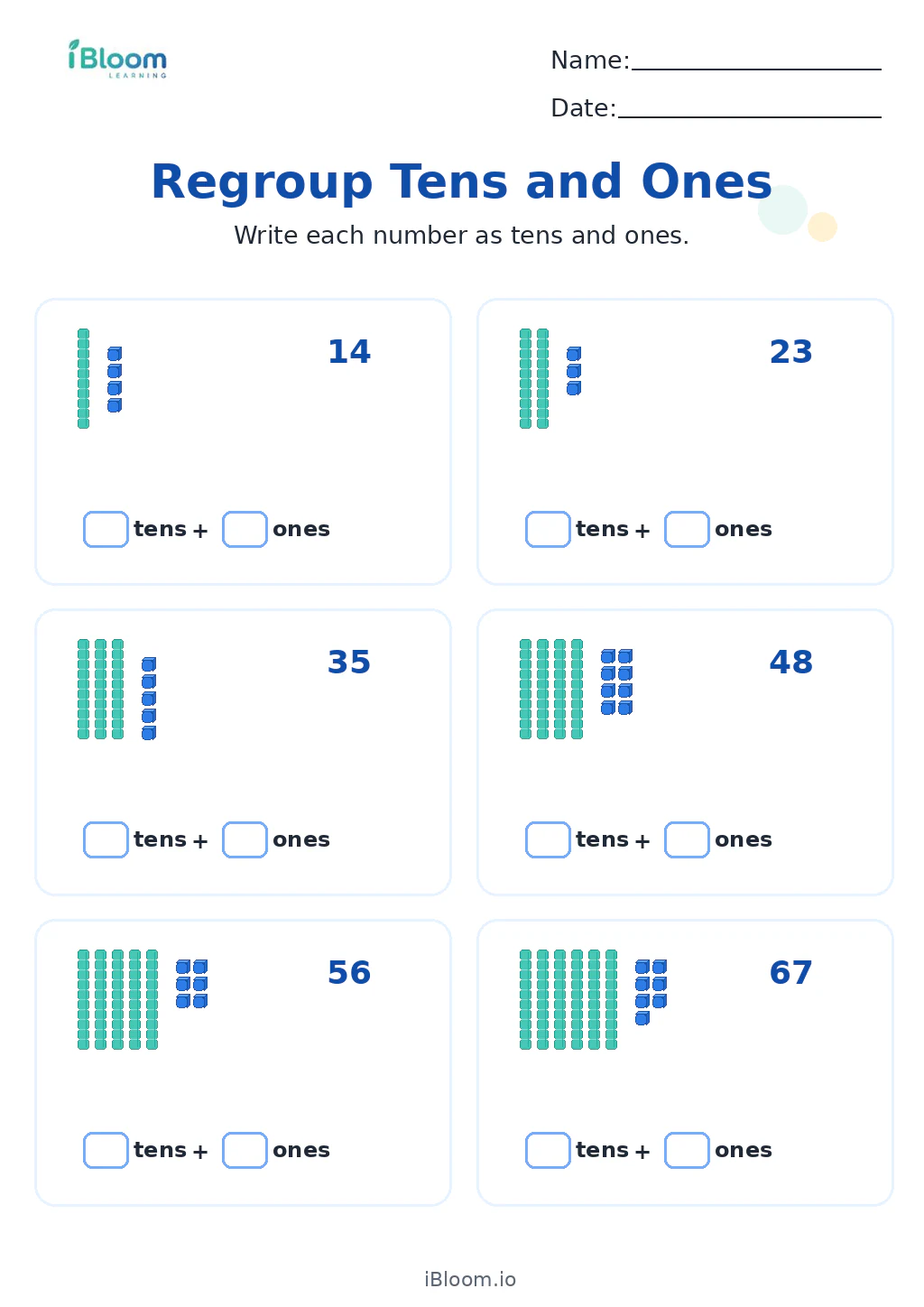
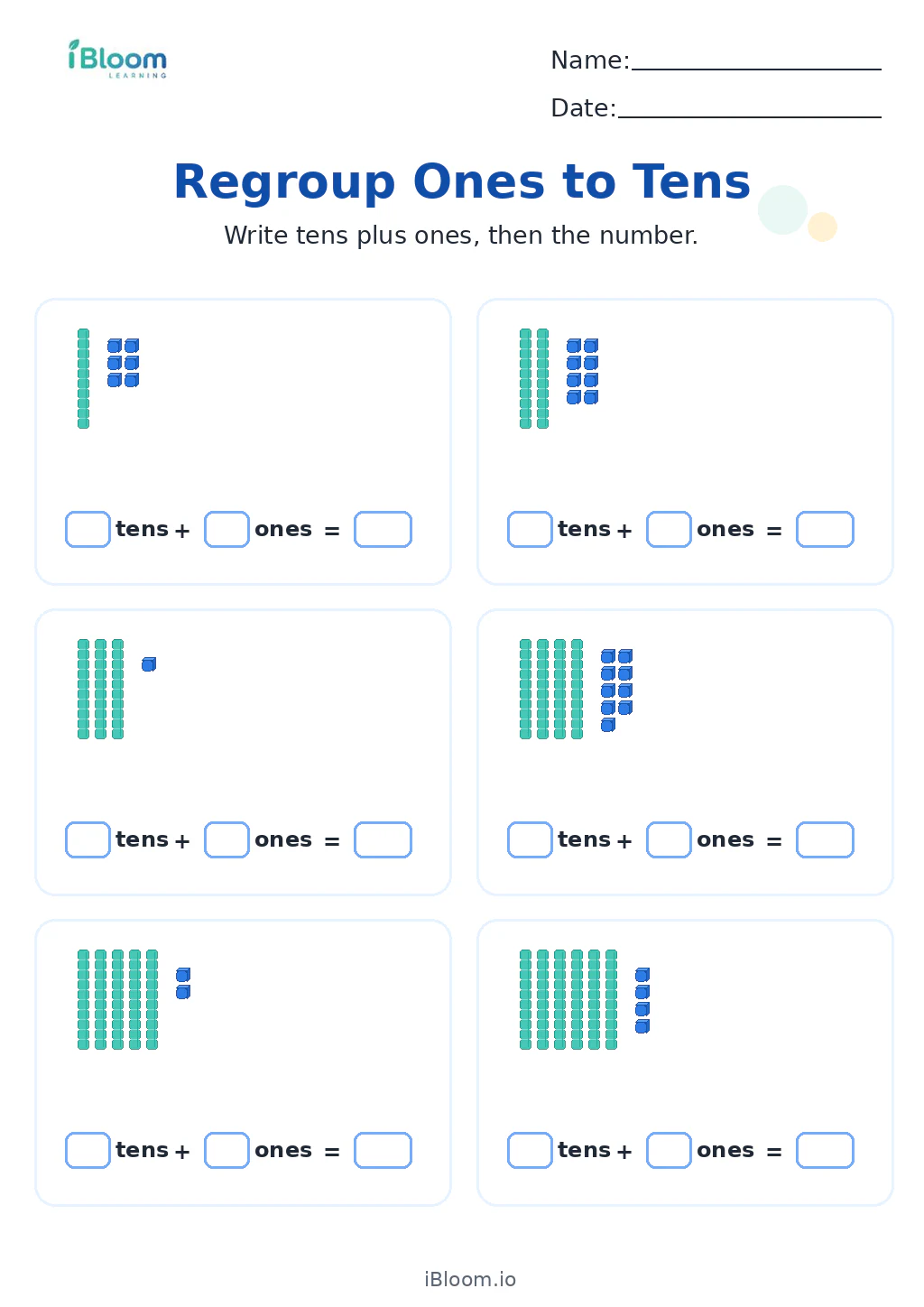
This Grade 1 printable gives students 14 chances to read two-digit numbers in tens and ones. Part A shows eight base-ten block models to count. Part B gives six written tens-and-ones clues, including examples with zero ones. Students connect each group of ten to the tens digit and each leftover cube to the ones digit, practicing the place-value idea in CCSS 1.NBT.B.2. A separate answer key lists every number.
Aligned to 1.NBT.B.2
What is on the worksheet?
Part A has eight base-ten block models to count. Part B has six clues that state the number of tens and ones.
- Count each rod as one ten
- Count each small cube as one
- Use the tens digit first and the ones digit second
How do you count a block model?
Count the rods by tens, then add the ones cubes. A rod is a group of 10 ones.
- 1Question 2 shows 4 rods and 6 small cubes.
- 24 tens = 40; 6 ones = 6.
- 340 + 6 = 46.
What if there are no ones cubes?
The ones digit is 0 when there are no leftover cubes. For example, 6 tens and 0 ones make 60. The zero holds the ones place.
How to use this worksheet
- 1Point to each rod and count by tens.
- 2Count the loose cubes by ones.
- 3Say the tens value and ones value aloud.
- 4Write the tens digit first and the ones digit second.
- 5Check each of the 14 answers with the key.
Common mistakes and quick fixes
The mistake
Read the digits in reverse order.
The fix
Say “tens, then ones” before writing the numeral.
The mistake
Count every rod as one.
The fix
A rod is one group of ten; count by 10s.
The mistake
Add a zero when there are no rods.
The fix
Only write a zero in a place when that place has zero groups; question 5 has six tens and no ones, so it is 60.
Common Core alignment
This page practices tens and ones through short, focused questions.
Read a two-digit number as tens and ones.
On this sheet: Read a two-digit number as tens and ones.
Show the official wordingHide the official wording
Understand that the two digits of a two-digit number represent amounts of tens and ones.
What to practice next
Make more practice
Further reading
Questions parents and teachers ask
What is one tens rod worth?
One tens rod represents 10 ones. Count each rod by tens, then count the small cubes by ones. Four rods and six small cubes make 40 + 6, or 46. The blocks show groups and leftover ones, not a pile to count one by one.
How do you write four tens and six ones?
Four tens are 40 and six ones are 6, so the number is 46. Say “40 and 6” before writing 46 to keep the tens value separate from the ones value. This same place-value idea appears in the block models and written clues.
What if there are zero ones?
Write 0 in the ones place. Six tens and zero ones make 60. The zero shows that there are no single cubes, while the 6 remains in the tens place. This is why the number is 60 rather than 6 or 600.
What number do six tens and eight ones make?
Six tens are 60 and eight ones are 8, so together they make 68. Question 13 uses this combination. Add the tens value and ones value to check: 60 + 8 = 68, with 6 in the tens place and 8 in the ones place.
Is an answer key included?
Yes. The separate key gives the number for each of the eight block models and six written clues, including clues with zero ones. Students can check by rebuilding each answer as tens plus ones, then compare the digits with their written number.