
About this worksheet
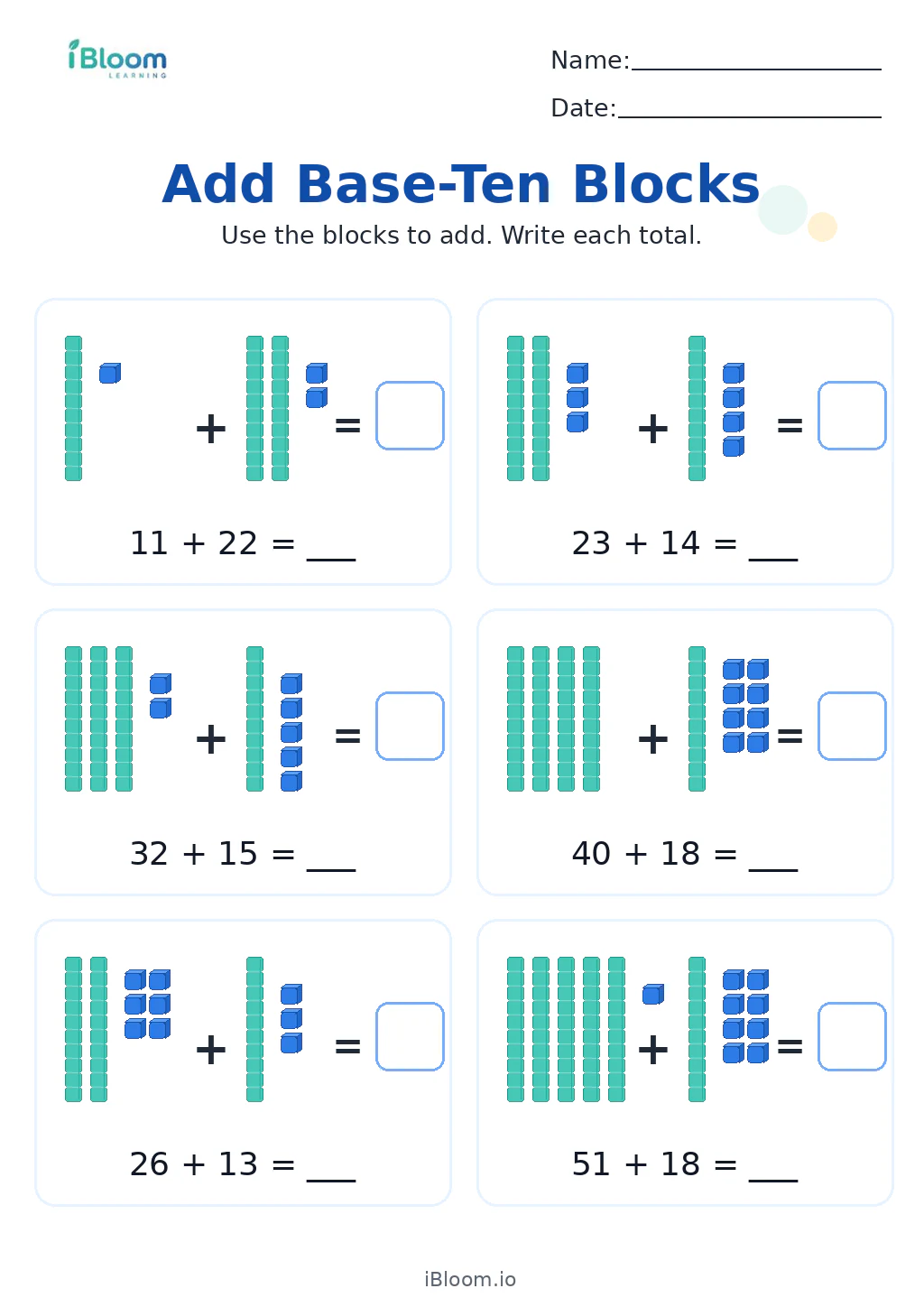
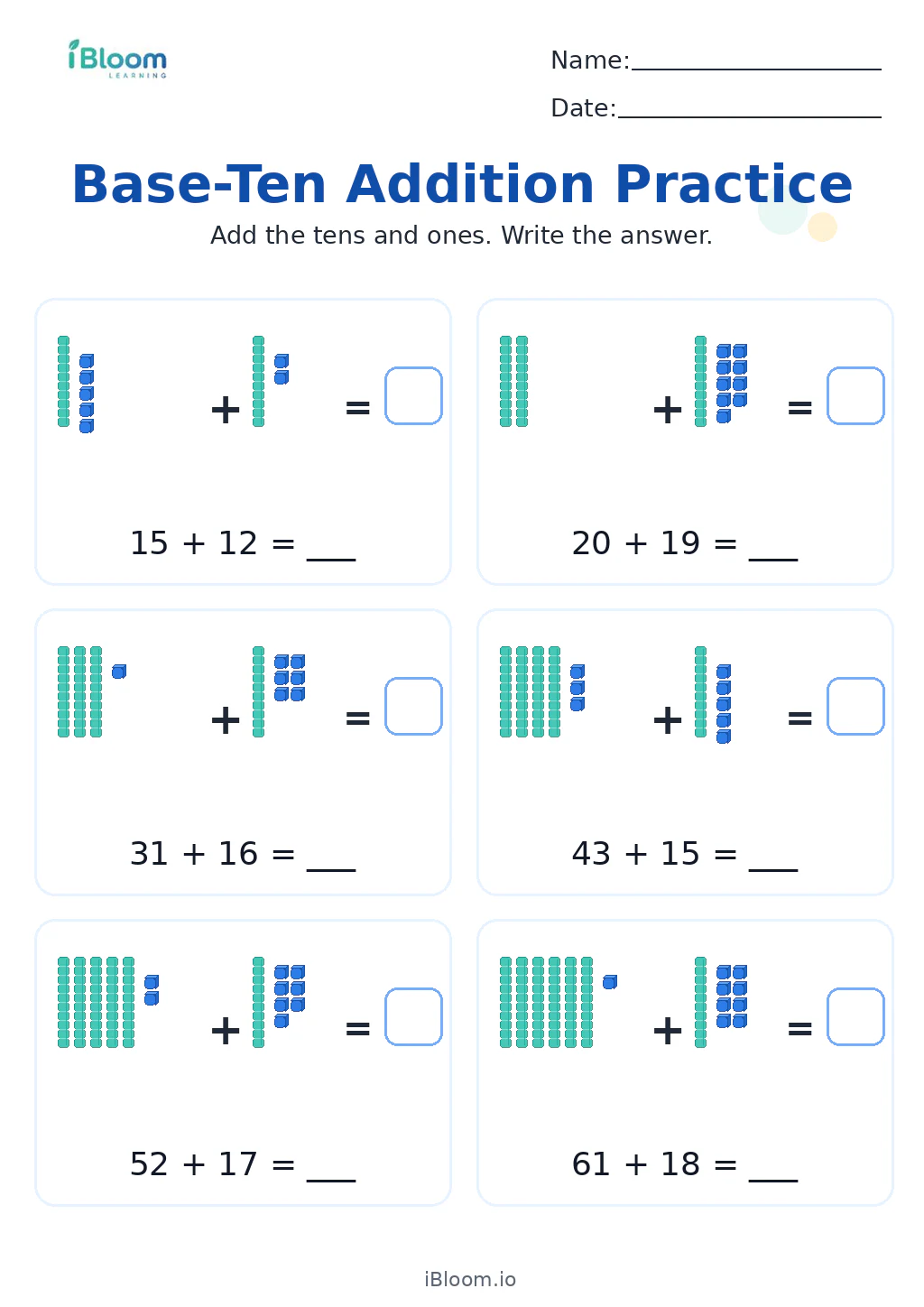
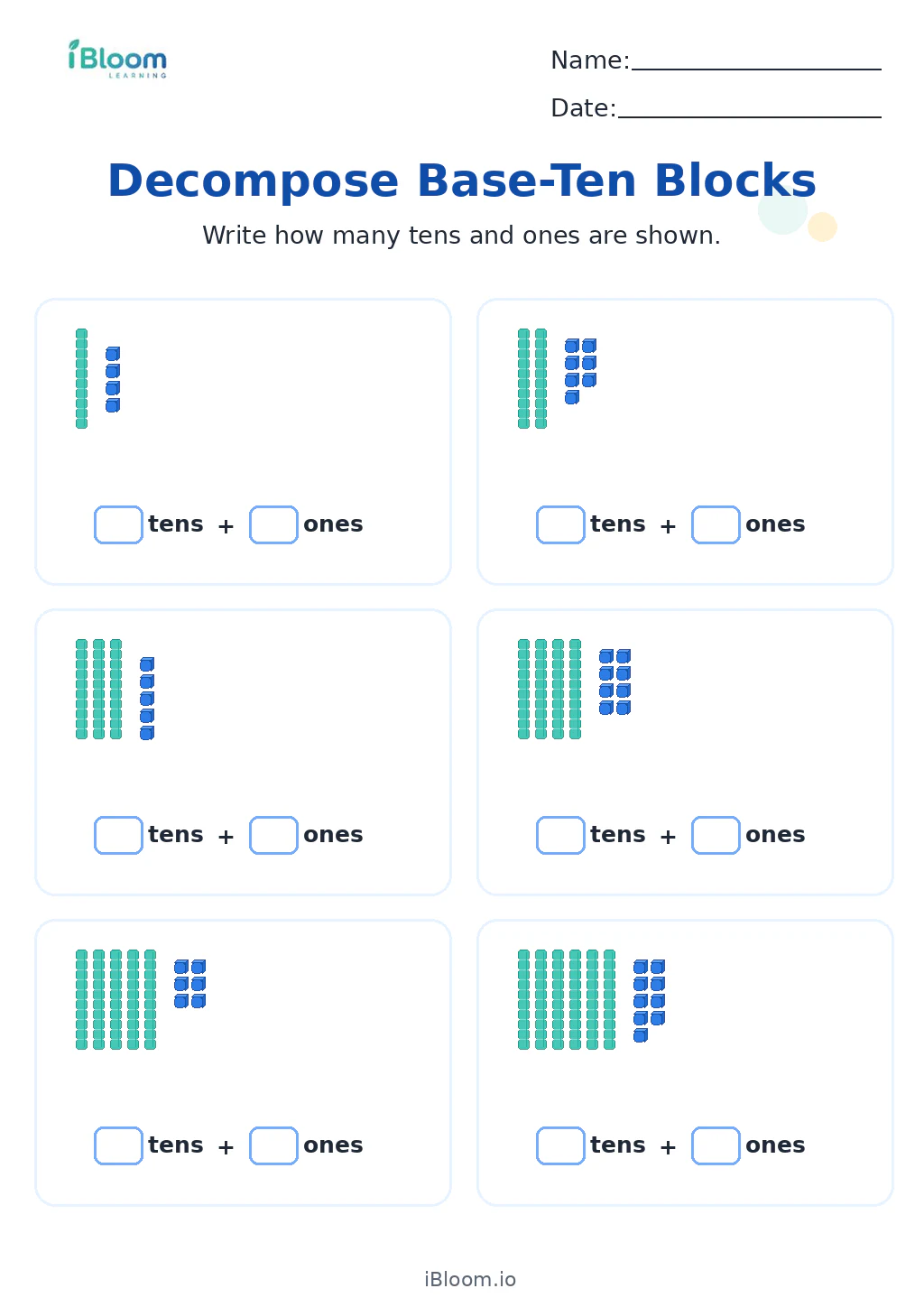
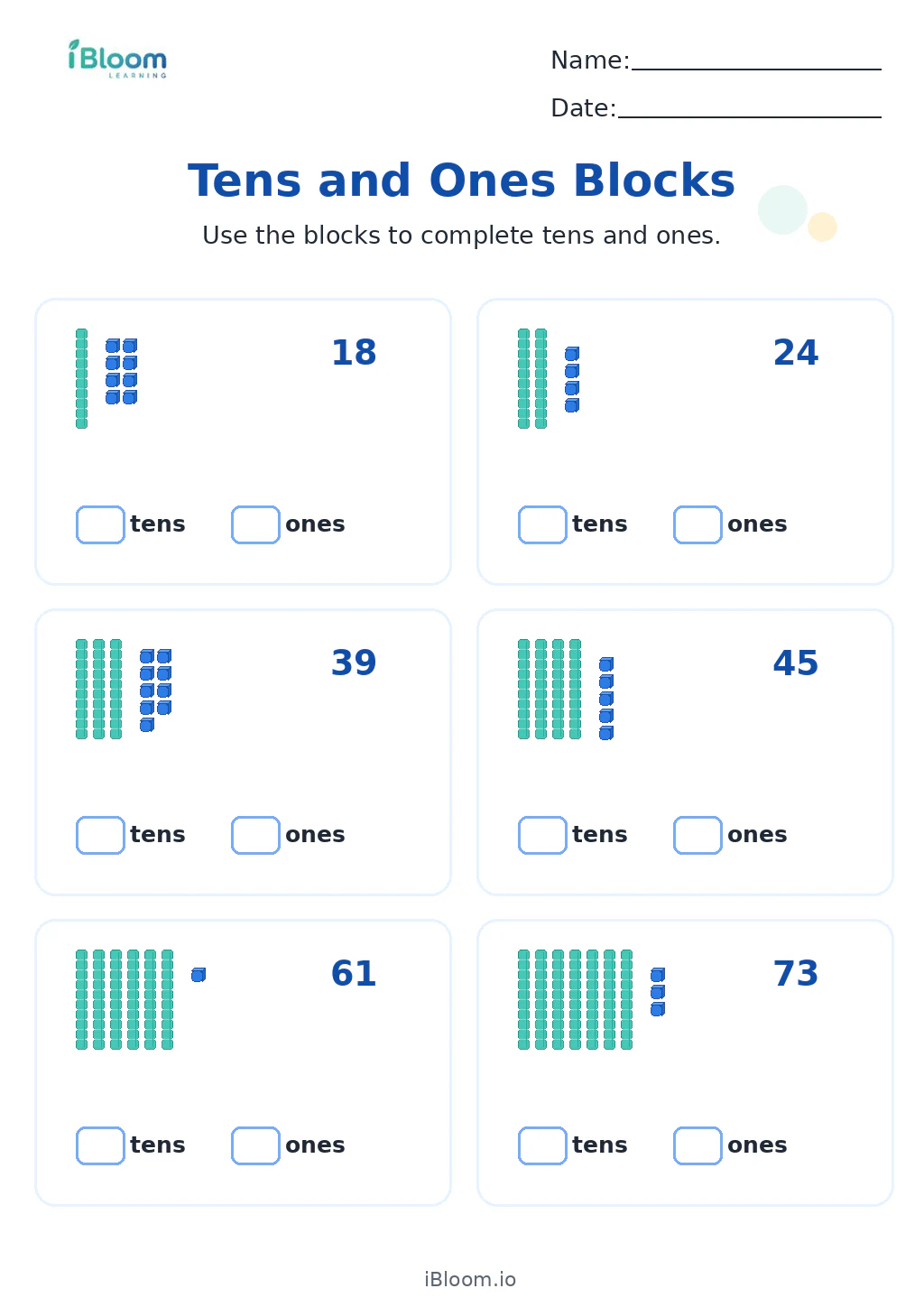
This Grade 1 printable helps children read two-digit numbers in base-ten models. Part A shows tens rods and ones cubes to count; Part B asks students to compose numbers from a tens amount and a ones amount. The 16 questions focus on the relationship between the digits and the amounts of tens and ones, as described by CCSS 1.NBT.B.2. The worksheet and answer key are provided as separate printable pages.
Aligned to 1.NBT.B.2 and 1.NBT.A.1
What does a tens rod represent?
One rod is a bundle of ten ones. In question 3, count 10 and then 5 more to make 15.
How do tens and ones make a number?
The tens digit tells how many groups of ten; the ones digit tells how many single cubes. Part B practices combining those amounts.
How can the number be checked?
Say the number aloud and compare its digits with the model: the tens digit should match the rod count, and the ones digit should match the cube count.
How to use this worksheet
- 1Point to and count each tens rod by 10.
- 2Count the single cubes by 1.
- 3In Part A, touch each rod as you count by tens, then count the loose cubes.
- 4In Part B, use the tens and ones named in each prompt to write the number.
- 5Add the ones digit to those tens.
- 6Use the key to check both digits.
Common mistakes and quick fixes
The mistake
Counting each rod as one instead of ten.
The fix
Touch each rod and say 10, 20, 30 as you count.
The mistake
Reading the ones before identifying the tens.
The fix
Name the tens amount first, then add the cubes.
The mistake
Writing the tens digit as the full tens amount.
The fix
For 4 tens and 3 ones, write 43, not 403.
Common Core alignment
The models and number-building questions connect place-value digits with tens and ones.
Understand that two-digit digits represent amounts of tens and ones.
On this sheet: Students count rods and cubes and compose numbers from tens and ones.
Show the official wordingHide the official wording
Understand that the two digits of a two-digit number represent amounts of tens and ones.
Read and write numerals to represent counted amounts.
On this sheet: Each model is counted and recorded with a numeral within 120.
Show the official wordingHide the official wording
Count to 120, starting at any number less than 120. In this range, read and write numerals and represent a number of objects with a written numeral.
What to practice next
Make more practice
Questions parents and teachers ask
How do base-ten blocks show a number?
Each long rod represents one group of ten, and each small cube represents one. Count the rods by tens, then count the single cubes by ones. Put those amounts together to name the two-digit number modeled on the page. The blocks make each group of ten visible.
What does this worksheet practice?
Children count illustrated base-ten models and write each number. The second part states a number of tens and ones, then asks students to compose the matching numeral. These activities make the value of each digit visible and concrete. Look back at the models if a digit is uncertain.
How can I help if a child miscounts?
Ask the child to touch each rod while saying 10, 20, 30, and so on. Then count the loose cubes by ones. Compare the written number’s tens digit with the rod count and its ones digit with the cube count. This keeps the rod count connected to its place.
Is there an answer key?
Yes. A separate answer key shows the numeral for every block model and each tens-and-ones statement. After checking, have the child choose one answer and explain how many tens and ones it contains. Use the answer key after finishing both parts.
What is one example from the block models?
Question 3 shows one tens rod and five ones cubes. Count the rod as 10, then add 5 single cubes to make 15. The answer key gives the numeral for each model, so a learner can check whether both place values were counted.