
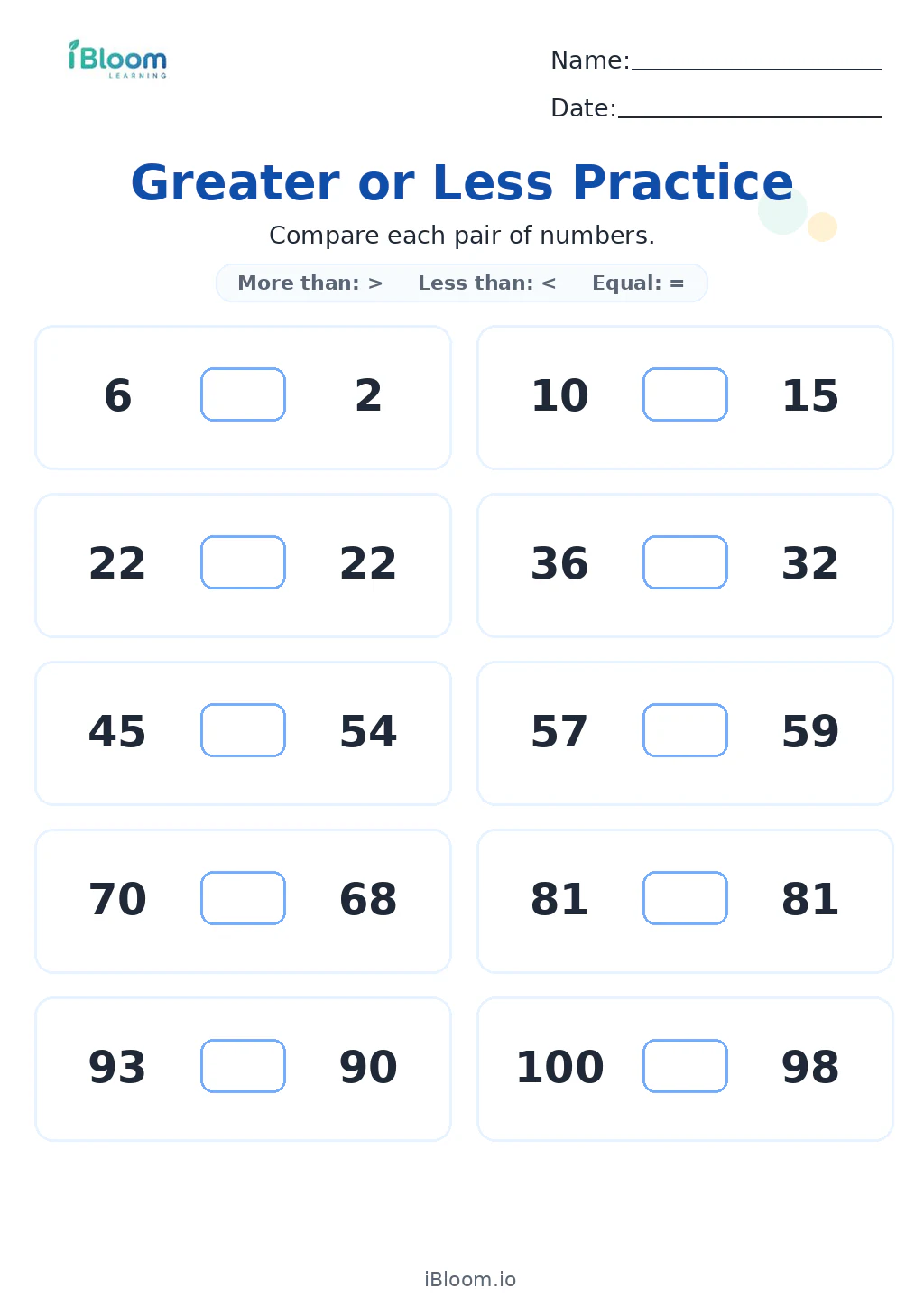
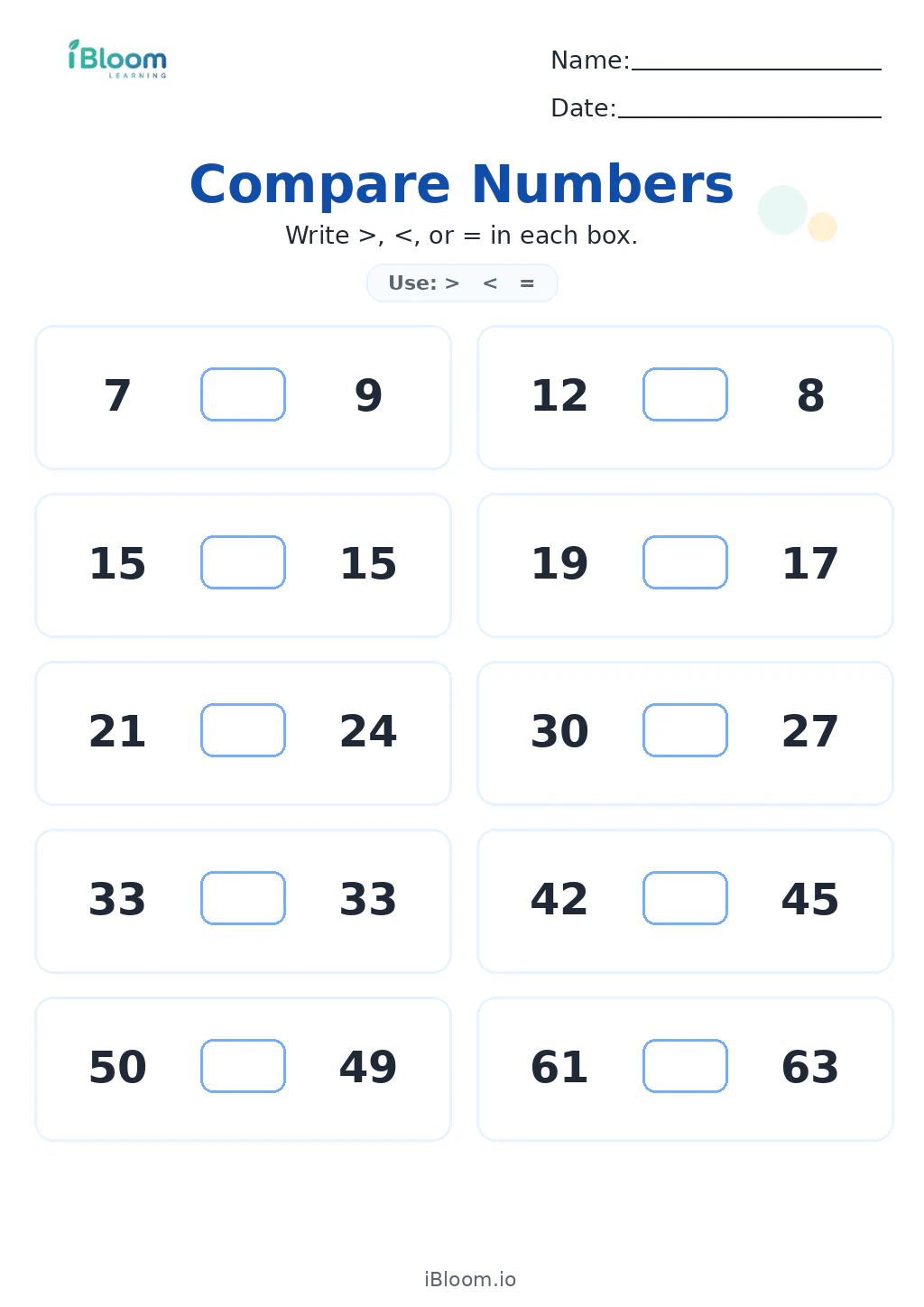
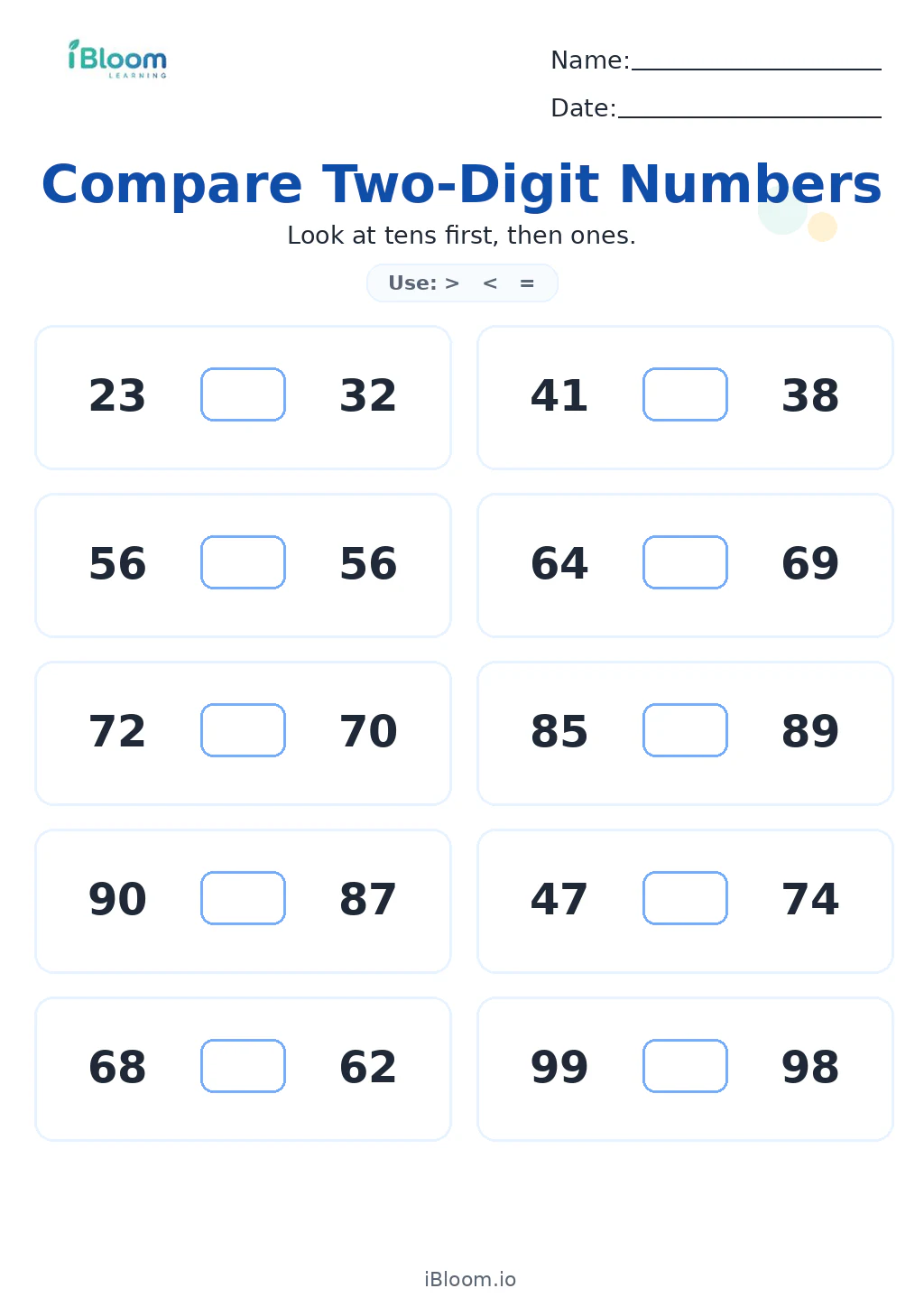
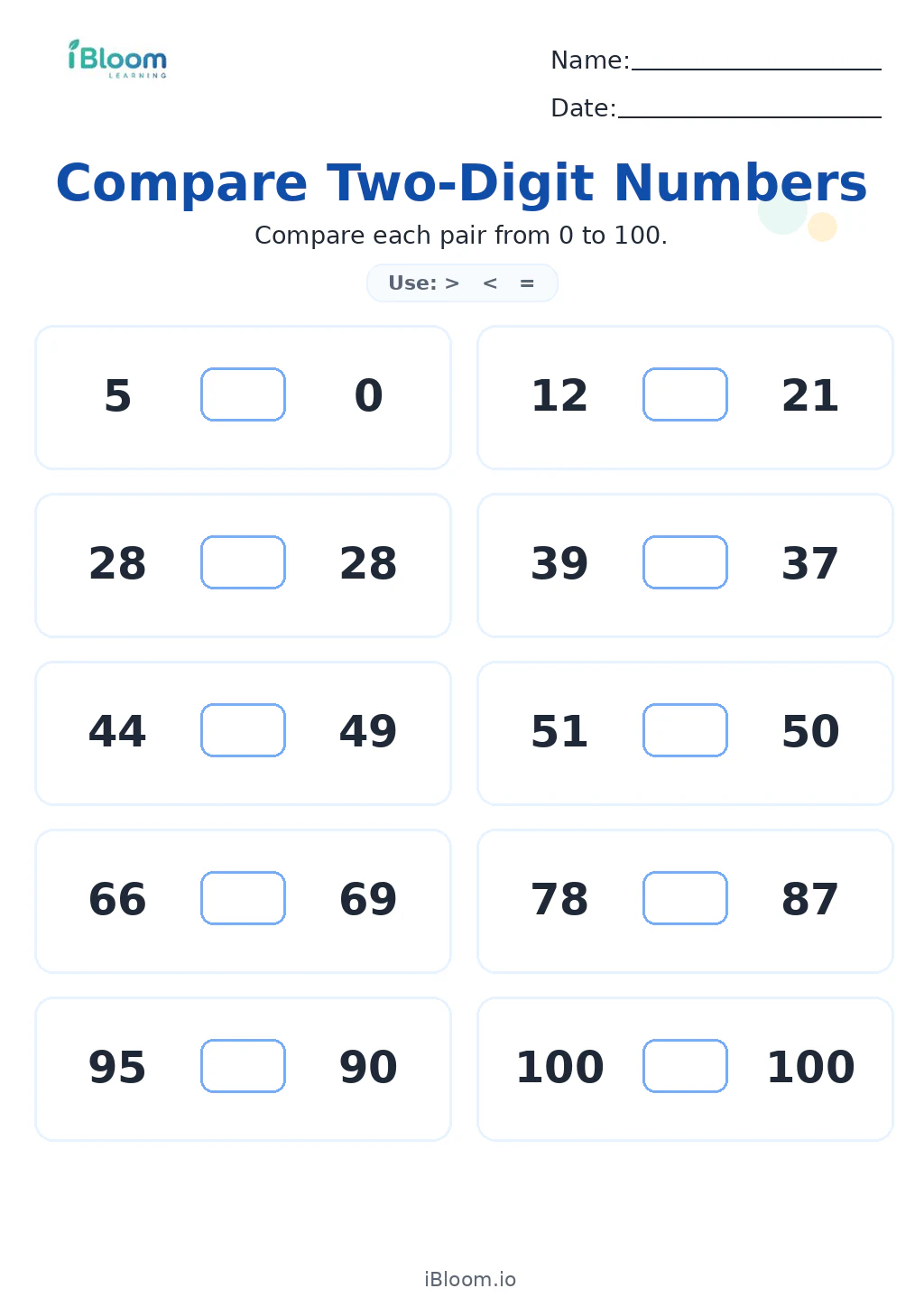
About this worksheet
This free Grade 1 printable worksheet helps students compare two-digit numbers using >, <, and =. It practices Common Core 1.NBT.B.3 by asking children to compare tens and ones and record the comparison symbol. The two-page sheet includes 16 pairs in three parts, and a separate answer key gives each symbol.
Aligned to 1.NBT.B.3
What is on the worksheet?
Sixteen comparisons are divided into three short parts. Students use the same three symbols throughout, while the number pairs vary so the work includes both place-value decisions and equal numbers.
The answer key is separate from the practice pages and lists the correct symbol beside each item.
How do you decide between two numbers?
Look at tens before ones. The tens digit tells how many groups of ten each number contains. Only when those digits match does the ones digit decide which number is larger.
- 146 ___ 64
- 24 tens is fewer than 6 tens, so 46 < 64.
When should a child use the equals sign?
Use = when both numbers have the same value. Check both places: matching tens and matching ones make an equal pair. Saying “is equal to” while reading the statement can help distinguish = from the two comparison signs.
How to use this worksheet
- 1Read the full pair before choosing a symbol.
- 2Compare the tens digits.
- 3If the tens match, compare the ones digits.
- 4Choose >, <, or = and read the statement aloud.
- 5Check each response with the answer key.
Common mistakes and quick fixes
The mistake
Turning the open side of < or > toward the smaller number.
The fix
Read the symbol as a mouth: its open side faces the greater number.
The mistake
Comparing only the ones digits.
The fix
Compare tens first; use ones only when the tens match.
The mistake
Using > or < when both numbers match.
The fix
Check both digits; matching tens and ones call for =.
Common Core alignment
The practice connects the page activities to these Common Core skills.
Record comparisons of two-digit numbers with >, =, and <.
On this sheet: Students compare two-digit pairs and record the relation with a symbol.
Show the official wordingHide the official wording
Compare two two-digit numbers based on meanings of the tens and ones digits, recording the results of comparisons with the symbols >, =, and <.
What to practice next
Make more practice
Further reading
Questions parents and teachers ask
What do >, <, and = mean?
The symbol > means “is greater than,” < means “is less than,” and = means “is equal to.” In the pair 38 ___ 31, the true comparison is 38 > 31 because 38 has three tens and 31 has three tens, then eight ones is more than one one. The worksheet practices all three symbols.
How should a child compare two-digit numbers?
Start with the tens digit. If one number has more tens, it is greater. If the tens digits are equal, compare the ones. For example, 46 is less than 64 because four tens are fewer than six tens; the ones digits do not change that result.
How many problems are on this worksheet?
There are 16 number pairs across three parts. Students choose a comparison symbol for each pair, including greater-than, less-than, and equal pairs. The two worksheet pages provide room for the full set, and a separate answer key shows the symbol for every question.
What does the answer key include?
The answer key gives one correct symbol for each pair, so an adult can check the page quickly. Students can also read each completed comparison aloud as a sentence. That extra check helps catch a symbol that was turned the wrong way.
Can this page be used for independent practice?
Yes. The directions are the same for every item: choose the symbol that makes the comparison true. A child who is still learning the symbols can use the example in Part A, then compare tens and ones on their own before checking the key.