
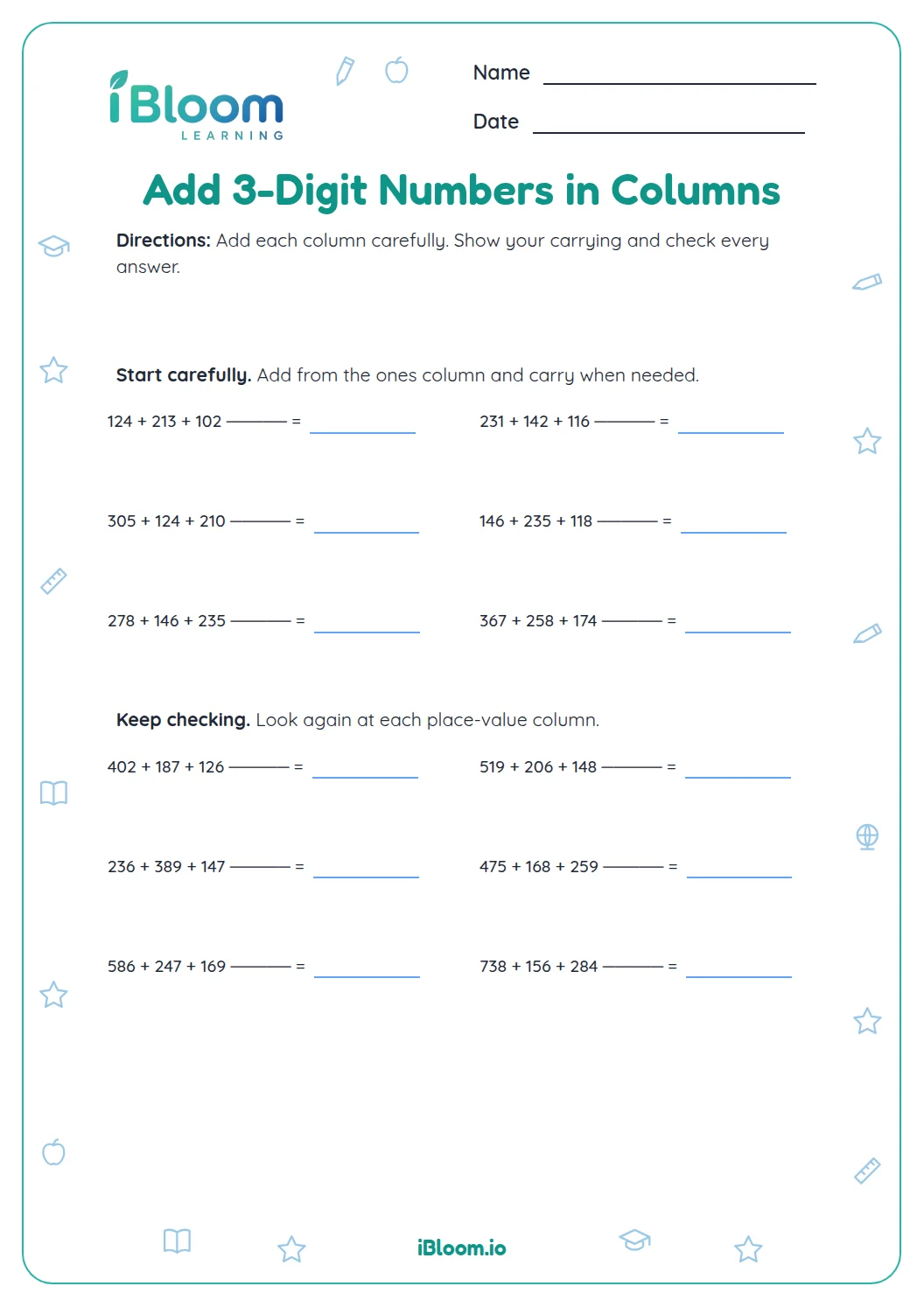
About this worksheet
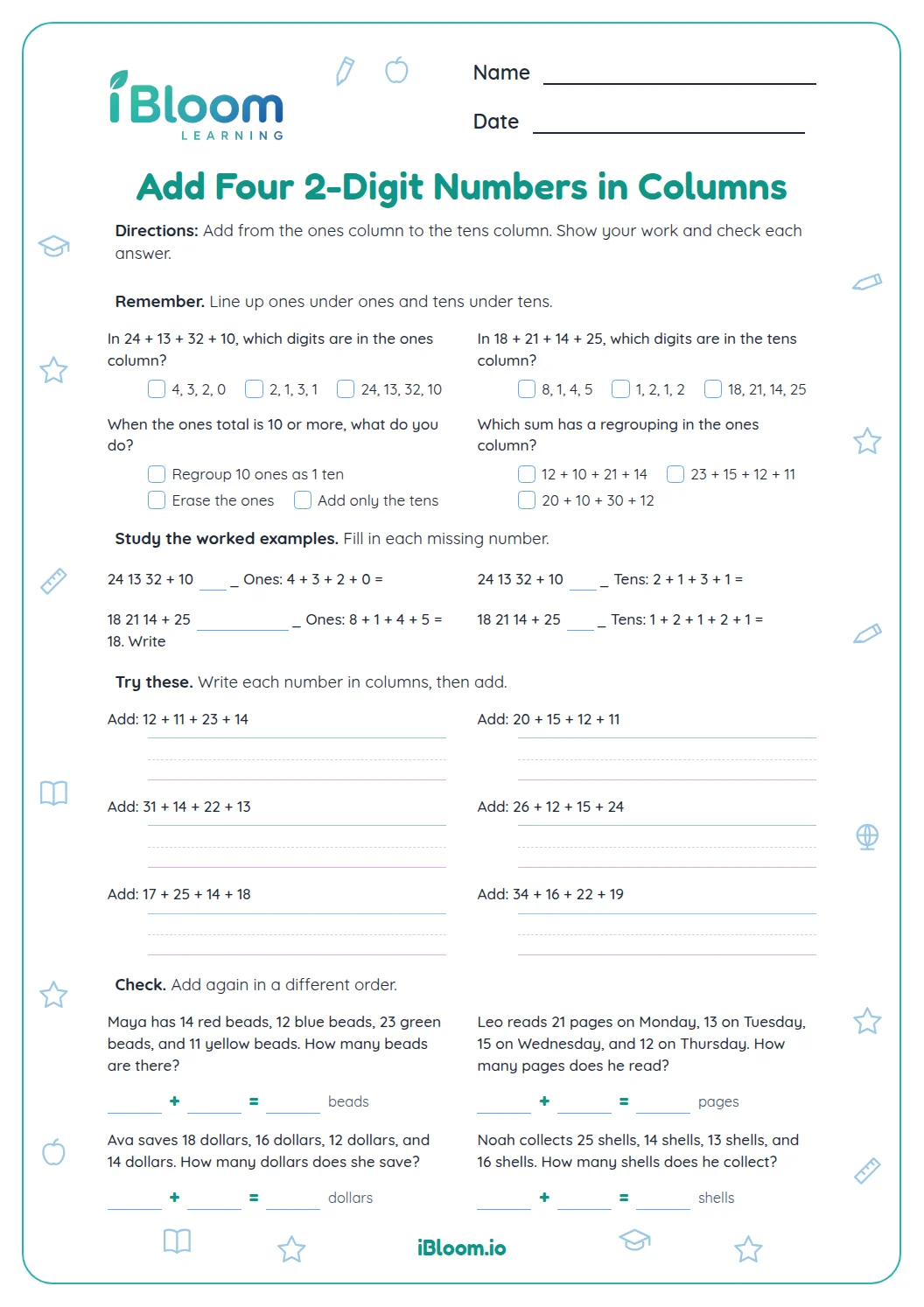
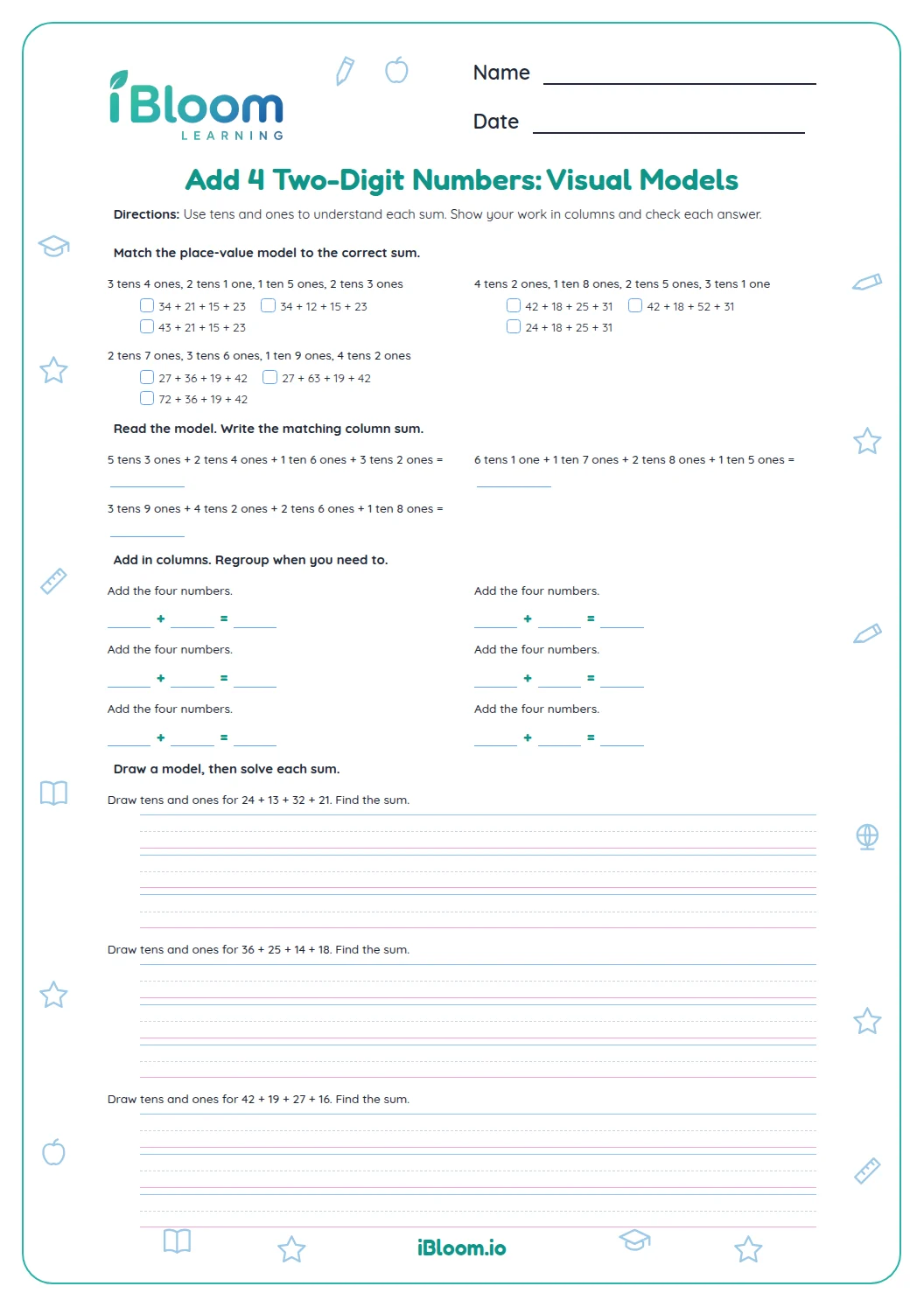
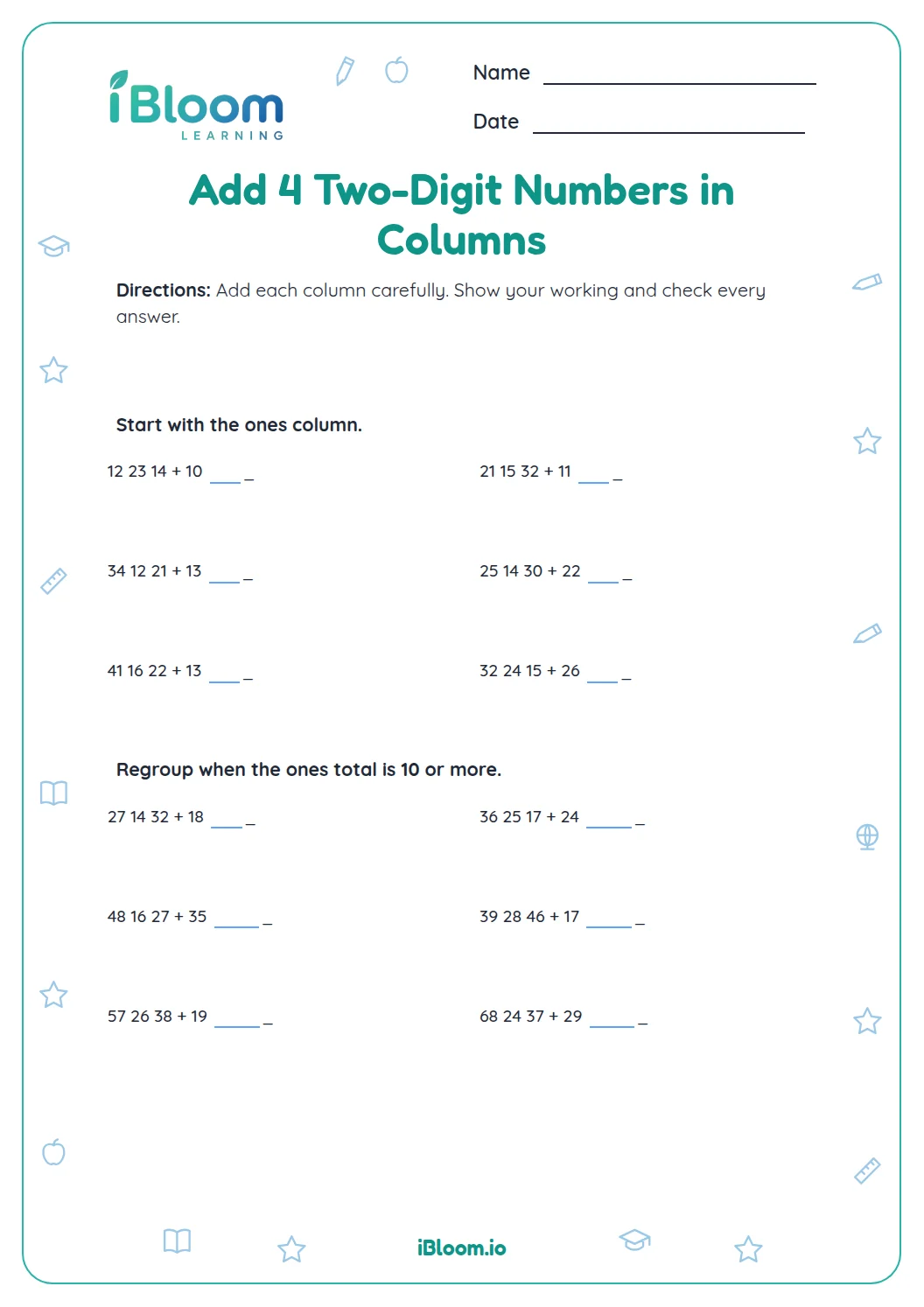
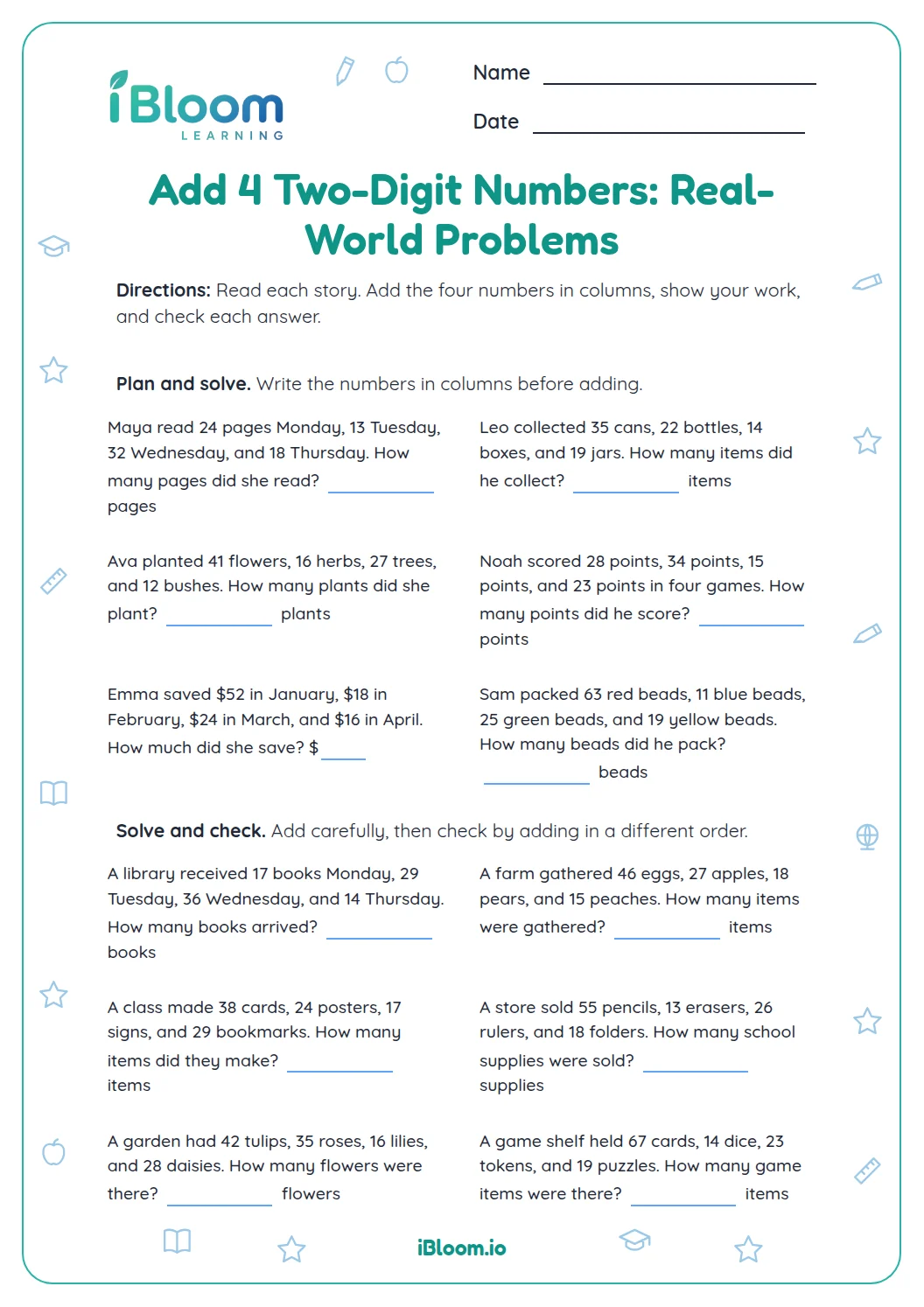
This two-page Grade 2 worksheet combines addition reasoning with column practice. Four multiple-choice questions ask which pair among four addends makes a target; eight problems leave room to add four two-digit numbers in columns, and two quick totals provide extra practice. Plus signs separate every addend. The answer key covers all 14 questions, which practice Common Core 2.NBT.B.6.
Aligned to 2.NBT.B.6
How can friendly pairs make addition easier?
Look for two addends that make a convenient total before adding the rest. In question 7, 24 + 16 makes 40, leaving 18 + 37 to add. Grouping does not change the sum; it gives the student a useful route through it.
- 124 + 18 + 37 + 16
- 224 + 16 = 40
How do you finish a four-addend sum?
Line up all four numbers by place value. Add the ones column, regroup any tens, then add the tens column with those regrouped tens included.
What is on the two pages?
Four questions check pair selection, eight ask students to show the complete sum in columns, and two provide quick total practice. The answer key shows the correct pair or total for all 14 questions.
How to use this worksheet
- 1Read all four addends before choosing a pair.
- 2Check the two chosen numbers really make the target.
- 3For each full sum, line up all tens and ones.
- 4Add the ones, regroup when needed, then add the tens.
- 5Use the key to check the eight column sums, two quick totals and four pair choices.
Common multi-addend addition mistakes
The mistake
Grouping a pair that does not make the target.
The fix
Add the two chosen numbers before selecting them.
The mistake
Leaving an addend out after grouping.
The fix
Keep the other two numbers in the expression and add them too.
The mistake
Forgetting regrouped tens.
The fix
Carry the full tens from the ones column into the tens column.
Common Core alignment
Students add four two-digit numbers using place-value strategies and useful groupings.
Add up to four two-digit numbers using place-value strategies.
On this sheet: Students add four two-digit numbers using place-value strategies and useful groupings.
Show the official wordingHide the official wording
Add up to four two-digit numbers using strategies based on place value and properties of operations.
What to practice next
Make more practice
Further reading
Questions parents and teachers ask
What is a friendly pair?
A friendly pair is two addends that combine to make a convenient total. Question 7 uses 24 and 16, which make 40. Finding that pair can simplify the next steps, as long as the remaining two addends are still included in the complete sum.
Do the four pair questions ask for the whole sum?
The four grouping questions ask students to identify a pair that makes the stated target. Eight other questions ask for the full total with column work, and two are quick totals. The answer key labels the correct pair or completed sum for each of the 14 questions.
How many full sums should students solve?
There are eight full column sums, two quick totals and four multiple-choice questions about useful pairs. The column sums each have four two-digit addends. Together, the 14 questions practice both the written addition method and planning a path through the addends.
Should students still use columns after finding a pair?
Yes. Grouping helps plan the addition, while columns keep the tens and ones organized. Students can add the friendly pair mentally, then record or combine the remaining values by place. Regroup whenever the ones total reaches 10 or more. Check the remaining addends too.
Is an answer key included?
Yes. The separate key gives the target pair for each reasoning check and the full total for every column sum. Students can check their choices and calculations after working through the two-page worksheet. The key follows the printed question order.