

About this worksheet
How do tens-and-ones models help with these sums?
Aligned to 2.NBT.B.5
How do tens and ones help?
A two-digit number has tens and ones. Keep those parts in view while adding three more single-digit amounts; if the ones reach ten, regroup them as one ten.
Question 5 is 26 + 3 + 1 + 4. The extra addends make 8, and 26 + 8 = 34.
- 126 + 3 + 1 + 4
- 23 + 1 + 4 = 8
- 326 + 8 = 34
What if the ones reach ten?
Ten ones become one ten. Add that ten to the tens already in the two-digit number, then keep any remaining ones.
What is on the printable?
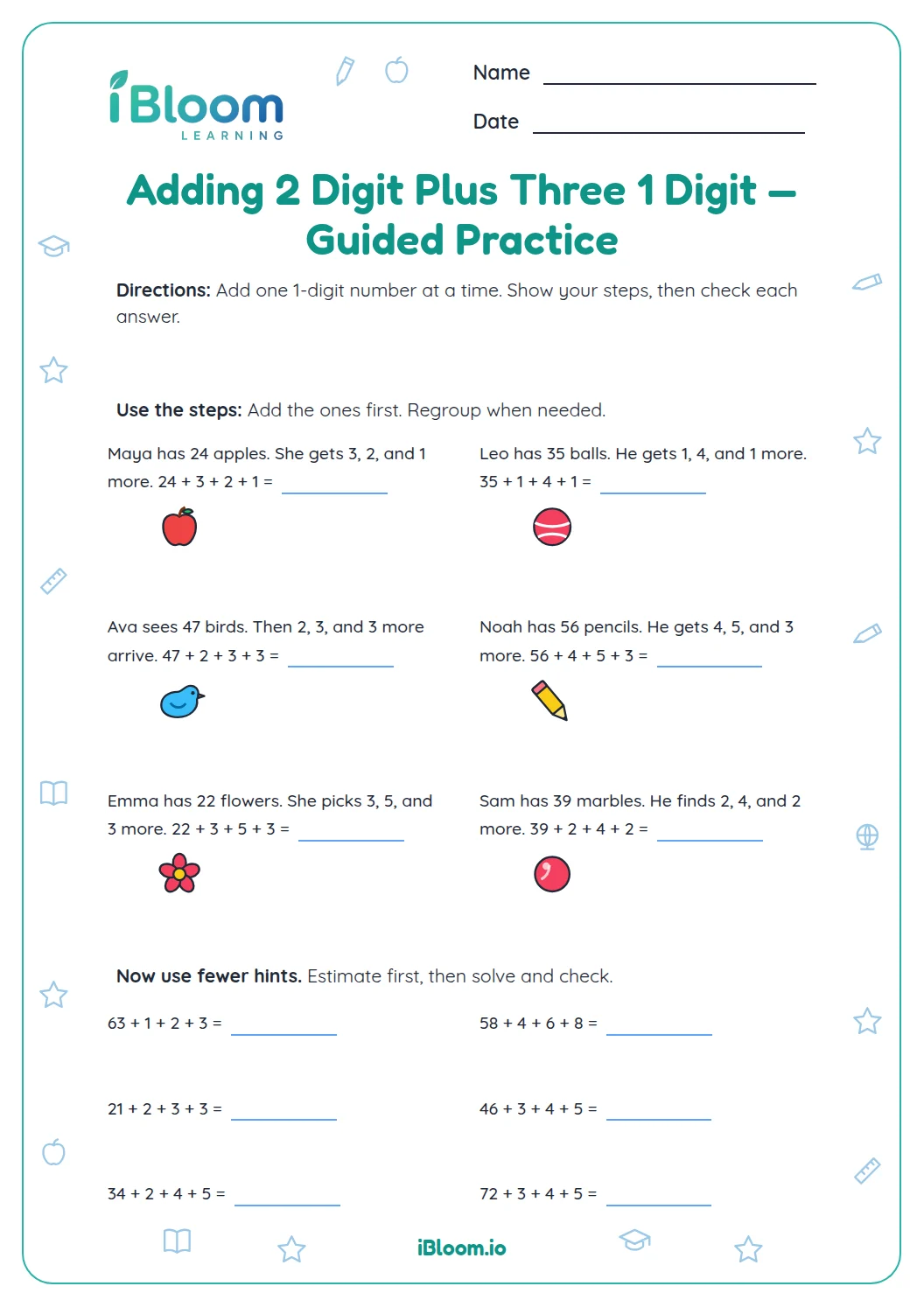
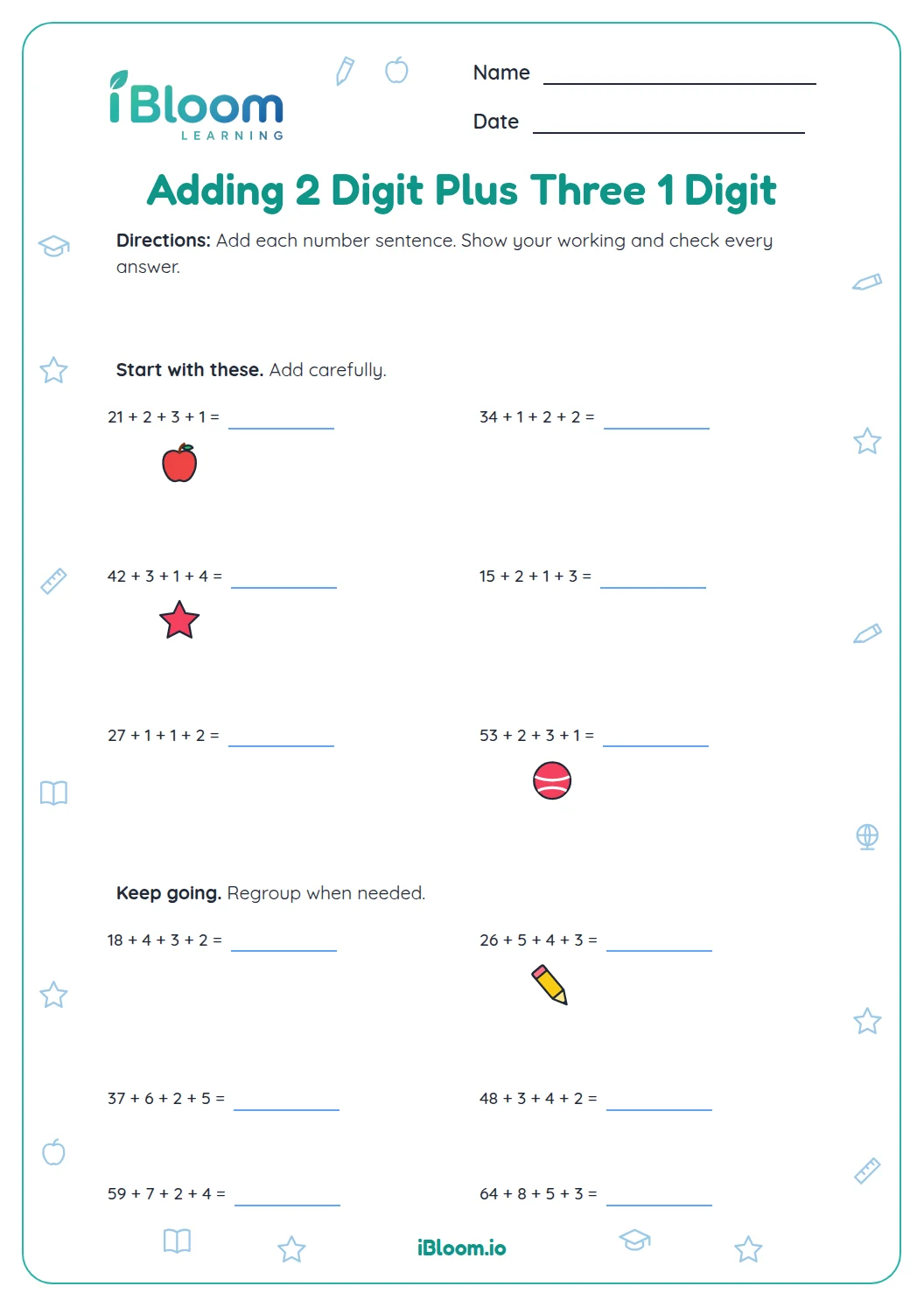
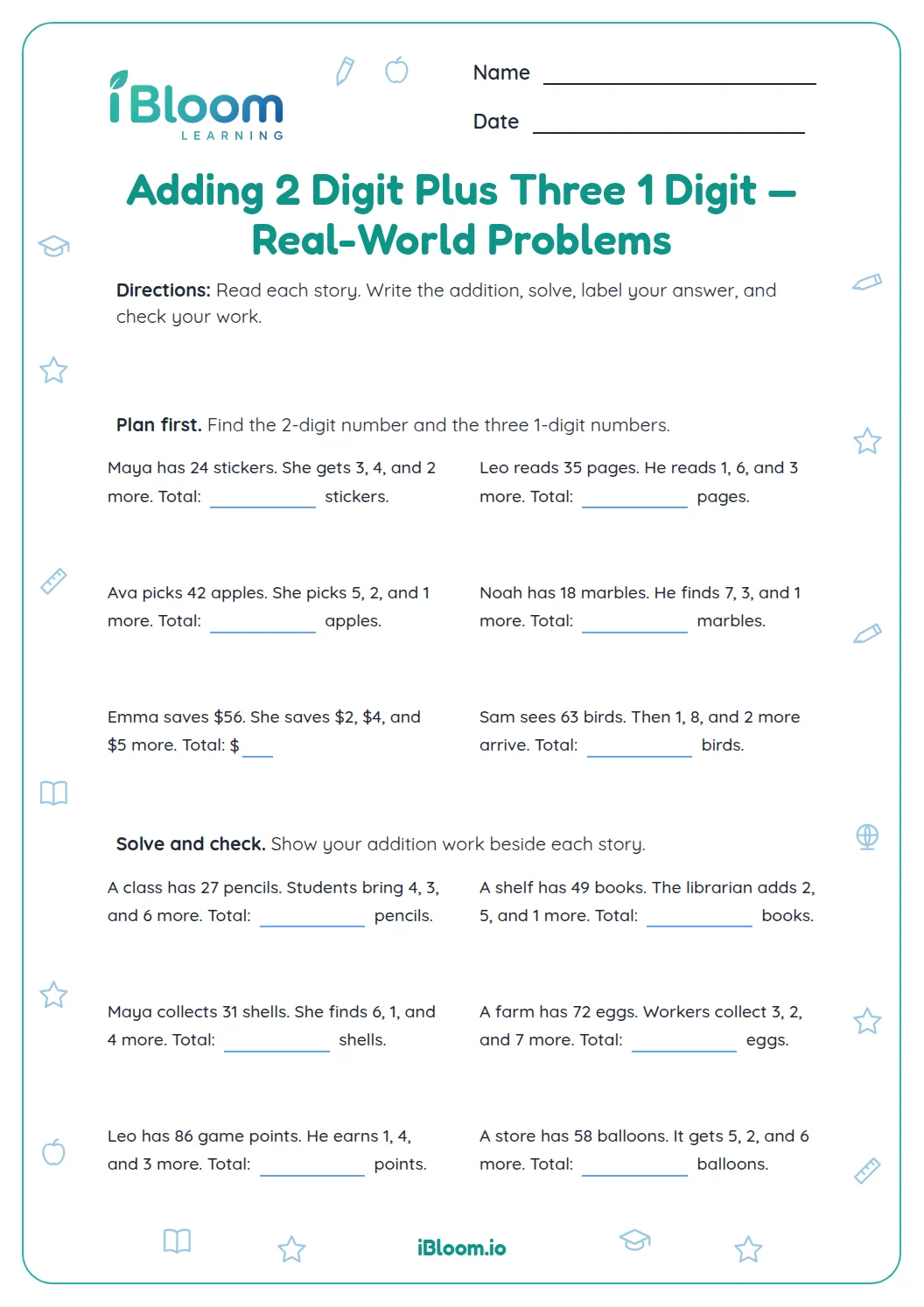
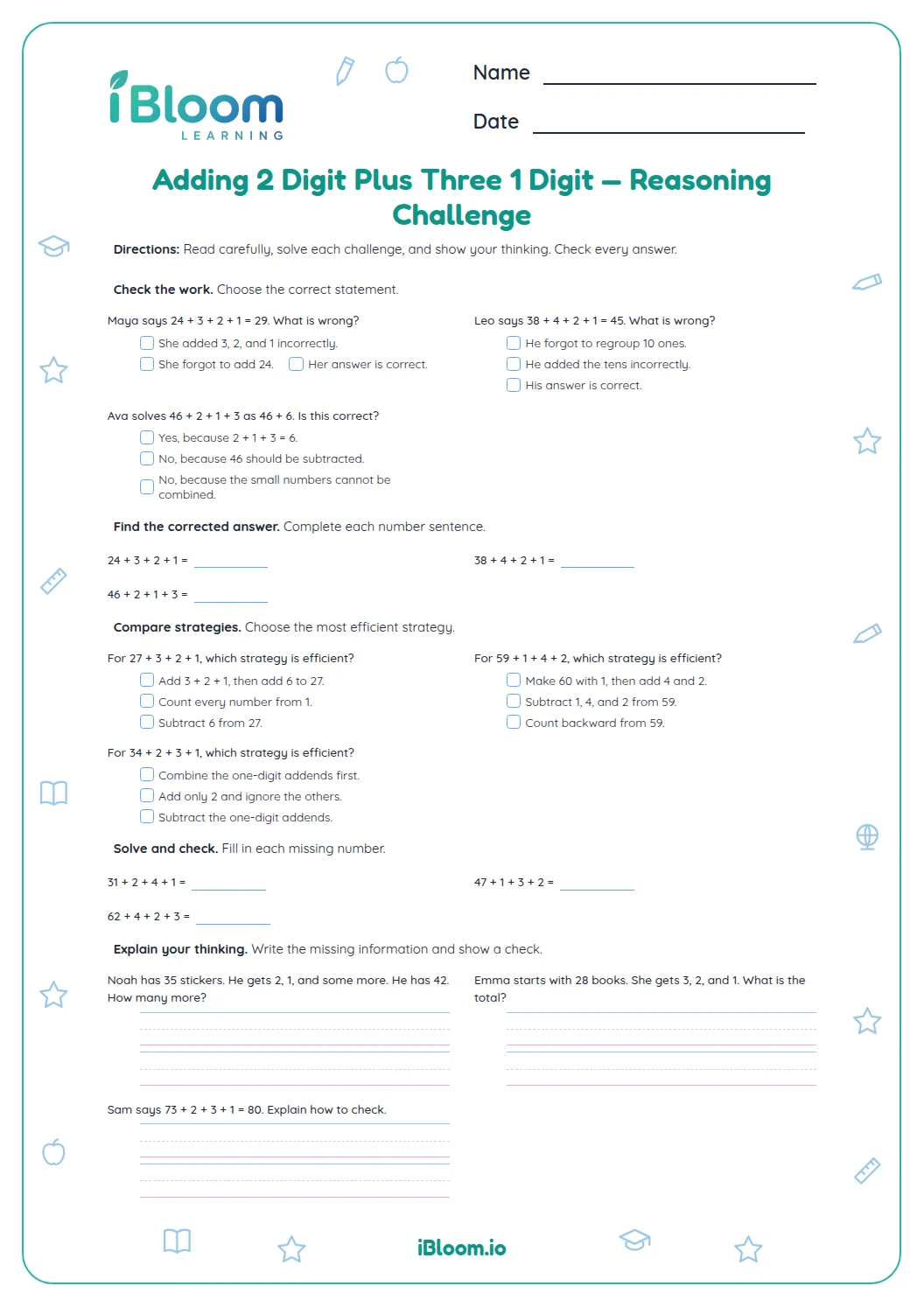
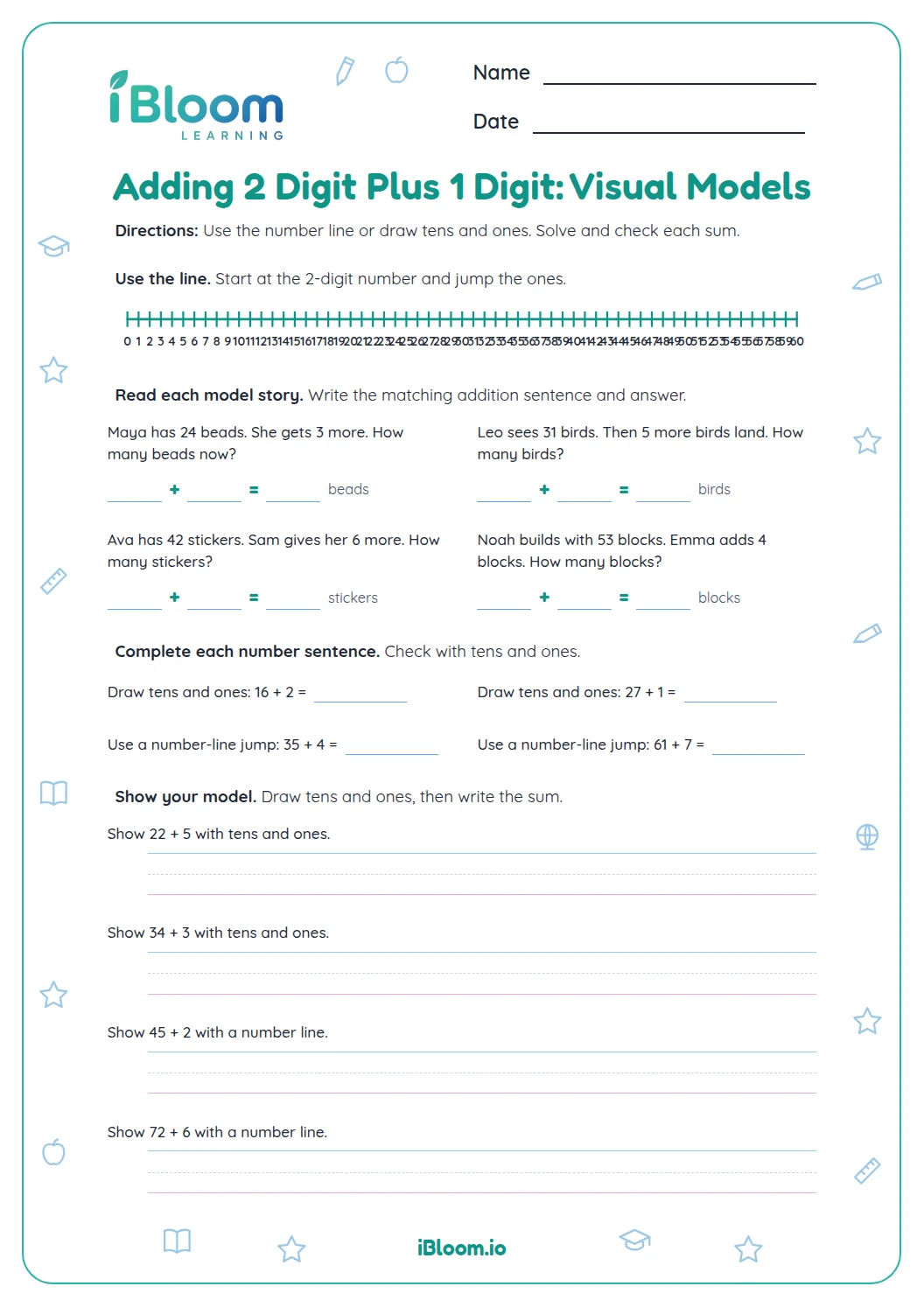
The sheet starts with model matching, then moves to missing totals and open-work addition problems. The answer key shows a checked total for every item.
How can I use this worksheet?
- 1Read the tens and ones in the starting number.
- 2Add all three single-digit numbers.
- 3Regroup ten ones as one ten when needed.
- 4Add the new ten to the starting tens.
- 5Check that all four addends are included.
What addition slips should I watch for?
The mistake
Adding only two of the three extra numbers.
The fix
Mark each extra addend once it has been used.
The mistake
Forgetting to regroup ten ones.
The fix
Trade a group of ten ones for one ten.
The mistake
Changing the starting tens while adding ones.
The fix
Keep tens and ones in separate columns until the trade.
Common Core alignment
This page practices the following Common Core math standard.
Fluently add within 100 using place-value strategies.
On this sheet: The problems add within 100 by combining ones and tens, including regrouping.
Show the official wordingHide the official wording
Fluently add and subtract within 100 using strategies based on place value, properties of operations, and/or the relationship between addition and subtraction.
What to practice next
Make more practice
Further reading
Questions parents and teachers ask
What is 26 + 3 + 1 + 4?
The total is 34. Combine the three single-digit numbers: 3 + 1 + 4 = 8, then add 8 to 26 to make 34. Ask the student to point to every group or addend as they explain the steps, then compare the result with the separate key.
When should a ten be regrouped?
If the ones from the starting number and extra addends make ten or more, trade ten ones for one ten. Add that ten to the tens in the original two-digit number. Ask the student to point to every group or addend as they explain the steps, then compare the result with the separate key.
How many items are included?
There are 16 questions in three parts: model matches, missing totals, and addition problems with working room. The answer key lists each final sum. Ask the student to point to every group or addend as they explain the steps, then compare the result with the separate key.
Can the three single-digit addends be added first?
Yes. Adding those three numbers first can make the work easier. Then add their total to the two-digit number, keeping track of any new ten. Ask the student to point to every group or addend as they explain the steps, then compare the result with the separate key.
How can a student check a sum?
Add the extra digits in a different order or count tens and ones in the model. The final value should include the original two-digit number and each of the three extra addends. Ask the student to point to every group or addend as they explain the steps, then compare the result with the separate key.