






About this worksheet
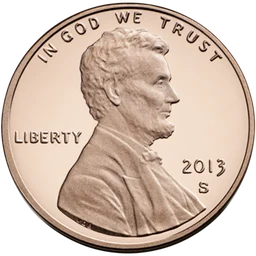
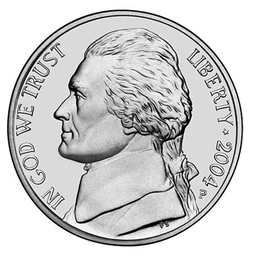
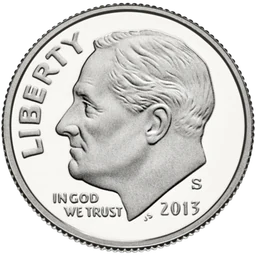
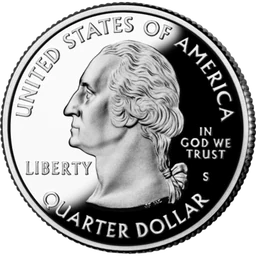
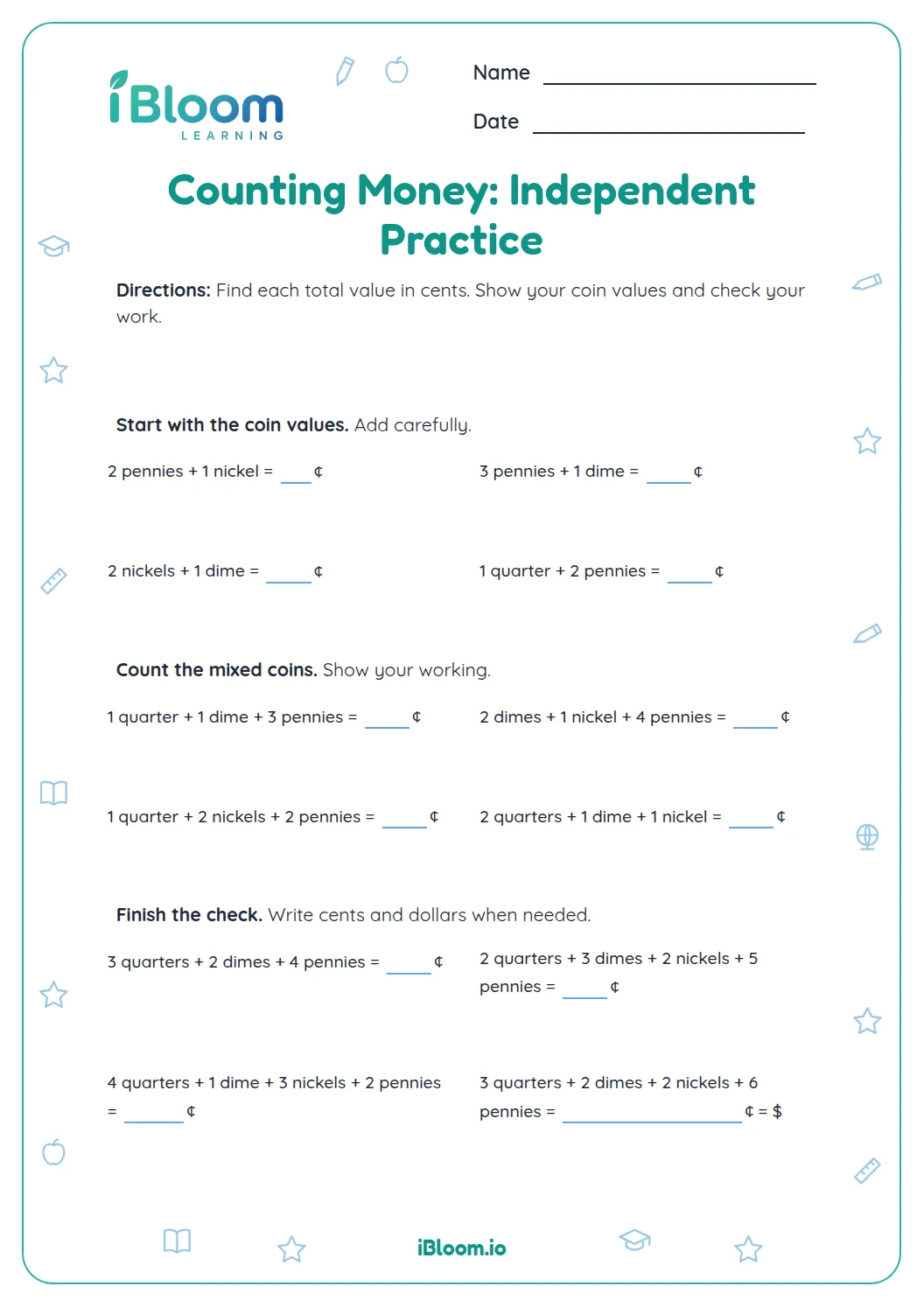
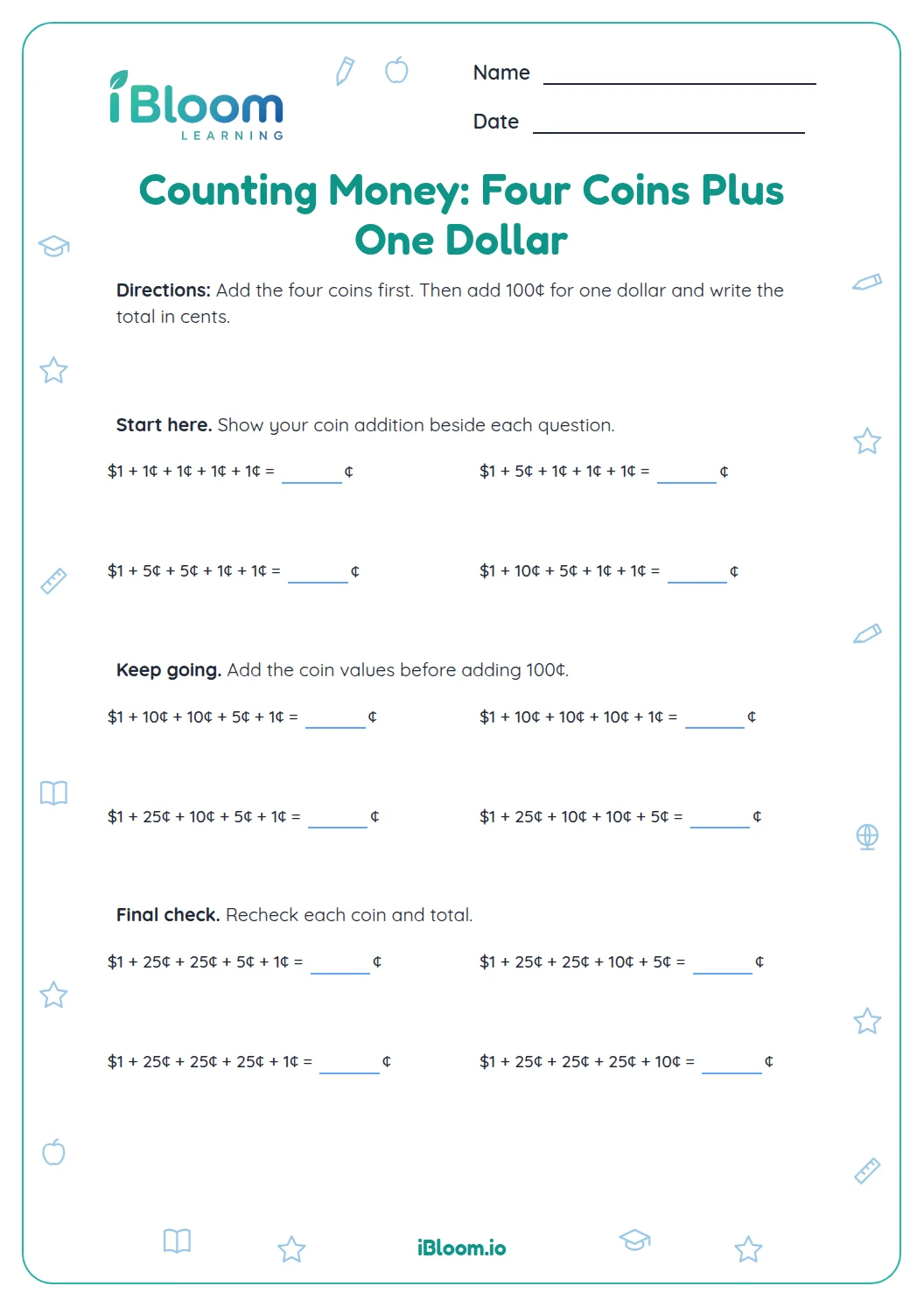
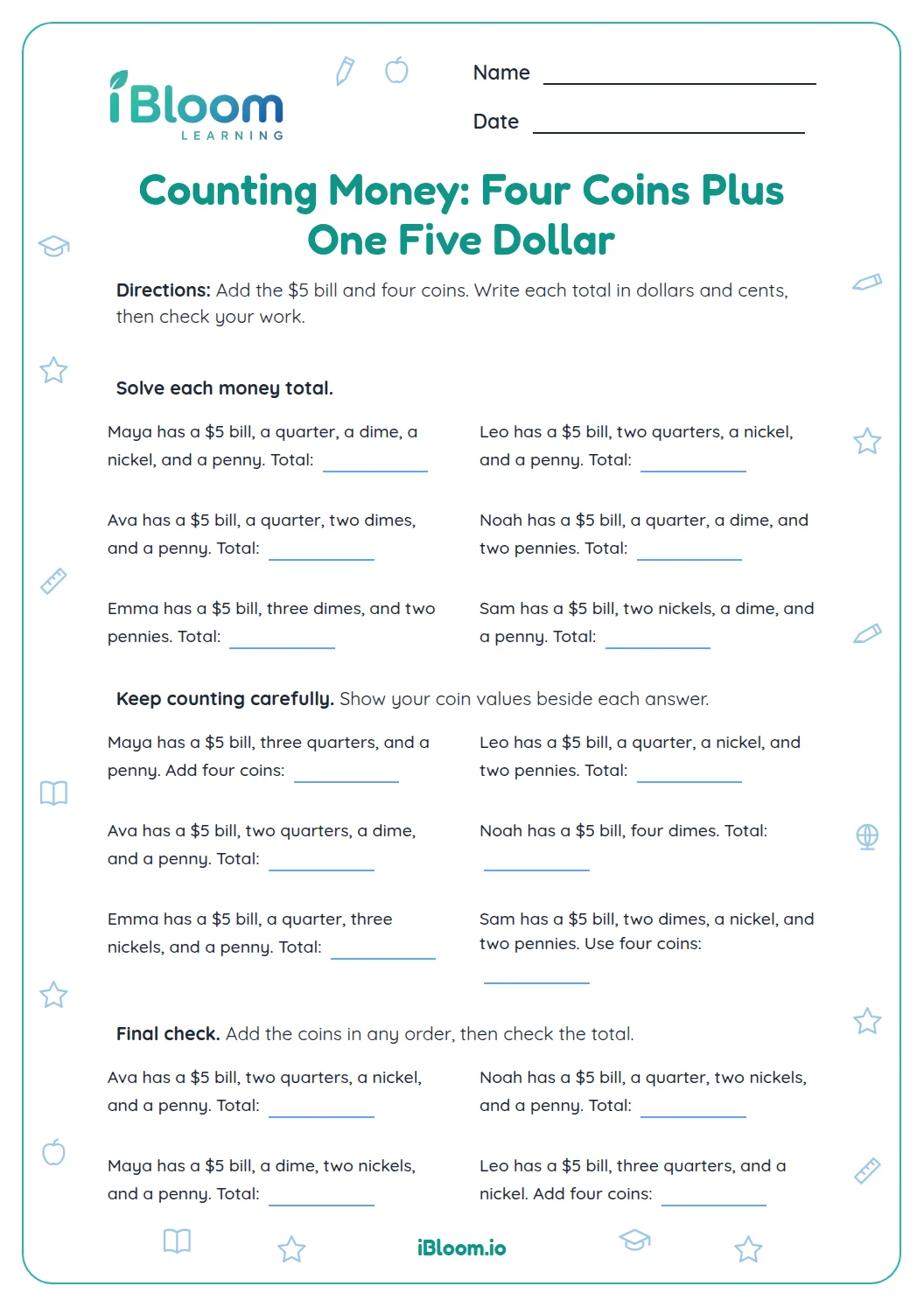
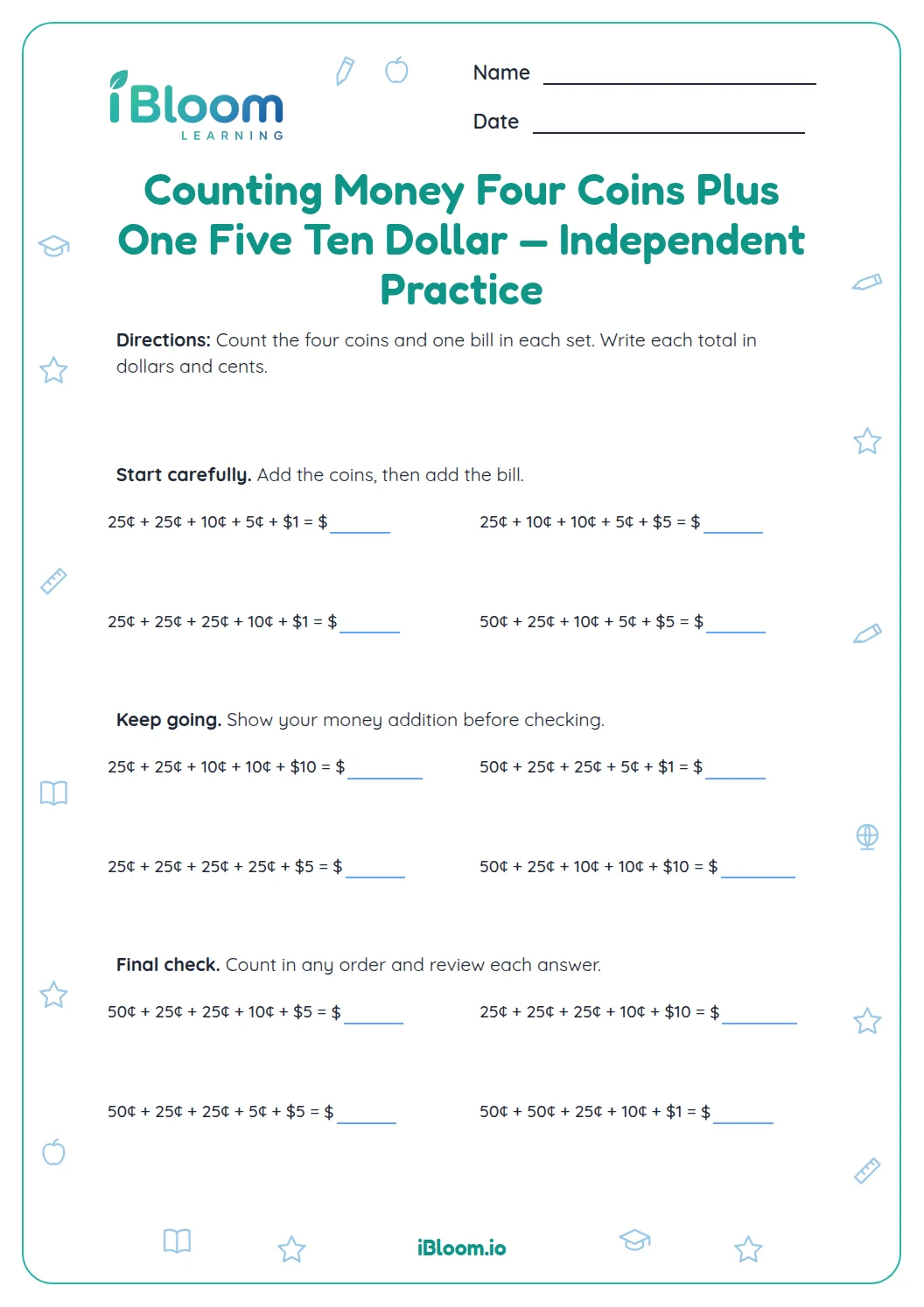
This printable Grade 3 money worksheet has 15 questions in three parts. Students identify the values of pennies, nickels, dimes, and quarters, add pictured coin groups, and check whether a total claim is correct. Each coin drawing supplies the values for its question, and the separate answer key supports a quick review. The sheet practices the coin-value work described in Common Core 2.MD.C.8.
Aligned to 2.MD.C.8
How can students find a coin total?
Start by naming each coin value: penny 1¢, nickel 5¢, dime 10¢, and quarter 25¢. Then add the values shown in the drawing. For example, question 5 shows a quarter, dime, and two pennies: 25 + 10 + 1 + 1 = 37 cents.
- 125¢ + 10¢ + 1¢ + 1¢ = 37¢
- 2Name each coin before adding.
How can a student check Noah’s claim?
Question 12 shows one quarter, two dimes, and three pennies. Add 25 + 10 + 10 + 1 + 1 + 1 to get 48 cents. That confirms Noah’s claim; counting every pictured coin prevents a missed dime or penny.
What is on the worksheet?
There are 15 questions in three parts: identify four coin values, total pictured coin groups, and check or estimate totals. The coin pictures match the coins named by each question, and the key gives the correct value or choice.
How to use this worksheet
- 1Read each coin value or identify it from the drawing.
- 2Add every coin shown in each group.
- 3For Noah’s claim, compare the sum of all six coins with 48¢.
- 4Choose the closest amount for the final coin group.
- 5Use the key to check totals and correct any missed coin.
Common mistakes and quick fixes
The mistake
Adding unlike place values or pieces without naming their unit.
The fix
Say the unit or denominator aloud as you combine the values.
The mistake
Stopping when the fractional parts make one or more wholes.
The fix
Trade each complete set of parts for a whole and include it in the total.
The mistake
Copying an answer before checking every addend.
The fix
Read each addend again and check the total with the model or a second calculation.
Common Core alignment
This worksheet gives practice with coin values and money totals.
Solve money problems using the values of dollars and coins.
On this sheet: Students count coins and use their cent values to find and check totals.
Show the official wordingHide the official wording
Solve word problems involving dollar bills, quarters, dimes, nickels, and pennies, using $ and ¢ symbols appropriately.
What to practice next
Make more practice
Further reading
Questions parents and teachers ask
Which coin values should students remember?
A penny is worth 1 cent, a nickel 5 cents, a dime 10 cents, and a quarter 25 cents. The first part asks students to identify these values. In later questions, they use the same values to add pictured groups of coins and check a total.
How does the Noah question work?
Question 12 shows one quarter, two dimes, and three pennies. Add 25 + 10 + 10 + 1 + 1 + 1 to get 48 cents. Noah’s stated total is correct. The question checks whether the student includes both dimes and all three pennies.
Is every coin group drawn?
Yes. The coin pictures show the pennies, nickels, dimes, or quarters students need to count in each total question. They can point to each coin, say its value, and add the values. The drawings and prompt work together to show the complete set.
Does the page include an answer key?
Yes. A separate answer key gives the coin values, totals, and selected responses. Students can finish the worksheet first, then compare answers and revisit any group where a coin may have been skipped or counted with the wrong value.
How long should the practice take?
Plan for about 15 minutes, adjusting for how quickly the student names coin values and adds each group. The identification questions are brief; adding coins and checking Noah’s claim may take longer because students should account for every coin.