
About this worksheet
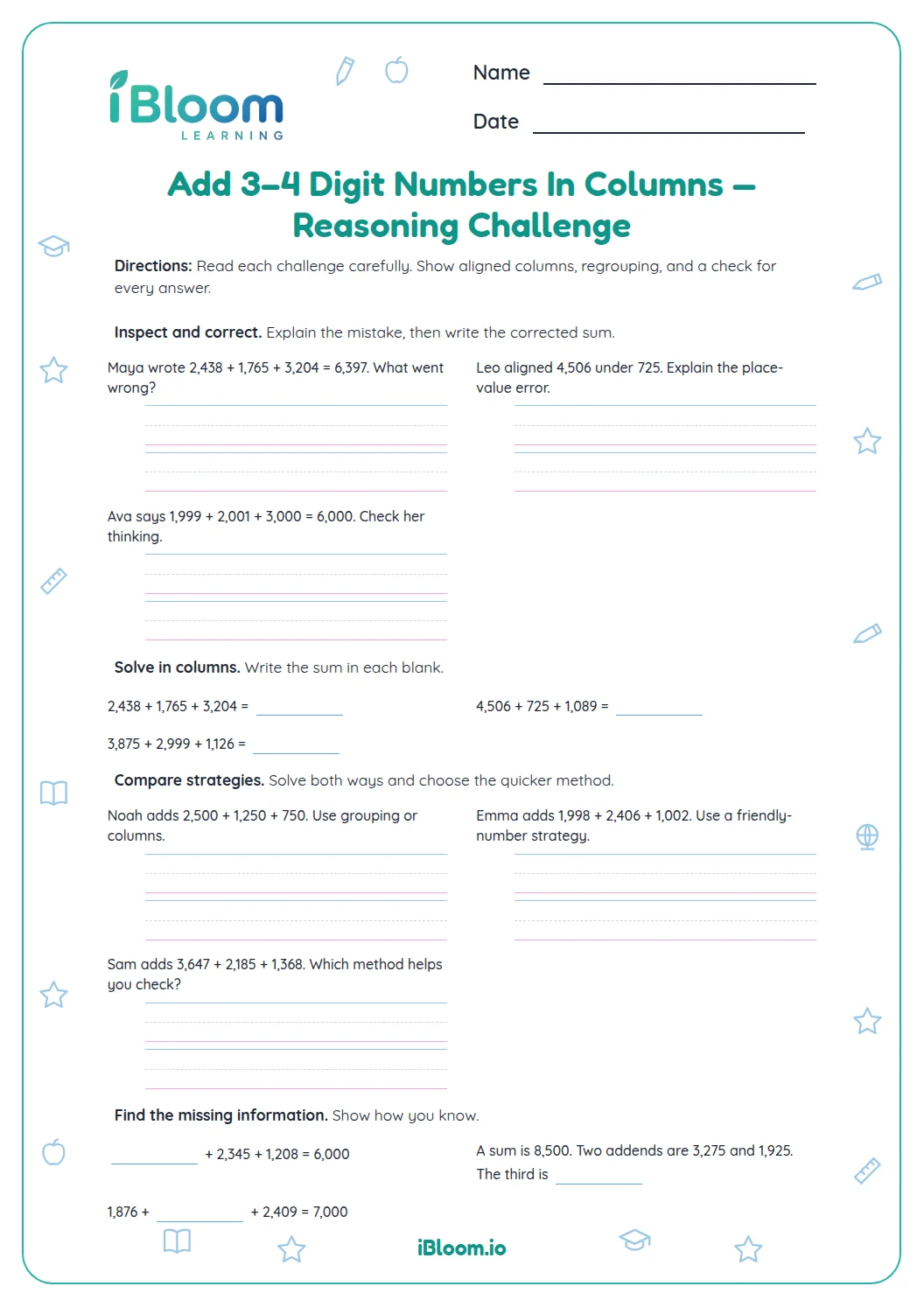
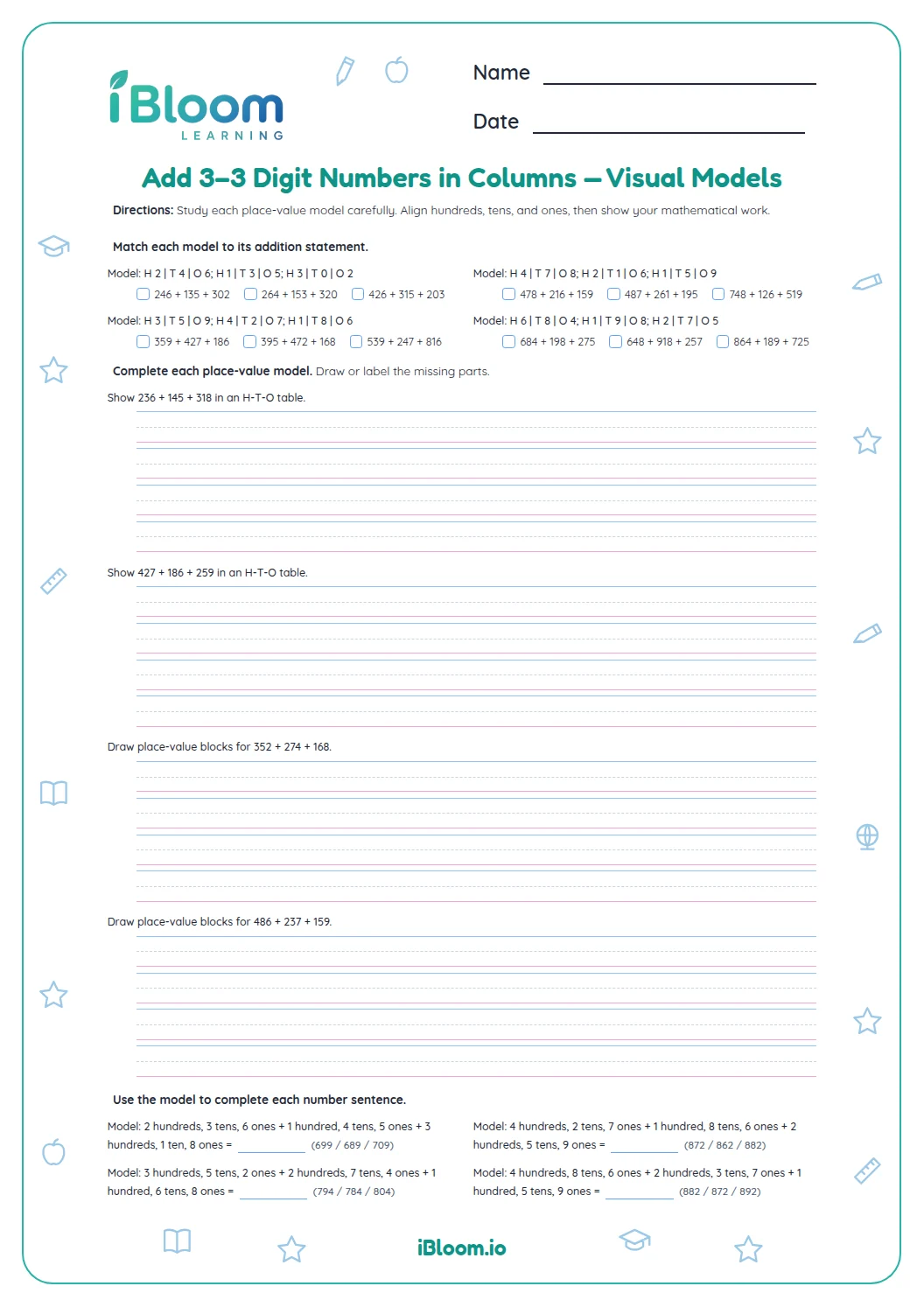
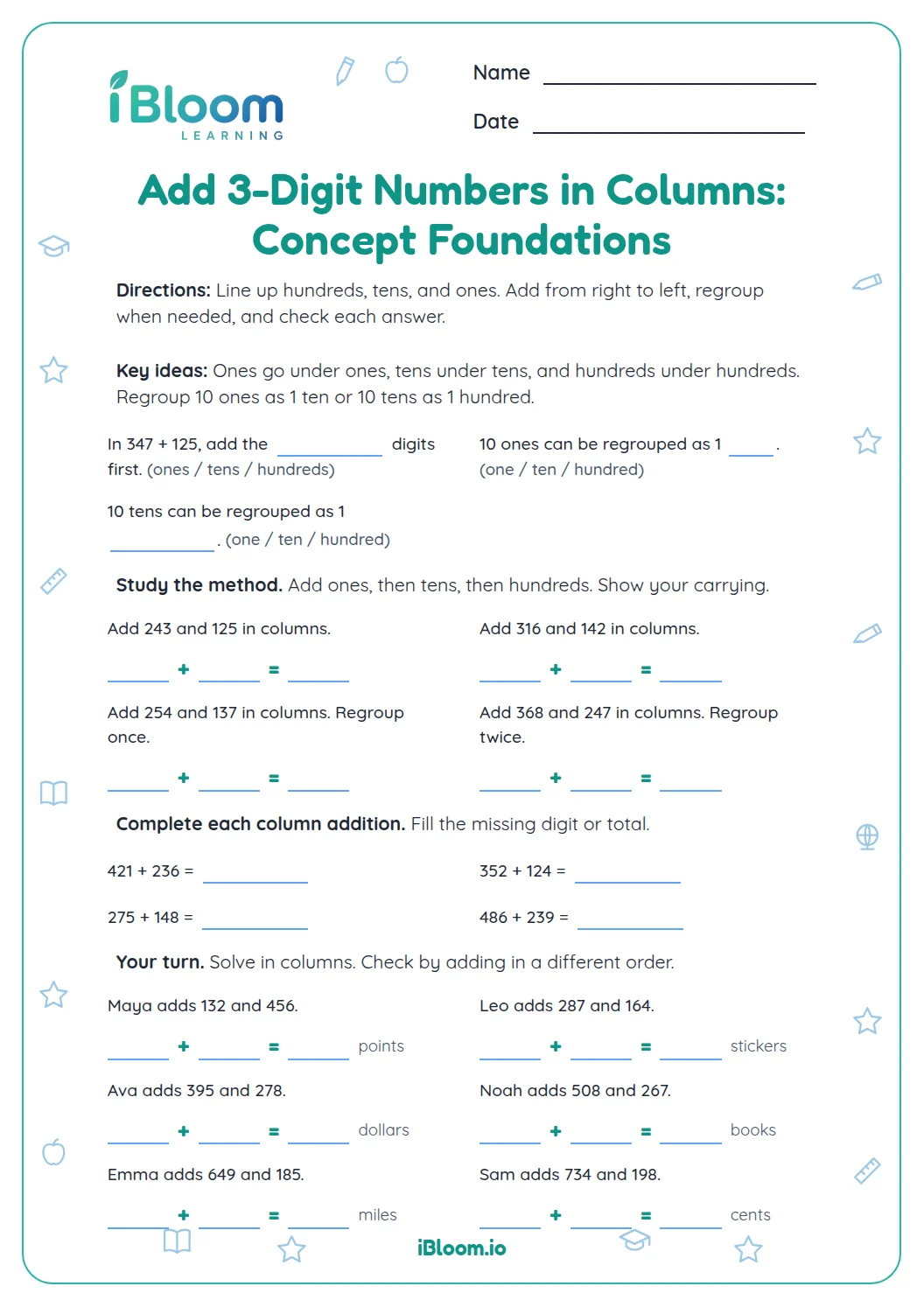
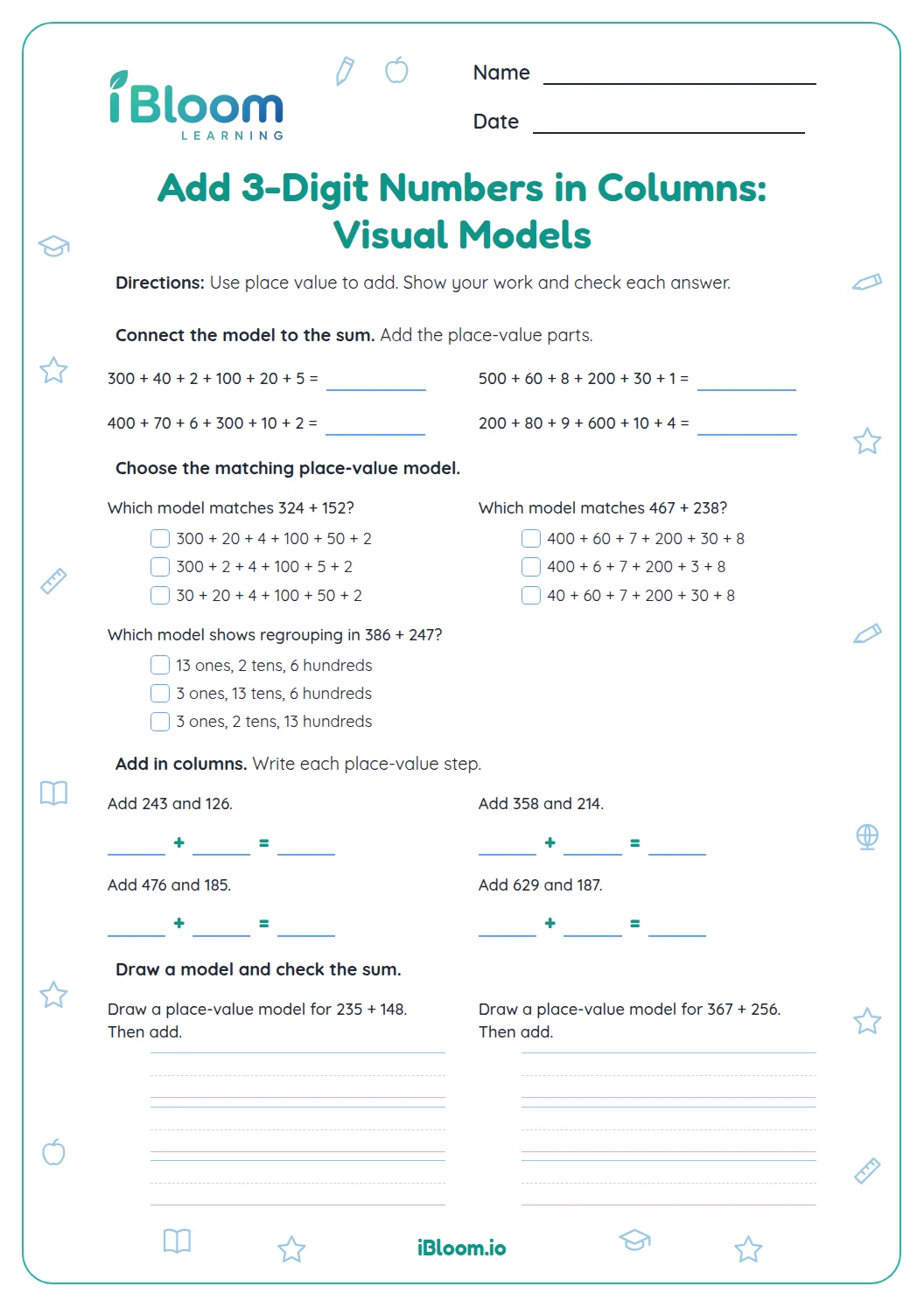
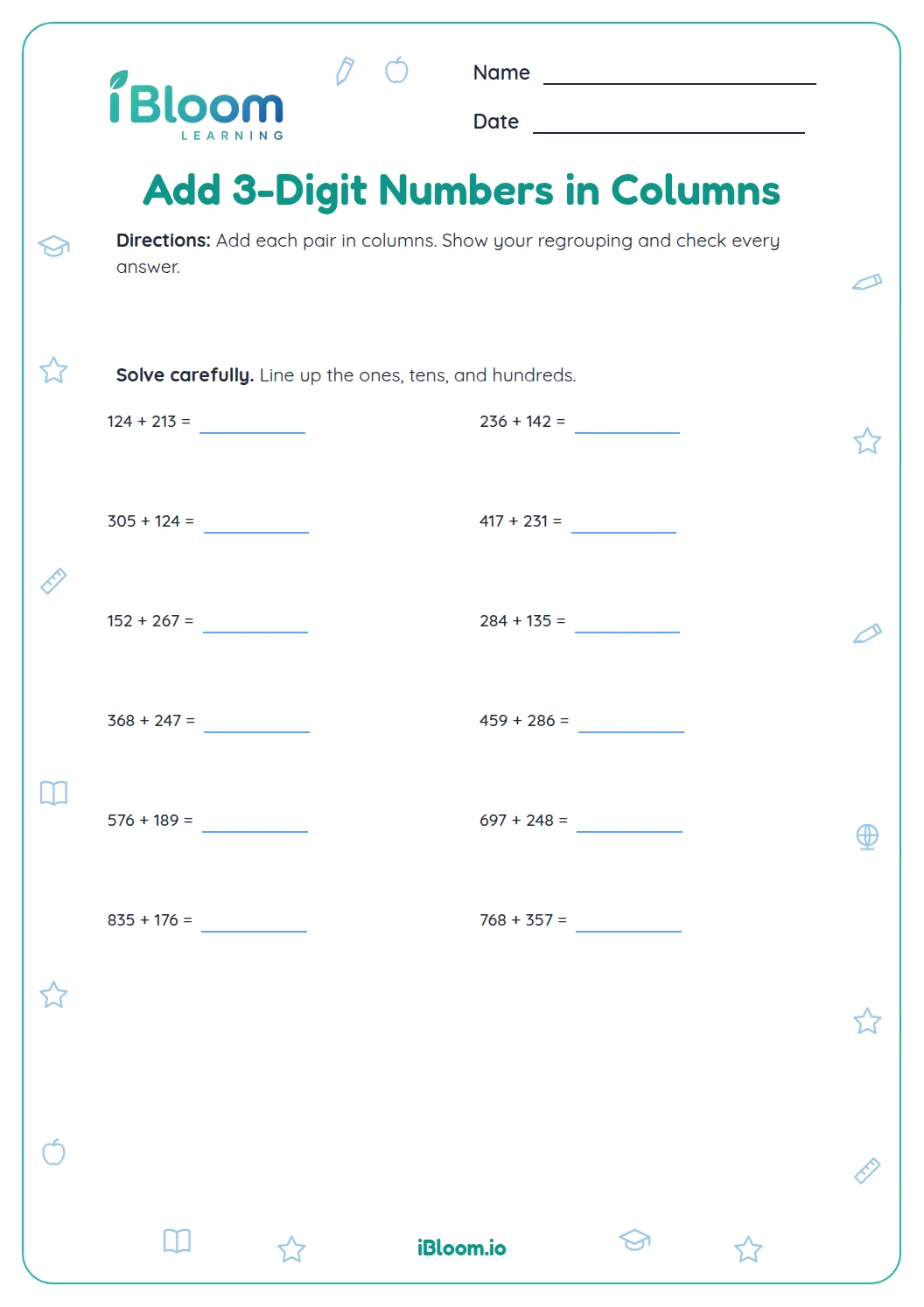
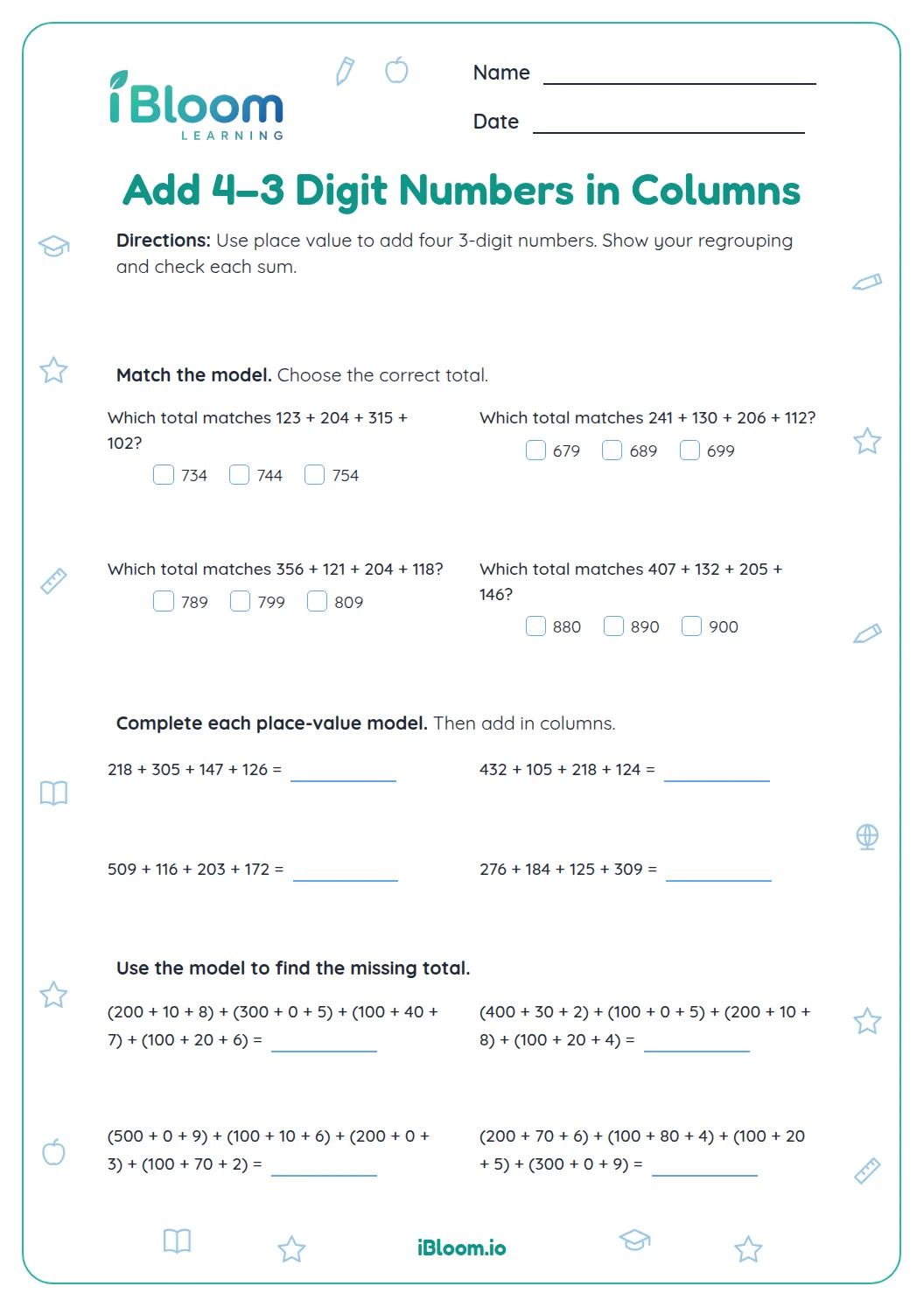
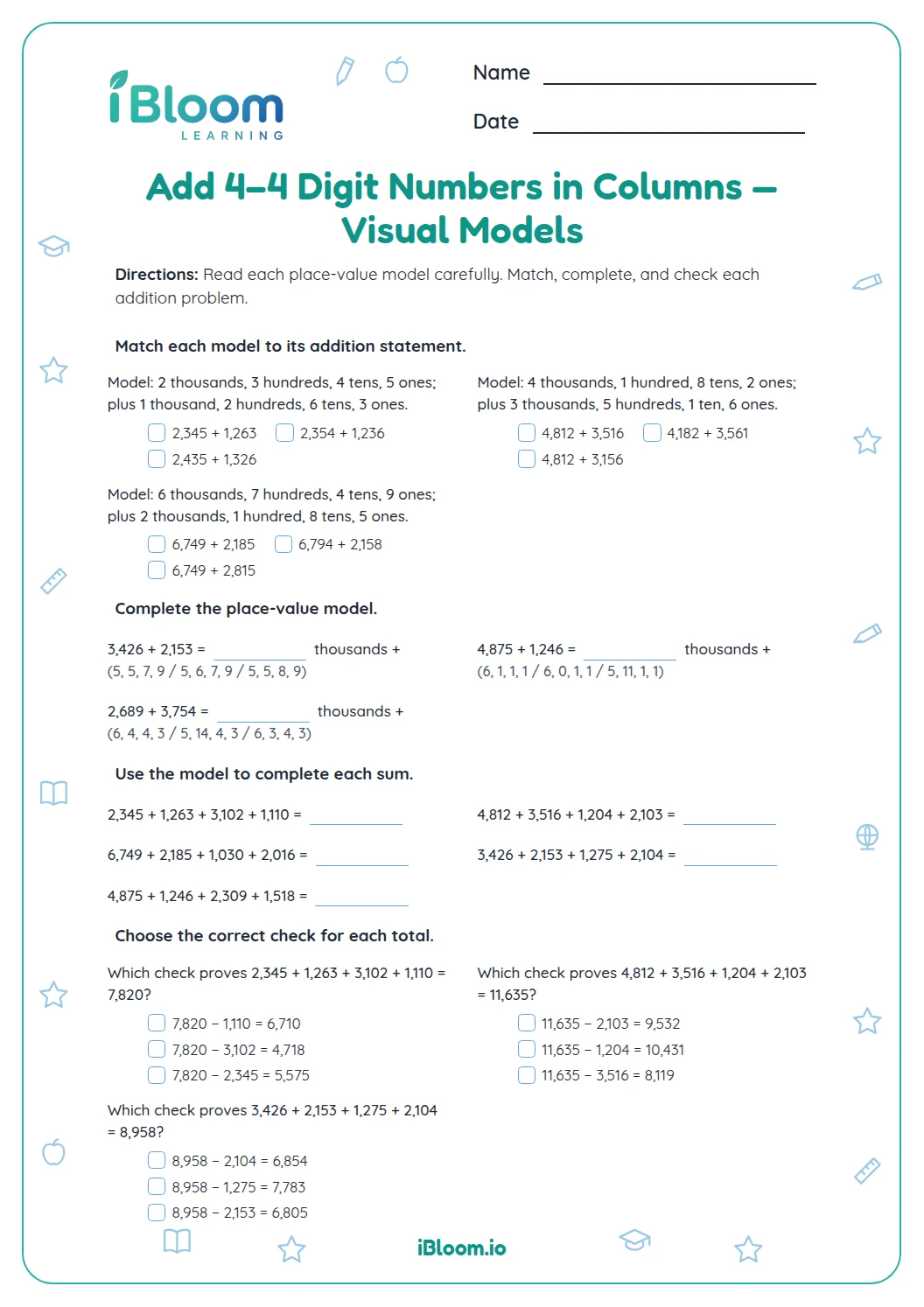
This free printable worksheet gives Grade 4 students focused practice adding multi-digit numbers in columns. Every problem shows each addend with a clear plus sign, so students can align ones, tens, hundreds and thousands before adding. Work moves from a first set of sums to a second set for regrouping and checking. The page includes 16 questions and a separate answer key, and practices Common Core 4.NBT.B.4.
Aligned to 4.NBT.B.4
How do you line up several addends?
Write each number so its ones, tens, hundreds and thousands digits share a column. Keep every plus sign visible, then add one place at a time from right to left.
For question 1, add the ones digits first, then combine the tens, hundreds and thousands. Carry each group of ten into the next place before recording the final sum.
- 11,246 + 2,357 + 1,084 = ___
- 24,687 is the sum.
- 3Check by adding the first two addends, then adding the rest.
When do you regroup?
Regroup whenever a column totals ten or more. For example, 8 ones plus 7 ones makes 15 ones: write 5 in the ones place and add 1 ten to the tens column.
The second set asks you to keep using that process across multiple columns. Make a small carry mark above the next place so it is included exactly once.
How can you check a sum?
Add the numbers in a different grouping or estimate with nearby thousands. If a total seems smaller than any one addend, check the place-value alignment and regrouping.
The answer key gives one sum per problem. Compare each result only after completing the column work.
How to work through the page
- 1Copy each addend into a column, matching the ones digits.
- 2Write a plus sign before every addend after the first.
- 3Add the ones column and regroup if its total is ten or more.
- 4Continue through tens, hundreds and thousands, including carry marks.
- 5Estimate the total to see whether it is a reasonable size.
- 6Use the separate key to check each sum and correct any place-value slip.
Common addition slips and quick fixes
The mistake
Digits drift into the wrong place when numbers have different lengths.
The fix
Start at the right edge and align every ones digit before calculating.
The mistake
A carried ten is forgotten in the next column.
The fix
Write a small carry mark above the next place and add it with that column.
The mistake
A carry mark is added twice or placed in the wrong column.
The fix
Carry one ten exactly one place left, then cross-check by adding the addends in a new grouping.
Common Core alignment
This worksheet builds fluency with multi-digit addition using the standard algorithm.
Add multi-digit whole numbers accurately with the standard algorithm.
On this sheet: Students add 3 four-digit whole numbers in aligned columns and regroup across place values.
Show the official wordingHide the official wording
Fluently add and subtract multi-digit whole numbers using the standard algorithm.
What to practice next
Make more practice
Further reading
Questions parents and teachers ask
How many problems are on this worksheet?
There are 16 addition problems across two sets. Each asks students to add the printed numbers in columns, with a plus sign shown between every pair of addends. The second set offers another chance to regroup and check the total.
Does the worksheet include an answer key?
Yes. A separate answer key lists the completed sum for every numbered problem. Students can finish the worksheet first, then use the key to check each result and locate a place-value step that needs another look. It covers both worksheet pages when a sheet has two pages.
What does regrouping mean in column addition?
Regrouping means trading ten units in one place for one unit in the next place. For instance, 14 ones become 4 ones and 1 ten, which is carried into the tens column. The same trade works in the tens and hundreds places.
How should students keep the columns organized?
Line up ones under ones, tens under tens, hundreds under hundreds and thousands under thousands. The plus signs mark the addends, and small carry marks belong above the next column to the left. Check that no digit has shifted sideways.
How can a student check an answer?
Estimate the addends to the nearest thousand, then compare the estimate with the exact sum. A second check is to add the numbers in a different grouping and see whether the same total appears. Recheck any total far from the estimate.