



About this worksheet
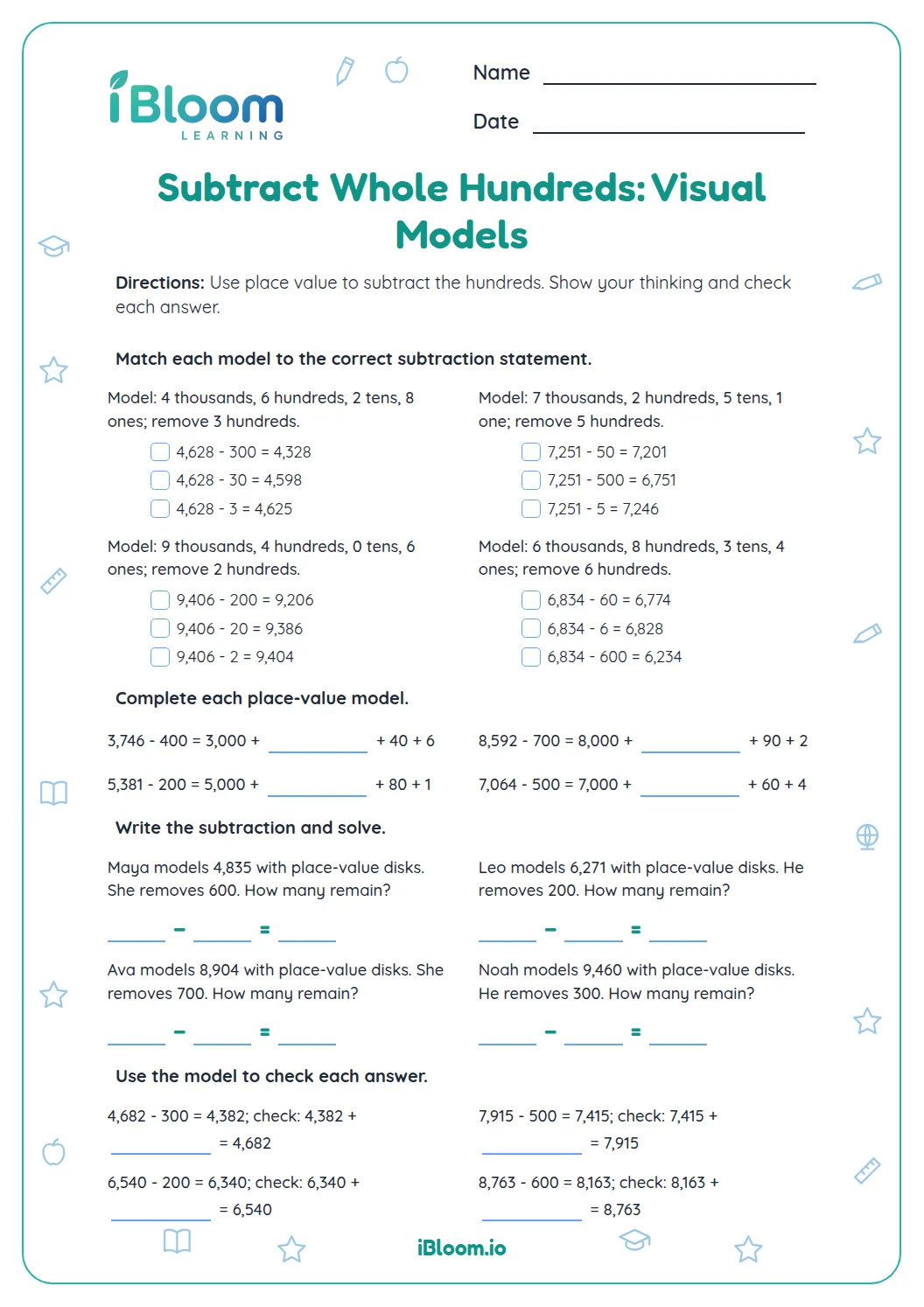
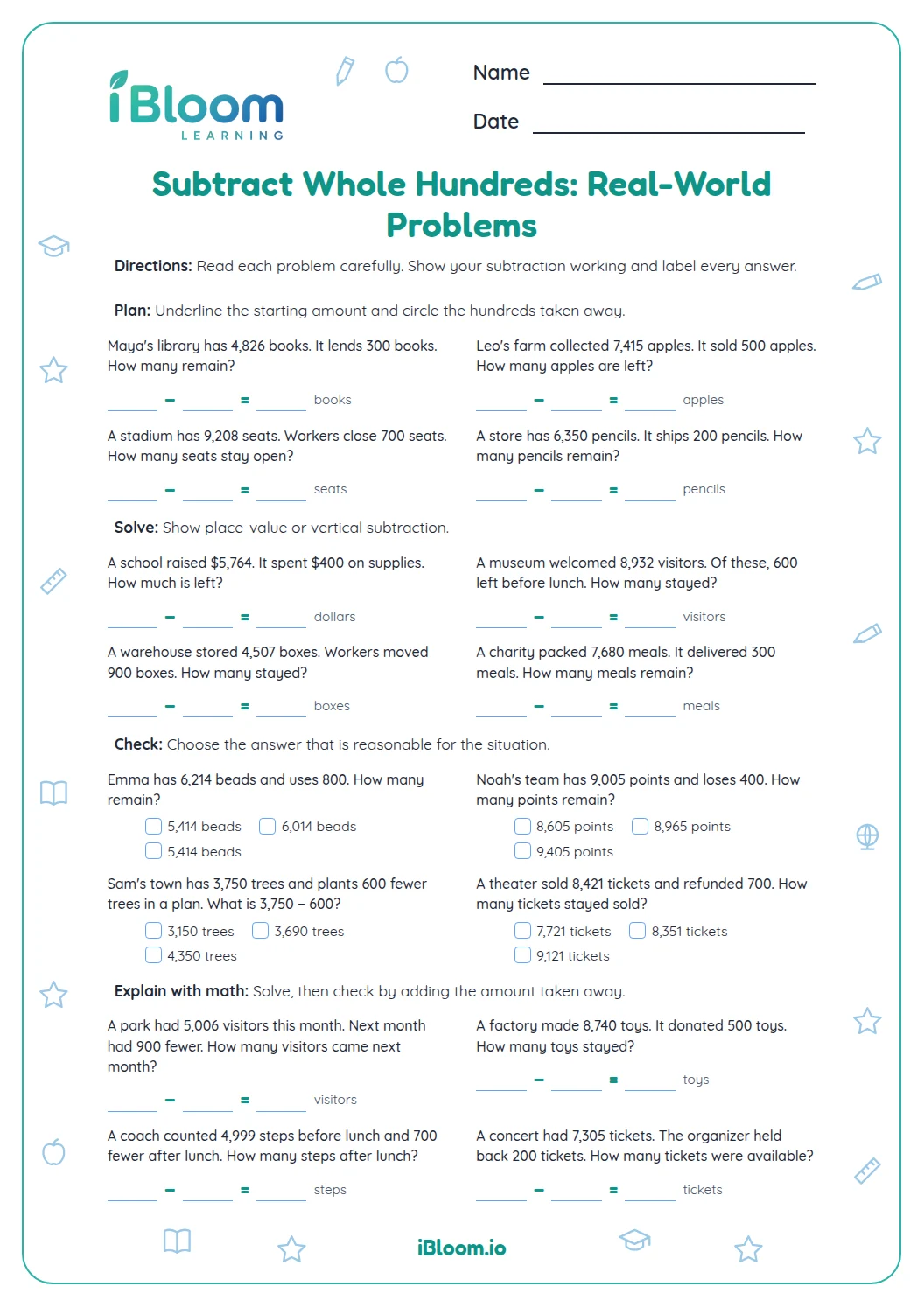
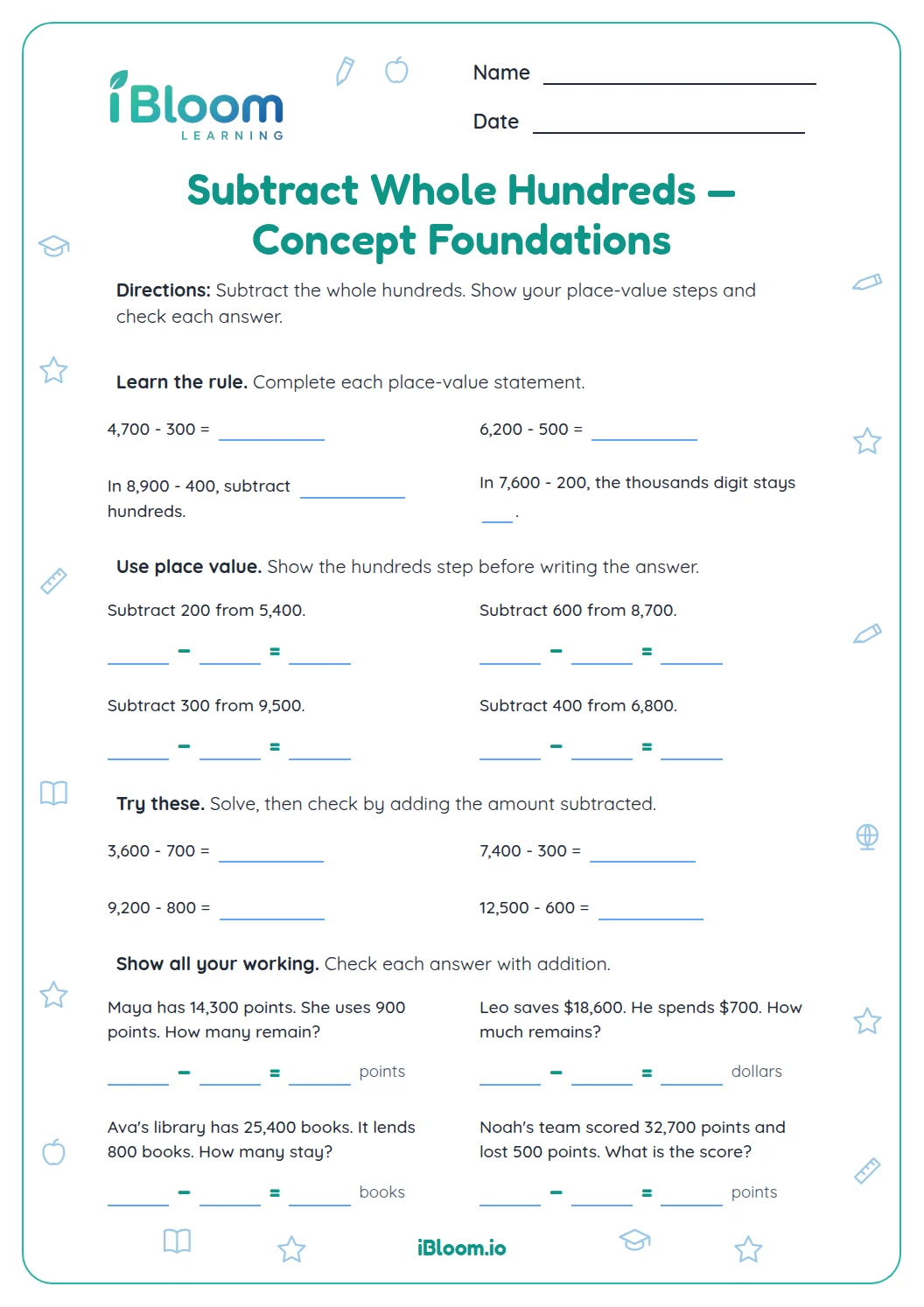
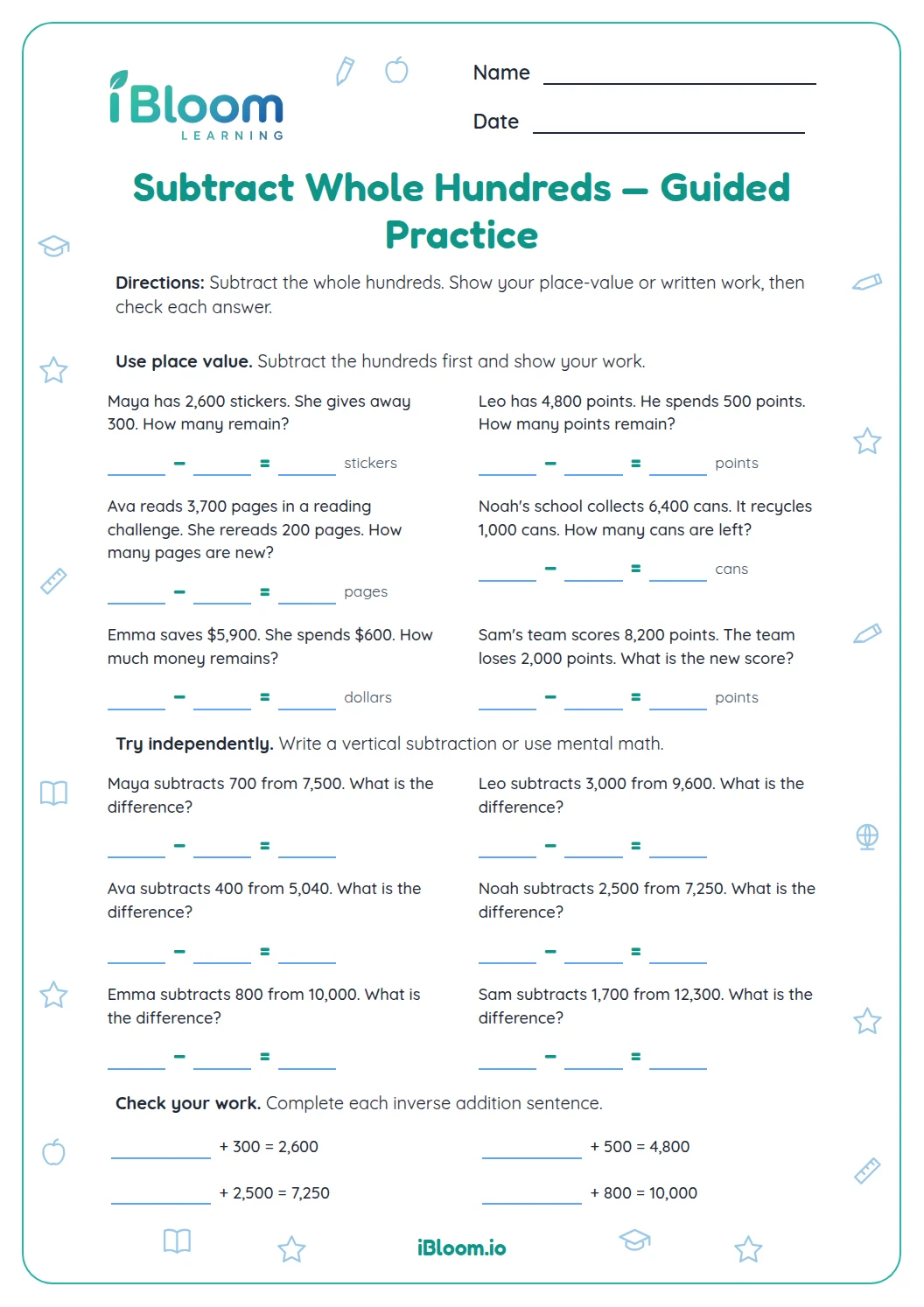
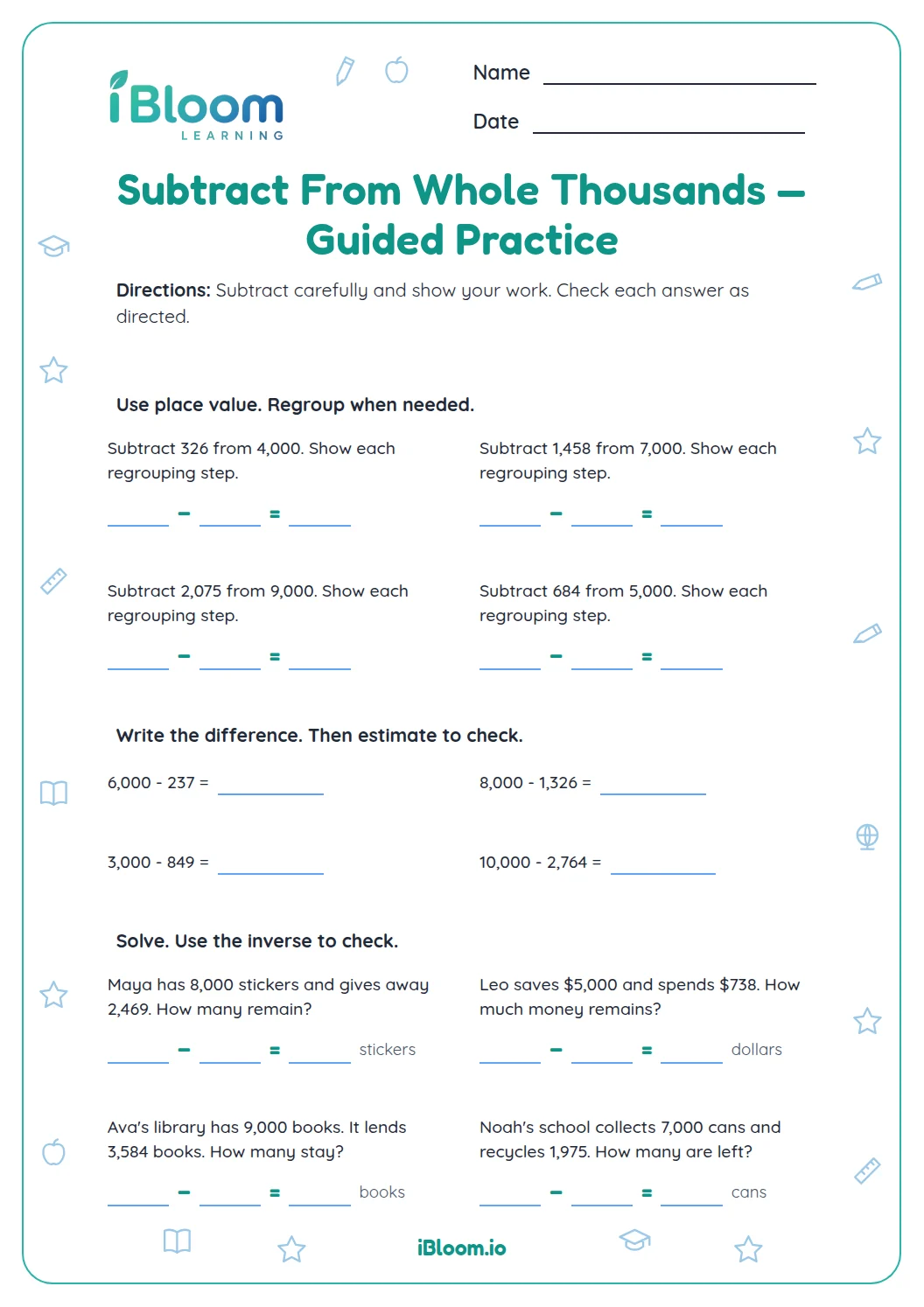
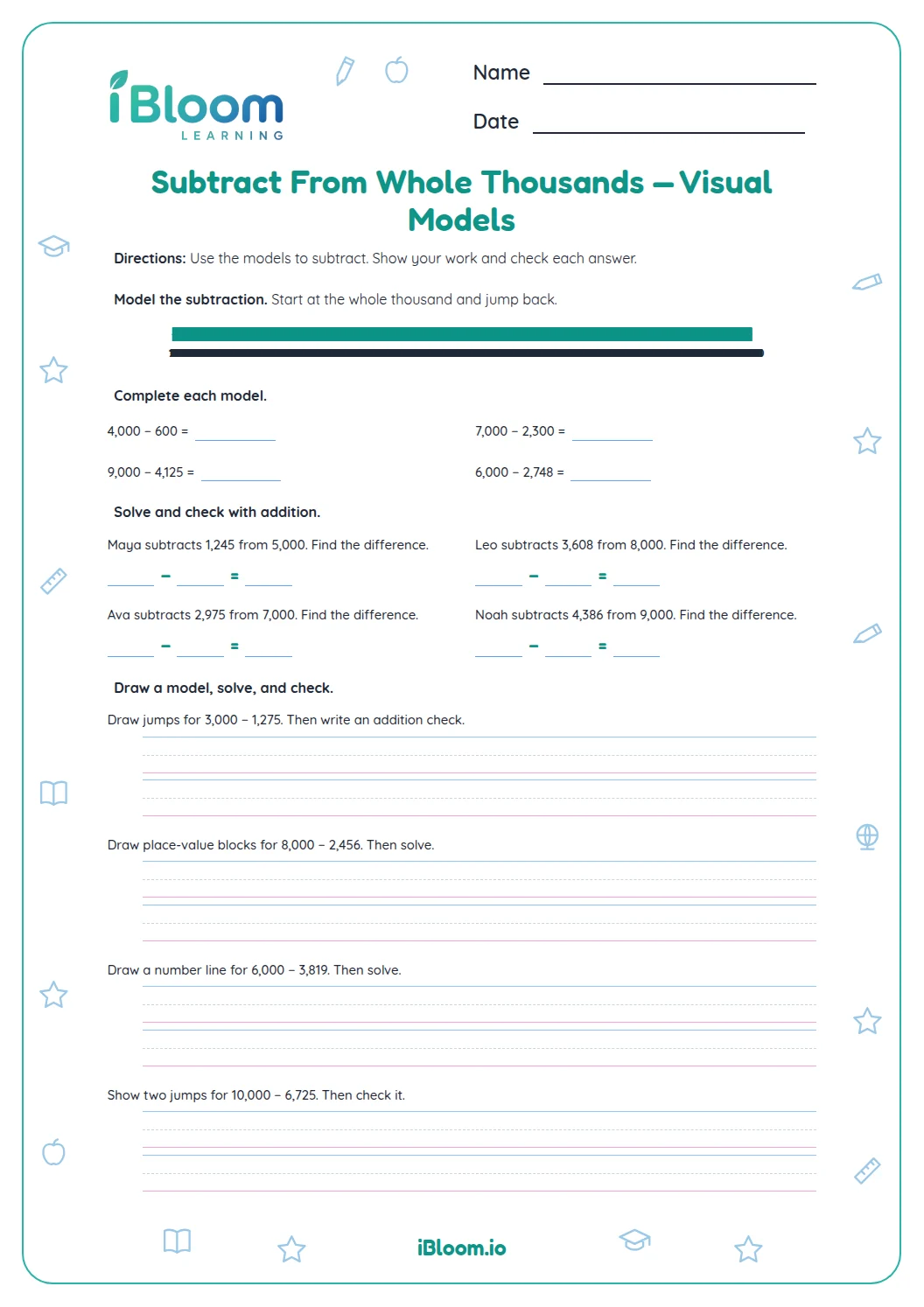
This Grade 4 worksheet focuses on subtracting whole hundreds from four-digit numbers. Students identify which place changes, solve equations, write related addition checks, and apply the skill in short contexts. The sixteen problems move from direct subtraction to missing numbers and checking. A separate answer key includes the complete subtraction sentences so digits stay in their proper places.
Aligned to 4.NBT.B.4
Which place changes when you subtract hundreds?
A whole hundred is made of hundreds, so subtract its hundreds digit from the hundreds place. In 4,732 − 300, the 7 hundreds become 4 hundreds, while the thousands, tens, and ones remain in place. The result is 4,432.
Read every digit in its column; do not split the answer into separate chunks.
- 14,732 − 300
- 27 hundreds − 3 hundreds = 4 hundreds
- 3Thousands, tens, and ones remain the same.
- 44,732 − 300 = 4,432
- 5Check: 4,432 + 300 = 4,732
How can addition check a subtraction answer?
Addition reverses subtraction. Add the amount taken away to the difference. If the sum returns to the starting number, the subtraction is consistent.
What kinds of problems are included?
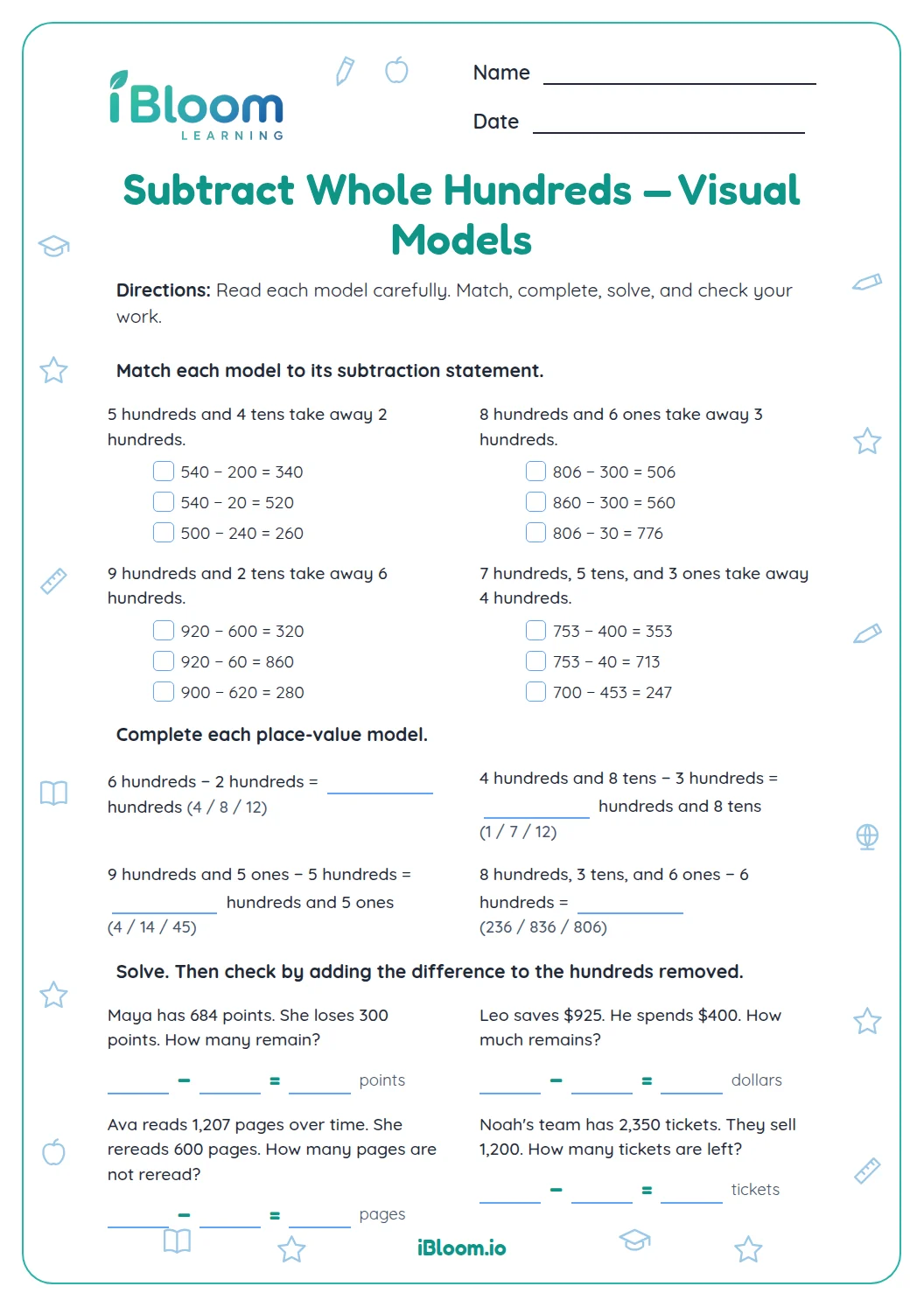
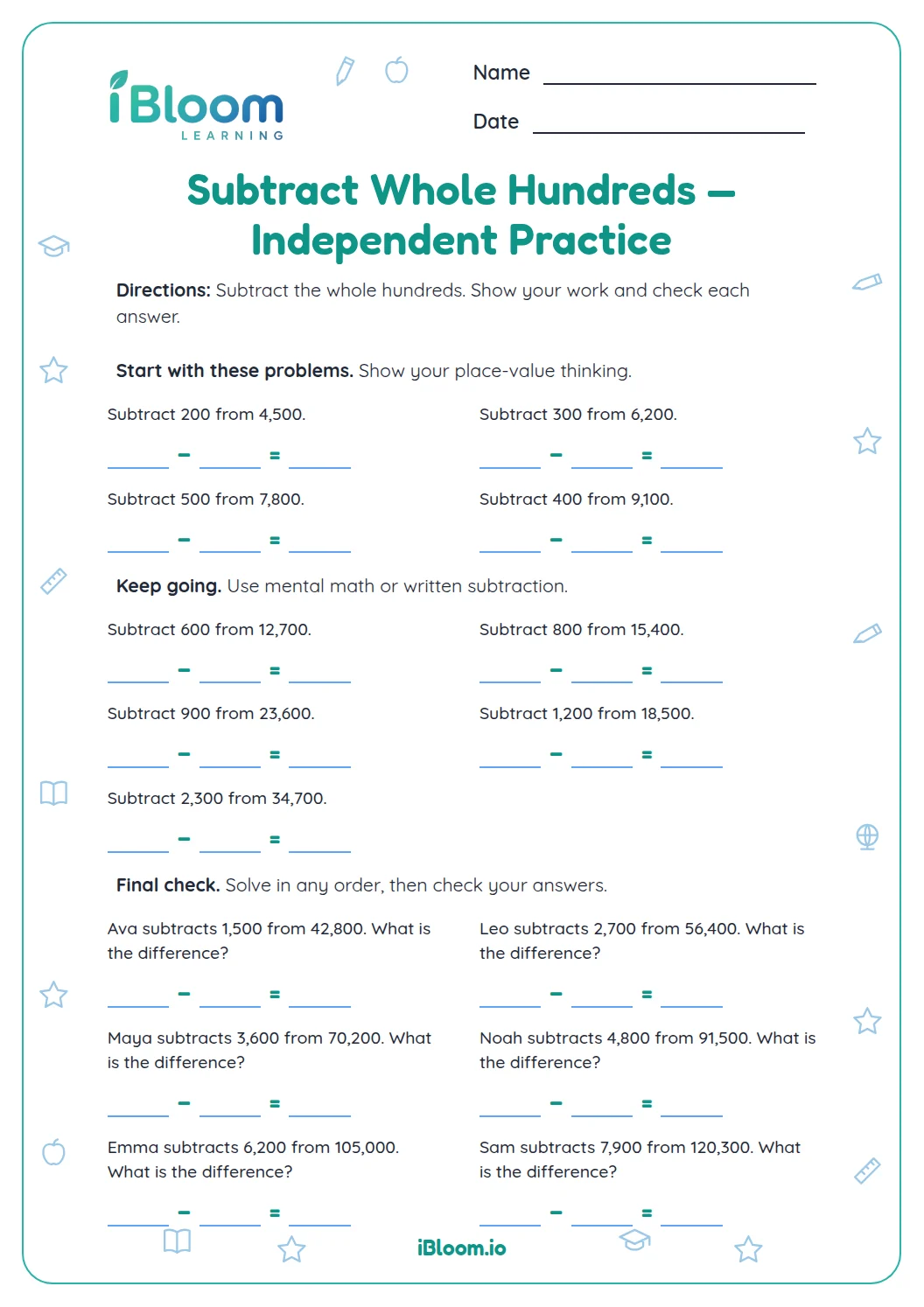
Part A builds confidence with direct differences. Part B checks place-value understanding and subtraction statements. Part C asks students to write full equations, give related addition checks, and solve short contexts. Part D practices missing values and checking.
How can I use this worksheet?
- 1Underline the whole hundred being subtracted.
- 2Find the hundreds digit in the four-digit number.
- 3Subtract the hundreds and keep the other places aligned.
- 4Read the entire difference, including any zero in the tens place.
- 5Add the difference and amount subtracted to check.
Common mistakes and quick fixes
The mistake
Writing 5,66464 when a blank splits a number.
The fix
Write the full result 5,664 in one answer blank.
The mistake
Changing the tens or ones digits by mistake.
The fix
Line up the hundreds place and subtract only the hundreds amount.
The mistake
Forgetting the zero in 6,050.
The fix
Read each place after subtracting; the tens place remains zero.
Common Core alignment
This worksheet gives students focused practice with the standard below.
Subtract multi-digit whole numbers using place value and the standard algorithm.
On this sheet: Subtract multi-digit whole numbers using place value and the standard algorithm.
Show the official wordingHide the official wording
Fluently add and subtract multi-digit whole numbers using the standard algorithm.
What to practice next
Further reading
Questions parents and teachers ask
Why does 4,732 − 300 equal 4,432?
The 300 is three hundreds. Subtract three from the 7 hundreds in 4,732, leaving 4 hundreds; the thousands, tens, and ones stay in place. The difference is 4,432. Add 300 back to check that you return to 4,732. This gives students a second way to confirm the place value and operation.
Which digit changes when subtracting 500?
The hundreds place changes because 500 is five hundreds. In 7,826 − 500, the 8 hundreds become 3 hundreds, so the difference is 7,326. No regrouping is needed because there are at least five hundreds to subtract. Add 500 back to check the result.
Why is 6,450 − 400 equal to 6,050?
Subtract four hundreds from the 4 hundreds in 6,450. There are no hundreds left, while the thousands, tens, and ones remain. Keep the zero in the hundreds place and the zero in the tens place, giving 6,050. This gives students a second way to confirm the place value and operation.
How do I check a subtraction answer?
Add the difference and the amount subtracted. For question 9, 5,331 + 400 should equal 5,731. If the sum is different, recheck the hundreds and any zeros in the written result. This gives students a second way to confirm the place value and operation.
Does the sheet include word problems?
Yes. Two items describe a store or park situation using a difference of whole hundreds. The numbers are included in each question, and the answer key gives the result with the matching unit. This gives students a second way to confirm the place value and operation.