

About this worksheet
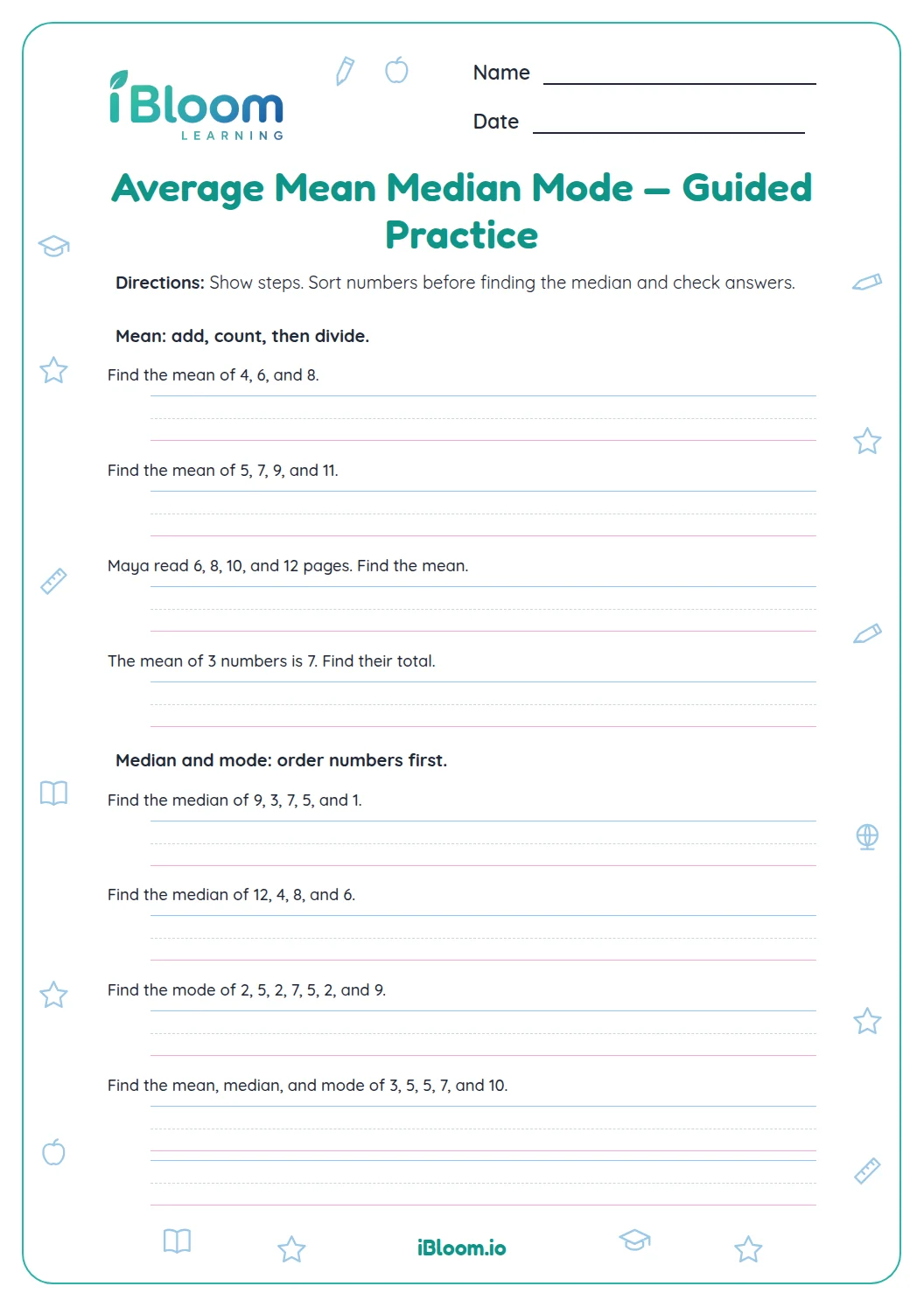
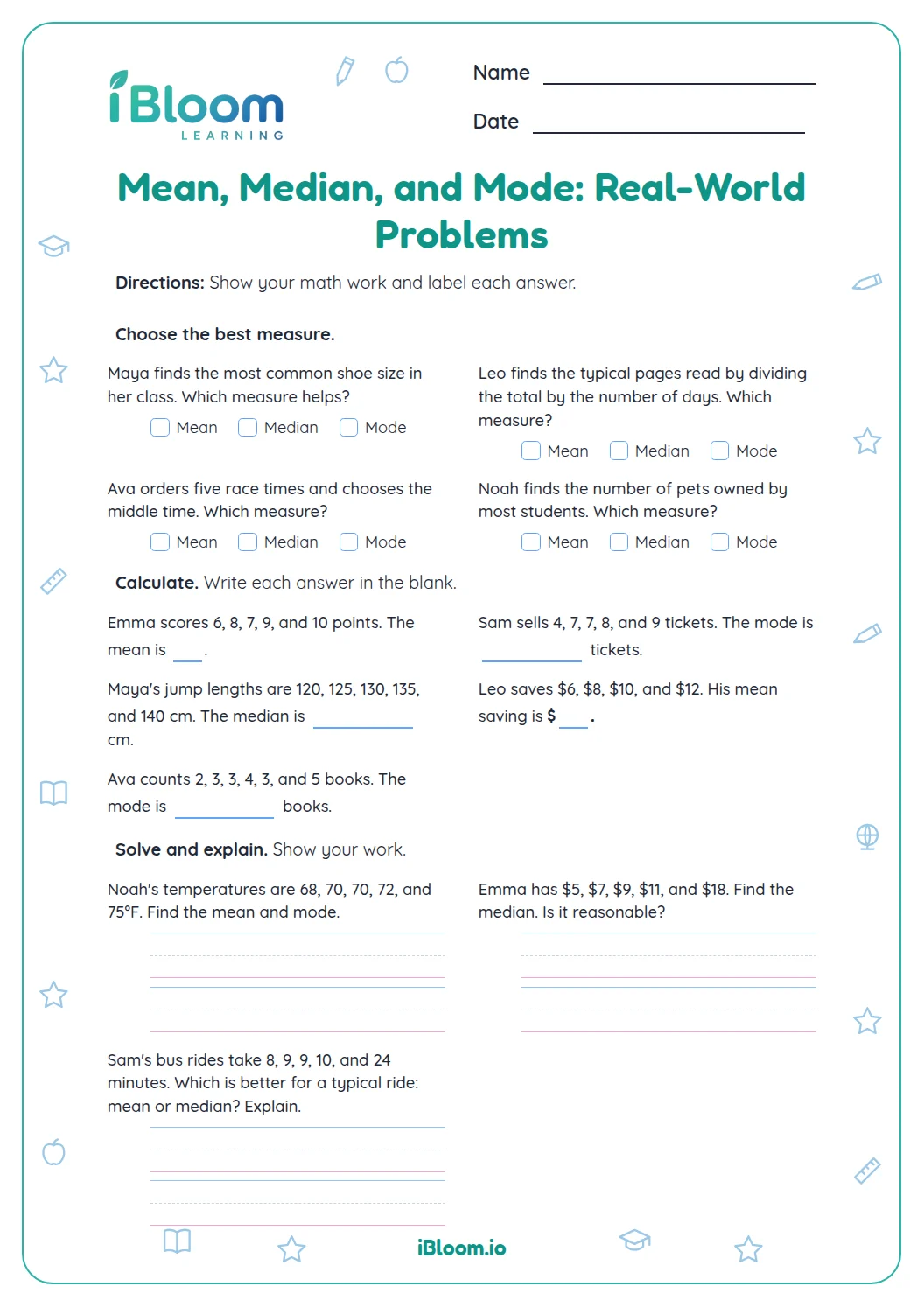
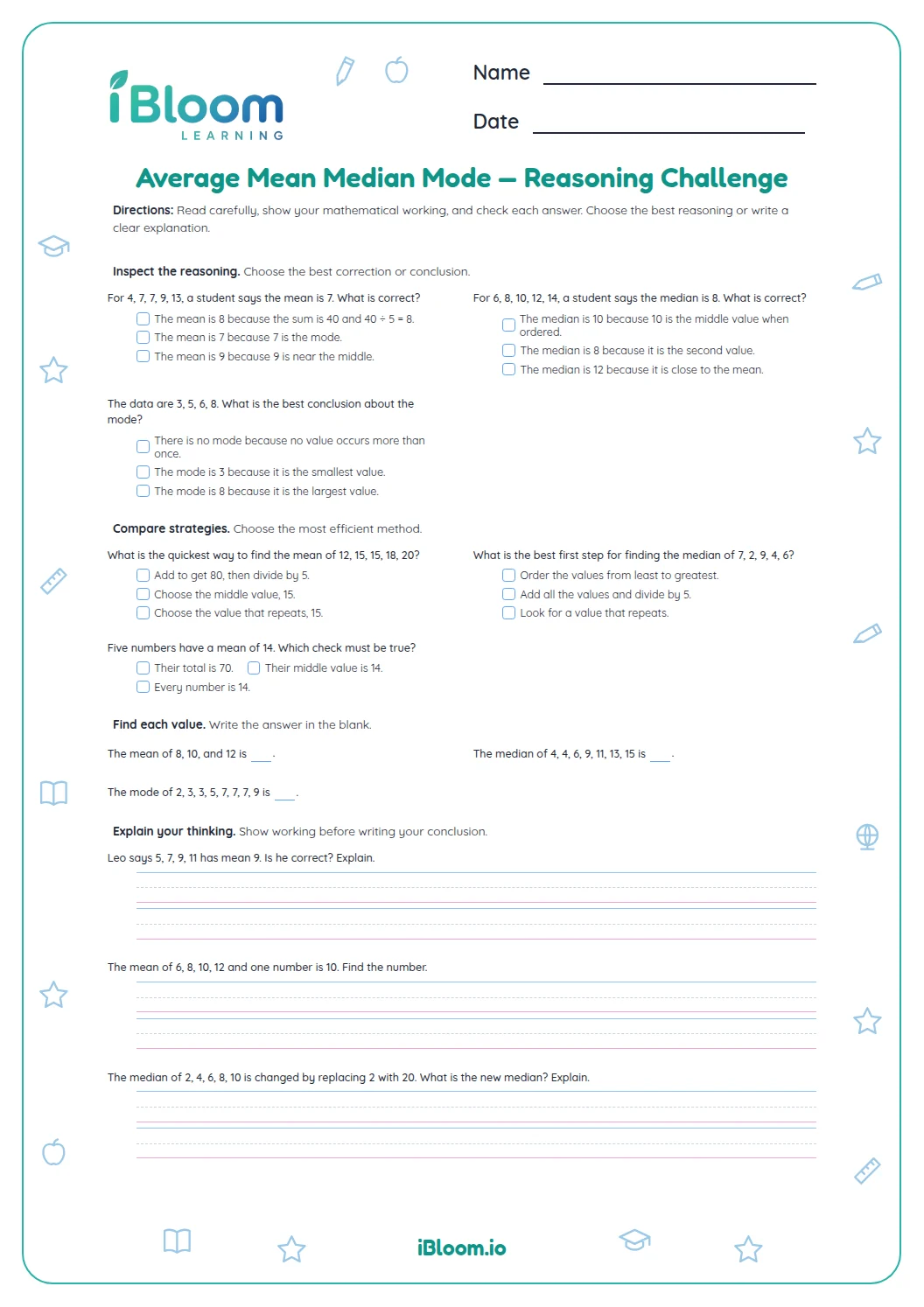
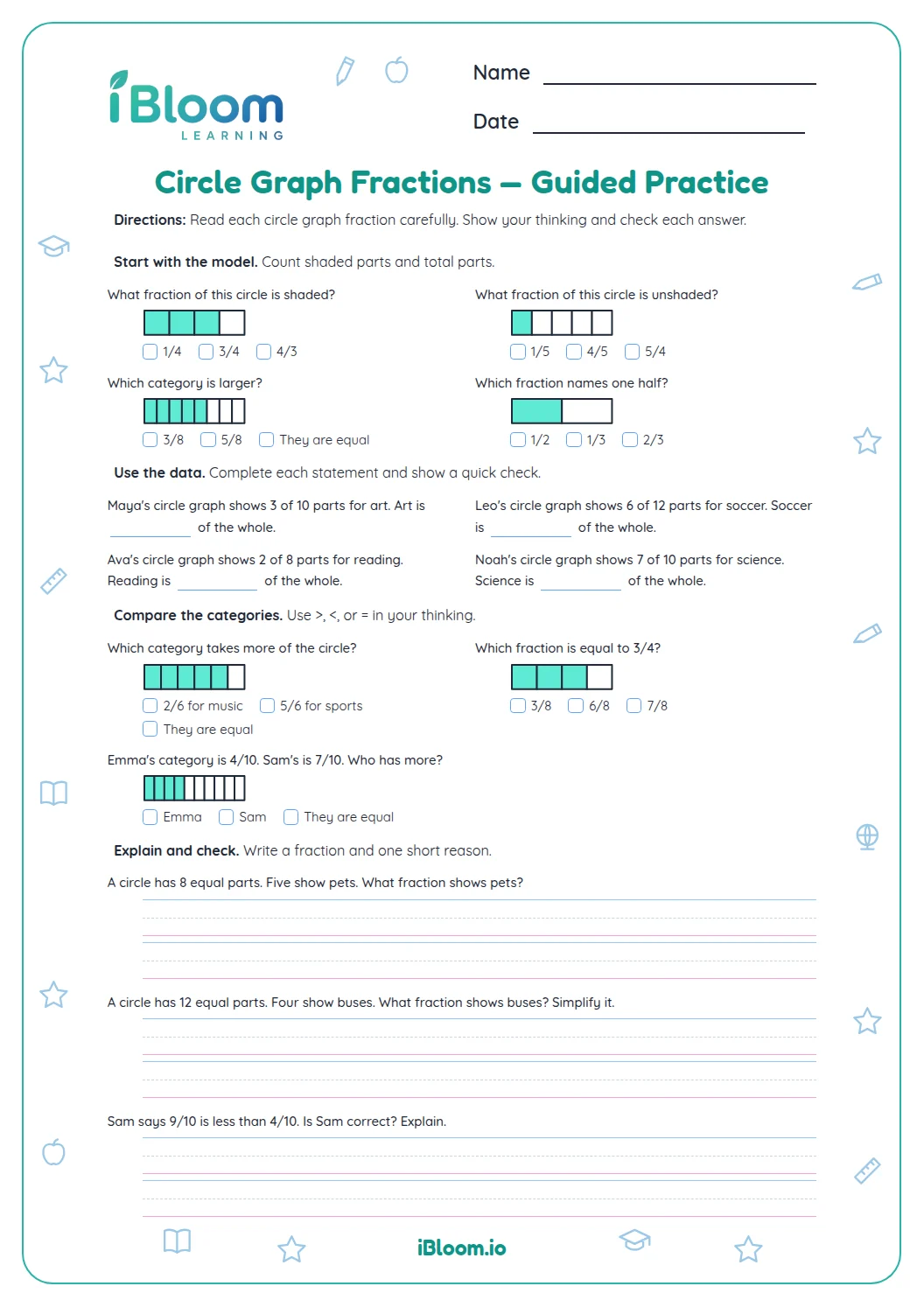
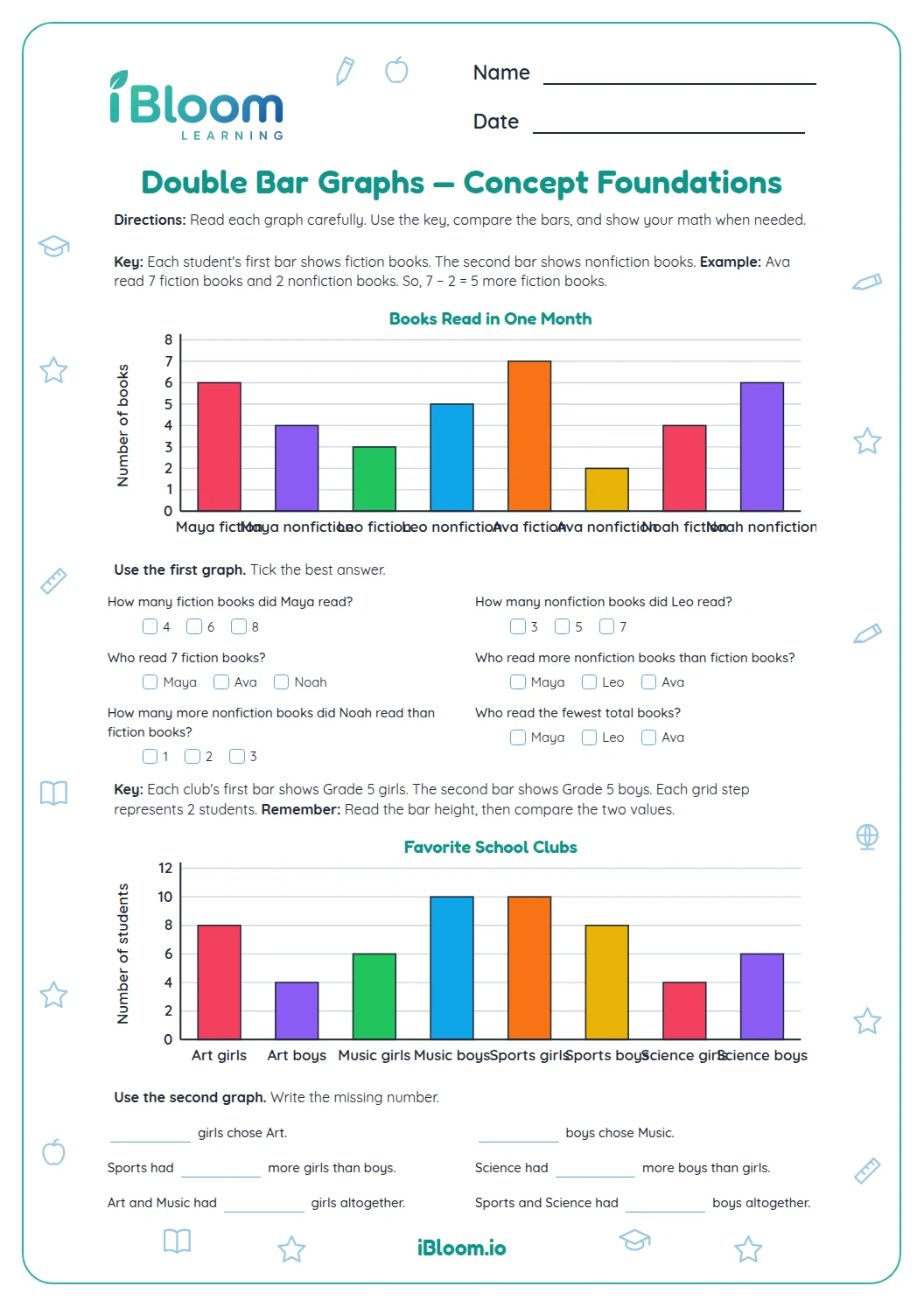
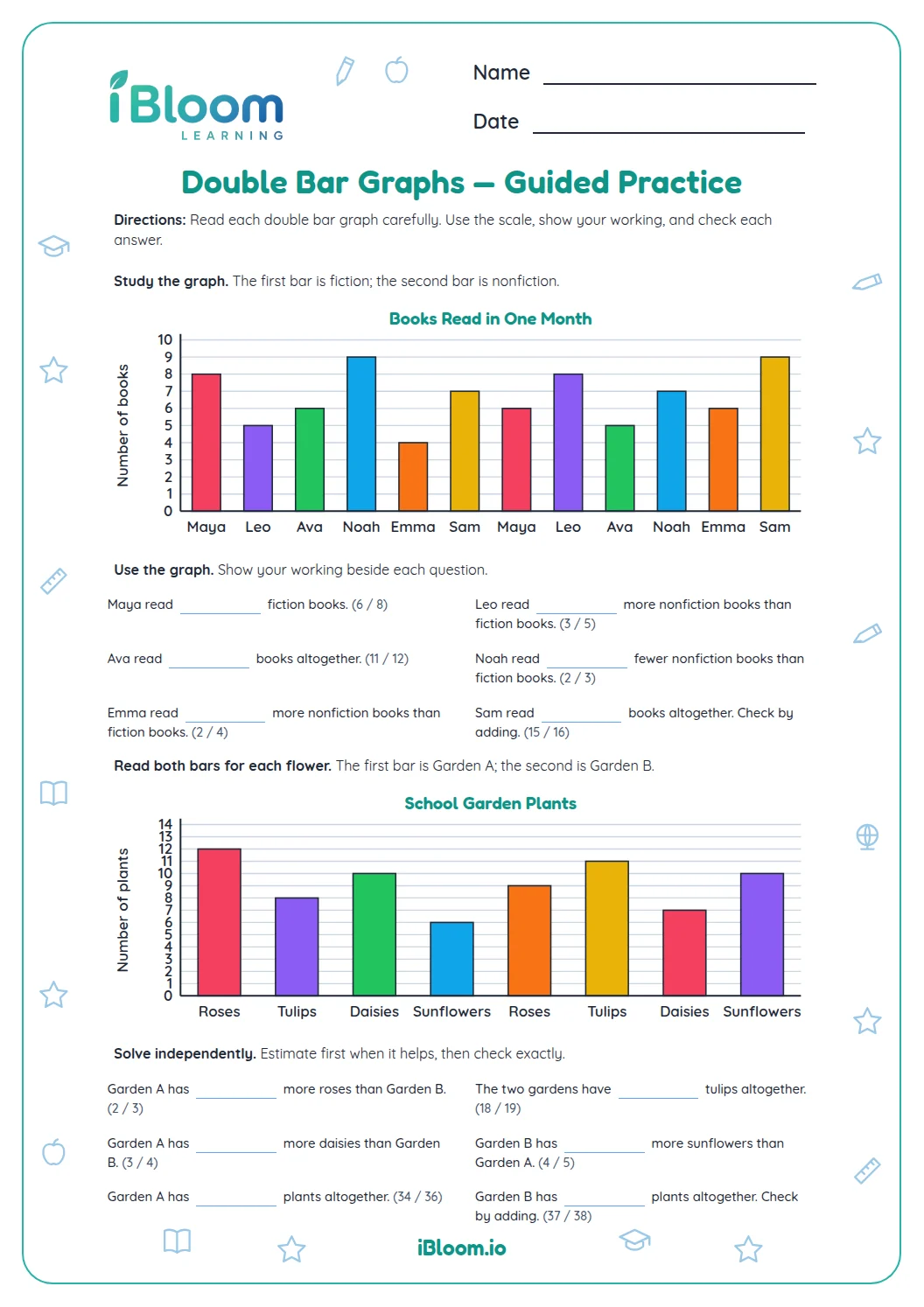
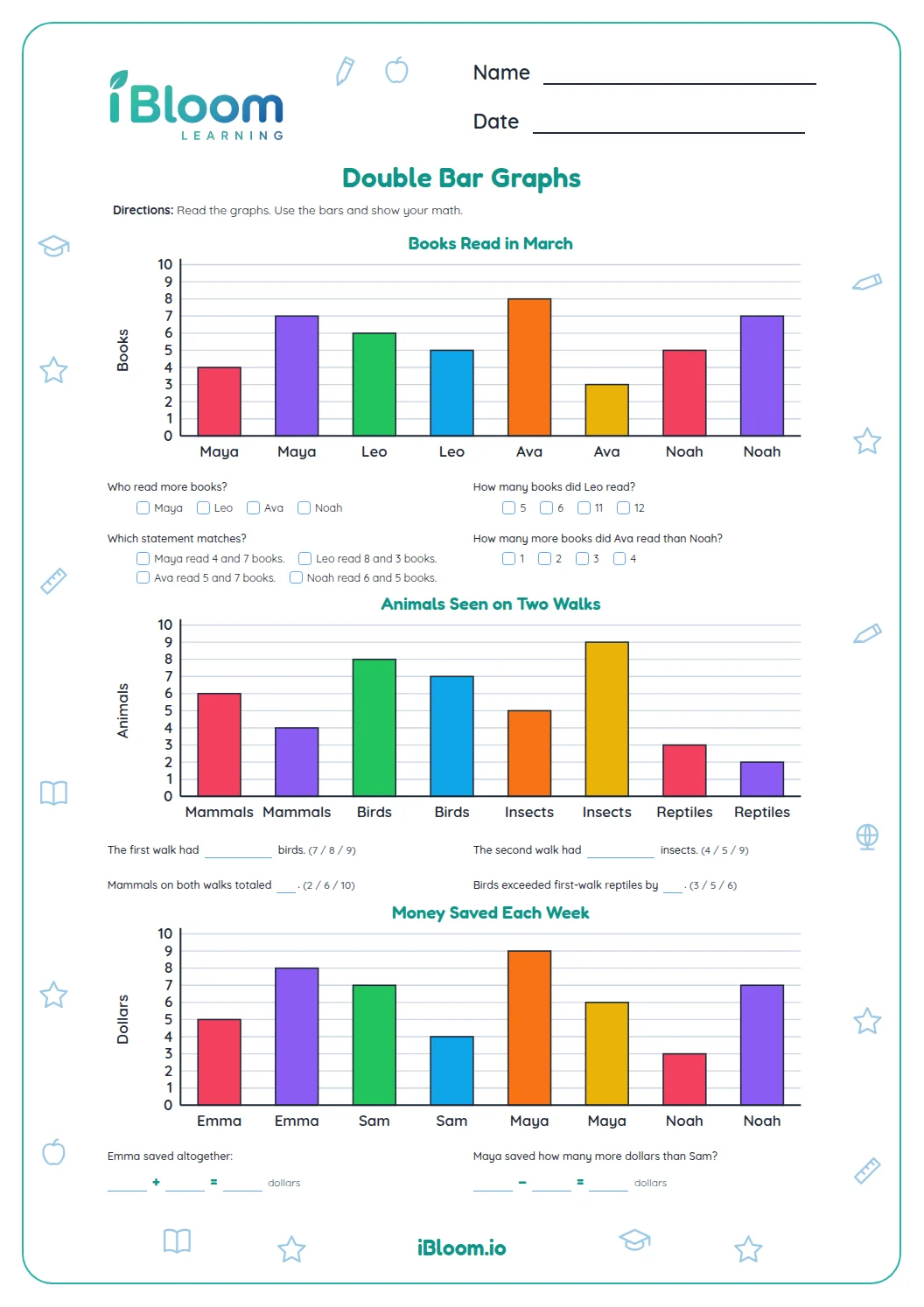
This printable Grade 5 worksheet builds fluency with mean, median, and mode. Children first calculate from small sets, then interpret classroom-style data and explain how a statistic is found. The 15 questions fit two practice pages, with a separate answer key and a focus on sorting, equal sharing, and repeated values.
How do you find each measure of center?
The mean is the sum divided by the number of values. The median is the middle value after sorting; with an even number of values, average the two middle values. The mode is the value that occurs most often.
- 14 + 6 + 8 + 10 = 28; 28 ÷ 4 = 7
When is sorting important?
Sort before finding a median so the middle value is clear. For a mode, count occurrences rather than choosing the largest or smallest number.
How can a child check the work?
Finish each item before using the separate answer key. For a mean, check that the values add to the total you divided; for a median, check the ordered middle position; for a mode, check the frequency.
How to use this worksheet
- 1Sort the values before finding a median.
- 2Add all values and divide by their count to find the mean.
- 3Count repeats to identify the mode.
- 4Use the requested statistic and label in your answer.
- 5Recheck the arithmetic and the original data set.
Common mistakes and quick fixes
The mistake
Using the largest value as the mode.
The fix
Count how often each value appears; the most frequent value is the mode.
The mistake
Finding the median before sorting.
The fix
Order the values first, then locate the middle position or two middle positions.
The mistake
Dividing a mean by the wrong count.
The fix
Count every data value, then divide the sum by that count.
What to practice next
Make more practice
Questions parents and teachers ask
How do you distinguish mean and median?
Mean uses the sum of all values divided by their count. Median is the middle value after the data are sorted, or the average of the two middle values when there is an even count. The worksheet practices both methods with small data sets.
Can a set have more than one mode?
Yes. Two or more values can share the highest frequency, in which case each is a mode. If every value appears once, there is no mode. Count every value before deciding whether one mode, several modes, or none fits the set.
Why does Sam’s answer need correction?
Sam’s set totals 28 across four values. Since 28 ÷ 4 = 7, the mean is 7 and Sam’s claim that it is 8 is incorrect. On the worksheet, mark “No,” then use the sum and count to verify the result.
How many questions are on this worksheet?
There are 15 questions: 5 direct statistic questions, 6 data situations, and 4 reasoning items. They practice mean, median, mode, and range across two worksheet pages. A separate answer key supports checking after the child has worked through each data set.
How can an adult support practice?
Ask the child to explain why the chosen measure fits the question. For a mean, have them point to the total and count; for a median, check the sorted order; for a mode, compare frequencies. Then use the separate answer key to check the result and talk through any arithmetic that needs another look.