


About this worksheet
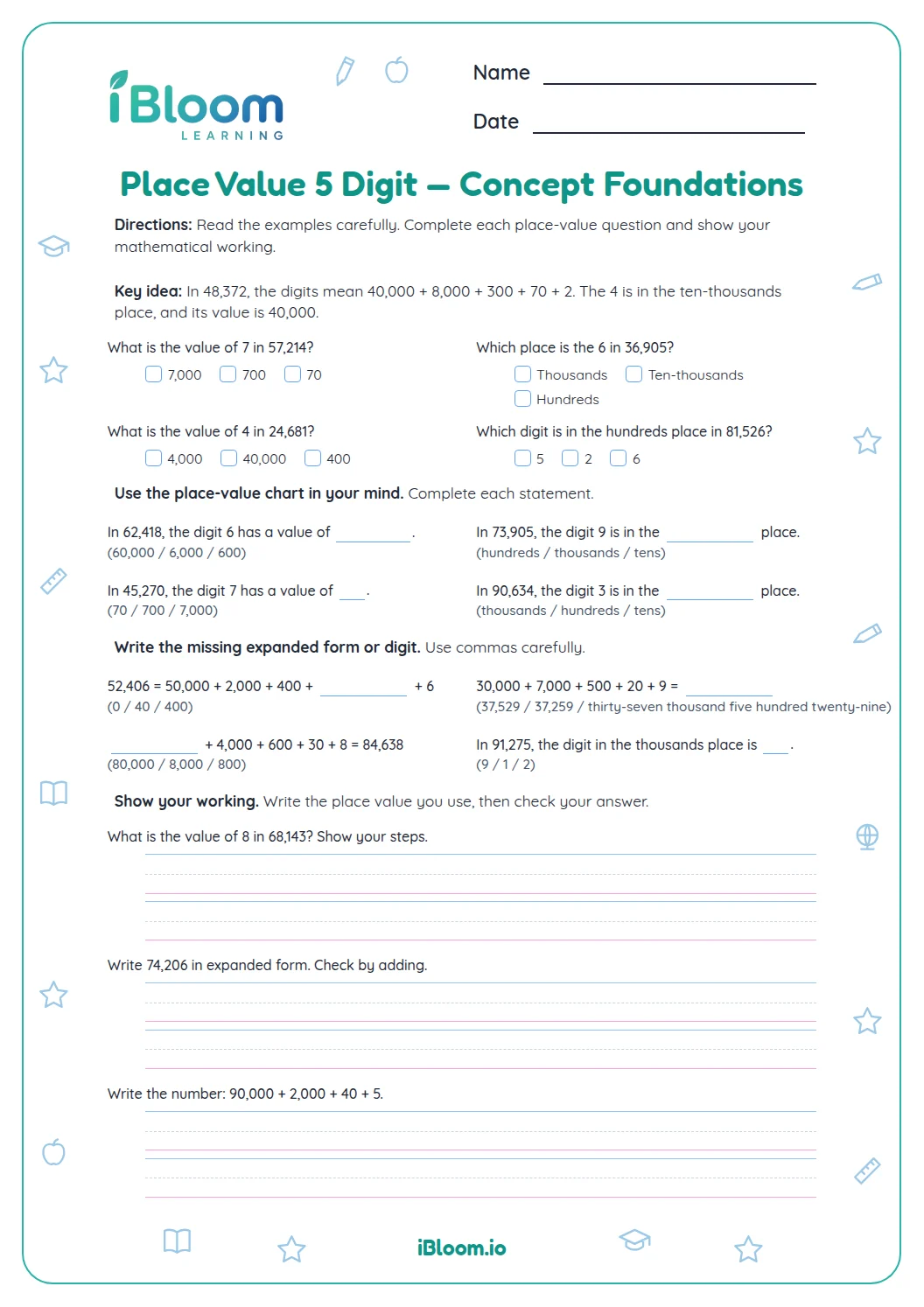
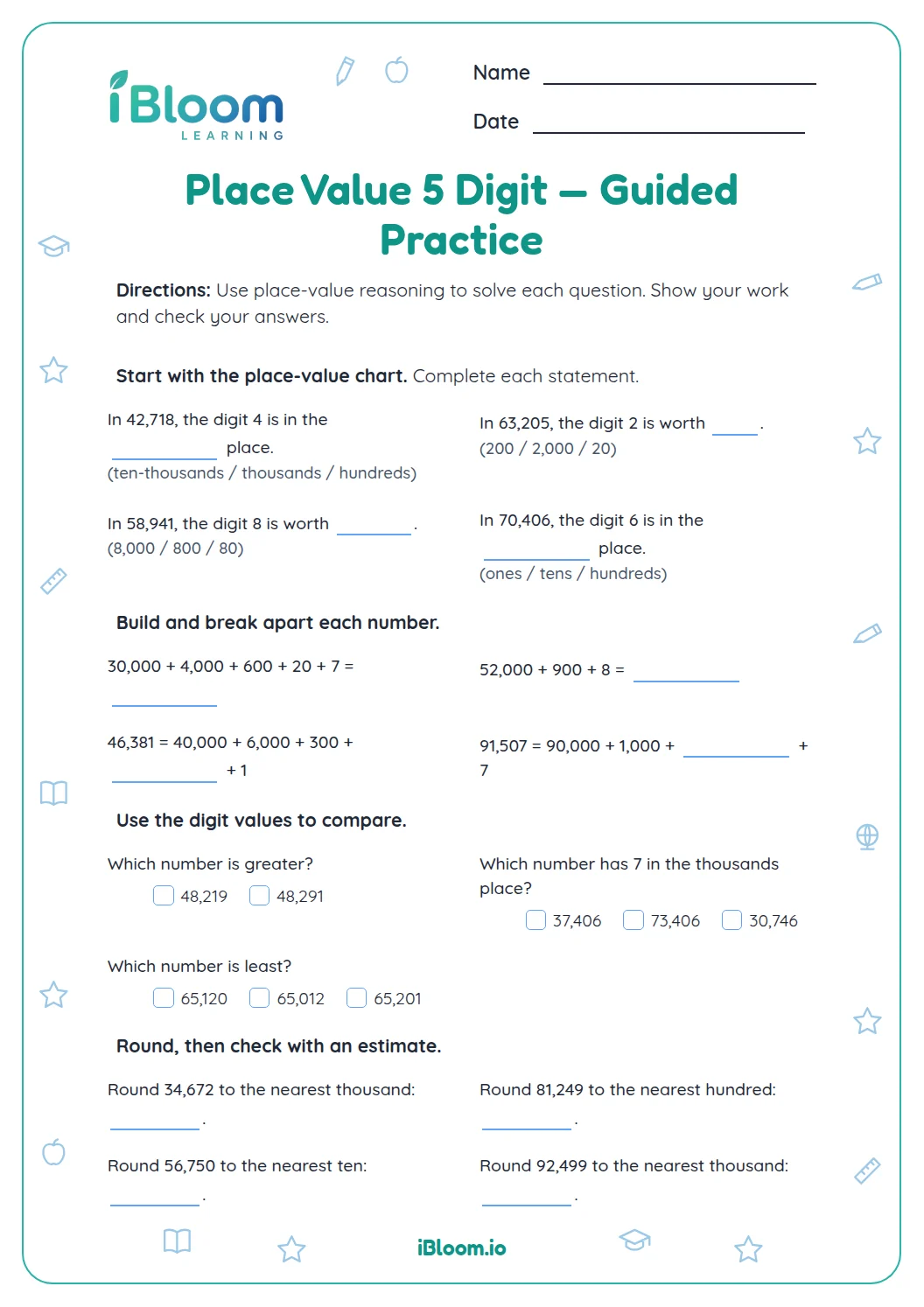
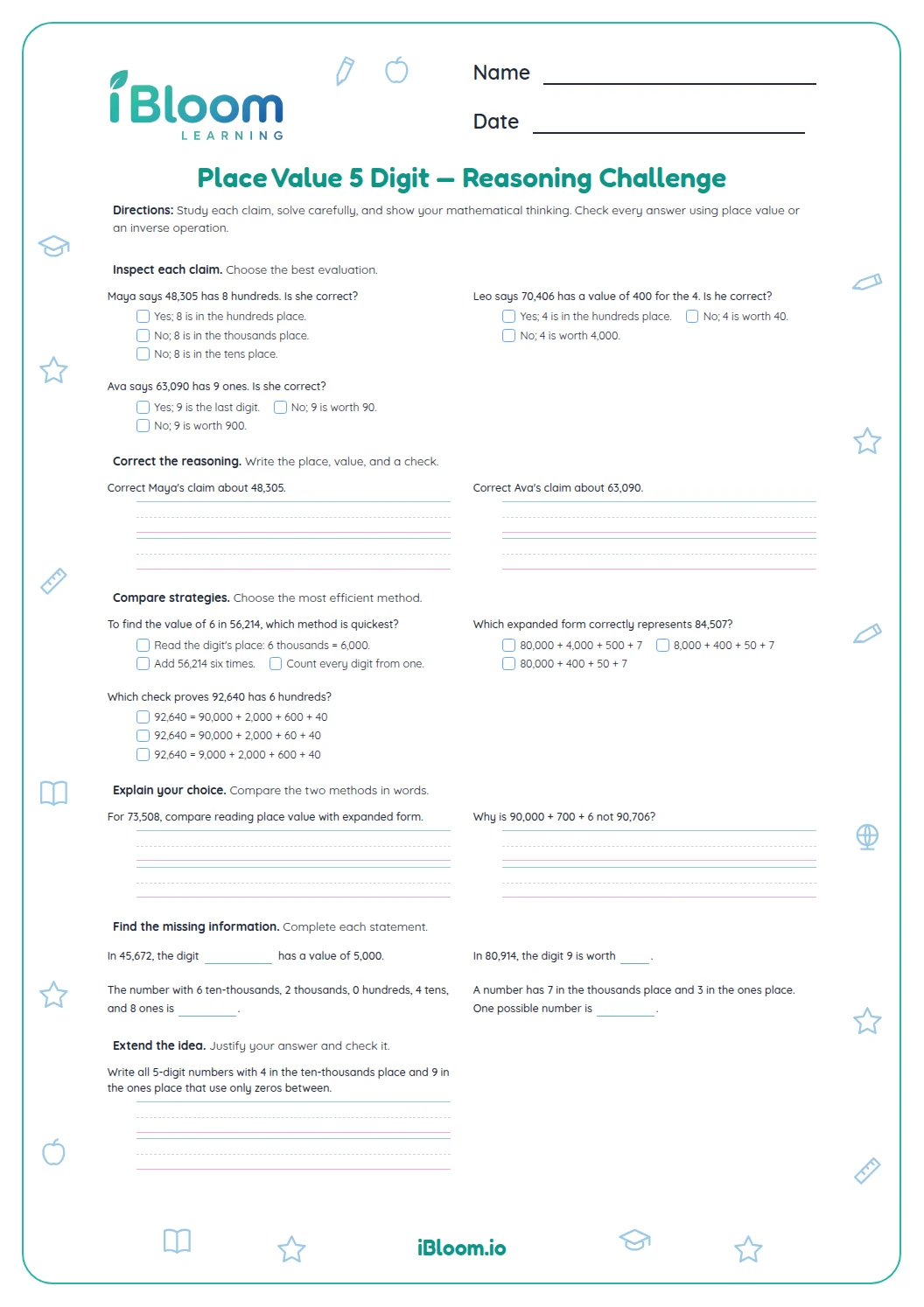
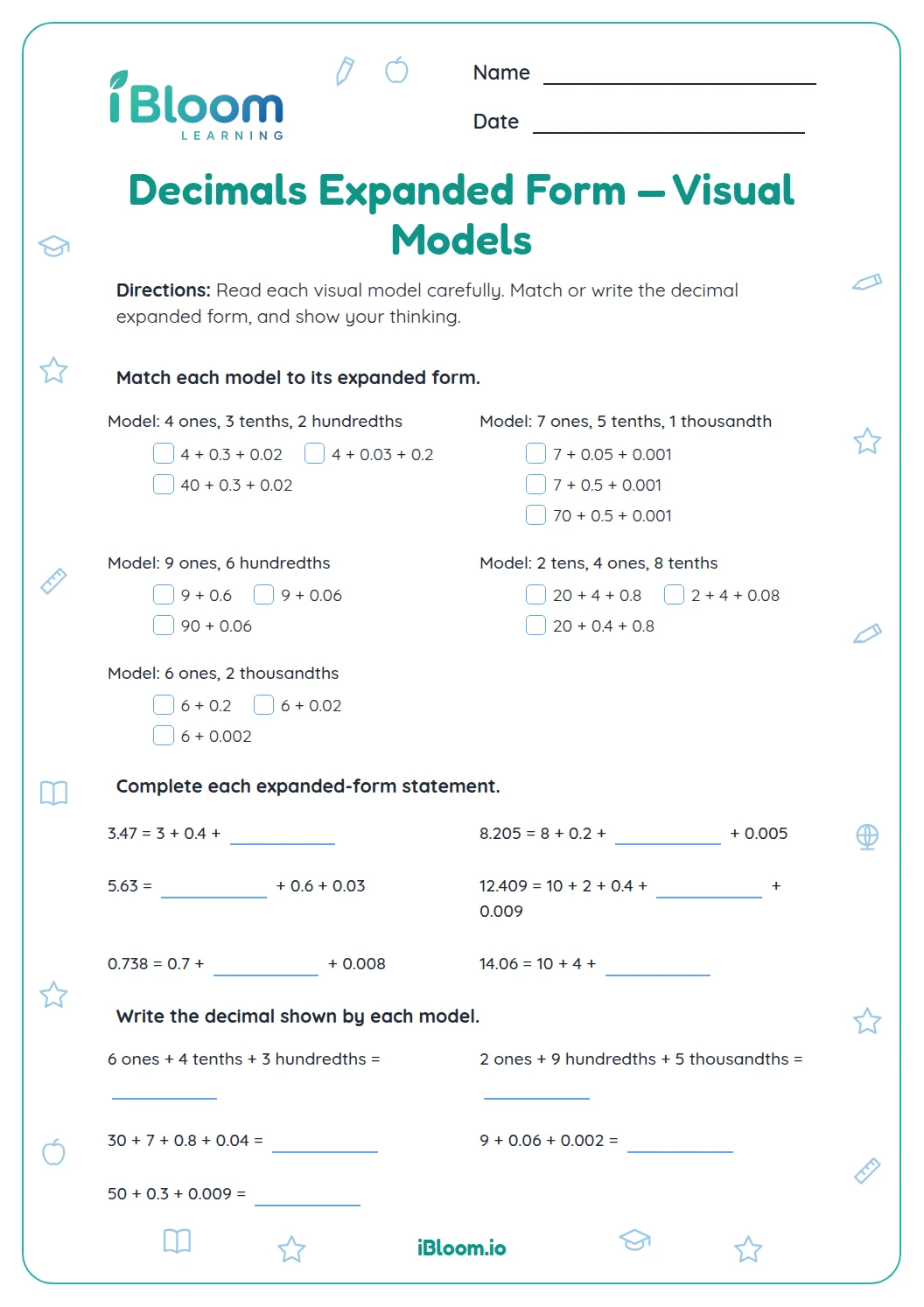
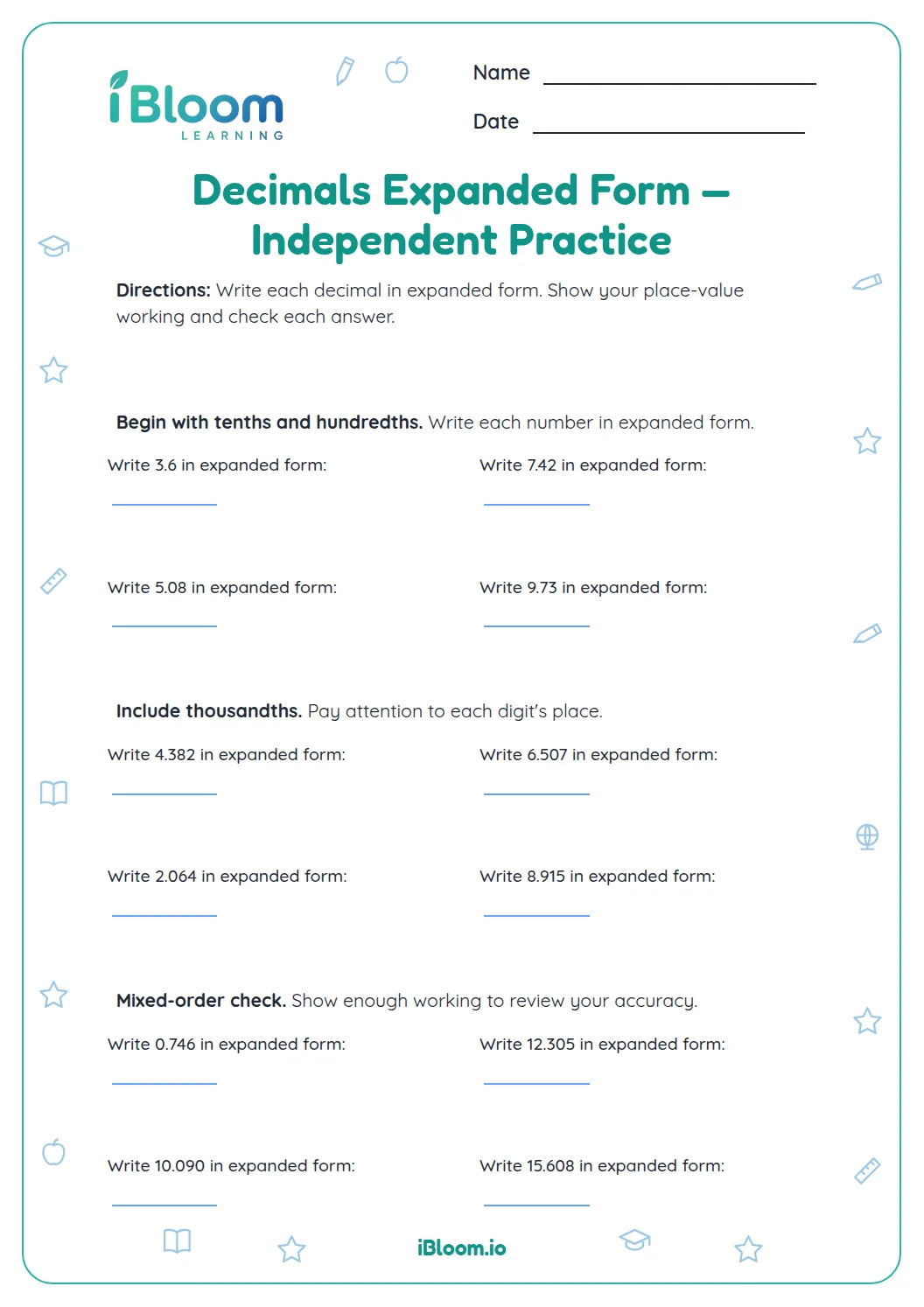
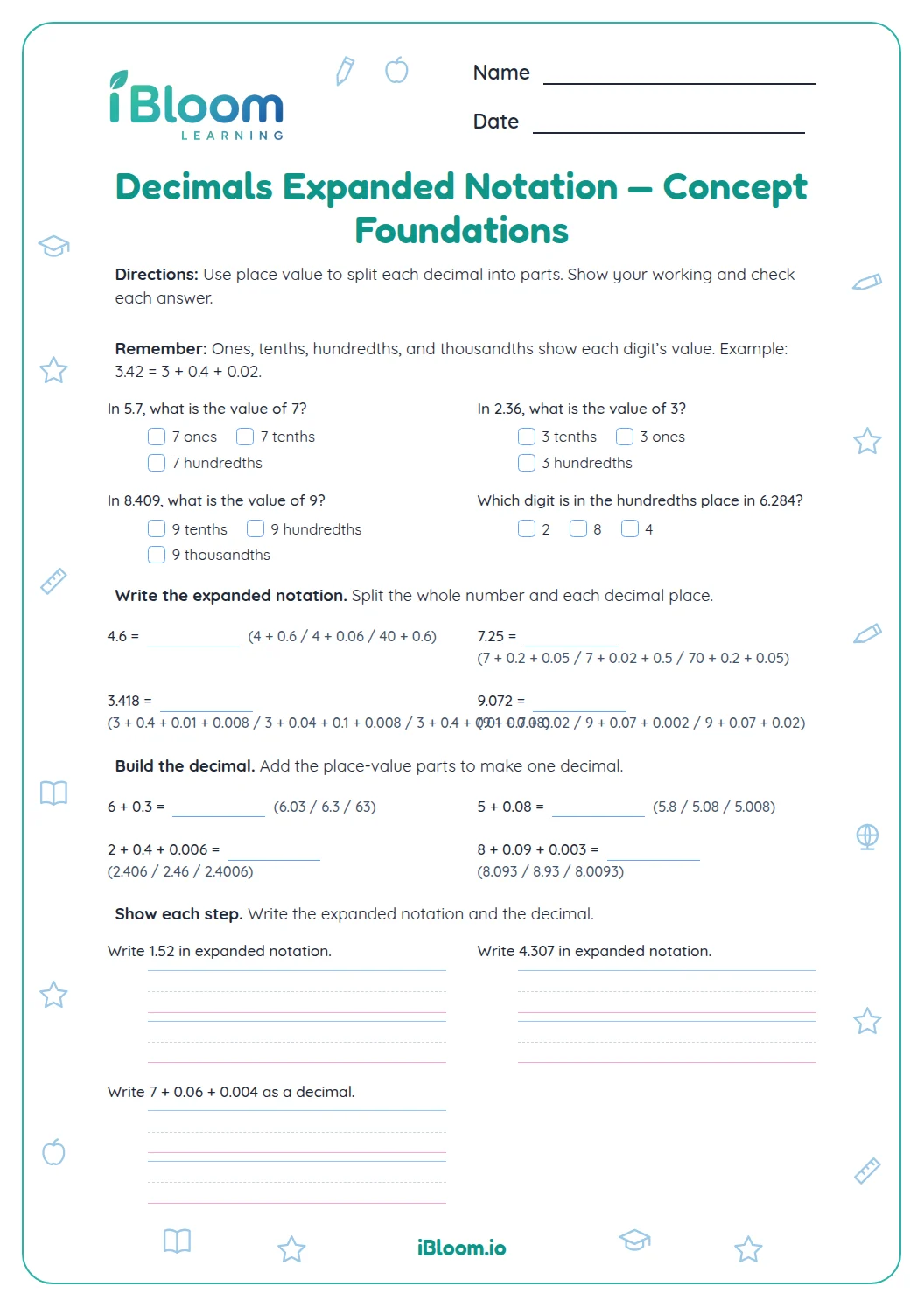
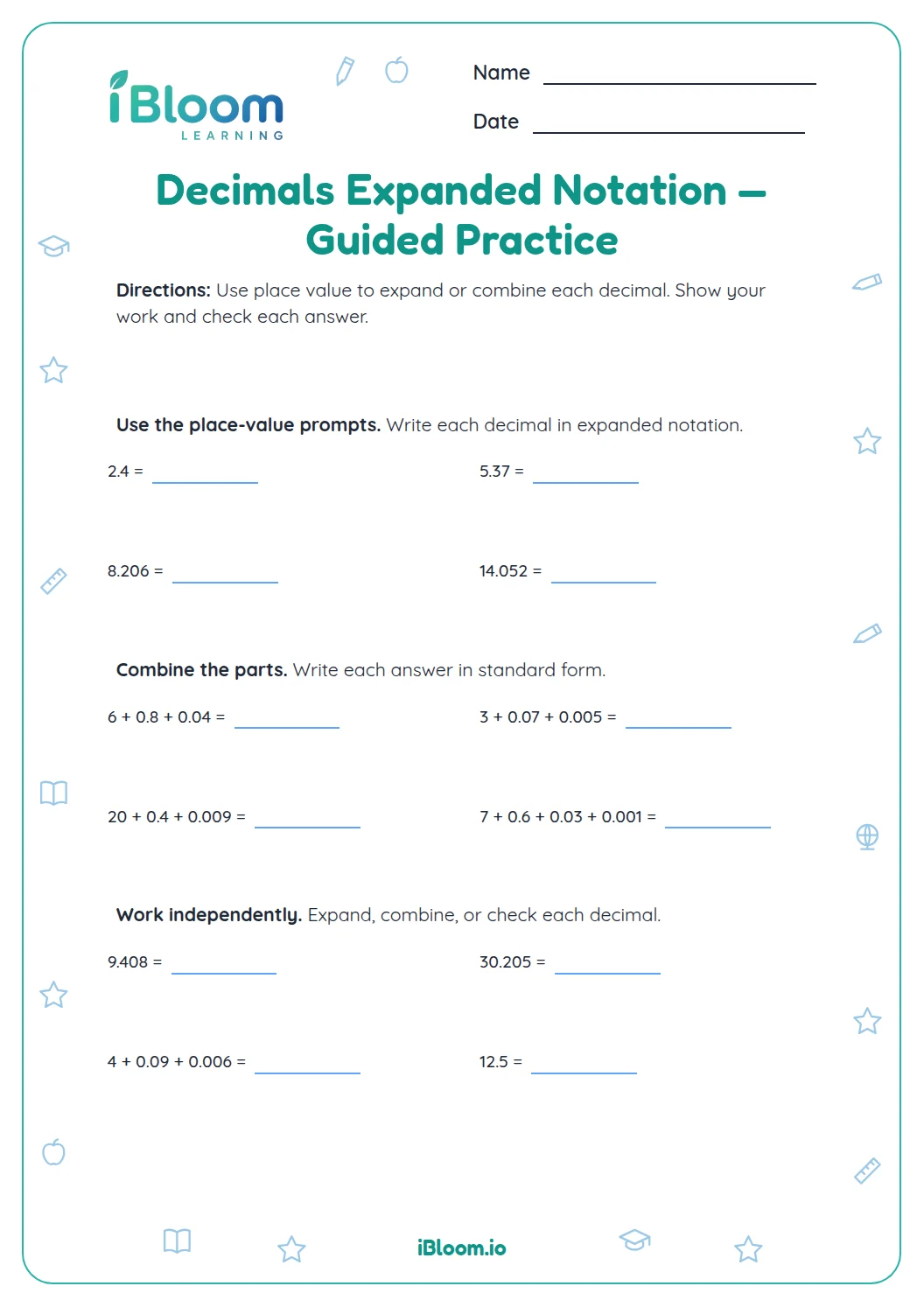
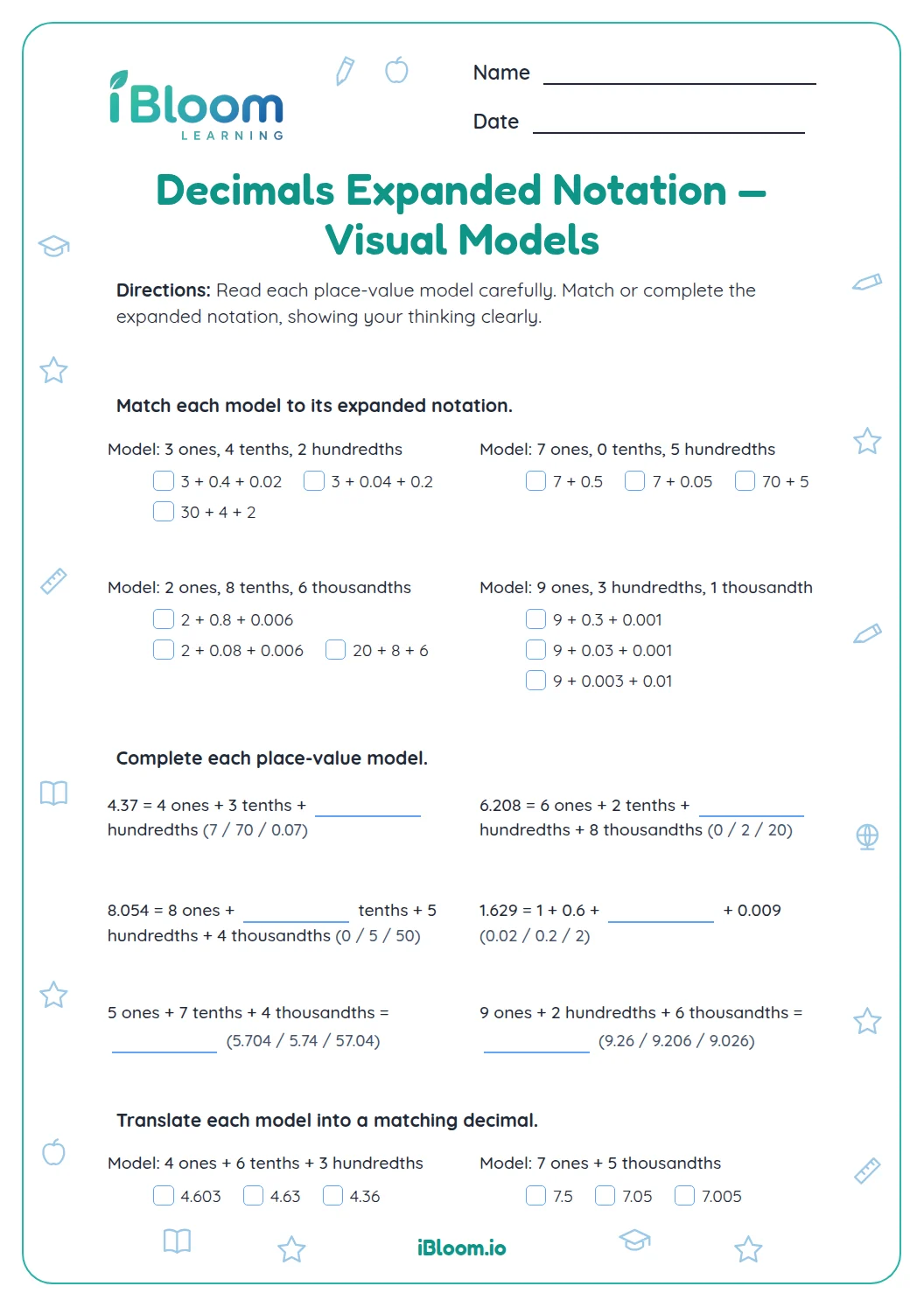
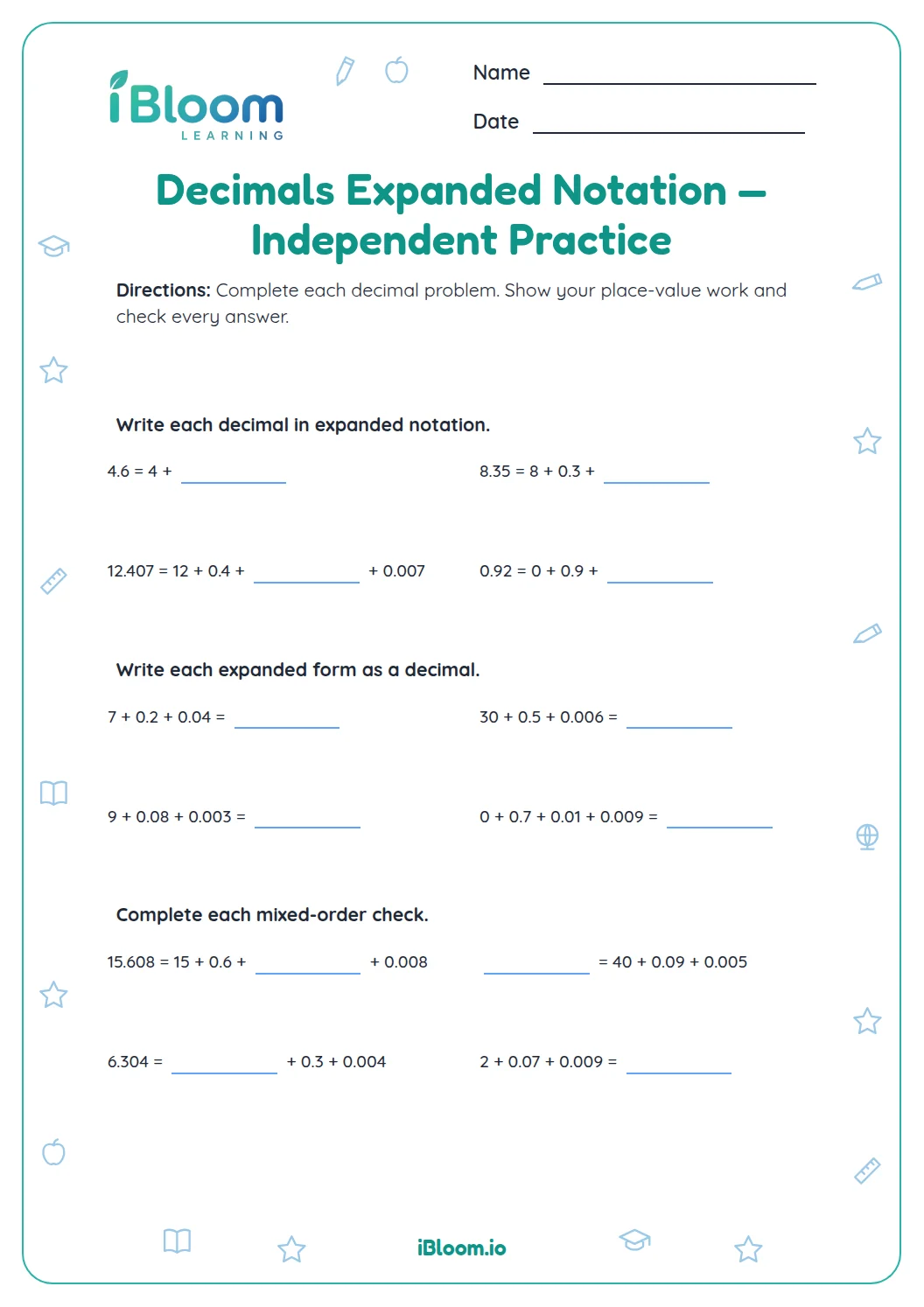
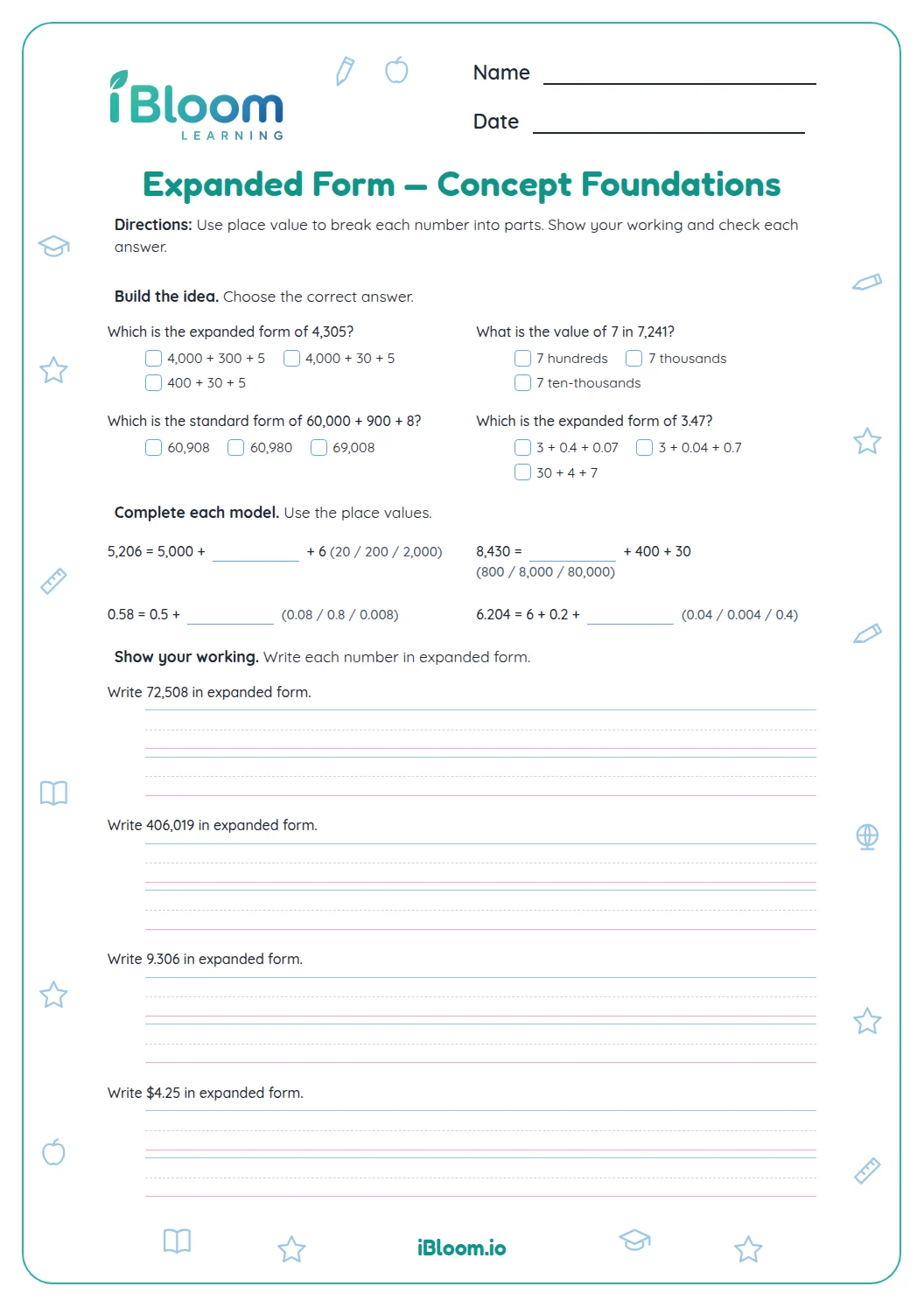
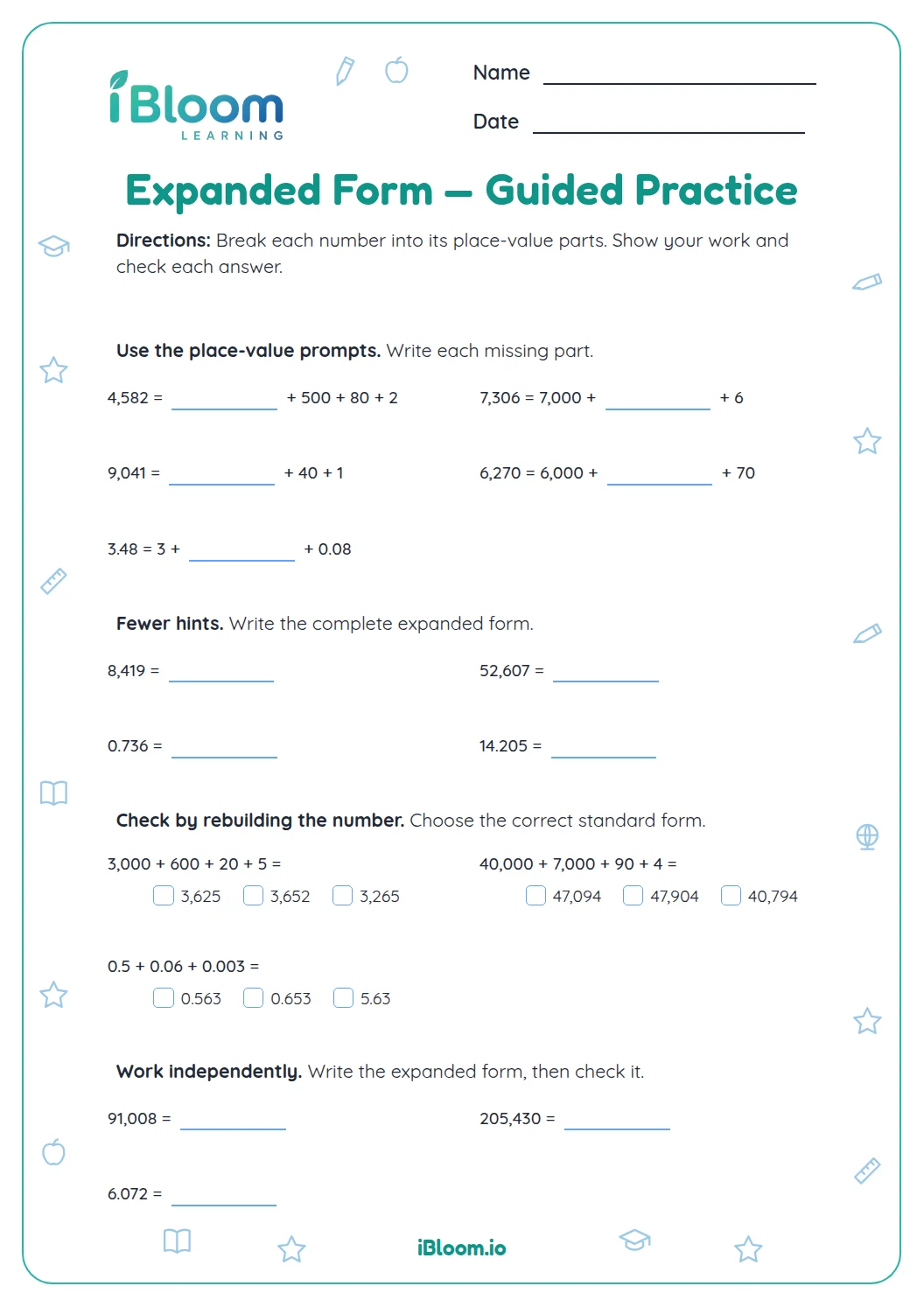
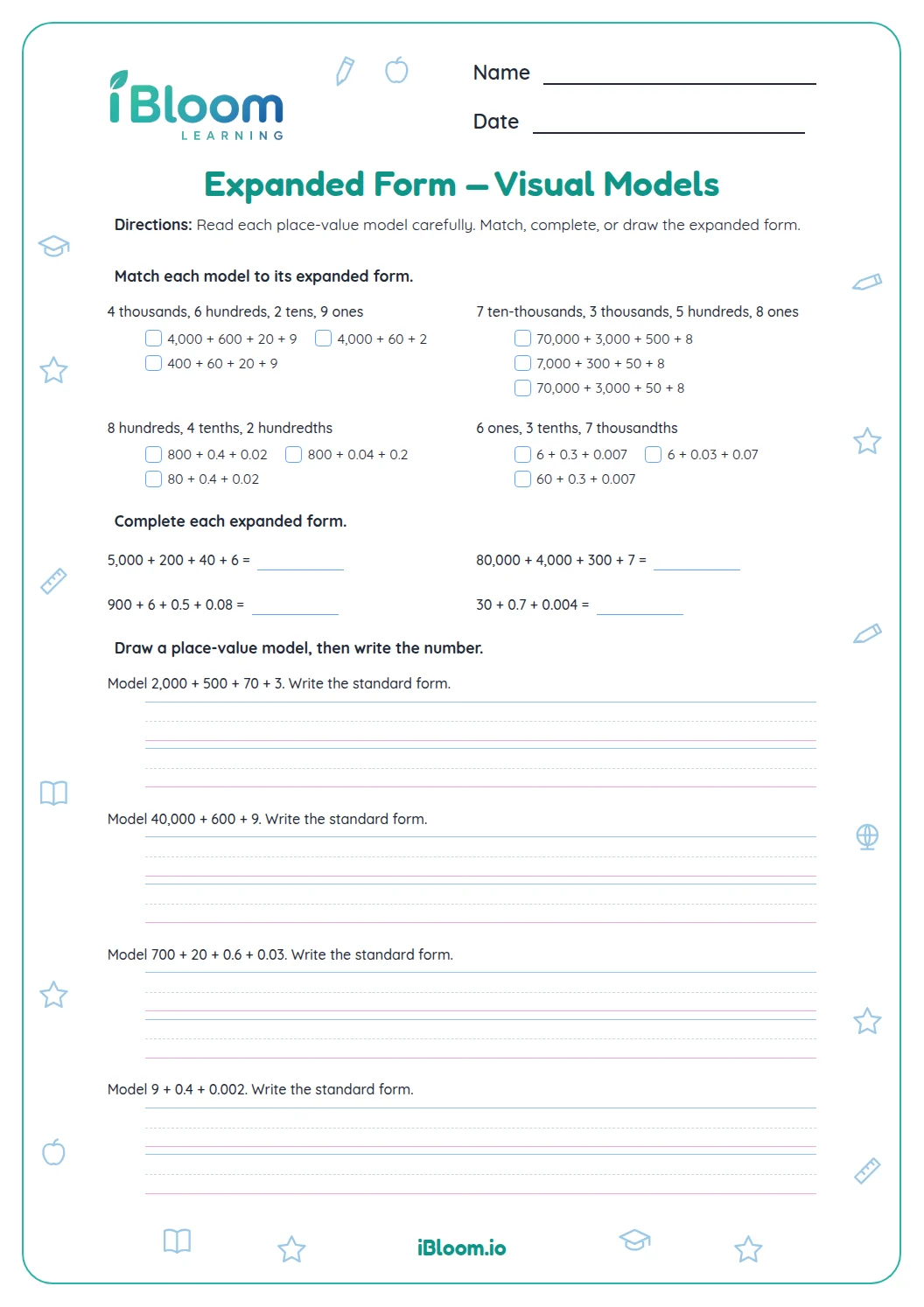
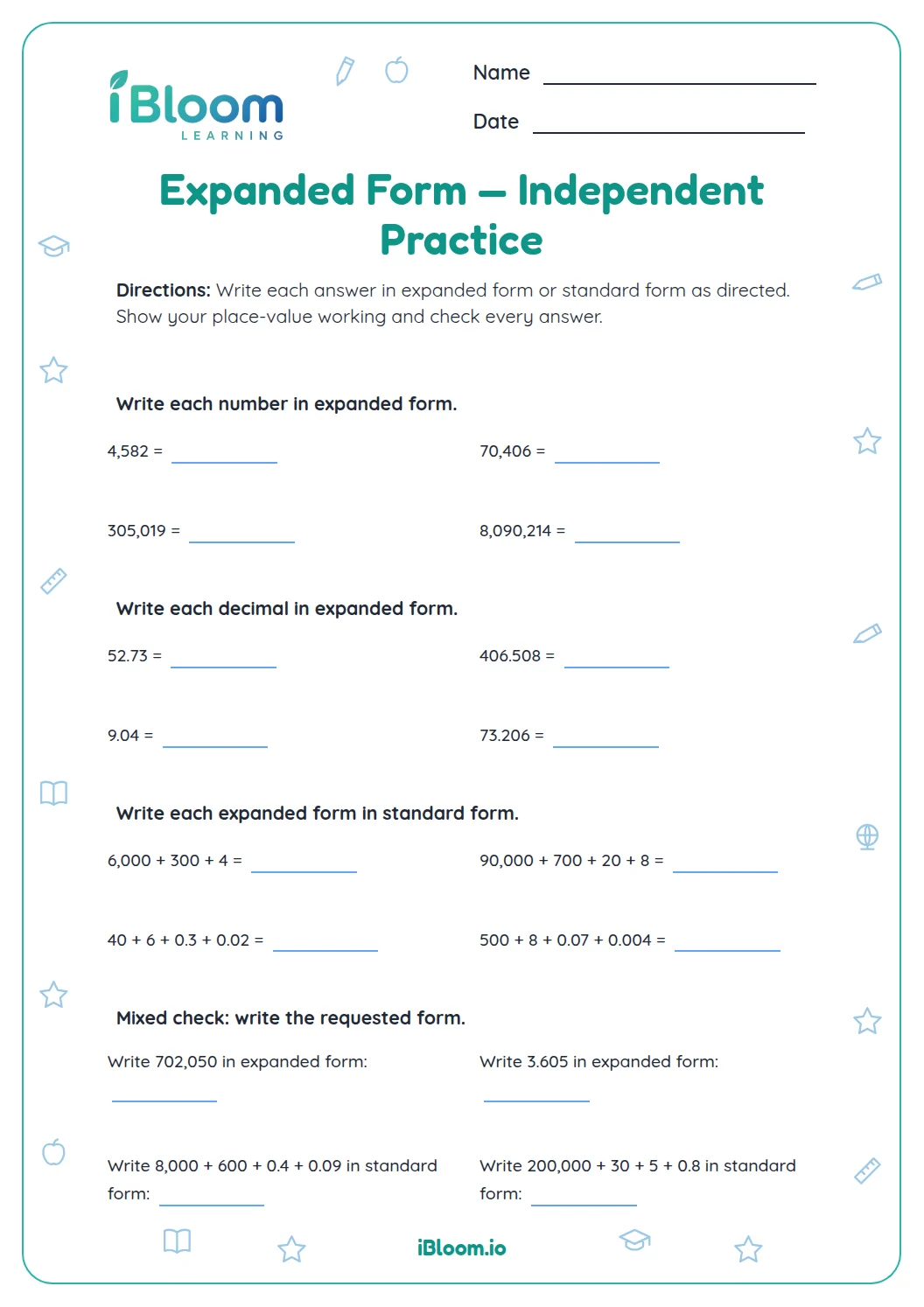
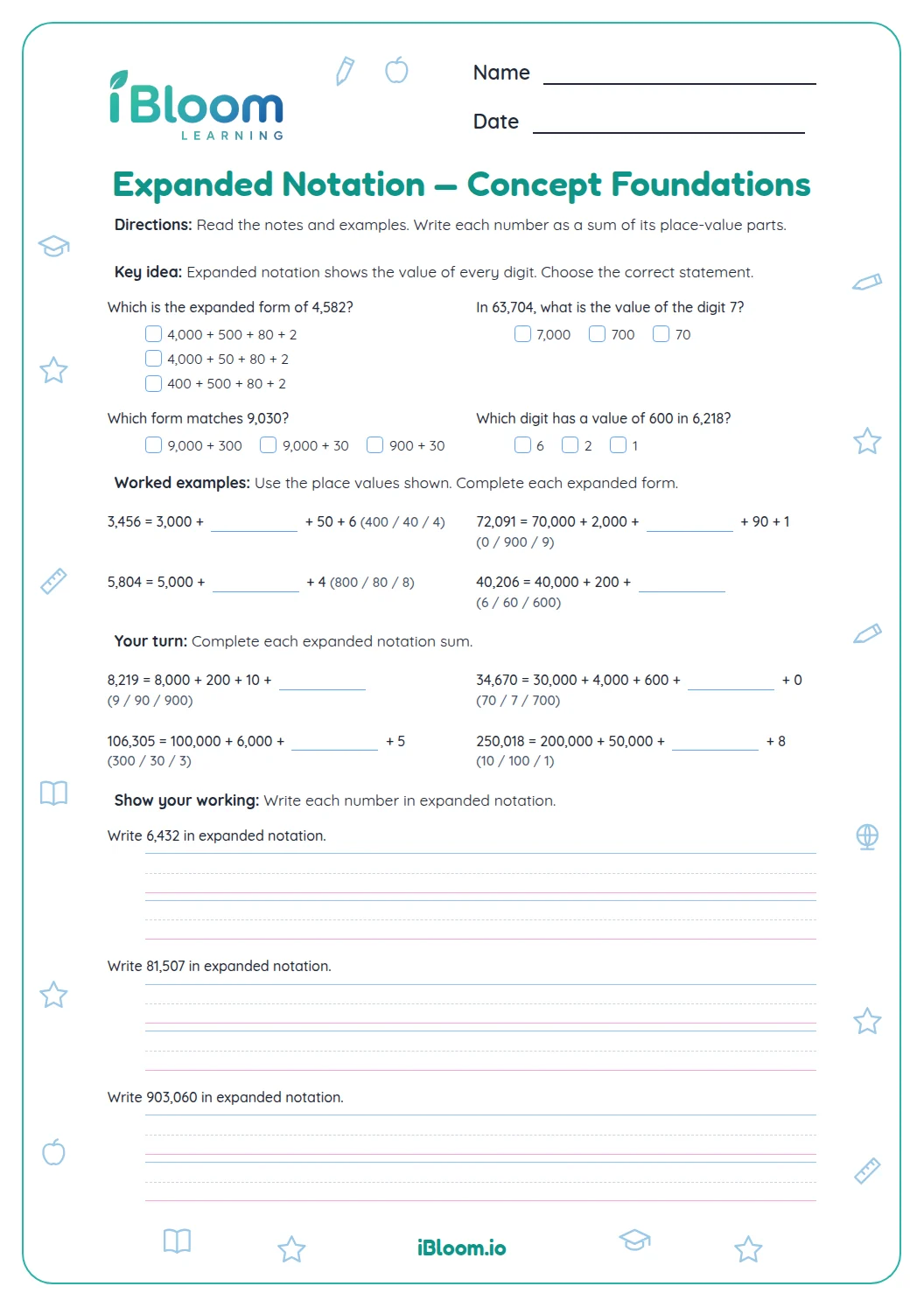
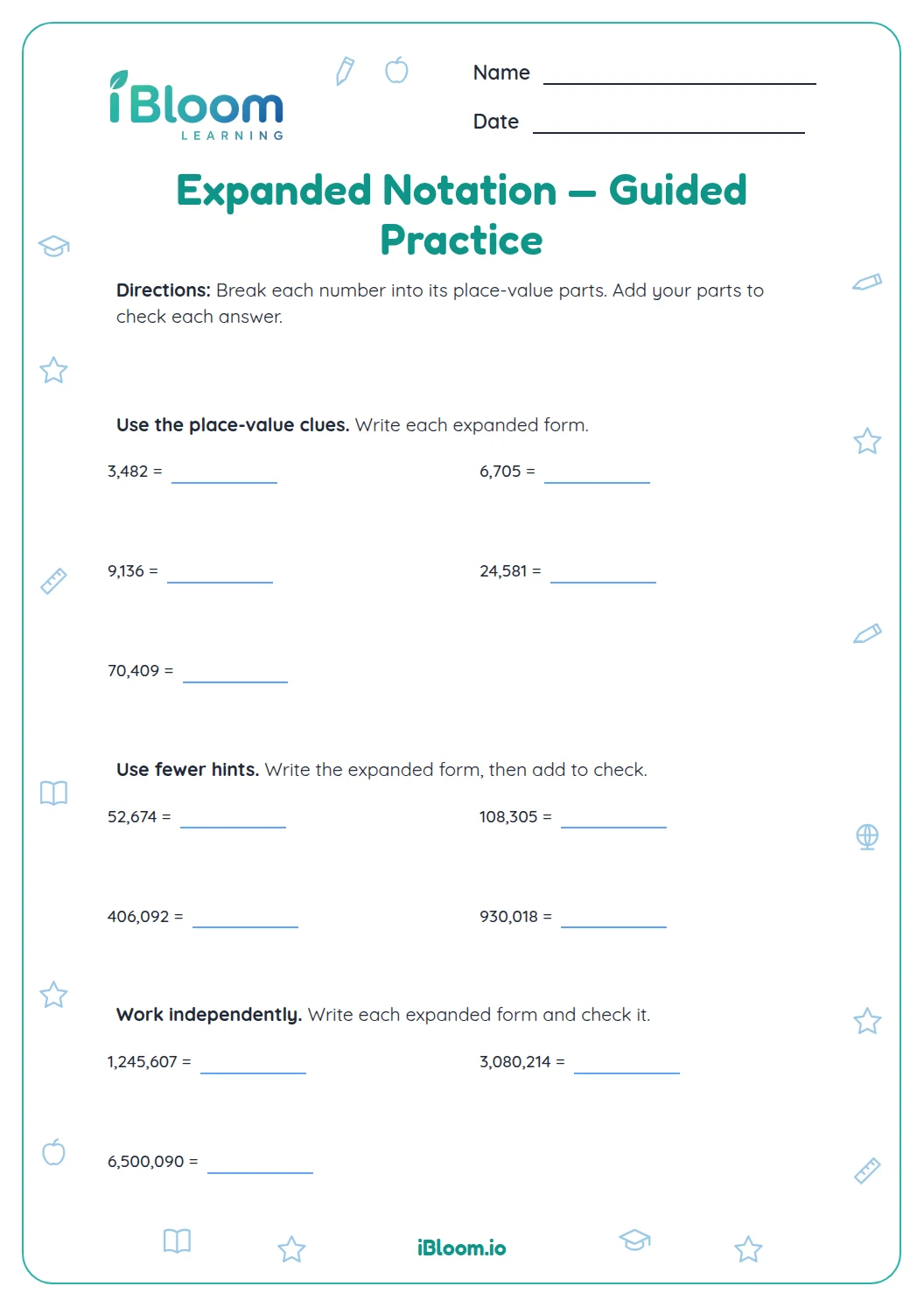
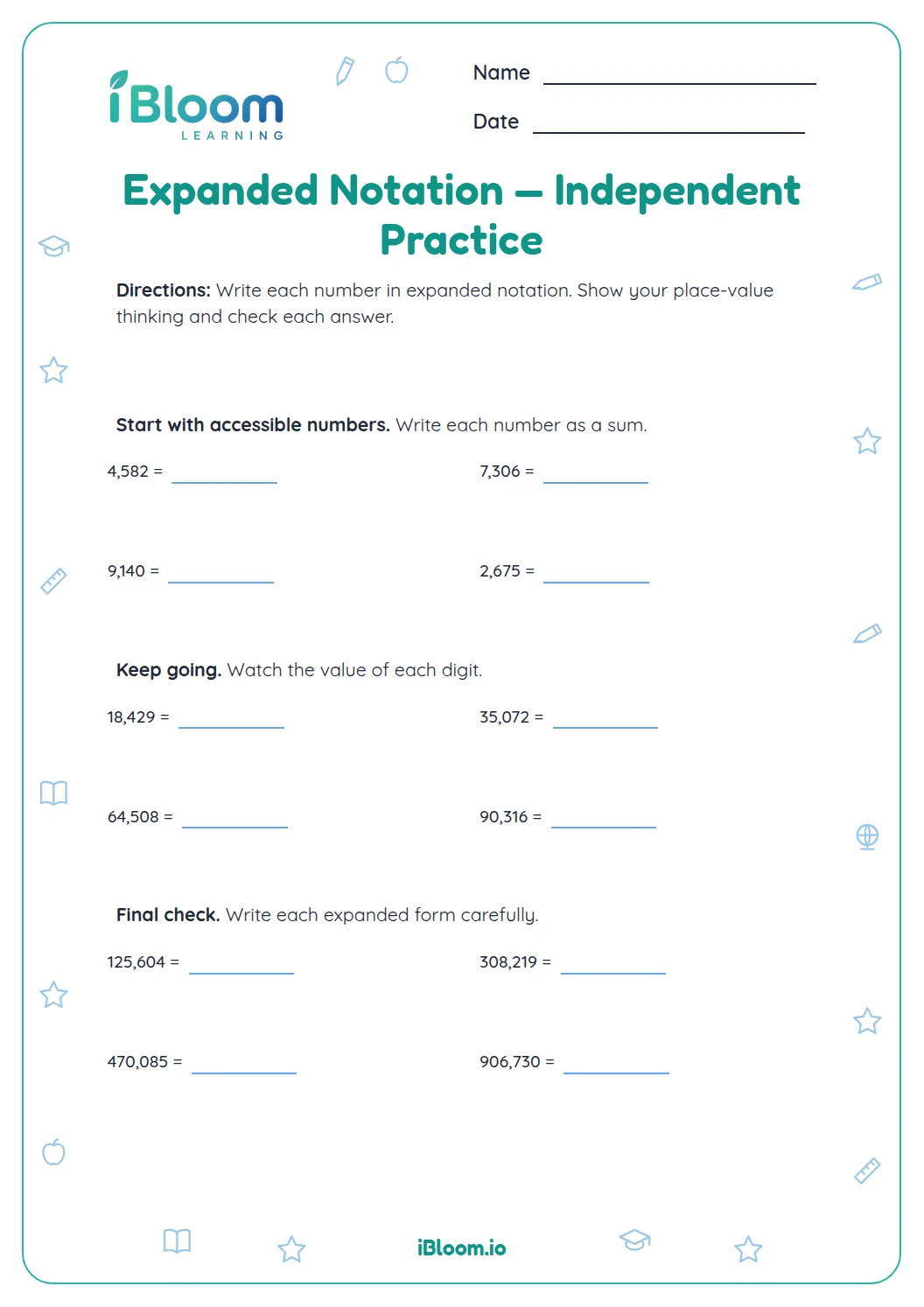
This Grade 5 worksheet uses place-value charts, expanded forms, and five-digit numbers to help students connect each digit to its value. It includes 14 questions in two parts, moving from reading five-digit values to translating between standard and expanded form. The activities replace the old sheet’s compressed checkboxes and open-ended chart drawing with clear, fully specified numbers and models. It practices CCSS 5.NBT.A.1.
Aligned to 5.NBT.A.1
How does each digit show its value?
Each digit’s position tells its value. In 42,716, the 4 represents 40,000, the 2 represents 2,000, the 7 represents 700, the 1 represents 10, and the 6 represents 6. Use the place-value chart and expanded form to check the matching number.
Read each five-digit number from left to right: ten-thousands, thousands, hundreds, tens, and ones. A zero holds a place even though it contributes no value.
- 135,248 = 30,000 + 5,000 + 200 + 40 + 8
What does the worksheet ask students to do?
The sheet has 14 distinct questions in 2 parts. Part A reads named place values and models. Part B translates among expanded form, digit values, and standard form.
The key lists a concise response for each item; story answers include units when the question asks for a measured amount or rate.
How can students check their work?
Check expanded form by adding its parts. The total should match the original number, and each nonzero digit should contribute its value at the correct place.
How to use this worksheet
- 1Name the place of each digit.
- 2Write its value, not just the digit.
- 3Build the number from its place values.
- 4Translate between standard and expanded form.
- 5Add expanded parts to check the total.
Common mistakes and quick fixes
The mistake
Reading a digit as its value.
The fix
Name the place first, then multiply the digit by that place value.
The mistake
Skipping a zero place in standard form.
The fix
Keep a zero in every empty place so the other digits stay aligned.
The mistake
Adding digits instead of their values in expanded form.
The fix
Write each digit multiplied by its place before adding.
Common Core alignment
This worksheet practices the following Common Core Mathematics standard.
Apply five-digit place value in real worksheet problems.
On this sheet: The questions ask students to five-digit place value and interpret the results.
Show the official wordingHide the official wording
Recognize that in a multi-digit number, a digit in one place represents 10 times as much as it represents in the place to its right.
What to practice next
Make more practice
Further reading
Questions parents and teachers ask
What skill does this Grade 5 worksheet practice?
Students read five-digit numbers, identify digit values, and move between standard and expanded form. The 14 questions use explicit place-value descriptions and values, so students can check how each digit contributes to the whole.
How many questions are included?
The worksheet includes 14 questions arranged in two parts. The first part builds confidence with direct examples, and the second part applies the same skill to varied values and everyday contexts. Students can complete it over two practice sessions.
Is an answer key included?
Yes. A separate answer key follows the student pages and gives a concise answer for every question. For story problems, it includes the unit when the answer is a measured amount or rate; counts are keyed as counts.
How can a student check an answer?
Expand the number by writing each digit’s value, then add the parts. The sum should equal the original number. This catches a digit placed in the wrong column or a zero omitted from standard form.
Can this worksheet be used at home?
Yes. Print the student pages and keep the answer key nearby for checking after the work is complete. Ask the student to explain the number relationship, show the calculation, and connect the final answer to the question.