Free printable practice
Comparing Weights Practice Activities
Printable Class 4 maths worksheets for comparing weights in grams and kilograms using symbols, ordering, conversions, and word problems.
Free printable worksheet PDFs
Preview every available page, then download the free worksheet PDF for home, homeschool, tutoring, or classroom practice.
Preview the exact activity before downloading it.
 Measurement: Comparing Weights — Concept FoundationsConcept Foundations for measurement: comparing weights in Class 4. Compare weights using heavier, lighter, equal, comparison symbols, and simple kilogram-to-gram facts.Class 4Free PDF preview
 Measurement: Comparing Weights — Visual ModelsVisual Models for measurement: comparing weights in Class 4. Compare pictured objects and labelled weights, then choose the heavier, lighter, or equal weight.Class 4Free PDF preview
 Measurement: Comparing Weights — Guided PracticeGuided Practice for measurement: comparing weights in Class 4. Compare weights with symbols, convert kilograms and grams, order measurements, and solve simple weight word problems.Class 4Free PDF preview
 Measurement: Comparing Weights — Independent PracticeIndependent Practice for measurement: comparing weights in Class 4. Compare weights using >, < and =, convert between grams and kilograms, order measurements, and solve weight word problems.Class 4Free PDF preview
 Measurement: Comparing Weights — Real-World ProblemsReal-World Problems for measurement: comparing weights in Class 4. Solve real-world weight problems by comparing, converting, ordering, and finding differences in grams and kilograms.Class 4Free PDF preview
 Measurement: Comparing Weights — Reasoning ChallengeReasoning Challenge for measurement: comparing weights in Class 4. Compare weights, convert between kilograms and grams, order measurements, and solve weight reasoning problems.Class 4Free PDF preview
Practice that builds confidence
What children compare
These Class 4 comparing weights worksheets help children decide which object or quantity is heavier, lighter, or equal. Learners practise reading weights in grams and kilograms, using comparison symbols, and arranging given weights in order.
The printable activities include direct comparisons, mixed kg-g questions, ascending and descending order tasks, and simple real-life word problems. Children build confidence with measurement vocabulary while learning to check units before comparing.
In this measurement skill, children compare weights written in grams, kilograms, or a mix of both. They use words such as heavier, lighter, equal, greatest, least, ascending order, and descending order. A typical question may ask whether 750 g is lighter than 1 kg, or whether 2 kg 250 g is the same as 2250 g.
Building the idea step by step
The worksheets move from simple same-unit comparisons to questions where children must convert before deciding. Class 4 learners should remember that 1 kg = 1000 g. This helps them compare quantities like 3 kg 100 g and 3100 g, or order a group of weights from smallest to greatest. Number lines, balance-scale thinking, and place-value style regrouping all support the concept.
A simple home routine
At home, use everyday objects such as rice packets, fruits, school bags, and spice boxes. Ask your child to estimate first: “Which is heavier?” Then check the printed weight or use a kitchen scale if available. After that, write two weights and let the child place >, <, or = between them. Keep the focus on explaining the reason, not only giving the answer.
Classroom use for teachers
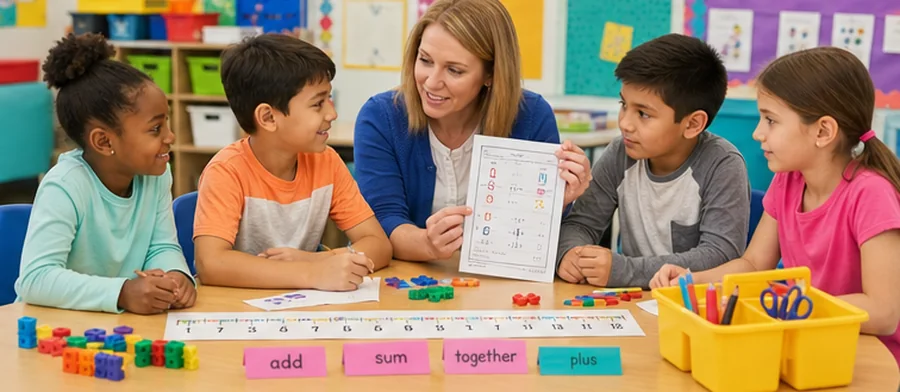
Teachers can use these pages for measurement practice after introducing grams and kilograms, as maths centres, quick revision, or independent work. Pair work is useful: one child converts mixed units while the other checks the comparison symbol. The word problems also help connect measurement to shopping, cooking, parcels, and classroom objects.
Common errors to watch for
Many children compare only the numbers and ignore the units, so they may think 900 g is greater than 1 kg because 900 is bigger than 1. Others reverse the comparison symbol or forget to change kilograms into grams before ordering. Encourage children to underline the unit, convert when needed, and read the full statement aloud.
Free printable PDF download
Use this class 4 comparing weights worksheet page to preview the activity, print it, or download it as a PDF for quick practice. It works well for homework, homeschool lessons, tutoring, morning work, revision, and classroom centers.
Answers and answer key support
After the child completes the worksheet independently, parents and teachers can use the answer support or answer key information to check the work, review mistakes, and choose the next practice step.
Why iBloom worksheets help
The iBloom activities give repeated, varied practice without making the page feel mechanical. Children compare, convert, order, and solve short situations, so they learn the meaning of weight comparisons rather than memorising a trick. A child-friendly strategy is: check the unit, convert if needed, compare the numbers, then read the answer with the unit.
Helpful answers
Frequently asked questions
What should a Class 4 child know before comparing weights?
Children should know the meanings of heavier, lighter, and equal, and should understand that weights can be written in grams and kilograms. Knowing that 1 kg = 1000 g is especially useful for mixed-unit questions.
Do these worksheets include both grams and kilograms?
Yes. The practice includes weights in grams, kilograms, and mixed kg-g forms so children learn to compare quantities only after checking the unit.
How can I help my child avoid mistakes with comparison symbols?
Ask your child to read the full sentence aloud after placing the symbol. For example, “750 g is less than 1 kg.” This helps them notice if the symbol direction does not match the meaning.
Are weight ordering questions included?
Yes. Children practise arranging weights in ascending and descending order, including questions where some values may need conversion before ordering.
How can I make comparing weights practical at home?
Use grocery packets, fruits, books, or containers. Let your child estimate which is heavier, check the labelled weight where possible, and then write a comparison using >, <, or =.
Is this class 4 comparing weights worksheet free?
Yes. You can preview it for free and use the printable worksheet for home or classroom practice.
Can I download this class 4 comparing weights worksheet as a PDF?
Yes. Use the worksheet download option to save a printable PDF, or print the worksheet directly from the page.
Does this class 4 comparing weights worksheet include answers or an answer key?
When the activity has fixed answers, iBloom includes answer support so parents and teachers can check the completed worksheet.