Free printable practice
Converting Volume Units Ounces Cups Quarts Practice Activities
Class 4 maths worksheets for converting volume between fluid ounces, cups and quarts using multiplication, division and word problems.
Free printable worksheet PDFs
Preview every available page, then download the free worksheet PDF for home, homeschool, tutoring, or classroom practice.
Preview the exact activity before downloading it.
 Converting Volume Units Ounces Cups Quarts — Concept FoundationsConcept Foundations for converting volume units ounces cups quarts in Class 4. Use known conversion facts to complete and choose equivalent amounts in fluid ounces, cups and quarts.Class 4Free PDF preview
 Converting Volume Units Ounces Cups Quarts — Visual ModelsVisual Models for converting volume units ounces cups quarts in Class 4. Use cup, glass and jar models to match equal volumes, then complete and solve ounce–cup–quart conversions.Class 4Free PDF preview
 Converting Volume Units Ounces Cups Quarts — Guided PracticeGuided Practice for converting volume units ounces cups quarts in Class 4. Use the conversion facts as guides, then solve multiplication, division, and mixed volume conversions step by step.Class 4Free PDF preview
 Converting Volume Units Ounces Cups Quarts — Independent PracticeIndependent Practice for converting volume units ounces cups quarts in Class 4. Solve mixed conversion questions by changing between fluid ounces, cups and quarts, including short word problems.Class 4Free PDF preview
 Converting Volume Units Ounces Cups Quarts — Real-World ProblemsReal-World Problems for converting volume units ounces cups quarts in Class 4. Solve real-world conversion stories by multiplying or dividing between fluid ounces, cups and quarts.Class 4Free PDF preview
 Converting Volume Units Ounces Cups Quarts — Reasoning ChallengeReasoning Challenge for converting volume units ounces cups quarts in Class 4. Solve mixed conversion puzzles by choosing equivalents, filling missing values, and working out volume stories.Class 4Free PDF preview
Practice that builds confidence
Build the unit ladder
These Class 4 maths worksheets help children practise converting volume units in the US customary system: fluid ounces, cups and quarts. Learners use the key relationships 8 fluid ounces = 1 cup and 4 cups = 1 quart to move between smaller and larger units.
The printable activities include conversion tables, fill-in-the-blank questions, comparison tasks and simple word problems about drinks, recipes and containers. Children strengthen multiplication and division while learning to choose the correct unit for a given volume.
Children first need a clear ladder of units: fluid ounces are the smallest, cups are larger, and quarts are larger again. A useful visual is 1 quart = 4 cups = 32 fluid ounces. This helps learners see why converting to a smaller unit means the number gets bigger, while converting to a larger unit means the number gets smaller.

Concept progression in the worksheets
The practice usually begins with direct facts such as 2 cups = 16 fluid ounces or 3 quarts = 12 cups. It then moves to mixed thinking, for example changing quarts to fluid ounces by going through cups. Word problems add meaning: if a jug holds 2 quarts, how many cups of juice can be poured? These steps connect measurement, multiplication facts and division facts.
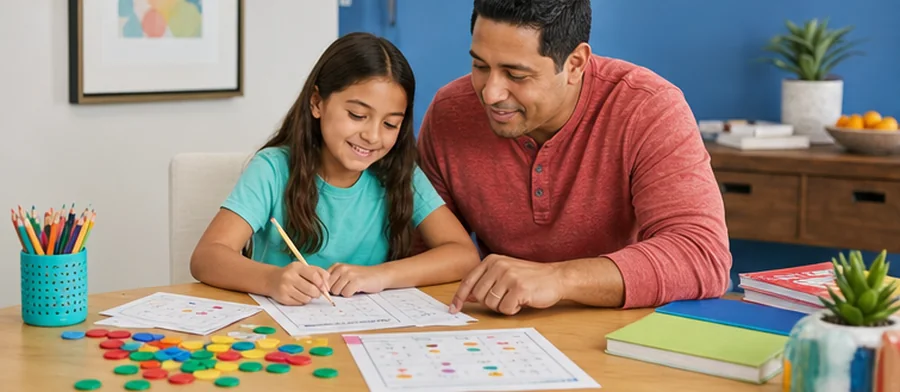
Parent routine at home
Use a measuring cup, a water bottle label or a kitchen jug. Ask your child to say the conversion fact aloud, then draw a quick unit ladder before calculating. Try three questions together: one ounces-to-cups, one cups-to-quarts and one quarts-to-ounces. Let your child explain whether they multiplied or divided and why. This short routine builds confidence without turning the topic into memorisation only.
Classroom uses for teachers
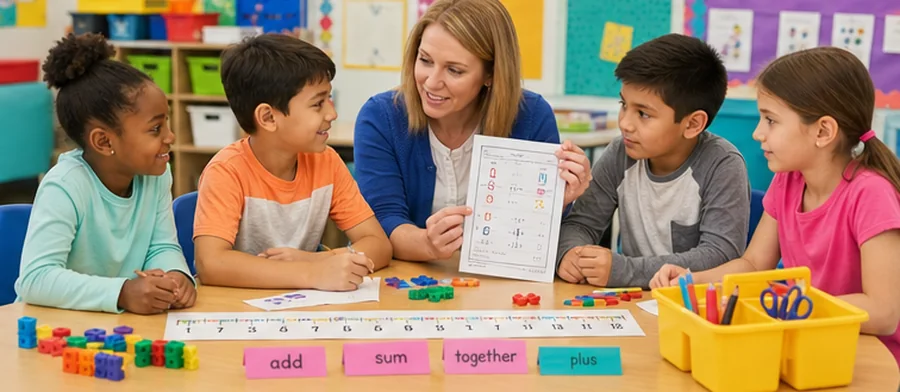
Teachers can use these pages during a measurement lesson, as maths centres, for partner checking or as extra practice after introducing customary volume. Conversion tables work well for warm-ups, while word problems can be discussed in small groups. Encourage pupils to underline the starting unit and circle the unit required before solving.
Common errors to watch for
Some children multiply when they should divide, especially when changing from fluid ounces to cups. Others confuse the facts and write 1 cup = 4 ounces instead of 8 ounces. A child-friendly strategy is: “Name the units, draw the ladder, then choose bigger number or smaller number.” If the unit becomes smaller, the count should increase.
Free printable PDF download
Use this converting volume units ounces cups quarts worksheet page to preview the activity, print it, or download it as a PDF for quick practice. It works well for homework, homeschool lessons, tutoring, morning work, revision, and classroom centers.
Answers and answer key support
After the child completes the worksheet independently, parents and teachers can use the answer support or answer key information to check the work, review mistakes, and choose the next practice step.
Why iBloom worksheets help
These worksheets give focused, uncluttered practice on just ounces, cups and quarts, so Class 4 learners can master the relationships before mixing in too many other measurement units. The activities balance number facts, visual reasoning and real-life contexts, helping children convert accurately and explain their thinking.
Helpful answers
Frequently asked questions
What conversion facts should my child know for these worksheets?
The main facts are 8 fluid ounces = 1 cup and 4 cups = 1 quart. From these, children can also work out that 1 quart = 32 fluid ounces.
Are ounces and fluid ounces the same in this topic?
For volume measurement, the worksheet topic refers to fluid ounces. In everyday language, people may say ounces, but children should understand that fluid ounces measure liquid volume.
How can a child convert quarts to fluid ounces?
First convert quarts to cups by multiplying by 4, then convert cups to fluid ounces by multiplying by 8. For example, 2 quarts = 8 cups = 64 fluid ounces.
Why does the number get larger when converting cups to fluid ounces?
Fluid ounces are smaller units than cups, so more of them are needed to show the same volume. Since 1 cup has 8 fluid ounces, the number increases.
Can these worksheets be used in Indian classrooms?
Yes. They are useful when Class 4 pupils are learning about measurement systems beyond metric units, especially US customary volume units used in recipes, labels and international contexts.
Is this converting volume units ounces cups quarts worksheet free?
Yes. You can preview it for free and use the printable worksheet for home or classroom practice.
Can I download this converting volume units ounces cups quarts worksheet as a PDF?
Yes. Use the worksheet download option to save a printable PDF, or print the worksheet directly from the page.
Does this converting volume units ounces cups quarts worksheet include answers or an answer key?
When the activity has fixed answers, iBloom includes answer support so parents and teachers can check the completed worksheet.