Free printable practice
Projects Practice Activities
Class 4 measurement project worksheets help children plan, measure, record, compare and explain real-world findings using suitable units.
Free printable worksheet PDFs
Preview every available page, then download the free worksheet PDF for home, homeschool, tutoring, or classroom practice.
Preview the exact activity before downloading it.
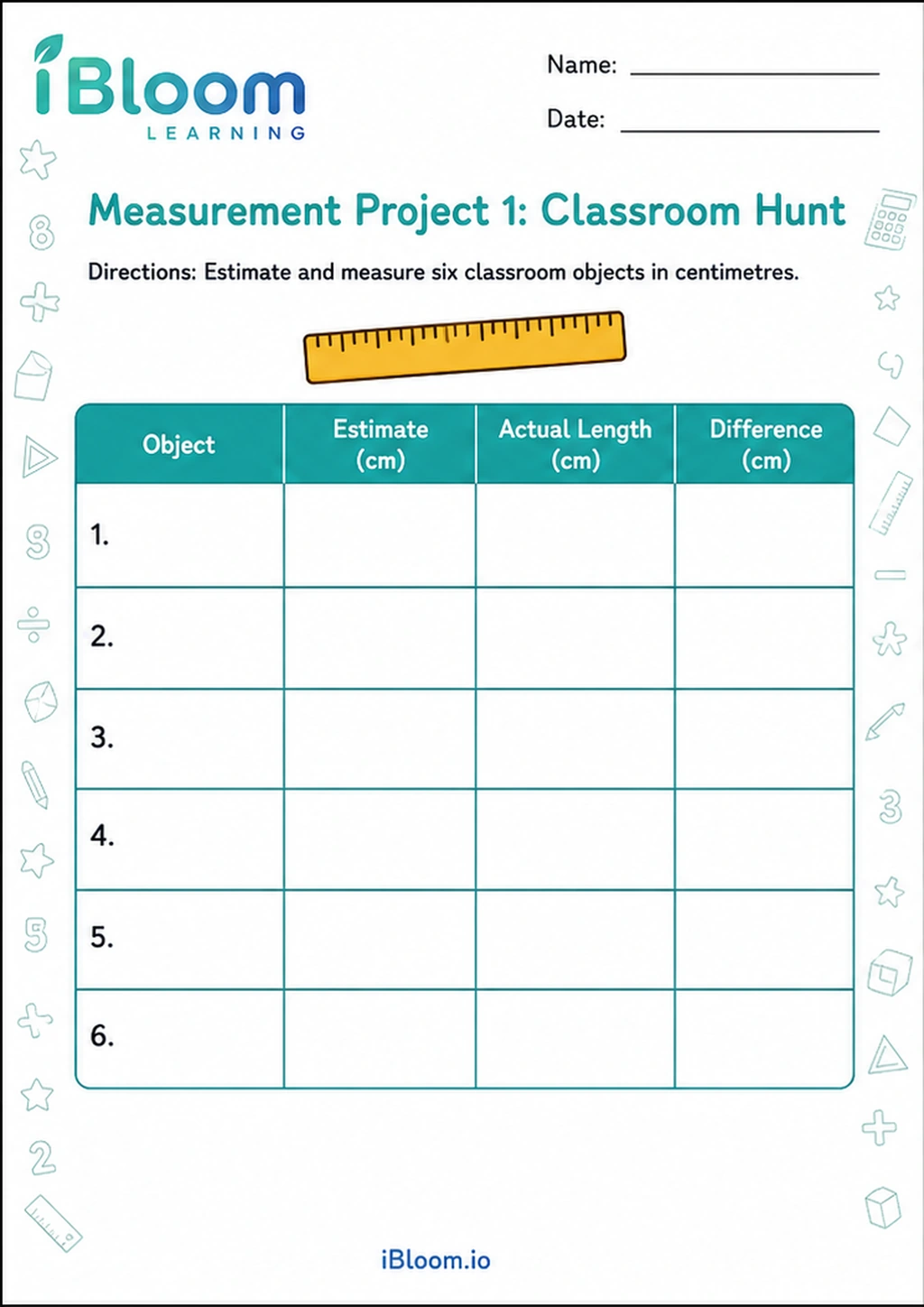 Measurement Project 1: Classroom HuntClass 4 printable practice for Measurement Projects.Class 4Free PDF preview
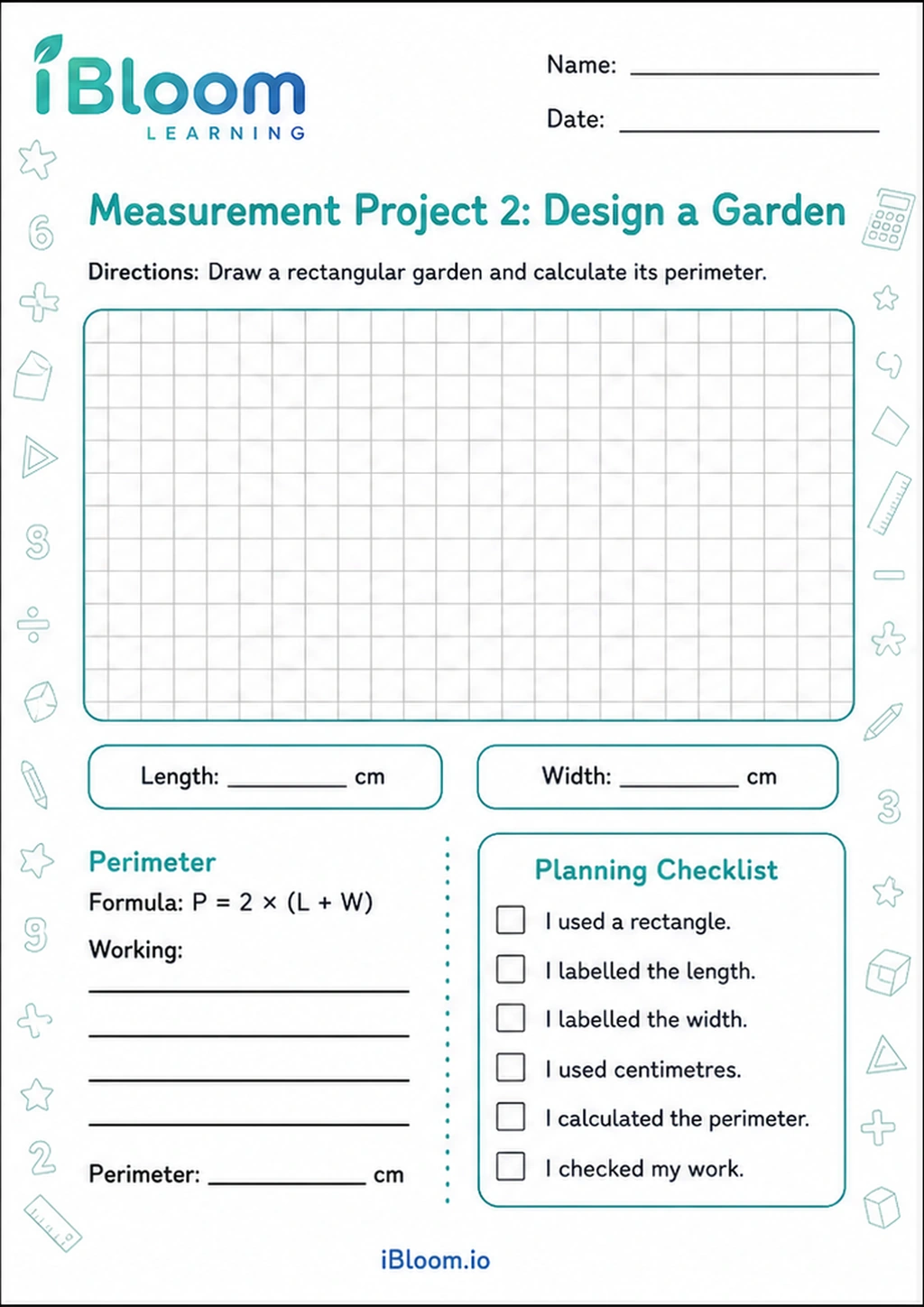 Measurement Project 2: Design a GardenClass 4 printable practice for Measurement Projects.Class 4Free PDF preview
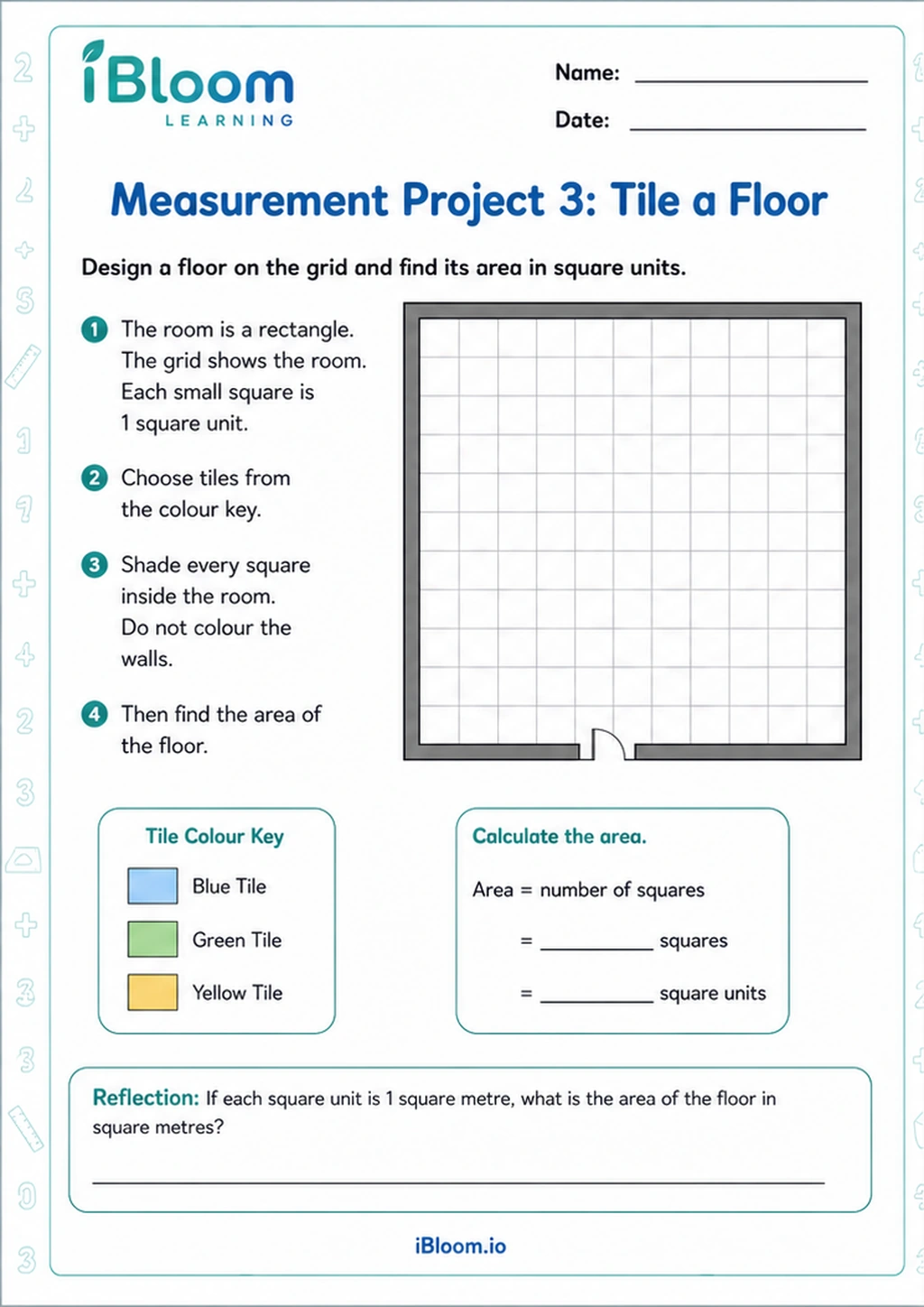 Measurement Project 3: Tile a FloorClass 4 printable practice for Measurement Projects.Class 4Free PDF preview
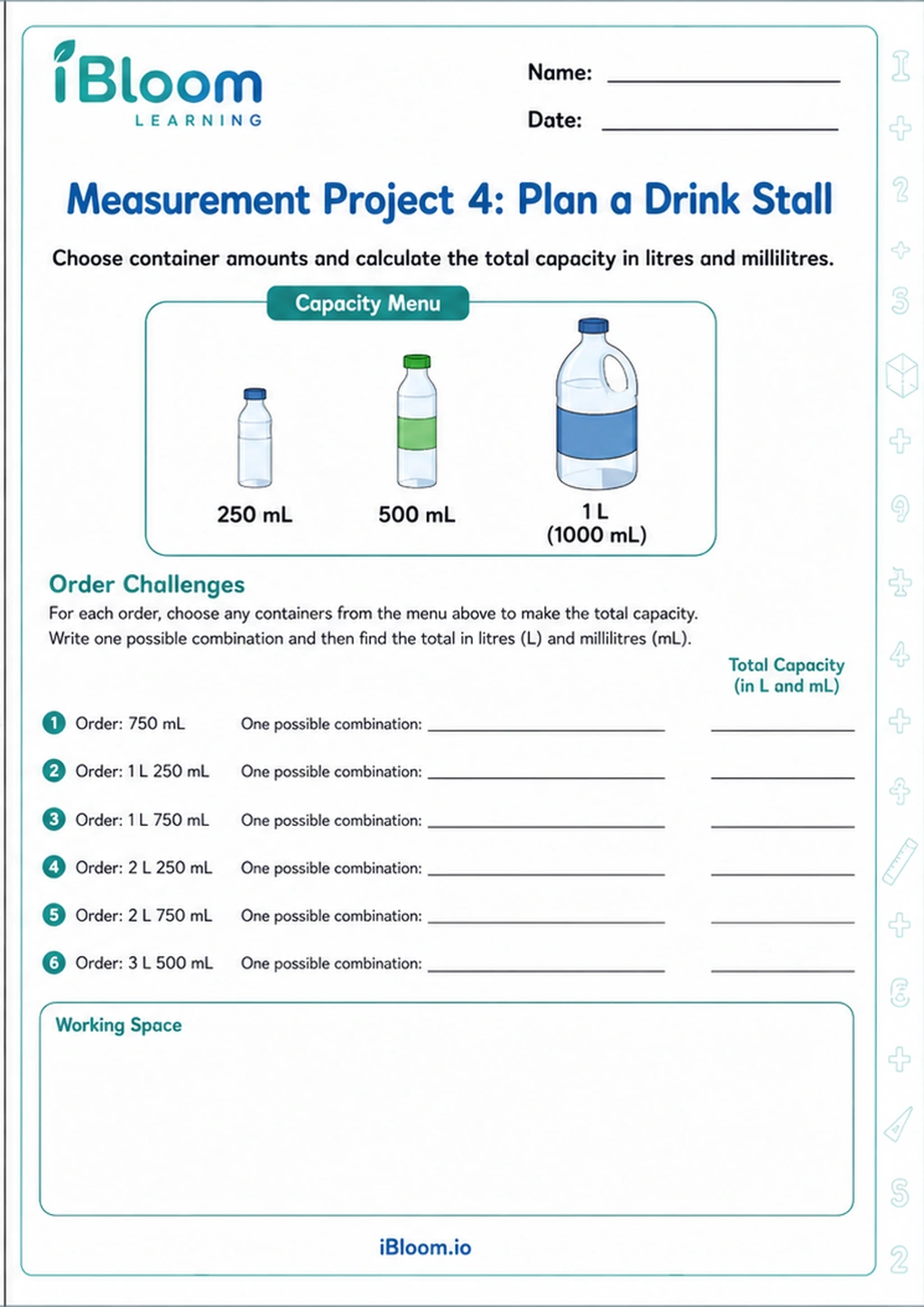 Measurement Project 4: Plan a Drink StallClass 4 printable practice for Measurement Projects.Class 4Free PDF preview
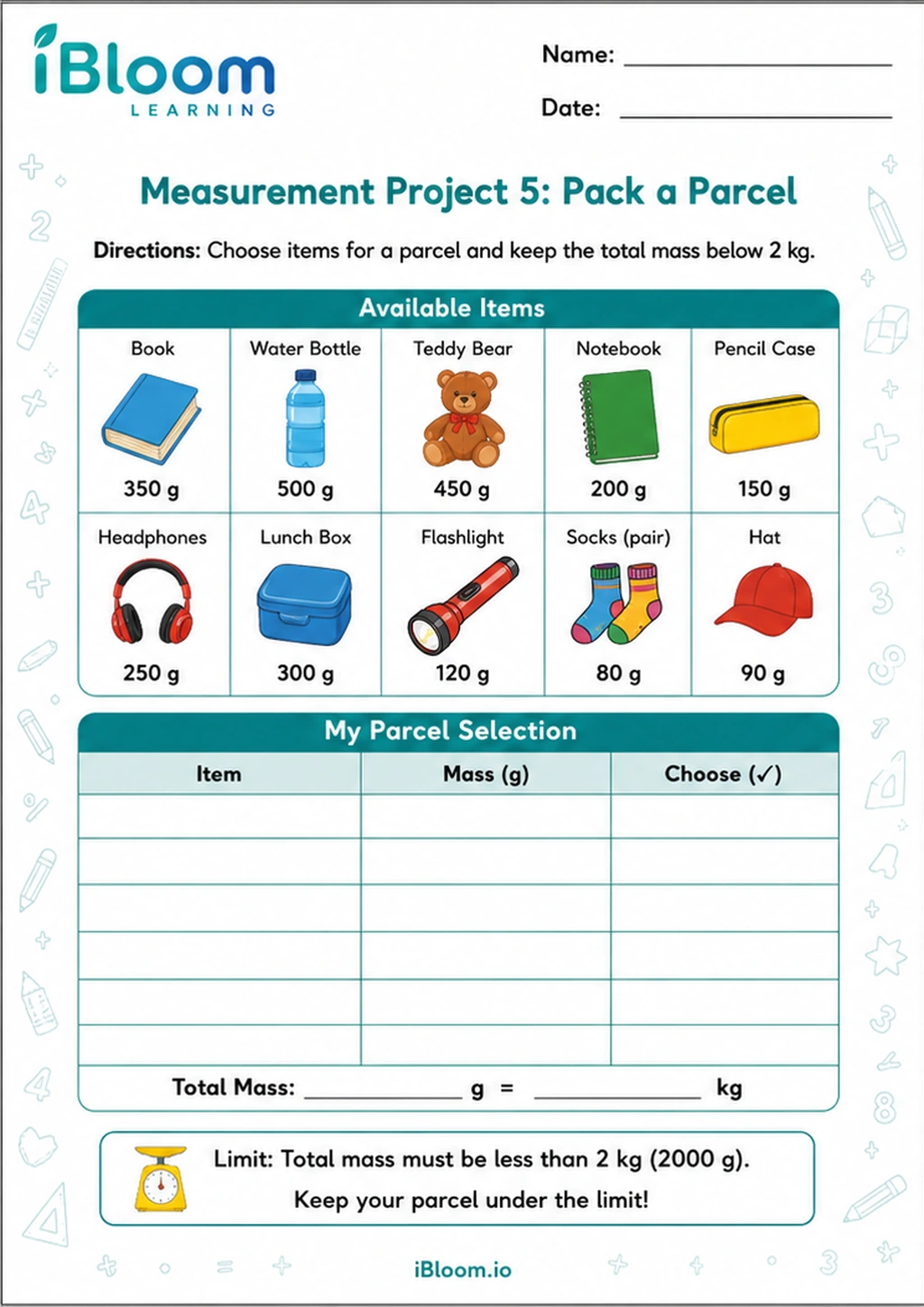 Measurement Project 5: Pack a ParcelClass 4 printable practice for Measurement Projects.Class 4Free PDF preview
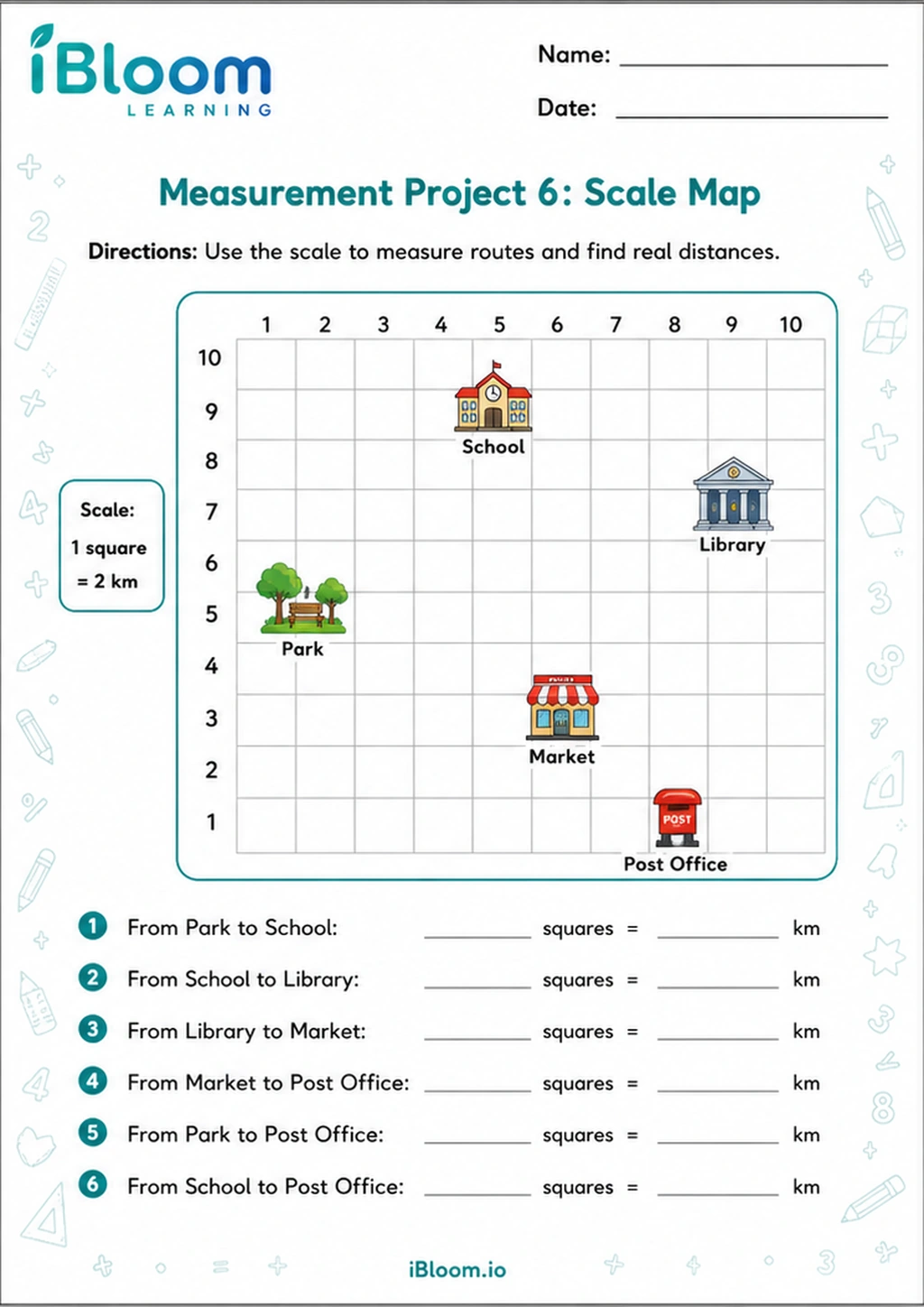 Measurement Project 6: Scale MapClass 4 printable practice for Measurement Projects.Class 4Free PDF preview
Practice that builds confidence
From measuring to investigating
These Class 4 maths project worksheets help children use measurement as a practical skill, not just a calculation exercise. Learners estimate and measure objects around them, choose sensible units, record observations and compare results.
The printable activities include project-style tasks with clear prompts, tables, drawing space and reflection questions. Children practise length, mass, capacity and related measurement vocabulary through hands-on investigations at home or in class.
Measurement projects ask children to plan a small task, collect information and explain what they found. Instead of only converting units on a page, they may measure desk lengths, compare water capacities, list classroom objects by mass or create a simple record of measured items. This builds accuracy, reasoning and confidence with tools.

Building unit sense
Class 4 learners need repeated practice choosing between units such as cm, m, g, kg, ml and l. These worksheets encourage children to think: “Which unit fits this object?” A pencil is better measured in centimetres, a room in metres, a packet in grams and a bucket in litres. Tables help them connect the object, tool, unit and value.
A simple parent routine
At home, choose one worksheet and gather safe everyday items: a ruler, measuring tape, kitchen scale or measuring cup if available. Ask your child to estimate first, then measure and write the result neatly with the unit. After two or three items, discuss why the estimate was close or far away. End by asking the child to order the results from smallest to largest or heaviest to lightest.

Classroom uses for teachers
Teachers can use these pages for maths lab work, group activities, holiday projects, revision or display-board tasks. Pairs can measure different objects and compare data, while groups can present their findings using labelled tables. The format also supports observation skills, neat recording and mathematical communication.

Common errors to watch for
Children often forget units, mix up cm and m, read a scale from the wrong starting point, or copy a measurement without checking. Encourage the child-friendly strategy: estimate, measure, record, check. Saying the unit aloud after every answer helps: “The bottle holds 1 litre,” not just “1.”
Free printable PDF download
Use this Class 4 measurement projects worksheet page to preview the activity, print it, or download it as a PDF for quick practice. It works well for homework, homeschool lessons, tutoring, morning work, revision, and classroom centers.
Answers and answer key support
After the child completes the worksheet independently, parents and teachers can use the answer support or answer key information to check the work, review mistakes, and choose the next practice step.
Why iBloom worksheets help
The iBloom project activities keep the work structured while still feeling practical. Clear spaces for estimates, actual measurements and conclusions guide children step by step. The tasks make measurement meaningful by linking classroom maths with objects children can see, lift, pour, compare and describe.
Helpful answers
Frequently asked questions
What do children practise in these Class 4 measurement project worksheets?
They practise estimating, measuring, choosing suitable units, recording results in tables and comparing measured values using real-life objects.
Do these worksheets need special equipment?
Most tasks can be done with simple tools such as a ruler, measuring tape, weighing scale or measuring cup. Teachers and parents can adapt the objects based on what is available.
How are project worksheets different from regular measurement sums?
Project worksheets ask children to investigate and record actual measurements, so they apply maths skills through observation, tool use and explanation rather than only solving written questions.
Can these activities be used for homework or holiday work?
Yes. The structured prompts and tables make them suitable for home projects, holiday assignments, maths lab practice or classroom group work.
What common mistakes should I check while my child works?
Check that the child writes the correct unit, starts measuring from zero, reads the scale carefully and compares values only when the units are suitable.
Is this Class 4 measurement projects worksheet free?
Yes. You can preview it for free and use the printable worksheet for home or classroom practice.
Can I download this Class 4 measurement projects worksheet as a PDF?
Yes. Use the worksheet download option to save a printable PDF, or print the worksheet directly from the page.
Does this Class 4 measurement projects worksheet include answers or an answer key?
When the activity has fixed answers, iBloom includes answer support so parents and teachers can check the completed worksheet.