Free printable practice
Childrens Stories Practice Activities
Class 3 printable reading comprehension stories that build detail-finding, sequencing, inference, vocabulary, and own-words answering skills.
Explore Childrens Stories
Free printable worksheet PDFs
Preview every available page, then download the free worksheet PDF for home, homeschool, tutoring, or classroom practice.
Preview the exact activity before downloading it.
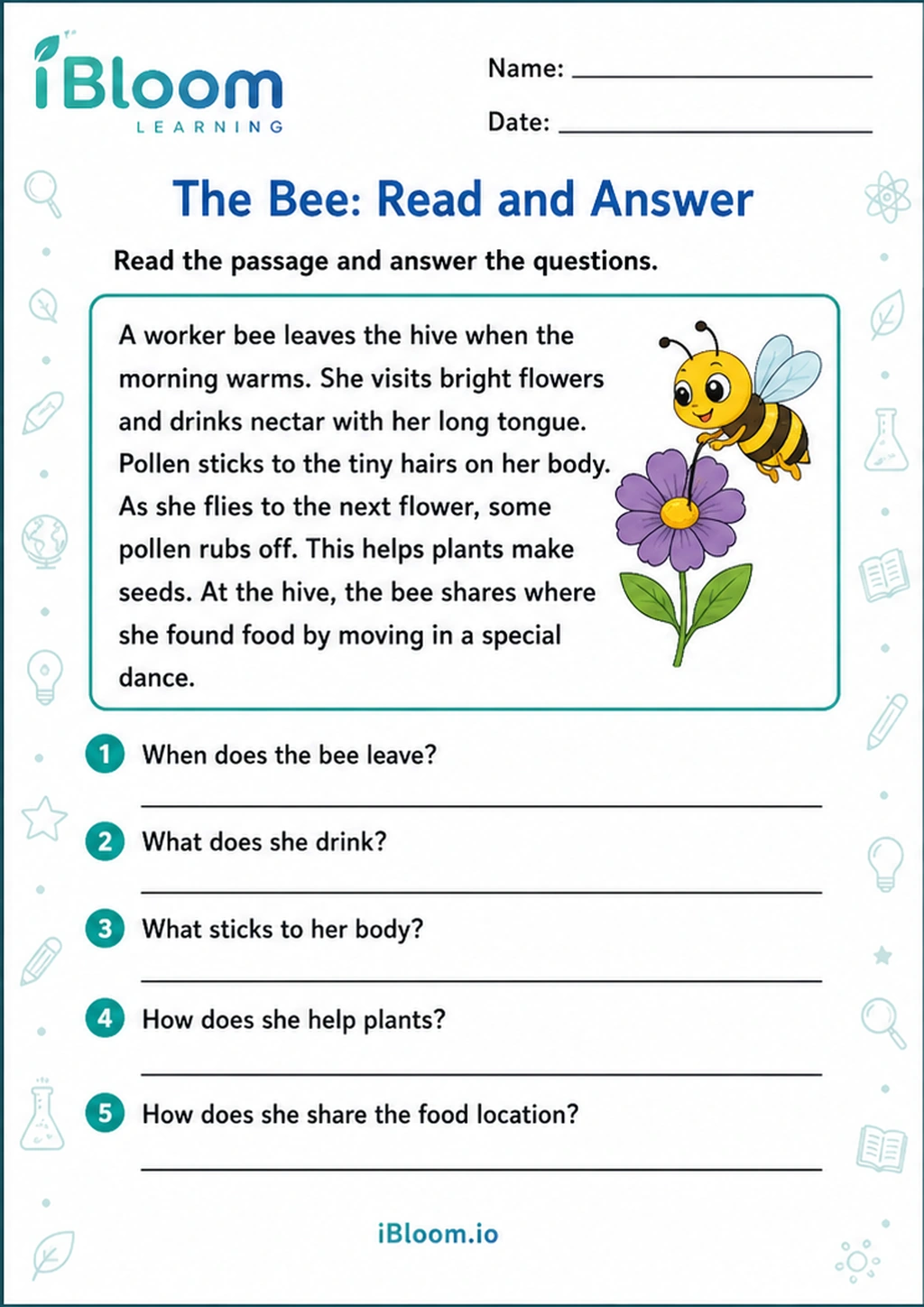 The Bee: Read and AnswerClass 3 printable practice for The Bee Reading.Class 3Free PDF preview
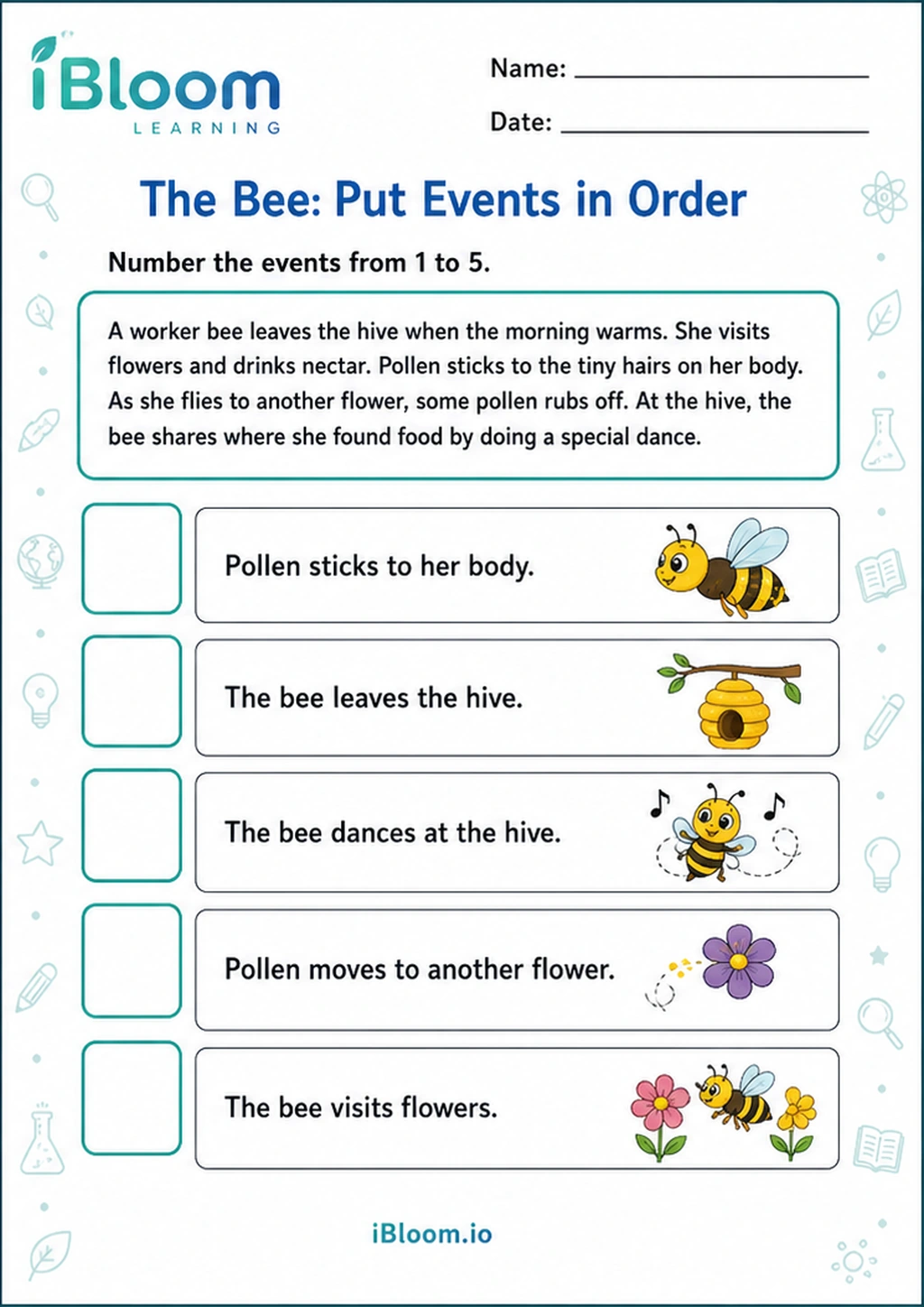 The Bee: Put Events in OrderClass 3 printable practice for The Bee Reading.Class 3Free PDF preview
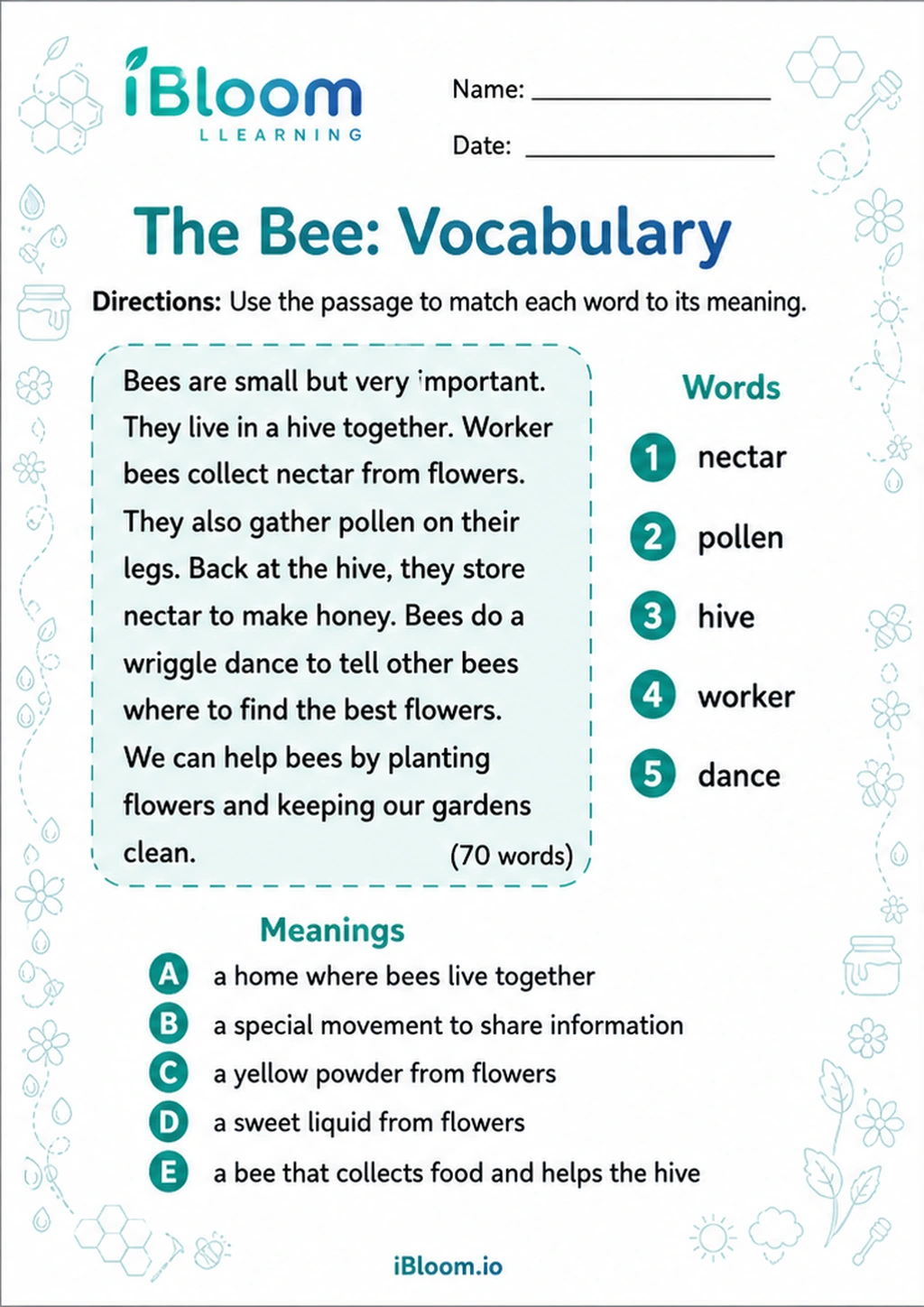 The Bee: VocabularyClass 3 printable practice for The Bee Reading.Class 3Free PDF preview
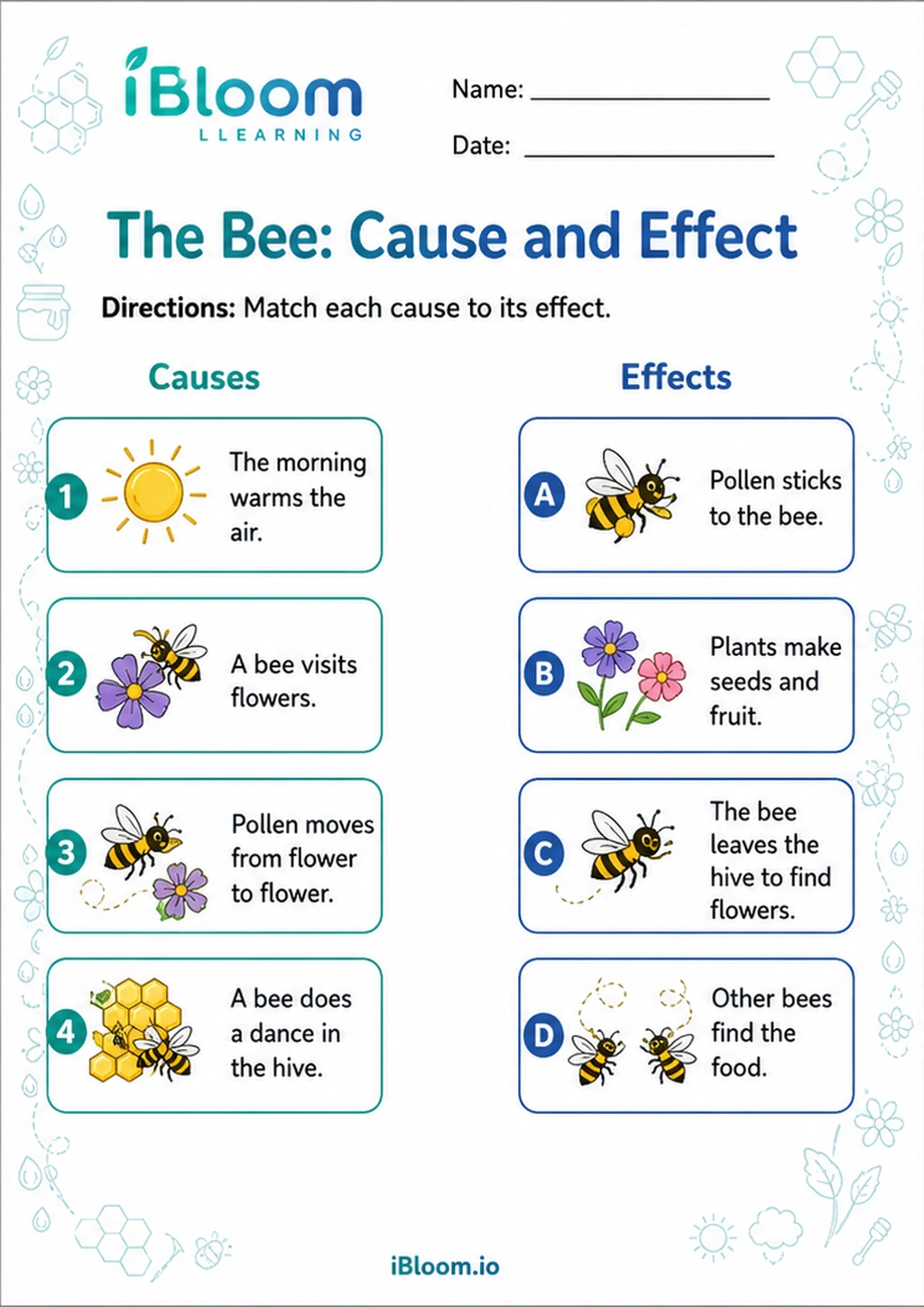 The Bee: Cause and EffectClass 3 printable practice for The Bee Reading.Class 3Free PDF preview
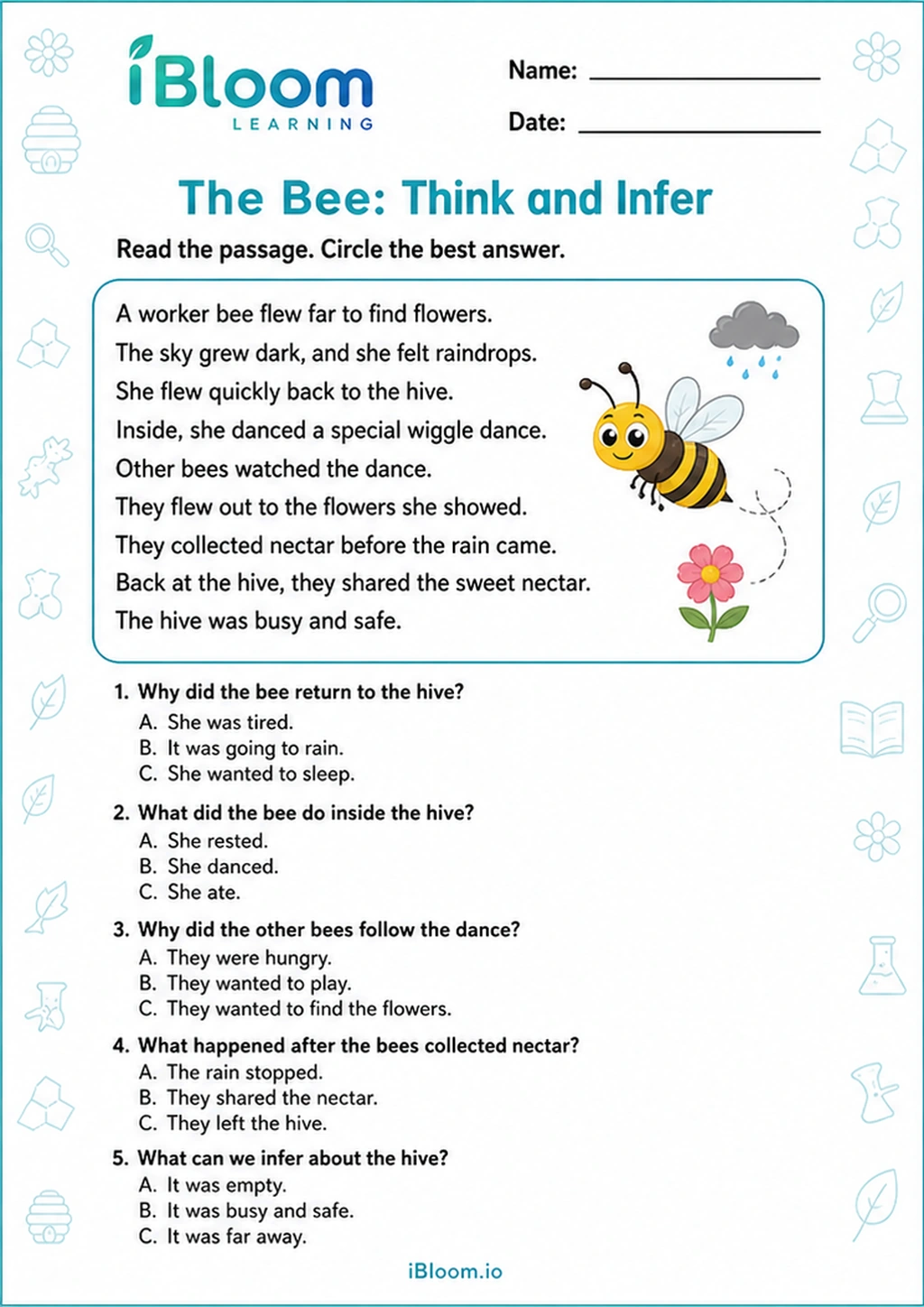 The Bee: Think and InferClass 3 printable practice for The Bee Reading.Class 3Free PDF preview
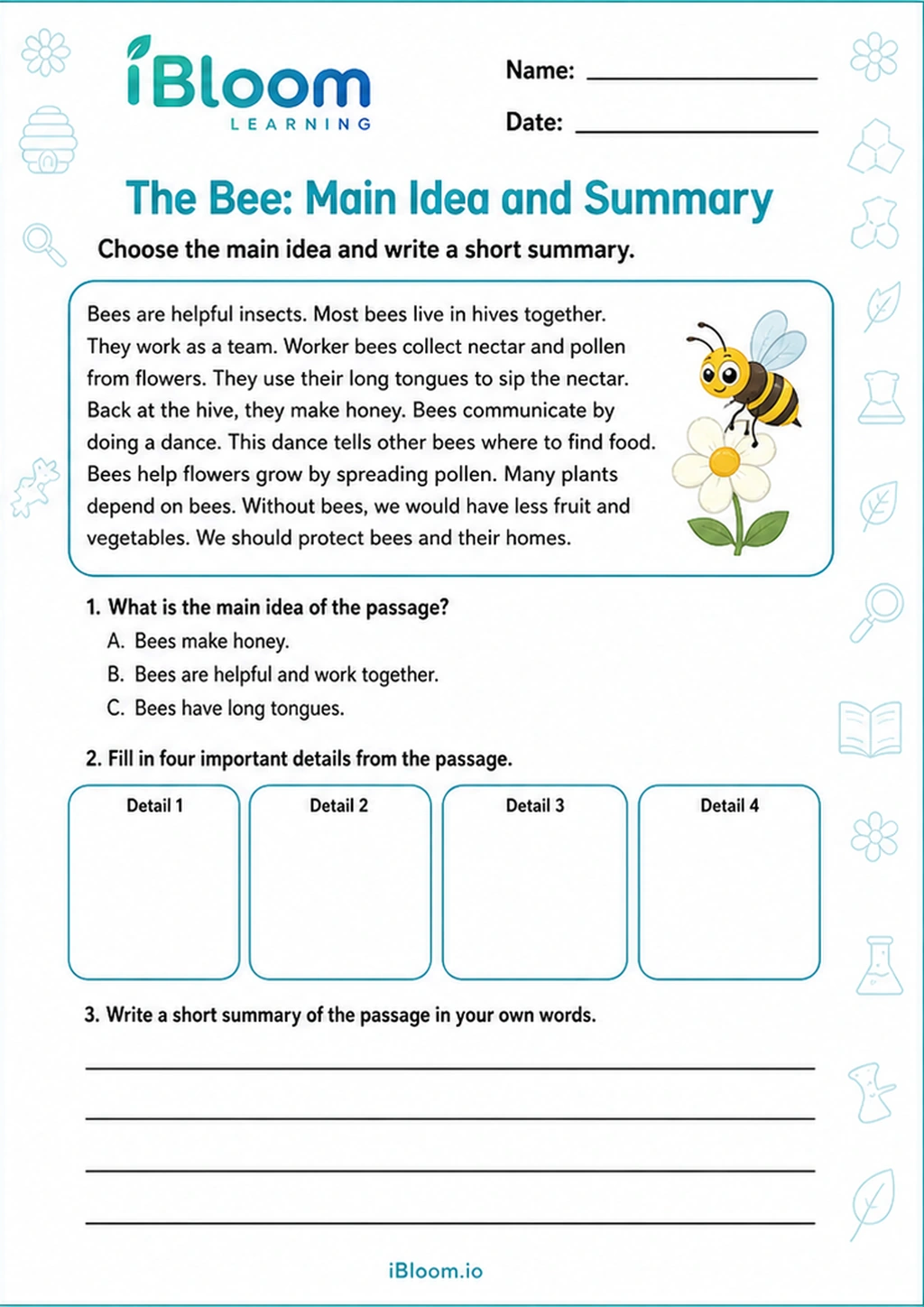 The Bee: Main Idea and SummaryClass 3 printable practice for The Bee Reading.Class 3Free PDF preview
Practice that builds confidence
Reading across many kinds of passages
These Class 3 reading comprehension worksheets use short children's stories and information passages to help learners read for meaning, not just sound out words. Children practise finding key details, sequencing events, understanding vocabulary in context, and giving answers in their own words.
The printable set includes passages such as Hats In Harvard, Life Cycles, Amandas News, Landforms, Anna And Her Basketball Adventure, What Are Clouds, Healthy Muscles Matter, The Bee, How To Make Ice Cream, Little Red Cape, and Tag Rules. Questions mix recall, inference, cause and effect, and simple written responses.
In the Reading Comprehension > Class 3 > Childrens Stories collection, children meet a mix of realistic stories, playful fiction, and simple informational texts. A passage like My New Scooter or Anna And Her Basketball Adventure supports character, setting, and event questions, while Life Cycles, Force, Landforms, and Healthy Muscles Matter build careful reading of facts and topic words.

Skill progression in the worksheets
The activities move from direct questions such as who, what, where, and when to deeper thinking. Children may identify a problem in Amusement Park Problem, explain a habit in Maxs Good Habit, follow steps in How To Make Ice Cream, or infer a character's feeling in Helping Hally. Own Words encourages children to stop copying full sentences and write a clear answer based on the passage.
A simple parent routine
At home, ask your child to read the title first and predict what the passage may be about. After reading, let them underline two useful clues before answering. For stories such as Idea For Tucker, Will The Wolf, The Solver, or Little Red Cape, ask, “Which line helped you know that?” End by having your child retell the passage in three sentences: beginning, middle, and end.

Classroom uses for teachers
Teachers can use these printables for guided reading groups, independent practice, homework, or quick comprehension checks. Pair related texts such as Hunters Hunted and The Bee for vocabulary discussion, or use What Are Clouds and Landforms during an EVS-linked reading lesson. Questions can also be discussed orally before children write answers in their notebooks.

Common errors to watch for
Class 3 learners often copy too much, miss small words in the question, or answer from memory instead of the passage. They may confuse the main idea with one detail, especially in Girl Closet or Amandas News. Encourage complete but short answers, correct use of names, and rereading when a question asks why or how.
Free printable PDF download
Use this Class 3 childrens stories reading comprehension worksheet page to preview the activity, print it, or download it as a PDF for quick practice. It works well for homework, homeschool lessons, tutoring, morning work, revision, and classroom centers.
Answers and answer key support
After the child completes the worksheet independently, parents and teachers can use the answer support or answer key information to check the work, review mistakes, and choose the next practice step.
Why iBloom worksheets help
The collection gives repeated practice with varied titles rather than one passage type. Children learn a child-friendly strategy: read, find the clue, say the answer, then write it. This builds confidence, accuracy, and the habit of proving an answer from the text.
Helpful answers
Frequently asked questions
What reading skills do these Class 3 children's stories practise?
They practise locating details, sequencing events, identifying characters and settings, understanding topic vocabulary, making simple inferences, and writing answers in the child's own words.
Are all the worksheets fictional stories?
No. The collection includes story-based passages such as My New Scooter and Little Red Cape, along with informational reading on topics like Life Cycles, Landforms, Force, Clouds, muscles, and bees.
How can I help my child avoid copying full sentences from the passage?
Ask your child to underline the clue first, say the answer aloud in a short sentence, and then write it. This helps them use the passage without copying every word.
Can these worksheets be used for homework in Indian Class 3 classrooms?
Yes. The passages and questions work well for homework, revision, guided reading, English practice, and short comprehension checks in Class 3.
Which worksheets are useful for factual comprehension practice?
Life Cycles, Landforms, What Are Clouds, Healthy Muscles Matter, Force, Hunters Hunted, and The Bee are especially useful for reading facts carefully and answering from the text.
Is this Class 3 childrens stories reading comprehension worksheet free?
Yes. You can preview it for free and use the printable worksheet for home or classroom practice.
Can I download this Class 3 childrens stories reading comprehension worksheet as a PDF?
Yes. Use the worksheet download option to save a printable PDF, or print the worksheet directly from the page.
Does this Class 3 childrens stories reading comprehension worksheet include answers or an answer key?
When the activity has fixed answers, iBloom includes answer support so parents and teachers can check the completed worksheet.