Free printable practice
The Bee Practice Activities
Class 3 children practise reading The Bee closely, answering story questions, building vocabulary, and explaining ideas in complete sentences.
Free printable worksheet PDFs
Preview every available page, then download the free worksheet PDF for home, homeschool, tutoring, or classroom practice.
Preview the exact activity before downloading it.
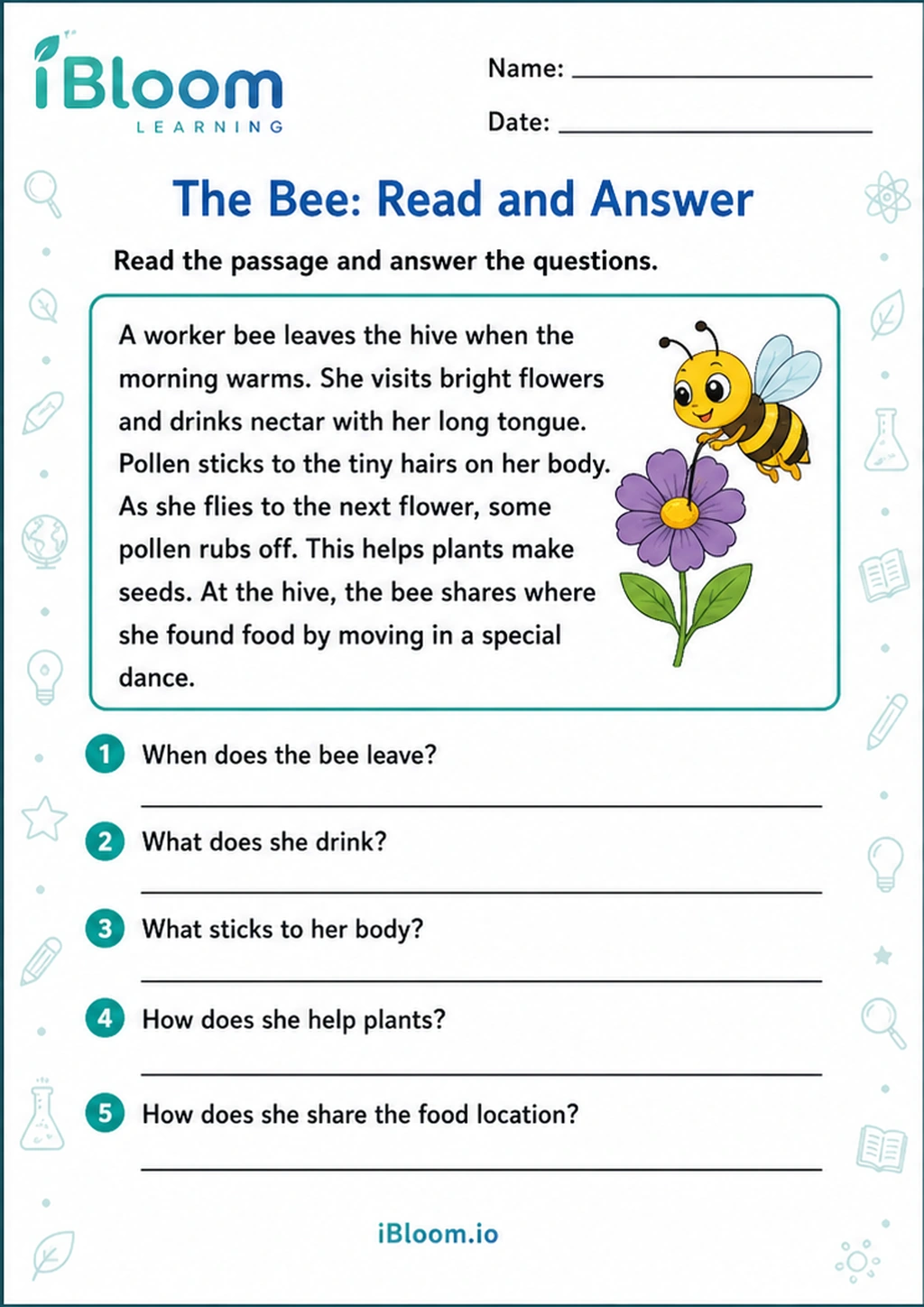 The Bee: Read and AnswerClass 3 printable practice for The Bee Reading.Class 3Free PDF preview
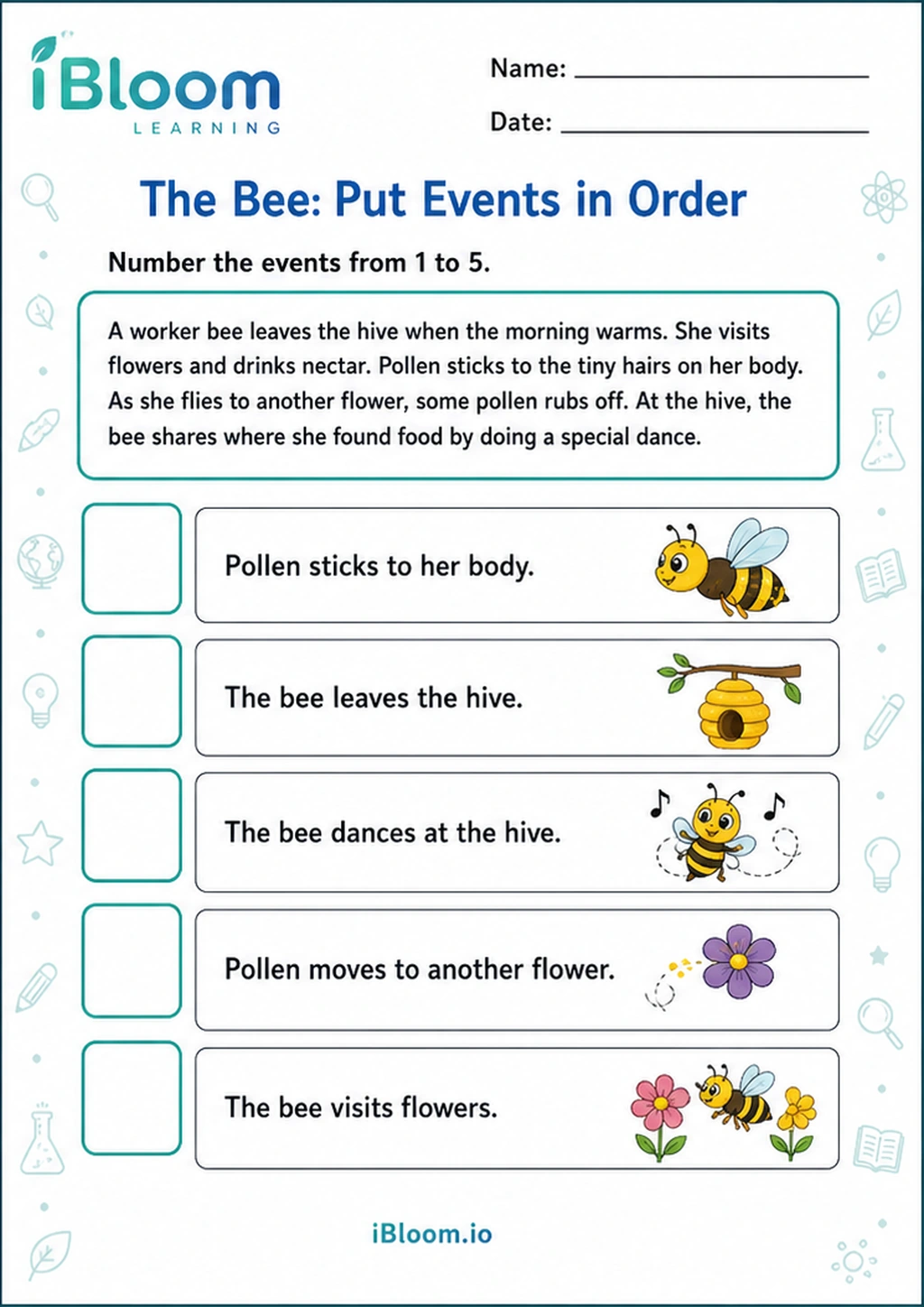 The Bee: Put Events in OrderClass 3 printable practice for The Bee Reading.Class 3Free PDF preview
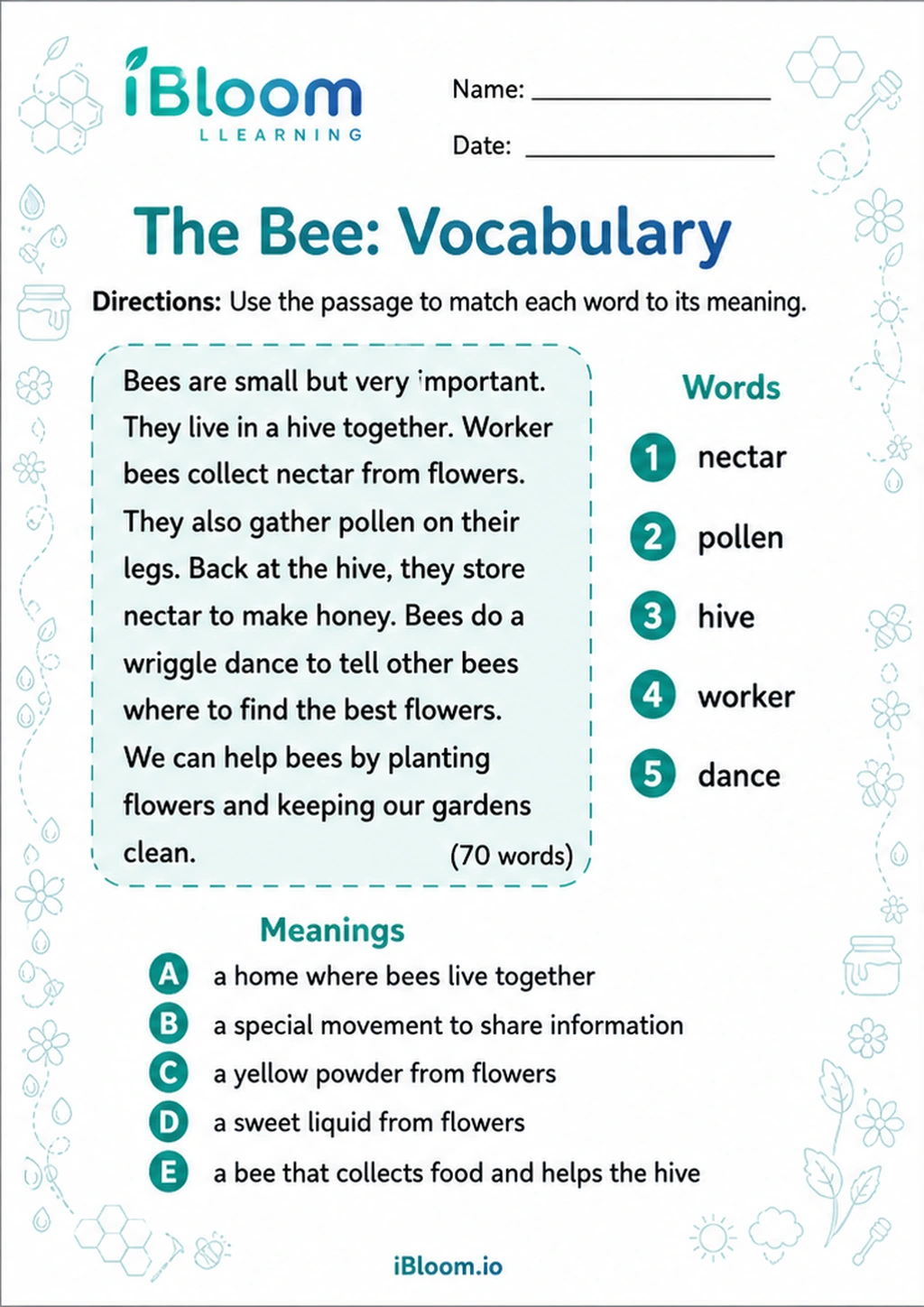 The Bee: VocabularyClass 3 printable practice for The Bee Reading.Class 3Free PDF preview
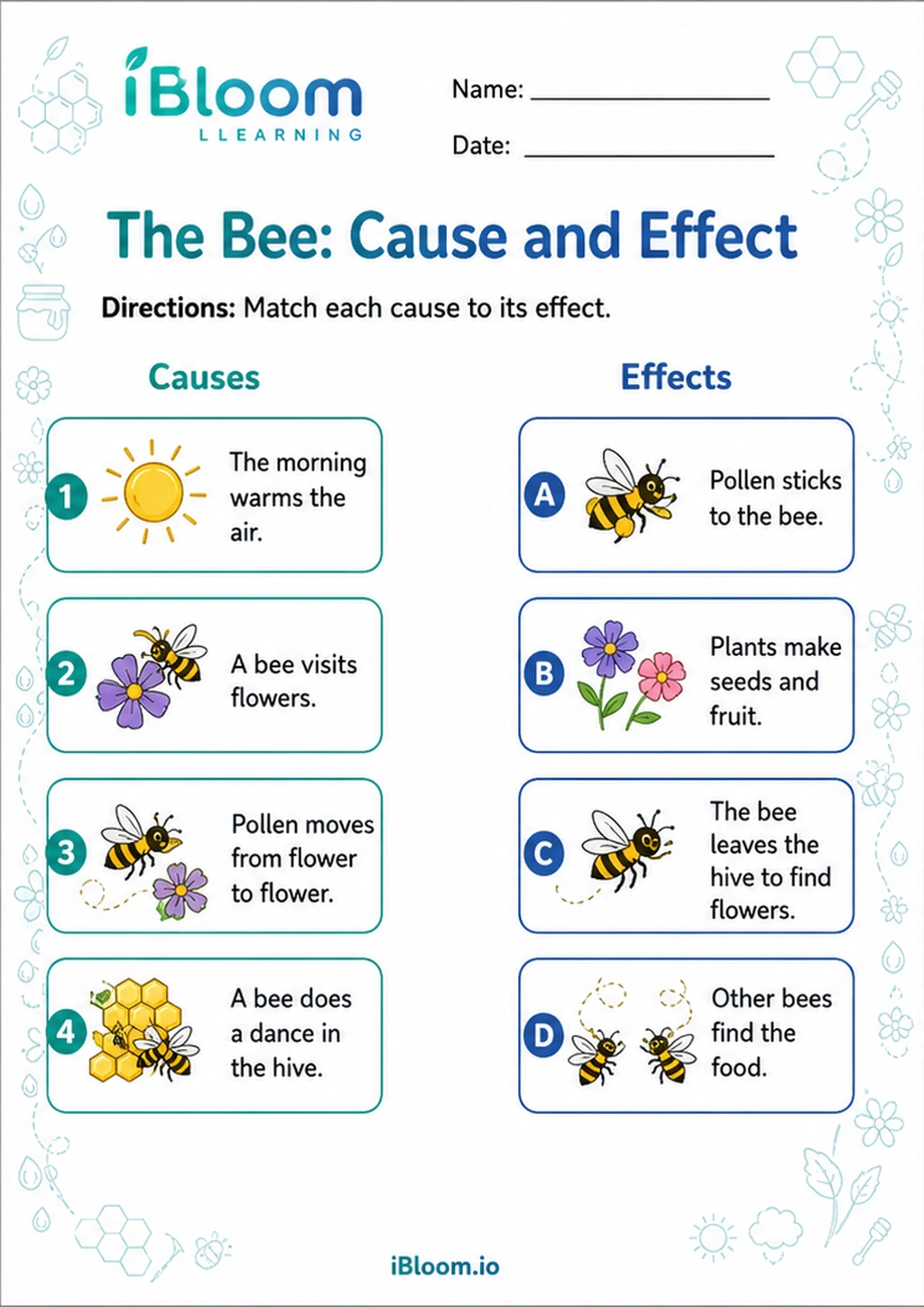 The Bee: Cause and EffectClass 3 printable practice for The Bee Reading.Class 3Free PDF preview
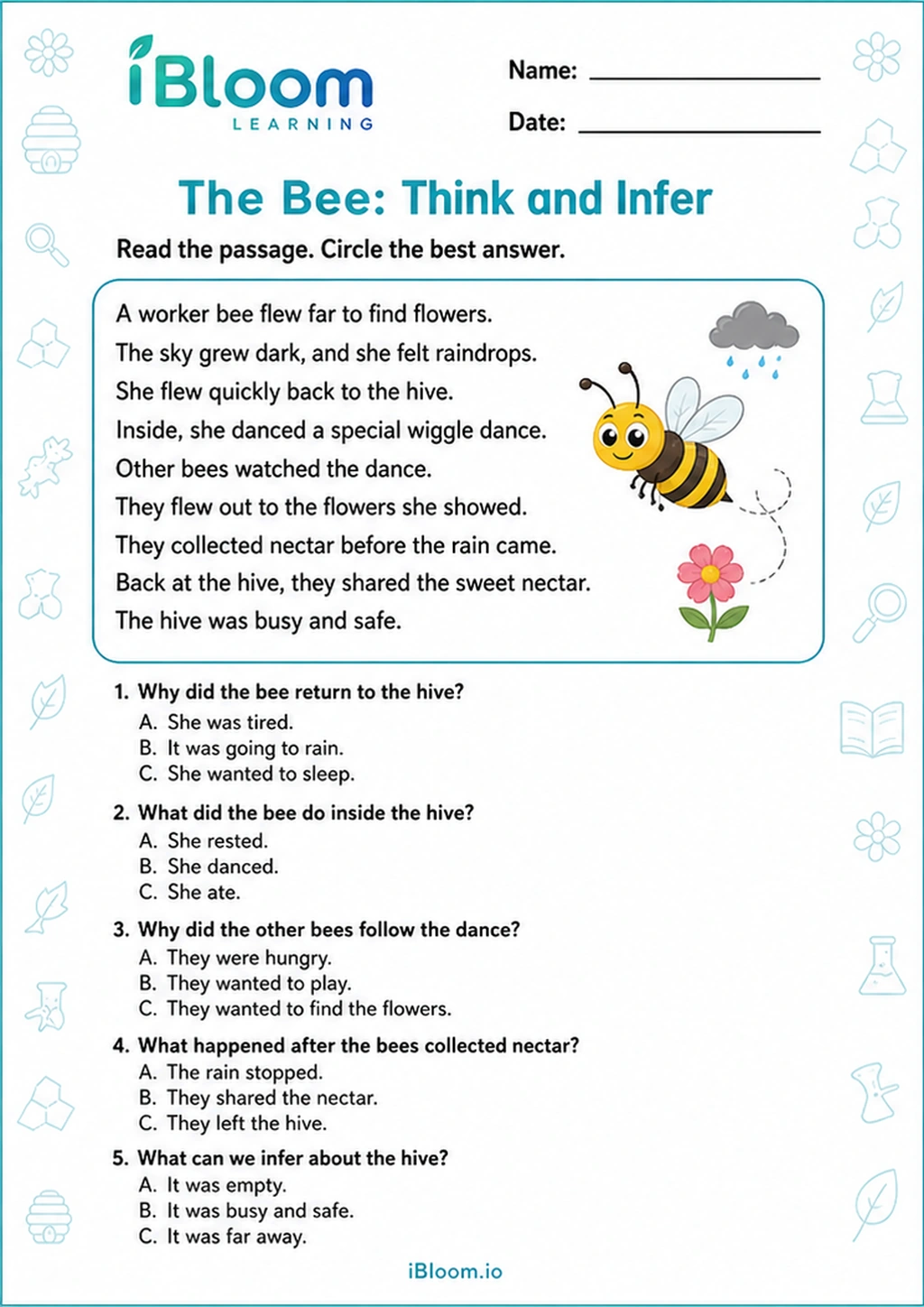 The Bee: Think and InferClass 3 printable practice for The Bee Reading.Class 3Free PDF preview
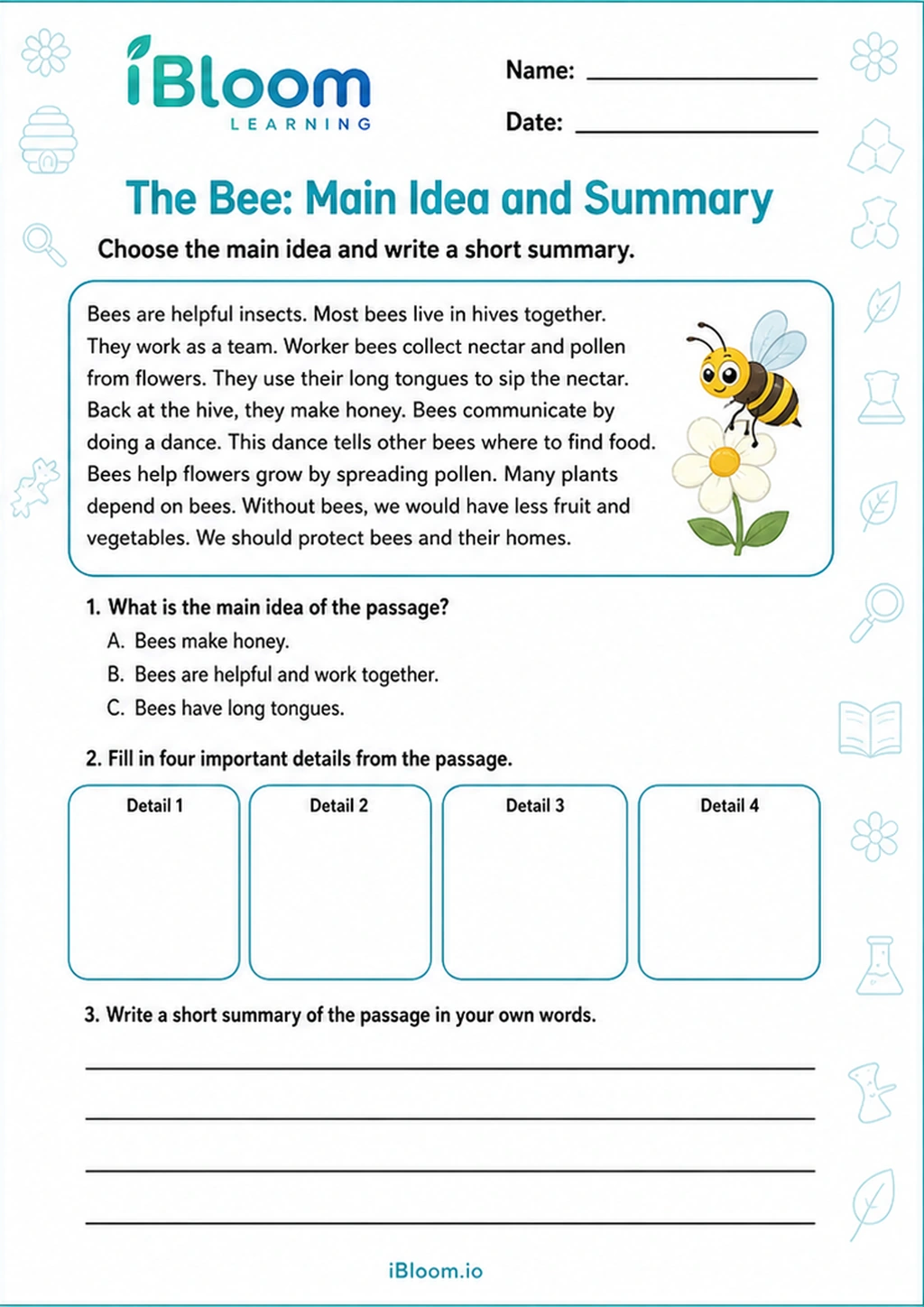 The Bee: Main Idea and SummaryClass 3 printable practice for The Bee Reading.Class 3Free PDF preview
Practice that builds confidence
Reading the story closely
These Class 3 reading comprehension worksheets help children practise understanding The Bee, a short children’s story centred on a bee. Learners read for meaning, notice key details, follow the order of events, and answer questions using evidence from the passage.
The printable activities include a child-friendly reading text with a mix of recall, inference, vocabulary, sequencing, and short-answer tasks. They encourage children to write complete responses, revisit the story, and talk about what the bee does, what happens, and what the story may be teaching.
At this level, children are moving beyond simply reading words correctly. These worksheets guide them to ask, “What is happening?” and “How do I know?” while reading The Bee. They practise spotting important nouns, action words, describing words, and story clues that explain the bee’s behaviour or role.

Building comprehension step by step
The activities move from direct questions to deeper thinking. A child may first find a fact from the story, then put events in order, explain a word from context, or answer why something happened. This progression supports fluency, attention to detail, and the habit of returning to the passage before writing an answer.
A simple parent routine
At home, ask your child to read the story aloud once for flow and once silently for understanding. Then let them underline two details about the bee and circle any new word. Before they write, ask them to say the answer in a full sentence, such as “The bee…” or “In the story…”. Finish by discussing one idea the story gives about nature, work, helpfulness, or care.

Classroom uses for teachers
Teachers can use these printables for guided reading, independent practice, or a reading comprehension centre. The story also works well for pair reading: one child reads a paragraph while the other listens for key details. After answering, children can compare responses and learn how to support an answer with a line or clue from the text.

Common errors to watch for
Some children answer from memory without checking the passage. Others copy a full sentence when the question needs a short explanation, or they give one-word answers when a complete sentence is expected. Watch for confusion between what the bee does and what another character or part of the story describes.
Child-friendly strategy
Teach children to use “Read, Find, Say, Write”. Read the question, find the clue in the story, say the answer aloud, and then write it neatly. This keeps answers connected to the text and helps children avoid guessing.
Free printable PDF download
Use this The Bee worksheets Class 3 reading comprehension page to preview the activity, print it, or download it as a PDF for quick practice. It works well for homework, homeschool lessons, tutoring, morning work, revision, and classroom centers.
Answers and answer key support
After the child completes the worksheet independently, parents and teachers can use the answer support or answer key information to check the work, review mistakes, and choose the next practice step.
Why iBloom worksheets help
The iBloom activities are focused on one story, so children can practise comprehension without being overwhelmed. The question types encourage careful reading, vocabulary growth, and clear written expression while keeping the topic familiar and engaging for Class 3 learners.
Helpful answers
Frequently asked questions
What does my child practise in The Bee worksheets?
Your child practises reading a short story carefully, finding details about the bee, understanding the order of events, answering direct and inference questions, and writing answers in complete sentences.
Are these worksheets suitable for Class 3 English practice?
Yes. The language and question types are designed for Class 3 learners who are developing story comprehension, vocabulary, and written response skills.
How should my child answer the comprehension questions?
Encourage your child to read the question, go back to the story, find the clue, and then write a clear answer. For short-answer questions, a complete sentence is usually better than a single word.
Can these worksheets be used after a read-aloud session?
Yes. A parent or teacher can first read the story aloud, discuss unfamiliar words, and then let children complete the questions independently or in pairs.
What should I do if my child guesses the answers?
Ask your child to point to the exact word, sentence, or part of the story that helped them answer. This builds the habit of using evidence from the text instead of guessing.
Is this The Bee worksheets Class 3 reading comprehension free?
Yes. You can preview it for free and use the printable worksheet for home or classroom practice.
Can I download this The Bee worksheets Class 3 reading comprehension as a PDF?
Yes. Use the worksheet download option to save a printable PDF, or print the worksheet directly from the page.
Does this The Bee worksheets Class 3 reading comprehension include answers or an answer key?
When the activity has fixed answers, iBloom includes answer support so parents and teachers can check the completed worksheet.