Free printable practice
How To Make Ice Cream Practice Activities
Class 3 pupils practise reading a process-based children's story about making ice cream, then answer questions on sequence, details, vocabulary and meaning.
Free printable worksheet PDFs
Preview every available page, then download the free worksheet PDF for home, homeschool, tutoring, or classroom practice.
Preview the exact activity before downloading it.
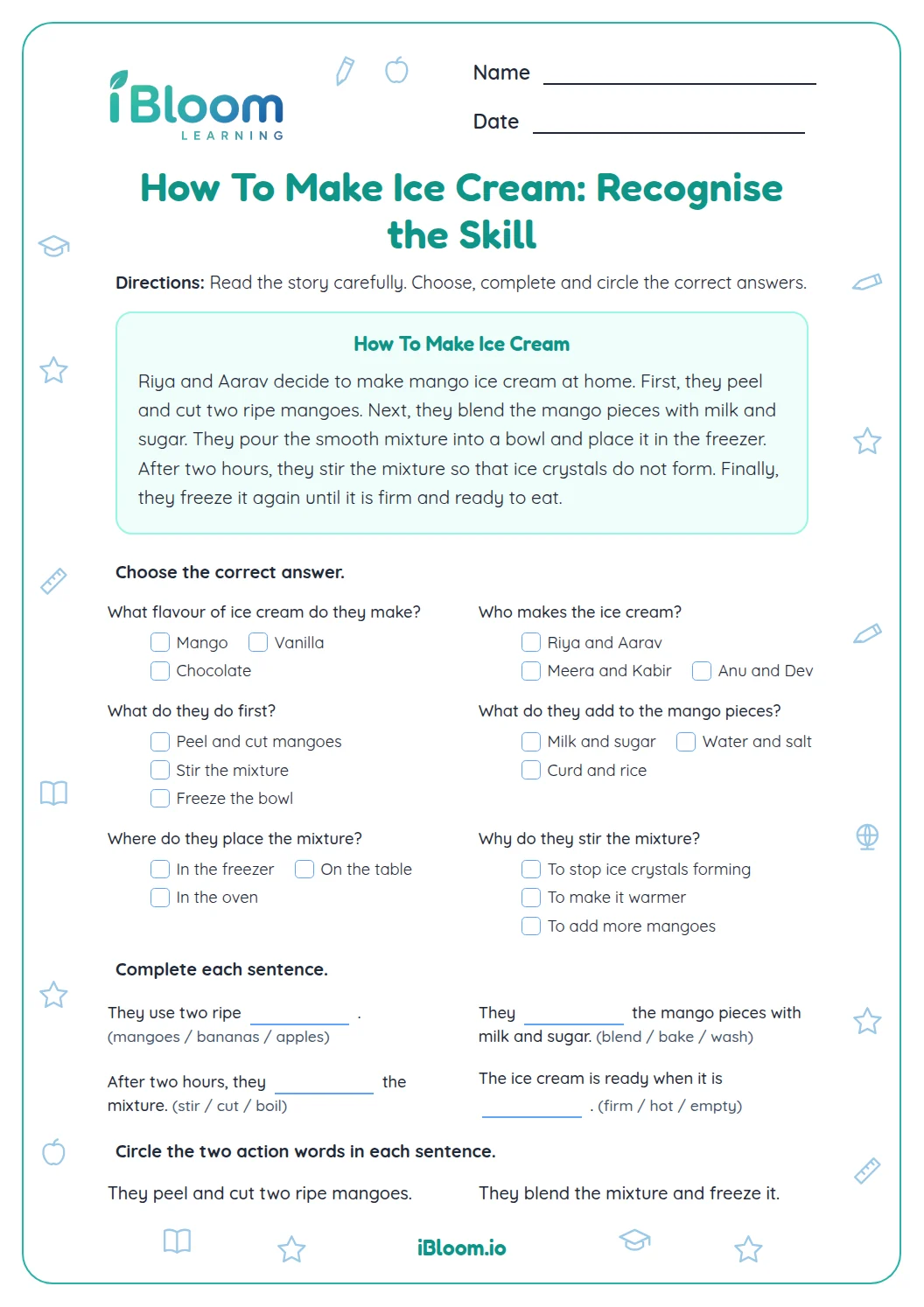 Childrens Stories: How To Make Ice Cream — Recognise the SkillRecognise the Skill for childrens stories: how to make ice cream in Class 3. Read the process story, then recognise its sequence, details, vocabulary and meaning.Class 3Free PDF preview
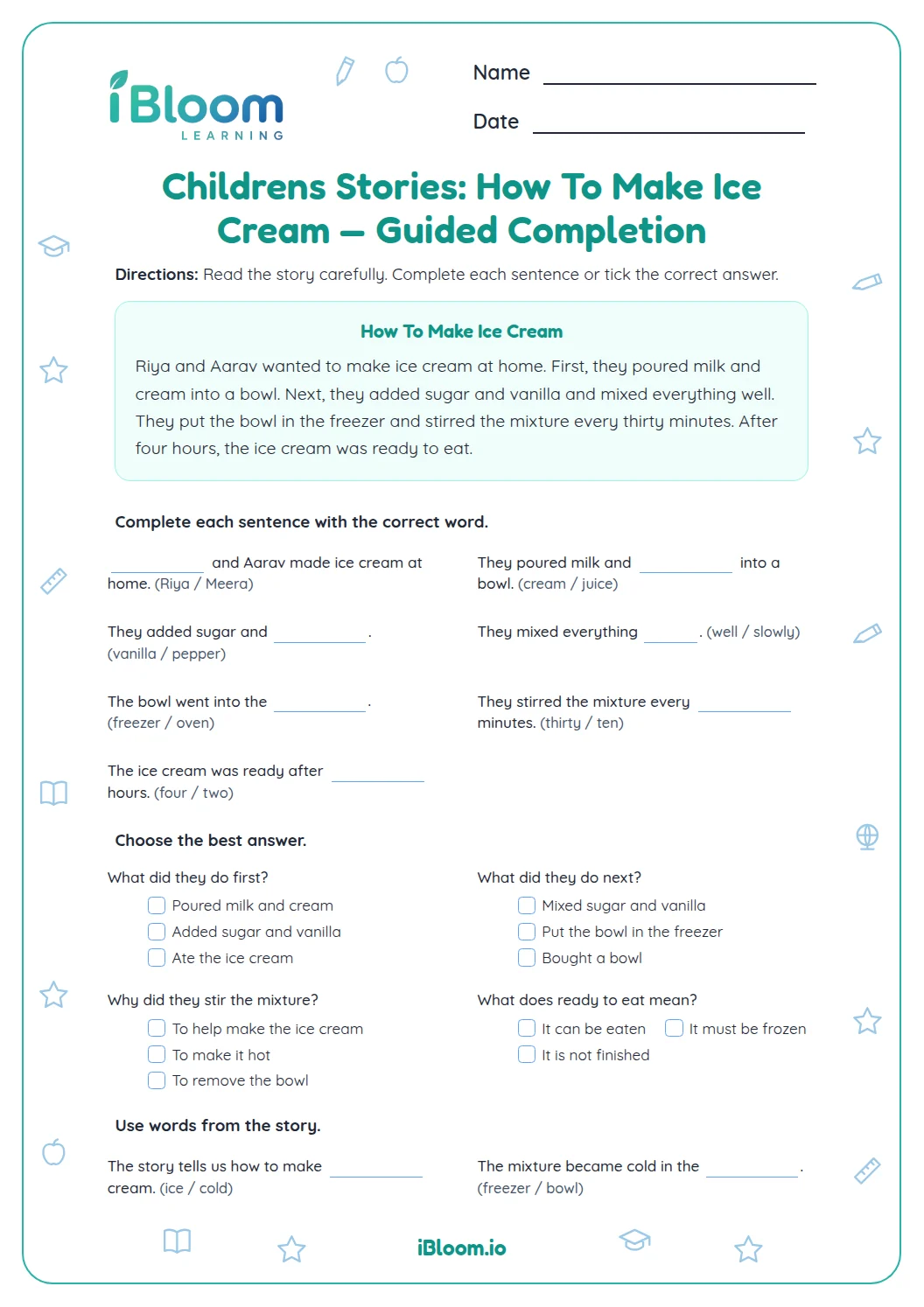 Childrens Stories: How To Make Ice Cream — Guided CompletionGuided Completion for childrens stories: how to make ice cream in Class 3. Read a short process story, then complete missing words and choose answers about the steps, details and vocabulary.Class 3Free PDF preview
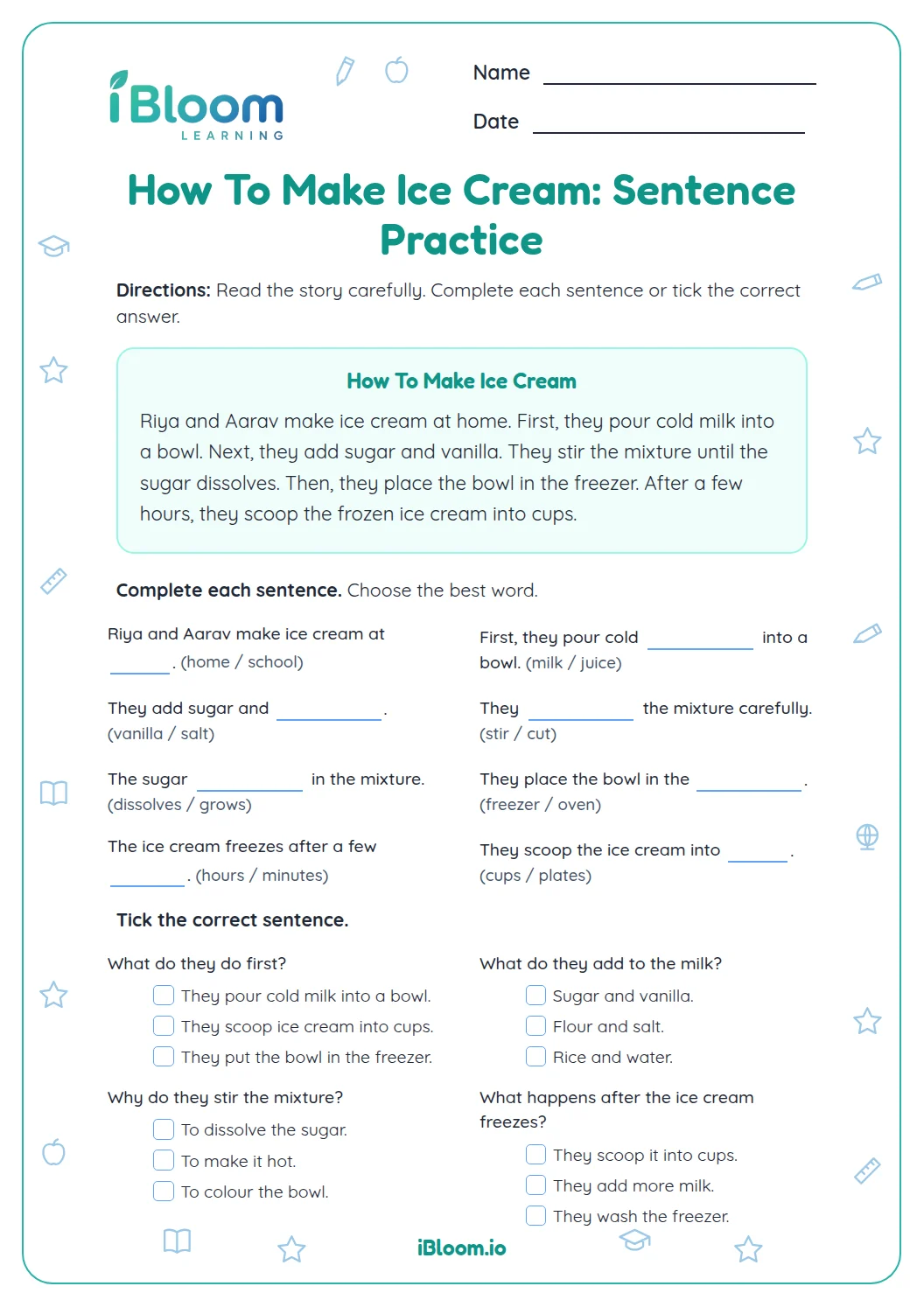 Childrens Stories: How To Make Ice Cream — Sentence PracticeSentence Practice for childrens stories: how to make ice cream in Class 3. Read a short process story, then complete and choose sentences about the steps and details.Class 3Free PDF preview
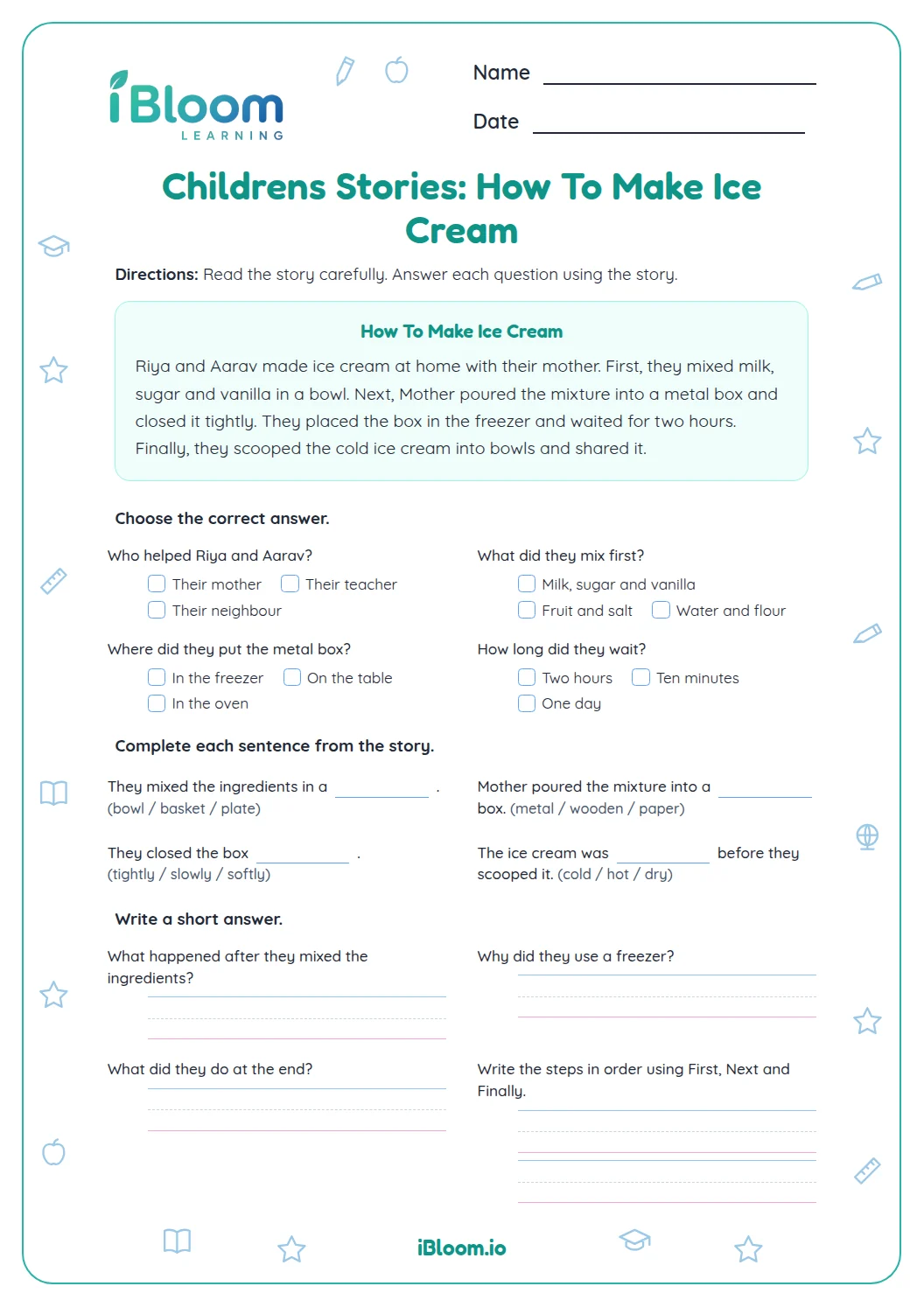 Childrens Stories: How To Make Ice Cream — Write and ApplyWrite and Apply for childrens stories: how to make ice cream in Class 3. Read a short process story, then apply it by answering sequence, detail, vocabulary and meaning questions.Class 3Free PDF preview
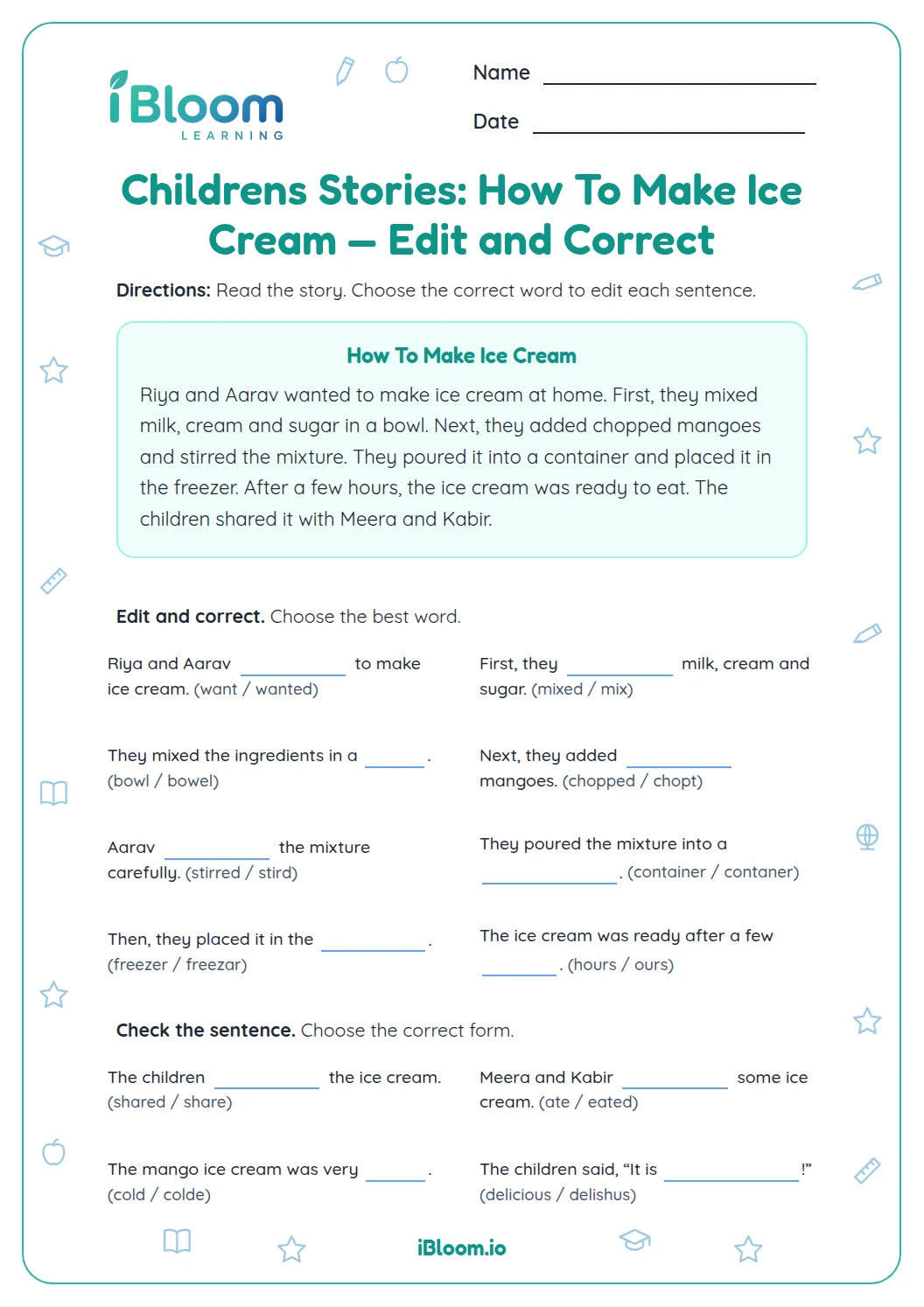 Childrens Stories: How To Make Ice Cream — Edit and CorrectEdit and Correct for childrens stories: how to make ice cream in Class 3. Read the ice-cream story, then edit each sentence by choosing the correct word or punctuation.Class 3Free PDF preview
 Childrens Stories: How To Make Ice Cream — Mixed Review and ChallengeMixed Review and Challenge for childrens stories: how to make ice cream in Class 3. Read a short ice-cream-making story, then answer mixed questions on order, details, vocabulary and meaning.Class 3Free PDF preview
Practice that builds confidence
What the story builds
These Class 3 reading comprehension worksheets use the children's story “How To Make Ice Cream” to help pupils follow a process, understand sequence, and pick out important details from an everyday topic.
The printable activities include story-based questions that encourage careful reading, vocabulary thinking, and clear written answers. Children practise noticing what happens first, next and last while connecting the text to a familiar real-life activity.
“How To Make Ice Cream” is useful for Class 3 because it reads like a simple process story. Children are not only reading for enjoyment; they are learning how actions are arranged in order. Words such as first, next, then, before and after help them track the method and understand why one step must come before another.

From reading to answering
The worksheets guide pupils from literal understanding to deeper comprehension. They may identify ingredients or actions mentioned in the passage, arrange events in the correct sequence, explain a word from context, or answer why a step is needed. This supports accuracy, complete sentence writing and evidence-based answers drawn from the story rather than guesswork.
Simple routine at home
Parents can begin by asking the child to read the story aloud once for flow and a second time with a pencil in hand. Ask, “What happened first?” and “Which sentence helped you know that?” After the worksheet, let the child retell the process in three or four steps. A quick oral retelling is especially helpful before writing answers, because it shows whether the sequence is clear.

Classroom uses for teachers
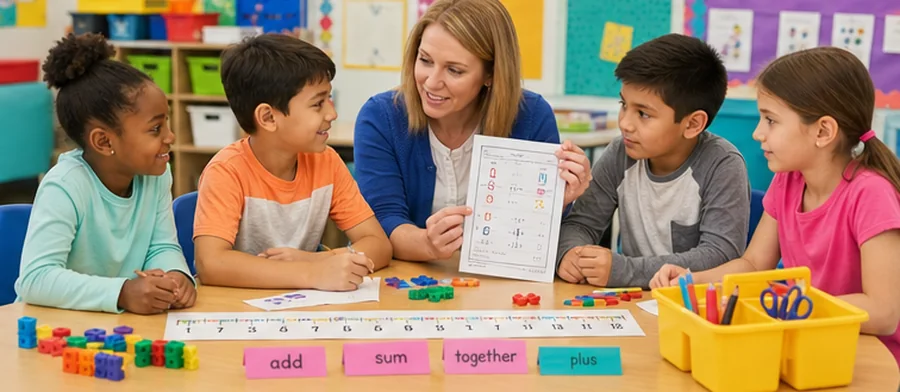
Teachers can use these printables for independent reading, paired discussion, small-group support or a comprehension lesson on procedural texts. The story also works well for a board activity: list the steps out of order and ask pupils to reorder them using clues from the passage. Stronger readers can extend by writing one extra safety or serving step in the same style.
Mistakes to watch for
Some children answer from personal experience of ice cream instead of the passage. Others copy a nearby sentence without checking whether it answers the question. A child-friendly strategy is: Read the question, find the clue, say the answer, then write it. Encourage pupils to underline clue words in the question, such as ingredient, first, why or after.
Free printable PDF download
Use this How To Make Ice Cream Class 3 reading comprehension worksheet page to preview the activity, print it, or download it as a PDF for quick practice. It works well for homework, homeschool lessons, tutoring, morning work, revision, and classroom centers.
Answers and answer key support
After the child completes the worksheet independently, parents and teachers can use the answer support or answer key information to check the work, review mistakes, and choose the next practice step.
Why iBloom worksheets help
The iBloom activities keep the focus on one clear Class 3 story, so children can practise comprehension without being overloaded. Questions move through detail, order, vocabulary and meaning, helping pupils see that reading comprehension is not memory work but careful thinking with the text.
Helpful answers
Frequently asked questions
What skills do these How To Make Ice Cream worksheets practise?
They practise reading a short children's story, identifying details, following the order of steps, understanding vocabulary from context and writing answers based on evidence in the passage.
Is this worksheet mainly a recipe activity or a reading activity?
It is a reading comprehension activity. The ice cream-making theme gives children a familiar process to follow, but the main aim is to understand the passage and answer questions accurately.
How can I help my child if they mix up the steps in the story?
Ask your child to mark order words such as first, next, then and after. Then have them retell the process orally in three or four steps before writing their answers.
Can Class 3 pupils complete these worksheets independently?
Many pupils can try them independently after reading the story carefully. Children who need support may benefit from reading the passage aloud with an adult first and discussing the sequence.
How can teachers use this page in a comprehension lesson?
Teachers can use it for individual practice, pair reading, small-group support or a sequencing activity where pupils reorder events from the story and justify each choice using the text.
Is this How To Make Ice Cream Class 3 reading comprehension worksheet free?
Yes. You can preview it for free and use the printable worksheet for home or classroom practice.
Can I download this How To Make Ice Cream Class 3 reading comprehension worksheet as a PDF?
Yes. Use the worksheet download option to save a printable PDF, or print the worksheet directly from the page.
Does this How To Make Ice Cream Class 3 reading comprehension worksheet include answers or an answer key?
When the activity has fixed answers, iBloom includes answer support so parents and teachers can check the completed worksheet.