Free printable practice
Animals Practice Activities
Printable Class 1 Science and EVS animal worksheets covering habitats, food, movement, body coverings, young ones, homes, needs, and classification.
Explore Animals
Free printable worksheet PDFs
Preview every available page, then download the free worksheet PDF for home, homeschool, tutoring, or classroom practice.
Preview the exact activity before downloading it.
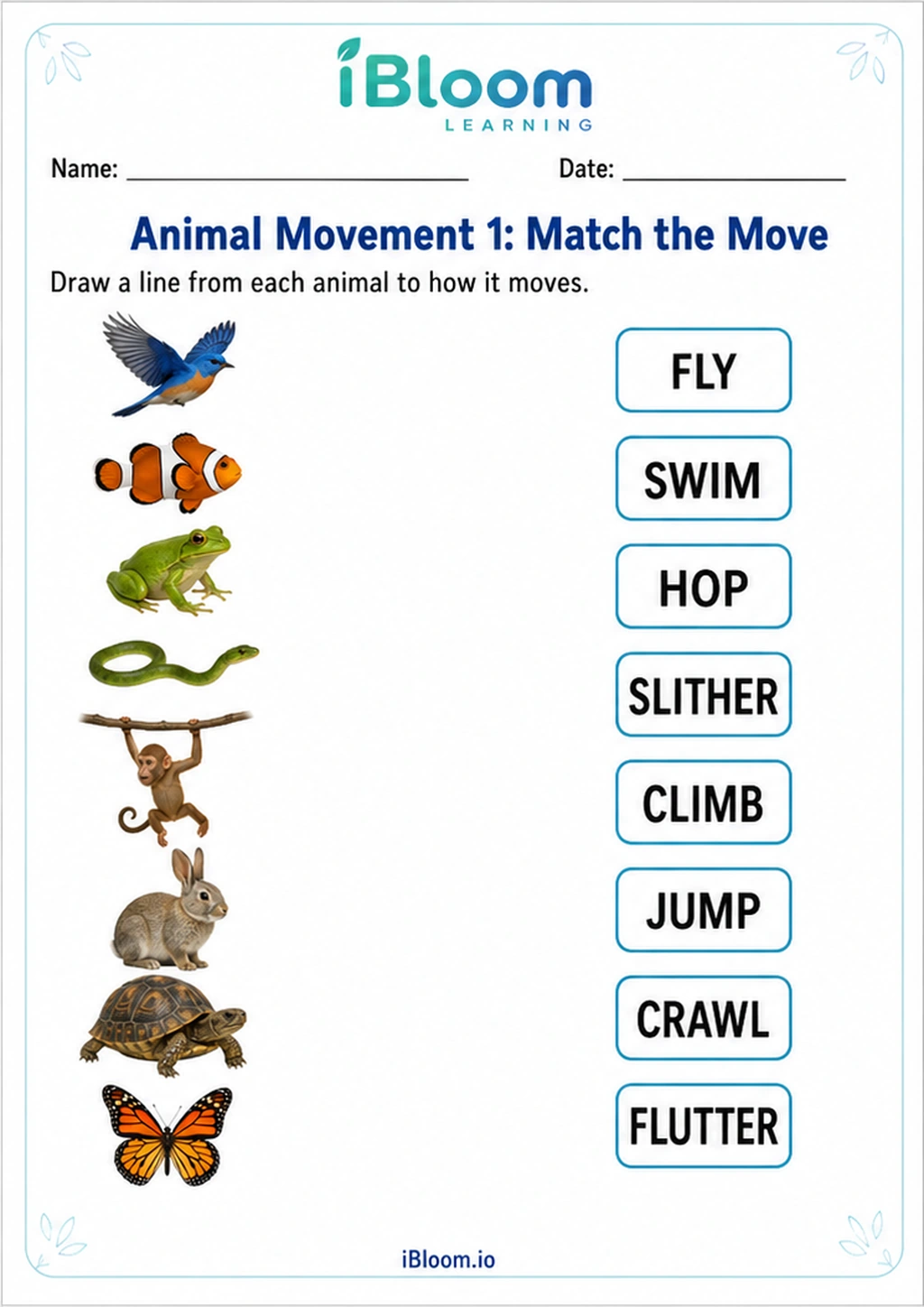 Animal Movement 1: Match the MoveClass 1 printable practice for Animal Movement.Class 1Free PDF preview
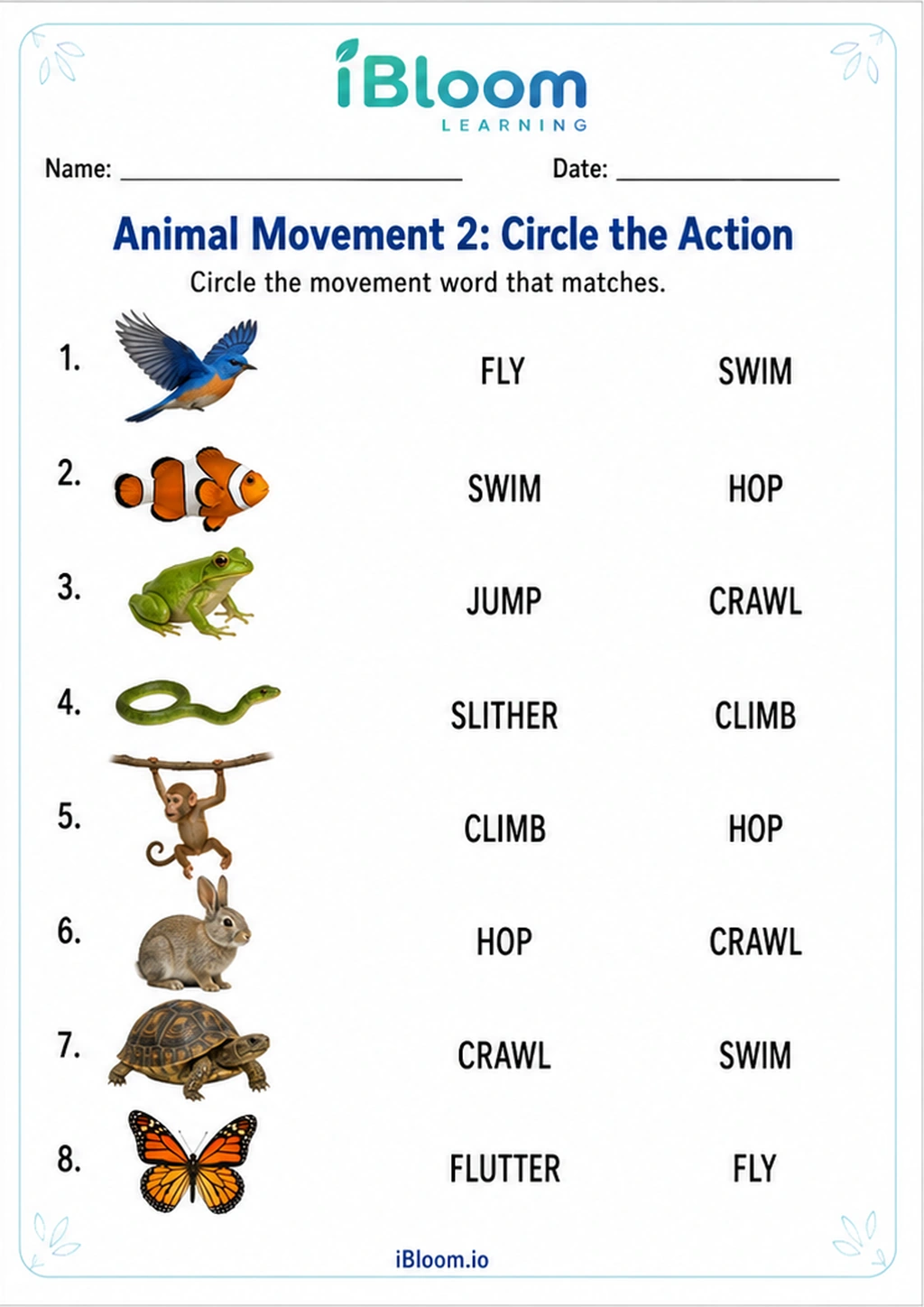 Animal Movement 2: Circle the ActionClass 1 printable practice for Animal Movement.Class 1Free PDF preview
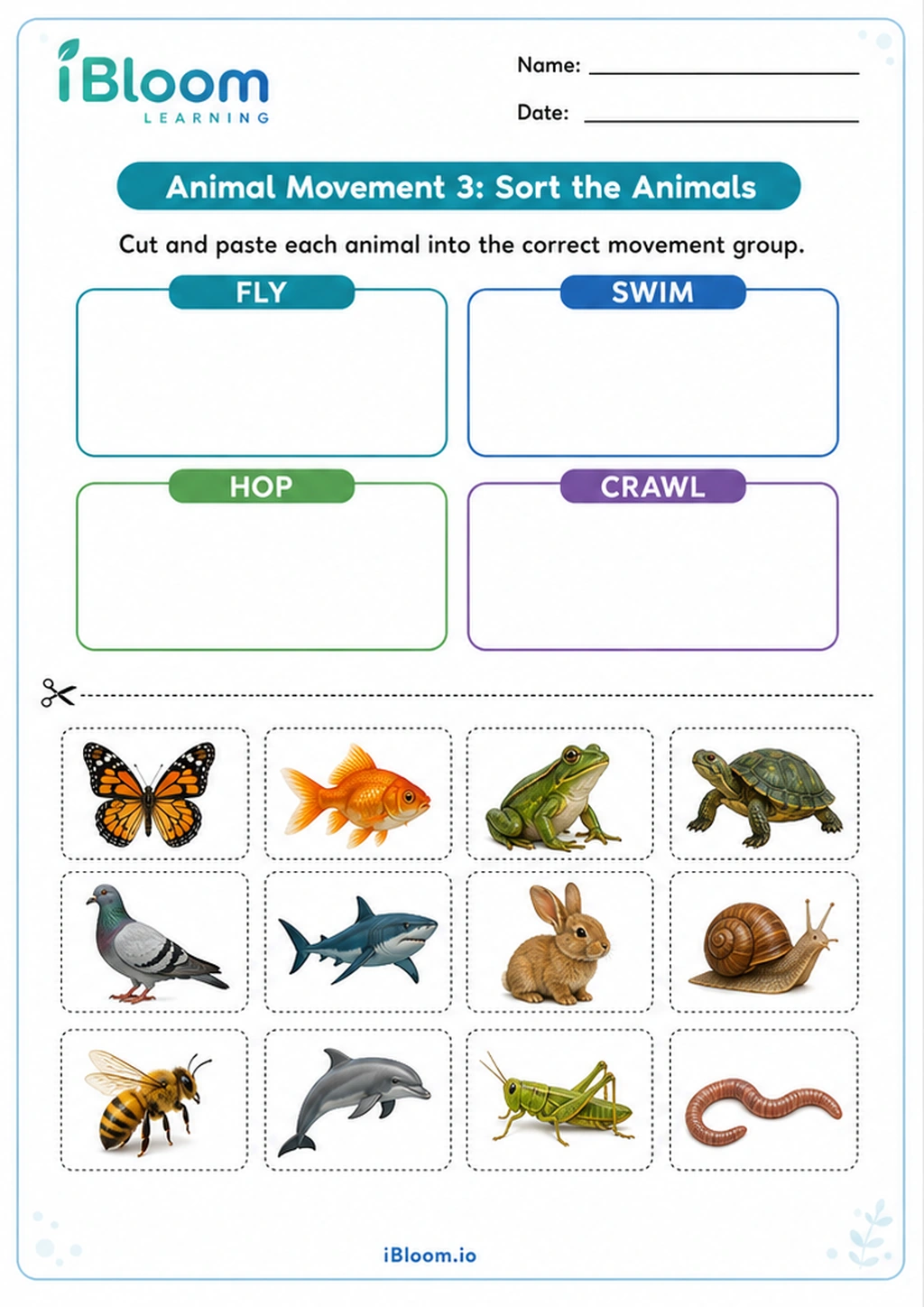 Animal Movement 3: Sort the AnimalsClass 1 printable practice for Animal Movement.Class 1Free PDF preview
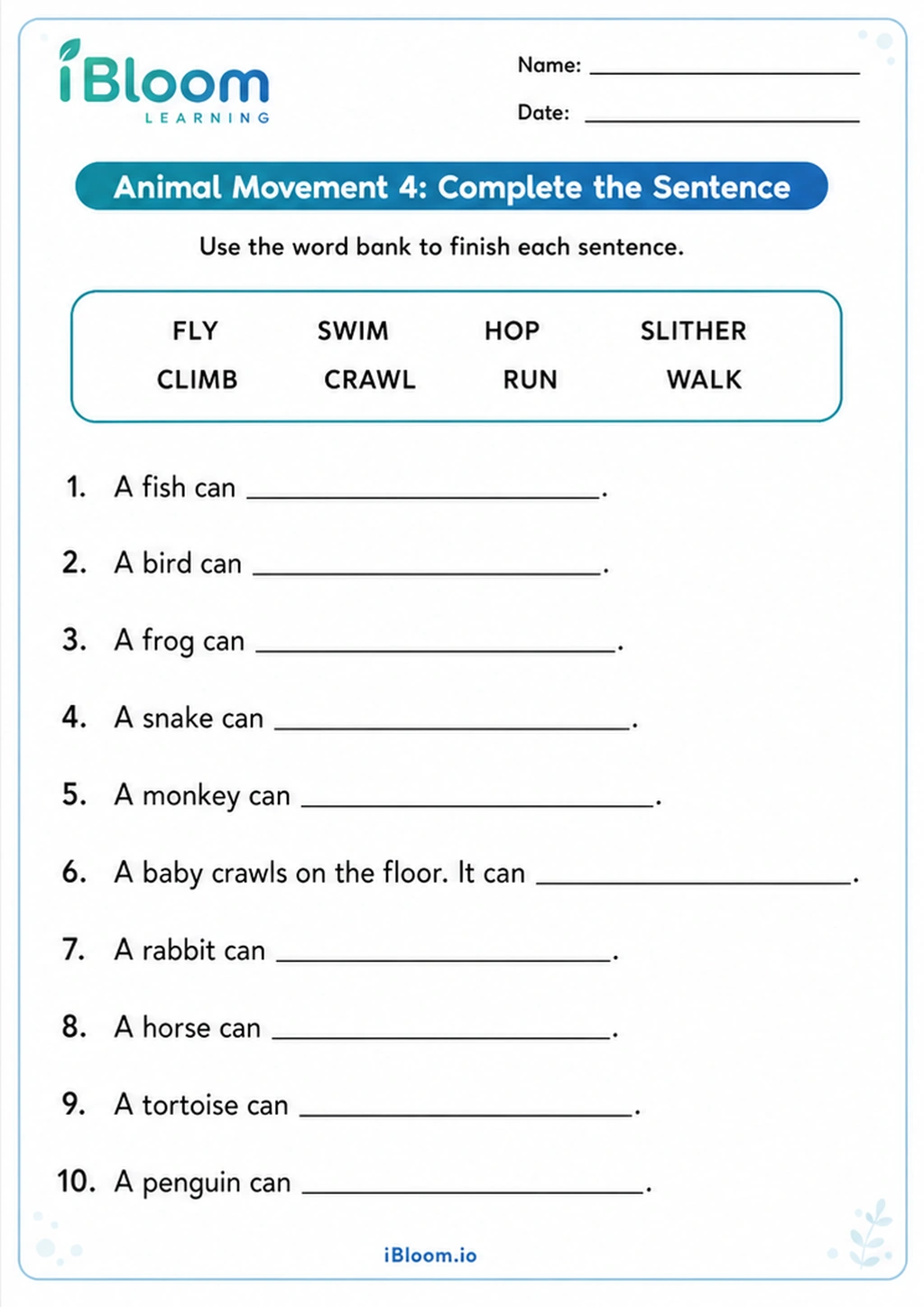 Animal Movement 4: Complete the SentenceClass 1 printable practice for Animal Movement.Class 1Free PDF preview
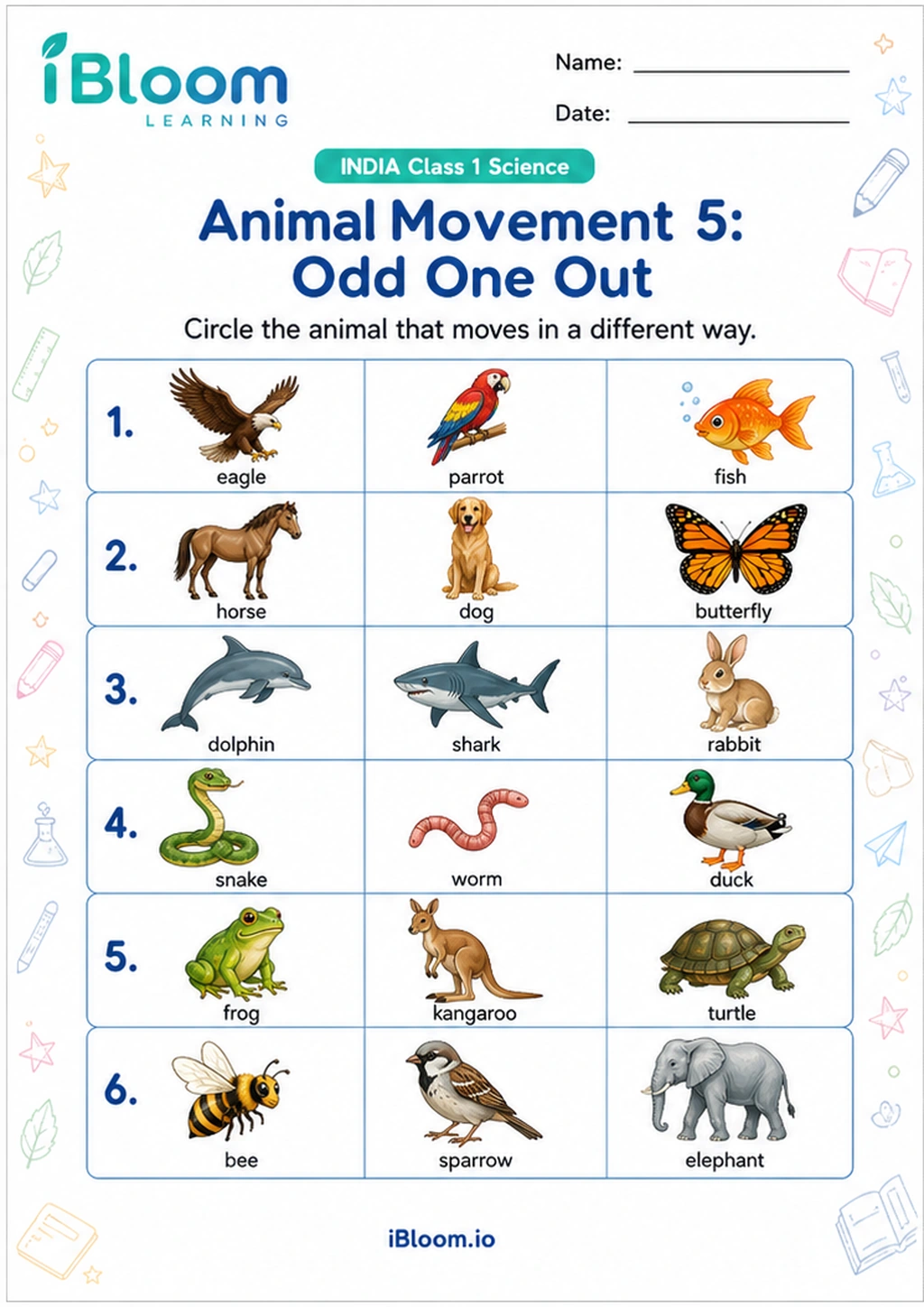 Animal Movement 5: Odd One OutClass 1 printable practice for Animal Movement.Class 1Free PDF preview
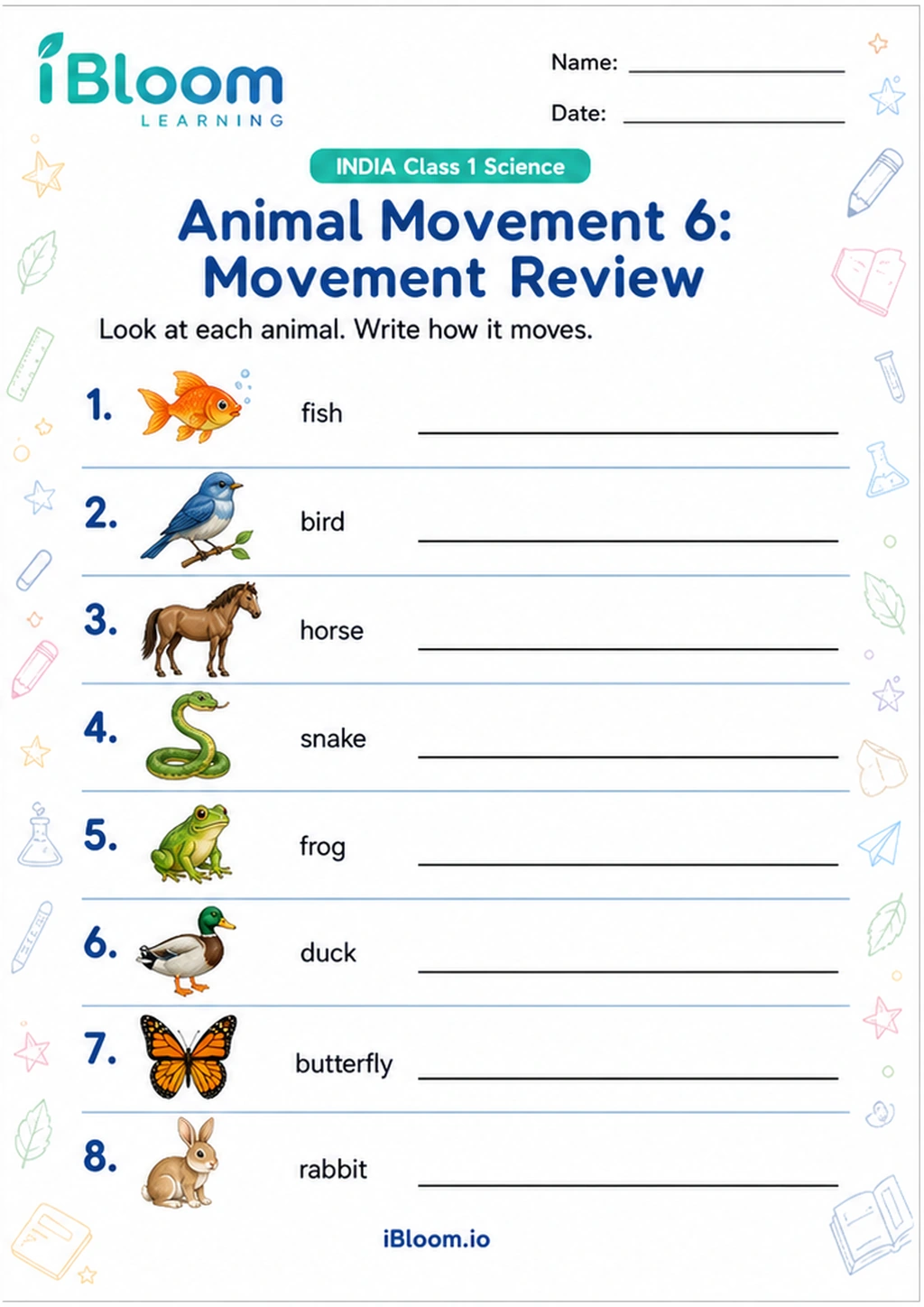 Animal Movement 6: Movement ReviewClass 1 printable practice for Animal Movement.Class 1Free PDF preview
Practice that builds confidence
What children learn about animals
These Class 1 Science and EVS animals practice activities help children observe how animals live, move, eat, grow, and care for their young. Learners build everyday vocabulary such as habitat, offspring, camouflage, covering, wings, legs, farm, forest, and ocean.
The printables include naming tasks, matching, sorting, circling, tracing, labelling, and simple picture-based questions. Children practise animal names, homes, needs, food habits, body parts, life cycles, adaptations, and similarities between parents and young ones.
This collection moves from familiar animal recognition to simple scientific grouping. Children identify animals by name, match animals to homes such as nest, burrow, kennel, shed, and water, and notice where animals live: ocean, forest, farm, and nearby surroundings. They also compare animals by movement, such as walking, flying, swimming, crawling, and hopping.

Building Class 1 EVS concepts step by step
Activities connect pictures with ideas children can see in daily life. A cow eats plants, a tiger eats meat, and some animals may eat both. A fish has scales and lives in water, a bird has wings and feathers, and a tortoise has a hard shell. Worksheets also introduce animal needs like food, water, air, shelter, and care, along with simple life-cycle ideas and animal offspring such as calf, chick, kitten, and puppy.
Parent routine for home practice
Choose one worksheet and one real-world talk. After a matching page, ask your child to name three animals seen at home, in a book, or on the road. Use prompts: “Where does it live?”, “How does it move?”, “What covers its body?”, and “What might it eat?” Keep a small animal word list so children can practise writing names like lion, goat, fish, hen, dog, and elephant without turning the task into rote copying.

Classroom uses for teachers
Teachers can use these pages for EVS warm-ups, picture reading, science corners, group sorting, or quick revision after a lesson on habitats, coverings, adaptations, and animal families. Cut-and-sort sheets work well for table groups: one group sorts by food, another by movement, and another by habitat. Naming worksheets also support early literacy because children connect spoken animal words with printed labels.

Common errors to watch for
Class 1 learners may confuse homes with habitats, such as saying “kennel” when the question asks “land or water”. They may think all animals with wings can fly, or that all baby animals look exactly like their parents. Camouflage can also be misunderstood as “changing colour” in every case, so use simple examples like an animal blending with leaves, sand, or water.
Free printable PDF download
Use this Class 1 animals worksheet page to preview the activity, print it, or download it as a PDF for quick practice. It works well for homework, homeschool lessons, tutoring, morning work, revision, and classroom centers.
Answers and answer key support
After the child completes the worksheet independently, parents and teachers can use the answer support or answer key information to check the work, review mistakes, and choose the next practice step.
Why iBloom worksheets help
The pages use clear pictures, limited writing load, and repeated classification practice so children can reason from visible features. A child-friendly strategy is: look closely, say the animal name, check its body, think where it lives, then choose the answer. This helps children move beyond guessing and explain their choices in simple words.
Helpful answers
Frequently asked questions
What animal topics are covered in these Class 1 worksheets?
They cover animal names, habitats, homes, movement, food habits, body coverings, legs and wings, animal needs, young ones, simple life cycles, camouflage, adaptations, and sorting animals into groups.
Are these worksheets suitable for EVS as well as Science?
Yes. The pages are written for Class 1 Science and EVS, using everyday examples children can observe at home, school, on farms, in forests, and in water habitats.
How can my child practise animal classification with these printables?
Children can sort animals by where they live, what they eat, how they move, what covers their body, or whether they are farm, forest, or ocean animals.
Do the worksheets include writing practice for animal names?
Yes. Some activities ask children to write, trace, choose, or label animal names, helping them connect EVS learning with early reading and spelling.
What common mistakes should I correct gently?
Watch for mixing up animal homes and habitats, assuming every winged animal flies, confusing plant eaters with meat eaters, and thinking all young animals look exactly like adult animals.
Is this Class 1 animals worksheet free?
Yes. You can preview it for free and use the printable worksheet for home or classroom practice.
Can I download this Class 1 animals worksheet as a PDF?
Yes. Use the worksheet download option to save a printable PDF, or print the worksheet directly from the page.
Does this Class 1 animals worksheet include answers or an answer key?
When the activity has fixed answers, iBloom includes answer support so parents and teachers can check the completed worksheet.