Free printable practice
Movement Practice Activities
Class 1 Science and EVS worksheets that help children identify and describe how animals move using pictures, action words and simple sorting tasks.
Free printable worksheet PDFs
Preview every available page, then download the free worksheet PDF for home, homeschool, tutoring, or classroom practice.
Preview the exact activity before downloading it.
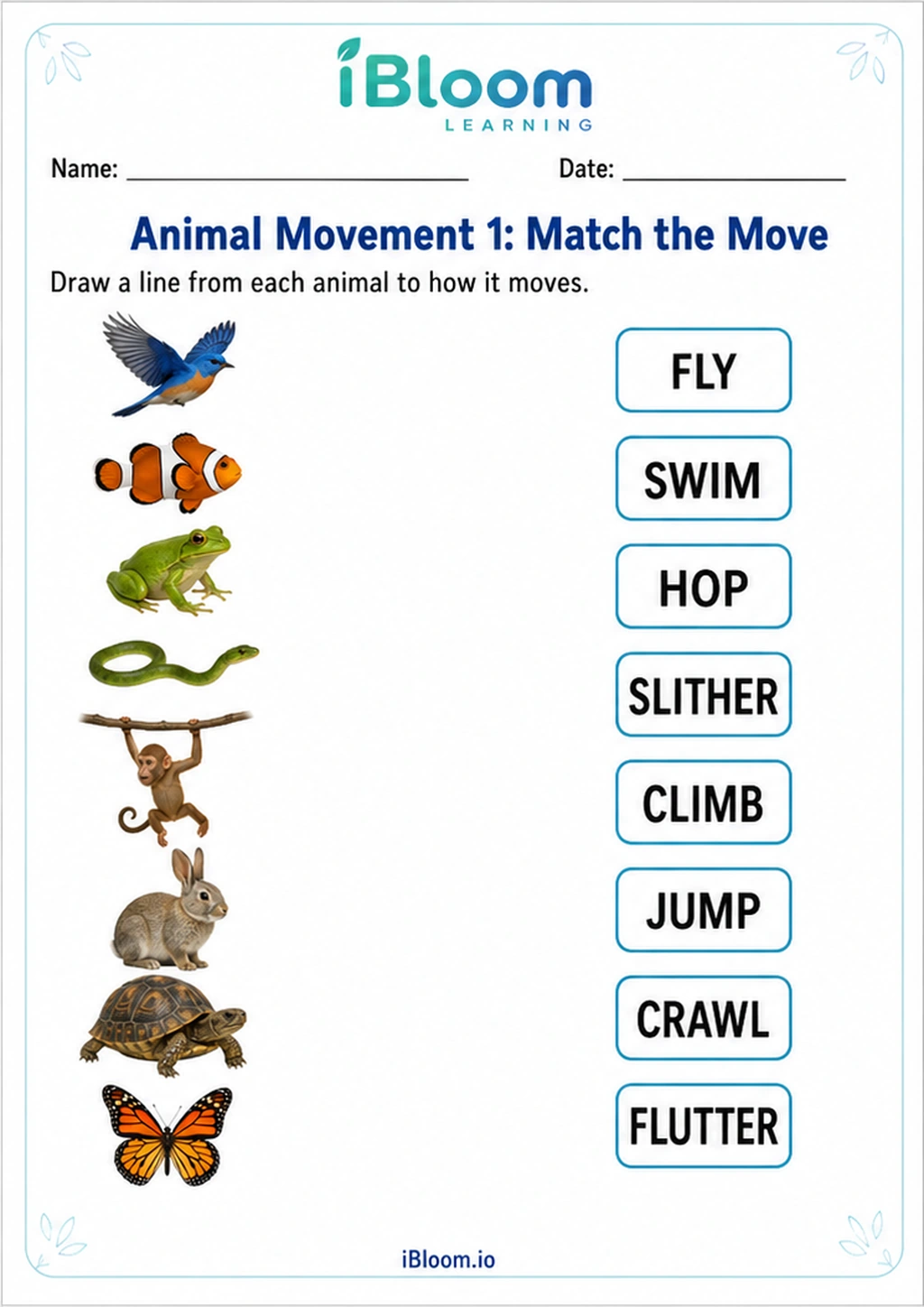 Animal Movement 1: Match the MoveClass 1 printable practice for Animal Movement.Class 1Free PDF preview
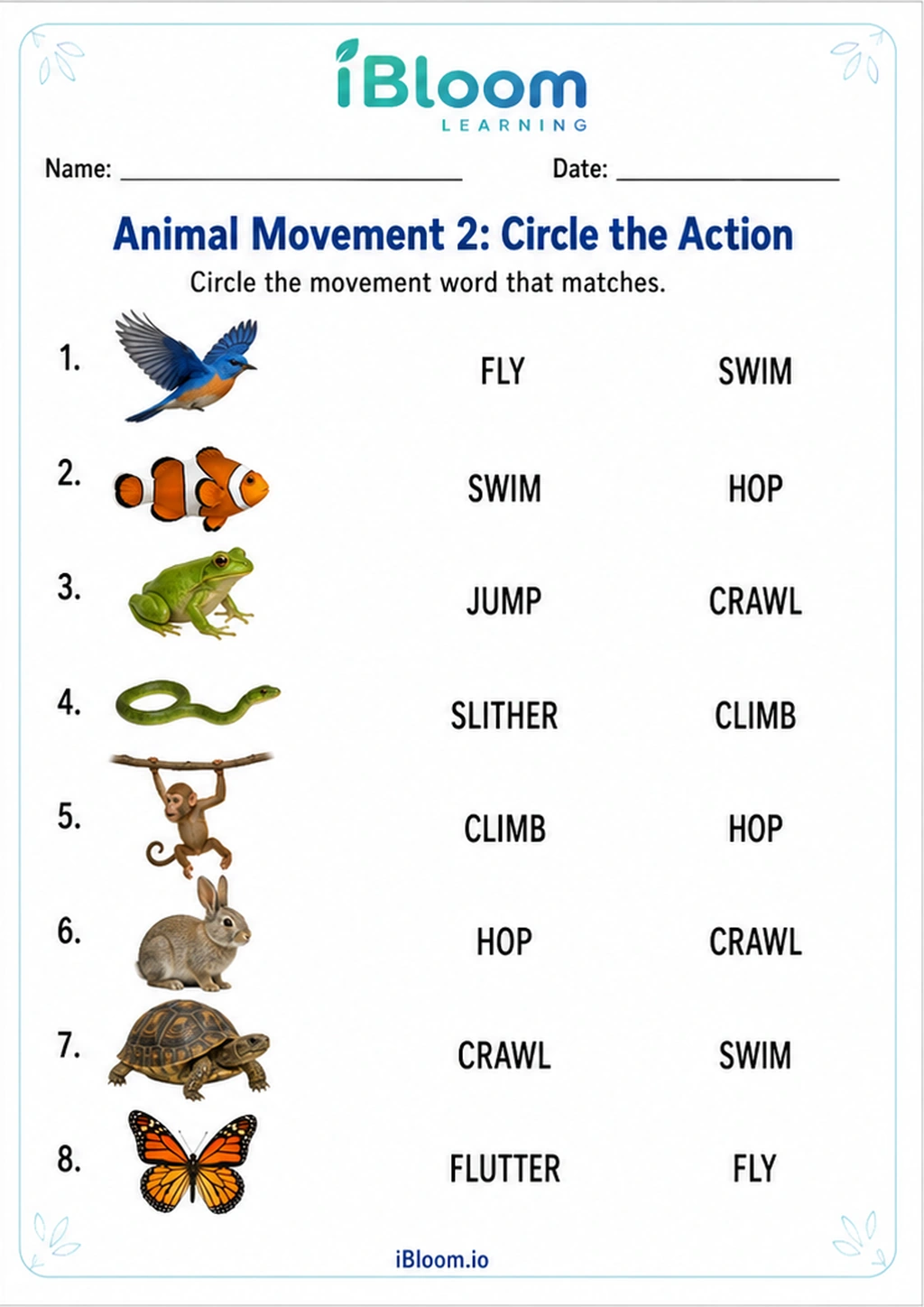 Animal Movement 2: Circle the ActionClass 1 printable practice for Animal Movement.Class 1Free PDF preview
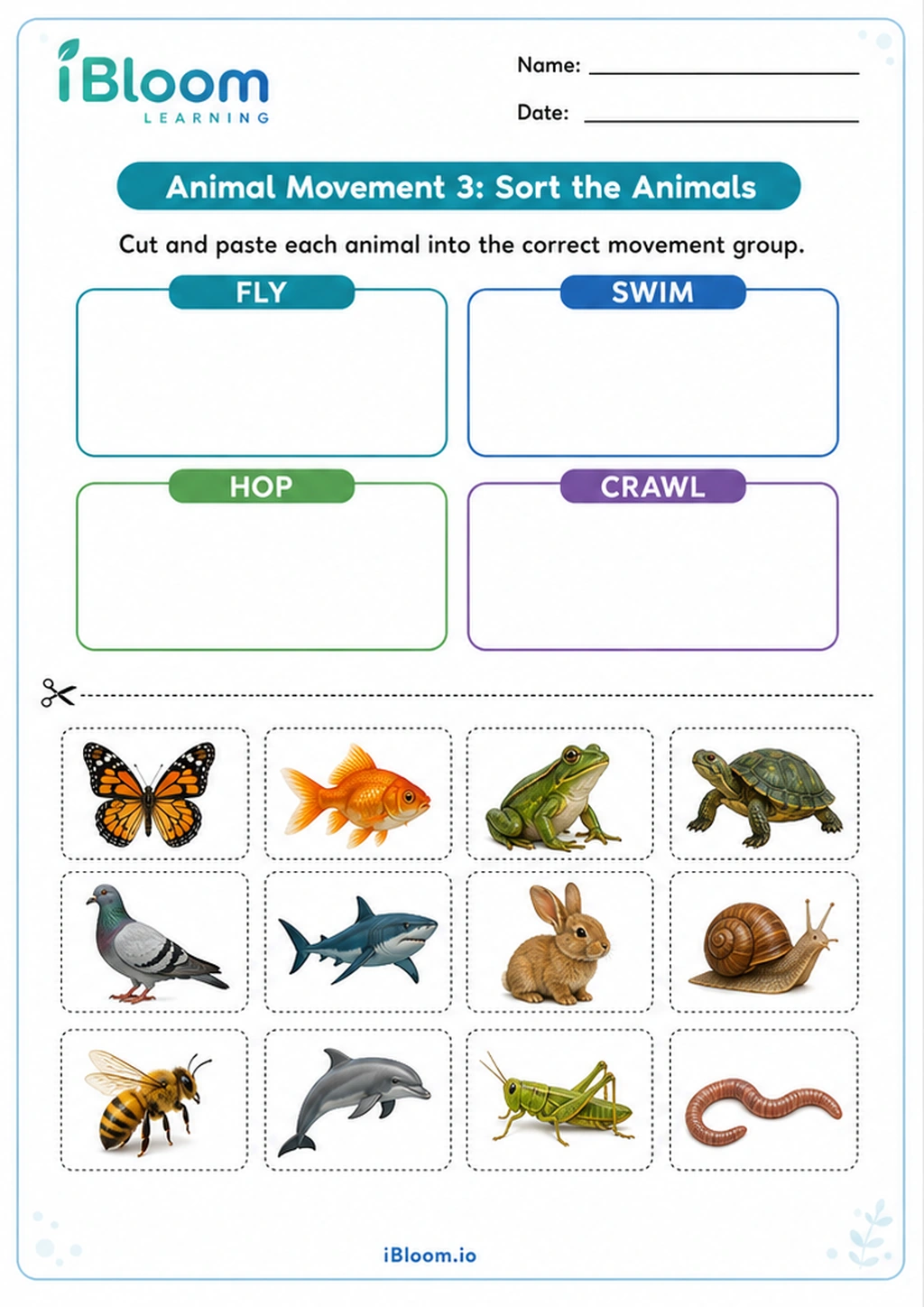 Animal Movement 3: Sort the AnimalsClass 1 printable practice for Animal Movement.Class 1Free PDF preview
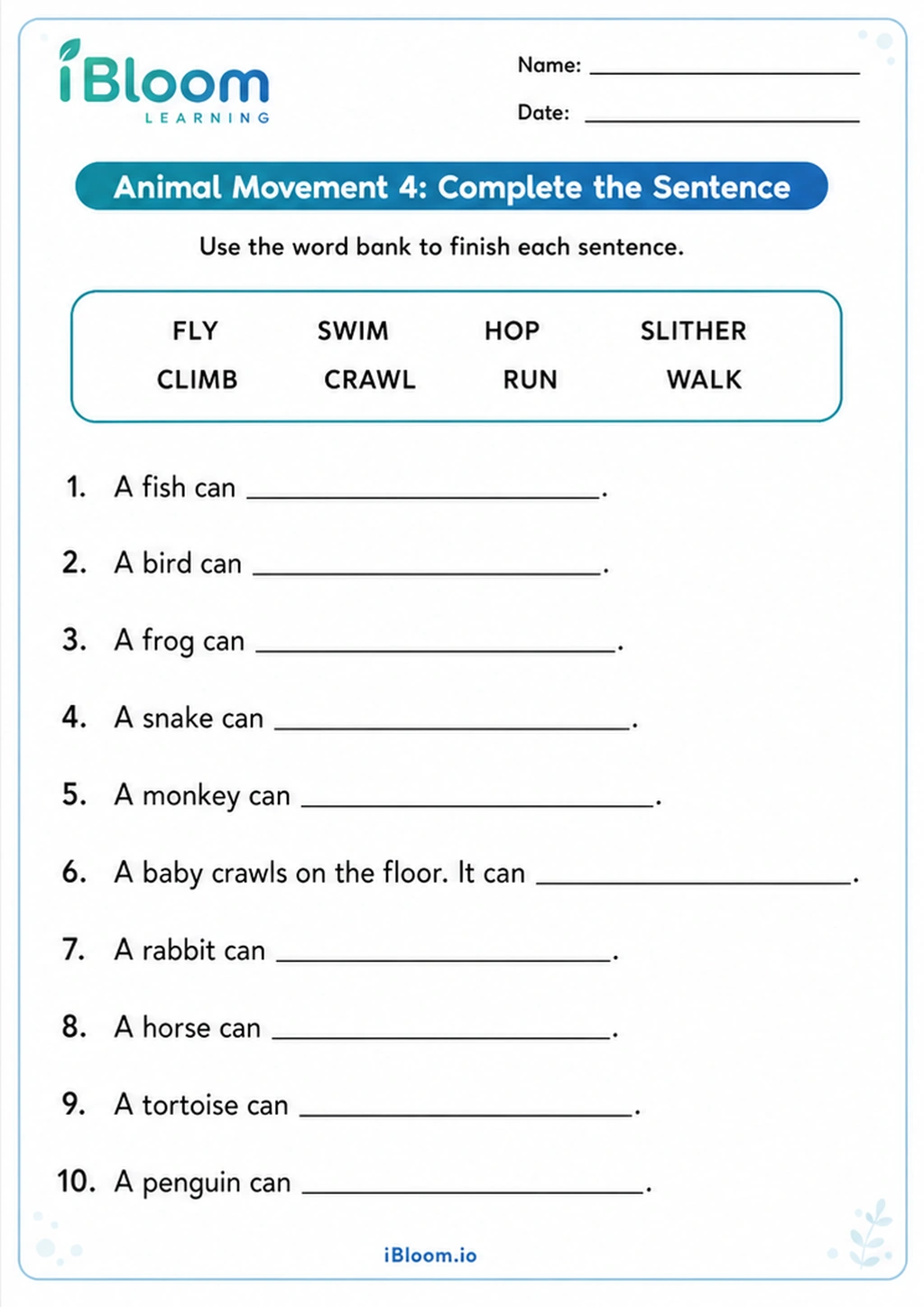 Animal Movement 4: Complete the SentenceClass 1 printable practice for Animal Movement.Class 1Free PDF preview
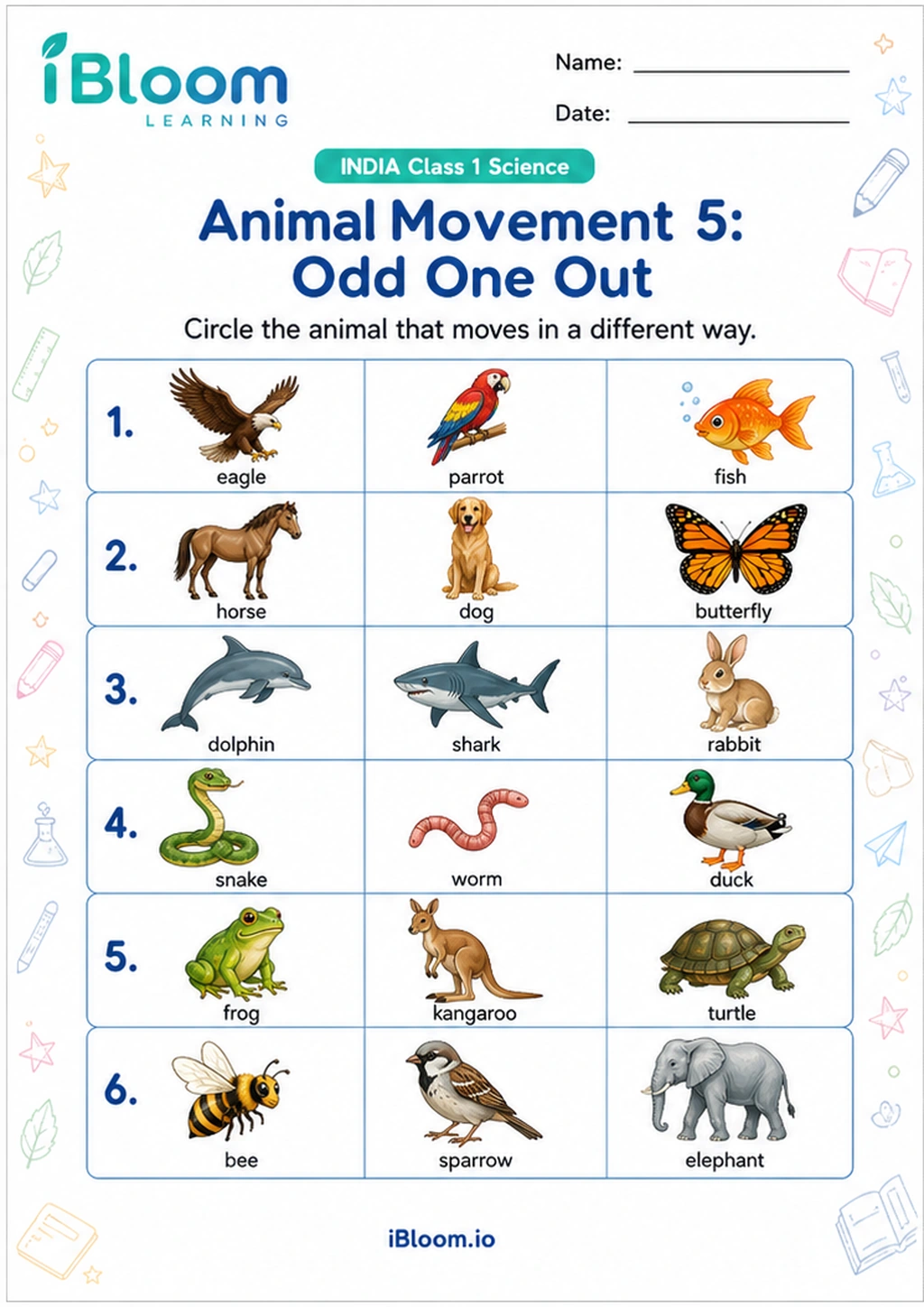 Animal Movement 5: Odd One OutClass 1 printable practice for Animal Movement.Class 1Free PDF preview
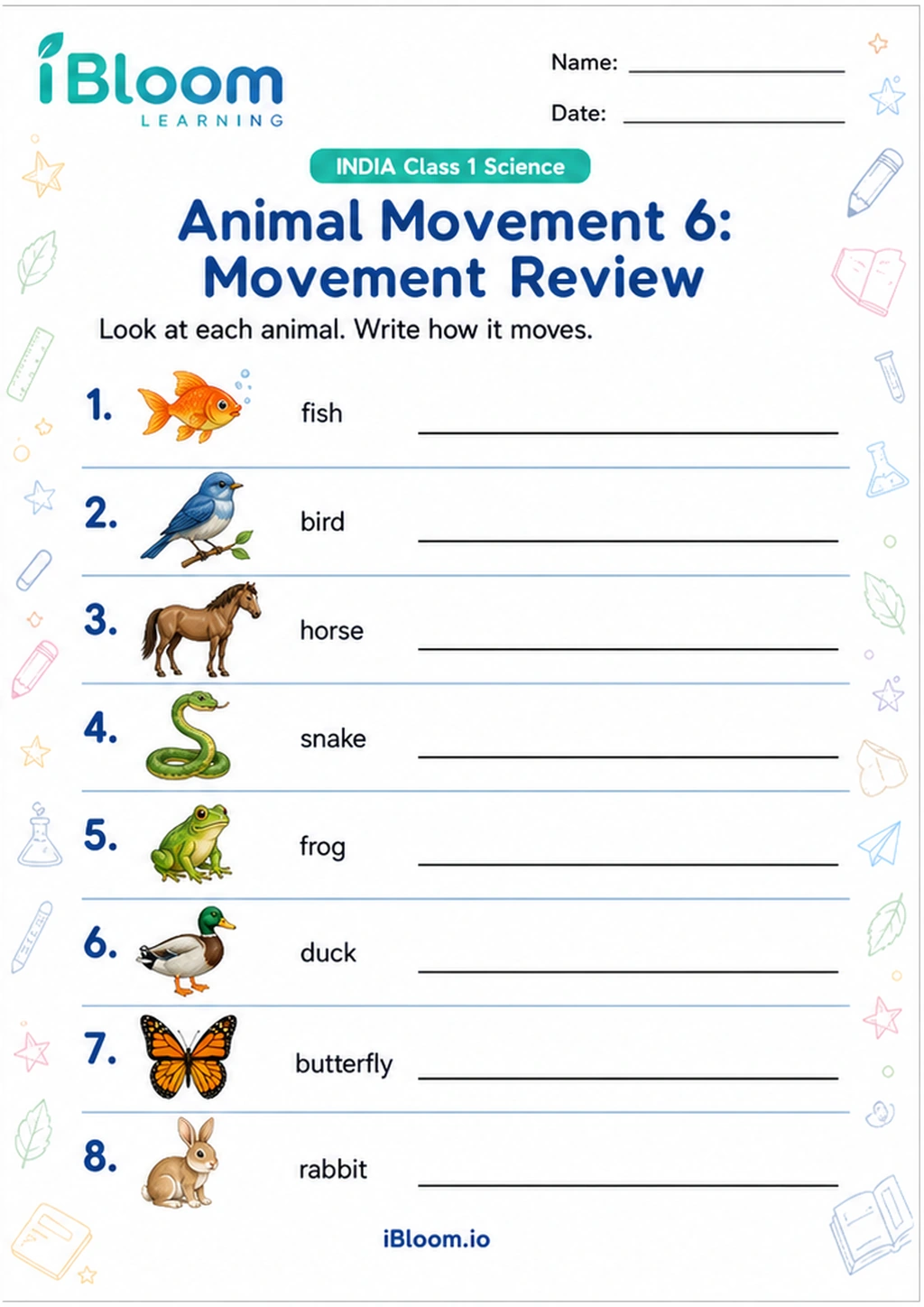 Animal Movement 6: Movement ReviewClass 1 printable practice for Animal Movement.Class 1Free PDF preview
Practice that builds confidence
What children learn
These Class 1 Science and EVS movement practice activities help children notice how different animals move. Learners connect animals with actions such as walking, running, hopping, crawling, flying, swimming, slithering and climbing.
The printable worksheets include picture-based matching, circle-and-sort tasks, action word practice and simple observation prompts. They are designed for young readers, so children can use visual clues while building animal vocabulary and early classification skills.
Animal movement is an easy, lively way to introduce classification in Class 1 EVS. Children learn that animals use body parts differently: birds fly with wings, fish swim with fins, snakes slither, frogs hop, and cows walk. The focus is not on memorising long facts, but on observing a picture, naming the animal, and choosing the best movement word.

How the practice progresses
The activities move from familiar animals to simple comparison. A child may first match a bird to “fly”, a fish to “swim”, or a rabbit to “hop”. Later tasks ask learners to sort animals into groups, complete sentences such as “A snake can ___”, or pick the odd one out when one animal moves differently from the others. This builds vocabulary as well as careful looking.
Parent routine for home
At home, use one page with a short talk before writing. Ask, “How does this animal go from one place to another?” Let your child act it out—flap, hop, crawl or swim with hands—then complete the worksheet. After finishing, choose two animals from the page and say one full sentence for each: “The duck can swim” or “The monkey can climb.”

Classroom uses for teachers
Teachers can use these printables for EVS practice, picture reading, morning work, or small-group revision. They also work well in activity corners: one group matches animal cards, another completes the worksheet, and a third acts out movement words. The pages support speaking and listening because children can explain why they chose a movement.

Common errors to watch for
Some children may say every bird “flies”, even when discussing a hen or duck in a picture context. Others may confuse crawling and slithering, or choose where an animal lives instead of how it moves. Prompt with body clues: “Does it have legs?”, “Does it have wings?”, “Is it moving in water?”
Free printable PDF download
Use this Class 1 animal movement worksheet page to preview the activity, print it, or download it as a PDF for quick practice. It works well for homework, homeschool lessons, tutoring, morning work, revision, and classroom centers.
Answers and answer key support
After the child completes the worksheet independently, parents and teachers can use the answer support or answer key information to check the work, review mistakes, and choose the next practice step.
Why iBloom worksheets help
The worksheets keep the skill visual, concrete and age-appropriate. Clear pictures, repeated action words and simple response formats help Class 1 children practise independently while still encouraging discussion. A child-friendly strategy is: look at the body, think of the action, then say the sentence before marking the answer.
Helpful answers
Frequently asked questions
What animal movements are covered in these Class 1 worksheets?
The worksheets practise common movement words such as walk, run, hop, crawl, fly, swim, slither and climb using familiar animal pictures.
Are these worksheets suitable for children who are still learning to read?
Yes. The activities use clear pictures and simple action words, so children can rely on visual clues while gradually building reading confidence.
How can I teach the difference between crawling and slithering?
Use body clues. Animals with legs, such as lizards or ants, may crawl, while a snake moves by slithering without legs. Acting out both movements can help children remember.
Can these pages be used for EVS speaking practice?
Yes. After each answer, ask the child to say a full sentence, such as “A fish can swim” or “A frog can hop.” This links observation with oral language.
What should I do if my child gives the animal’s home instead of its movement?
Gently redirect with a question like, “That tells me where it lives. How does it move?” Then point to body parts such as wings, legs, fins or the long body of a snake.
Is this Class 1 animal movement worksheet free?
Yes. You can preview it for free and use the printable worksheet for home or classroom practice.
Can I download this Class 1 animal movement worksheet as a PDF?
Yes. Use the worksheet download option to save a printable PDF, or print the worksheet directly from the page.
Does this Class 1 animal movement worksheet include answers or an answer key?
When the activity has fixed answers, iBloom includes answer support so parents and teachers can check the completed worksheet.