Free printable practice
Earth Sun Moon Practice Activities
Class 1 Science and EVS worksheets introducing the Sun, Moon, Earth, day and night, seasons, and simple space words.
Explore Earth Sun Moon
Free printable worksheet PDFs
Preview every available page, then download the free worksheet PDF for home, homeschool, tutoring, or classroom practice.
Preview the exact activity before downloading it.
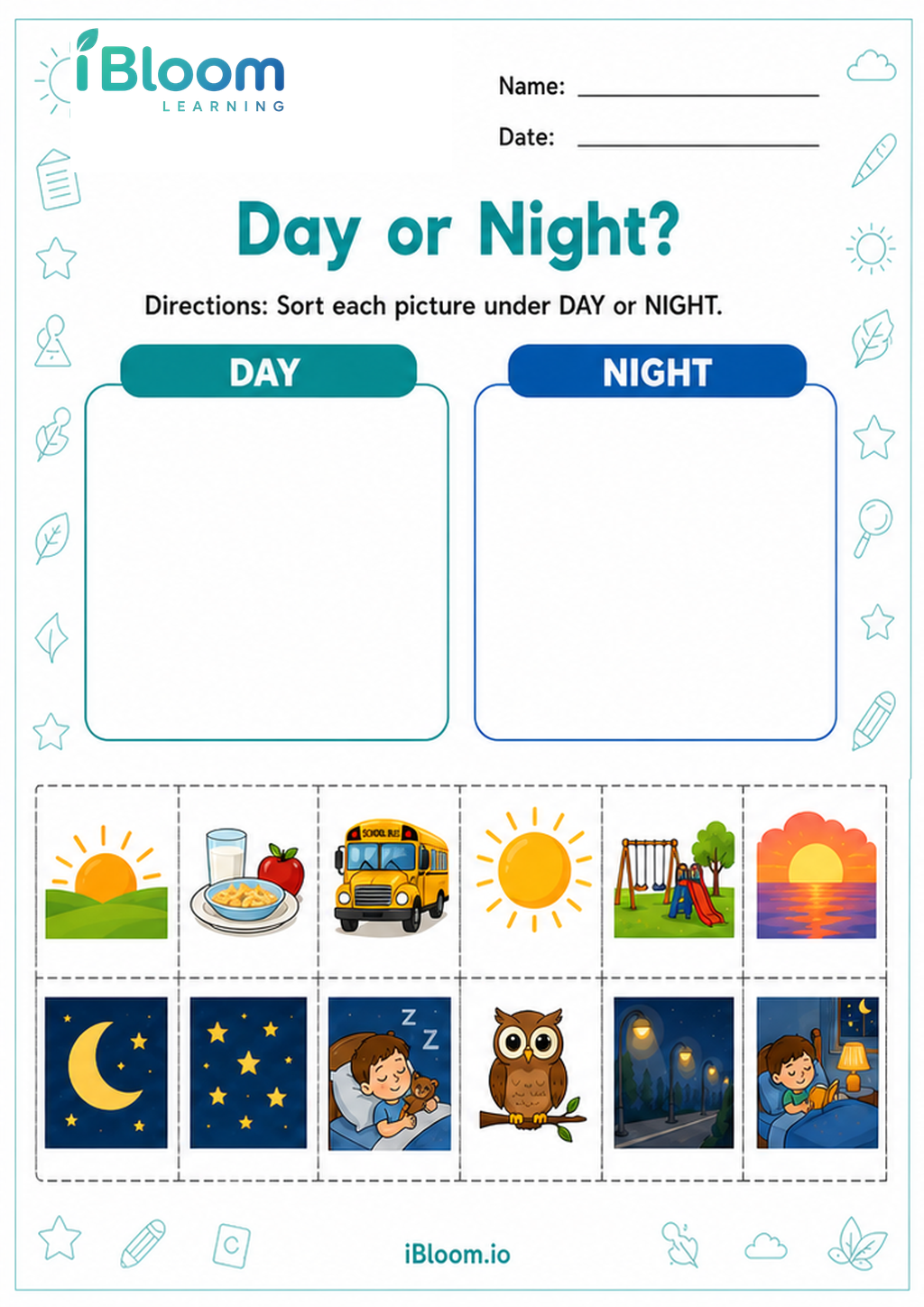 Day or Night?Class 1 printable practice for Day and Night.Class 1Free PDF preview
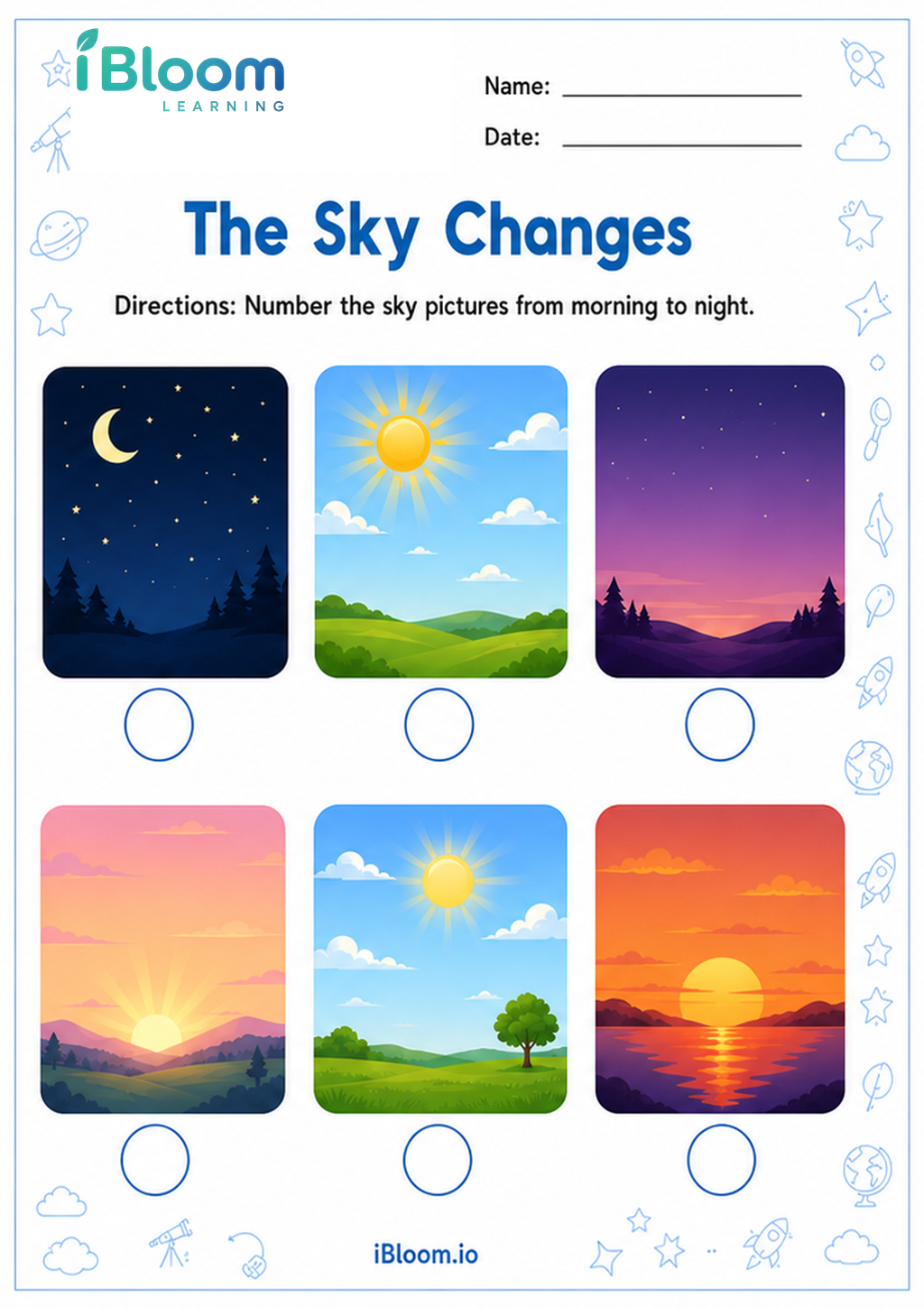 The Sky ChangesClass 1 printable practice for Day and Night.Class 1Free PDF preview
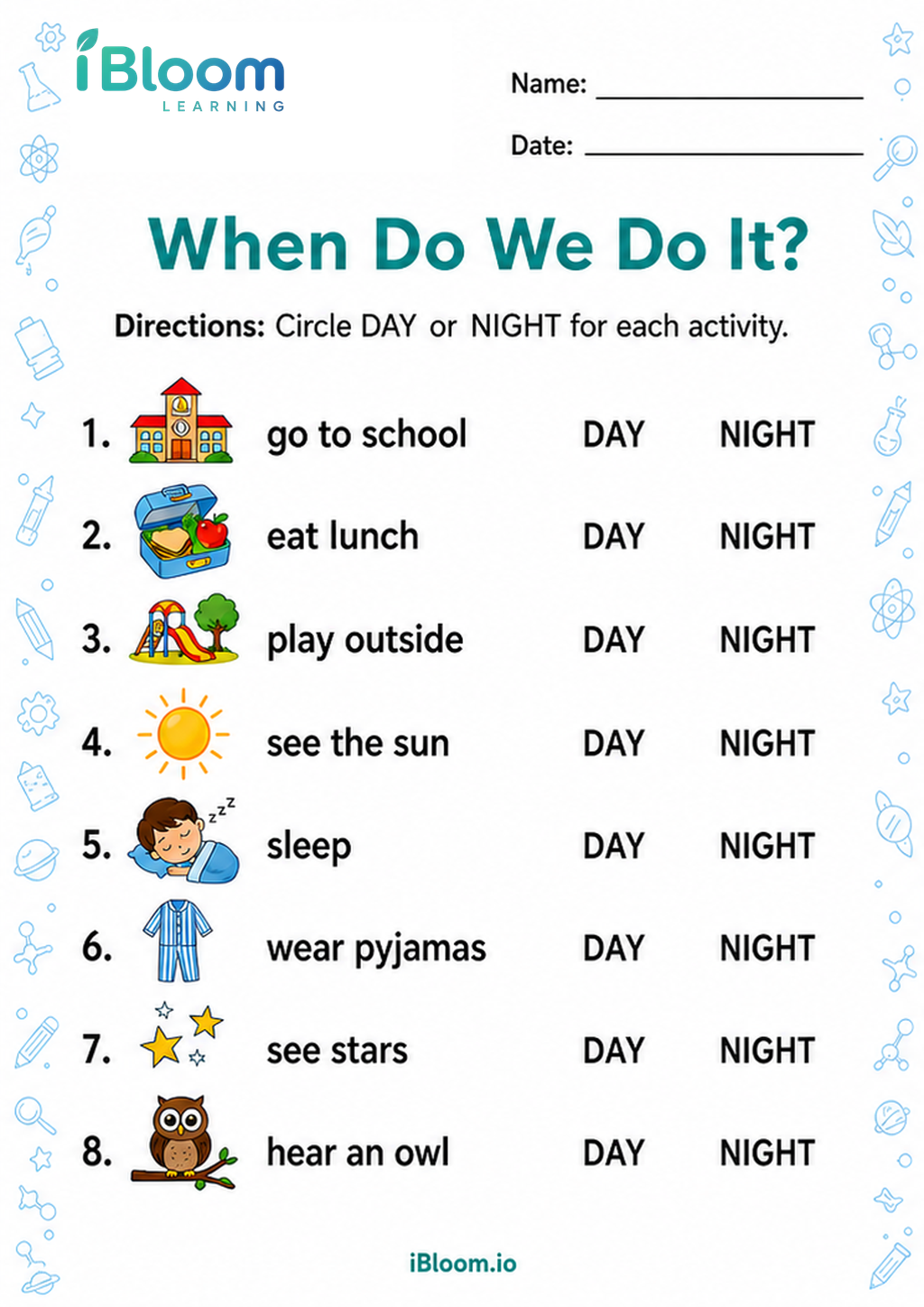 When Do We Do It?Class 1 printable practice for Day and Night.Class 1Free PDF preview
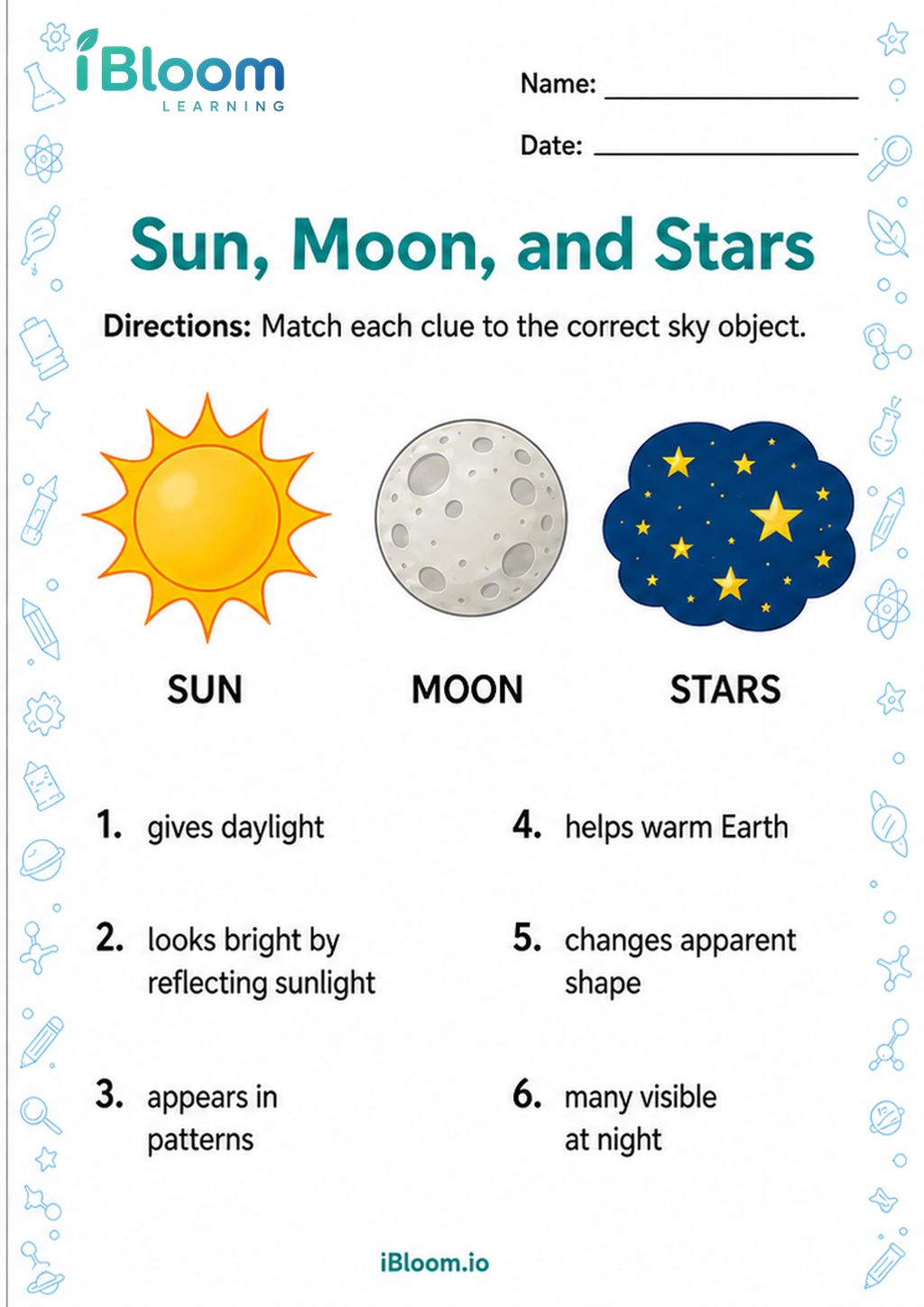 Sun, Moon, and StarsClass 1 printable practice for Day and Night.Class 1Free PDF preview
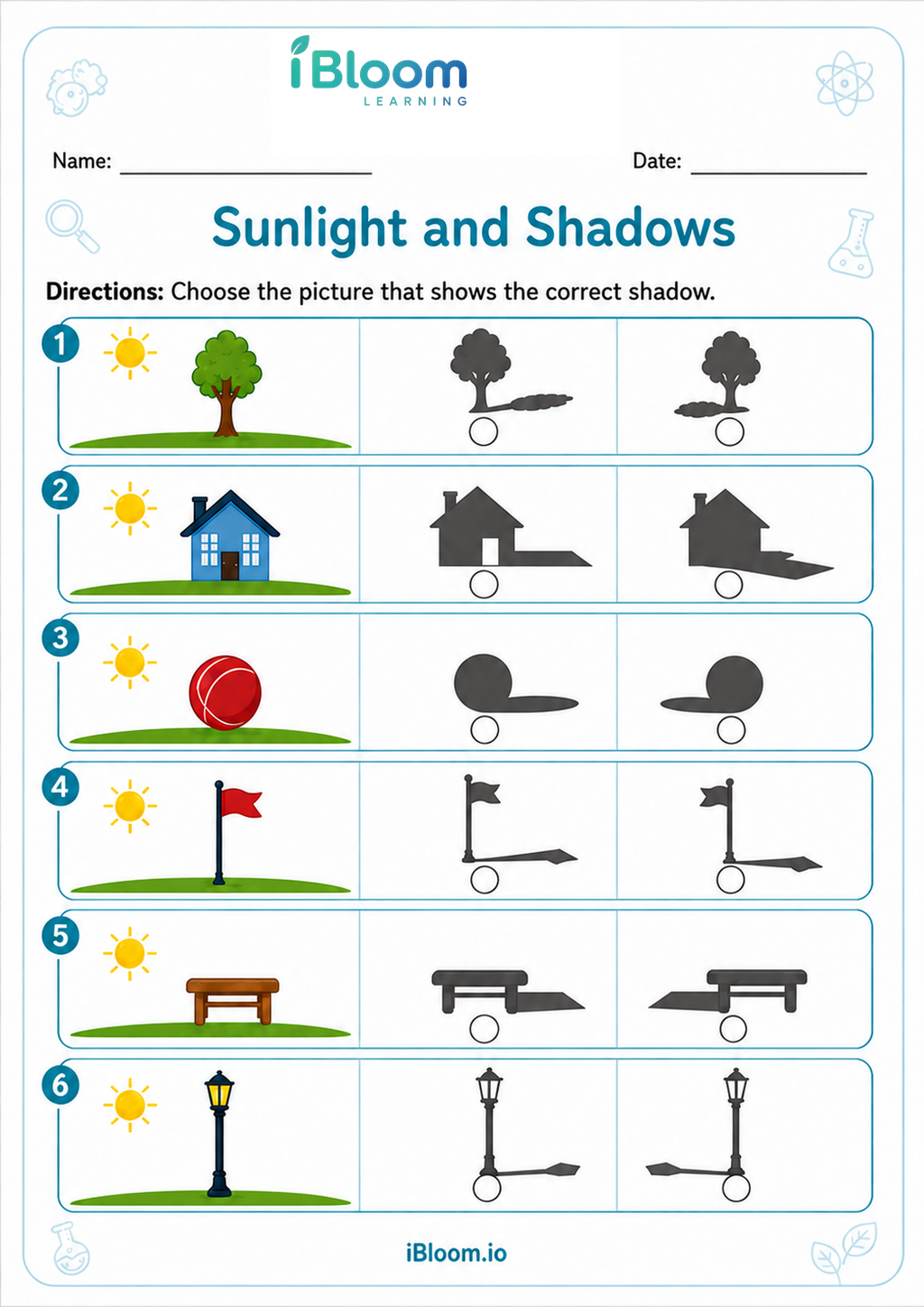 Sunlight and ShadowsClass 1 printable practice for Day and Night.Class 1Free PDF preview
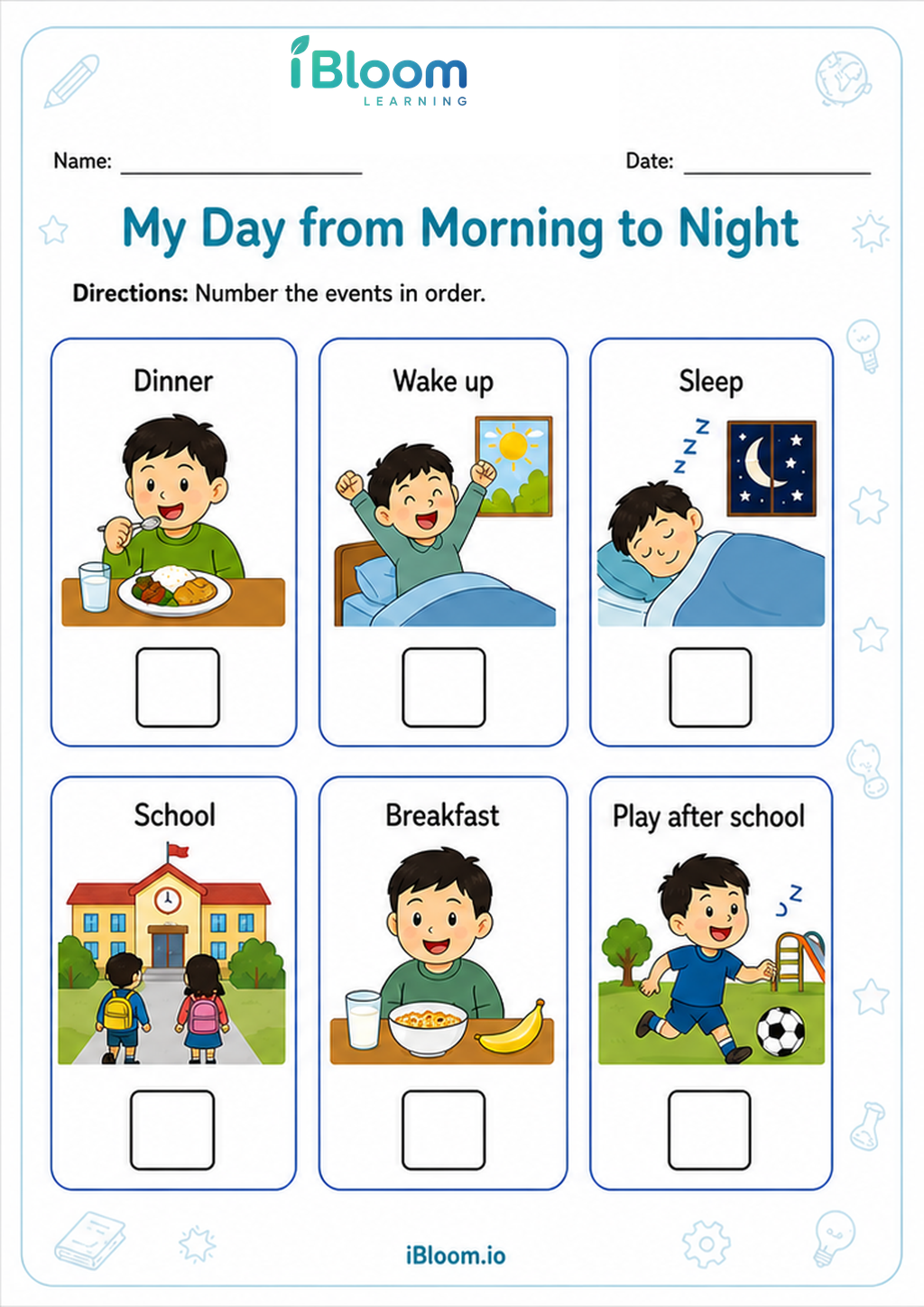 My Day from Morning to NightClass 1 printable practice for Day and Night.Class 1Free PDF preview
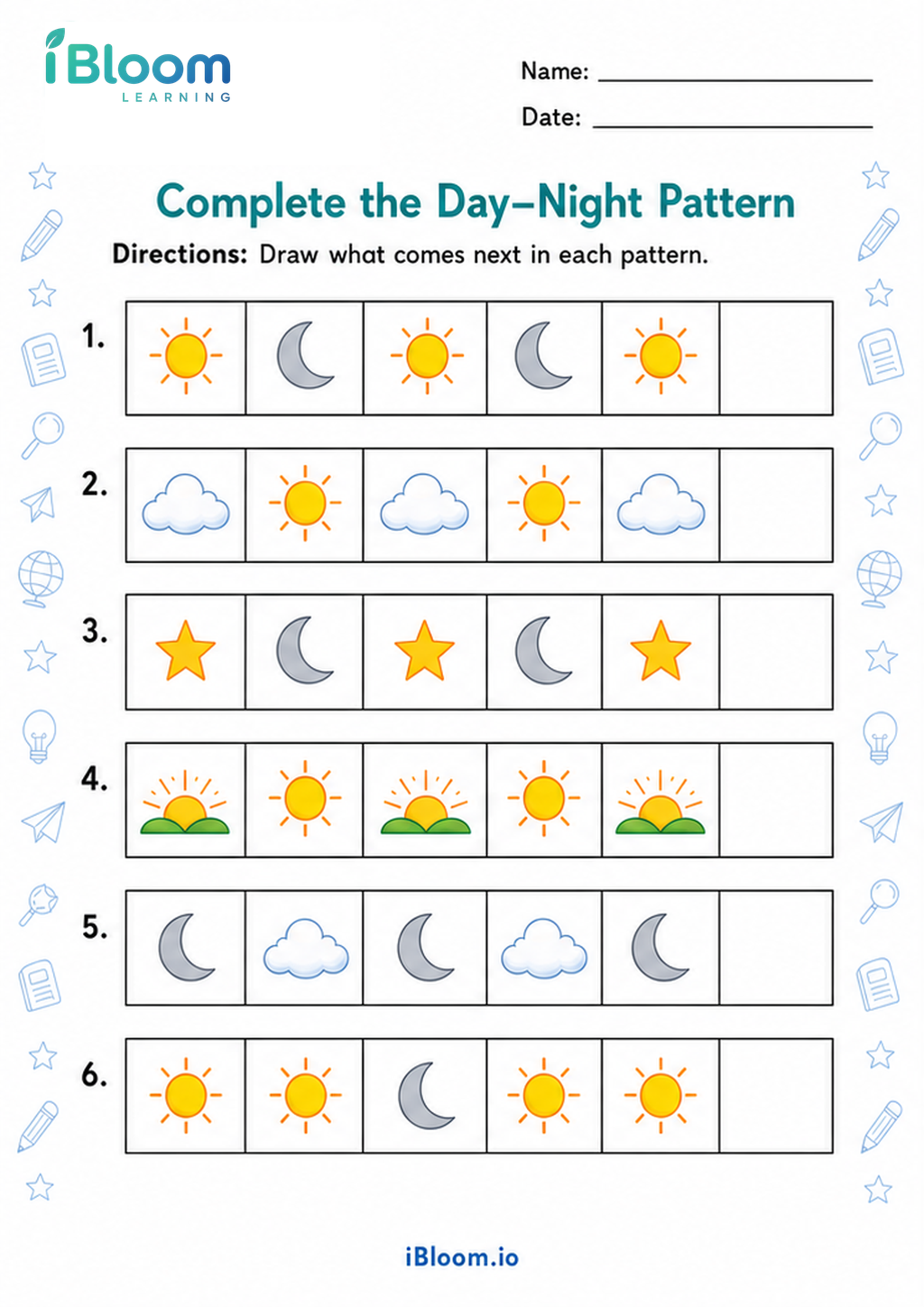 Complete the Day-Night PatternClass 1 printable practice for Day and Night.Class 1Free PDF preview
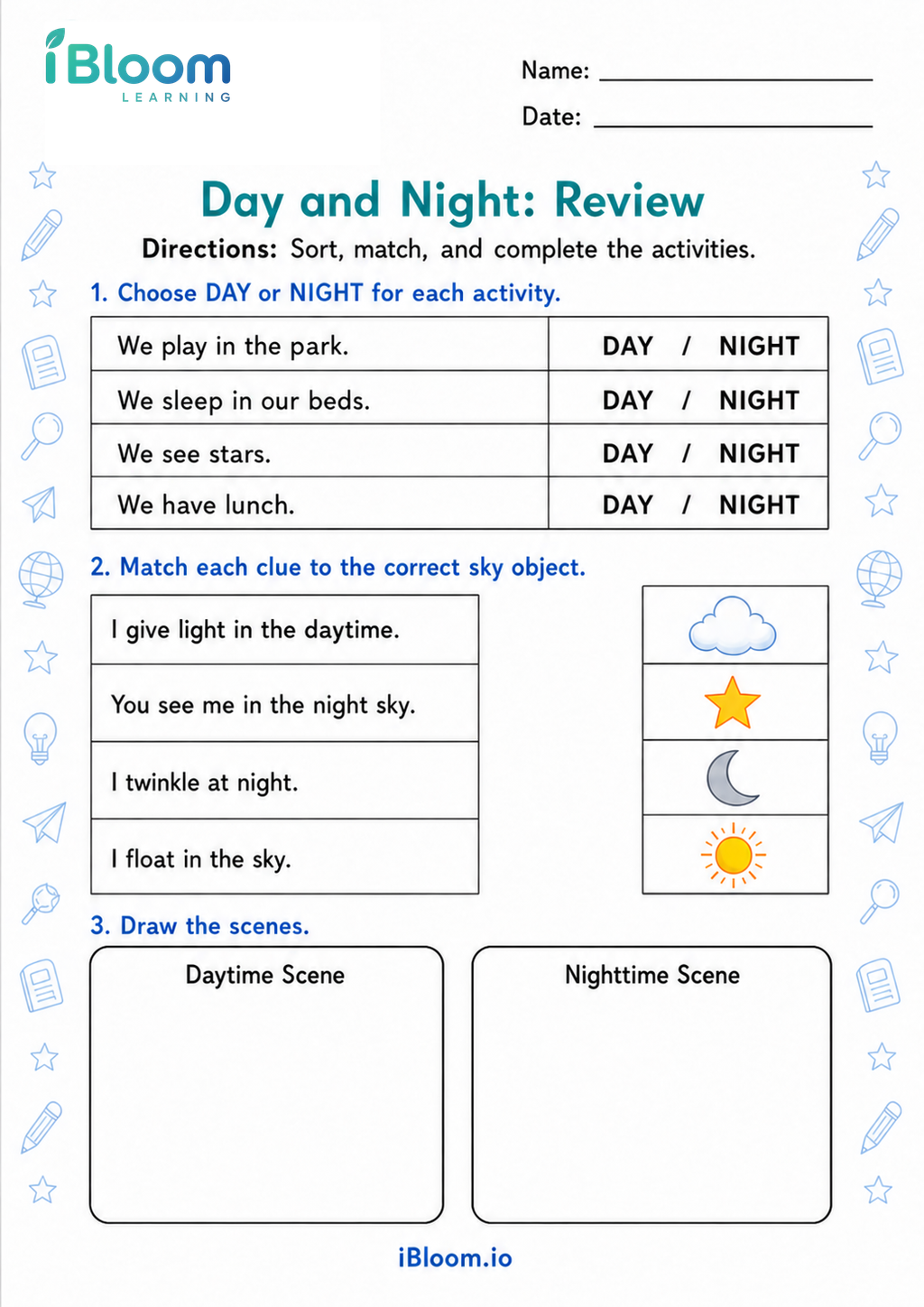 Day and Night: ReviewClass 1 printable practice for Day and Night.Class 1Free PDF preview
Practice that builds confidence
Exploring Earth, Sun and Moon
These Class 1 Earth Sun Moon practice activities introduce young learners to the sky and the world around them. Children observe simple ideas about the Sun, Moon, day, night, summer, winter, and basic space vocabulary.
The printable worksheets include picture labelling, matching, sorting, drawing, and simple question activities. Topics include Moon Phases, Sun Patterns, Summer Winter, Day Night, and Space Vocabulary in an age-appropriate way.
In Class 1 Science and EVS, children begin by naming what they see in the sky and connecting it with daily life. These worksheets help them identify the Sun as the bright object seen in the daytime, the Moon as an object often seen at night, and Earth as our home. The focus is observational and simple, not technical astronomy.

Child topics covered
Moon Phases activities may show that the Moon can look different on different nights, using picture matching rather than complex explanations. Sun Patterns pages help children notice that the Sun appears in the morning, gives light and warmth, and is linked to daytime. Day Night worksheets compare activities such as waking, going to school, sleeping, and seeing stars. Summer Winter practice connects weather, clothing, food, and daily habits. Space Vocabulary introduces words such as Earth, Sun, Moon, star, sky, day, and night.
Parent routine for home practice
Use the worksheet with a real observation. In the morning, ask your child where the sunlight is coming from and what the sky looks like. At night, ask whether they can see the Moon or stars. Then complete one page together. Let your child colour, circle, or label pictures and say a full sentence, such as “We see the Sun in the day” or “I wear warm clothes in winter.”

Classroom uses for teachers
Teachers can use these pages during EVS lessons, picture talks, seasonal discussions, morning circle time, or science corners. A class chart can sort pictures into day and night or summer and winter. The worksheets also work well after storytelling, rhymes about the Sun and Moon, or a simple sky observation activity from the school playground.

Common errors to watch for
Some children may think the Moon appears only on every night or that stars are always visible. Others may mix up hot summer weather and cold winter weather if they focus only on a favourite activity. Keep explanations simple: clouds, light, and time of day affect what we see. Avoid overloading children with facts about orbits or exact Moon phase names unless they are ready.
Free printable PDF download
Use this class 1 earth sun moon worksheet page to preview the activity, print it, or download it as a PDF for quick practice. It works well for homework, homeschool lessons, tutoring, morning work, revision, and classroom centers.
Answers and answer key support
After the child completes the worksheet independently, parents and teachers can use the answer support or answer key information to check the work, review mistakes, and choose the next practice step.
Why iBloom worksheets help
The worksheets connect science words to pictures, seasons, routines, and sky observations that Class 1 children understand. A child-friendly strategy is: “Look at the picture, think of the time or season, then choose.” This builds curiosity, vocabulary, and early Science and EVS confidence.
Helpful answers
Frequently asked questions
What do Class 1 children learn in Earth Sun Moon worksheets?
They learn to identify the Earth, Sun, and Moon, compare day and night, notice simple Moon shapes, connect seasons with daily life, and use basic space words.
Are Moon phases taught in detail at this level?
No. The focus is on noticing that the Moon can look different in the sky. The activities use simple pictures and matching rather than detailed phase names.
How can parents connect these worksheets to real life?
Ask your child to observe the sky in the morning and evening, talk about sunlight or darkness, and connect clothing or weather to summer and winter before completing a worksheet.
What space vocabulary is suitable for Class 1?
Useful words include Earth, Sun, Moon, star, sky, day, night, summer, and winter. Children should be encouraged to use these words in simple sentences.
Can these worksheets be used in EVS lessons?
Yes. They are suitable for Science and EVS picture discussion, seasonal sorting, day-night comparison, and introductory sky observation activities.
Is this class 1 earth sun moon worksheet free?
Yes. You can preview it for free and use the printable worksheet for home or classroom practice.
Can I download this class 1 earth sun moon worksheet as a PDF?
Yes. Use the worksheet download option to save a printable PDF, or print the worksheet directly from the page.
Does this class 1 earth sun moon worksheet include answers or an answer key?
When the activity has fixed answers, iBloom includes answer support so parents and teachers can check the completed worksheet.