Free printable practice
Day Night Practice Activities
Class 1 Science and EVS worksheets that help children recognise day, night, the Sun, the Moon, and daily activities linked to each time.
Free printable worksheet PDFs
Preview every available page, then download the free worksheet PDF for home, homeschool, tutoring, or classroom practice.
Preview the exact activity before downloading it.
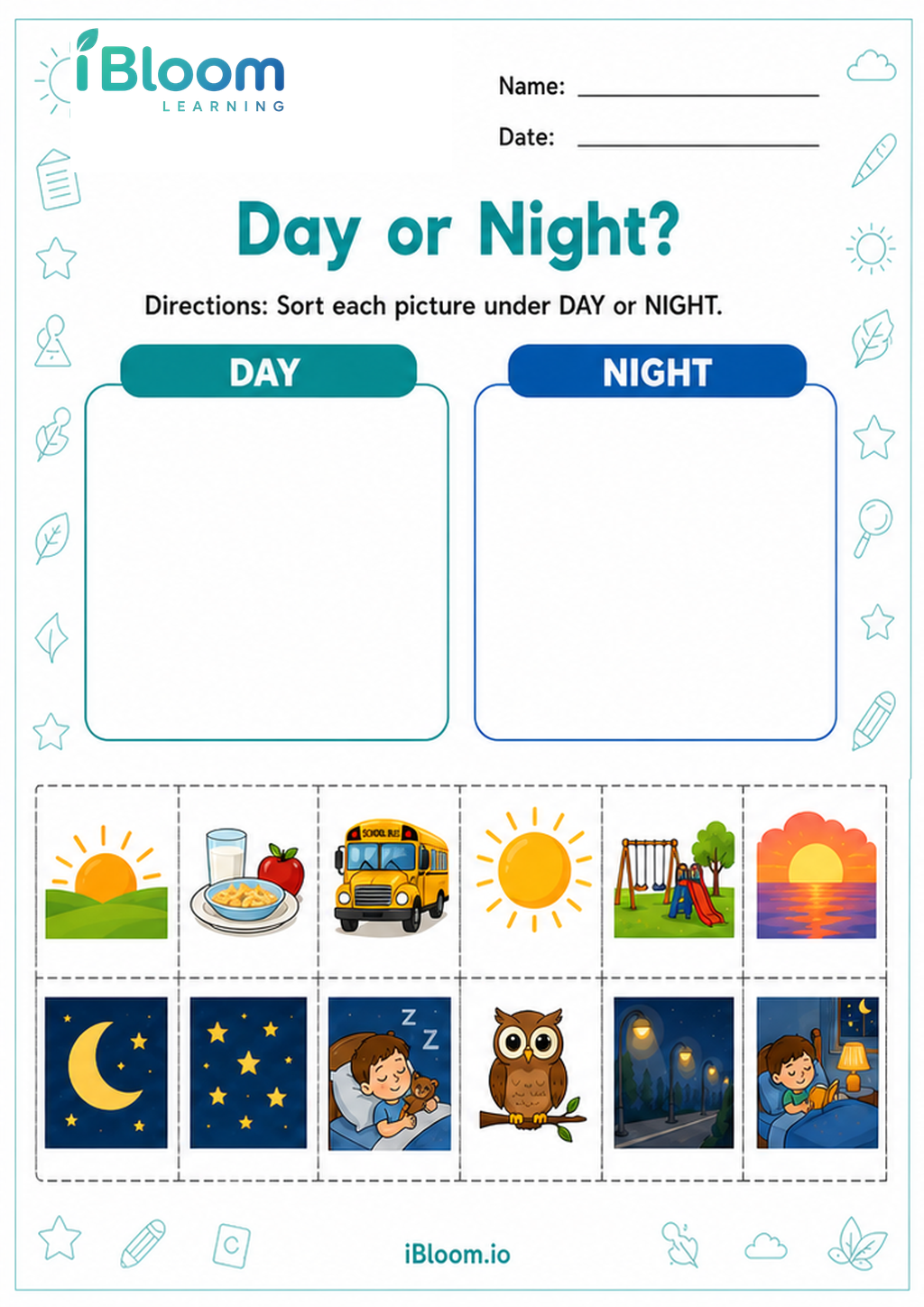 Day or Night?Class 1 printable practice for Day and Night.Class 1Free PDF preview
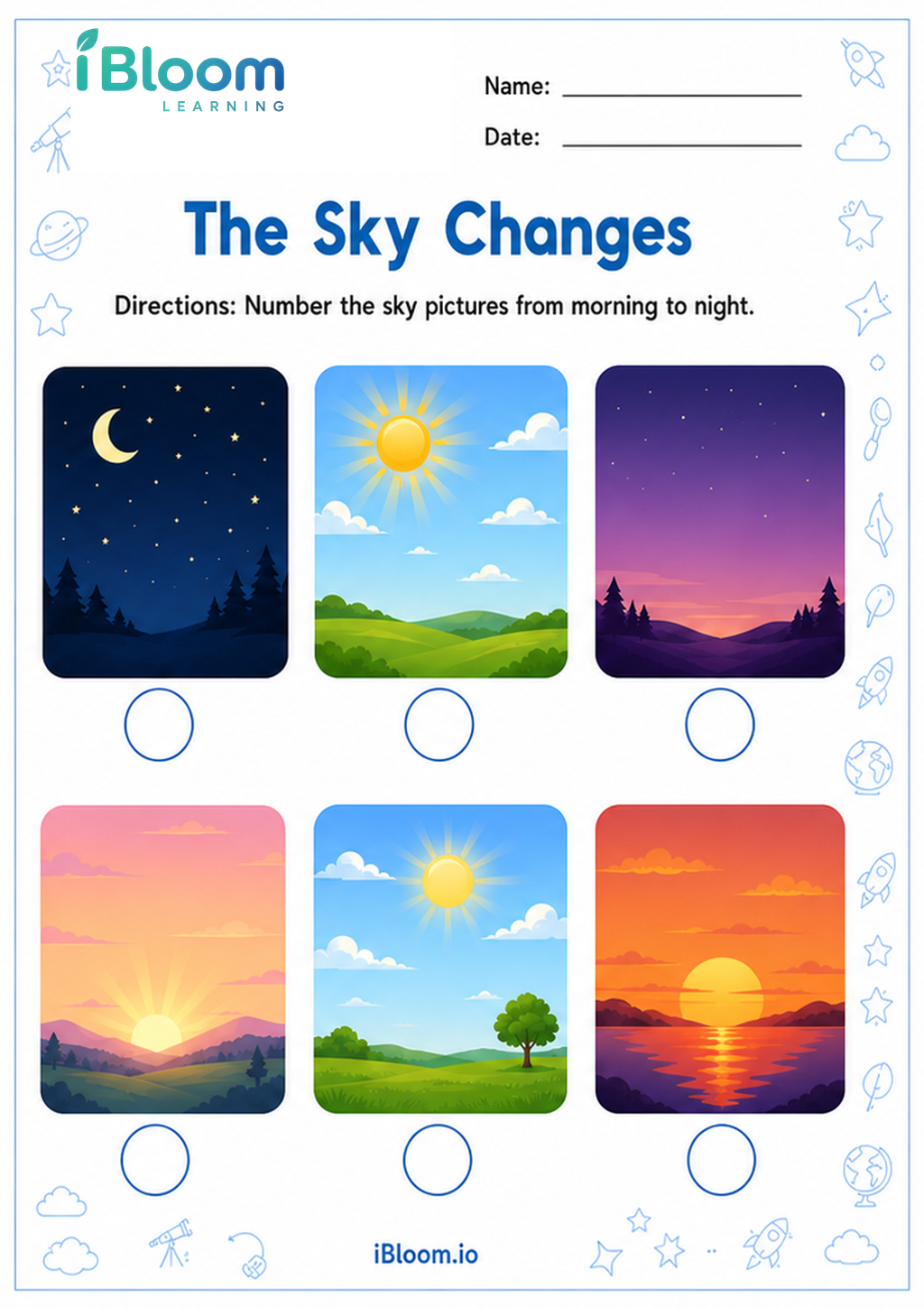 The Sky ChangesClass 1 printable practice for Day and Night.Class 1Free PDF preview
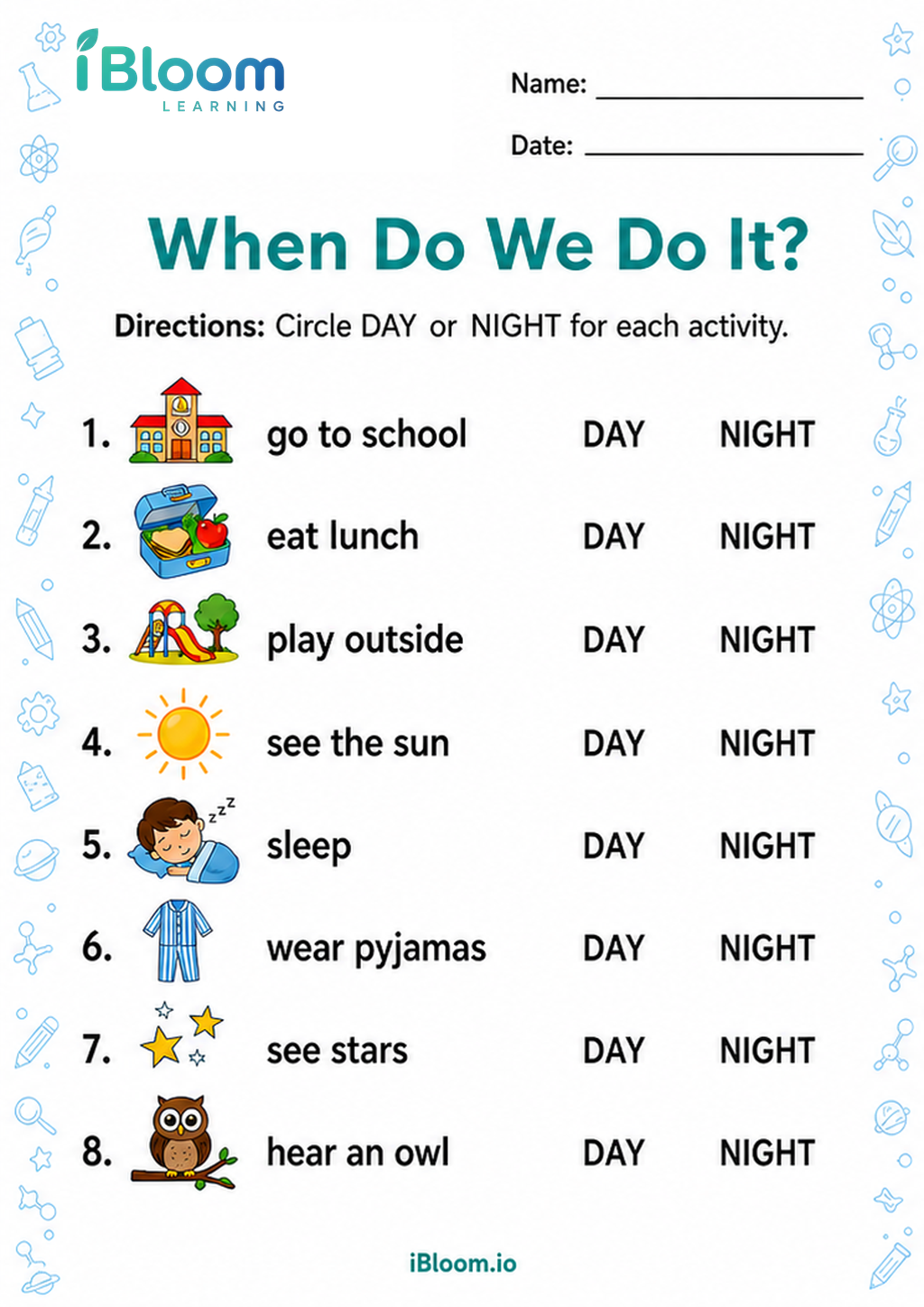 When Do We Do It?Class 1 printable practice for Day and Night.Class 1Free PDF preview
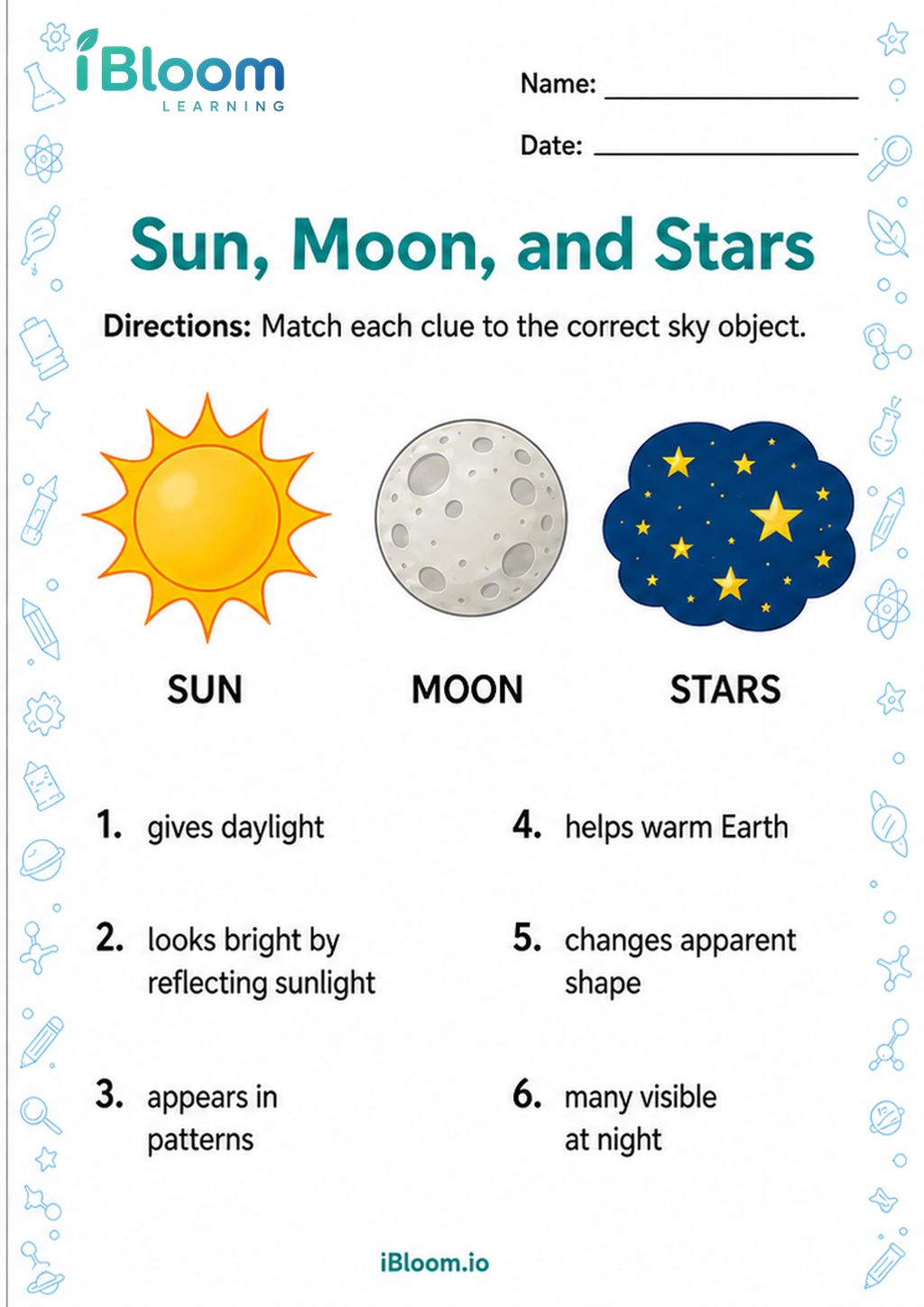 Sun, Moon, and StarsClass 1 printable practice for Day and Night.Class 1Free PDF preview
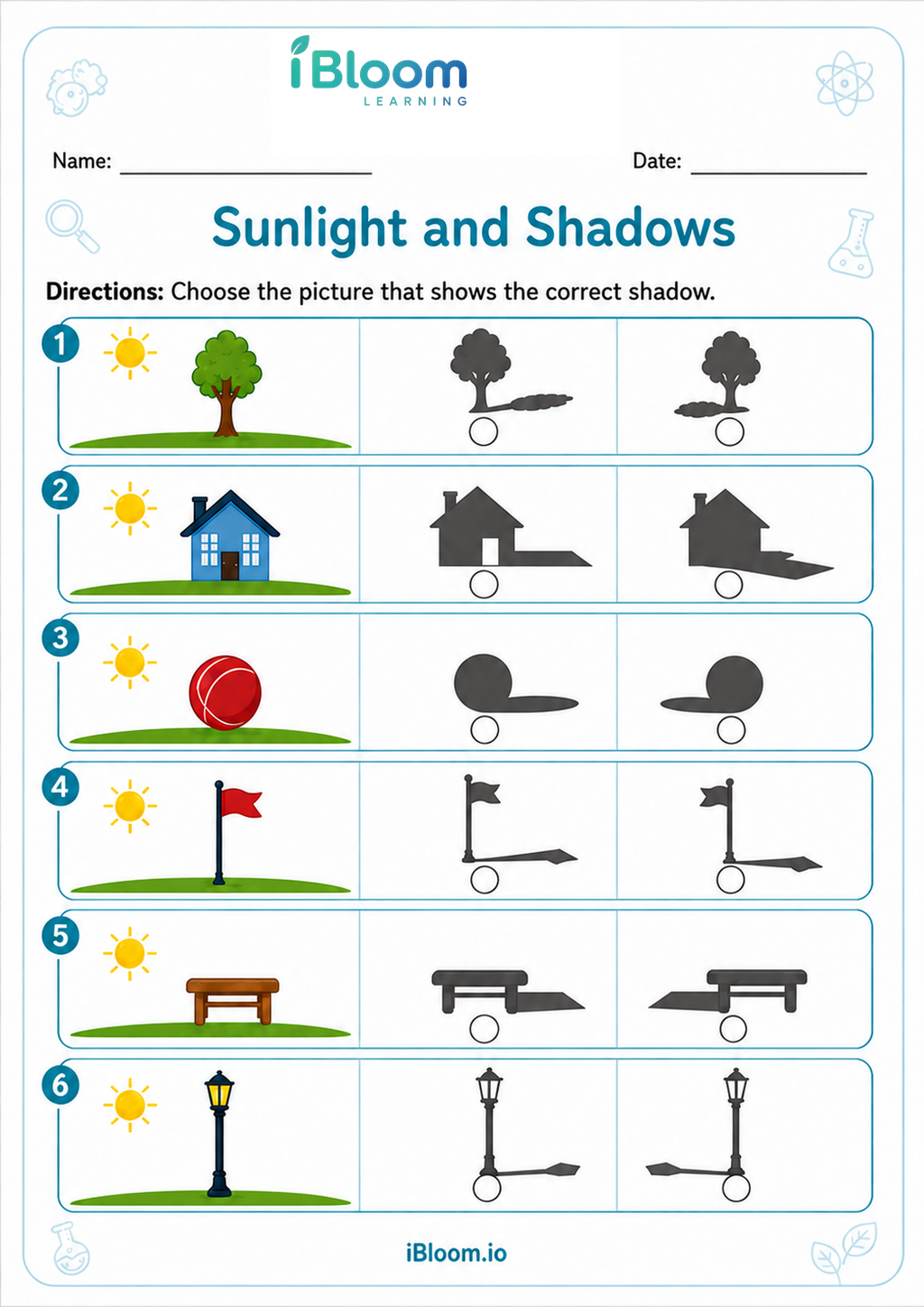 Sunlight and ShadowsClass 1 printable practice for Day and Night.Class 1Free PDF preview
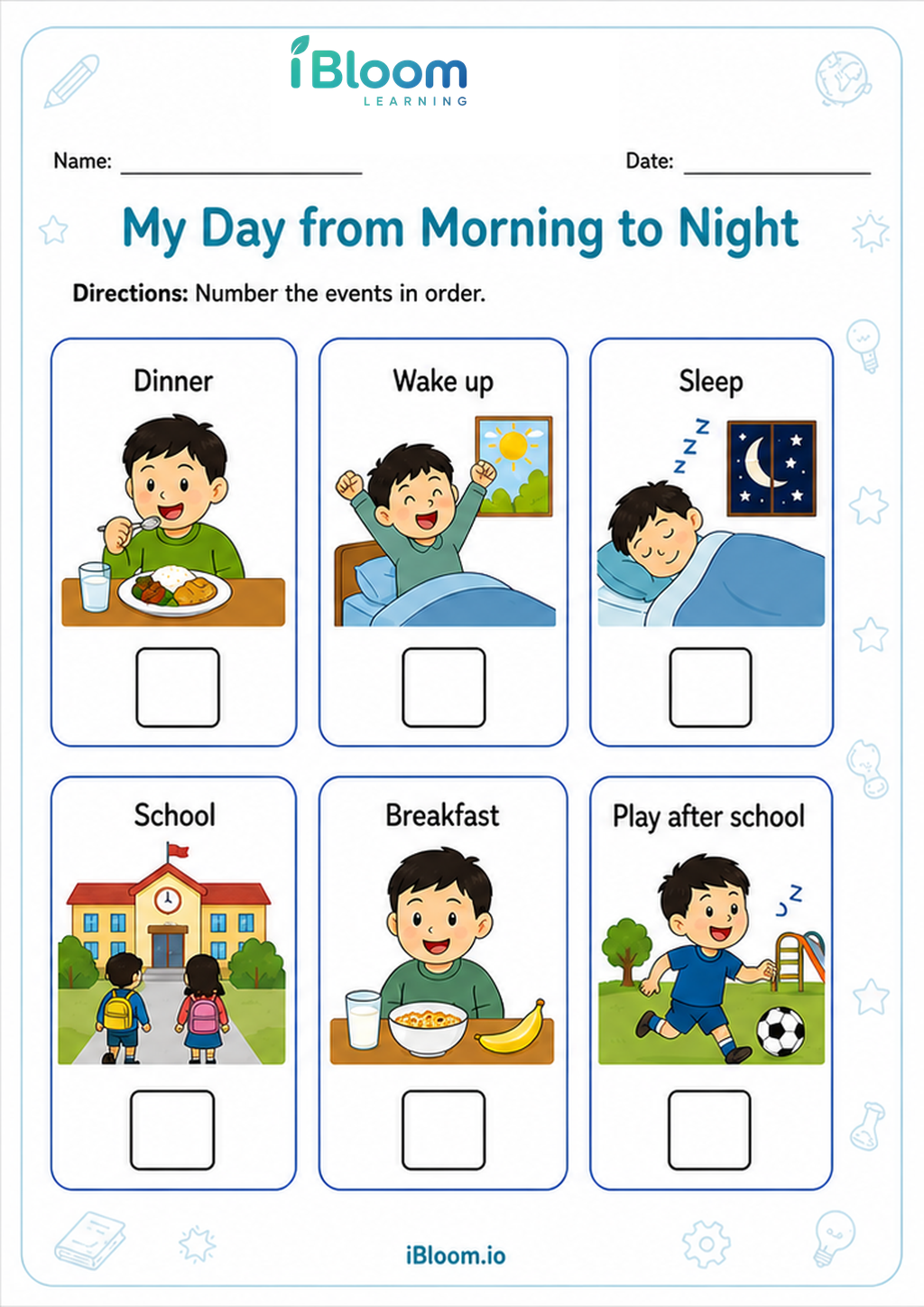 My Day from Morning to NightClass 1 printable practice for Day and Night.Class 1Free PDF preview
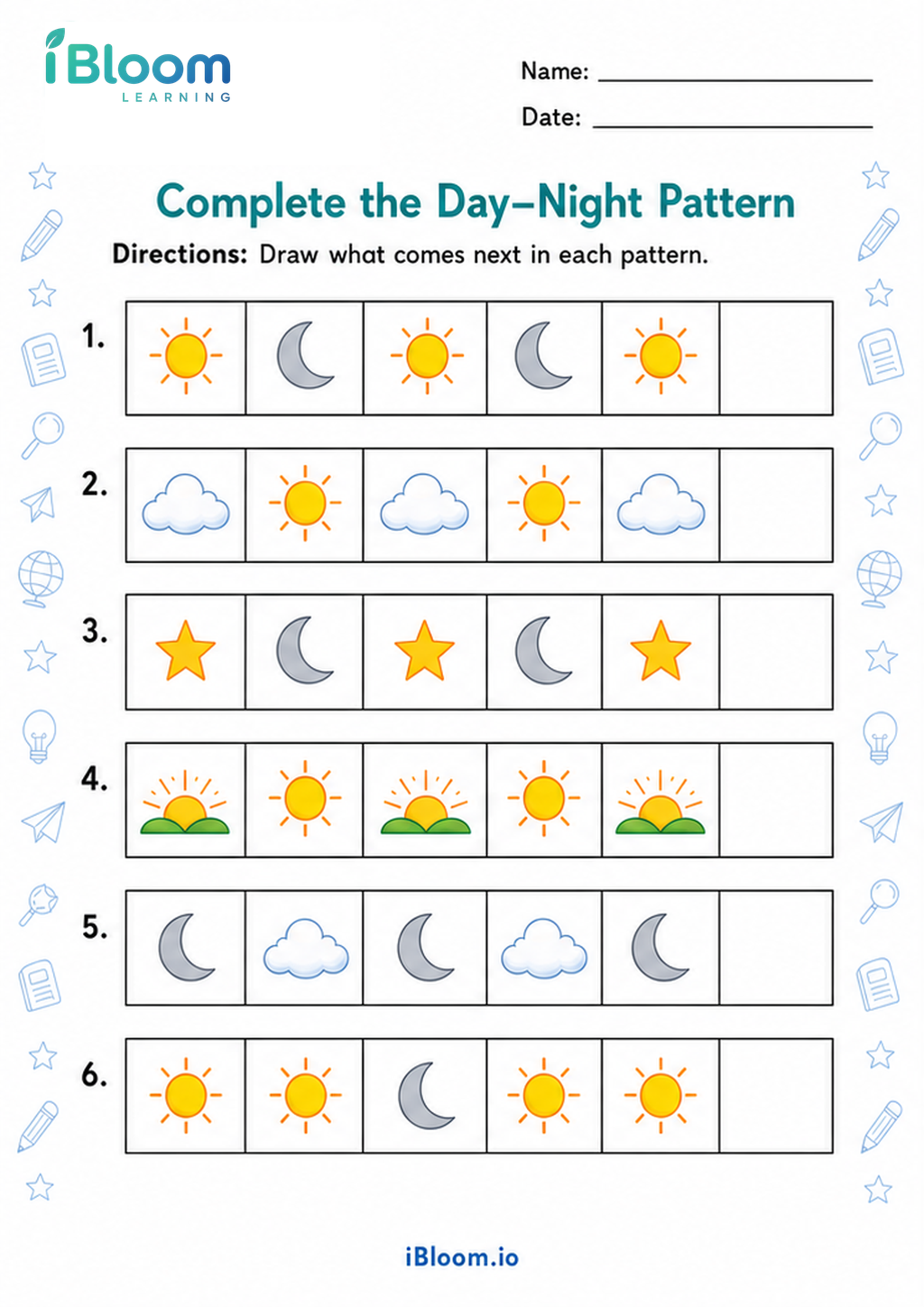 Complete the Day-Night PatternClass 1 printable practice for Day and Night.Class 1Free PDF preview
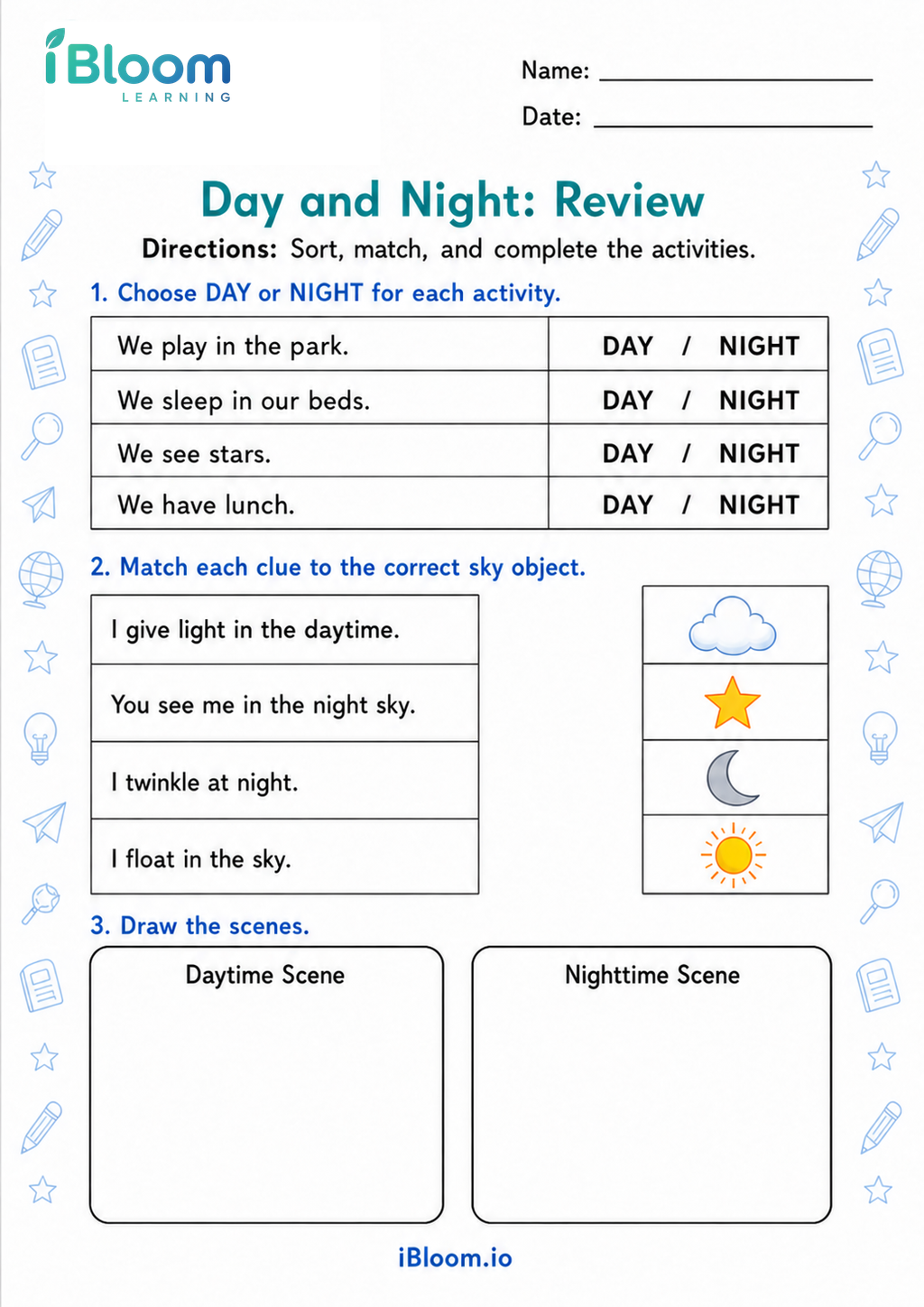 Day and Night: ReviewClass 1 printable practice for Day and Night.Class 1Free PDF preview
Practice that builds confidence
What children learn
These Class 1 Day Night practice activities help children observe how the sky, light, and daily routines change from day to night. Learners practise identifying the Sun, Moon, stars, daytime activities, night-time activities, and simple before-after ideas connected to a day.
The printable worksheets include picture-based sorting, matching, colouring, circling, and short answer tasks. Children connect familiar scenes such as going to school, playing outside, sleeping, and seeing stars with the correct time of day.
Day and night is one of the first Earth-Sun-Moon ideas children meet in Science and EVS. At this level, the focus is observation: the Sun is usually seen in the day, the sky is bright, and many people work, study, travel, or play. At night, the sky is dark, the Moon and stars may be seen, and people often rest or sleep.

Building the concept step by step
The worksheets move from recognition to reasoning. A child may first circle the Sun in a day scene or colour a night sky. Next, they match activities to day or night, sort pictures into two groups, and answer simple questions such as “When do we sleep?” or “What do we see in the sky at night?” This progression supports vocabulary such as day, night, morning, evening, Sun, Moon, stars, bright, and dark.
Parent routine at home
Use one worksheet with a real-life conversation. In the morning, ask, “What tells us it is day?” and point to sunlight, school bags, breakfast, or people going to work. At bedtime, ask, “What changes now?” and talk about darkness, lights, quiet streets, the Moon, or stars if visible. Then let your child complete a sorting or matching page and explain each choice aloud.

Classroom use for teachers
Teachers can use these printables during an Earth, Sun, and Moon lesson, EVS discussion, or picture reading activity. Pages work well in small groups, science corners, early finisher folders, and revision after an oral lesson. Children can compare answers, describe the pictures, and use full sentences such as “We play in the day” or “We sleep at night.”

Common mix-ups to watch for
Some children think the Moon is only present at night or that stars always disappear completely in the day. Keep the explanation simple: we usually see the Sun in the day, and we can often see the Moon and stars at night. Also watch for activity-based confusion, because some people work at night. Accept real-life exceptions while teaching the usual pattern expected for Class 1.
Free printable PDF download
Use this Class 1 day and night worksheet page to preview the activity, print it, or download it as a PDF for quick practice. It works well for homework, homeschool lessons, tutoring, morning work, revision, and classroom centers.
Answers and answer key support
After the child completes the worksheet independently, parents and teachers can use the answer support or answer key information to check the work, review mistakes, and choose the next practice step.
Why iBloom worksheets help
iBloom worksheets use clear pictures and familiar Indian routines so young learners can connect science to everyday life. A child-friendly strategy is: “Look at the sky, look at the light, then choose day or night.” This simple check helps children slow down, observe the scene, and make a reasoned answer.
Helpful answers
Frequently asked questions
What do Class 1 children practise in these day and night worksheets?
They practise recognising day and night scenes, identifying the Sun, Moon, and stars, and matching familiar activities such as school, play, and sleep to the usual time of day.
Are these worksheets suitable for EVS as well as Science?
Yes. The topic fits both early Science and EVS because it connects sky observations with everyday routines children can see at home and school.
How can I explain day and night simply to a Class 1 child?
Use observable clues: day is usually bright and we see the Sun; night is dark and we may see the Moon and stars. Then connect these clues to daily activities.
What if my child says some people work at night?
That is a good real-life observation. You can say that some routines are different, but the worksheet is asking about the usual pattern children commonly observe.
Do children need to know Earth's rotation for these worksheets?
No. These activities focus on Class 1 observation and vocabulary, not the detailed scientific cause of day and night.
Is this Class 1 day and night worksheet free?
Yes. You can preview it for free and use the printable worksheet for home or classroom practice.
Can I download this Class 1 day and night worksheet as a PDF?
Yes. Use the worksheet download option to save a printable PDF, or print the worksheet directly from the page.
Does this Class 1 day and night worksheet include answers or an answer key?
When the activity has fixed answers, iBloom includes answer support so parents and teachers can check the completed worksheet.