Free printable practice
Human Body Practice Activities
Printable Class 1 Science and EVS activities help children identify body parts, face parts, five senses, healthy foods, fruits, vegetables, and food groups.
Explore Human Body
Free printable worksheet PDFs
Preview every available page, then download the free worksheet PDF for home, homeschool, tutoring, or classroom practice.
Preview the exact activity before downloading it.
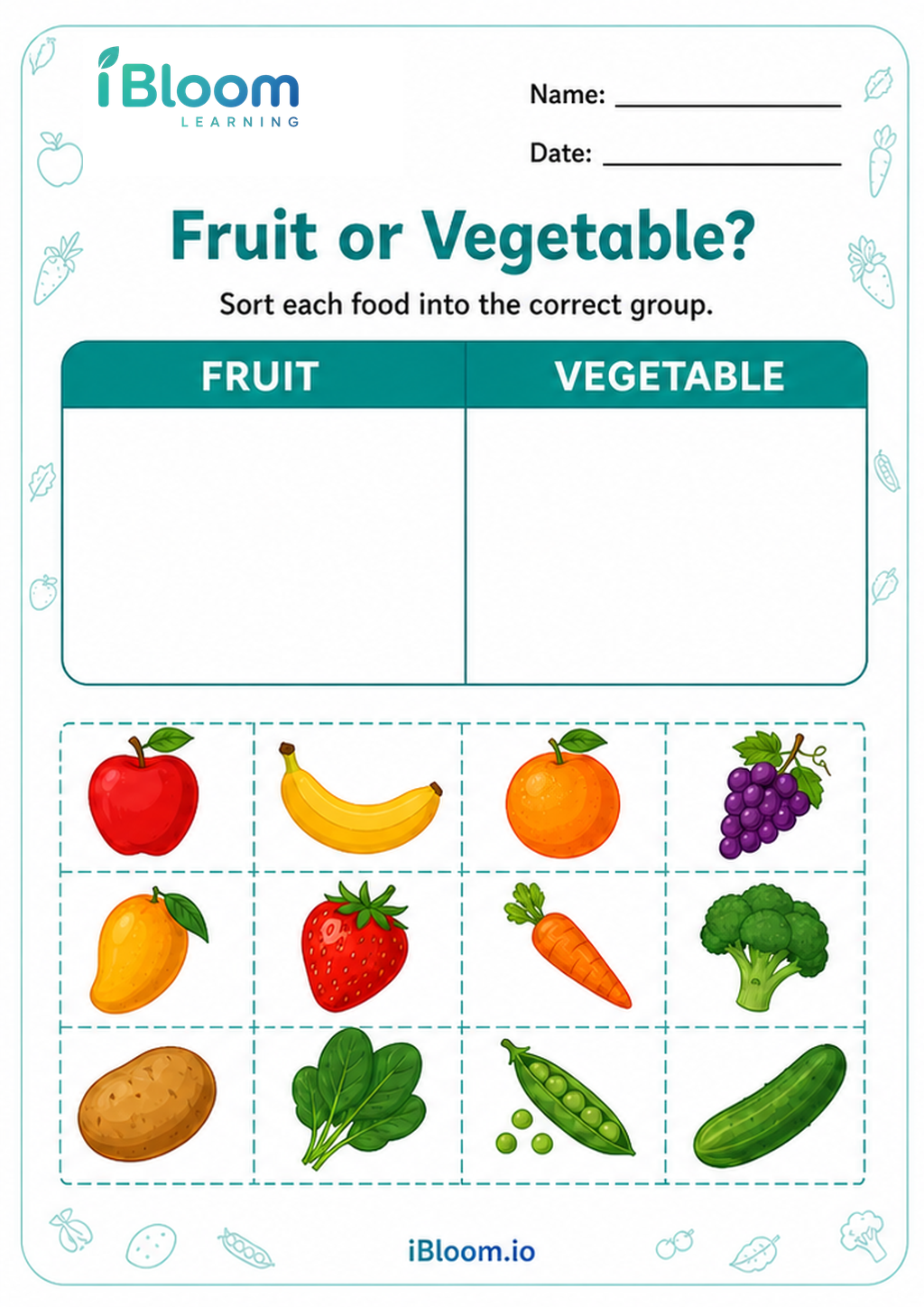 Fruit or Vegetable?Class 1 printable practice for Fruits and Vegetables.Class 1Free PDF preview
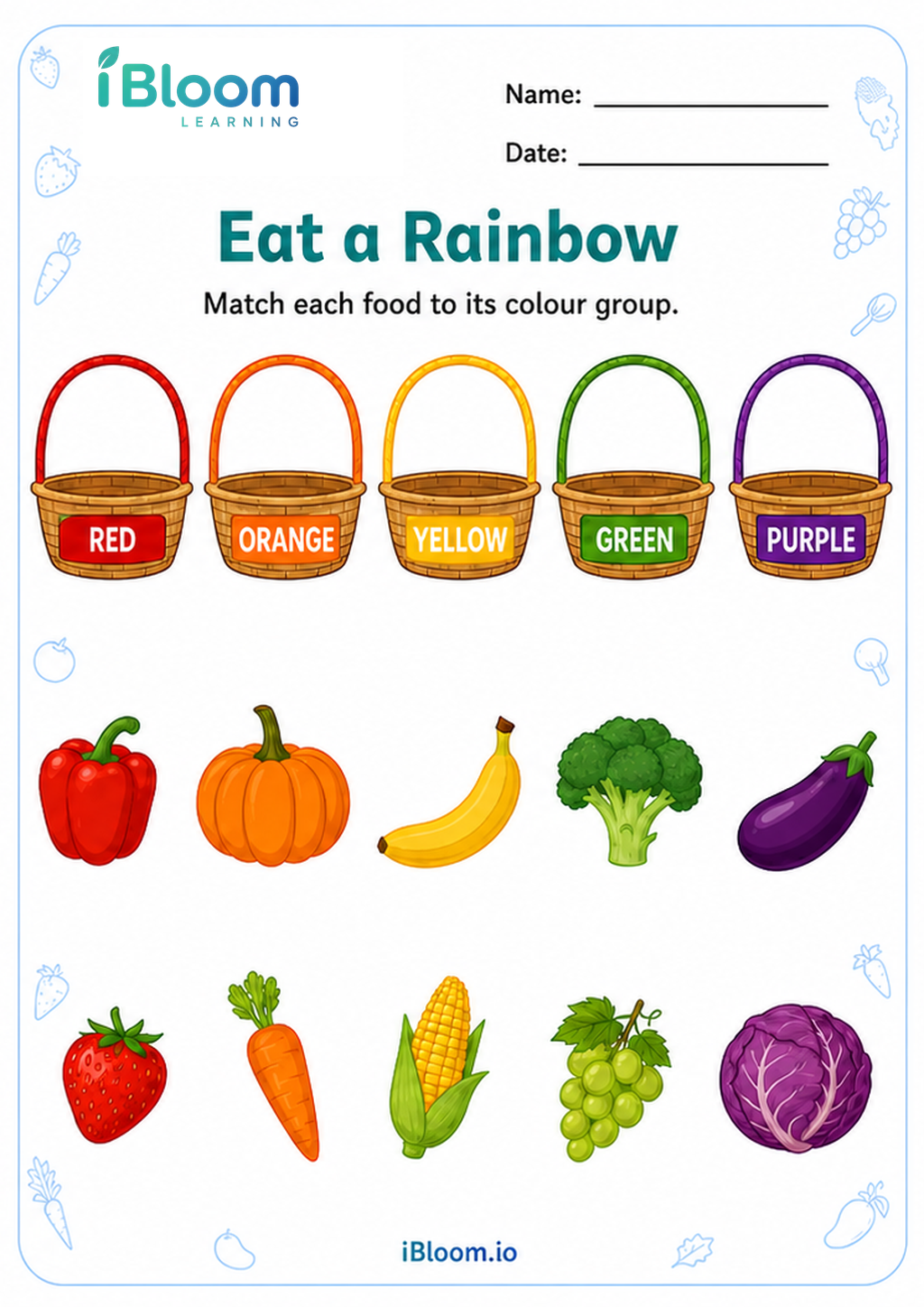 Eat a RainbowClass 1 printable practice for Fruits and Vegetables.Class 1Free PDF preview
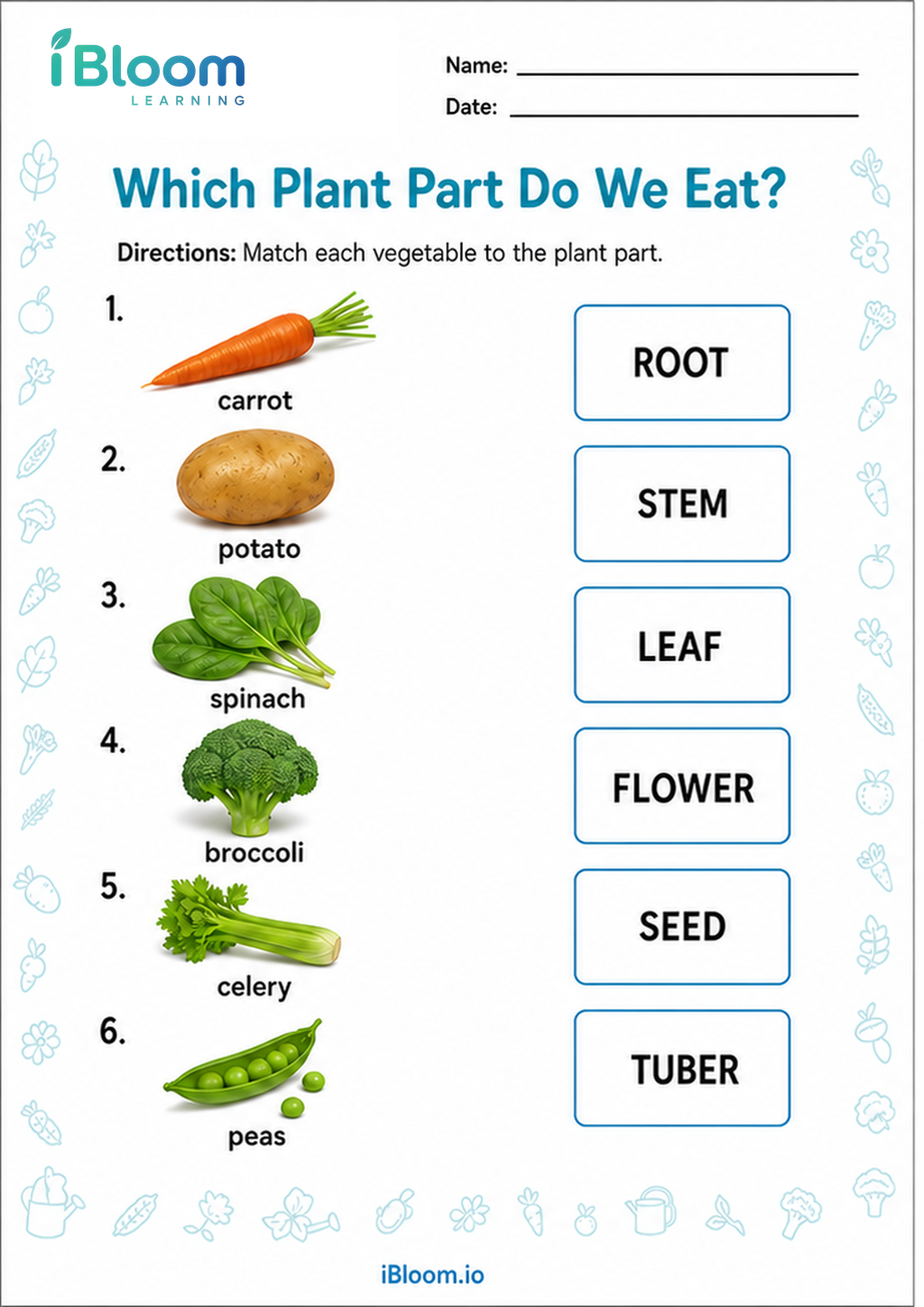 Which Plant Part Do We Eat?Class 1 printable practice for Fruits and Vegetables.Class 1Free PDF preview
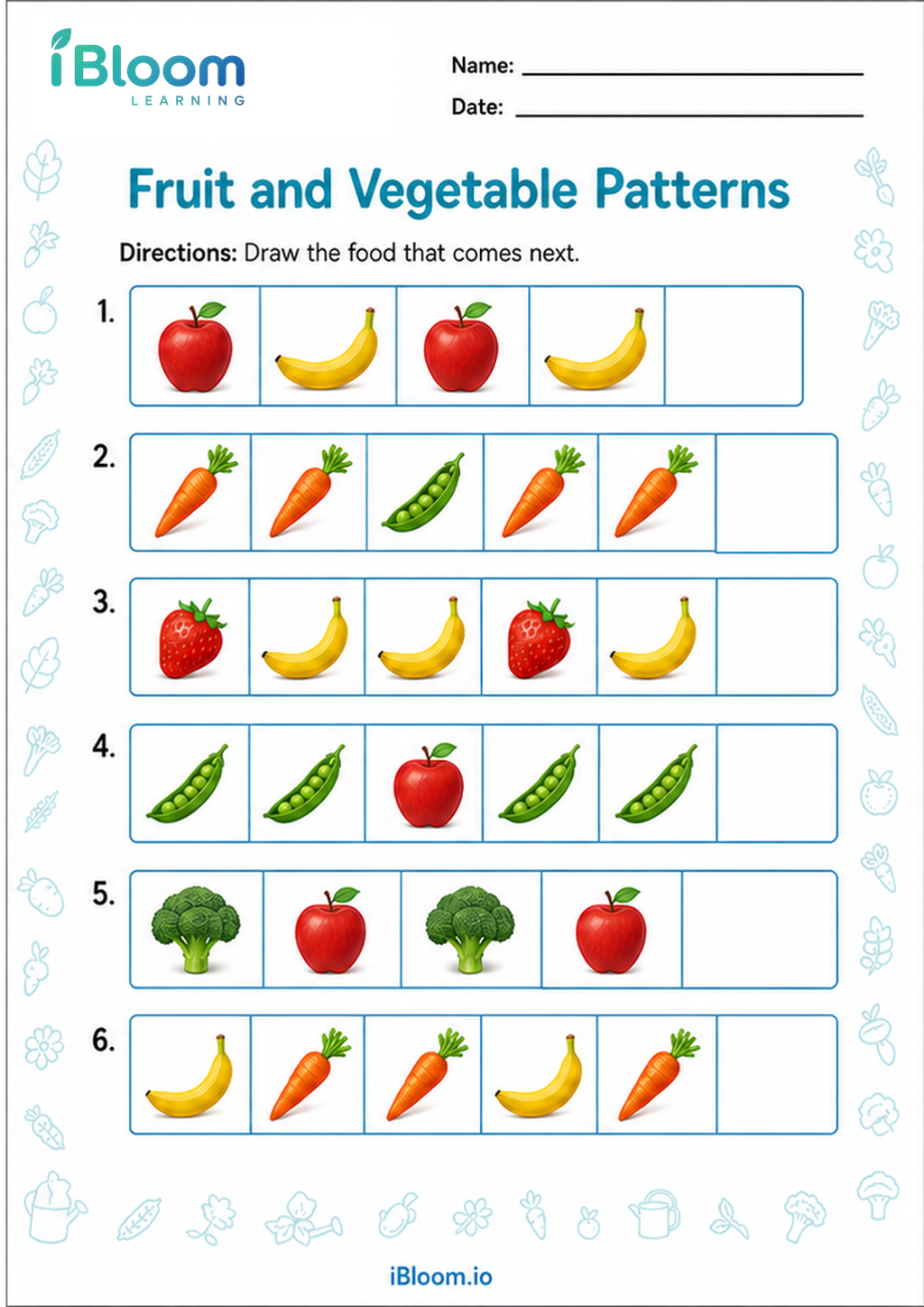 Fruit and Vegetable PatternsClass 1 printable practice for Fruits and Vegetables.Class 1Free PDF preview
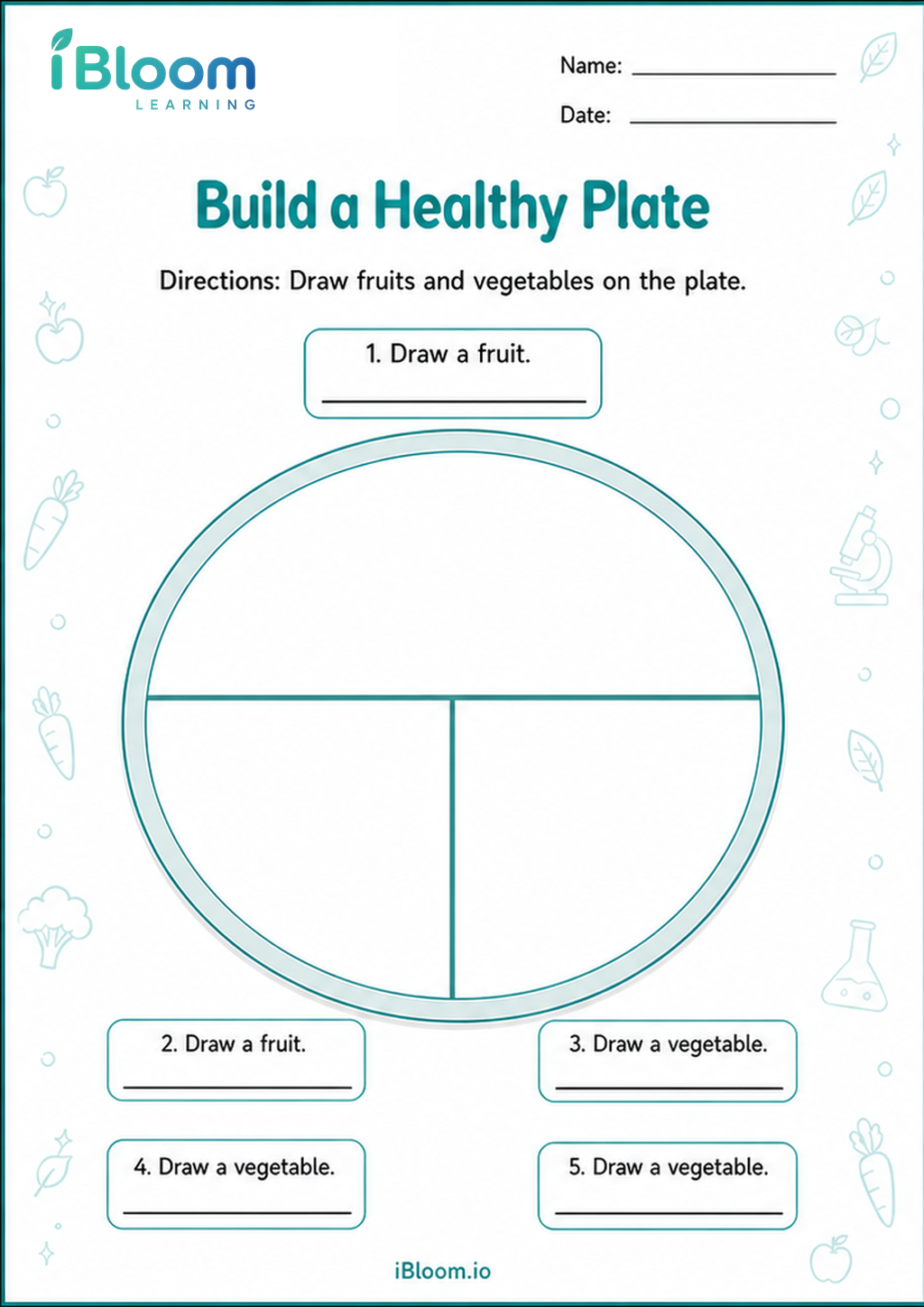 Build a Healthy PlateClass 1 printable practice for Fruits and Vegetables.Class 1Free PDF preview
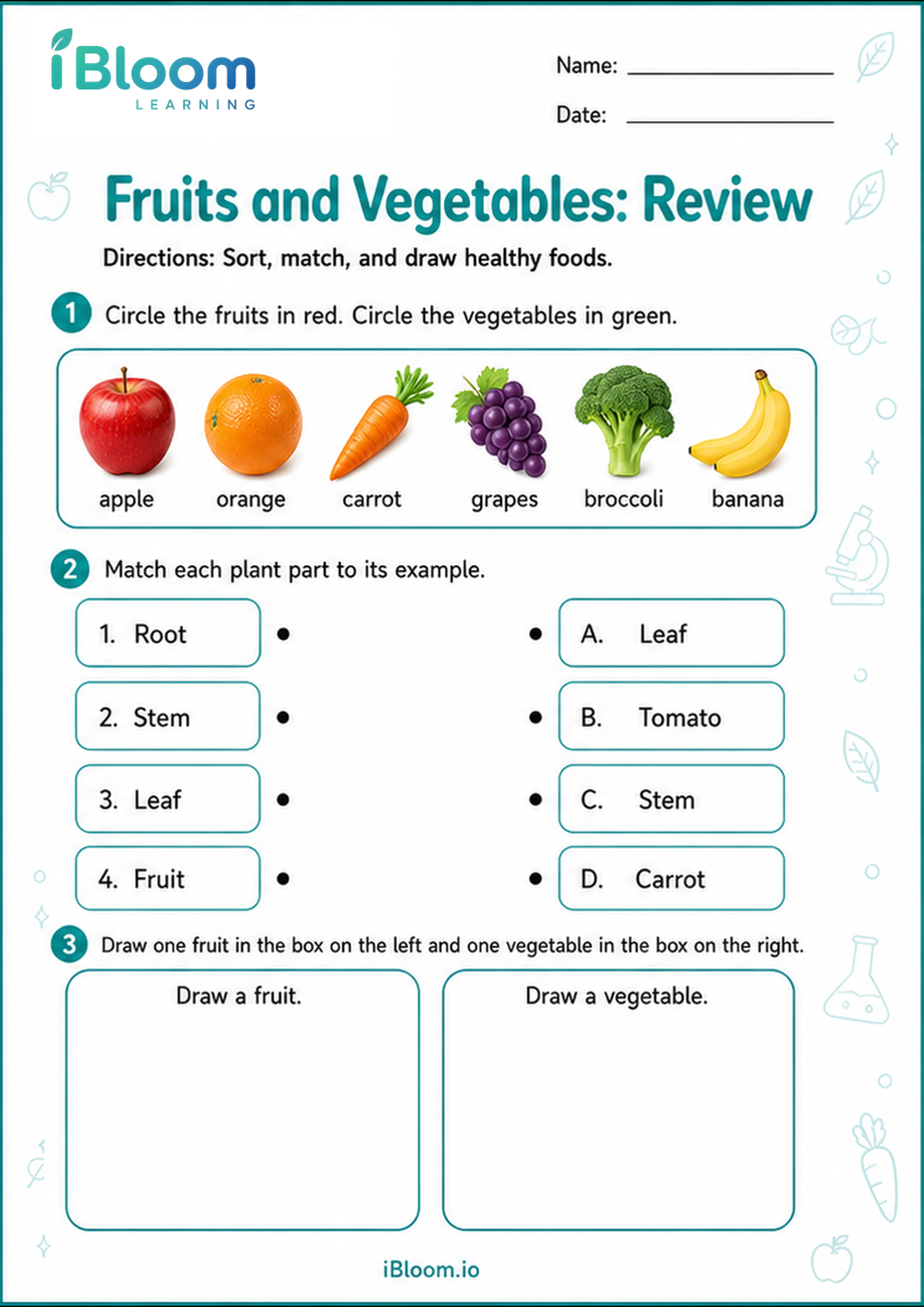 Fruits and Vegetables: ReviewClass 1 printable practice for Fruits and Vegetables.Class 1Free PDF preview
Practice that builds confidence
What children learn
These Class 1 Human Body worksheets build early Science and EVS understanding through familiar topics children meet every day: body parts, face parts, the five senses, healthy eating, fruits, vegetables, and food groups.
The printable activities include naming, matching, sorting, labelling, observing, and simple picture-based questions. Children practise using words such as eyes, ears, nose, tongue, skin, fruit, vegetable, grains, milk, and healthy food in meaningful contexts.
Children begin by recognising the main parts of the body and face, then connect each sense organ with what it helps us do. For example, eyes help us see colour and shape, ears help us hear sounds, the nose helps us smell, the tongue helps us taste, and the skin helps us feel hot, cold, soft, or rough things. Food activities introduce healthy eating through everyday Indian examples such as rice, dal, chapati, milk, banana, carrot, spinach, and curd.

Skill progression in the worksheets
The practice moves from picture recognition to simple classification. A child may first circle body parts, then label a face, match a sense organ to an action, and finally sort foods into fruits, vegetables, or basic food groups. This progression supports vocabulary, observation, and early reasoning without making the topic abstract.
A simple home routine
Use one worksheet with a real-life talk. Before starting, ask your child to point to their elbow, chin, eyes, and knees. During a meal, name one food from the plate and ask, “Is it a fruit, vegetable, grain, or milk product?” For the senses, place safe objects such as a spoon, cotton ball, lemon, or bell nearby and let the child describe what they see, hear, smell, taste, or feel.

Classroom uses for teachers
Teachers can use these pages during Science and EVS lessons, morning revision, group centres, or notebook follow-up. A body-parts worksheet works well after an action song. Five-senses pages can support observation corners. Food sorting sheets can lead into a class discussion on healthy lunch boxes and the need to eat a variety of foods.

Common errors to watch for
Some children confuse fruits and vegetables because both are plants. Keep the focus on common classroom naming rather than complex botanical rules. Children may also mix up the sense organ and the action, such as saying “ears smell.” Encourage full sentences: “I smell with my nose.” When labelling, check left-to-right reading and correct spelling of short body words.
Free printable PDF download
Use this Class 1 human body worksheet page to preview the activity, print it, or download it as a PDF for quick practice. It works well for homework, homeschool lessons, tutoring, morning work, revision, and classroom centers.
Answers and answer key support
After the child completes the worksheet independently, parents and teachers can use the answer support or answer key information to check the work, review mistakes, and choose the next practice step.
Why iBloom worksheets help
The activities use clear pictures, age-appropriate vocabulary, and repeated practice across related ideas. Children do not just memorise body parts or food names; they compare, sort, label, and explain. A child-friendly strategy is: look carefully, say the word aloud, touch or point if possible, then mark the answer.
Helpful answers
Frequently asked questions
What topics are covered in these Class 1 Human Body worksheets?
They cover parts of the body, parts of the face, the five senses and sense organs, healthy eating, fruits, vegetables, and simple food groups.
Are the worksheets suitable for Science and EVS practice?
Yes. The activities are written for Class 1 Science and EVS and use familiar examples from a child’s daily life, such as meals, body movements, and sense experiences.
How can I teach the five senses with these worksheets?
Ask your child to match each sense organ with its use, then connect it to real objects: eyes for seeing colours, ears for sounds, nose for smells, tongue for tastes, and skin for touch.
Do the food activities include fruits and vegetables separately?
Yes. Children practise recognising and sorting common fruits and vegetables, along with broader healthy eating and food group activities.
What should I do if my child mixes up body parts or sense organs?
Use pointing and speaking together. For example, ask the child to touch the nose and say, “I smell with my nose,” then repeat with eyes, ears, tongue, and skin.
Is this Class 1 human body worksheet free?
Yes. You can preview it for free and use the printable worksheet for home or classroom practice.
Can I download this Class 1 human body worksheet as a PDF?
Yes. Use the worksheet download option to save a printable PDF, or print the worksheet directly from the page.
Does this Class 1 human body worksheet include answers or an answer key?
When the activity has fixed answers, iBloom includes answer support so parents and teachers can check the completed worksheet.